Yellowfin tuna are warm-water predators that follow temperature and bait across vast stretches of ocean. Off Southern California and into Baja, finding yellowfin means finding the right water — and that starts with understanding their temperature preferences.
In this guide, we’ll break down the ideal water temperatures for yellowfin tuna, how they differ from bluefin tuna, and how to use SST charts to plan your trips.
The Ideal Temperature Range
Yellowfin tuna thrive in water between 68°F and 78°F (20–26°C). They’re significantly warmer-water fish than bluefin, which is why SoCal anglers typically encounter them farther south and later in the season. The sweet spot is around 72–76°F — that’s where you’ll find the most consistent concentrations.
Below 65°F, yellowfin become scarce. They won’t tolerate cold water the way bluefin will. Above 82°F, they tend to go deeper during the day, feeding near the surface only in low-light conditions.
Seasonal Patterns for SoCal and Baja
Spring (March–May): Yellowfin are typically south of the border, concentrated around the Baja banks — Hurricane Bank, the Ridge, and the high spots south of Cedros. Water temps at these locations hit the upper 60s and 70s well before SoCal waters warm up. Long-range boats run these trips with trolling spreads of cedar plugs and feathers to cover ground between stops.
Summer (June–August): This is when things get exciting for SoCal boats. As warm currents push north, yellowfin follow. During El Niño years or strong warm-water intrusions, yellowfin can show up as close as the Coronado Islands or even the 302/371/425 spots. Check the fleet tracker — when the long-range boats start running shorter trips, that’s a sign yellowfin have moved within range. Have your tuna setup rigged with 50–65lb braid and ready.
Fall (September–November): Peak season for SoCal yellowfin. Water temps are at their annual high, and the fish that have been pushing north all summer are now in full feeding mode. September and October can produce incredible fishing within range of overnight and 1.5-day trips. Surface iron and poppers are at their most effective when yellowfin are boiling on the surface. See our fishing season calendar for specifics.
Winter (December–February): Yellowfin retreat south as water cools. They’re still available on multi-day Baja trips, but you won’t find them in SoCal waters. This is the season to focus on bluefin instead.
Using SST Charts for Yellowfin
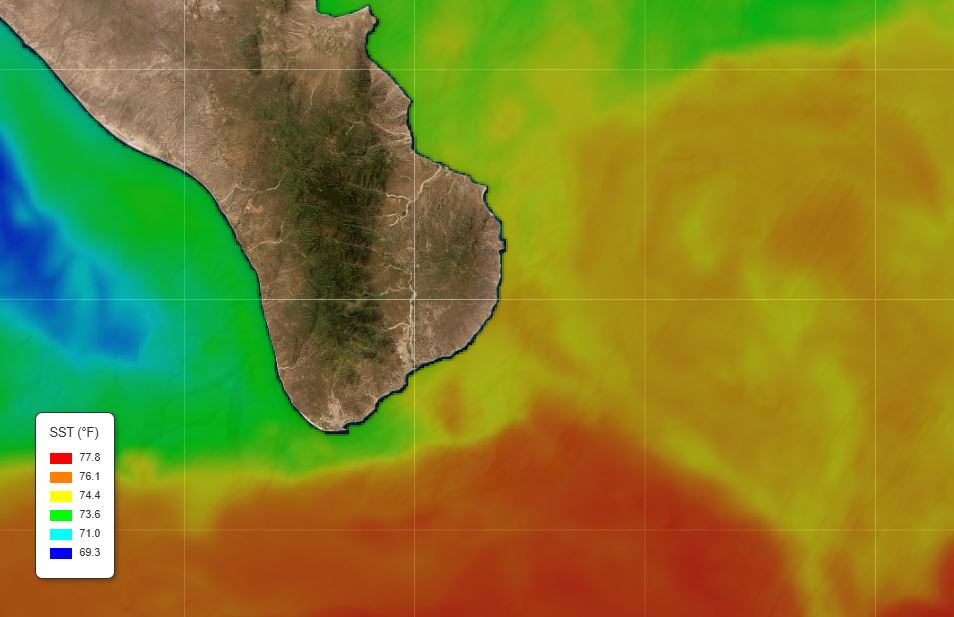
Yellowfin tuna relate strongly to temperature breaks. They patrol the edges where warm and cool water meet, using the convergence zone as a feeding highway. On the SST chart, look for sharp color transitions where water jumps 2–4°F over a short distance. See our fishing the edges guide for how to work these boundaries once you’re on the water.
The warm side of the break is where you want to focus. Yellowfin cruise the warm edge, diving into cooler water to ambush bait that gets pushed along the break. Combine the SST chart with the chlorophyll map — high chlorophyll on the cool side of a break means bait, and bait on a temperature break means tuna.
Warm-water intrusions are especially productive. When tongues of 72°F+ water push inshore from the open Pacific, yellowfin ride them in. The edges of these intrusions collect kelp paddies and debris that also hold dorado — making mixed-bag trips common when you find the right intrusion.
Yellowfin vs. Bluefin Temperature Preferences
| Factor | Yellowfin | Bluefin |
|---|---|---|
| Ideal temp range | 68–78°F | 60–72°F |
| Sweet spot | 72–76°F | 62–68°F |
| Cold tolerance | Low — won’t go below 65°F | High — comfortable in upper 50s |
| SoCal peak | September–October | June–November |
| Where to find them | Warm side of breaks | Either side of breaks |
This is why SoCal boats can have both species on the same trip — bluefin on the cool side of a break and yellowfin on the warm side, sometimes only miles apart. Size up your gear for the bigger fish — a 40lb+ class setup handles both species.
Yellowfin Gear and Lure Guides
Yellowfin are pound-for-pound one of the hardest fighting tuna. They run fast and deep, and a big yellowfin (40lb+) will test your tackle. Here are our complete guides:
Casting and jigging: Surface iron (Tady 45) and poppers are devastating on surface-feeding yellowfin. When fish are deep on the meter, flat-fall jigs get down to where they’re holding. See our surface iron guide for casting technique and our jigs vs irons vs poppers comparison for when to throw each.
Trolling: Cedar plugs, feathers, and Rapala X-Rap Magnums in a staggered spread cover ground along temperature breaks. See our tuna trolling guide for the complete spread setup.
Live bait: A fly-line rig with live sardine or mackerel is the bread-and-butter technique when the boat is stopped on a school. Use a 2/0–4/0 circle hook for jaw-corner hookups — see our hooks guide and circle vs J hooks guide for specifics.
Rod and reel: A 40lb+ class setup for big yellowfin — Shimano Talica 12 or similar on an 8-foot rod. Spool with 50–65lb braid and a 30–40lb fluorocarbon leader connected with an FG knot. See our rod and reel combo guide for complete pairings.
Hooks: Replace factory trebles on all iron and poppers with Owner ST-66 trebles — factory hooks straighten on yellowfin. Owner Mutu Light Circle (5114) in 2/0–4/0 for fly-lining. See our hooks by species guide for the full breakdown.
Yellowfin Temperature Quick Reference
| Condition | Temp Range | What to Expect |
|---|---|---|
| No yellowfin | Below 65°F | Too cold — fish are farther south |
| Possible | 65–68°F | Occasional fish on temp breaks |
| Prime zone | 68–78°F | Active feeding, surface boils |
| Sweet spot | 72–76°F | Best concentrations, most aggressive |
| Still good | 78–82°F | Fish deeper during midday |
Plan Your Trip
Check today’s conditions before you head out:
- SST Chart — Find 68–78°F water and temperature breaks
- Chlorophyll Map — Locate bait concentrations along breaks
- Marine Weather — Wind, swell, and offshore conditions
- Fleet Tracker — See where boats are finding yellowfin
- AI Fishing Predictions — Data-driven forecasts for SoCal
- SD Fishing Season Calendar — When yellowfin show up in SoCal
Related Guides
- Best Lures for Tuna
- Best Tuna Jigs
- Best Poppers for Tuna
- Surface Iron Fishing Guide
- Jigs vs Irons vs Poppers
- Fly-Line Rig for Tuna
- Best Reel for Bluefin Tuna
- Best 8-Foot Offshore Rods
- Best Rod & Reel Combos for SoCal
- Best Hooks by Species
- Circle Hooks vs J Hooks
- Braid vs Mono vs Fluorocarbon
- Best Fishing Line by Pound Test
- Best Fishing Knots
- Finding Temperature Breaks
- Fishing the Edges
- How to Use Chlorophyll Maps
- How to Read SST Charts
- Understanding Upwelling
- How to Fish Kelp Paddies
- Best Water Temp for Bluefin Tuna
- Best Water Temp for Dorado
- Best Water Temp for Yellowtail
- Best Water Temp for Wahoo
- Best Water Temp for White Seabass
- Best Water Temp for Halibut
- Best Lures for Dorado
- Best Yellowtail Jigs & Irons
- Overnight Trip Packing List
- SD Fishing Season Calendar
Tight lines!
Affiliate Disclosure: As an Amazon Associate, fishing-reports.ai earns from qualifying purchases. Links to Amazon on this page are affiliate links — if you click and buy, we may earn a small commission at no extra cost to you.