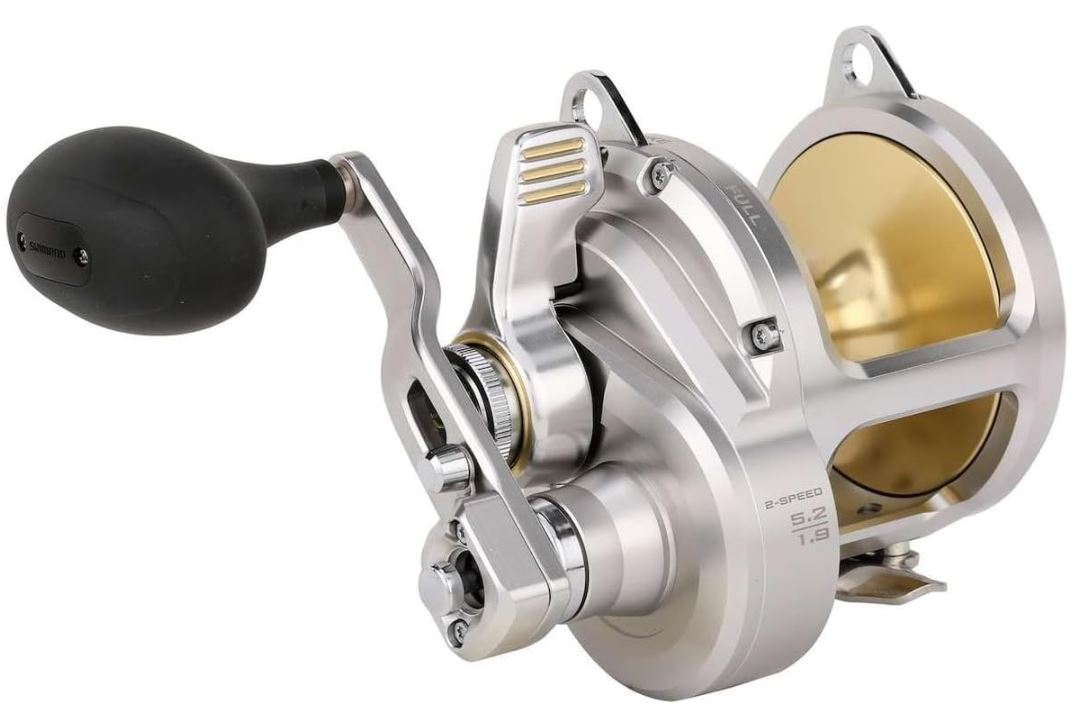
Spinning or conventional? It’s one of the most common questions in saltwater fishing — and the answer depends entirely on what you’re fishing for, where you’re fishing, and how much experience you have.
The short version: spinning reels are easier to use, better for casting light baits, and ideal for surf fishing and finesse applications. Conventional reels deliver more power, better line capacity, and superior drag performance for big fish and heavy tackle. Most serious SoCal anglers own both.
This guide breaks down exactly when to use each type, with specific recommendations for Southern California species and situations.
Quick Comparison
| Factor | Spinning Reel | Conventional Reel |
|---|---|---|
| Ease of use | Very easy — no backlash risk | Moderate — requires thumb control |
| Casting distance | Excellent with light lures | Good, but risk of backlash (birdnest) |
| Drag power | Good (8–20 lbs typical) | Excellent (15–50+ lbs) |
| Line capacity | Moderate | High — holds more heavier line |
| Cranking power | Lower gear ratio leverage | Higher — two-speed options available |
| Best line class | 8–25 lb | 20–80+ lb |
| Price range | $50–$400 | $100–$800+ |
When to Use a Spinning Reel
Surf fishing. Spinning reels are the clear winner from shore. They cast farther with lighter weights, don’t backlash in wind, and are easier to use when you’re standing in the surf. A 4000–5000 size spinning reel is the standard for SoCal surf fishing. See our guide to the best surf fishing reels.
Light line applications (8–20 lb). When you’re fishing light tackle for calico bass, spotfin croaker, halibut in the bays, or other inshore species, spinning reels give you better casting performance and more natural bait presentation.
Throwing swimbaits and light jigs. If you’re casting swimbaits for halibut or light jigs for calico bass, spinning reels let you work lighter lures more effectively. The bail closure and line management is more forgiving than a conventional for repetitive casting.
Beginners. If you’re new to saltwater fishing, start with spinning. Zero risk of backlash, intuitive operation, and you’ll spend more time fishing instead of untangling line. You can always step up to conventional later.
Pier and jetty fishing. The casting advantage of spinning reels makes them ideal for reaching fish from structures where casting distance matters.
When to Use a Conventional Reel
Party boat fishing (20–40 lb class). Conventional reels dominate on SoCal sportfishing boats. When you’re dropping heavy jigs, fighting yellowtail on 30lb, or winding up rockfish from deep water, conventional reels provide the cranking power and drag performance that spinning reels can’t match. See our guides to best 20lb reels, best 30lb reels, and best 40lb+ reels.
Yellowtail fishing. A strong yellowtail will run 100+ yards of line off your reel. Conventional reels with 15–25 lbs of drag and 300+ yards of capacity are the standard for targeting yellows. Check our best reel for yellowtail guide.
Tuna fishing. Whether it’s bluefin or yellowfin, tuna require heavy drag, massive line capacity, and grinding power. Two-speed conventional reels are the standard for anything over 30 lbs — and they’re essential for 50lb+ tuna. See our best reel for bluefin tuna guide.
Trolling. Conventional reels are designed for trolling applications. The spool design handles the constant pressure of dragging lures at speed, and the clicker system lets you know when a fish hits without holding the rod.
Surface iron fishing. Throwing heavy surface irons and jigs for yellowtail requires the kind of casting distance and retrieve speed that conventional reels deliver. Experienced iron fishermen prefer conventional reels for the higher gear ratios and better casting control.
Bottom fishing (deep). When you’re dropping to 200+ feet for rockfish, lingcod, or sheephead, conventional reels with low gear ratios make cranking up heavy fish from depth manageable. Spinning reels don’t have the mechanical advantage for this application.
The SoCal Arsenal: You Need Both
Most experienced SoCal anglers end up with a mix of both types. Here’s what a well-rounded setup looks like:
Setup 1 — Surf/Inshore (spinning): 4000–5000 spinning reel on a 9–10 foot surf rod spooled with 20lb braid and a fluorocarbon leader. Use it for: surf fishing halibut and perch, bay fishing, casting swimbaits, light rock fishing. This covers your shore fishing needs.
Setup 2 — Party boat standard (conventional): Medium conventional reel on a 7-foot rod spooled with 30lb braid. Use it for: calico bass, yellowtail, bonito, small tuna on day trips. This is your all-around boat rod and the most-used setup on SoCal sportfishing boats.
Setup 3 — Big game (conventional): Heavy two-speed conventional on an 8-foot rod spooled with 50–65lb braid. Use it for: bluefin tuna, big yellowtail, wahoo on overnight trips. This is the heavy stick you bring when the big fish are biting.
For complete recommendations on pairing rods and reels, see our best rod and reel combo guide.
Spinning vs Conventional by Species
| Target Species | Best Reel Type | Why |
|---|---|---|
| Halibut (surf) | Spinning | Casting distance from shore, light presentations |
| Halibut (boat) | Either | Spinning for swimbaits, conventional for Carolina rigs |
| Calico bass | Either | Spinning for plastics/swimbaits, conventional for iron |
| Yellowtail | Conventional | Drag power and line capacity for long runs |
| White seabass | Conventional | Need 20–30lb drag and heavy line capacity |
| Bluefin tuna | Conventional | Non-negotiable — need 30+ lbs drag, two-speed |
| Yellowfin tuna | Conventional | Same as bluefin — heavy tackle required |
| Dorado | Either | 25lb spinning works; conventional for bigger fish |
| Barred surf perch | Spinning | Light line, long casts from the beach |
| Rockfish | Conventional | Cranking power from deep water |
Common Mistakes
Using a spinning reel for big tuna. Spinning reels above 8000 size exist for tuna, but they’re specialist tools. The drag systems aren’t as durable as conventional reels under prolonged heavy pressure. Unless you’re an experienced angler who specifically wants the challenge, stick with conventional for anything over 40 lbs.
Buying a conventional for surf fishing. A casting conventional (baitcaster) can work from shore, but it requires practice to avoid backlash, especially in wind. For most surf anglers, spinning is the right choice — it lets you focus on fishing instead of managing your reel.
Overspending on one type. It’s better to have a solid $150 spinning reel AND a solid $200 conventional than one $400 reel that only covers half your fishing situations. Versatility matters more than having one premium reel.
Key Features to Compare
Drag system: Conventional reels typically use larger carbon fiber washers that dissipate heat better during long fights. For fish that make extended runs (yellowtail, tuna), this matters. Spinning reels have improved dramatically, but conventional still wins for sustained heavy drag.
Gear ratio: Conventional reels offer two-speed options — high gear for fast retrieves and low gear for power cranking. This is a huge advantage when fighting big fish or working heavy jigs from deep water. Spinning reels are single-speed only.
Line lay: Conventional reels spool line evenly with a level-wind or manual thumb guidance. Spinning reels use an oscillating spool that can cause line twist over time, especially with certain lures. Use a swivel when fishing lures that spin to prevent this.
Corrosion resistance: Both types are available in saltwater-specific models with sealed bearings and corrosion-resistant materials. Always buy reels rated for saltwater use — freshwater reels will corrode quickly in the salt environment. Rinse any reel with fresh water after every trip.
Plan Your Next Trip
- SST Charts — Find what species are in your temperature zone
- Chlorophyll Maps — Locate bait concentrations
- Fleet Tracker — See what boats are catching and where
- Marine Weather — Check conditions before heading out
- AI Fishing Predictions — Get personalized bite forecasts
Related Gear Guides
- Best Surf Fishing Reel
- Best Reel for Yellowtail
- Best Reel for Bluefin Tuna
- Best 20lb Reels for SoCal
- Best Rod & Reel Combos
- Graphite vs Fiberglass Rods
- Braid vs Mono vs Fluorocarbon
Tight lines!