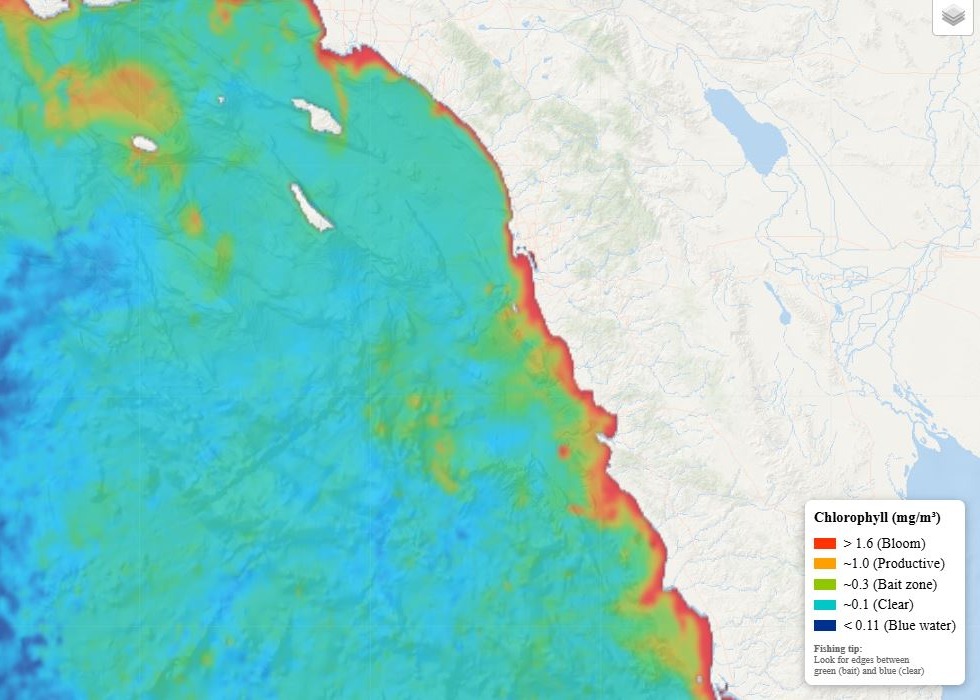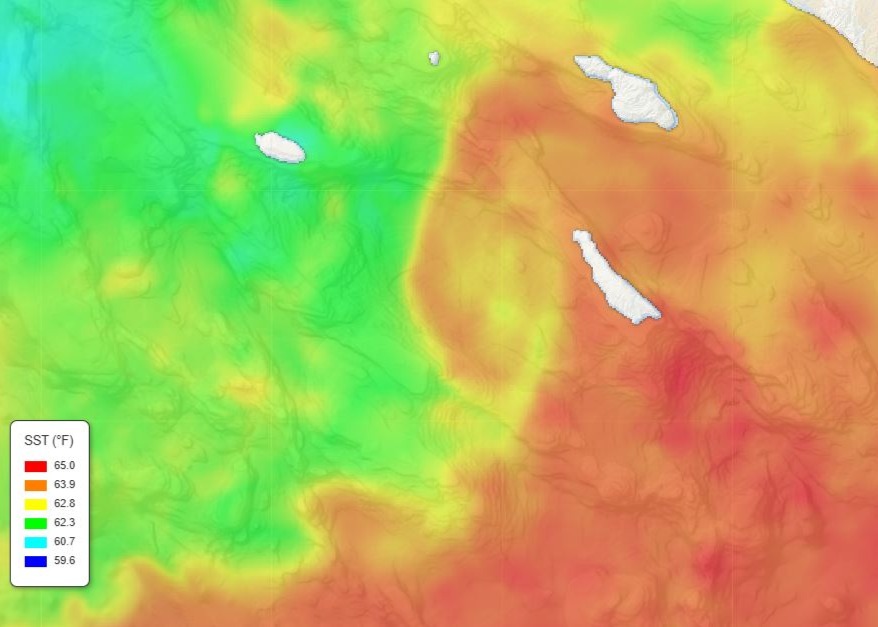
You’ve checked the SST chart, found a sharp temperature break, cross-referenced the chlorophyll map, and run offshore to the coordinates. Now you’re sitting on the edge. What do you actually do?
Edges — temperature breaks, chlorophyll boundaries, color changes, current seams — are the most productive features in the open ocean. But finding one and fishing one effectively are two different skills. This guide covers how to work an edge once you’re on it: trolling strategy, which side to fish for each species, when to switch from trolling to casting, and how to keep the bite going.
Why Edges Hold Fish
Fish don’t spread evenly across the ocean. They concentrate along boundaries for two reasons: food and comfort.
Baitfish use edges as reference points. In open water with no structure, bait schools have nothing to orient to and spread out. When they encounter a temperature change, a current boundary, or a color break, they travel along it rather than cross it. This funnels scattered bait into defined corridors that predators learn to patrol.
Gamefish have thermal preferences — a bluefin might prefer 66°F water but will hunt in 63°F water if that’s where the bait is. The edge lets them stage in comfortable temps while making quick forays into adjacent water to feed. You’ll often find fish holding just on the warm side of a break, facing into the cooler water where bait is getting pushed toward them.
Types of Edges
Temperature breaks. Where water masses of different temperatures meet. The sharper the transition, the more fish concentrate. A 3°F change over a quarter mile is far more productive than the same change over five miles. See our finding temperature breaks guide for how to identify these on the SST chart before your trip.
Chlorophyll edges. Where productive green water meets clean blue water. Bait stays near their food source on the green side; predators prefer the visibility of the blue side. The edge gives both what they want, creating a natural ambush zone. See our chlorophyll map guide for reading these from satellite data.
Color changes. Visible from the boat as a distinct line where green meets blue. This often indicates different water masses meeting and typically corresponds to temperature or chlorophyll boundaries. When you see one on the water, you’re on the edge — start fishing.
Current seams. Where currents of different speeds or directions meet. Debris, kelp paddies, and bait accumulate along the seam. These sometimes show up on SST imagery as elongated temperature features, but they’re often easier to spot on the water — look for lines of foam, debris, or color change.
Structure edges. Where the seafloor rises from deep water to a bank, ridge, or seamount. Upwelling along these features creates productive water above. When a temperature break or chlorophyll edge lines up with a structure edge, you’ve found a high-probability zone.
Which Side Does Each Species Want?
Knowing which side of the edge your target species prefers tells you where to concentrate your trolling passes and casting efforts.
Bluefin tuna — Hold on the cooler side in 60–68°F water, darting into warmer or greener water to feed. When you find bluefin on a break, surface iron (Tady 45) and poppers thrown into the boil are the play. For trolling the edge, run cedar plugs and feathers along the cooler side. Have your 40lb+ setup rigged with 50–65lb braid. When fish are on the meter but won’t eat lures, drop a fly-line rig with a circle hook.
Yellowfin tuna — Prefer the warm side of the edge in 72°F+ water. Less line-shy than bluefin, so brighter trolling lures and faster retrieves work. When mixed with bluefin on the same edge, yellowfin tend to hold slightly warmer and higher in the column.
Dorado — Warm, clean side in 72°F+ water. Dorado concentrate where the edge collects floating debris and kelp paddies. The edge itself pushes floating structure into pockets and bends, and dorado follow it. Run a dorado trolling spread along the blue side while scanning for paddies — when you find one, switch to casting iron and poppers. A 20lb spinning setup handles dorado perfectly.
Yellowtail — Less picky about which side. They’ll feed comfortably in greener, more productive water around kelp and structure. Temperature breaks near islands and reefs are yellowtail magnets. Bring your iron and jigs — the Tady 45 for surface boils, flat-falls when they’re deep on structure. A 30lb class setup with 40lb braid covers it.
White seabass — Productive (green) side of the edge in 59–65°F water, especially where squid are spawning near kelp beds. Fish the kelp edges at dawn with a slider rig and live squid on a 4/0–6/0 circle hook. See our hooks guide for specifics.
Wahoo — The warmest, cleanest side, 76–82°F. They’re speed hunters that patrol defined boundaries. High-speed trolling (8–14 knots) along the warm side with wire leader is the standard approach.
How to Work the Edge
Troll Parallel First
Run your initial trolling passes along the edge, not across it. This keeps your spread in the productive zone for the entire pass. If you troll perpendicular to the break, your lures spend most of their time in open, unproductive water on either side. Parallel passes also help you map how far the edge extends and where it bends — irregularities are often the hottest spots.
Note Which Side Produces
After a few passes, the fish will tell you where they want to be. Mark the GPS coordinates of every strike and look for the pattern — are they consistently on the warm side? The cool side? Right on the line? Adjust your passes to keep the spread in the strike zone.
Work the Bends and Points
Edges rarely run perfectly straight. Where the boundary juts out, curves sharply, or creates a pocket, bait tends to collect. These irregularities are the first places to fish and the last places to leave. On the SST chart, these show up as fingers or bumps in the temperature contour line.
Switch from Trolling to Casting
When fish show on the surface — boils, birds working, bait getting pushed up — it’s time to stop trolling and start casting. Kill the engines upwind of the activity and drift through. Have your iron rod rigged and ready: Tady 45 with Owner ST-66 trebles for tuna and yellowtail, or a popper when fish are blowing up on top. The first lure in the water gets bit — speed matters more than lure selection in the first 30 seconds of a stop.
Don’t Abandon It Too Quickly
An edge that looks dead might just be between feeding windows. If the satellite data shows a strong feature and the fleet tracker has boats nearby, give it time. Pelagics feed in bursts — being in the right place when they switch on matters more than constantly moving to find a new edge.
Chum the Edge
If you’re stopped on a meter mark or a recent boil, toss handfuls of live bait over the side while casting. The combination of flylined baits and artificial lures swimming through a chum line is hard for any fish to resist. Have multiple rods rigged — some with circle hooks for bait, some with iron for casting.
Double Edges: The Highest-Probability Zones
When a temperature break lines up with a chlorophyll edge — warm water meeting cool water at the same place where green productive water meets clean blue water — you’ve found a “double edge.” These are the best features in the ocean for fishing because bait concentrates along both boundaries simultaneously.
Triple edges add bottom structure to the equation. A temperature break that sits over a bank or ridge with a chlorophyll edge in the same area is about as good as offshore fishing gets. Every predator in the area will be working that zone.
Use the SST chart and chlorophyll map together to identify these overlapping features before your trip. See our finding temperature breaks and chlorophyll map guides for the step-by-step workflow.
Plan Your Trip
Find today’s edges before you leave the dock:
- SST Chart — Find the sharpest temperature transitions
- Chlorophyll Map — Identify where chlorophyll edges align with temperature breaks
- Marine Weather — Wind and swell conditions — calm days make edges easier to fish
- Fleet Tracker — See where boats are holding position along edges
- AI Fishing Predictions — Data-driven forecasts combining SST, chlorophyll, and historical data
- SD Fishing Season Calendar — What’s biting this month
Related Guides
- Finding Temperature Breaks
- How to Read SST Charts
- How to Use Chlorophyll Maps
- How to Fish Kelp Paddies
- Swell, Wind & Fishing Conditions
- Best Water Temp for Bluefin Tuna
- Best Water Temp for Yellowfin Tuna
- Best Water Temp for Dorado
- Best Water Temp for Yellowtail
- Best Water Temp for White Seabass
- Best Water Temp for Wahoo
- Best Lures for Tuna
- Best Tuna Jigs
- Best Lures for Dorado
- Best Yellowtail Jigs & Irons
- Best Poppers for Tuna
- Surface Iron Fishing Guide
- Fly-Line Rig for Tuna
- Slider Rig for Live Bait
- Best Reel for Bluefin Tuna
- Best Reel for Yellowtail
- Best 20lb Reels
- Best 8-Foot Offshore Rods
- Best Rod & Reel Combos for SoCal
- Best Hooks by Species
- Circle Hooks vs J Hooks
- Braid vs Mono vs Fluorocarbon
- Best Fishing Line by Pound Test
- Best Fishing Knots
- Overnight Trip Packing List
- SD Fishing Season Calendar
Tight lines!