• Jigs vs Irons vs Poppers for Saltwater Fishing

    Jigs vs Irons vs Poppers for Saltwater Fishing

    Walk into any SoCal tackle shop and you’ll find walls of metal — surface irons, vertical jigs, flat-falls, slow-pitch jigs, poppers, stick baits, and more. If you’re not sure what the difference is or when to throw each one, you’re not alone. The categories overlap, the marketing gets confusing, and different anglers use different names for the same thing.

    This guide breaks it all down. What each type of artificial does, how it works, and — most importantly — when to reach for it on the water.

    The Three Main Categories

    Surface Irons

    Surface irons are heavy metal jigs (3–7 oz) designed to be cast long distances and retrieved rapidly across the surface. They skip, wobble, and dart, imitating a fleeing baitfish. The original SoCal technique — brands like Tady, Salas, and Jri built the tradition. For a complete breakdown of technique and specific models, read our surface iron fishing guide.

    How they work: Cast into or past breaking fish. Retrieve fast — the speed creates the action. The iron’s flat or contoured body generates its own wobble and flash as it moves through the water. No rod-tip action needed, just reel speed.

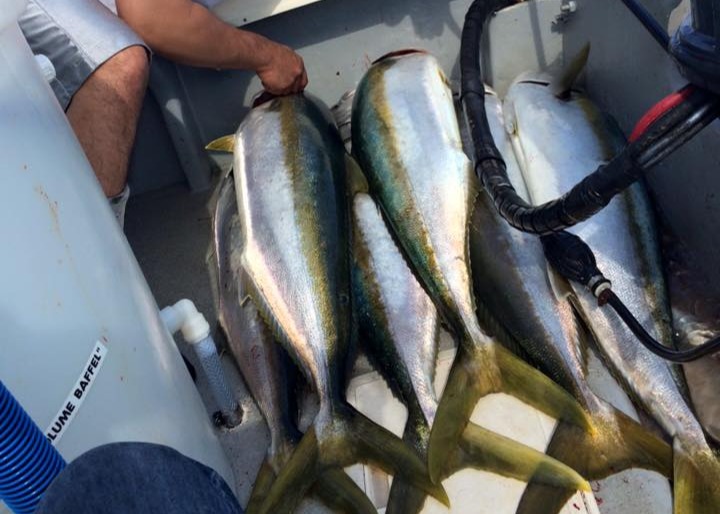
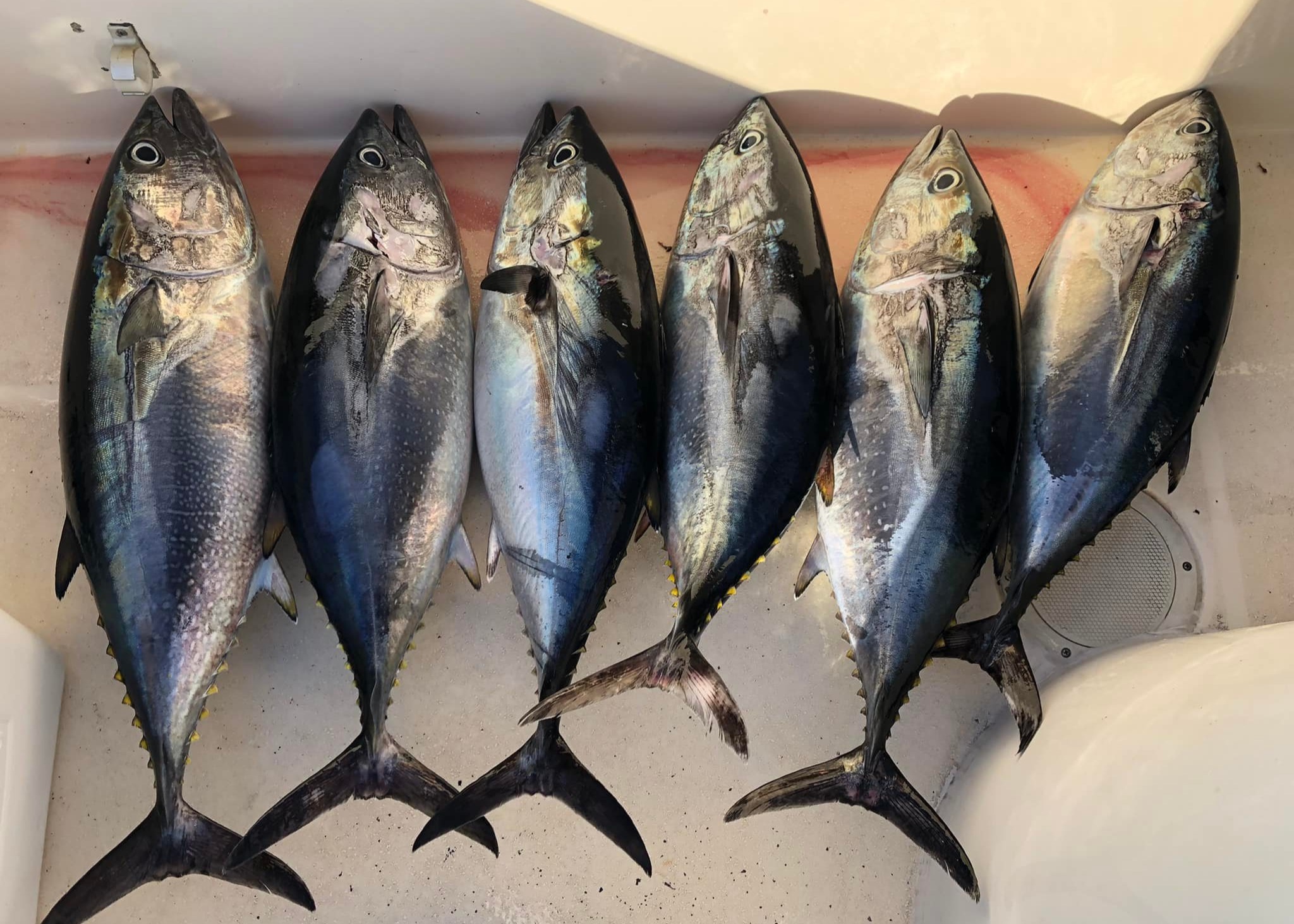
    Best for: Yellowtail, bonito, and bluefin tuna feeding on the surface. Any situation where fish are actively crashing bait in the top 10 feet of the water column.

    Limitations: Requires fish on the surface. Ineffective when fish are deep. Heavy — demanding to cast and retrieve all day. Requires a spinning reel for maximum casting distance.

    Vertical Jigs (Yo-Yo / Flat-Fall / Slow-Pitch)

    Vertical jigs are designed to be dropped straight down and worked with rod action rather than reel speed. This category includes several sub-types.

    Yo-yo (knife) jigs are narrow, heavy jigs that sink fast and are worked with aggressive, sharp rod pumps. Drop to the bottom or to the depth fish are marking, then rip the rod up and let the jig flutter back down. The erratic darting action triggers reaction strikes. Classic models include the Salas CX and Shimano Coltsniper.

    Flat-fall jigs are wide, flat jigs designed to flutter and spiral on the fall. The Shimano Butterfly Flat-Fall changed SoCal fishing when it came out — most of the bites come on the drop as the jig slowly spirals down, imitating a dying baitfish. Less physically demanding than yo-yo jigging because the jig does the work on the fall.

    Slow-pitch jigs are center-weighted jigs designed for a specific rod technique where short, rhythmic rod movements create a slow, hypnotic action. Deadly on finicky fish that won’t commit to aggressive presentations. The Nomad Streaker and Shimano Ocea are popular slow-pitch options.

    Best for: Fish holding on structure or suspended at specific depths. Yellowtail on reefs, rockfish on pinnacles, tuna under kelp paddies. Any time fish aren’t showing on the surface. See our yellowtail jigs guide for specific models.

    Limitations: Limited casting range — primarily a vertical technique. Requires knowing the depth fish are at (electronics help). Slow-pitch and flat-fall need specific rod actions to work properly.

    Poppers & Stick Baits

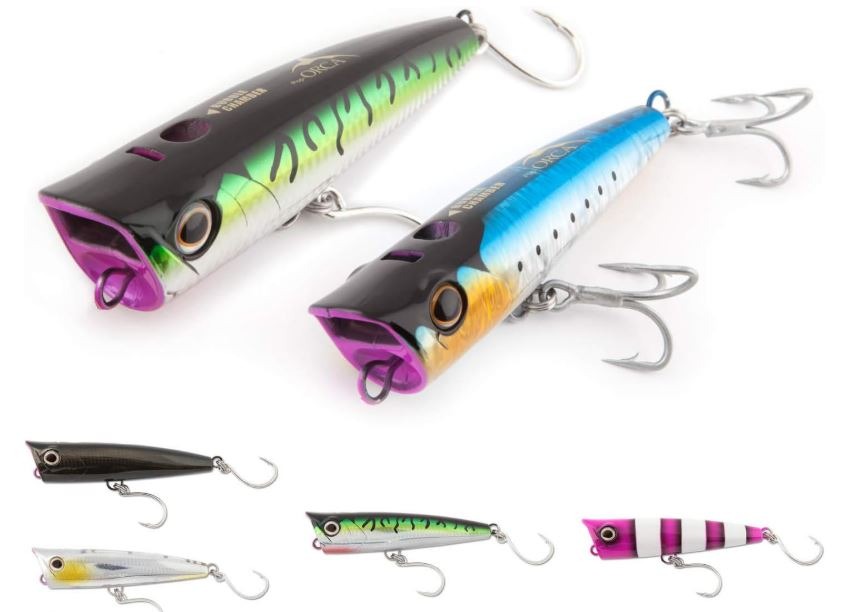
    Poppers are floating or slow-sinking lures with a cupped or angled face that creates a splash, bubble trail, and popping sound when worked with sharp rod twitches. Stick baits (also called pencil poppers or walk-the-dog lures) are similar but create a side-to-side walking action rather than a pop.

    How they work: Cast to or near feeding fish. Work with sharp rod twitches — each twitch pulls the popper forward and creates a commotion on the surface. The splash and noise imitates a baitfish being attacked, which draws predators in from a distance. Stick baits use a rhythmic twitch-pause-twitch to create a zigzag surface walk.

    Best for: Tuna that are following surface iron but not committing. Bluefin that have seen too many irons and need something different. Fish feeding just below the surface where a popper’s commotion draws them up. See our best poppers for tuna guide for specific models.

    Limitations: Shorter casting range than heavy surface irons. Requires more rod technique than iron. Can fatigue your wrist on long sessions. Not effective when fish are deep.

    When to Use What

    ScenarioBest ChoiceWhy
    Fish boiling on surface, wide openSurface ironMaximum casting distance, speed matches frantic bait
    Fish boiling but ignoring ironPopper or stick baitDifferent presentation breaks their pattern
    Fish showing but not breaking surfaceFlat-fall jigFlutter on the fall reaches fish just below surface
    Fish deep on structure/reefYo-yo knife jigFast sink rate, aggressive action at depth
    Fish deep but finickySlow-pitch jigSubtle action triggers cautious fish
    Kelp paddy fishingSurface iron or flat-fallCast iron past paddy; or drop flat-fall under it
    Blind casting with no visible fishSurface iron or popperCovers water, noise draws fish from distance
    Fish on sonar at specific depthFlat-fall to that depthPrecise depth targeting with fluttering action

    Gear Crossover

    One of the nice things about these categories is the gear overlaps. A spinning reel in the 6000–8000 class with a 7-foot medium-heavy fast rod handles both surface irons and poppers. A conventional reel in the 20–30lb class with a medium-heavy rod handles all three vertical jig types. You don’t need a separate setup for each category — two well-chosen outfits cover everything.

    For line, 40–65lb braid is standard across all categories. For surface iron, most anglers skip the leader for maximum casting distance. For vertical jigging, a short 40lb fluorocarbon leader protects against abrasion on structure. For poppers, a 4-foot 50–60lb fluorocarbon leader is standard to prevent bite-offs from toothy tuna.

    Building Your Arsenal

    If you’re starting from zero, here’s the order to buy:

    First purchase: Tady 45 in blue/white and scrambled egg (2 irons). This handles the most common SoCal scenario — fish on the surface — and the Tady 45 is the most versatile iron ever made.

    Second purchase: Shimano Butterfly Flat-Fall in 160g (2 colors — blue sardine and pink). This covers the second most common scenario — fish on structure or suspended — and the flat-fall is the easiest vertical technique to learn.

    Third purchase: A popper in the 60–80g range (1 popper). Nomad Design Chug Norris or Shimano Ocea Bomb Dip are both excellent. This gives you a third option when fish are rejecting irons.

    Fourth purchase: Fill in gaps. A lighter surface iron (Salas 7X), a heavy iron (Tady A1), a slow-pitch jig, and more colors in your flat-falls. At this point you’re covering 95% of situations.

    Reading the Conditions

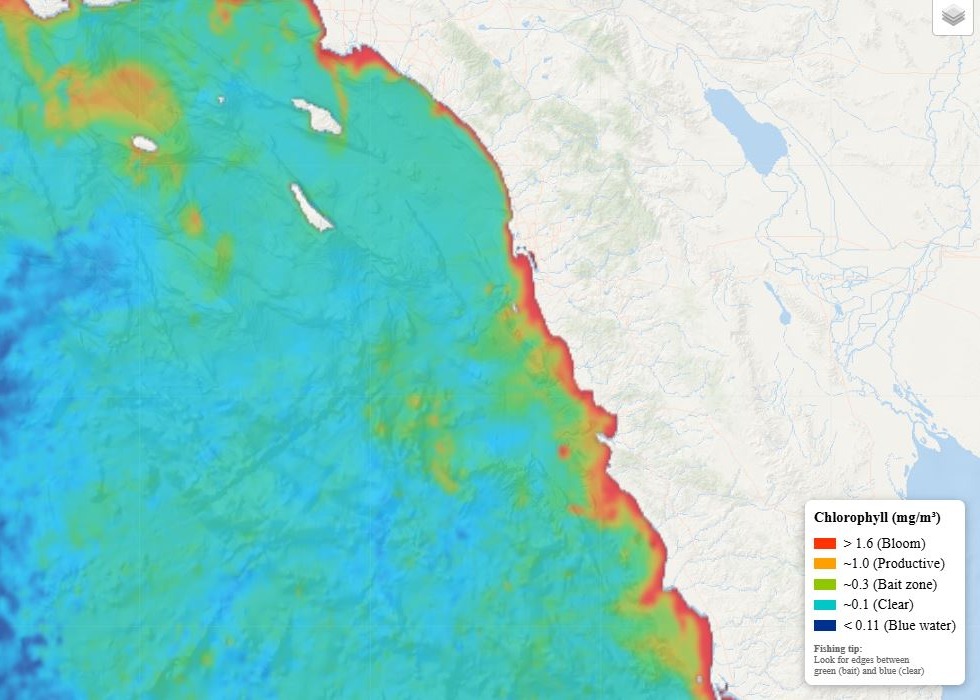
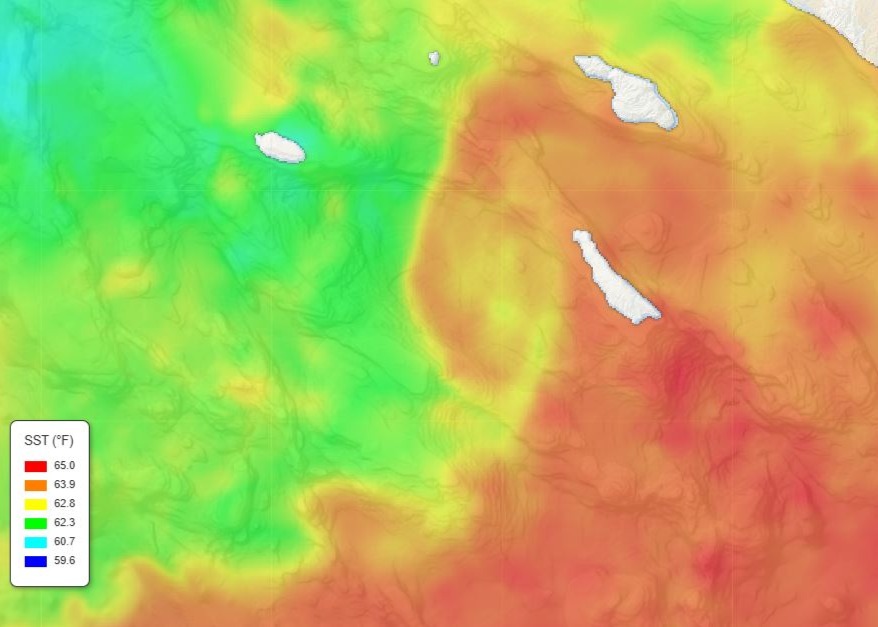
    The ocean tells you what to throw if you know how to read it. Check the SST chart for temperature breaks where bait and predators concentrate. Warm water pushing against cooler coastal water creates feeding zones. The chlorophyll map shows where bait is thickest — green water near blue water edges is prime territory. Our species-specific temperature guides for yellowtail, bluefin, and yellowfin tell you what temperatures each species prefers.

    Plan Your Trip

    Check conditions before you go — the right artificial technique depends on what the fish are doing that day:

    Tight lines!

  • Surface Iron Fishing Guide for Southern California

    Surface Iron Fishing Guide for Southern California

    Surface iron fishing is one of the most exciting and uniquely Southern California techniques in all of saltwater fishing. There’s nothing quite like watching a boil of yellowtail or bluefin erupt on the surface, whipping a heavy chrome jig into the chaos, and feeling a fish hammer it on the retrieve. It’s raw, visual, and demands skill — which is why it’s become a badge of honor among SoCal anglers.

    This guide covers everything you need to know: the right irons, how to cast them, retrieval techniques, gear setup, and when conditions are right for throwing iron.

    What Is Surface Iron Fishing?

    Surface iron refers to heavy metal jigs — typically 3 to 7 ounces of chrome, lead, or zinc — cast to breaking fish and retrieved rapidly across the surface. The iron skips, wobbles, and darts, imitating a panicked baitfish fleeing a school of predators. The visual nature of the strikes is what hooks anglers for life — fish explode on the iron at the surface in full view.

    The technique originated in SoCal in the mid-20th century, and brands like Tady, Salas, and Jri are local legends. While jig fishing exists everywhere, the surface iron tradition — heavy jigs, fast retrieves, brutal strikes — is a distinctly Southern California thing.

    Essential Surface Irons

    You don’t need 50 different irons. A handful of proven models in the right sizes covers every situation. See our best yellowtail jigs guide and best tuna jigs guide for more detail on each model.

    Tady 45 (4.5 oz): The all-around standard. Casts well, has a wide wobble, and catches everything. If you own one iron, own this one. Blue/white, scrambled egg, and mint are the essential colors.

    Salas 7X (3 oz): The finesse option. Lighter weight matches smaller bait profiles. Great when fish are picky or the bait is small. Chrome and blue/white are reliable.

    Tady A1 (6 oz): The distance iron. When you need to reach fish that are boiling far from the boat, the extra weight gets it there. Also produces a deeper, wider action that big fish prefer. Doubles as a tuna iron.

    Salas 6X (4 oz): A narrower profile than the Tady 45, the 6X has a tighter, faster wobble. Excellent when fish want a slimmer bait profile. Many anglers keep both the 45 and 6X and switch between them until the fish tell them which one they want.

    Tady 9 (3.5 oz): A compact, heavy-for-its-size jig that sinks fast and casts like a bullet. Great for wind and when you need to get the iron down quickly before retrieving on the surface.

    Hooks: Replace the factory trebles on every iron you buy with Owner ST-66 trebles in 2/0–3/0. Factory hooks are made from soft wire that straightens on yellowtail and tuna. The ST-66 is 4X strong — it’s the single most important upgrade you can make. See our hooks by species guide for the right treble size for each iron.

    Gear Setup for Surface Iron

    Iron fishing demands specific gear. A spinning reel is preferred for casting distance — the open spool design lets you launch irons much farther than a conventional reel, which matters when fish are boiling 80+ yards away.

    Reel: Spinning reel in the 6000–10000 size class with a fast retrieve ratio (6.0:1 or higher). You need to burn the iron back fast, and a high-speed reel does the work. The reel also needs a strong, smooth drag — yellowtail will smoke you in the kelp if your drag hesitates. See our yellowtail reel guide and bluefin reel guide for specific models.

    Rod: 7–8 foot medium-heavy to heavy power with a fast action. You need the backbone to launch heavy irons and the stiffness to work them aggressively on the retrieve. A soft rod kills the iron’s action. A good iron rod has a moderate butt section for leverage and a fast tip for working the jig. See our 7-foot and 8-foot rod guides for specific models.

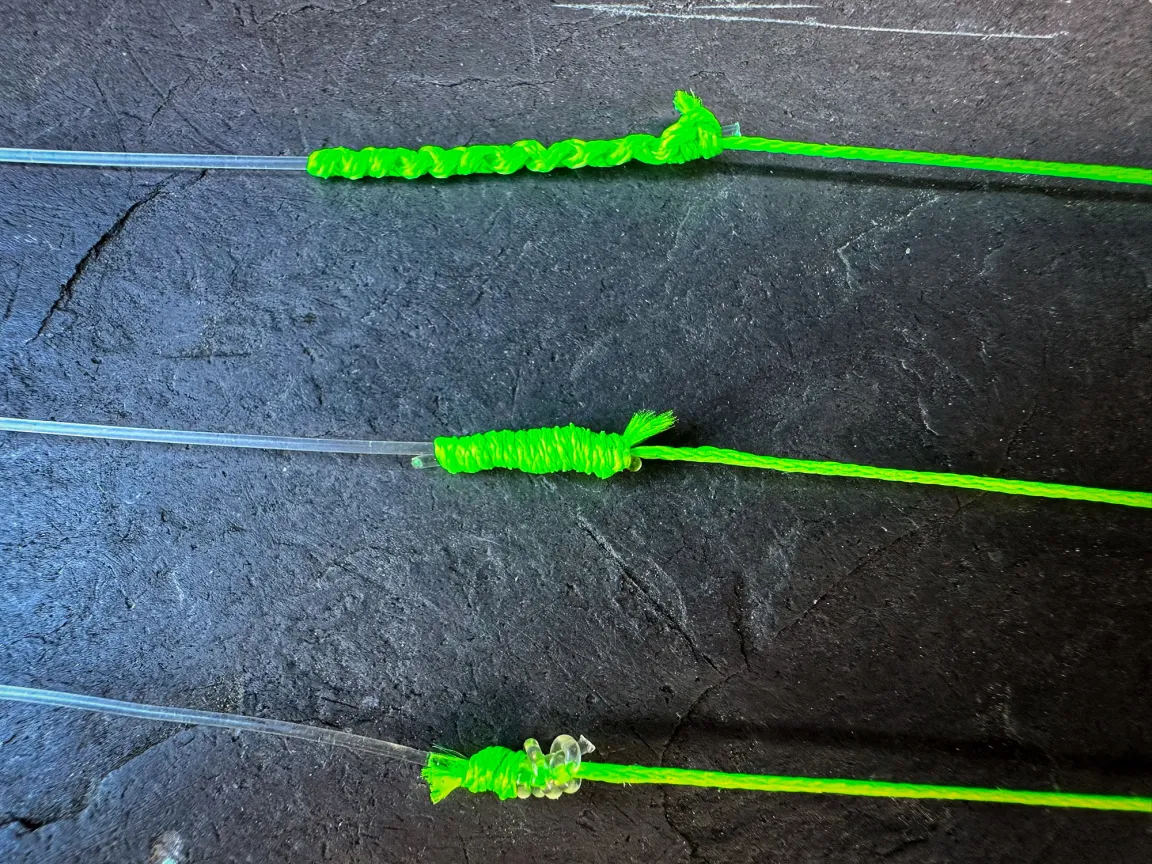
    Line: 40–65lb braided line. Braid’s thin diameter maximizes casting distance, and the zero stretch transmits every jig movement and every bite directly. No leader needed for most iron fishing — the speed of the retrieve and the flash of the iron means fish commit before they can inspect the connection. Some anglers add a short (3-foot) 40lb fluorocarbon leader for extra-clear water or line-shy bluefin. See our fishing line guide for specific braid recommendations and our knots guide for the FG knot connection.

    For complete rod and reel pairing advice, see our best rod and reel combo guide.

    How to Cast Surface Iron

    Casting a 4.5-ounce jig is different from casting a lure. The weight is substantial, and a bad cast can be dangerous to everyone on the boat.

    The overhead cast: Point the rod at the fish, open the bail, and load the rod behind you with a smooth, controlled backswing. Drive forward with your body and arms together — the power comes from your hips and core, not just your arms. Release the line at about 45 degrees above the horizon. The jig should fly in a tight arc, not wobble or helicopter. If it helicopters, you’re not loading the rod smoothly enough.

    The sidearm cast: Used when the wind is at your back or when you need a low trajectory to reach fish just beyond casting range. Same mechanics but on a horizontal plane. Keep the rod tip low and the arc tight.

    The lob: For shorter distances, a simple underhand lob gets the iron out without the drama of a full cast. Useful when fish pop up close to the boat unexpectedly.

    Safety: Always look behind you before casting. A 4.5-ounce chunk of metal traveling at high speed will seriously injure anyone in its path. Call out “casting!” so people around you know to duck. Keep your swing controlled — wild, uncontrolled casts are dangerous and inaccurate.

    Retrieval Techniques

    The speed burn: The most common surface iron retrieve. Crank the reel as fast as you can, keeping the rod tip low and the iron skipping on or just below the surface. The speed triggers a reaction strike from competitive fish. This is exhausting — your forearm will burn after a few casts — but it’s what catches fish in a frenzy.

    The yo-yo burn: Retrieve fast, but periodically drop the rod tip and let the iron sink 5–10 feet before burning it back to the surface. This mimics a baitfish trying to dive for safety and then being forced back up. The change of direction often triggers a strike from following fish that won’t commit to a straight retrieve.

    The slow roll: A moderate-speed retrieve that keeps the iron wobbling just below the surface. Used when fish are boiling lazily or when the bite is slow. Less dramatic but can be more effective when fish aren’t in full attack mode.

    The dead stick: Cast the iron past the boil, let it sink to the depth you think the fish are at, and then begin a medium-speed retrieve. Effective when fish are feeding subsurface and not breaking the top. Watch for subtle taps.

    When to Throw Iron

    Surface iron is at its best when fish are actively feeding on the surface. Look for these signs: boiling water (fish crashing bait on the surface), birds diving and circling, bait balls getting pushed to the surface, and meter marks showing fish high in the water column.

    In SoCal, the best iron fishing happens from late spring through fall when yellowtail and bluefin tuna push into the warm water that moves in. The Coronado Islands, La Jolla kelp, Catalina, and San Clemente Island are legendary iron grounds. Check the SST chart for warm water edges where bait concentrates and predators follow.

    Surface Iron vs Other Techniques

    SituationBest Approach
    Fish actively boiling on surfaceSurface iron (speed burn)
    Fish showing but not committingSwitch to lighter iron or poppers
    Fish deep on structureYo-yo jig or flat-fall
    No surface activity, fish on meterLive bait (fly-line or slider)
    Wind killing your cast distanceHeavy iron (Tady A1) or switch to bait

    For a complete comparison of all the artificial techniques, see our jigs vs irons vs poppers guide.

    When iron isn’t working: If fish are boiling but refusing iron, try poppers — the surface commotion triggers a different response than the flash-and-speed of iron, and fish that have been seeing the same Tady 45 from every angler on the boat will sometimes eat a popper without hesitation. See our dorado lures guide and tuna lures guide for other casting options including swimbaits and spoons.

    Plan Your Trip

    The best iron bite requires warm water, bait, and active fish. Check conditions:

    Related Guides

    Tight lines!

  • Circle Hooks vs J Hooks for Saltwater Fishing

    Circle Hooks vs J Hooks for Saltwater Fishing

    The circle hook vs J hook debate is one of the most common questions in saltwater fishing, and the answer isn’t as simple as “one is better.” Each hook design works fundamentally differently, and choosing wrong for the situation means missed fish, gut-hooked fish, or both. Understanding when to use each one will immediately improve your hookup rate. For specific hook models and sizes by species, see our best hooks by species guide.

    How They Work

    Circle hooks have a point that curves inward toward the shank, forming a circular shape. When a fish eats the bait and swims away, the hook slides through the throat and rotates to catch in the corner of the mouth. The fish essentially hooks itself. The angler’s job is to reel tight — not set the hook. A traditional hookset with a circle hook actually pulls it out of the fish’s mouth.

    J hooks have a point that runs parallel to the shank, forming a J shape. They require the angler to set the hook — when you feel the bite, you swing the rod to drive the point into whatever it touches. J hooks can penetrate anywhere in the fish’s mouth, throat, or gut, which means they hook up in more locations but also cause more deep-hooking.

    When to Use Circle Hooks

    Circle hooks excel in situations where the fish takes the bait and runs, giving time for the hook to rotate into position.

    Tuna on live bait. This is the #1 application for circle hooks in SoCal. When fly-lining sardines or mackerel for bluefin and yellowfin, a circle hook lands in the jaw corner almost every time. The tuna eats and turns, you reel tight, and the hook sets itself. This is critical when fishing lighter leader for picky tuna — a circle hook gives you a solid jaw hookup even on 25lb fluorocarbon, whereas a J hook might bury in the gut and get cut off by the tuna’s teeth. The Owner Mutu Light Circle (5114) in 2/0–4/0 is the go-to for tuna fly-lining — see our hooks guide for the full breakdown. Check our bluefin temperature guide for when to target them.

    Soaking bait from a boat or pier. Any time you’re fishing bait and waiting for a bite — bottom fishing with a dropper loop rig, soaking squid for white seabass, or chunking on anchor — circle hooks dramatically reduce gut-hooking. If you’re not holding the rod and actively watching for bites, circle hooks are the safer choice. The Owner Mutu Circle (5163) is the best all-around option for bait soaking.

    Surf fishing with bait. On a Carolina rig, circle hooks work perfectly. When a halibut picks up the bait and moves off, the circle rotates into the jaw. You don’t need lightning reflexes — just reel down and come tight.

    Catch and release fishing. The jaw-corner hookup of circle hooks means easier, less harmful releases. For undersized fish or species you want to release, circles significantly improve survival rates.

    When to Use J Hooks

    J hooks are better when you need to set the hook yourself and timing is critical.

    Live bait with active rod in hand. When you’re holding the rod, watching the bait, and ready to react instantly — like fishing live bait off the stern for yellowtail — a J hook gives you a direct, immediate hookset. You feel the bite, you swing, and the hook drives home. Some experienced anglers prefer this control over the passive hookup of a circle.

    Trolling. When lures or bait are moving behind the boat, J hooks set on the strike — the fish’s own momentum combined with the boat’s movement drives the point. Most trolling jigs, feathers, and cedar plugs come pre-rigged with J hooks for this reason.

    Artificial lures and jigs. Surface irons, swimbaits, and casting jigs almost exclusively use J-style hooks (or trebles, which are essentially three J hooks joined together). The instant a fish hits the lure, the hookset needs to happen — there’s no bait for the fish to hold onto while a circle hook rotates into position. Replace factory trebles on all your iron with Owner ST-66 trebles — factory hooks straighten on tuna and big yellowtail. See our hooks guide for the right treble size for each jig.

    Short-striking fish. When fish are nipping at baits without committing — common with calico bass in the kelp or sheephead on structure — a J hook lets you drive the point on even a brief contact. A circle hook requires the fish to take the whole bait and turn, which doesn’t happen with short bites.

    Direct Comparison

    FactorCircle HookJ Hook
    Hookset techniqueReel tight, no swingTraditional rod swing
    Hook locationJaw corner (90%+)Varies — jaw, throat, gut
    Gut-hook rateVery lowHigher, especially with bait
    Release survivalExcellentLower if gut-hooked
    Best for bait soakingYesOnly if actively watching
    Best for lures/jigsNoYes
    Learning curveMust resist hookset instinctNatural, intuitive
    Hookup rate (bait)High with proper techniqueHigh with good timing

    Hook Size Guide by Species

    Matching hook size to your target species and bait is just as important as choosing circle vs J. Too big and the fish won’t eat it. Too small and it won’t hold. For specific hook models, wire weights, and point styles, see our complete hooks by species guide.

    SpeciesCircle Hook SizeJ Hook SizeNotes
    Bluefin tuna3/0–5/04/0–6/0Match to bait size, lighter wire for picky fish
    Yellowfin tuna2/0–4/03/0–5/0Circle preferred for live bait fly-lining
    Yellowtail2/0–4/02/0–4/0J-hook for iron, circle for bait
    White seabass4/0–6/04/0–6/0Circle with squid, J with lures
    Halibut2/0–4/01/0–3/0Circle on Carolina rig is deadly
    Calico bass1/0–2/01/0–2/0J-hook for swimbaits and reactionary
    Rockfish2/0–4/02/0–4/0Either works on dropper loops
    Corbina/perch2–1/04–1/0Small circle on light Carolina rigs

    The Bottom Line

    Use circle hooks when bait fishing and you want consistent jaw hookups with minimal gut-hooking — especially for tuna, halibut, and any catch-and-release scenario. Use J hooks when fishing artificial lures, when you need an immediate hookset, or when fish are short-striking. Many SoCal anglers carry both and switch based on the situation, which is the smart play.

    For more on rigging with these hooks, check our guides on Carolina rigs, dropper loop rigs, fly-line rigs for tuna, and slider rigs for live bait. For the specific hook models we recommend — including Owner circle hooks, Owner J hooks, and Owner ST-66 trebles — see our best hooks by species guide.

    Plan Your Trip

    Check conditions before heading out:

    Related Guides

    Tight lines!

    The circle hook vs J hook debate is one of the most common questions in saltwater fishing, and the answer isn’t as simple as “one is better.” Each hook design works fundamentally differently, and choosing wrong for the situation means missed fish, gut-hooked fish, or both. Understanding when to use each one will immediately improve your hookup rate. For specific hook models and sizes by species, see our best hooks by species guide.

    How They Work

    Circle hooks have a point that curves inward toward the shank, forming a circular shape. When a fish eats the bait and swims away, the hook slides through the throat and rotates to catch in the corner of the mouth. The fish essentially hooks itself. The angler’s job is to reel tight — not set the hook. A traditional hookset with a circle hook actually pulls it out of the fish’s mouth.

    J hooks have a point that runs parallel to the shank, forming a J shape. They require the angler to set the hook — when you feel the bite, you swing the rod to drive the point into whatever it touches. J hooks can penetrate anywhere in the fish’s mouth, throat, or gut, which means they hook up in more locations but also cause more deep-hooking.

    When to Use Circle Hooks

    Circle hooks excel in situations where the fish takes the bait and runs, giving time for the hook to rotate into position.

    Tuna on live bait. This is the #1 application for circle hooks in SoCal. When fly-lining sardines or mackerel for bluefin and yellowfin, a circle hook lands in the jaw corner almost every time. The tuna eats and turns, you reel tight, and the hook sets itself. This is critical when fishing lighter leader for picky tuna — a circle hook gives you a solid jaw hookup even on 25lb fluorocarbon, whereas a J hook might bury in the gut and get cut off by the tuna’s teeth. The Owner Mutu Light Circle (5114) in 2/0–4/0 is the go-to for tuna fly-lining — see our hooks guide for the full breakdown. Check our bluefin temperature guide for when to target them.

    Soaking bait from a boat or pier. Any time you’re fishing bait and waiting for a bite — bottom fishing with a dropper loop rig, soaking squid for white seabass, or chunking on anchor — circle hooks dramatically reduce gut-hooking. If you’re not holding the rod and actively watching for bites, circle hooks are the safer choice. The Owner Mutu Circle (5163) is the best all-around option for bait soaking.

    Surf fishing with bait. On a Carolina rig, circle hooks work perfectly. When a halibut picks up the bait and moves off, the circle rotates into the jaw. You don’t need lightning reflexes — just reel down and come tight.

    Catch and release fishing. The jaw-corner hookup of circle hooks means easier, less harmful releases. For undersized fish or species you want to release, circles significantly improve survival rates.

    When to Use J Hooks

    J hooks are better when you need to set the hook yourself and timing is critical.

    Live bait with active rod in hand. When you’re holding the rod, watching the bait, and ready to react instantly — like fishing live bait off the stern for yellowtail — a J hook gives you a direct, immediate hookset. You feel the bite, you swing, and the hook drives home. Some experienced anglers prefer this control over the passive hookup of a circle.

    Trolling. When lures or bait are moving behind the boat, J hooks set on the strike — the fish’s own momentum combined with the boat’s movement drives the point. Most trolling jigs, feathers, and cedar plugs come pre-rigged with J hooks for this reason.

    Artificial lures and jigs. Surface irons, swimbaits, and casting jigs almost exclusively use J-style hooks (or trebles, which are essentially three J hooks joined together). The instant a fish hits the lure, the hookset needs to happen — there’s no bait for the fish to hold onto while a circle hook rotates into position. Replace factory trebles on all your iron with Owner ST-66 trebles — factory hooks straighten on tuna and big yellowtail. See our hooks guide for the right treble size for each jig.

    Short-striking fish. When fish are nipping at baits without committing — common with calico bass in the kelp or sheephead on structure — a J hook lets you drive the point on even a brief contact. A circle hook requires the fish to take the whole bait and turn, which doesn’t happen with short bites.

    Direct Comparison

    FactorCircle HookJ Hook
    Hookset techniqueReel tight, no swingTraditional rod swing
    Hook locationJaw corner (90%+)Varies — jaw, throat, gut
    Gut-hook rateVery lowHigher, especially with bait
    Release survivalExcellentLower if gut-hooked
    Best for bait soakingYesOnly if actively watching
    Best for lures/jigsNoYes
    Learning curveMust resist hookset instinctNatural, intuitive
    Hookup rate (bait)High with proper techniqueHigh with good timing

    Hook Size Guide by Species

    Matching hook size to your target species and bait is just as important as choosing circle vs J. Too big and the fish won’t eat it. Too small and it won’t hold. For specific hook models, wire weights, and point styles, see our complete hooks by species guide.

    SpeciesCircle Hook SizeJ Hook SizeNotes
    Bluefin tuna3/0–5/04/0–6/0Match to bait size, lighter wire for picky fish
    Yellowfin tuna2/0–4/03/0–5/0Circle preferred for live bait fly-lining
    Yellowtail2/0–4/02/0–4/0J-hook for iron, circle for bait
    White seabass4/0–6/04/0–6/0Circle with squid, J with lures
    Halibut2/0–4/01/0–3/0Circle on Carolina rig is deadly
    Calico bass1/0–2/01/0–2/0J-hook for swimbaits and reactionary
    Rockfish2/0–4/02/0–4/0Either works on dropper loops
    Corbina/perch2–1/04–1/0Small circle on light Carolina rigs

    The Bottom Line

    Use circle hooks when bait fishing and you want consistent jaw hookups with minimal gut-hooking — especially for tuna, halibut, and any catch-and-release scenario. Use J hooks when fishing artificial lures, when you need an immediate hookset, or when fish are short-striking. Many SoCal anglers carry both and switch based on the situation, which is the smart play.

    For more on rigging with these hooks, check our guides on Carolina rigs, dropper loop rigs, fly-line rigs for tuna, and slider rigs for live bait. For the specific hook models we recommend — including Owner circle hooks, Owner J hooks, and Owner ST-66 trebles — see our best hooks by species guide.

    Plan Your Trip

    Check conditions before heading out:

    Related Guides

    Tight lines!

  • Best Reels for Bluefin Tuna — What You Actually Need

    Best Reels for Bluefin Tuna — What You Actually Need

    Bluefin tuna are the most demanding fish you’ll hook in Southern California waters. A 50-pound bluefin can run 300 yards in the first burst, fight for 30+ minutes, and put sustained pressure on your drag system that most reels simply can’t handle. When your reel fails on a bluefin, you don’t get a second chance.

    This guide covers exactly what you need in a bluefin reel — drag power, line capacity, two-speed vs. single speed, and where to put your money at every budget level.

    ⚡ Short Answer

    Most SoCal bluefin anglers need a two-speed conventional reel in the 40–50lb class with at least 25 lbs of max drag and 500+ yards of 50lb braid capacity. That covers everything from school-size 30-pounders to the occasional cow.

    👉 See our top picks: Best 40lb+ Reels for Tuna Fishing — specific models reviewed with pros, cons, and pricing.

    ⚡ Quick Picks

    Best overall: Shimano Talica 16 II — the SoCal bluefin standard. Smooth two-speed, 25+ lbs of drag.

    Best for giants: Shimano Talica 20 II — more drag, more capacity for 150+ lb fish.

    Best premium: Accurate Fury FX2 500N — smoothest drag in the business, built in California.

    Best value: Penn Fathom II 30 SD — legitimate tuna reel at a fraction of the price.

    Best spinning: Shimano Saragosa SW 14000 — for casting iron to surface bluefin.

    Now here’s everything you need to know to make the right choice.

    What a Bluefin Reel Must Have

    Drag: 25–40+ lbs of max drag. This is the single most important spec. Bluefin make long, powerful runs and you need to apply serious pressure to turn them before they spool you or reach structure. Your reel should deliver at least 25 lbs of max drag — and the drag must stay smooth and consistent under sustained load. Carbon fiber drag washers that dissipate heat are essential. Cheap drags overheat and fade, and a bluefin will exploit that instantly.

    Line capacity: 500+ yards of 50–65lb braid. A big SoCal bluefin can run 200–300 yards on the first pull. You need a minimum of 500 yards of heavy braided line (50–65lb) to survive those runs with a safety margin. Running out of line on a tuna is one of the most frustrating experiences in fishing — don’t let it happen. See our best fishing line by pound test guide for specific braid recommendations.

    Two-speed gearing. This is nearly non-negotiable for serious bluefin fishing. Two-speed reels let you switch between high gear (for fast retrieves and surface work) and low gear (for grinding power when a tuna goes deep and decides to circle). Fighting a 50+ pound fish from 200 feet deep in high gear only will destroy your back and potentially your reel gears.

    Heavy-duty construction. Machined aluminum frame, stainless steel gears, sealed bearings. Bluefin fights put extreme stress on every component. Stamped frames flex under load, weak gears strip, and unsealed bearings corrode. This is not the place to cut corners.

    Conventional vs Spinning for Bluefin

    Conventional reels are the standard for bluefin tuna. They deliver more drag power, more line capacity, and two-speed gearing — all critical advantages for this species.

    Large spinning reels (10000–18000 size) are used by some experienced anglers, particularly for casting poppers and stick baits to surface-feeding tuna. But spinning reels at this size are expensive, heavy, and their drag systems generally don’t hold up as well as conventional under prolonged stress. For the vast majority of anglers, conventional is the right choice.

    Reel Size Classes for Bluefin

    40lb class (medium conventional): The starting point for bluefin fishing. Handles fish in the 30–60lb range effectively. Good for school-size bluefin that SoCal boats encounter on day trips. Holds 500+ yards of 50lb braid with adequate drag. See our full 40lb+ reel reviews →

    50lb class: The sweet spot for SoCal bluefin. These reels hold 600+ yards of 65lb braid and deliver 30+ lbs of smooth drag. This is what most serious bluefin anglers run on overnight trips out of San Diego. They handle everything from 40-pound school fish to the occasional 100+ pound cow.

    60–80lb class (large conventional): For targeting trophy bluefin over 100 lbs or fishing long-range trips where you might encounter giant tuna. These are heavy, expensive reels that most anglers don’t need for typical SoCal bluefin. But if you’re making multi-day trips to Guadalupe Island or fishing known big-fish zones, stepping up makes sense.

    Not sure what class you need? If this is your first dedicated tuna reel, go with the 40–50lb class. It covers 90% of SoCal bluefin scenarios and pairs perfectly with a quality 8-foot offshore rod.

    Top Bluefin Reels by Budget

    For detailed reviews with specific models, features, and current pricing, see our Best 40lb+ Reels for Tuna Fishing guide. Here’s what to prioritize at each budget level:

    Entry level ($250–$400): At this price, you can find a solid two-speed conventional reel with 20+ lbs of drag and enough capacity for 50lb braid. These reels handle school-size bluefin (20–50 lbs) well. Look for carbon fiber drags and an aluminum frame. Penn and Shimano both offer strong options here.

    Mid-range ($400–$700): This bracket gets you into reels with 30+ lbs of max drag, larger spools for 600+ yards of heavy braid, and significantly better gear quality. Two-speed is standard at this price. These reels can handle bluefin up to 80+ lbs and are the most popular choice for SoCal overnight trips. Shimano, Daiwa, Okuma, and Penn all compete aggressively here.

    Premium ($700–$1,200+): Top-tier bluefin reels with 35–50 lbs of drag, precision machined components, and the kind of build quality that handles hundred-pound fish without breaking a sweat. Accurate, Shimano Talica/Trinidad, and Avet are the names most SoCal tuna anglers reach for at this level. These are buy-it-once reels that will last years of hard use.

    Setting Up Your Bluefin Reel

    Line: Spool with 50–65lb braid. Some anglers add a mono topshot (first 50–100 yards of mono over the braid) to provide stretch that cushions the initial strike and helps prevent pulled hooks on bait presentations. Our fishing line guide covers the best brands at every pound test.

    Leader: 40–80lb fluorocarbon, 6–15 feet long. Leader length depends on water clarity — clear water calls for longer leaders so the visible braid is farther from the fish. Connect braid to fluoro with an FG knot.

    Terminal: Circle hooks (4/0–7/0) for live bait, or various jigs and poppers for artificial presentations. Palomar knot or San Diego Jam for terminal connections — see our fishing knots guide for step-by-step instructions.

    Hooks: Check our best hooks by species guide for specific hook sizes and styles matched to bluefin presentations.

    Drag setting: Set your strike drag at about 1/3 of your weakest connection (usually the leader). For 60lb fluoro leader, that’s about 20 lbs of strike drag. Set it at home with a scale — don’t guess on the water. You can bump drag up during the fight once the fish is hooked and the line is already under tension.

    Rod Pairing

    A bluefin reel needs to be matched with the right rod:

    Bait fishing: An 8-foot medium-heavy to heavy rod with moderate action. The length provides lifting leverage and the moderate flex cushions the line during surges. Fiberglass or composite blanks are preferred for their shock absorption.

    Jigging: A shorter 5.5–6.5 foot heavy-action rod with a fast tip. These are stiffer for working jigs and have the backbone to fight fish vertically. Graphite or composite blanks work well here.

    Casting poppers/iron: A 7-foot to 8-foot heavy-action rod with a fast tip for launching heavy poppers and surface irons. This is where graphite rods excel — lighter weight for repeated casting.

    For complete rod and reel pairing advice, see our best rod and reel combo guide.

    Common Mistakes

    Underspending on the reel. Bluefin is the one species where a cheap reel will cost you fish. A $150 reel that “works fine for yellowtail” will fail when a 60-pound bluefin tests the drag for 20 straight minutes. Budget at least $300+ for a dedicated bluefin reel.

    Not enough line capacity. If you can’t hold 500+ yards of 50lb braid, you’re gambling every time a big fish takes a long run. Don’t put yourself in a position where you’re staring at a spool with 20 yards left and a fish still running.

    Single-speed for big fish. A single-speed reel can catch bluefin, but you’ll work three times as hard during the fight. When a tuna goes deep and starts circling, you need low gear. Paying the premium for two-speed is one of the best investments in tuna fishing.

    Not testing drag before the trip. Set your drag at home with a scale. Most anglers run their drag too loose because they’re afraid of breaking off. On bluefin, you need serious drag pressure to control the fight. Know your numbers before you leave the dock.

    Frequently Asked Questions

    What size reel do I need for bluefin tuna?

    A 40–50lb class two-speed conventional reel covers most SoCal bluefin scenarios. For school-size fish (30–60 lbs), the 40lb class is ideal. For targeting larger fish on overnight or multi-day trips, step up to a 50lb class for extra line capacity and drag power.

    Can I use a spinning reel for bluefin?

    You can, but conventional reels are strongly preferred. Spinning reels in the 10000–18000 size work for casting poppers to surface fish, but they lack the two-speed gearing and sustained drag performance that conventional reels provide for extended bluefin fights.

    How much drag do I need for bluefin tuna?

    At least 25 lbs of max drag for school-size bluefin, and 30–40+ lbs for larger fish. The drag must be smooth and heat-resistant — carbon fiber drag washers are essential. Set your strike drag at 1/3 of your weakest connection.

    What line should I use for bluefin tuna?

    50–65lb braided line with a 40–80lb fluorocarbon leader. You need at least 500 yards of braid on the spool. See our best fishing line guide for specific brand recommendations at every pound test.

    What’s the best rod to pair with a bluefin reel?

    An 8-foot medium-heavy to heavy rod is the most versatile choice. Fiberglass or composite blanks absorb shock better during long fights. See our combo guide for matched pairings.

    Plan Your Bluefin Trip

    Related Guides

    Tight lines!

  • Braid vs Mono vs Fluorocarbon — Which Fishing Line Should You Use?

    Braid vs Mono vs Fluorocarbon — Which Fishing Line Should You Use?

    Your fishing line is the only connection between you and the fish. Choose the wrong one and you’ll lose fish, miss bites, and waste money. Choose the right one — and match it to the right situation — and your catch rate goes up immediately.

    Here’s the short answer most SoCal anglers land on: braided mainline + fluorocarbon leader. It’s the standard setup for 90% of saltwater applications from surf to tuna. But understanding why — and when to break from this standard — will make you a better angler. For specific line weight recommendations by species, see our best fishing line by pound test guide.

    Quick Comparison

    Property Braided Monofilament Fluorocarbon
    Diameter Thinnest (per lb test) Thickest Medium
    Stretch Near zero High (25–30%) Low (5–10%)
    Visibility Visible (colored) Low (clear) Nearly invisible underwater
    Abrasion resistance Low Good Excellent
    Sensitivity Excellent Low Good
    Sinks or floats Floats Slow sink Sinks
    UV resistance Excellent Poor (degrades) Excellent
    Cost High upfront, lasts long Cheap Most expensive per yard
    Knot strength Needs specific knots Easy to knot Needs wet knots, can be stiff

    Braided Line: Your Mainline

    Braid is the standard mainline for SoCal saltwater fishing. Here’s why:

    Thinner diameter = more capacity. 30lb braid has the same diameter as 8lb mono. This means you can fit 300+ yards of heavy line on a reel that would only hold 150 yards of equivalent mono. When a yellowtail or tuna takes a 200-yard run, that extra capacity is the difference between landing the fish and getting spooled.

    Zero stretch = instant sensitivity. Braid doesn’t stretch, so every movement of your lure and every bite transmits directly to your rod tip. You feel structure, detect subtle bites (critical for halibut on swimbaits), and get faster hooksets.

    Longevity. Braid doesn’t degrade from UV exposure or develop “memory” (coils from being spooled). A quality braid can last a year or more before needing replacement, while mono should be replaced every few months.

    When NOT to use braid as mainline: Braid is visible in the water and has zero abrasion resistance against rocks and structure. This is why you always use a leader — never tie braid directly to your hook or lure (except for some topwater applications like surface iron where visibility doesn’t matter and maximum casting distance is the priority).

    Fluorocarbon: Your Leader Material

    Fluorocarbon is the standard leader material for saltwater fishing. It bridges the gap between braid’s sensitivity and the fish’s wariness:

    Nearly invisible underwater. Fluorocarbon has a refractive index close to water, making it almost invisible to fish. In clear SoCal water, this is a major advantage — line-shy fish like halibut and white seabass can see mono but struggle to detect fluoro.

    Abrasion resistant. Fluorocarbon holds up against rocks, kelp, and sharp gill plates better than braid or mono. When your leader is rubbing against a yellowtail’s body during the fight, fluoro survives. Braid would be cut in seconds.

    Sinks. Fluorocarbon sinks naturally, which keeps your bait or lure down in the water column. This is important for Carolina rigs, fly-line rigs, and any bottom-fishing application.

    Low stretch. Not quite zero like braid, but much less than mono. You maintain good sensitivity through the leader while getting the shock absorption that braid can’t provide.

    Tips for fluorocarbon: Always wet your knots before cinching — dry fluoro generates heat that weakens the line. Use a Palomar knot for terminal connections and an FG knot for braid-to-leader connections. Fluoro is stiffer than mono, so leave a slightly longer tag end to prevent slippage.

    Monofilament: Still Has Its Place

    Mono gets overlooked in the braid era, but it still has legitimate applications:

    Trolling. Mono’s stretch acts as a shock absorber when a fish strikes a trolled lure at speed. This prevents pulled hooks and broken leaders. Many experienced trollers run mono mainline specifically for this cushion effect — it’s especially valuable for dorado and tuna trolling spreads with cedar plugs and feathers.

    Live bait soaking. When fishing live bait for tuna or white seabass, mono’s stretch gives the fish time to eat the bait without feeling hard resistance. This is why some captains recommend mono topshots on tuna rigs.

    Budget option. Mono is dramatically cheaper than braid or fluoro. If you’re filling multiple reels and budget is a concern, mono mainline with a short fluoro leader still catches plenty of fish. It won’t perform as well, but it works.

    Surf fishing (in certain conditions). Some surf anglers prefer mono because it’s less likely to catch wind and create tangles on long casts. The stretch can also help absorb wave surge when fighting fish in the surf.

    Leader material (budget). Mono leaders work fine in murky water or when targeting less line-shy species. A 20lb mono leader is significantly cheaper than 20lb fluoro and will get the job done when conditions aren’t finesse-demanding.

    The SoCal Standard: Braid + Fluoro Leader

    Here’s how to set up the standard rig for different SoCal scenarios. For specific line weight and brand recommendations, see our fishing line by pound test guide.

    Surf fishing: 20lb braid mainline → 15–20lb fluorocarbon leader (3–4 feet) → Palomar knot to hook. Connect braid to leader with an FG knot or double uni. Pair with a 4000–5000 spinning reel on a 9–10 foot rod.

    Party boat (yellowtail/calico): 30lb braid → 25–30lb fluoro leader (4–6 feet) → Palomar knot to jig or hook. Pair with a 20lb conventional reel or 30lb reel on a 7-foot rod. See our yellowtail reel guide for specific models.

    Tuna (bluefin/yellowfin): 50–65lb braid → 40–60lb fluoro leader (6–15 feet depending on water clarity) → circle hook or jig. The leader length matters more for tuna — clear water = longer leader. Pair with a 40lb+ conventional reel on an 8-foot rod. See our bluefin reel guide for complete recommendations.

    Halibut (boat or shore): 15–20lb braid → 12–20lb fluoro leader (2–3 feet) → Carolina rig or swimbait. Light leader is important — halibut can be line-shy in clear water.

    Braid-to-Leader Knots

    The connection between your braid mainline and fluorocarbon leader is the weakest point in your system. Use the right knot:

    FG Knot: The strongest braid-to-leader connection. Retains nearly 100% of line strength and creates a slim, low-profile knot that slides through guides easily. It takes practice to tie, but it’s worth learning for any application over 20lb. See our complete knot guide.

    Double Uni Knot: Easier to tie than the FG and still retains 85–90% strength. Good for lighter applications (under 30lb) or when you need to retie quickly on the water.

    Alberto Knot: A modified version of the Uni that works well for connecting braid to heavier fluoro (30lb+). Good compromise between strength and ease of tying.

    For terminal connections (line to hook/lure), the Palomar knot retains 90–95% strength on all three line types and should be your go-to. See our hooks by species guide for the right hook to tie it to.

    Choosing Pound Test

    Target Species Braid Mainline Fluoro Leader
    Surf perch, croaker 10–15lb 8–12lb
    Halibut 15–20lb 12–20lb
    Calico bass 20–30lb 15–25lb
    Yellowtail 30–40lb 25–40lb
    White seabass 30–40lb 25–30lb
    Dorado 30–40lb 25–30lb
    Bluefin tuna 50–80lb 40–60lb
    Yellowfin tuna 40–65lb 30–50lb

    For a deeper dive on matching line weight to species — including specific braid and fluorocarbon brand recommendations — see our best fishing line by pound test guide.

    Common Mistakes

    Not using a leader. Running straight braid to your hook is the number one mistake beginners make. Fish can see braid, and it has zero abrasion resistance. Always use a fluorocarbon (or at minimum mono) leader.

    Leader too short. A 12-inch leader defeats the purpose. Use at least 3 feet for inshore and 6+ feet for offshore in clear water. The fish need enough distance from the visible braid to not be spooked.

    Not replacing mono. Monofilament degrades from UV exposure and develops memory. If you’re using mono mainline, re-spool every 2–3 months or after heavy use. Braid and fluoro last much longer.

    Dry knots on fluoro. Cinching a fluorocarbon knot without wetting it first can weaken the line by up to 20%. Always wet your knots — saliva or water, every single time.

    Using fluoro as mainline. Fluoro is expensive and has more memory than braid. Using it as mainline fills your reel with costly line that doesn’t cast as well. Use it for leaders and use braid or mono as mainline.

    Plan Your Trip

    Related Guides

    Tight lines!

  • How to Use Chlorophyll Maps to Find Fish Offshore

    How to Use Chlorophyll Maps to Find Fish Offshore

    🌊 View Today’s Chlorophyll Map

    Check the current chlorophyll conditions for SoCal and Baja right now on our free animated chlorophyll map — updated daily with NOAA satellite data. Pair it with the Animated SST chart or AI Enhanced Regional SST charts to find where bait is stacking up along temperature breaks.

    Most offshore anglers know about SST charts — sea surface temperature maps that show water temperature and temperature breaks. Fewer know about chlorophyll maps, and that’s a missed opportunity. Chlorophyll data tells you where the food chain starts, and ultimately, where gamefish are feeding.

    If SST charts tell you where fish are comfortable, chlorophyll maps tell you where fish are eating. Used together, they’re the most powerful combination of satellite data available to recreational anglers.

    What Chlorophyll Maps Show

    Chlorophyll is the green pigment in phytoplankton — microscopic plants floating at the ocean surface. Satellites measure the color of the ocean from space. Green water has high chlorophyll (lots of phytoplankton). Blue water has low chlorophyll (clear, nutrient-poor water).

    Why does this matter for fishing? Because the ocean food chain works like this:

    Phytoplankton → Zooplankton → Baitfish → Gamefish

    Areas with high chlorophyll are producing plankton, which attracts krill and small organisms, which attract anchovies, sardines, and squid, which attract tuna, yellowtail, dorado, and everything else you’re trying to catch. Chlorophyll maps show you the foundation of that food chain from 400 miles up.

    How to Read a Chlorophyll Map

    Chlorophyll maps on fishing-reports.ai use a color scale from blue to green:

    • Dark blue — Very low chlorophyll. Clear, deep oceanic water. Low productivity. Fish density is usually low unless there’s other structure (temperature breaks, seamounts, debris).
    • Light blue / cyan — Moderate chlorophyll. Transitional water. This zone often marks the boundary between productive coastal water and clean offshore water — a key area for fishing.
    • Green / yellow-green — High chlorophyll. Productive, nutrient-rich water. Baitfish concentrations are likely. Nearshore and upwelling areas typically show this.
    • Bright green / yellow — Very high chlorophyll. Extremely productive — often associated with active upwelling zones, river mouths, or nutrient plumes. Water may be too murky for pelagic fishing but holds bait.

    The Money Zone: The Chlorophyll Edge

    The single most valuable feature on a chlorophyll map is the chlorophyll edge — the boundary where green, productive water meets clean blue water. This is the fishing equivalent of the tree line at the edge of a field. Prey congregates along the edge, and predators patrol it.

    Here’s why the edge is so productive:

    • Bait stacks up — Small fish feed in the green productive water and get pushed against the boundary by currents. The edge acts as a concentration line.
    • Predators prefer clean water — Tuna, dorado, and billfish generally prefer the cleaner blue side where they can see and hunt effectively. They work the edge, darting into the green side to feed.
    • Current convergence — Chlorophyll edges often mark the boundary between two water masses moving at different speeds or directions. This convergence zone concentrates floating debris, kelp paddies, and bait.

    On the chlorophyll map, look for a sharp transition from green to blue. The sharper and more defined the edge, the better. A gradual fade from green to blue over 50 miles is less useful than a crisp boundary over 5 miles.

    Combining Chlorophyll with SST Charts

    This is where the real power lies. Each data layer tells you something different, and together they paint a complete picture:

    Step 1: Check the SST Chart

    Open the SST chart and identify water in the right temperature range for your target species. (See our species temperature guides for bluefin tuna, yellowfin tuna, dorado, yellowtail, white seabass, and halibut.)

    Step 2: Check the Chlorophyll Map

    Switch to the chlorophyll layer and find the chlorophyll edge in the same area. Where is the green-to-blue transition relative to the water temperature you identified?

    Step 3: Find the Overlap

    The magic spot is where three things intersect:

    1. Water temperature in the right range for your target species
    2. A chlorophyll edge (green meets blue)
    3. A temperature break (warm meets cool)

    When all three line up in the same area, you’ve found a high-probability fishing zone. This combination concentrates bait, provides the right thermal environment, and creates structure in the open ocean where gamefish feed.

    Step 4: Check the Fleet

    Confirm your analysis by looking at the fleet tracker. Are boats heading to or fishing in the area you identified? If the satellite data and the fleet agree, you’ve found the bite.

    Chlorophyll Patterns for Each Species

    Bluefin Tuna

    Bluefin often work the chlorophyll edge from the blue side. They’re comfortable in moderate-to-clean water and will push into greener water to feed on bait schools. Look for the chlorophyll edge where it intersects with the 62–68°F temperature range. Bluefin tend to hold along the edge rather than ranging through open blue water. When you find them, surface iron, poppers, and trolling lures are how you capitalize — have your tuna setup rigged with 50–65lb braid and ready before you reach the edge. For live bait along the edge, circle hooks on a fly-line rig are deadly.

    Yellowfin Tuna and Dorado

    Both species prefer the clean blue side of the edge in water 72°F+. They’re more sight-oriented feeders that want visibility. The best dorado fishing is often a few miles on the blue side of the chlorophyll edge, especially when kelp paddies or debris are present. The edge concentrates the floating structure that dorado associate with. Run a trolling spreadcedar plugs and feathers — along the blue side of the edge while searching for paddies. When you find fish on a paddy, switch to casting: surface iron (Tady 45) and poppers draw explosive strikes from both species. A 20lb spinning setup handles dorado, but size up to a 40lb class if yellowfin are in the mix.

    Yellowtail

    Yellowtail are less picky about water clarity than tuna or dorado. They’ll feed comfortably in greener, more productive water — especially around kelp beds and structure where chlorophyll levels are naturally higher. For yellowtail, the chlorophyll data is most useful for identifying areas of strong upwelling (very high chlorophyll) that concentrate squid and baitfish near structure. When you find 62–70°F water with high chlorophyll near islands or kelp, bring your iron and jigs. A 30lb class setup with 40lb braid handles everything from casting iron at boils to yo-yoing structure. See our hooks guide for the right hook sizes.

    White Seabass

    White seabass thrive in the greener, more productive water that other pelagics avoid. They’re often caught in areas with moderate-to-high chlorophyll where squid are spawning. If the chlorophyll map shows a productive zone near islands or kelp beds in 59–65°F water during spring, that’s white seabass territory. Fish the kelp edges at dawn with a slider rig and live squid on a 4/0–6/0 circle hook. A 20–25lb class setup with 30lb braid and 25lb fluoro leader is the standard. See our hooks guide for specific models.

    Halibut

    For inshore species like halibut, chlorophyll maps help you identify where bait is stacking up along the coast. High chlorophyll nearshore — especially near sandy flats and bay mouths — means baitfish concentrations that pull halibut into shallow water. This is when swimbaits and Carolina rigs on the sandy flats produce best. From shore, a 4000–5000 spinning reel on a 9–10 foot surf rod with 20lb braid covers it. See our halibut surf fishing guide for beach-specific techniques.

    Common Mistakes When Reading Chlorophyll Maps

    Fishing in the green — New users see high chlorophyll and think “bait = fish.” But if you’re targeting tuna or dorado, the green water itself is often too murky. Fish the edge, not the middle of the green zone.

    Ignoring the time lag — Chlorophyll responds to nutrients with a delay. An upwelling event might take 3–7 days to produce a visible chlorophyll bloom. And baitfish may take another few days to aggregate. A brand-new upwelling plume might not hold fish yet, but one that’s been established for a week is worth fishing.

    Cloud cover gaps — Like SST charts, chlorophyll maps are satellite-based and blocked by clouds. If the latest image is patchy, check the previous day’s image or use the multi-day composite view on the charts page.

    Trusting it alone — Chlorophyll maps are one piece of the puzzle. Always combine with SST data, fleet intel, swell conditions, and fishing reports. No single data source tells the whole story.

    Seasonal Chlorophyll Patterns in SoCal

    The chlorophyll picture off Southern California changes throughout the year:

    Winter–Spring (Jan–Apr): Strong coastal upwelling produces high chlorophyll nearshore. The green water extends well offshore, and the chlorophyll edge may be 30–50+ miles out. This is when the ocean is most productive overall — good for bait production that fuels the spring and summer fisheries. Prime time for white seabass in the green water and early-season yellowtail near structure.

    Late Spring–Summer (May–Aug): Upwelling relaxes, and the chlorophyll edge moves closer to shore. Offshore water becomes cleaner and bluer. Clear temperature and chlorophyll edges form between the coastal upwelling zone and the clean offshore water — these are prime fishing boundaries for bluefin, yellowfin, and dorado as warm water pushes in.

    Fall (Sep–Nov): Chlorophyll levels decrease as upwelling weakens and surface water warms. The green-to-blue transition can be quite sharp and close to shore. Look for remaining productive pockets around the islands and banks. Late-season dorado and yellowfin concentrate along these tightening edges.

    Plan Your Trip

    Ready to add chlorophyll data to your pre-trip planning? Start here:

    Related Guides

    Tight lines!

  • San Diego Fishing Season Calendar — Complete Month-by-Month Guide

    San Diego Fishing Season Calendar — Complete Month-by-Month Guide

    San Diego is one of the few places in the world where you can fish offshore every month of the year. The species change with the seasons as water temperatures rise and fall, bringing waves of gamefish from the tropics to the north and resident species through their annual cycles. Knowing what’s in season — and what water temperature triggers each bite — is the difference between an epic trip and a slow one.

    Here’s a month-by-month breakdown of what to expect from San Diego’s sportfishing fleet, the water temperatures that drive each fishery, and how to use ocean condition data to time your trips.

    At a Glance: San Diego Fishing Calendar

    Month Avg SST Primary Targets Trip Types
    Jan 57–60°F Rockfish, Yellowtail, Lingcod ½ day, ¾ day
    Feb 57–59°F Rockfish, Yellowtail (squid), Lingcod ½ day, ¾ day
    Mar 58–61°F Yellowtail, White Seabass, Rockfish ¾ day, 1.5 day
    Apr 59–63°F Yellowtail, White Seabass, early Bluefin ¾ day, full day, 1.5 day
    May 61–65°F Bluefin, Yellowtail, White Seabass Full day, 1.5 day, overnight
    Jun 63–67°F Bluefin, Yellowtail, Calico Bass Full day, overnight, multi-day
    Jul 66–72°F Bluefin, Yellowfin, Yellowtail, Dorado All trip types
    Aug 68–74°F Bluefin, Yellowfin, Dorado, Wahoo All trip types
    Sep 69–75°F Bluefin, Yellowfin, Dorado, Wahoo All trip types — peak variety
    Oct 67–72°F Bluefin (trophies), Yellowfin, Dorado Full day, overnight, multi-day
    Nov 63–68°F Bluefin, Yellowtail, Rockfish Full day, ¾ day, 1.5 day
    Dec 59–63°F Rockfish, Yellowtail, Lingcod ½ day, ¾ day

    Winter: December through February

    Water temperature: 57–62°F

    Winter is bottom fishing season. The offshore pelagics have largely moved south, and the fleet focuses on rockfish, lingcod, and sheephead on the local reefs and structure. But winter isn’t all about bottom fish — yellowtail often stick around the islands and local kelp beds, especially when squid are spawning.

    What’s biting:

    • Rockfish — The bread and butter of winter fishing. Vermilion, reds, coppers, and bocaccio on the local reefs. Half-day boats produce consistent limits.
    • Lingcod — Big, aggressive predators that hit swimbaits and live bait fished near the bottom. Fish to 30+ lbs are landed every winter.
    • Yellowtail — When squid spawning activity peaks near the islands (San Clemente, Catalina), yellowtail stack up to feed on them. The squid bite requires specialized techniques (dropper loop rigs, live squid bait), but produces some of the biggest yellowtail of the year — fish over 30 lbs are common. Check the fleet tracker to see if overnight boats are running to the islands.
    • Bonito — Still around in fishable numbers, especially on half-day boats near Point Loma and La Jolla. Great fight and fun on light tackle.

    SST tip: Look at the SST charts for pockets of warmer water (61°F+) near the islands. Warmer pockets in winter often hold better yellowtail fishing.

    Spring: March through May

    Water temperature: 58–65°F

    Spring is transition season and arguably the most exciting time to watch the SST charts. Water temperatures are climbing, and every degree brings new possibilities. White seabass arrive, yellowtail fishing heats up, and the first bluefin of the year may show on the outer banks.

    What’s biting:

    • Yellowtail — As water climbs past 62°F, yellowtail fishing transitions from the winter squid bite to the spring/summer bait bite. Fish move from the islands to the local kelp beds and Coronado Islands. Iron jigs and live sardines become the go-to.
    • White Seabass — The prized catch of spring. White seabass push into SoCal waters when temps hit 59–63°F, usually targeting squid. They’re most commonly caught on live squid fished near kelp beds and structure, especially at night or early morning. The fishery is heavily dependent on squid availability — check if the squid fleet is active.
    • Bluefin Tuna — Early-season bluefin start showing in April or May as water nears 62°F on the outer banks. These are often the first big-fish reports of the year and generate huge excitement. Watch the SST charts for temperature breaks forming along the 60–65°F isotherms offshore.
    • Calico Bass — Spring bass fishing on the kelp beds is outstanding as the fish come shallow to feed. Live sardines on the kelp edge or swimbaits for the bigger specimens.
    • Halibut — California halibut move into shallower sandy areas to feed in spring. Half-day boats pick them up on the flats near Point Loma and Mission Bay.

    SST tip: Spring is all about temperature breaks. Coastal upwelling creates sharp cold/warm boundaries that concentrate bait and gamefish. A 3°F break in April is a fish highway.

    Summer: June through August

    Water temperature: 63–74°F

    Peak season. The widest variety of species, the most boats on the water, and the best conditions for offshore fishing. The warm water has arrived, and with it come the pelagics that make SoCal sportfishing world-class.

    What’s biting:

    • Bluefin Tuna — The main event. Summer bluefin fishing from San Diego is legendary. Schools show up from the local banks out to San Clemente and Tanner Bank. Fish from 20 lbs to 200+ lbs are caught on flylined sardines, surface iron, kite, and trolled lures. The fleet tracker is essential for finding where the bite is.
    • Yellowfin Tuna — Arriving in July when water temps hit 72°F, yellowfin add another dimension. Often found mixed with bluefin on the same grounds, or further offshore on warm water intrusions. Yellowfin are typically more aggressive biters than bluefin.
    • Dorado — Show up mid-to-late summer as 72°F+ water pushes in. Found on kelp paddies and debris offshore. The colorful fight and excellent table fare make them a favorite.
    • Yellowtail — Still going strong on the islands, kelp beds, and Coronado Islands. Summer yellowtail tend to be more willing biters than spring fish.
    • Calico Bass & Barracuda — Excellent inshore fishing all summer. Half-day and 3/4-day boats produce consistent action.

    SST tip: Summer produces the most complex SST charts of the year — warm water intrusions, eddies, upwelling plumes, and temperature breaks everywhere. Use the SST charts and chlorophyll maps together to find where warm offshore water meets productive coastal water. That intersection is where the action concentrates.

    Fall: September through November

    Water temperature: 63–75°F

    Many veteran anglers consider fall the best season of all. Water temperatures peak in September, bringing the widest species variety of the year. As temps slowly drop through October and November, the remaining warm-water species are at their largest.

    What’s biting:

    • Bluefin Tuna (trophies) — Fall bluefin are the heaviest of the year. Fish that have been feeding all summer are at peak weight, and 200+ lb catches are most common in September and October. As water cools, the window narrows but the quality increases.
    • Yellowfin Tuna — Peak yellowfin action. September and October often produce the highest yellowfin counts of the year, sometimes mixing with bluefin on the same grounds.
    • Dorado — Late-season dorado tend to be bigger (bull dorado to 40+ lbs) as smaller fish have moved south. Still on paddies and debris in 72°F+ water.
    • Wahoo — The most exotic catch in SoCal waters. Wahoo prefer 74°F+ water and show up in September and October during warm years, particularly around the outer islands and offshore banks. They’re fast, powerful, and incredible table fare.
    • Yellowtail — Fall yellowtail fishing can be outstanding, especially as fish migrate south and stack up on local structure.

    SST tip: Watch the SST charts for the warm water retreat. As the 72°F water pulls offshore and south through October and November, the warm-water species retreat with it. The fleet tracker shows which boats are still running offshore — when they stop going, the warm water is gone.

    Species Temperature Quick Reference

    For detailed temperature guides on individual species, see our in-depth articles:

    Species Preferred Temp (°F) SoCal Season Temp Guide
    Bluefin Tuna 60–72°F Apr–Nov Read Guide
    Yellowfin Tuna 72–82°F Jul–Oct Read Guide
    Yellowtail 62–70°F Year-round (peak Mar–Oct) Read Guide
    Dorado (Mahi Mahi) 72–82°F Jul–Oct Read Guide
    Wahoo 74–84°F Sep–Oct (warm years) Read Guide
    White Seabass 59–66°F Mar–Jun Read Guide
    Rockfish 52–65°F Year-round
    Lingcod 50–60°F Nov–Mar (best)
    Calico Bass 60–72°F Year-round (peak May–Oct)
    California Halibut 58–68°F Mar–Sep Read Guide
    Barracuda 63–72°F Apr–Oct

    How to Use Ocean Data to Plan Your Trip

    The beauty of understanding seasonal temperature patterns is that you can combine that knowledge with real-time data to make smarter decisions about when and where to fish. Here’s the workflow:

    1. Know what’s in season — Use the calendar above to narrow down your target species based on the month.
    2. Check the SST charts — Visit the charts page to see current water temperatures. Are they running warm or cool for the time of year? That shifts everything earlier or later.
    3. Look for structure in the data — Temperature breaks, warm water intrusions, chlorophyll edges, and eddies all concentrate fish. Our guides on reading SST charts and finding temperature breaks show you exactly what to look for.
    4. Watch the fleet — The fleet tracker shows where San Diego’s sportfishing boats are heading and how long they’re staying on the grounds. This is real-time intelligence on where the bite is.
    5. Check the AI forecast — Our AI prediction model synthesizes SST, chlorophyll, swell, wind, and historical catch data to give you a daily forecast of fishing conditions.

    The anglers who check conditions before choosing their trip consistently outperform those who book randomly. Water temperature data won’t guarantee fish on the end of your line, but it stacks the odds heavily in your favor.

  • Best Water Temperature for Bluefin Tuna Fishing

    Best Water Temperature for Bluefin Tuna Fishing

    Pacific bluefin tuna are the most sought-after gamefish in Southern California, and water temperature is one of the best predictors of where you’ll find them. Unlike most pelagic species that need warm tropical water, bluefin are cold-water tolerant and will feed in a surprisingly wide temperature range — which is exactly why they show up off San Diego when other warm-water species haven’t arrived yet.

    Here’s what you need to know about bluefin tuna and water temperature to plan your next trip.

    The Quick Answer: Ideal Temperature Range

    Bluefin tuna are most actively caught in water temperatures between 60°F and 72°F (15.5–22°C). The sweet spot for Southern California is 62–68°F, which is when the fish are feeding aggressively and most accessible to the sportfishing fleet.

    That said, bluefin have been caught in water as cold as 55°F and as warm as 78°F off our coast. Their ability to thermoregulate — maintaining a body temperature above ambient water — gives them a much wider range than yellowfin or dorado. This is a key reason bluefin can be targeted nearly year-round in SoCal and Baja waters.

    Temperature Ranges and What to Expect

    The Prime Zone: 62–68°F

    This is the bread-and-butter range for SoCal bluefin fishing. In this range, bluefin are typically:

    • Feeding on the surface or in the upper water column
    • Responsive to flylined bait and topwater techniques like surface iron and poppers
    • Holding on temperature breaks and along current edges
    • Found in schools mixing smaller 20–40 lb fish with occasional larger specimens

    When you see this range on the SST chart, pay close attention to where the 62°F and 68°F isotherms sit relative to known banks and structure.

    Cool Side: 58–62°F

    Bluefin absolutely feed in the low 60s and upper 50s, but the bite changes character. Fish in cooler water tend to be:

    • Deeper in the water column (50–150 feet down)
    • More responsive to kite fishing, slow-trolled mackerel, and deep jigging with flat-falls
    • Less likely to show on the surface or feed on flylined sardines
    • Often larger-grade fish — winter/spring giants in the 100–300 lb class

    Don’t write off a trip just because the SST chart shows 59°F. Some of the biggest bluefin caught off San Diego have come in water that would send yellowtail south.

    Warm Side: 68–74°F

    As water pushes into the upper 60s and low 70s — typically late summer through fall — bluefin often share the water with yellowfin tuna, dorado, and wahoo. In this range:

    • Bluefin may become more selective and harder to hook as bait options increase
    • Surface iron, poppers, and trolled lures become more effective
    • Fish often push to deeper, cooler pockets below the thermocline while feeding up on bait schools
    • Mixed bags are common — you might hook bluefin, yellowfin, and dorado on the same stop

    Extended Range: Below 58°F or Above 74°F

    Bluefin can be caught outside the typical range, but these are generally edge cases. Below 58°F, the fish are usually deep and scattered. Above 74°F, you’re more likely targeting yellowfin, with bluefin as an incidental catch around deeper structure or thermocline edges where cooler water sits below the warm surface layer.

    Bluefin Temperature Preferences by Season in SoCal

    Winter (December–February): 57–62°F

    The conventional wisdom is that bluefin disappear in winter, but that’s not always true. In warmer years, fish linger off the Coronado Islands and outer banks in water around 60°F. These tend to be bigger fish — the kind that make multi-day trips worthwhile. Check the fleet tracker to see if boats are making the run south. If they are, the bluefin are still around.

    Spring (March–May): 60–65°F

    The bluefin season traditionally kicks off in spring as water temps climb past 60°F. Early-season fish often show up at the outer banks (9 Mile, 43 Fathom, Coronado Canyon) and along temperature breaks where warmer offshore water meets the cooler coastal upwelling. This is when SST charts become essential — a 2–3°F temperature break can concentrate bait and bluefin along a visible edge. See our guide on how to find temperature breaks for details. Have your bluefin reel spooled with fresh 50–65lb braid before the season starts.

    Summer (June–August): 64–72°F

    Peak season. The widest temperature range and most fish. Bluefin can be found from the local kelp beds out to San Clemente and Tanner Banks, often in massive schools. Surface feeding is common, and flyline bait fishing is at its best. The SST chart during summer usually shows a complex mix of warm and cool water masses — look for the edges and eddies where different water masses meet. Bring your iron setup for surface boils and a trolling spread for covering ground between stops.

    Fall (September–November): 65–72°F

    The water is at its warmest, and this is often when the biggest fish of the year are caught. Fall bluefin have been feeding all summer and can be at peak weight. Trophy fish over 200 lbs are most common in September and October. The SST charts may show the warmest surface temps of the year, but don’t be misled — bluefin will often sit just below the warm surface layer. Look for areas where the warm water is pushed up against cooler upwelled water, especially around the islands.

    How to Use SST Charts to Find Bluefin

    Water temperature is the starting point, not the whole picture. Here’s a practical workflow for using SST charts to narrow down where bluefin are likely to be:

    1. Check the regional SST chart — Look for water in the 60–72°F range within reach of the SoCal fleet (inner and outer banks, island waters, Baja coast)
    2. Find the temperature breaks — Bluefin stack up along edges where temperature changes 2°F or more over a short distance. These breaks concentrate bait and create feeding lanes.
    3. Cross-reference chlorophyll — Green water (high chlorophyll) means plankton, which means bait. Bluefin often work the edge where green productive water meets cleaner blue offshore water. Check the chlorophyll map — see our chlorophyll guide for how to read the edges.
    4. Watch the fleet — Use the fleet tracker to see where boats are fishing and how long they’re staying on a spot. Multiple boats holding position is a strong signal.
    5. Compare the 14-day animation — Conditions change fast. Use the animated SST view to see if a warm water mass is building, holding, or retreating. A stable, warm eddy that’s been in place for several days is more likely to hold fish than a transient warm spot.

    Beyond Temperature: Other Factors That Matter

    Water temperature gets you in the neighborhood. These factors help you narrow it down to the right block:

    Bait presence — Bluefin follow their food. Sardines, anchovies, squid, and flying fish all drive bluefin movements. If you’re marking bait on the sounder in the right temperature range, you’re in the zone.

    Water clarity — Bluefin generally prefer clean blue water over dirty green. The transition zone between blue and green (the “color break”) is often where the action is — see our chlorophyll map guide for identifying these edges from satellite data.

    Current — Moving water concentrates bait. Tidal flow around structure, wind-driven currents, and larger oceanographic features like eddies all create feeding opportunities.

    Moon phase — Some skippers swear by the new moon for bluefin, as darker nights may push fish to feed more aggressively during the day. Full moons can produce good night bites on kite-fished baits.

    Time of day — Dawn and dusk are classic feeding windows. But surface-feeding bluefin on a flat-calm midday are not uncommon in peak season.

    Bluefin Gear and Lure Guides

    Once you’ve found the right water temperature, you need the right gear to land these fish. Bluefin pull harder than any other SoCal species — undersized tackle means lost fish. Here are our complete bluefin guides:

    Quick Reference Table

    Temperature Range Rating What to Expect Best Techniques
    55–58°F Fishable Deep, scattered fish; trophy potential Deep jig, kite, slow-trolled mackerel
    58–62°F Good Early season; fish moving in; bigger grade Kite, flyline with sinker, slow troll
    62–68°F ⭐ Prime Peak activity; surface feeding; best consistency Flyline sardine, surface iron, poppers, troll
    68–72°F Good Late season; mixed with yellowfin/dorado; selective bite Topwater, trolling, chunk, flyline
    72–78°F Fishable Fish often below thermocline; incidental catches Deep jig, deep bait, thermocline edges

    Plan Your Trip

    Planning a bluefin trip? Start by checking current conditions:

    Related Guides

    Tight lines!

  • Fishing The Edges

    Fishing The Edges

    You’ve checked the SST chart, found a sharp temperature break, cross-referenced the chlorophyll map, and run offshore to the coordinates. Now you’re sitting on the edge. What do you actually do?

    Edges — temperature breaks, chlorophyll boundaries, color changes, current seams — are the most productive features in the open ocean. But finding one and fishing one effectively are two different skills. This guide covers how to work an edge once you’re on it: trolling strategy, which side to fish for each species, when to switch from trolling to casting, and how to keep the bite going.

    Why Edges Hold Fish

    Fish don’t spread evenly across the ocean. They concentrate along boundaries for two reasons: food and comfort.

    Baitfish use edges as reference points. In open water with no structure, bait schools have nothing to orient to and spread out. When they encounter a temperature change, a current boundary, or a color break, they travel along it rather than cross it. This funnels scattered bait into defined corridors that predators learn to patrol.

    Gamefish have thermal preferences — a bluefin might prefer 66°F water but will hunt in 63°F water if that’s where the bait is. The edge lets them stage in comfortable temps while making quick forays into adjacent water to feed. You’ll often find fish holding just on the warm side of a break, facing into the cooler water where bait is getting pushed toward them.

    Types of Edges

    Temperature breaks. Where water masses of different temperatures meet. The sharper the transition, the more fish concentrate. A 3°F change over a quarter mile is far more productive than the same change over five miles. See our finding temperature breaks guide for how to identify these on the SST chart before your trip.

    Chlorophyll edges. Where productive green water meets clean blue water. Bait stays near their food source on the green side; predators prefer the visibility of the blue side. The edge gives both what they want, creating a natural ambush zone. See our chlorophyll map guide for reading these from satellite data.

    Color changes. Visible from the boat as a distinct line where green meets blue. This often indicates different water masses meeting and typically corresponds to temperature or chlorophyll boundaries. When you see one on the water, you’re on the edge — start fishing.

    Current seams. Where currents of different speeds or directions meet. Debris, kelp paddies, and bait accumulate along the seam. These sometimes show up on SST imagery as elongated temperature features, but they’re often easier to spot on the water — look for lines of foam, debris, or color change.

    Structure edges. Where the seafloor rises from deep water to a bank, ridge, or seamount. Upwelling along these features creates productive water above. When a temperature break or chlorophyll edge lines up with a structure edge, you’ve found a high-probability zone.

    Which Side Does Each Species Want?

    Knowing which side of the edge your target species prefers tells you where to concentrate your trolling passes and casting efforts.

    Bluefin tuna — Hold on the cooler side in 60–68°F water, darting into warmer or greener water to feed. When you find bluefin on a break, surface iron (Tady 45) and poppers thrown into the boil are the play. For trolling the edge, run cedar plugs and feathers along the cooler side. Have your 40lb+ setup rigged with 50–65lb braid. When fish are on the meter but won’t eat lures, drop a fly-line rig with a circle hook.

    Yellowfin tuna — Prefer the warm side of the edge in 72°F+ water. Less line-shy than bluefin, so brighter trolling lures and faster retrieves work. When mixed with bluefin on the same edge, yellowfin tend to hold slightly warmer and higher in the column.

    Dorado — Warm, clean side in 72°F+ water. Dorado concentrate where the edge collects floating debris and kelp paddies. The edge itself pushes floating structure into pockets and bends, and dorado follow it. Run a dorado trolling spread along the blue side while scanning for paddies — when you find one, switch to casting iron and poppers. A 20lb spinning setup handles dorado perfectly.

    Yellowtail — Less picky about which side. They’ll feed comfortably in greener, more productive water around kelp and structure. Temperature breaks near islands and reefs are yellowtail magnets. Bring your iron and jigs — the Tady 45 for surface boils, flat-falls when they’re deep on structure. A 30lb class setup with 40lb braid covers it.

    White seabass — Productive (green) side of the edge in 59–65°F water, especially where squid are spawning near kelp beds. Fish the kelp edges at dawn with a slider rig and live squid on a 4/0–6/0 circle hook. See our hooks guide for specifics.

    Wahoo — The warmest, cleanest side, 76–82°F. They’re speed hunters that patrol defined boundaries. High-speed trolling (8–14 knots) along the warm side with wire leader is the standard approach.

    How to Work the Edge

    Troll Parallel First

    Run your initial trolling passes along the edge, not across it. This keeps your spread in the productive zone for the entire pass. If you troll perpendicular to the break, your lures spend most of their time in open, unproductive water on either side. Parallel passes also help you map how far the edge extends and where it bends — irregularities are often the hottest spots.

    Note Which Side Produces

    After a few passes, the fish will tell you where they want to be. Mark the GPS coordinates of every strike and look for the pattern — are they consistently on the warm side? The cool side? Right on the line? Adjust your passes to keep the spread in the strike zone.

    Work the Bends and Points

    Edges rarely run perfectly straight. Where the boundary juts out, curves sharply, or creates a pocket, bait tends to collect. These irregularities are the first places to fish and the last places to leave. On the SST chart, these show up as fingers or bumps in the temperature contour line.

    Switch from Trolling to Casting

    When fish show on the surface — boils, birds working, bait getting pushed up — it’s time to stop trolling and start casting. Kill the engines upwind of the activity and drift through. Have your iron rod rigged and ready: Tady 45 with Owner ST-66 trebles for tuna and yellowtail, or a popper when fish are blowing up on top. The first lure in the water gets bit — speed matters more than lure selection in the first 30 seconds of a stop.

    Don’t Abandon It Too Quickly

    An edge that looks dead might just be between feeding windows. If the satellite data shows a strong feature and the fleet tracker has boats nearby, give it time. Pelagics feed in bursts — being in the right place when they switch on matters more than constantly moving to find a new edge.

    Chum the Edge

    If you’re stopped on a meter mark or a recent boil, toss handfuls of live bait over the side while casting. The combination of flylined baits and artificial lures swimming through a chum line is hard for any fish to resist. Have multiple rods rigged — some with circle hooks for bait, some with iron for casting.

    Double Edges: The Highest-Probability Zones

    When a temperature break lines up with a chlorophyll edge — warm water meeting cool water at the same place where green productive water meets clean blue water — you’ve found a “double edge.” These are the best features in the ocean for fishing because bait concentrates along both boundaries simultaneously.

    Triple edges add bottom structure to the equation. A temperature break that sits over a bank or ridge with a chlorophyll edge in the same area is about as good as offshore fishing gets. Every predator in the area will be working that zone.

    Use the SST chart and chlorophyll map together to identify these overlapping features before your trip. See our finding temperature breaks and chlorophyll map guides for the step-by-step workflow.

    Plan Your Trip

    Find today’s edges before you leave the dock:

    Related Guides

    Tight lines!

  • Understanding Upwelling

    Understanding Upwelling

    How Cold Water from Below Creates Hot Fishing Above

    Along the coasts of Baja and Southern California, some of the most productive fishing water doesn’t flow in from somewhere else — it rises up from below. This process, called upwelling, is responsible for the rich marine ecosystem that makes our region one of the best fisheries on the Pacific coast. Understanding how it works helps you predict where the bite will be — and what gear to have ready when you get there.

    The Mechanics of Upwelling

    Upwelling starts with wind. When prevailing winds blow parallel to the coastline, a phenomenon called Ekman transport pushes surface water offshore at an angle. As that surface water moves away from shore, cold water from depth rises to replace it.

    This deep water is fundamentally different from what was at the surface. It’s colder, often by 10 degrees or more, and it’s loaded with nutrients — nitrates, phosphates, and silicates that have accumulated in the deep from decomposing organic matter. When this nutrient-rich water hits the sunlit surface, it fertilizes an explosion of phytoplankton growth.

    That phytoplankton bloom feeds the entire food chain above it. Zooplankton multiply, baitfish arrive to graze, and gamefish follow the bait. A strong upwelling event can transform a biological desert into productive fishing grounds within a week.

    Where Upwelling Happens

    Upwelling isn’t uniform along the coast. It concentrates around specific geographic features.

    Headlands and points. Where the coastline juts out into prevailing winds, upwelling intensifies. Points like Punta Banda, Punta Colonet, and Cabo San Lucas are reliable upwelling hotspots. The cold, green water often extends offshore from these landmarks in visible plumes.

    Submarine canyons. Deep water close to shore makes it easier for upwelled water to reach the surface. Canyons act as conduits, channeling cold water upward along their walls. The edges of these canyons, where upwelled water meets ambient surface water, create distinct temperature breaks.

    Islands and banks. Offshore features can generate localized upwelling when currents flow past them. The downstream side of islands often shows cooler, more productive water. Seamounts and underwater ridges create similar effects — the same structure that generates upwelling also holds yellowtail and white seabass along the edges.

    Reading Upwelling on the Charts

    On the SST chart, active upwelling appears as tongues of cold water extending from the coast or from bathymetric features. The color will be notably cooler than surrounding offshore water — often blue or purple against green or yellow backgrounds.

    The key features to look for:

    Sharp thermal gradients at the upwelling edge. Where the cold upwelled water meets warmer surface water, you get a distinct temperature break. This edge is prime fishing territory — bait concentrates there, and predators patrol it. See our fishing the edges guide for how to work these boundaries once you’re on the water.

    Corresponding chlorophyll blooms. Flip to the chlorophyll map and look for elevated readings in the same area. Fresh upwelling might show cold water but low chlorophyll (the nutrients haven’t spurred a bloom yet). Mature upwelling shows both cold temps and high chlorophyll. Aging upwelling may show the chlorophyll persisting even as water temperatures moderate. See our chlorophyll map guide for how to read these patterns.

    Plume direction. Upwelled water gets pushed offshore and curves with the currents. Tracking where that plume extends helps you find productive edges further from the coast where fishing pressure is lighter.

    Timing the Upwelling Cycle

    Upwelling events follow a cycle that directly impacts fishing quality.

    Days 1–2: Fresh upwelling. Water temps drop sharply, but chlorophyll hasn’t responded yet. Bait may scatter as conditions change rapidly. Fishing can be tough — you have cold, clear water without an established food chain.

    Days 3–5: Building productivity. Phytoplankton respond to the nutrients. Chlorophyll levels climb. Zooplankton populations grow. Bait begins concentrating along the upwelling edges. Fishing improves.

    Days 5–10: Peak conditions. The full food chain is operating. Bait is stacked on the edges, gamefish are actively feeding. Temperature breaks are well-defined. This is the window you want to hit.

    Days 10+: Relaxation. Winds shift, upwelling weakens, surface water warms. The bloom may persist, but the sharp edges soften. Fishing remains decent but becomes less predictable.

    Watching the multi-day trend on the SST chart animation helps you catch the upwelling cycle at its peak rather than arriving too early or too late.

    Which Species Benefit from Upwelling

    Different species relate to upwelling differently. Knowing where each one sits in the upwelling picture tells you what to target — and what gear to bring:

    Yellowtail push up the coast following bait that concentrates along upwelling edges, especially in spring. They feed comfortably in the greener, productive water and don’t avoid it like tuna do. Upwelling zones near islands and reefs are yellowtail magnets. Bring your iron and jigs — the Tady 45 for surface boils, flat-falls for fish on deep structure. A 30lb class setup covers it.

    White seabass thrive in upwelling conditions. The cold, nutrient-rich water triggers squid spawning runs, and white seabass follow the squid into the kelp. When you see mature upwelling (cold water + high chlorophyll) near kelp beds in 58–65°F water during spring, that’s white seabass territory. Fish the kelp edges at dawn with a slider rig and live squid on a 4/0–6/0 circle hook.

    Bluefin tuna work the outer edges of upwelling plumes — where the cold productive water meets warmer offshore water. They stage in the cleaner water and dart into the green side to feed. Look for upwelling edges where temperature hits the 62–68°F sweet spot. Have your tuna setup rigged with 50–65lb braid and iron ready.

    Halibut respond to nearshore upwelling that pushes bait onto sandy flats. When the SST chart shows upwelling bringing water into the upper 50s to low 60s along the coast, halibut move shallow to feed. Swimbaits and Carolina rigs on the sandy flats produce best during these events.

    Dorado and yellowfin prefer the warm, clean side — they avoid the upwelling core but feed along its outer boundary where kelp paddies and debris collect along the current edge. Run a trolling spreadcedar plugs and feathers — along the warm side of the upwelling edge.

    Seasonal Patterns

    Spring (March–May) is the classic upwelling season along the Baja and SoCal coast. Northwest winds strengthen, and regular upwelling events create the productivity that fuels summer fishing. This is when yellowtail push up the coast following the bait, white seabass move into the kelp for squid, and early-season bluefin show up along the outer edges.

    Summer (June–August) sees reduced but localized upwelling. Look for persistent cold spots around known features — these become magnets for bait and fish when surrounding water gets warm and sterile. The contrast between upwelling zones and the warm offshore water creates some of the sharpest temperature breaks of the year.

    Fall (September–November) brings variable conditions. Wind patterns shift, and upwelling becomes less predictable. But fall upwelling events, when they happen, can produce excellent fishing as fish feed heavily before water cools.

    Winter (December–February) generally has the weakest upwelling, but some localized events occur during Santa Ana wind patterns when offshore flow reverses the typical direction. Check the SST chart during and after Santa Ana events — the wind-driven mixing can create unexpected productive zones.

    Practical Application

    Before planning a trip, review several days of SST charts to identify active upwelling zones. Look for cold-water plumes extending from known headlands or structure. Check if those same areas show elevated chlorophyll on the chlorophyll map — that tells you the upwelling has matured enough to build a food chain.

    Target the edges of the upwelling plume rather than the coldest water at its core. The core might be too cold for your target species, while the edges offer the combination of nutrients, bait, and comfortable temperatures that stack fish. See our fishing the edges guide for how to work these boundaries effectively.

    Upwelling is the engine that drives productivity in our coastal waters. Learn to read it on the charts, and you’ll understand why certain spots fire while others stay quiet — and you’ll know where to be when conditions come together.

    Plan Your Trip

    Read the upwelling before you leave the dock:

    Related Guides

    Tight lines!