• Best Tuna Jigs and Lures

    Best Tuna Jigs and Lures

    When tuna are crashing bait on the surface or stacked on deep structure, the angler throwing iron is the one getting bit. Live bait catches more tuna overall in SoCal — but nothing matches the adrenaline of a bluefin blowing up on a surface iron or hammering a flat-fall on the drop. Jig fishing for tuna is harder than throwing iron at yellowtail — tuna are faster, pickier, and pull significantly harder — but the payoff is worth it.

    This guide covers the three main categories of tuna jigs — surface irons, yo-yo (vertical) jigs, and casting jigs — plus the specific models that consistently produce on SoCal bluefin and yellowfin. If you’re still dialing in your tuna setup, check our best reel for bluefin guide first.

    ⚡ Quick Picks by Situation

    Surface boils: Tady 45 (2.9 oz) — the SoCal standard, cast it into the boil and burn it back.

    Finesse surface: Tady 4/0 (2.6 oz) — lighter profile for picky bluefin that are following but not eating.

    Distance / wind: Nomad Design Slidekick (4.25 oz) — aerodynamic, reaches boils other irons can’t.

    Deep structure: Shimano Butterfly Flat-Fall — the flutter on the drop is what triggers the bite.

    Heavy yo-yo: Tady 4/0 Heavy (6 oz) — punches through current to deep fish fast.

    Surface Irons

    Surface iron fishing for tuna is the pinnacle of SoCal angling. When bluefin or yellowfin push bait to the surface and the water erupts, casting iron into the chaos is how you get the most explosive strikes in the ocean. The window is often short — tuna boil for a few minutes, then go back down — so you need to be rigged, ready, and casting the instant fish show on top. Speed is everything: fast retrieve, long cast, no hesitation. For a full breakdown of when to throw iron vs other lure types, see our jigs vs irons vs poppers guide.

    Critical upgrade: Replace the factory treble hooks on every iron you own with Owner ST-66 trebles in 2/0–3/0. Factory trebles are made from soft wire and will straighten instantly on a tuna. The ST-66 is 4X strong with a tin finish for corrosion resistance. This is non-negotiable — see our hooks guide for details.

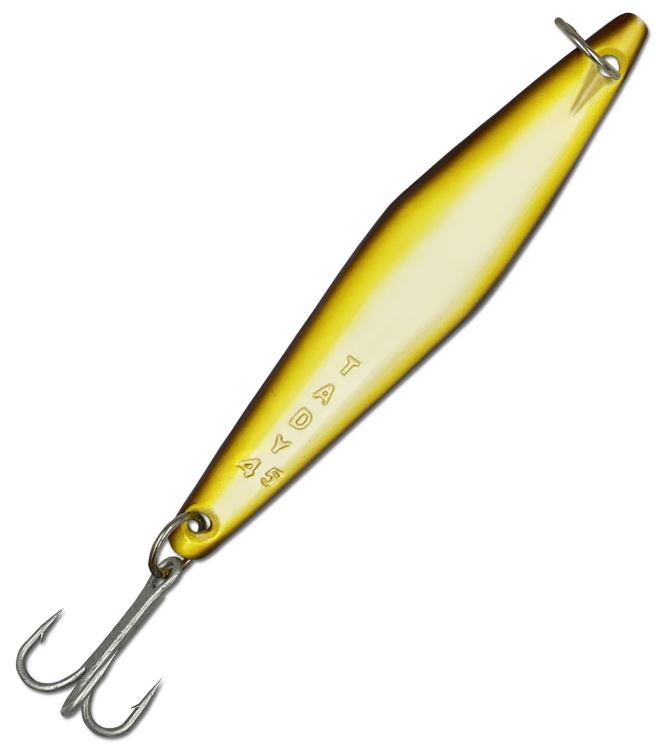
    Tady 45 (2.9 oz / 6.5″)
    Buy it on Amazon

    On bluefin specifically, the Tady 45 is all about speed and distance. When a boil erupts, you need a full-burn retrieve from the moment the iron hits the water — no pause, no slow down, no hesitation. Tuna are keyed on escaping bait at maximum speed, and any break in the retrieve gets the iron refused. The 2.9oz weight earns its place on tuna trips because bluefin boils move fast and casting distance determines whether you’re in the zone or watching from behind. Every extra yard of cast matters when the window is 90 seconds. Non-negotiable: replace the factory treble immediately with an Owner ST-66 in 2/0. Bluefin will straighten soft factory wire on the first hard run — this upgrade is not optional.

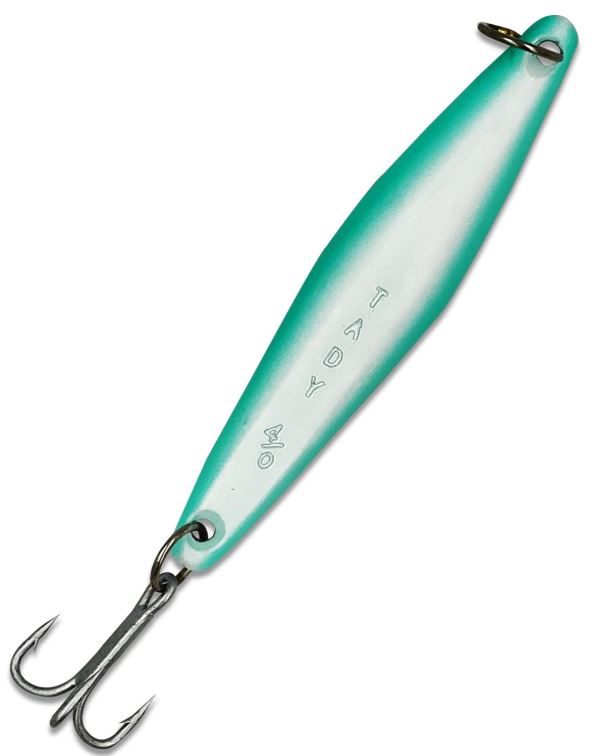
    Tady 4/0 (2.6 oz / 5.74″)
    Buy it on Amazon

    The 4/0 is a finesse weapon for line-shy bluefin — not a backup to the 45, but a deliberate tool for a specific situation. When bluefin in the 30–60lb class are boiling but following the 45 without committing, the smaller 4/0 profile matches smaller forage and the slightly different action gives picky fish a reason to eat. This is well-documented behavior on SoCal bluefin: fish that have seen pressure get selective, and the 4/0 breaks through that. Bone and chrome are the go-to colors on difficult fish. The reduced casting distance means you need fish within range, but when everyone on the boat is watching followers and not going tight, the 4/0 is the move. Same treble rule applies: ST-66, not factory.

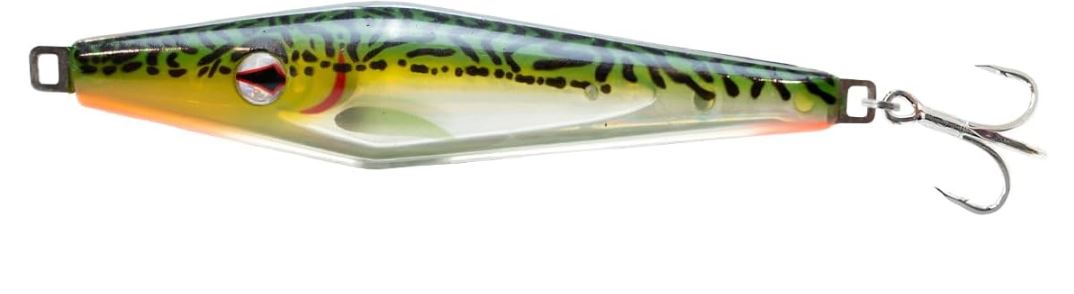
    Nomad Design Slidekick Surface Iron (4.25 oz)
    Buy it on Amazon

    The Slidekick solves the tuna angler’s most common problem: boils that are too far away and moving fast. At 4.25oz, it cuts through headwinds and delivers 20–30 yards more distance than a Tady in rough conditions — and on bluefin where the boil window is short and the school is moving, that distance is often everything. The hard dart-and-slash action differs from the Tady’s wobble, which can trigger strikes from fish that have already refused every other iron in the boat. The extra weight also means it can be yo-yoed vertically in a pinch when fish drop below the surface mid-stop. Same mandatory upgrade: Owner ST-66 trebles before you throw it at anything with tuna written on it.

    Yo-Yo (Vertical) Jigs

    When tuna are on the meter but won’t come to the surface, yo-yo jigging gets down to their depth. This is especially productive on bluefin — they often hold 60–150 feet below the surface during the day and only come up briefly to feed. Drop the jig to the depth fish are marking, then work it back up with sharp, aggressive rod pumps. The erratic darting action triggers reaction strikes from fish that are ignoring bait and surface presentations.

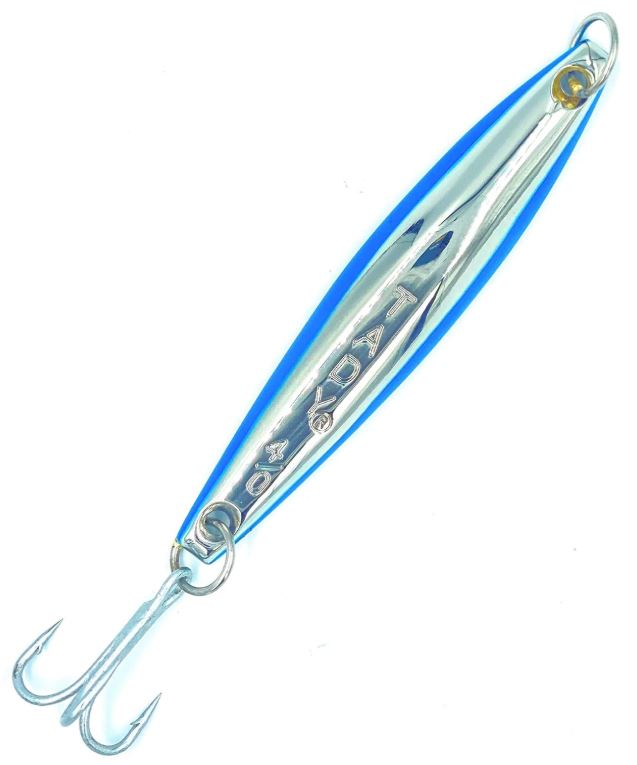
    Tady 4/0 Heavy Yo-Yo Iron (6 oz)
    Buy it on Amazon

    Bluefin on the meter at 80–200 feet is where the Heavy earns its place. The 6oz sinks fast enough to reach a moving school before it passes underneath — which is the constant challenge with deep bluefin, because unlike yellowtail stacked on structure, tuna don’t hold still. Work it with hard, sharp pumps, but unlike deep yellowtail jigging where the bite comes on the rise, bluefin often eat the Heavy on the fall — feather it down on semi-slack line and watch for a tick or sudden slack that signals a fish. When bluefin are circling at 150+ feet and won’t commit to anything on the surface, this is where you find the bite. A 40lb conventional setup with 65lb braid is the right call — a 30lb yellowtail setup gets embarrassed on the first run of a big bluefin.

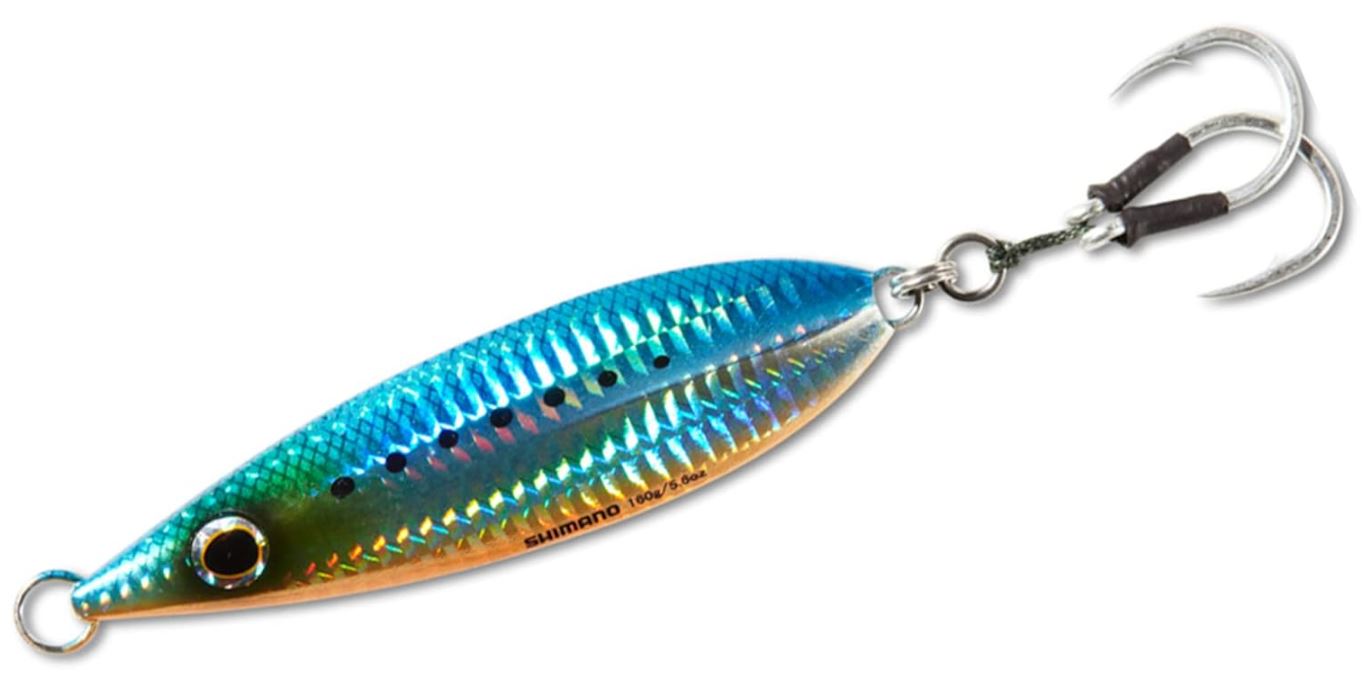
    Shimano Butterfly Flat-Fall Jig (160–200g)
    Buy it on Amazon

    The Flat-Fall produces bluefin bites that nothing else in the bag will. The critical thing to understand for tuna specifically: the bite comes on the fall, not the rise. Drop it on a semi-slack line and watch your line for a tick, a jump, or sudden slack going down — that’s the eat. Bluefin will inhale a flat-fall on the descent and you’re tight before you feel it as a thump. This is a completely different mental approach than yo-yo jigging with the Heavy, and anglers who treat it like a standard vertical jig miss most bites. On deep stops where fish are marking at 150–200 feet and surface iron is getting nothing, the flat-fall angler is almost always the first one going tight. Single assist hook 4/0–6/0 on the top ring. Blue sardine and pink are the consistent bluefin producers.

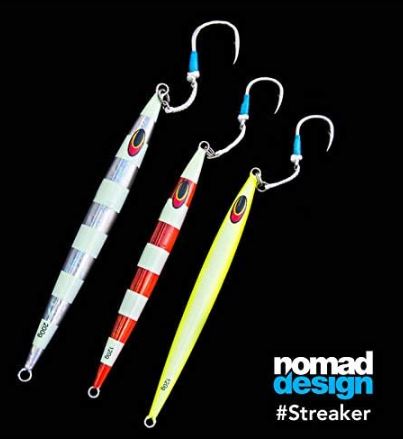
    Nomad Design Streaker Deep Water Jig — Silver Glow Stripe
    Buy it on Amazon

    When bluefin are deep and lethargic — present on the meter but not responding to aggressive presentations — the Streaker’s slow-pitch flutter triggers fish that have locked down. This is most relevant on trips where fish have seen sustained pressure and stopped reacting to standard iron. The slow-pitch technique for tuna requires patience: let the jig sink completely on near-slack line, work it up slowly with soft rod loads, and let it fall again. The Silver Glow Stripe finish matters at depth specifically for bluefin — fish holding at 150+ feet are in low light conditions, and the glow adds visibility that blue sardine and pink patterns don’t deliver below 120 feet. This is a specialty tool for a specific situation, not a first-throw option, but knowing when to deploy it is what separates experienced tuna jig anglers.

    Casting Jigs

    Not every tuna situation calls for surface iron or vertical jigging. Sometimes fish are mid-column — too deep for surface iron, too scattered for a straight vertical drop. Casting jigs bridge that gap: cast them out, count them down to the depth fish are holding, and work them back. They also double as vertical jigs in a pinch. For a full comparison of when to throw each type, see our jigs vs irons vs poppers guide.

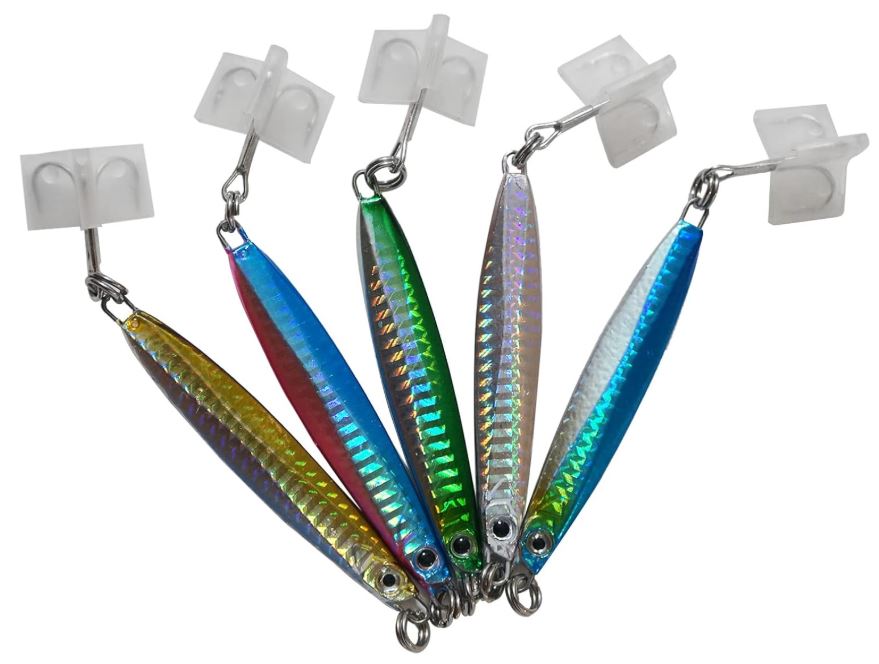
    MUSTAD Colt Sniper Jig
    Buy it on Amazon

    Bluefin suspended mid-column — on the meter but not on structure and not at the surface — are the Colt Sniper’s target. Count it down to the depth fish are marking on the sonar, then work it back with a pump-and-wind retrieve. This happens most often when bluefin are following offshore temperature breaks and holding at a specific thermocline depth without rising or settling on bottom. The through-wire construction matters on tuna specifically — bluefin in the 30–60lb range test every component and standard wire-through won’t survive a full fight. It also doubles as a casting jig for mid-column fish during a stop: count it down 15–20 feet and work it back instead of burning on top when surface presentations are getting ignored.

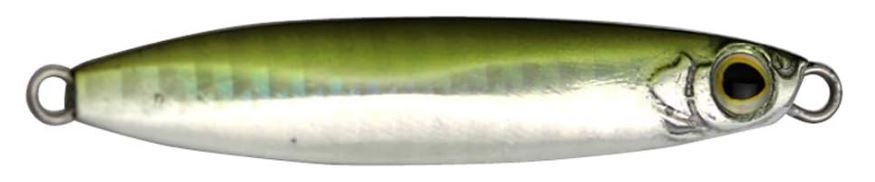
    Shimano Current Sniper Jig
    Buy it on Amazon

    SoCal bluefin concentrate along offshore current edges and temperature breaks, and the Current Sniper’s asymmetric design performs in the moving water you find along those lines. Standard symmetrical jigs spin in current and lose their action entirely — the Current Sniper darts and slashes naturally in the flow, looking like a baitfish being pushed along a current edge, which is exactly how bluefin see their forage in that environment. Cast up-current along a temperature break, sink to depth, and retrieve with the current. This is a specific tool for offshore current fishing, but that’s precisely where SoCal bluefin concentrate — along the edges where water masses collide and bait stacks up.

    Color Selection

    Tuna are more color-selective than yellowtail, especially bluefin in clear water. Match the forage and you’ll get bit more consistently:

    • Blue and white — sardine imitation, the all-around best tuna color in SoCal.
    • Chrome / silver — maximum flash in clear water. The go-to for surface iron when tuna are chasing bait on top.
    • Bone / white — subtle profile for bright days and line-shy bluefin. Works when chrome is too flashy.
    • Scrambled egg (blue/yellow/white) — the classic SoCal pattern that still produces on tuna.
    • Pink — surprisingly deadly on tuna, especially on flat-falls and vertical jigs fished deep. May imitate squid.
    • Blue sardine — realistic finish for picky fish. The top flat-fall color for bluefin.
    • Silver glow stripe — deep water where light fades, adds visibility below 100 feet.

    When in doubt, start with blue/white for surface iron and blue sardine or pink for vertical jigs. Bluefin key on matching the forage — if they’re eating sardines, blue/white and chrome dominate. If the bite is happening deeper or around dawn, darker and pink patterns produce better. Check the chlorophyll map for water clarity — in clean blue water, go natural or chrome. In greener water, brighter patterns get more attention.

    When to Throw What

    SituationBest Jig TypeTop Pick
    Tuna boiling, crashing bait on topSurface ironTady 45 blue/white — burn it back
    Picky bluefin, refusing the 45Light surface ironTady 4/0 chrome or bone
    Wind, need distance to reach boilHeavy surface ironNomad Slidekick 4.25 oz
    Fish on meter, won’t come upYo-yo ironTady 4/0 Heavy 6 oz
    Deep fish, biting on the fallFlat-fall jigButterfly Flat-Fall 160–200g
    Lethargic fish, slow bite deepSlow-pitch jigNomad Streaker Silver Glow
    Mid-column, count-downCasting jigColt Sniper
    Current edges, temperature breaksCurrent jigCurrent Sniper

    Gear to Pair with Your Jigs

    Tuna pull harder than yellowtail — significantly harder. SoCal bluefin regularly run 30–80 lbs with fish over 100 every season, and even yellowfin in the 20–40 lb range will punish undersized tackle. Your jig gear needs to launch heavy iron, handle high-speed retrieves, and stop a fish that wants to take 300 yards of line on the first run.

    Surface iron: A spinning reel in the 6000–10000 class — Shimano Saragosa 6000 or Saragosa 8000 — paired with an 8-foot heavy spinning rod for maximum casting distance. Spool with 50–65lb braid — no leader for maximum distance on the cast. The 8-foot rod is preferred over a 7-footer for tuna iron because the extra length adds critical distance when you’re trying to reach a boil before it goes down.

    Yo-yo jigging: A 40lb class conventional reelShimano Talica 12 or Penn Squall II 25N — on a 7-foot medium-heavy rod. Spool with 50–65lb braid and 30–40lb fluorocarbon leader connected with an FG knot. The heavier class is necessary because bluefin on a vertical jig often eat heading straight down — you need stopping power to turn the fish before it spools you.

    Casting jigs: Same spinning setup as surface iron works — Saragosa 6000 on an 8-foot rod with 50–65lb braid. Add a 30–40lb fluoro leader for casting jigs since you’re not relying on the same distance you need for iron — the extra abrasion resistance of fluoro matters when tuna are rubbing the leader against their sandpaper skin.

    Hooks: Owner ST-66 trebles (2/0–3/0) on every surface iron — replace factory hooks immediately. Single assist hooks (4/0–6/0) on flat-falls and vertical jigs — far better hookup ratio than trebles on the drop. See our hooks by species guide for specific sizes. Use J hooks on assist rigs, not circle hooks — you need the instant hookset on reaction strikes.

    For complete rod and reel pairing advice, see our bluefin reel guide, best rod and reel combo guide, and fishing line guide for specific braid recommendations.

    Frequently Asked Questions

    What is the best all-around tuna jig?

    The Tady 45 (2.9 oz) for surface situations and the Shimano Butterfly Flat-Fall (160g) for when fish are deep. Between those two jigs you can cover tuna on the surface and tuna on the meter. Replace the Tady’s factory trebles with Owner ST-66s before you throw it at tuna.

    What jig should I use when tuna are deep?

    Start with a Shimano Butterfly Flat-Fall (160g) and watch your line on the fall — that’s when bluefin eat it. If that’s not working, switch to a Tady 4/0 Heavy (6 oz) for an aggressive yo-yo presentation, or try the Nomad Streaker for a slower approach on lethargic fish.

    What’s the difference between surface iron and yo-yo iron?

    Surface irons are cast and retrieved at high speed across the top of the water when tuna are boiling. Yo-yo irons are dropped vertically and worked up with sharp rod pumps when fish are deep on the meter. Different techniques for different situations — see our complete comparison guide and surface iron guide.

    What reel do I need for tuna iron?

    For surface iron: a spinning reel in the 6000–10000 class like the Saragosa 6000 or 8000. For yo-yo jigging: a 40lb conventional like the Talica 12. Tuna require heavier gear than yellowtail — don’t bring a 30lb class setup to a bluefin fight. See our bluefin reel guide for complete recommendations.

    Do I need to replace treble hooks on my irons?

    Yes — this is non-negotiable for tuna. Factory trebles on iron jigs are made from soft wire that straightens on a hard-pulling tuna in seconds. Replace every treble with Owner ST-66 trebles — 4X strong construction that won’t bend or break. Takes 2 minutes per jig with split-ring pliers. This is the single most important upgrade for tuna jig fishing. See our hooks guide for the right treble size for each iron.

    What rod length is best for casting iron at tuna?

    An 8-foot rod is preferred for tuna — the extra length over a 7-footer adds 15–20% more casting distance, and on tuna where boils are farther out and the window is shorter, that distance matters. It’s more tiring over a full day, but the extra reach is worth it when bluefin are boiling at the edge of your range.

    What water temperature do tuna like?

    Bluefin bite best in 60–72°F water, with the sweet spot at 62–68°F. Yellowfin want 68°F and above, with the sweet spot around 72–78°F. Check our bluefin temperature guide, yellowfin temperature guide, and the SST chart to find productive water.

    Plan Your Trip

    Tuna follow bait along temperature breaks. Check conditions before you go:

    Related Guides

    Tight lines!

  • Best Tuna Lures for trolling

    Best Tuna Lures for trolling

    Tuna are the hardest-pulling fish in SoCal waters — and convincing one to eat an artificial lure instead of live bait is one of the most rewarding things you can do on the ocean. Bluefin and yellowfin both respond to lures, but they’re far pickier than species like dorado or yellowtail. The right lure, fished at the right speed and depth, puts fish on the deck. The wrong one gets ignored while the guy next to you on live bait goes tight.

    Bluefin show up in SoCal when water temperatures hit 60–72°F, typically from late spring through fall, with the biggest fish arriving in summer. Yellowfin prefer warmer water — 68°F and above — and overlap with bluefin from midsummer through fall. Both species follow bait — sardine, anchovy, squid, and mackerel schools that stack up along temperature breaks and current edges. Use the SST chart and chlorophyll map to find productive water where bait is concentrating — that’s where the tuna will be.

    ⚡ Quick Picks

    Best trolling lure: Cedar plugs — proven bluefin and yellowfin producer, run them behind every offshore spread.

    Best trolling spread: Zuker feather jigs — run 4–6 at staggered distances in blue/white and black/purple.

    Best casting lure: Tady 45 surface iron — the SoCal standard when tuna are crashing bait on top.

    Best deep trolling: Rapala X-Rap Magnum — gets down 15–20 feet where tuna cruise below the surface.

    Best surface lure: Poppers — when tuna are blowing up on bait, nothing beats a popper eat.

    Trolling Lures

    Trolling is how most tuna trips start — you cover ground until you mark fish on the meter, find temperature breaks, or run into birds working bait. A spread of 4–6 lures at staggered distances behind the boat works while you search, and a hookup on the troll often signals a school underneath that you can then stop on and fish with bait or casting lures. Run your spread at 6–8 knots for bluefin, 7–9 knots for yellowfin.

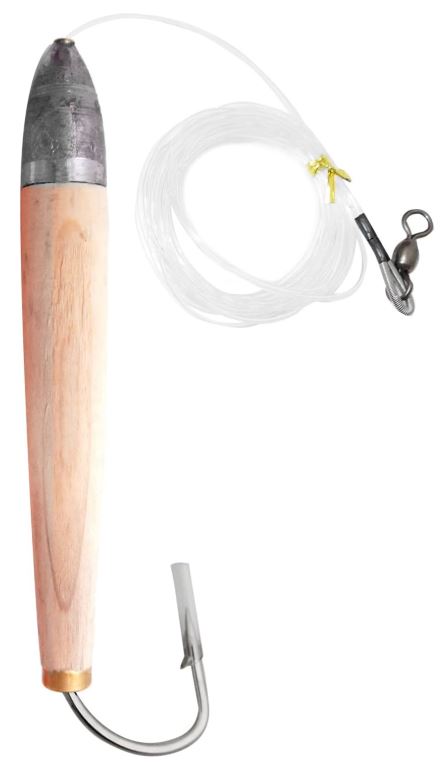
    Cedar Plugs

    Buy it on Amazon

    Bluefin are notoriously boat-shy — they spook from hull noise and surface disturbance more than any other SoCal tuna. This is what makes cedar plugs the ideal bluefin trolling lure: run them 100–150 feet back and they’re out of the boat’s pressure zone entirely, working through clean, undisturbed water where nervous bluefin feel comfortable eating. For yellowfin, shorter leads (50–80 feet) work fine — they’re less cautious and will track a lure right into the prop wash. Natural cedar and blue/white are the standard daytime colors; black/purple silhouettes well from below when fish look up at the sky. Long-range boats running multi-day trips to the bluefin grounds put cedar plugs out every morning for a reason. Carry a dozen minimum — you’ll lose some to big fish, and a tuna doesn’t care that the finish is scratched.

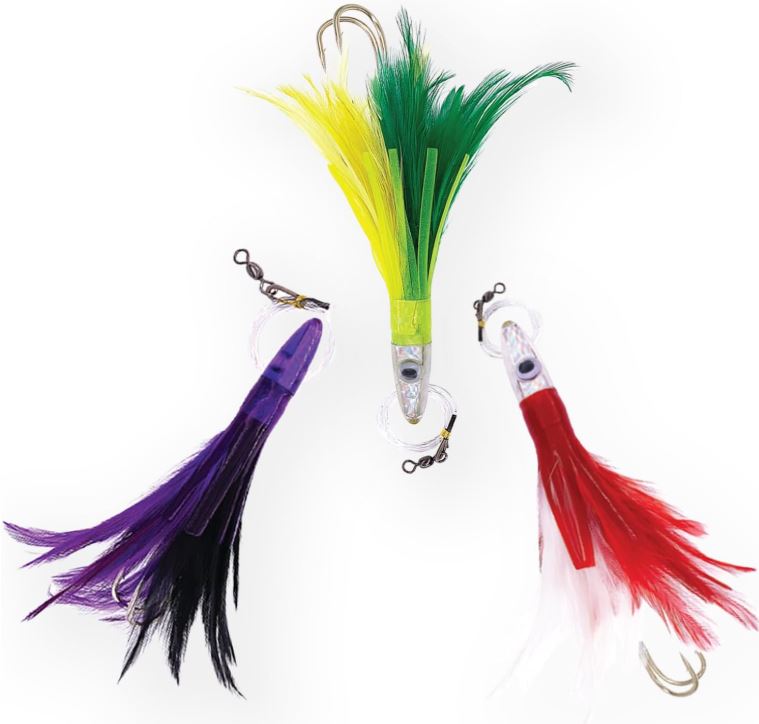
    Feather Jigs (Zuker / Tuna Feathers)

    Buy it on Amazon

    Feathers are built for reaction strikes — the bubble trail at trolling speed triggers tuna that aren’t actively feeding to bite anyway. This matters on bluefin specifically because they frequently go through lockdown phases where they’re present on the meter but refusing bait. A feather at speed looks like a fleeing baitfish and bypasses that lockdown instinct. Run a tuna spread longer than you would for dorado: two short positions at 30–50 feet, two long at 80–120 feet, and for bluefin add a fifth at 150+ feet for extra standoff distance. Blue/white, black/purple, and green/yellow are the top tuna colors — blue/white for clear conditions, black/purple for dawn and overcast, green/yellow when yellowfin are mixed in. Use 7/0–9/0 J hooks — larger than you’d need for dorado — and sharpen them before every trip. A dull trolling hook at 7 knots produces bumps instead of hookups. When skipjack or bonito crash a feather, don’t just reel it in — tuna are frequently following underneath, and that species activity is a signal to drop down or slow down and investigate.

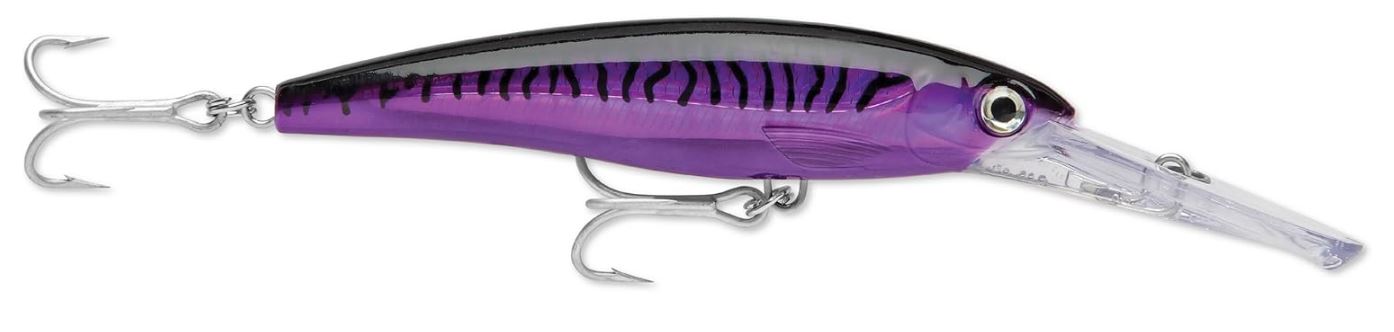
    Rapala X-Rap Magnum Series

    Buy it on Amazon

    Bluefin and yellowfin spend a significant portion of the day below the thermocline — below the 10–15 foot layer where cedar plugs and feathers are working. When you’re getting meter marks but not connecting on the troll, the X-Rap Magnum is the fix. At 10–20 feet of dive depth, it reaches fish that are present but holding below the surface zone. Cautious bluefin are also more willing to commit at depth than at the surface — the lure is farther from the boat’s noise and disturbance, and below the thermocline they’re more relaxed and feeding freely. Run the X-Rap on the outside or long positions of your spread at 5–7 knots, slightly slower than your feathers and plugs. The 15 and 20 sizes cover most SoCal depths. Bonito, sardine, and pilchard patterns work best on tuna. At $20–30 each they’re more expensive than cedar plugs — losing one to a big bluefin stings — but on days when everything else is getting ignored, the X-Rap is often the only thing in the spread getting bit.

    Casting Lures

    When tuna are on the surface — crashing bait, boiling, or chasing foamers — casting lures is how you get the most explosive strikes in SoCal fishing. The window is often short: tuna push bait to the surface, blow up on it for a few minutes, then go back down. You need to be rigged and ready to cast the moment you see the boil. Speed matters — the first lure in the water is the one that gets bit. For a deep dive on casting technique, see our surface iron guide and jigs vs irons vs poppers comparison.

    Surface Iron (Tady 45 / Tady 4/0)

    Buy it on Amazon

    Surface iron is the SoCal standard for tuna on top. When bluefin or yellowfin are crashing bait, a long cast with a Tady 45 (2.9 oz) into the boil and a fast, high-speed retrieve is the play. The iron skips across the surface like a fleeing baitfish, and the flash draws strikes from fish already in a feeding frenzy. The heavier Tady 45 gets maximum casting distance — critical when you’re trying to reach a boil before it goes down. The lighter Tady 4/0 (2.6 oz) gives you a slightly slower, more erratic action that can trigger bites when fish are pickier. Critical upgrade: replace the factory trebles with Owner ST-66 trebles in 2/0–3/0 — factory hooks straighten on tuna instantly. For a complete breakdown, see our tuna jigs and irons guide.

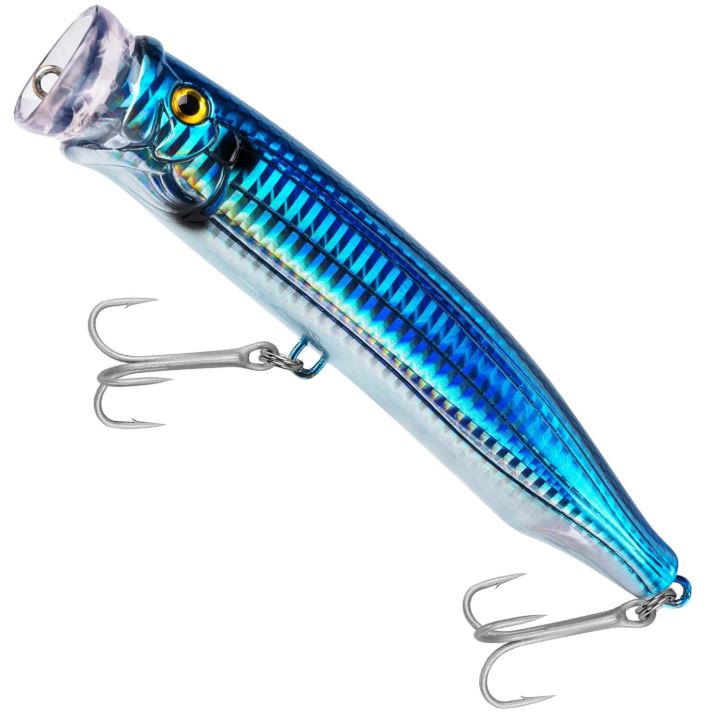
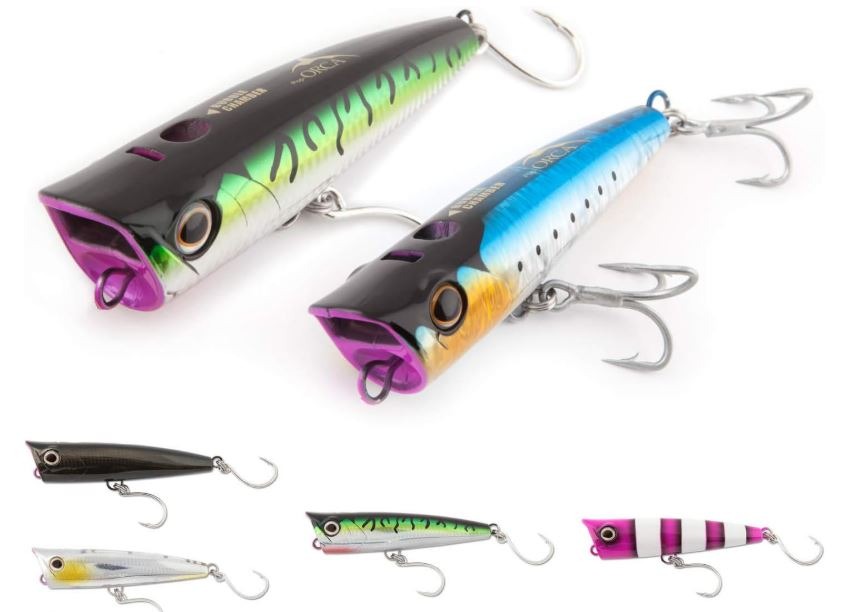
    Poppers

    Buy it on Amazon

    A tuna eating a popper off the surface is one of the most violent strikes in fishing — the kind of eat that makes your hands shake. Poppers create a commotion on top that imitates panicked bait, and tuna in feeding mode can’t resist it. For bluefin and yellowfin, you need heavy-duty poppers — 120–180mm in the 2–4 oz range — because these fish pull hard enough to straighten light-tackle popper hooks and break cheap split rings. Nomad Chug Norris and Yo-Zuri Bull Pop are both proven SoCal tuna poppers. Replace the stock trebles with Owner ST-66s immediately. Work them with aggressive pops — two to three hard rod sweeps, pause, repeat. The pause is often when the fish commits. Sardine, bone, and blue/white patterns are the top producers in SoCal clear water.

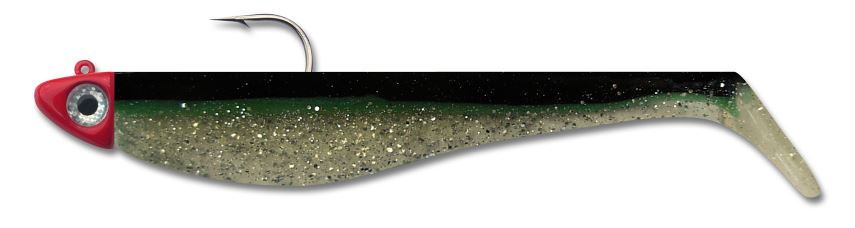
    Big Hammer Swimbaits

    Buy it on Amazon

    A 5–7 inch soft plastic swimbait on a 1–2 oz jig head won’t be the first thing you throw at tuna — but it can be deadly in specific situations. When tuna are feeding on small bait (sardines, anchovies) and refusing larger iron and poppers, a swimbait matching the bait size gets bit. Cast it into the zone, let it sink to the depth the fish are holding, and retrieve with a moderate, steady pace — the swimming tail does the work. Sardine, blue/white, and mackerel patterns in 5–6 inch sizes match the most common SoCal tuna forage. The downside is durability — tuna teeth shred soft plastics fast, and you’ll go through multiple baits per fish. Pack a full bag of 20+. The upside is a natural presentation that can fool line-shy bluefin that have seen every iron jig on the boat. See our swimbaits guide for rigging details.

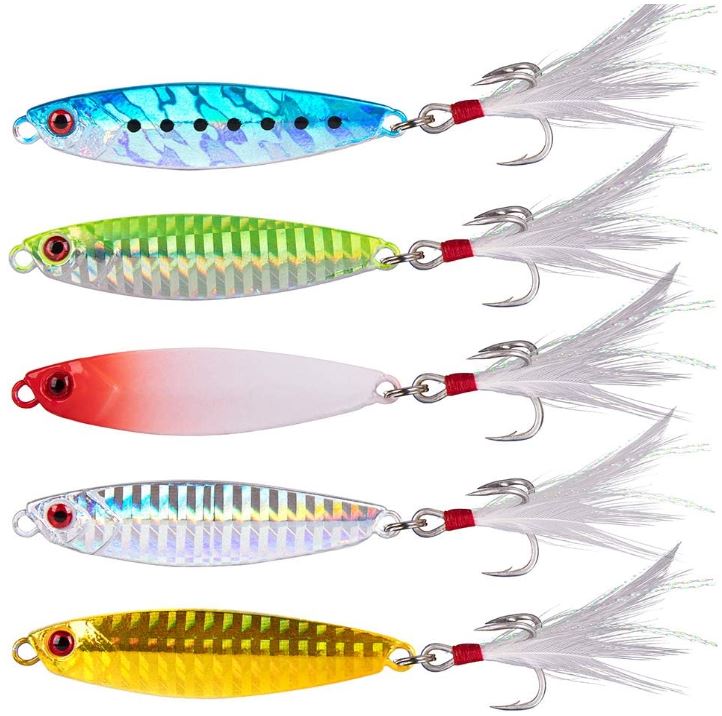
    Dr Fish Casting Spoons

    Buy it on Amazon

    A heavy casting spoon (3–4 oz) in chrome or blue/chrome produces massive flash that tuna can see from a distance. Particularly effective when fish are scattered and you need to draw them to the boat, or when they’re feeding just below the surface and ignoring topwater presentations. Cast it out, let it flutter down 10–20 feet, then retrieve with a pump-and-wind action. The fluttering fall is the key — it imitates a wounded baitfish sinking, and tuna often eat on the drop before you even start your retrieve. Chrome is the go-to in clear water; blue/chrome and green/chrome work in slightly dirtier conditions. Spoons also produce well when jigged vertically under the boat when tuna are holding deep on the meter but won’t come up to the surface.

    Color Selection

    Tuna are more selective about color than most SoCal species — especially bluefin in clear water. Match the bait they’re eating and you’ll get bit. The top producers:

    • Blue and white — sardine imitation, the universal SoCal tuna color. If you only carry one color, this is it.
    • Chrome / silver — maximum flash in clear water. Deadly on surface iron and spoons when tuna are chasing bait on top.
    • Black and purple — the classic long-range trolling color. Silhouettes well against the sky from below, which is how tuna see trolling lures.
    • Sardine / natural — realistic finishes for clear water and picky fish. Top choice for hard-body trolling lures like the Rapala X-Rap.
    • Green and yellow — dorado color that also catches yellowfin. Works best in warmer, slightly off-color water south toward Baja.
    • Bone / white — clean, subtle profile for bright days in clear water. Excellent on poppers and surface iron.

    When in doubt, start with blue/white for casting and black/purple for trolling. Bluefin in particular key on matching the forage — if they’re eating sardines, blue/white and chrome dominate. If they’re on squid at night, darker colors (black/purple, root beer) produce better at dawn. Check the chlorophyll map for water clarity — in cleaner blue water, go natural or chrome. In greener water near upwelling zones, brighter colors get more attention.

    When to Throw What

    SituationLure TypeTop Pick
    Searching for fish / covering groundTrolling spreadCedar plugs + feathers
    Fish on the meter but not on topDeep-diving trollerRapala X-Rap Magnum
    Tuna boiling / crashing bait on surfaceSurface ironTady 45 — long cast, high-speed retrieve
    Fish blowing up on top, staying upPopper120–180mm popper, bone or blue/white
    Fish feeding on small bait, refusing ironSoft plastic swimbait5–6″ paddle tail, sardine pattern
    Fish holding deep, scatteredCasting spoon3–4 oz chrome spoon, flutter and jig
    Picky bluefin, clear waterLight casting jigTady 4/0 (2.6 oz) chrome or bone

    Working a Tuna Stop

    When the captain calls a stop — whether from a troll strike, meter marks, or a visual on foamers — how the boat fishes the stop determines whether you catch a few or load up. Here’s the playbook:

    • Be rigged and ready before the stop. Have your iron or popper rod in hand with the bail open before the boat gets to the fish. The first 30 seconds of a stop are the most productive — tuna that are already feeding will eat the first thing they see.
    • Match what’s happening on the surface. If fish are boiling, throw iron or poppers. If they’re deep on the meter, drop a spoon or swimbait. If bait is in the water, match the bait size with your artificial.
    • Speed sells on surface fish. When tuna are up and eating, retrieve as fast as you can crank. They’re keyed on fleeing bait — slow lures get ignored. Burn the iron back and don’t stop reeling until the jig is at the boat.
    • Keep lures in the water. Dead time between casts means the school moves. Reel in, cast again immediately. If you’re fighting a fish, someone else should be casting.
    • Downsize if they’re picky. If tuna are boiling but refusing the Tady 45, drop to the lighter Tady 4/0 or switch to a swimbait. Bluefin in particular get lure-shy after seeing the same jig from every angler on the boat.
    • Don’t forget the chum. Toss handfuls of sardines or anchovies while casting to keep the school interested. The combination of live chum and a lure swimming through it is hard for any tuna to resist.

    Gear for Tuna

    Tuna require heavier gear than dorado or yellowtail — especially SoCal bluefin, which regularly run 30–80 lbs with fish over 100 lbs every season. Undersized gear means pulled hooks, broken line, and lost fish.

    Casting / iron setup: A spinning reel in the 6000–10000 class — Shimano Saragosa 6000 or Saragosa 8000 — on an 8-foot heavy rod. Spool with 50–65lb braid and a 30–40lb fluorocarbon leader connected with an FG knot. This is your iron and popper rod — it needs backbone to launch a 3 oz jig and stopping power to turn a bluefin before it spools you.

    Trolling setup: A 30–50lb class conventional reelShimano Talica 12 or Penn Squall II 25N — on a 7-foot medium-heavy rod. Spool with 50–65lb braid or 40lb mono. Set the drag at strike around 12–15 lbs for bluefin — light enough to prevent pulled hooks on the initial run but firm enough to stop the fish eventually.

    Hooks: Owner ST-66 trebles on every iron jig and popper — non-negotiable. Factory trebles will straighten on tuna. Pre-rigged J hooks on trolling feathers and cedar plugs. For live bait between lure sessions, Owner Mutu Light Circle (5114) in 2/0–4/0 for fly-lining. See our hooks guide for specific sizes by species and technique.

    For complete rod and reel pairing advice, see our bluefin reel guide, best rod and reel combo guide, and fishing line guide for specific braid recommendations.

    Frequently Asked Questions

    What is the best all-around lure for tuna?

    For trolling: cedar plugs — they’ve caught more tuna than any other artificial lure and they cost a few dollars each. For casting: a Tady 45 surface iron in blue/white or chrome with Owner ST-66 trebles. If you could only bring two lure types on a tuna trip, those would be them.

    What color lure is best for tuna?

    Blue and white is the #1 tuna color in SoCal — it imitates sardines, which are the primary forage. Chrome and silver are close behind for surface iron and spoons. For trolling, black and purple silhouettes well from below. Match the bait the fish are eating and you’ll get bit more consistently.

    How do I find tuna in SoCal?

    Start with the SST chart — bluefin want 60–72°F, yellowfin want 68°F+. Look for temperature breaks where warm and cool water meet — bait stacks up along these edges and tuna patrol them. The chlorophyll map shows bait concentrations, and the fleet tracker shows where boats are finding fish. Read our bluefin temperature guide and yellowfin temperature guide for seasonal patterns.

    Can I use the same lures for bluefin and yellowfin?

    Yes — surface irons, poppers, cedar plugs, and feathers all work on both species. The main difference is bluefin are more line-shy, so you may need longer trolling leads, lighter fluoro, and more natural color patterns. Yellowfin are more forgiving — brighter colors and shorter leads still get bit. Gear-wise, size up for bluefin since they average larger and pull significantly harder.

    What rod and reel do I need for tuna?

    For casting iron and poppers: Saragosa 6000 or 8000 on an 8-foot heavy rod with 50–65lb braid. For trolling: Talica 12 or Squall II 25N on a 7-foot medium-heavy rod. Tuna require heavier gear than dorado — a 40lb class setup is the minimum for SoCal bluefin. See our bluefin reel guide for complete recommendations.

    What water temperature do tuna need?

    Bluefin: 60–72°F, with the sweet spot around 62–68°F in SoCal. Yellowfin: 68°F and above, with the sweet spot around 72–78°F. Check our bluefin temperature guide, yellowfin temperature guide, and the SST chart to find productive water.

    Do I need to replace treble hooks on my lures?

    Absolutely — this is the single most important thing you can do before a tuna trip. Factory trebles on iron jigs and poppers are made from soft wire that straightens instantly on a hard-pulling tuna. Replace every treble with Owner ST-66 trebles — 4X strong construction that won’t bend or break. Takes 2 minutes per lure with split-ring pliers. See our hooks guide for the right treble size for each jig.

    Plan Your Trip

    Tuna follow bait along temperature breaks. Check conditions:

    Related Guides

    Tight lines!

  • Jigs vs Irons vs Poppers for Saltwater Fishing

    Jigs vs Irons vs Poppers for Saltwater Fishing

    Walk into any SoCal tackle shop and you’ll find walls of metal — surface irons, vertical jigs, flat-falls, slow-pitch jigs, poppers, stick baits, and more. If you’re not sure what the difference is or when to throw each one, you’re not alone. The categories overlap, the marketing gets confusing, and different anglers use different names for the same thing.

    This guide breaks it all down. What each type of artificial does, how it works, and — most importantly — when to reach for it on the water.

    The Three Main Categories

    Surface Irons

    Surface irons are heavy metal jigs (3–7 oz) designed to be cast long distances and retrieved rapidly across the surface. They skip, wobble, and dart, imitating a fleeing baitfish. The original SoCal technique — brands like Tady, Salas, and Jri built the tradition. For a complete breakdown of technique and specific models, read our surface iron fishing guide.

    How they work: Cast into or past breaking fish. Retrieve fast — the speed creates the action. The iron’s flat or contoured body generates its own wobble and flash as it moves through the water. No rod-tip action needed, just reel speed.

    Best for: Yellowtail, bonito, and bluefin tuna feeding on the surface. Any situation where fish are actively crashing bait in the top 10 feet of the water column.

    Limitations: Requires fish on the surface. Ineffective when fish are deep. Heavy — demanding to cast and retrieve all day. Requires a spinning reel for maximum casting distance.

    Vertical Jigs (Yo-Yo / Flat-Fall / Slow-Pitch)

    Vertical jigs are designed to be dropped straight down and worked with rod action rather than reel speed. This category includes several sub-types.

    Yo-yo (knife) jigs are narrow, heavy jigs that sink fast and are worked with aggressive, sharp rod pumps. Drop to the bottom or to the depth fish are marking, then rip the rod up and let the jig flutter back down. The erratic darting action triggers reaction strikes. Classic models include the Salas CX and Shimano Coltsniper.

    Flat-fall jigs are wide, flat jigs designed to flutter and spiral on the fall. The Shimano Butterfly Flat-Fall changed SoCal fishing when it came out — most of the bites come on the drop as the jig slowly spirals down, imitating a dying baitfish. Less physically demanding than yo-yo jigging because the jig does the work on the fall.

    Slow-pitch jigs are center-weighted jigs designed for a specific rod technique where short, rhythmic rod movements create a slow, hypnotic action. Deadly on finicky fish that won’t commit to aggressive presentations. The Nomad Streaker and Shimano Ocea are popular slow-pitch options.

    Best for: Fish holding on structure or suspended at specific depths. Yellowtail on reefs, rockfish on pinnacles, tuna under kelp paddies. Any time fish aren’t showing on the surface. See our yellowtail jigs guide for specific models.

    Limitations: Limited casting range — primarily a vertical technique. Requires knowing the depth fish are at (electronics help). Slow-pitch and flat-fall need specific rod actions to work properly.

    Poppers & Stick Baits

    Poppers are floating or slow-sinking lures with a cupped or angled face that creates a splash, bubble trail, and popping sound when worked with sharp rod twitches. Stick baits (also called pencil poppers or walk-the-dog lures) are similar but create a side-to-side walking action rather than a pop.

    How they work: Cast to or near feeding fish. Work with sharp rod twitches — each twitch pulls the popper forward and creates a commotion on the surface. The splash and noise imitates a baitfish being attacked, which draws predators in from a distance. Stick baits use a rhythmic twitch-pause-twitch to create a zigzag surface walk.

    Best for: Tuna that are following surface iron but not committing. Bluefin that have seen too many irons and need something different. Fish feeding just below the surface where a popper’s commotion draws them up. See our best poppers for tuna guide for specific models.

    Limitations: Shorter casting range than heavy surface irons. Requires more rod technique than iron. Can fatigue your wrist on long sessions. Not effective when fish are deep.

    When to Use What

    ScenarioBest ChoiceWhy
    Fish boiling on surface, wide openSurface ironMaximum casting distance, speed matches frantic bait
    Fish boiling but ignoring ironPopper or stick baitDifferent presentation breaks their pattern
    Fish showing but not breaking surfaceFlat-fall jigFlutter on the fall reaches fish just below surface
    Fish deep on structure/reefYo-yo knife jigFast sink rate, aggressive action at depth
    Fish deep but finickySlow-pitch jigSubtle action triggers cautious fish
    Kelp paddy fishingSurface iron or flat-fallCast iron past paddy; or drop flat-fall under it
    Blind casting with no visible fishSurface iron or popperCovers water, noise draws fish from distance
    Fish on sonar at specific depthFlat-fall to that depthPrecise depth targeting with fluttering action

    Gear Crossover

    One of the nice things about these categories is the gear overlaps. A spinning reel in the 6000–8000 class with a 7-foot medium-heavy fast rod handles both surface irons and poppers. A conventional reel in the 20–30lb class with a medium-heavy rod handles all three vertical jig types. You don’t need a separate setup for each category — two well-chosen outfits cover everything.

    For line, 40–65lb braid is standard across all categories. For surface iron, most anglers skip the leader for maximum casting distance. For vertical jigging, a short 40lb fluorocarbon leader protects against abrasion on structure. For poppers, a 4-foot 50–60lb fluorocarbon leader is standard to prevent bite-offs from toothy tuna.

    Building Your Arsenal

    If you’re starting from zero, here’s the order to buy:

    First purchase: Tady 45 in blue/white and scrambled egg (2 irons). This handles the most common SoCal scenario — fish on the surface — and the Tady 45 is the most versatile iron ever made.

    Second purchase: Shimano Butterfly Flat-Fall in 160g (2 colors — blue sardine and pink). This covers the second most common scenario — fish on structure or suspended — and the flat-fall is the easiest vertical technique to learn.

    Third purchase: A popper in the 60–80g range (1 popper). Nomad Design Chug Norris or Shimano Ocea Bomb Dip are both excellent. This gives you a third option when fish are rejecting irons.

    Fourth purchase: Fill in gaps. A lighter surface iron (Salas 7X), a heavy iron (Tady A1), a slow-pitch jig, and more colors in your flat-falls. At this point you’re covering 95% of situations.

    Reading the Conditions

    The ocean tells you what to throw if you know how to read it. Check the SST chart for temperature breaks where bait and predators concentrate. Warm water pushing against cooler coastal water creates feeding zones. The chlorophyll map shows where bait is thickest — green water near blue water edges is prime territory. Our species-specific temperature guides for yellowtail, bluefin, and yellowfin tell you what temperatures each species prefers.

    Plan Your Trip

    Check conditions before you go — the right artificial technique depends on what the fish are doing that day:

    Tight lines!