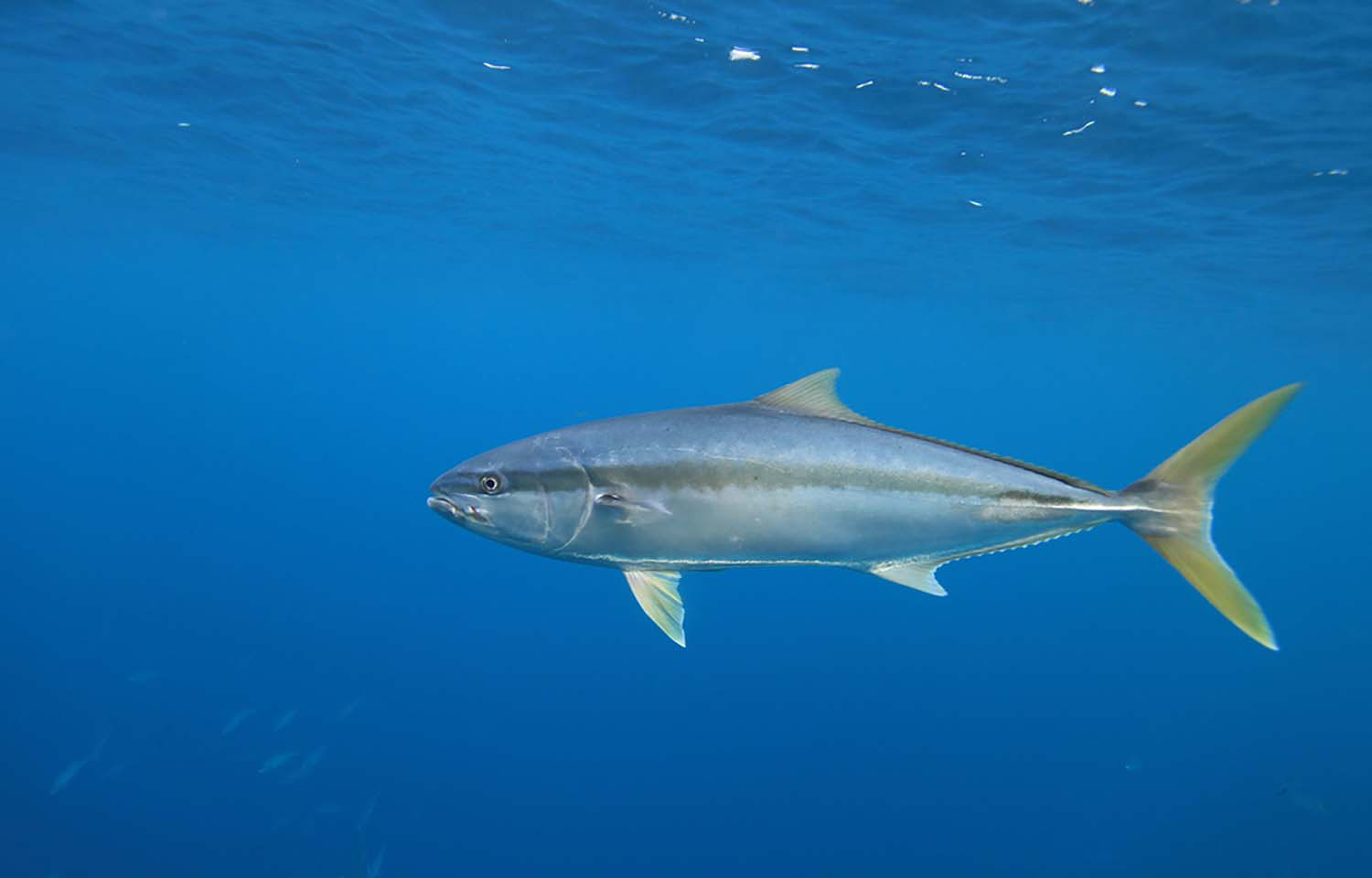
Yellowtail are arguably the most exciting fish to catch on iron in Southern California. When they’re crashing bait on the surface at the Coronado Islands or stacked up on a reef at Catalina, having the right jig in your arsenal makes all the difference. The wrong iron means missed strikes and short fish. The right one means bent rods and screaming drags.
This guide covers the three main categories of yellowtail jigs — surface irons, yo-yo (vertical) jigs, and casting jigs — plus the specific models that consistently produce in SoCal waters. If you’re still dialing in your yellowtail setup, check our best reel for yellowtail guide first.
⚡ Quick Picks by Situation
Surface boils: Tady 45 (2.9 oz) — the SoCal gold standard, nothing beats it.
Finesse surface: Tady 4/0 (2.6 oz) — lighter, tighter action for picky fish.
Distance / wind: Nomad Design Slidekick (4.25 oz) — aerodynamic, casts a mile.
Deep structure: Shimano Butterfly Flat-Fall — the fall is the bite.
Heavy yo-yo: Tady 4/0 Heavy (6 oz) — gets down fast, stays in the zone.
Surface Irons
Surface iron fishing is a SoCal tradition. When yellowtail are boiling on the surface, casting a heavy metal jig into the melee and burning it back is one of the most adrenaline-pumping techniques in fishing. The iron skips and darts across the surface, imitating a panicked baitfish, and the strikes are explosive. For a full breakdown of when to throw iron vs other lure types, see our jigs vs irons vs poppers guide.
Tady 45 (2.9 oz / 6.5″)
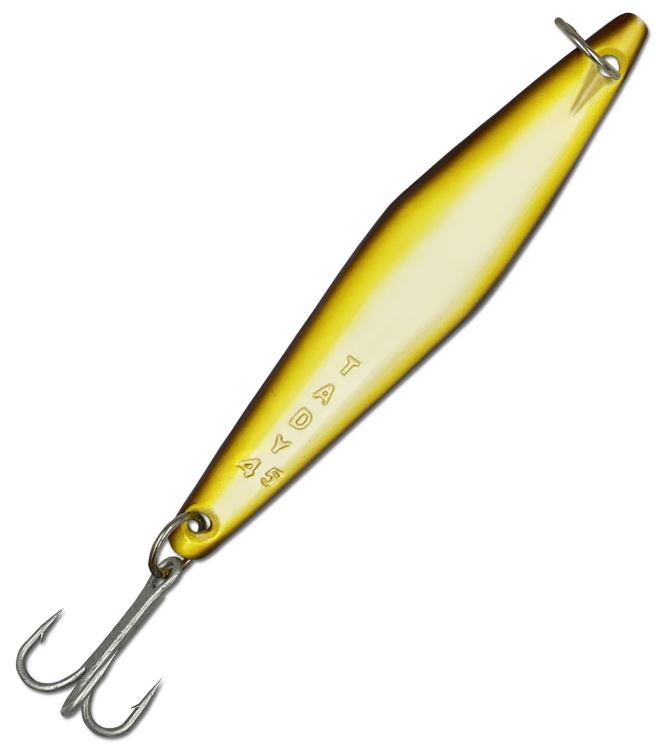
The Tady 45 has been catching yellowtail in SoCal longer than most of us have been fishing, and nothing has replaced it. The key for yellows is the retrieve — don’t burn it at full tuna speed. Yellowtail will track a Tady 45 for 20 feet before committing, and too fast a retrieve pulls it away from trailing fish. A moderate-fast pace — enough to look like a fleeing sardine, slow enough for followers to close — is the sweet spot. Blue/white and scrambled egg are the consistent yellowtail colors at the Coronados and Catalina. The 2.9oz weight loads a 7-foot rod cleanly for all-day casting without shoulder fatigue. Replace the factory treble with an Owner ST-36 in 1/0 or 2/0 — strong enough for yellows without the extra weight of a tuna treble that can affect the action.
Tady 4/0 (2.6 oz / 5.74″)
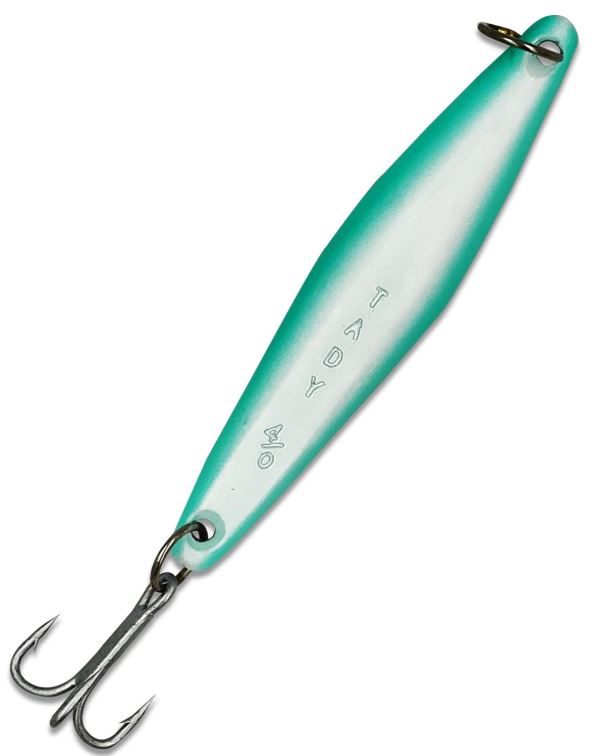
The 4/0 is the yellowtail finesse iron — reach for it when you’re watching fish track the 45 without committing. The smaller profile matches anchovies and small sardines more closely, which is often exactly what yellows are keyed on when they’re being selective. Slow the retrieve slightly from your 45 pace — the tighter, faster wobble of the 4/0 at moderate speed triggers commits from fish that have already refused the bigger iron. Chrome and bone are the go-to colors when the bite is tough and fish are line-shy. It doesn’t cast as far as the 45, so keep it for situations where yellows are within range and picky rather than distant and aggressive.
Nomad Design Slidekick Surface Iron (4.25 oz)
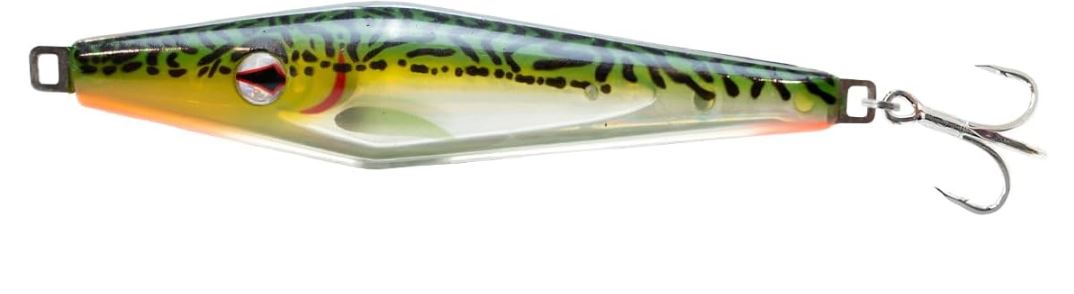
The Slidekick earns its spot in the yellowtail bag specifically on windy days and when fish are boiling at the outer edge of casting range. A Santa Ana headwind drops a Tady 45’s distance by 30 yards or more — the Slidekick’s aerodynamic 4.25oz profile punches through that and lands where the fish are. At the Coronado Islands during a morning yellowtail feed, those extra yards are often the difference between in the school and falling short. The dart-and-slash action differs from the Tady’s wide wobble, which can trigger aggressive yellows that have already ignored the standard irons. Reach for it second, not first — the Tady 45 is still the opener — but when distance or wind is the problem, the Slidekick solves it.
Yo-Yo (Vertical) Jigs
When yellowtail are holding deep on structure — reefs, wrecks, rock piles, kelp edges — yo-yo jigging is how you get them to bite. Drop the jig to the bottom, then work it back up with sharp, aggressive rod pumps. The erratic darting action triggers reaction strikes from fish that might ignore a bait drifting by.
Tady 4/0 Heavy Yo-Yo Iron (6 oz)
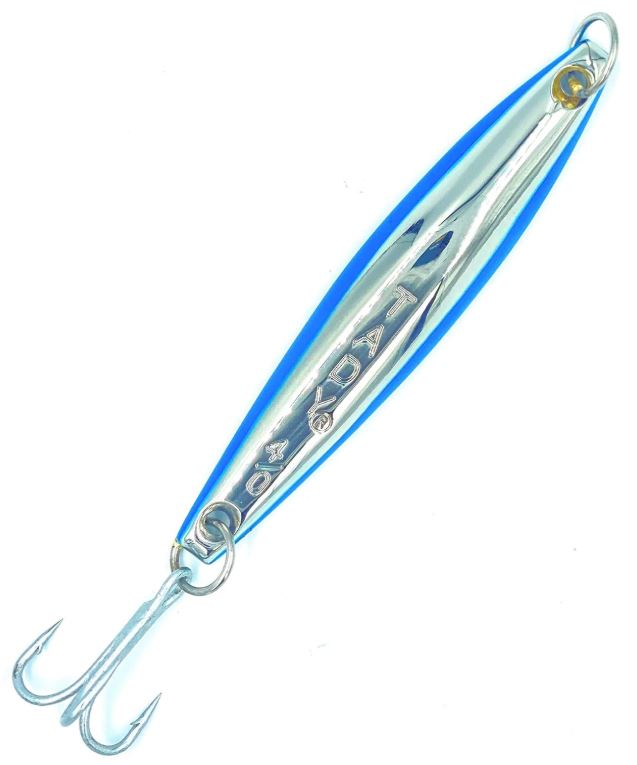
The go-to deep structure iron for yellowtail. When fish are on the meter at the 9-Mile Bank or along deep kelp edges at 80–150 feet and won’t come up, the Heavy’s 6oz gets down to them fast and stays in the zone even in moderate current. The yo-yo technique for yellows is aggressive — sharp upward rod pumps followed by a controlled fall back to depth. Yellows on structure eat it on both the rise and the fall, so watch your line during the drop for a tick or sudden slack that signals a bite you’d otherwise miss. This is the iron for the Coronado Canyon edges and anywhere the captain says fish are marking deep but not coming up to chum. Works best on a 30lb class conventional reel with 50lb braid for vertical control.
Shimano Butterfly Flat-Fall Jig (160–200g)
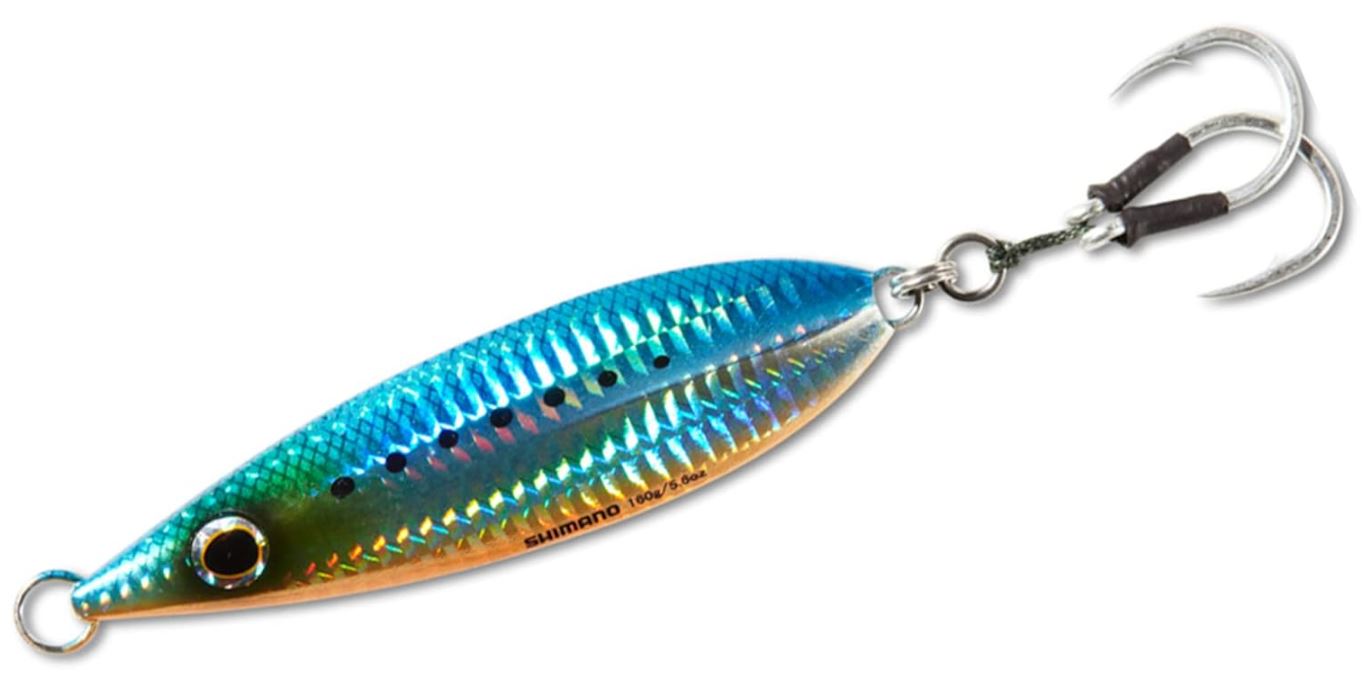
The Flat-Fall changed deep structure fishing for yellowtail in SoCal. Unlike traditional knife jigs, the flat-fall design flutters and spirals on the drop — and that movement is what triggers the bite. For yellowtail specifically, the eat almost always comes on the rise off the bottom, not mid-column: drop it to structure, engage the reel, and pump aggressively. The first few strokes off the bottom are when yellows commit. At the 9-Mile Bank and La Jolla reefs you’re typically working 100–140 feet of water with fish in the bottom third — the 160g handles that range cleanly on a standard 30lb setup. Pink and blue sardine are the consistent yellowtail producers. Run a single assist hook in 3/0–4/0 on the top ring only — a rear hook fouls on the bottom constantly and kills the jig’s action.
Nomad Design Streaker Deep Water Jig — Silver Glow Stripe
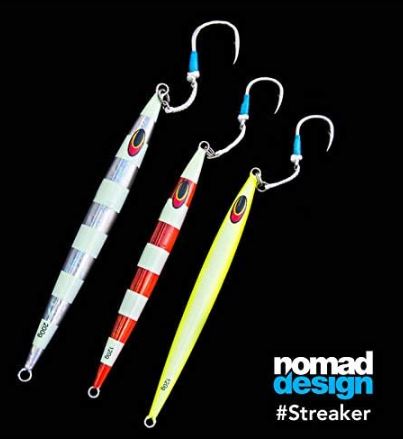
The Streaker’s slow-pitch flutter works on yellowtail when conventional yo-yo jigging has gone cold. If you’ve been hammering the bottom with a Tady Heavy and marking fish that won’t react, the Streaker’s long, lazy fall gives lethargic yellows time to look and commit without requiring a reaction strike. This is most useful on slack current when fish are sluggish — the extended flutter keeps the jig in their strike zone longer than any standard vertical iron. Silver Glow Stripe is the standout color for deep yellows specifically because it maintains visibility below 100 feet where blue sardine and pink start to lose their flash. Also deadly on white seabass holding on the same structure. Pair with a dedicated slow-pitch rod — a standard jig rod dampens the effect.
Casting Jigs
Not every yellowtail situation calls for iron or vertical jigging. Sometimes the fish want a faster-sinking, more compact presentation — or you need a jig that works the mid-water column where bait is suspending. See our jigs vs irons vs poppers guide for a full comparison of when to throw each type.
MUSTAD Colt Sniper Jig
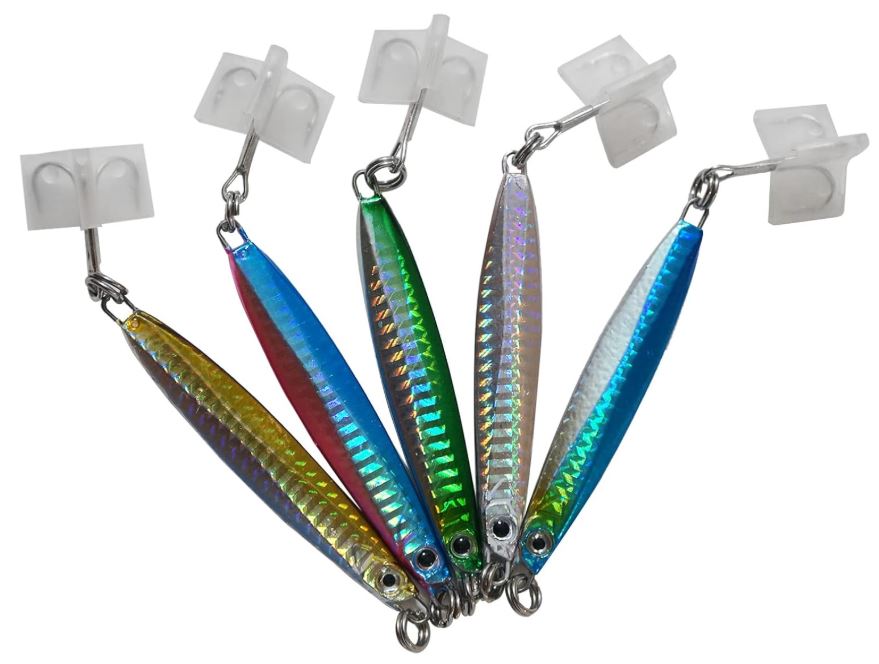
The Colt Sniper covers the mid-column gap — too deep for surface iron, not deep enough to justify dropping to structure. When yellows are suspending at 30–60 feet on the meter and won’t come up for a surface iron or down to a bottom jig, count the Sniper down to their depth and work it back with a pump-and-wind retrieve. It’s also the right call when yellows are scattered along a current line rather than stacked on structure — cast, count down, cover water. The through-wire construction holds up to yellowtail’s head shakes on fish over 20 pounds pushing toward structure. A reliable mid-column option that also works on school bluefin and big bonito when they mix in with yellows.
Shimano Current Sniper Jig
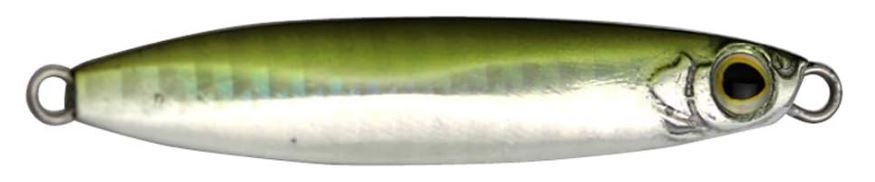
Yellowtail ambush bait along current lines and reef edges — and the Current Sniper’s asymmetric profile is built for exactly those conditions. Standard symmetrical jigs spin in moving water and look wrong to fish that are keyed on natural bait getting swept in the current. The Current Sniper darts and slashes naturally in the flow instead. Cast up-current, let it sink while the current pushes it downcurrent, and retrieve with the flow — it looks like a baitfish getting swept along a kelp edge, which is exactly how yellows want to see it. This jig is specifically effective at the Coronado Islands and along the La Jolla kelp where current runs hard against structure and positions yellowtail in predictable ambush spots.
Color Selection
Keep it simple. In clear SoCal water, these colors cover almost every situation:
- Blue and white — sardine imitation, the all-around best color
- Chrome / silver — bright days, clear water
- Scrambled egg (blue/yellow/white) — the classic SoCal pattern
- Mint / green — overcast days, green water. Check the chlorophyll map for water clarity
- Pink — surprisingly deadly on yellowtail, especially on vertical jigs and flat-falls
- Silver glow stripe — deep water where light fades, adds visibility
Match the bait when you can — if the fish are eating sardines, go blue and white. If they’re on squid, go pink or white. When in doubt, blue and white never fails.
When to Throw What
| Situation | Best Jig Type | Top Pick |
|---|---|---|
| Surface boils, breaking fish | Surface iron | Tady 45 blue/white |
| Picky fish, small bait | Light surface iron | Tady 4/0 chrome |
| Wind, need distance | Heavy surface iron | Nomad Slidekick 4.25oz |
| Fish on deep structure | Yo-yo iron | Tady 4/0 Heavy 6oz |
| Deep, fish hitting on the fall | Flat-fall jig | Butterfly Flat-Fall 160g |
| Slow bite, finicky fish | Slow-pitch jig | Nomad Streaker Silver Glow |
| Mid-water, count-down | Casting jig | Colt Sniper |
| Heavy current, reef edges | Current jig | Current Sniper |
Gear to Pair with Your Jigs
Iron and jig fishing require specific tackle to work right:
Surface iron: A spinning reel in the 5000–8000 class — Shimano Saragosa 6000 or Twin Power 6000 — paired with a 7-foot or 8-foot heavy spinning rod. Spool with 40–50lb braided line, no leader for maximum distance.
Yo-yo jigging: A 30lb class conventional reel — Penn Squall II 25N or Shimano Talica 12 — on a 7-foot medium-heavy rod. Spool with 50lb braid and 40lb fluorocarbon leader connected with an FG knot.
Casting jigs: Either spinning or conventional works. A 20lb class spinning reel like the Saragosa 5000 is versatile for lighter casting jigs, or step up to the 30lb class for heavier models.
Hooks: Rig flat-falls and vertical jigs with single assist hooks (3/0–5/0) — far better hookup ratio than treble hooks. See our hooks by species guide for specific sizes. Use J hooks on assist rigs for jigs, not circle hooks — you need the instant hookset on reaction strikes.
For complete rod and reel pairing advice, see our best rod and reel combo guide, and check our fishing line guide for specific braid recommendations.
Frequently Asked Questions
What is the best all-around yellowtail jig?
The Tady 45 (2.9 oz). It’s been the #1 surface iron in SoCal for decades and catches yellowtail in virtually every surface-feeding situation. If you buy one iron, buy a blue/white Tady 45.
What jig should I use when yellowtail are deep?
Start with a Shimano Butterfly Flat-Fall (160g) — pump it aggressively off the bottom and yellows eat it on the rise. If that’s not working, switch to a Tady 4/0 Heavy (6 oz) for an aggressive yo-yo presentation, or try the Nomad Streaker for a slower approach on lethargic fish.
What’s the difference between surface iron and yo-yo iron?
Surface irons are cast and retrieved fast across the top of the water for fish that are boiling. Yo-yo irons are dropped vertically and worked up with rod pumps for fish on deep structure. Different techniques for different situations — see our complete comparison guide.
What reel do I need for iron fishing?
For surface iron: a spinning reel in the 5000–8000 class like the Saragosa 6000. For yo-yo jigging: a 30lb conventional like the Penn Squall II 25N. See our yellowtail reel guide for complete recommendations.
What rod length is best for casting iron?
A 7-foot rod for general versatility, or an 8-foot rod for maximum casting distance when fish are boiling out of reach. The 8-footer gets you 15–20% more distance but is more tiring over a full day.
What water temperature do yellowtail like?
Yellowtail bite best in 62–70°F water, with the sweet spot at 64–68°F. Check our yellowtail temperature guide for seasonal patterns and how to use the SST chart to find them.
Plan Your Trip
Yellowtail follow warm water and bait. Check the conditions before you go:
- SST Chart — Find the warm water edges yellowtail follow
- Chlorophyll Map — Locate where bait is stacking up
- Marine Weather — Wind and swell conditions — calm days are best for iron
- Fleet Tracker — See where the fleet is finding yellowtail
- AI Fishing Predictions — Data-driven forecasts for SoCal
- Best Water Temp for Yellowtail — Know when the bite is on
- SD Fishing Season Calendar — What’s biting this month
Related Guides
- Surface Iron Fishing Guide — technique, retrieve speed, and setup
- Jigs vs Irons vs Poppers — when to throw each type
- Best Poppers for Tuna — surface lures for bluefin and yellowfin
- Best Lures for Dorado — trolling and casting lures for mahi
- Best Swimbaits for Halibut — soft plastics for the sand
- Best Reel for Yellowtail
- Best 30lb Reels
- Best 7-Foot Offshore Rods
- Best 8-Foot Offshore Rods
- Best Rod & Reel Combos for SoCal
- How to Fish Kelp Paddies
- Overnight Trip Packing List
Tight lines!