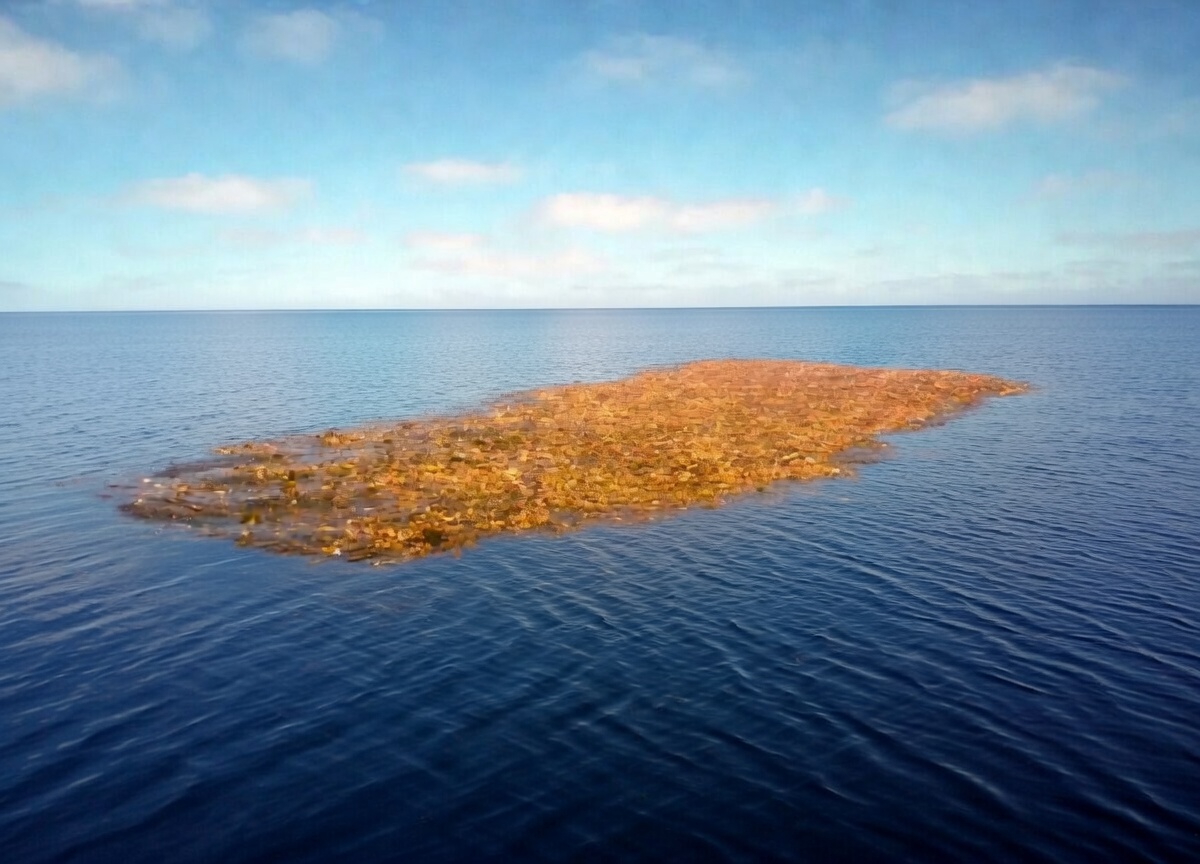
Kelp paddies are floating islands of drifting kelp that accumulate in SoCal’s offshore waters, and they are fish magnets. A single clump of kelp the size of a dining table can hold dorado, yellowtail, yellowfin tuna, bonito, calico bass, and a cloud of baitfish underneath. Finding productive paddies is one of the most reliable ways to catch quality fish on SoCal’s offshore grounds — and knowing how to fish them properly is the difference between a handful of bites and a wide-open day.
Why Paddies Hold Fish
Floating kelp creates shade, which attracts small baitfish looking for cover in the open ocean. The baitfish attract predators. A fresh paddy that’s drifted into warm, clean water can build a food chain underneath it within hours — starting with microscopic organisms, then small baitfish, then progressively larger predators.
Not all paddies are equal. The best paddies are in clean, blue water with good dorado temperatures (68°F+), have a visible bait ball underneath (polarized glasses are essential), and show signs of life — birds circling, bait flipping on the surface, or predators boiling near the edges. Dead, brown paddies with no visible life are worth a quick check but rarely produce consistent action.
How to Find Paddies
Kelp paddies form when strong swells or currents tear kelp from the coastal beds and carry it offshore. They concentrate along current edges, temperature breaks, and debris lines where different water masses meet.
SST charts: Check the SST chart on fishing-reports.ai for temperature breaks — paddies accumulate along these boundaries. Where warm offshore water meets cooler coastal water, floating debris (including kelp) collects in the convergence zone.
Chlorophyll maps: The chlorophyll map shows where productive water meets clean water. Paddies in the transition zone between green (nutrient-rich) and blue (clean) water tend to hold the most fish because bait is nearby but the water is clear enough for predators to hunt.
Fleet tracker: The fleet tracker shows where boats are clustering offshore. A cluster of boats 20+ miles out that aren’t on a known bank or high spot usually means they’ve found productive paddies.
Visual scanning: Once offshore, slow down and scan the surface. Paddies range from basketball-sized clumps to mat-sized rafts. Look for bird activity — terns and shearwaters circling or sitting on paddies indicate baitfish presence. A good set of binoculars and calm seas make paddy hunting much easier.
Species You’ll Find
Dorado: The signature paddy species. Dorado associate with floating structure throughout their range, and SoCal paddies are no exception. When water temps are above 68°F, dorado are the first species to check for. They usually sit close to the paddy — often within 50 feet — and are the most aggressive feeders on artificials. See our best dorado lures guide.
Yellowtail: Yellowtail relate to paddies differently than dorado — they often circle wider, 50–200 feet away, and hold deeper. They’ll come up for surface iron or live bait but are less likely to charge the paddy the way dorado do. Yellowtail prefer 65–72°F water, so early season paddies in slightly cooler water may hold yellowtail but not dorado.
Yellowfin tuna: In late summer and fall, yellowfin will hold under paddies — usually deeper, 30–100 feet below the kelp. They’re harder to catch on artificials around paddies and often respond better to live bait dropped below the kelp mat. Fly-lining a sardine or small mackerel near the paddy with the current is the standard approach.
Calico bass: Coastal paddies that drift near the islands or kelp beds often hold excellent calico bass. These fish relate to the kelp exactly like they do to fixed kelp beds — hiding in the canopy and ambushing bait that swims by.
How to Approach a Paddy
Approach is everything. A noisy, fast approach will scatter fish before you ever get a line in the water.
Step 1: When you spot a paddy, slow down at least 200 yards away. Cut the engines to idle.
Step 2: Idle upwind or up-current of the paddy. Let the drift carry you toward it. If there’s no wind, make a wide arc and approach from 100+ feet away.
Step 3: Look before you cast. Put on polarized glasses and scan the water around and under the paddy. Look for shadows, color changes, or bait behavior that indicates predators. If you see fish, note their depth and position — this tells you what technique to start with.
Step 4: Make your first cast count. The first lure or bait that hits the water near a fresh paddy often gets the best response. If dorado are visible, cast past the paddy and retrieve through the school. If you see fish but can’t identify them, start with a surface iron or popper to draw a reaction.
Techniques for Paddy Fishing
Casting Iron and Poppers
The most exciting method. Cast past the paddy (never into it — you’ll snag the kelp) and retrieve through the zone where fish are holding. For dorado and yellowtail on the surface, a fast retrieve with a Tady 45 or Salas 7X is deadly. If they follow but won’t commit, switch to a popper. See our jigs vs irons vs poppers guide for when to switch.
Fly-Lining Live Bait
The most consistent producer. Hook a live sardine or mackerel and let it swim toward the paddy on a fly-line rig — no weight, just a hook and fluorocarbon leader. The bait will swim naturally toward the shade of the paddy, and anything holding underneath will eat it. This is the best technique for yellowfin tuna hiding deep under the kelp.
Vertical Jigging
When fish are holding deep — visible on the sonar but not coming to the surface — drop a flat-fall jig to their depth and work it. The fluttering action on the fall imitates a dying baitfish drifting down from the paddy. Deadly on yellowtail and yellowfin that won’t come up.
Chunking
Cut sardines into chunks and toss pieces near the paddy to create a chum slick. This draws fish up and closer to the boat. Once you see activity in the chum, drop a hooked chunk or live bait into the action. Particularly effective for starting a bite that’s been slow.
Gear for Paddy Fishing
Two setups cover most paddy situations: a 20lb spinning setup for casting iron, poppers, and light live bait (handles dorado and average yellowtail), and a 30lb conventional setup for live bait drops and heavier fish (yellowtail and yellowfin). Spool with braid and carry fluorocarbon leader in 20–40lb for different situations.
Plan Your Trip
Paddies form in warm, clean water. Check conditions:
- SST Chart — Find warm water above 68°F and temperature breaks where paddies collect
- Chlorophyll Map — Locate the green-to-blue transition zone
- Marine Weather — Calm days make paddy hunting much easier
- Fleet Tracker — See where the fleet is clustering offshore
- AI Fishing Predictions — Data-driven forecasts for SoCal
- SoCal Fishing Season Calendar — Peak paddy season is midsummer through fall
Tight lines!