The slider rig is one of the most effective live bait presentations for SoCal offshore fishing. It lets you adjust the depth your bait swims at without retying your rig — a critical advantage when fish are holding at a specific depth and you need to get your bait right in front of them. Whether you’re targeting yellowtail on a reef, white seabass in the kelp, or tuna under a kelp paddy, the slider rig gives you precise depth control with a natural bait presentation.
What Is a Slider Rig?
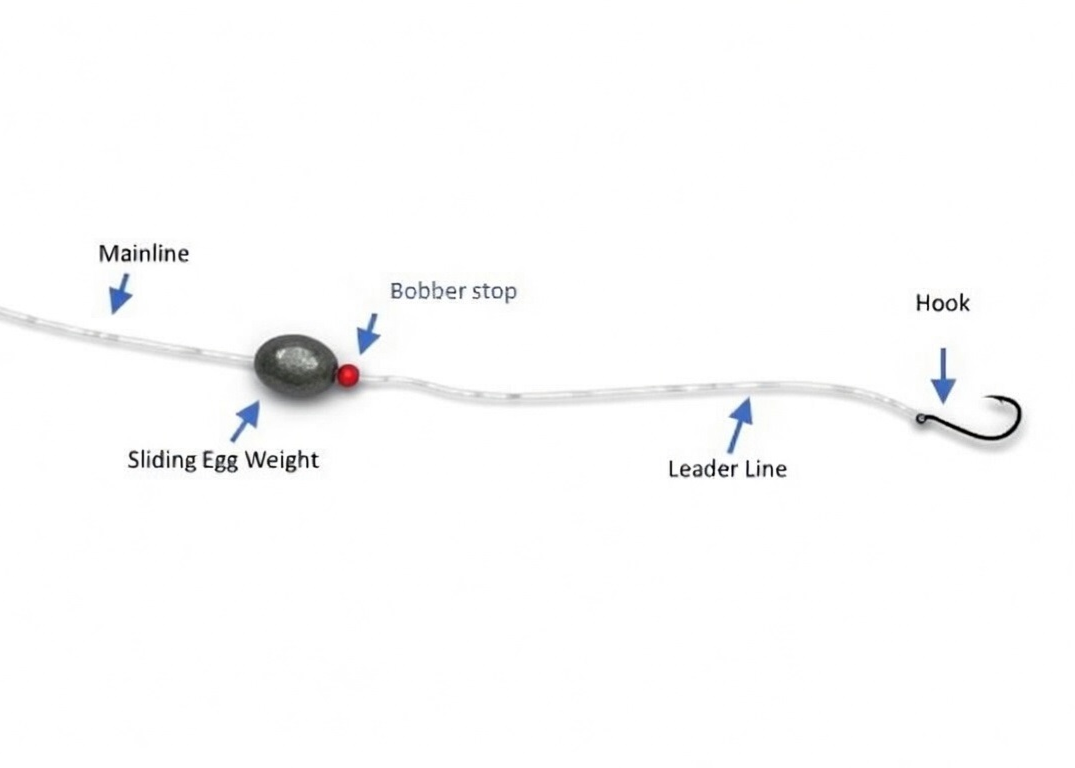
A slider rig uses a sliding sinker on your main line, held at a set depth by a bobber stop — a small knot or rubber stop that you can move up and down the line. The sinker slides freely down the line until it hits the bobber stop, and your bait hangs below on a fluorocarbon leader tied directly to the main line. When a fish takes the bait, the line pulls through the sinker freely — the fish feels no resistance, so it doesn’t drop the bait.
The slider is different from a fly-line rig (which uses no weight and lets the bait swim freely) and a Carolina rig (which sits on the bottom). The slider suspends the bait at a specific depth in the water column — wherever you set the bobber stop.
How to Set Up a Slider Rig
What you need: A bobber stop, an egg sinker (1–3 oz), fluorocarbon leader (20–40lb), and a circle hook in 1/0–4/0 (or a J hook if the boat allows — see our hooks by species guide for size selection by target). That’s it — four components.
On bobber stops: You have two options. A Rubber bobber stop are the best choice Buy on Amazon — they’re inexpensive, grip the line firmly, slide through rod guides cleanly, and are infinitely adjustable without retying anything. Keep a pack in your bag and you’ll always have them. Alternatively, if you’re on the water without one, a large enough knot in the main line can do the same job — a double overhand or a Palomar tag end left deliberately long will physically stop the sinker from sliding past it. It’s less adjustable than a proper stop but it works in a pinch.
Step 1: Slide the bobber stop onto your main line at the depth you want your bait to fish. If you want your bait at 5 feet, measure 5 feet of line from your rod tip and place the stop there. The stop grips the line firmly enough to hold the sinker at depth but can be slid up or down with finger pressure when you need to adjust — no retying required.
Step 2: Slide the egg sinker onto the line below the bobber stop. The sinker now floats freely on the line between the stop and the knot connecting your leader.
Step 3: Tie your fluorocarbon leader directly to the end of your main line using a strong connection knot. The knot itself acts as a natural stop for the sinker — the sinker can’t slide past it. Cut 3–5 feet of leader.
Step 4: Tie your hook to the end of the leader.
The complete rig from top to bottom: main line → bobber stop → egg sinker (slides freely) → main line/leader knot → fluorocarbon leader → hook.
How It Works
When you drop the rig in the water, the sinker pulls the line down. The line slides through the sinker until the bobber stop reaches the sinker — at which point the rig stops descending. Your bait now hangs at the depth you set, swimming naturally on the leader below.
When a fish takes the bait and swims away, the line pulls freely through the sinker. The fish feels only the weight of the bait and hook — no sinker resistance. This free-spool effect is why the slider rig gets more committed takes than fixed-weight rigs. By the time you engage the reel and come tight, the fish has the bait fully in its mouth and the circle hook rotates into the jaw corner.
When to Use a Slider Rig
Yellowtail on Structure
When yellowtail are holding at a specific depth on a reef or kelp edge — say 40 feet down over 80 feet of water — a slider lets you put your bait right in their face. Set the stop at 40 feet, drop the rig, and your sardine swims at exactly the depth the fish are at. This is far more precise than fly-lining (where the bait goes wherever it wants) and more natural than a heavy dropper loop rig. When fish are off the bite on live bait, it’s also worth having a jig ready to drop — the slider and the iron cover the same fish from two angles. Check the yellowtail temperature guide for when they’re in range.
White Seabass in the Kelp
White seabass often suspend at mid-depth in the kelp canopy, feeding on squid. A slider rig with a live squid at 20–30 feet is the classic technique. The squid swims naturally in the kelp, the sinker keeps it at the right depth, and the free-slide lets the seabass eat without feeling resistance. This is how most trophy white seabass are caught from party boats and private boats during the spring spawning run.
Tuna Under Kelp Paddies
When tuna are holding 30–80 feet under a kelp paddy and won’t come to the surface, a slider rig gets your bait to their depth. Set the stop based on what the sonar shows, and let a live sardine or mackerel swim at the target depth. This is more effective than a fly-line (which won’t get deep enough) and more natural than a heavy sinker rig. On the same stop, keep a slow-pitch jig rigged and ready — when the slider bite slows, dropping a jig to the same depth often restarts it.
Halibut Along Structure Edges
When drifting along sandy bottom near structure, a slider rig set just above the bottom lets your bait swim naturally along the sand where halibut lie in wait. The free-slide ensures a halibut can pick up the bait and move without feeling the sinker.
Dialing in the Details
Sinker Weight
Use the lightest weight that gets your bait to depth. In minimal current, 1 ounce is often enough. In moderate current, 2 ounces. In strong current or deep water (100+ feet), 3 ounces or more. Too much weight kills the bait faster and makes the presentation less natural. Too little and the bait never reaches the target depth.
Leader Length
3–5 feet is standard. Longer leaders give the bait more freedom to swim naturally but make the rig harder to manage on the boat. Shorter leaders keep better control but reduce the bait’s range of motion. For tuna in clear water, err longer (5 feet). For yellowtail on structure, 3 feet prevents the bait from swimming into the rocks.
Adjusting Depth
The biggest advantage of the slider rig is real-time depth adjustment. If the fish move shallower, slide the bobber stop down. If they drop deeper, slide it up. No retying, no re-rigging — just move the stop and drop again. This is where purpose-made bobber stops Buy on Amazon — really earn their keep over a knot: you can reposition them in seconds with two fingers while keeping your bait in the water. On a boat where conditions change throughout the day, that flexibility is invaluable.
Slider Rig vs Other Live Bait Rigs
| Rig | Best For | Limitation |
|---|---|---|
| Fly-line | Surface tuna, free-swimming bait | No depth control — bait goes where it wants |
| Slider (this guide) | Specific depth targeting, structure fishing | Slightly more complex setup |
| Carolina rig | Bottom fishing (halibut, surf) | Bait stays on bottom only |
| Dropper loop | Deep bottom fish (rockfish) | Fixed depth, less natural movement |
Gear Recommendations
A 30lb conventional reel with a medium-heavy rod is the standard slider rig setup for yellowtail and white seabass. For tuna, step up to a 40lb+ setup. Braided main line is preferred because it’s thinner, allowing the line to slide more freely through the sinker, and the zero stretch gives you better sensitivity to feel the bite.
Plan Your Trip
- SST Chart — Water temperatures for your target species
- Chlorophyll Map — Where bait is concentrating
- Marine Weather — Wind, swell, and conditions
- Fleet Tracker — See where the fleet is fishing
- AI Fishing Predictions — Data-driven forecasts for SoCal
- SoCal Fishing Season Calendar — What’s biting this month
Related Guides
- Fly-Line Rig for Tuna
- Carolina Rig Setup
- Dropper Loop Rig
- Circle Hooks vs J Hooks
- Best Hooks by Species
- Best Fishing Knots
- Braid vs Mono vs Fluorocarbon
- Best Yellowtail Jigs
- Best Tuna Jigs and Irons
- Best 30lb Reels
- Best Reels for Bluefin
- Fishing Kelp Paddies
- Best Water Temp for Yellowtail
- Best Water Temp for Halibut
Tight lines!