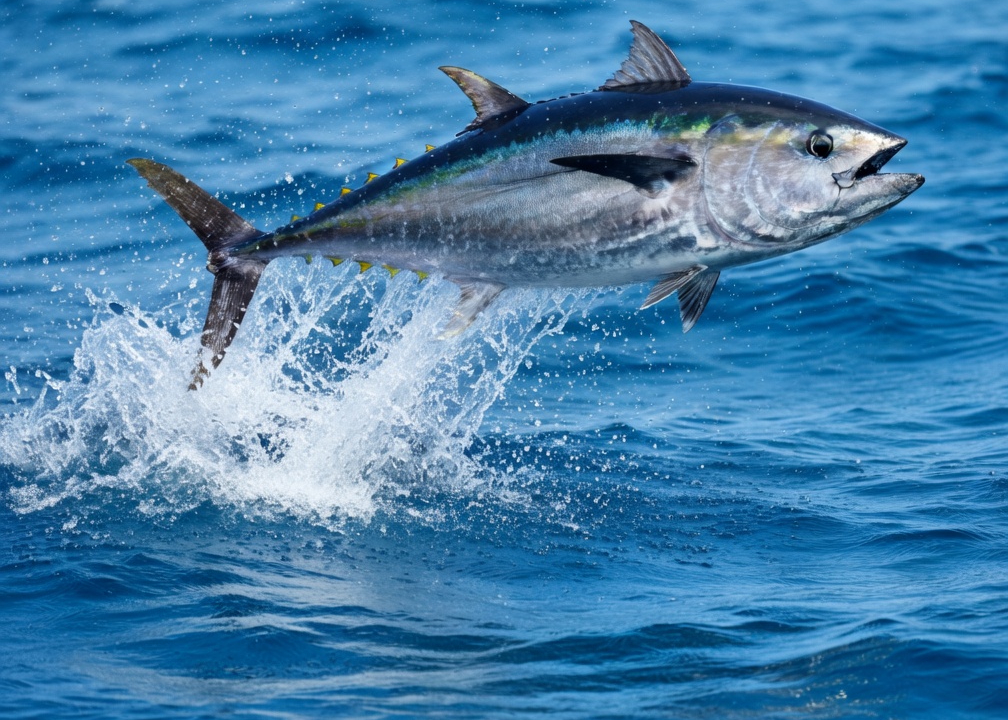
When tuna are crashing bait on the surface or stacked on deep structure, the angler throwing iron is the one getting bit. Live bait catches more tuna overall in SoCal — but nothing matches the adrenaline of a bluefin blowing up on a surface iron or hammering a flat-fall on the drop. Jig fishing for tuna is harder than throwing iron at yellowtail — tuna are faster, pickier, and pull significantly harder — but the payoff is worth it.
This guide covers the three main categories of tuna jigs — surface irons, yo-yo (vertical) jigs, and casting jigs — plus the specific models that consistently produce on SoCal bluefin and yellowfin. If you’re still dialing in your tuna setup, check our best reel for bluefin guide first.
⚡ Quick Picks by Situation
Surface boils: Tady 45 (2.9 oz) — the SoCal standard, cast it into the boil and burn it back.
Finesse surface: Tady 4/0 (2.6 oz) — lighter profile for picky bluefin that are following but not eating.
Distance / wind: Nomad Design Slidekick (4.25 oz) — aerodynamic, reaches boils other irons can’t.
Deep structure: Shimano Butterfly Flat-Fall — the flutter on the drop is what triggers the bite.
Heavy yo-yo: Tady 4/0 Heavy (6 oz) — punches through current to deep fish fast.
Surface Irons
Surface iron fishing for tuna is the pinnacle of SoCal angling. When bluefin or yellowfin push bait to the surface and the water erupts, casting iron into the chaos is how you get the most explosive strikes in the ocean. The window is often short — tuna boil for a few minutes, then go back down — so you need to be rigged, ready, and casting the instant fish show on top. Speed is everything: fast retrieve, long cast, no hesitation. For a full breakdown of when to throw iron vs other lure types, see our jigs vs irons vs poppers guide.
Critical upgrade: Replace the factory treble hooks on every iron you own with Owner ST-66 trebles in 2/0–3/0. Factory trebles are made from soft wire and will straighten instantly on a tuna. The ST-66 is 4X strong with a tin finish for corrosion resistance. This is non-negotiable — see our hooks guide for details.
Tady 45 (2.9 oz / 6.5″)
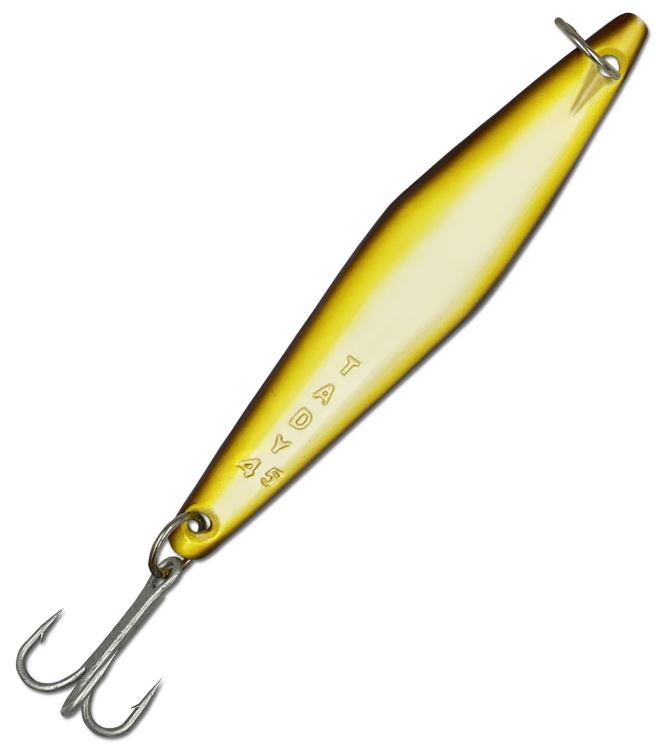
On bluefin specifically, the Tady 45 is all about speed and distance. When a boil erupts, you need a full-burn retrieve from the moment the iron hits the water — no pause, no slow down, no hesitation. Tuna are keyed on escaping bait at maximum speed, and any break in the retrieve gets the iron refused. The 2.9oz weight earns its place on tuna trips because bluefin boils move fast and casting distance determines whether you’re in the zone or watching from behind. Every extra yard of cast matters when the window is 90 seconds. Non-negotiable: replace the factory treble immediately with an Owner ST-66 in 2/0. Bluefin will straighten soft factory wire on the first hard run — this upgrade is not optional.
Tady 4/0 (2.6 oz / 5.74″)
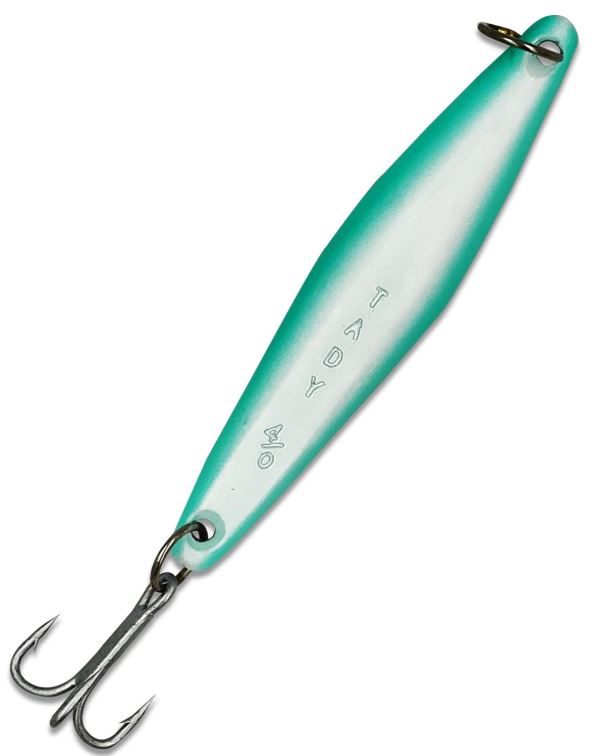
The 4/0 is a finesse weapon for line-shy bluefin — not a backup to the 45, but a deliberate tool for a specific situation. When bluefin in the 30–60lb class are boiling but following the 45 without committing, the smaller 4/0 profile matches smaller forage and the slightly different action gives picky fish a reason to eat. This is well-documented behavior on SoCal bluefin: fish that have seen pressure get selective, and the 4/0 breaks through that. Bone and chrome are the go-to colors on difficult fish. The reduced casting distance means you need fish within range, but when everyone on the boat is watching followers and not going tight, the 4/0 is the move. Same treble rule applies: ST-66, not factory.
Nomad Design Slidekick Surface Iron (4.25 oz)
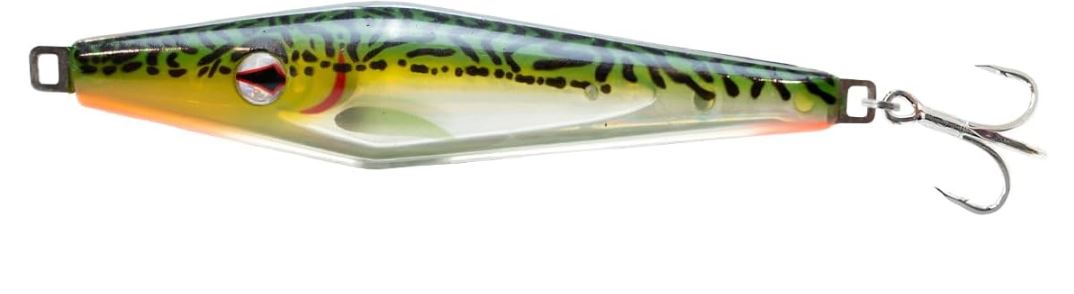
The Slidekick solves the tuna angler’s most common problem: boils that are too far away and moving fast. At 4.25oz, it cuts through headwinds and delivers 20–30 yards more distance than a Tady in rough conditions — and on bluefin where the boil window is short and the school is moving, that distance is often everything. The hard dart-and-slash action differs from the Tady’s wobble, which can trigger strikes from fish that have already refused every other iron in the boat. The extra weight also means it can be yo-yoed vertically in a pinch when fish drop below the surface mid-stop. Same mandatory upgrade: Owner ST-66 trebles before you throw it at anything with tuna written on it.
Yo-Yo (Vertical) Jigs
When tuna are on the meter but won’t come to the surface, yo-yo jigging gets down to their depth. This is especially productive on bluefin — they often hold 60–150 feet below the surface during the day and only come up briefly to feed. Drop the jig to the depth fish are marking, then work it back up with sharp, aggressive rod pumps. The erratic darting action triggers reaction strikes from fish that are ignoring bait and surface presentations.
Tady 4/0 Heavy Yo-Yo Iron (6 oz)
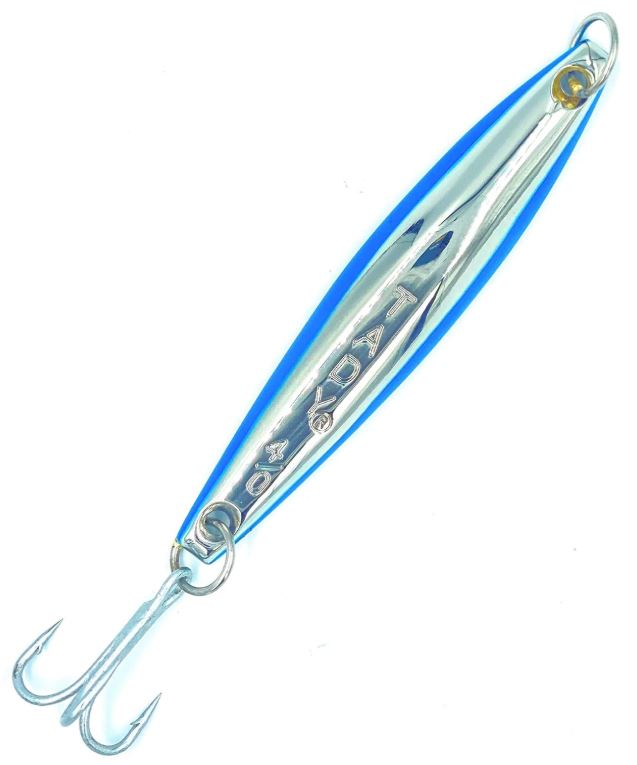
Bluefin on the meter at 80–200 feet is where the Heavy earns its place. The 6oz sinks fast enough to reach a moving school before it passes underneath — which is the constant challenge with deep bluefin, because unlike yellowtail stacked on structure, tuna don’t hold still. Work it with hard, sharp pumps, but unlike deep yellowtail jigging where the bite comes on the rise, bluefin often eat the Heavy on the fall — feather it down on semi-slack line and watch for a tick or sudden slack that signals a fish. When bluefin are circling at 150+ feet and won’t commit to anything on the surface, this is where you find the bite. A 40lb conventional setup with 65lb braid is the right call — a 30lb yellowtail setup gets embarrassed on the first run of a big bluefin.
Shimano Butterfly Flat-Fall Jig (160–200g)
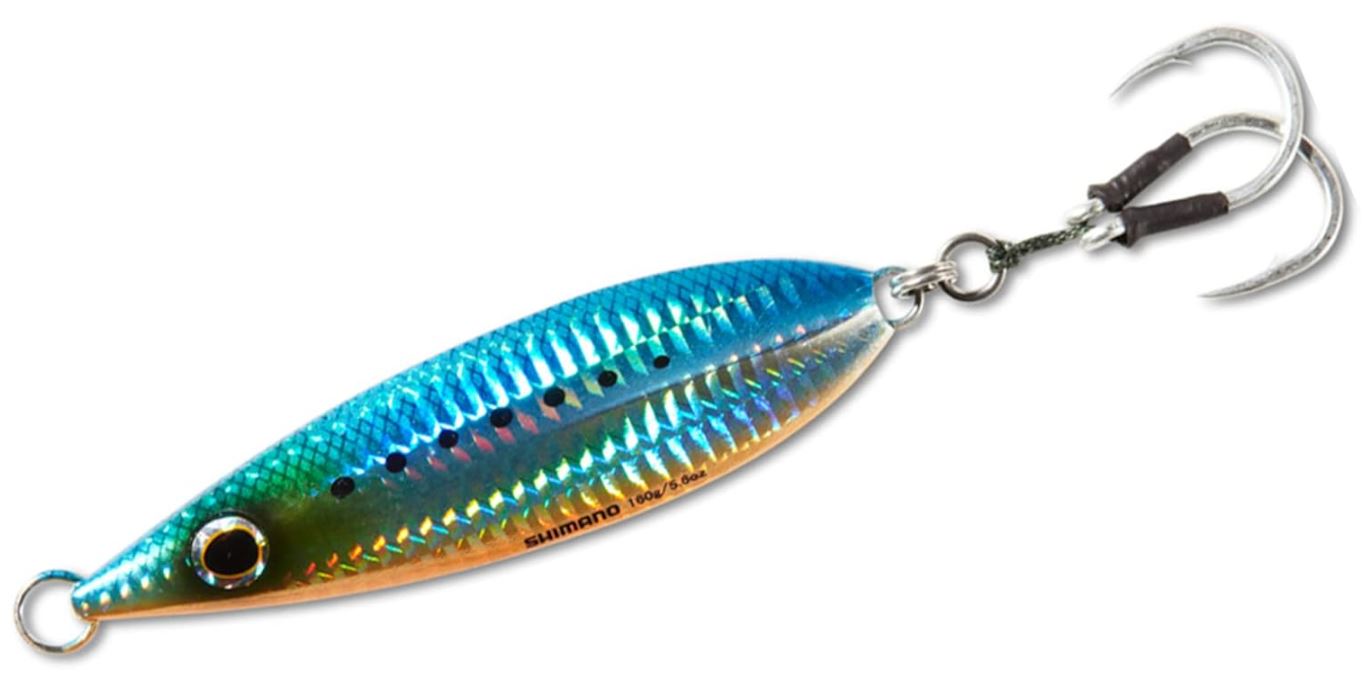
The Flat-Fall produces bluefin bites that nothing else in the bag will. The critical thing to understand for tuna specifically: the bite comes on the fall, not the rise. Drop it on a semi-slack line and watch your line for a tick, a jump, or sudden slack going down — that’s the eat. Bluefin will inhale a flat-fall on the descent and you’re tight before you feel it as a thump. This is a completely different mental approach than yo-yo jigging with the Heavy, and anglers who treat it like a standard vertical jig miss most bites. On deep stops where fish are marking at 150–200 feet and surface iron is getting nothing, the flat-fall angler is almost always the first one going tight. Single assist hook 4/0–6/0 on the top ring. Blue sardine and pink are the consistent bluefin producers.
Nomad Design Streaker Deep Water Jig — Silver Glow Stripe
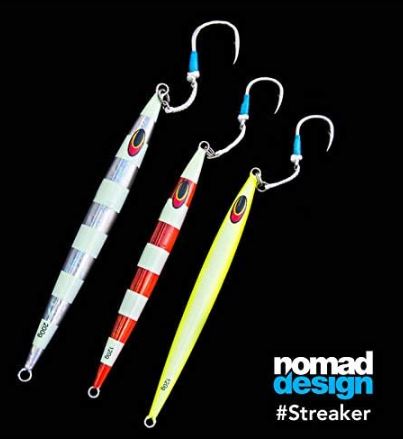
When bluefin are deep and lethargic — present on the meter but not responding to aggressive presentations — the Streaker’s slow-pitch flutter triggers fish that have locked down. This is most relevant on trips where fish have seen sustained pressure and stopped reacting to standard iron. The slow-pitch technique for tuna requires patience: let the jig sink completely on near-slack line, work it up slowly with soft rod loads, and let it fall again. The Silver Glow Stripe finish matters at depth specifically for bluefin — fish holding at 150+ feet are in low light conditions, and the glow adds visibility that blue sardine and pink patterns don’t deliver below 120 feet. This is a specialty tool for a specific situation, not a first-throw option, but knowing when to deploy it is what separates experienced tuna jig anglers.
Casting Jigs
Not every tuna situation calls for surface iron or vertical jigging. Sometimes fish are mid-column — too deep for surface iron, too scattered for a straight vertical drop. Casting jigs bridge that gap: cast them out, count them down to the depth fish are holding, and work them back. They also double as vertical jigs in a pinch. For a full comparison of when to throw each type, see our jigs vs irons vs poppers guide.
MUSTAD Colt Sniper Jig
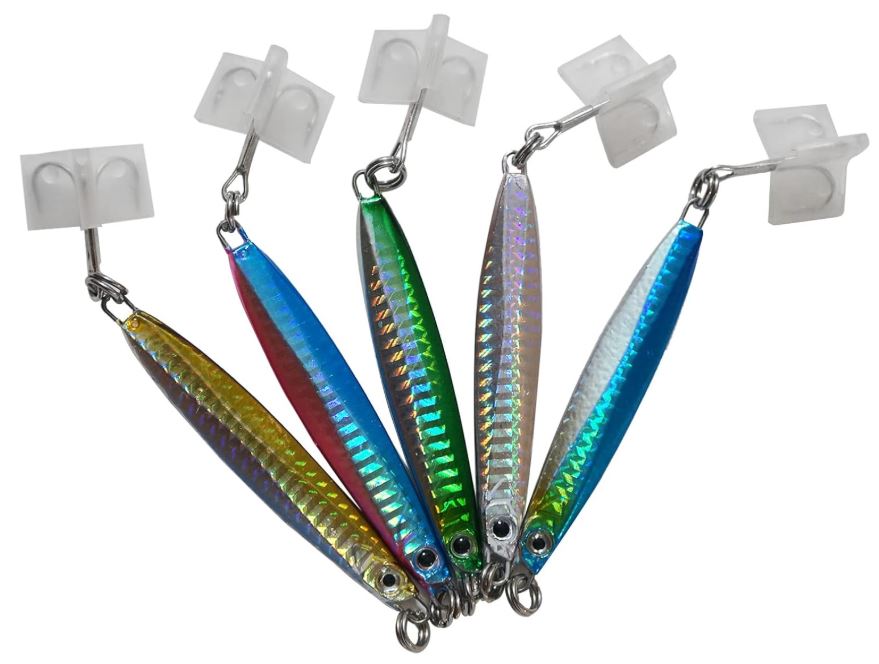
Bluefin suspended mid-column — on the meter but not on structure and not at the surface — are the Colt Sniper’s target. Count it down to the depth fish are marking on the sonar, then work it back with a pump-and-wind retrieve. This happens most often when bluefin are following offshore temperature breaks and holding at a specific thermocline depth without rising or settling on bottom. The through-wire construction matters on tuna specifically — bluefin in the 30–60lb range test every component and standard wire-through won’t survive a full fight. It also doubles as a casting jig for mid-column fish during a stop: count it down 15–20 feet and work it back instead of burning on top when surface presentations are getting ignored.
Shimano Current Sniper Jig
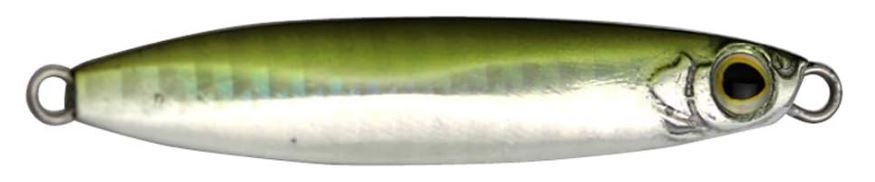
SoCal bluefin concentrate along offshore current edges and temperature breaks, and the Current Sniper’s asymmetric design performs in the moving water you find along those lines. Standard symmetrical jigs spin in current and lose their action entirely — the Current Sniper darts and slashes naturally in the flow, looking like a baitfish being pushed along a current edge, which is exactly how bluefin see their forage in that environment. Cast up-current along a temperature break, sink to depth, and retrieve with the current. This is a specific tool for offshore current fishing, but that’s precisely where SoCal bluefin concentrate — along the edges where water masses collide and bait stacks up.
Color Selection
Tuna are more color-selective than yellowtail, especially bluefin in clear water. Match the forage and you’ll get bit more consistently:
- Blue and white — sardine imitation, the all-around best tuna color in SoCal.
- Chrome / silver — maximum flash in clear water. The go-to for surface iron when tuna are chasing bait on top.
- Bone / white — subtle profile for bright days and line-shy bluefin. Works when chrome is too flashy.
- Scrambled egg (blue/yellow/white) — the classic SoCal pattern that still produces on tuna.
- Pink — surprisingly deadly on tuna, especially on flat-falls and vertical jigs fished deep. May imitate squid.
- Blue sardine — realistic finish for picky fish. The top flat-fall color for bluefin.
- Silver glow stripe — deep water where light fades, adds visibility below 100 feet.
When in doubt, start with blue/white for surface iron and blue sardine or pink for vertical jigs. Bluefin key on matching the forage — if they’re eating sardines, blue/white and chrome dominate. If the bite is happening deeper or around dawn, darker and pink patterns produce better. Check the chlorophyll map for water clarity — in clean blue water, go natural or chrome. In greener water, brighter patterns get more attention.
When to Throw What
| Situation | Best Jig Type | Top Pick |
|---|---|---|
| Tuna boiling, crashing bait on top | Surface iron | Tady 45 blue/white — burn it back |
| Picky bluefin, refusing the 45 | Light surface iron | Tady 4/0 chrome or bone |
| Wind, need distance to reach boil | Heavy surface iron | Nomad Slidekick 4.25 oz |
| Fish on meter, won’t come up | Yo-yo iron | Tady 4/0 Heavy 6 oz |
| Deep fish, biting on the fall | Flat-fall jig | Butterfly Flat-Fall 160–200g |
| Lethargic fish, slow bite deep | Slow-pitch jig | Nomad Streaker Silver Glow |
| Mid-column, count-down | Casting jig | Colt Sniper |
| Current edges, temperature breaks | Current jig | Current Sniper |
Gear to Pair with Your Jigs
Tuna pull harder than yellowtail — significantly harder. SoCal bluefin regularly run 30–80 lbs with fish over 100 every season, and even yellowfin in the 20–40 lb range will punish undersized tackle. Your jig gear needs to launch heavy iron, handle high-speed retrieves, and stop a fish that wants to take 300 yards of line on the first run.
Surface iron: A spinning reel in the 6000–10000 class — Shimano Saragosa 6000 or Saragosa 8000 — paired with an 8-foot heavy spinning rod for maximum casting distance. Spool with 50–65lb braid — no leader for maximum distance on the cast. The 8-foot rod is preferred over a 7-footer for tuna iron because the extra length adds critical distance when you’re trying to reach a boil before it goes down.
Yo-yo jigging: A 40lb class conventional reel — Shimano Talica 12 or Penn Squall II 25N — on a 7-foot medium-heavy rod. Spool with 50–65lb braid and 30–40lb fluorocarbon leader connected with an FG knot. The heavier class is necessary because bluefin on a vertical jig often eat heading straight down — you need stopping power to turn the fish before it spools you.
Casting jigs: Same spinning setup as surface iron works — Saragosa 6000 on an 8-foot rod with 50–65lb braid. Add a 30–40lb fluoro leader for casting jigs since you’re not relying on the same distance you need for iron — the extra abrasion resistance of fluoro matters when tuna are rubbing the leader against their sandpaper skin.
Hooks: Owner ST-66 trebles (2/0–3/0) on every surface iron — replace factory hooks immediately. Single assist hooks (4/0–6/0) on flat-falls and vertical jigs — far better hookup ratio than trebles on the drop. See our hooks by species guide for specific sizes. Use J hooks on assist rigs, not circle hooks — you need the instant hookset on reaction strikes.
For complete rod and reel pairing advice, see our bluefin reel guide, best rod and reel combo guide, and fishing line guide for specific braid recommendations.
Frequently Asked Questions
What is the best all-around tuna jig?
The Tady 45 (2.9 oz) for surface situations and the Shimano Butterfly Flat-Fall (160g) for when fish are deep. Between those two jigs you can cover tuna on the surface and tuna on the meter. Replace the Tady’s factory trebles with Owner ST-66s before you throw it at tuna.
What jig should I use when tuna are deep?
Start with a Shimano Butterfly Flat-Fall (160g) and watch your line on the fall — that’s when bluefin eat it. If that’s not working, switch to a Tady 4/0 Heavy (6 oz) for an aggressive yo-yo presentation, or try the Nomad Streaker for a slower approach on lethargic fish.
What’s the difference between surface iron and yo-yo iron?
Surface irons are cast and retrieved at high speed across the top of the water when tuna are boiling. Yo-yo irons are dropped vertically and worked up with sharp rod pumps when fish are deep on the meter. Different techniques for different situations — see our complete comparison guide and surface iron guide.
What reel do I need for tuna iron?
For surface iron: a spinning reel in the 6000–10000 class like the Saragosa 6000 or 8000. For yo-yo jigging: a 40lb conventional like the Talica 12. Tuna require heavier gear than yellowtail — don’t bring a 30lb class setup to a bluefin fight. See our bluefin reel guide for complete recommendations.
Do I need to replace treble hooks on my irons?
Yes — this is non-negotiable for tuna. Factory trebles on iron jigs are made from soft wire that straightens on a hard-pulling tuna in seconds. Replace every treble with Owner ST-66 trebles — 4X strong construction that won’t bend or break. Takes 2 minutes per jig with split-ring pliers. This is the single most important upgrade for tuna jig fishing. See our hooks guide for the right treble size for each iron.
What rod length is best for casting iron at tuna?
An 8-foot rod is preferred for tuna — the extra length over a 7-footer adds 15–20% more casting distance, and on tuna where boils are farther out and the window is shorter, that distance matters. It’s more tiring over a full day, but the extra reach is worth it when bluefin are boiling at the edge of your range.
What water temperature do tuna like?
Bluefin bite best in 60–72°F water, with the sweet spot at 62–68°F. Yellowfin want 68°F and above, with the sweet spot around 72–78°F. Check our bluefin temperature guide, yellowfin temperature guide, and the SST chart to find productive water.
Plan Your Trip
Tuna follow bait along temperature breaks. Check conditions before you go:
- SST Chart — Find the temperature breaks where tuna patrol
- Chlorophyll Map — Where bait is stacking up
- Marine Weather — Wind and swell conditions — calm days are best for iron
- Fleet Tracker — See where the fleet is finding tuna
- AI Fishing Predictions — Data-driven forecasts for SoCal
- Best Water Temp for Bluefin — Ideal temperature range and seasonal patterns
- Best Water Temp for Yellowfin — When and where yellowfin show up
- SD Fishing Season Calendar — What’s biting this month
Related Guides
- Surface Iron Fishing Guide — technique, retrieve speed, and setup
- Jigs vs Irons vs Poppers — when to throw each type
- Best Poppers for Tuna — surface lures for bluefin and yellowfin
- Best Lures for Tuna — trolling lures, cedar plugs, and feathers
- Best Yellowtail Jigs & Irons
- Best Lures for Dorado — trolling and casting lures for mahi
- Fly-Line Rig for Tuna
- Best Reel for Bluefin Tuna
- Best Reel for Yellowtail
- Best 40lb Reels
- Best 7-Foot Offshore Rods
- Best 8-Foot Offshore Rods
- Best Rod & Reel Combos for SoCal
- Best Hooks by Species
- Best Swimbaits for Halibut
- Braid vs Mono vs Fluorocarbon
- Best Fishing Line by Pound Test
- Best Fishing Knots
- Circle Hooks vs J Hooks
- Finding Temperature Breaks
- Overnight Trip Packing List
Tight lines!