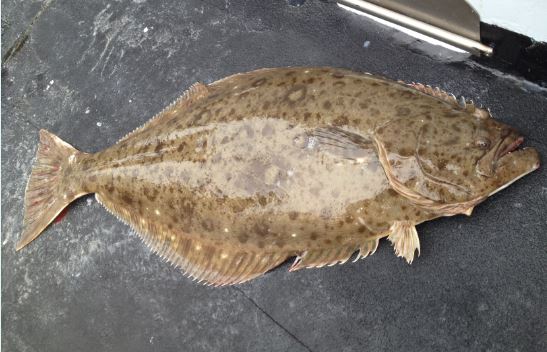
Swimbaits have become the most popular artificial lure for targeting California halibut, and for good reason. A well-presented soft plastic swimbait imitates the small baitfish and sand-dwelling prey that halibut eat every day. Unlike live bait, you can fish swimbaits all day without worrying about your bait dying, you can cover more ground with active retrieves, and you can fish water that’s hard to reach with bait — sandy pockets between rocks, shallow flats, and narrow troughs in the surf.
This guide covers the best swimbaits for halibut, how to rig them, and the techniques that consistently produce fish from boats, kayaks, and the beach.
⚡ Quick Picks
Best overall: Big Hammer 4″ — the SoCal halibut standard. Strong paddle tail, proven colors, catches everywhere.
Best for surf (hard body): Lucky Craft FlashMinnow 110 — suspends 1–2 ft deep, killer jerkbait action for halibut in the troughs.
Best for clear water: Berkley Gulp! 4″ Swimming Mullet — scent-infused, draws cautious fish that won’t commit to unscented plastic.
Best for surf (soft plastic): Z-Man MinnowZ 3″ — nearly indestructible ElaZtech survives rocks and dozens of fish.
Best for deep water: Keitech Swing Impact FAT 4.8″ — oversized profile triggers bigger halibut at depth.
Best hard body: Lucky Craft Gunfish — tight natural action for shallow bays and flats.
When to Throw What
| Situation | Best Swimbait | Jig Head | Why |
|---|---|---|---|
| Surf troughs | Lucky Craft FlashMinnow 110 | N/A (hard body) | Suspends 1–2 ft deep, jerk-and-pause triggers halibut in shallow troughs |
| Surf (sandy bottom) | Z-Man MinnowZ 3″ | 1/4–1/2 oz round | Indestructible in rocks, buoyant tail kicks at slow bottom-drag speeds |
| Heavy surf / current | Big Hammer 4″ | 1/2–3/4 oz football | Strong vibration cuts through turbulence |
| Clear calm water | Gulp! Swimming Mullet | 1/4–3/8 oz round | Scent draws cautious fish in high-visibility conditions |
| Bay flats (5–15′) | Lucky Craft Gunfish | N/A (hard body) | Consistent depth, lifelike action, excellent hookup ratio |
| Boat drift (20–40′) | Big Hammer 4″ | 1/2–3/4 oz round | Proven all-around producer at moderate depth |
| Deep structure (40–60′) | Keitech 4.8″ | 3/4–1 oz football | Oversized profile draws big halibut, strong flutter on fall |
| Slow bite / finicky | Gulp! Swimming Mullet | 1/4 oz round (dead stick) | Scent trail converts followers, dead-stick patience |
| Rock / reef transitions | Z-Man MinnowZ 3″ | 3/8 oz dart | Survives snags, dart head triggers staged fish |
Best Soft Plastic Swimbaits
Best Overall: Big Hammer 4″ Swimbait
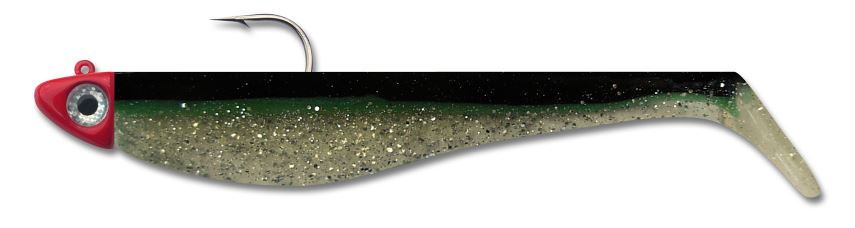
The Big Hammer has been catching SoCal halibut for years and remains the benchmark. The wide paddle tail creates a strong, thumping vibration that halibut can detect from distance — important because halibut use their lateral line to sense prey movement in low-visibility conditions. The 4-inch size matches the small smelt and gobies that halibut feed on along sandy bottom. Smelt, sardine, and glow/chartreuse are the money colors. Rig on a 1/2 oz round jig head with a 4/0 wide-gap hook and drag it across sandy bottom — this is the setup that consistently produces from party boats, drift boats, and the surf. If you only buy one halibut swimbait, this is it.
Best Hard Body for Surf: Lucky Craft FlashMinnow 110
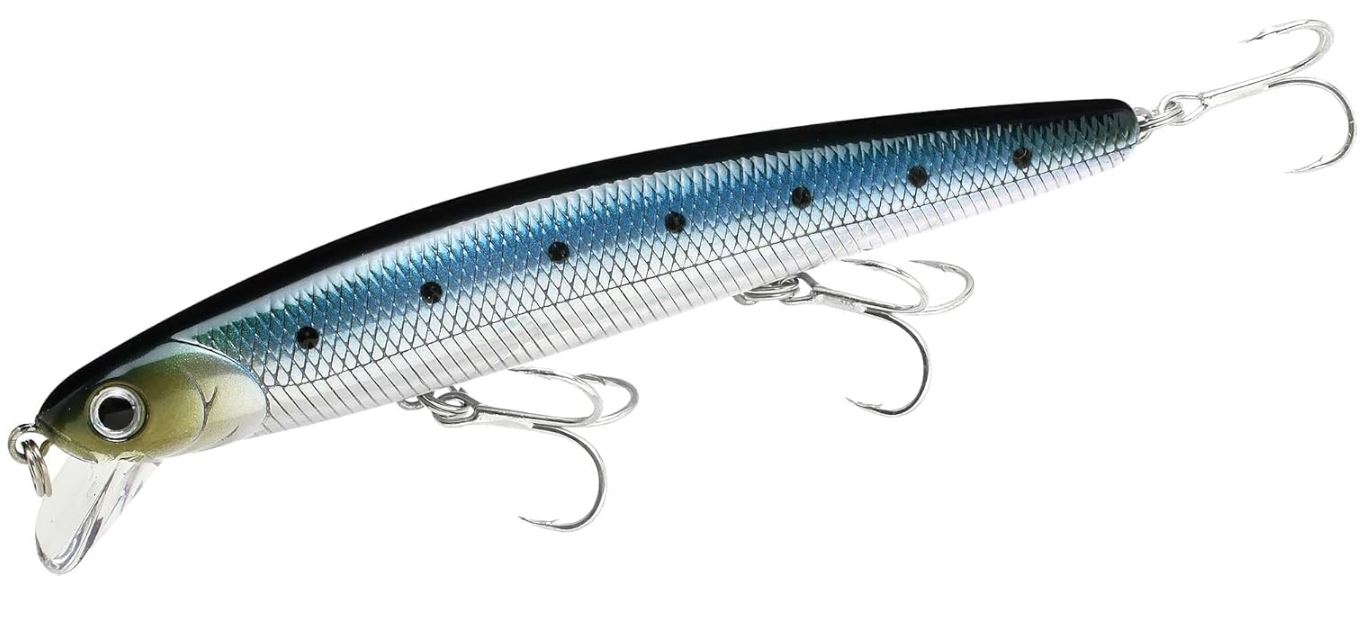
The FlashMinnow 110 is the lure that changed SoCal surf halibut fishing. Part of Lucky Craft’s California Inshore Fishing (CIF) series, this 4.5-inch suspending jerkbait runs just 1–2 feet below the surface — right where halibut are looking up for prey in the troughs. The weight-shift system launches it well past the breakers, and the tight side-to-side action on a jerk-and-pause retrieve is irresistible. When you stop reeling, the FlashMinnow suspends in place and wobbles — that pause is when halibut strike. Corrosion-resistant VMC treble hooks come standard, and the hookup ratio is excellent since halibut commit hard on the pause. Metallic sardine and pearl white are the go-to colors. Fish it on a 7’6″–8′ medium to medium-heavy rod with 15–20lb braid and 12–15lb fluoro leader. Where soft plastics drag the bottom, the FlashMinnow covers the upper water column — carry both and you have the entire strike zone covered.
Best for Clear Water: Berkley Gulp! 4″ Swimming Mullet
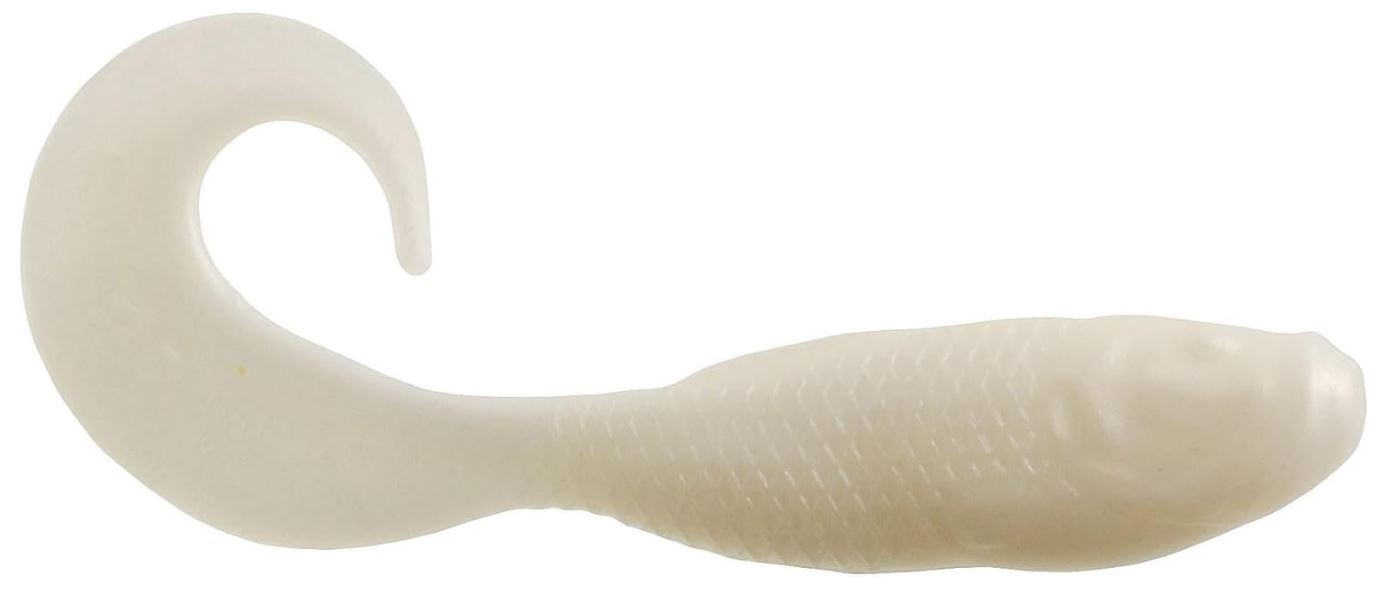
The Gulp! line infuses scent into the soft plastic, which gives you an edge in clear water where halibut can be cautious. The swimming mullet profile is a natural match for SoCal forage species, and the scent trail draws fish that might shy away from an unscented lure. Especially effective when halibut are in ambush mode and not actively chasing — the scent encourages them to commit when the visual alone wouldn’t. Pearl white and new penny are top producers. Also the best choice for the dead-stick technique — let the Gulp! sit on the bottom and the scent does the work while you wait. Keep them in their original bag juice when not in use; they dry out and lose effectiveness if stored improperly.
Best for the Surf: Z-Man MinnowZ 3″
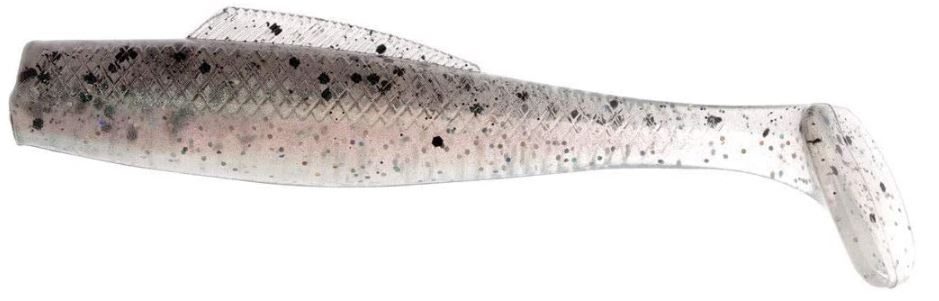
The Z-Man’s ElaZtech material is nearly indestructible — it survives dozens of fish, rocky bottom, and the abuse of surf casting without tearing. The smaller 3-inch profile matches the sand crabs and small baitfish that halibut eat in the surf zone. Rig it on a light jig head (1/4–1/2 oz) and work it through the troughs on a slow, bottom-bouncing retrieve. The material’s buoyancy keeps the tail kicking even at very slow speeds — critical in the surf where you need to creep the bait along the sand. Pair with a 4000–5000 spinning reel and 15–20lb braid for a deadly surf halibut setup.
Best for Deep Water: Keitech Swing Impact FAT 4.8″
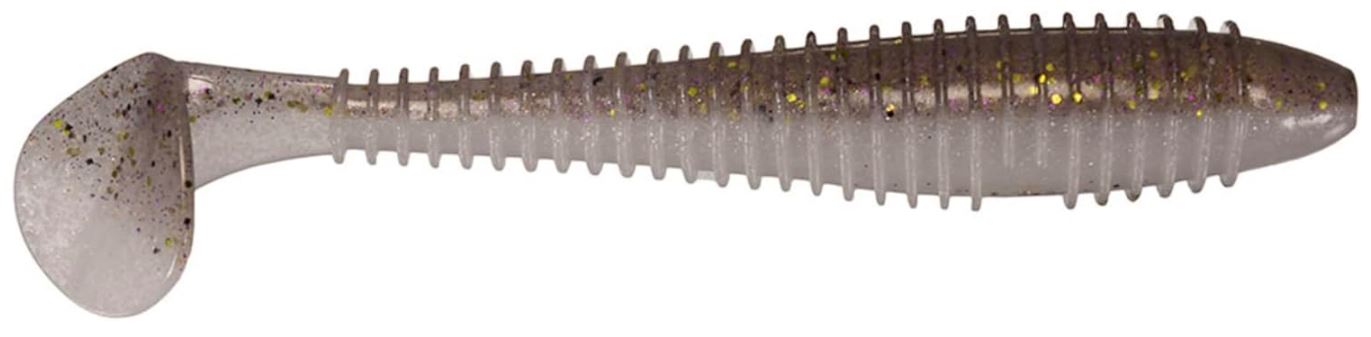
When you’re fishing halibut from a boat in 30–60 feet of water, you need a swimbait with enough size and action to draw attention at depth. The Keitech’s ribbed body creates subtle vibrations on the fall, and the fat paddle tail thumps hard even on a slow retrieve. The 4.8-inch size stands out on the bottom and triggers strikes from bigger halibut that won’t bother with a 3-inch bait. Sexy shad and bluegill are the standard colors. Rig on a 3/4–1 oz football head to maintain bottom contact in current — the football shape keeps it tracking upright instead of rolling over.
Best for Flats and Bays: Lucky Craft Gunfish
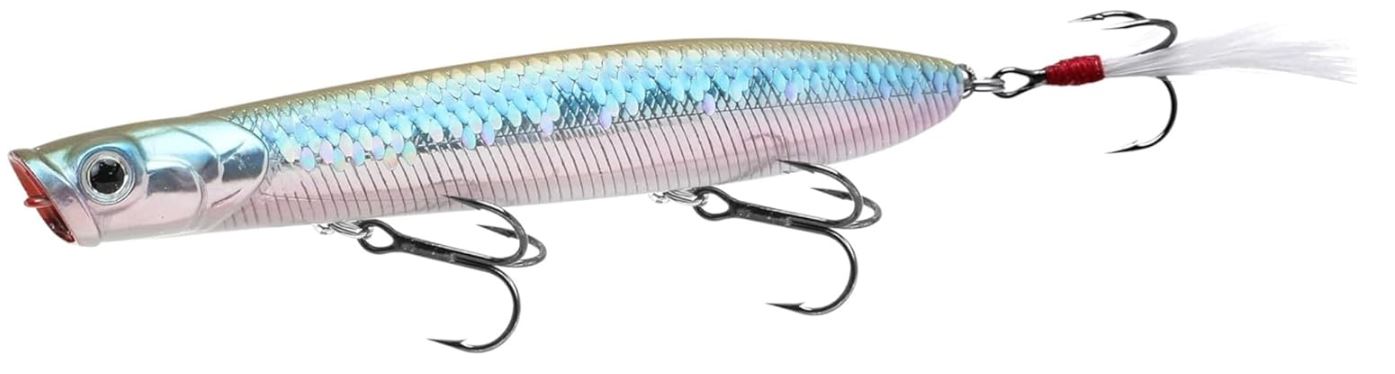
In shallow bays and over sand flats where halibut cruise in 5–15 feet of water, a hard-body swimbait with a tight, natural action excels. These lures swim at a consistent depth on a steady retrieve and look incredibly lifelike. They’re more expensive than soft plastics and you risk losing them to snags, but the hookup ratio is excellent because the treble hooks catch fish that swipe at the lure. Trout and sardine patterns are most effective. Best fished in San Diego Bay, Mission Bay, and Newport Back Bay on calm days when you can see the sandy bottom. A medium-fast 7-foot rod gives you the accuracy to cast these into tight sandy pockets.
Jig Heads
The jig head is as important as the swimbait itself. Weight, hook size, and head shape all affect how your swimbait fishes.
Weight
Match to depth and current. Use the lightest weight that maintains bottom contact — halibut eat prey that moves naturally, not lures that plummet to the sand.
| Scenario | Weight | Why |
|---|---|---|
| Surf fishing | 1/4–3/4 oz | Stays near bottom in wash without sinking too fast |
| Bay / flats | 1/4–1/2 oz | Light weight for natural drift in calm, shallow water |
| Boat (20–40′) | 1/2–3/4 oz | Reaches bottom on drift, holds during slow retrieve |
| Boat deep (40–60′) | 3/4–1 oz | Gets to bottom fast in deeper water and current |
| Heavy current | 1–1.5 oz | Maintains bottom contact in strong tidal flow |
Hook Size
3/0–5/0 wide-gap for most 3–5 inch swimbaits. The hook point should exit the swimbait cleanly with a wide enough gap to penetrate the halibut’s bony jaw. Cheap jig heads with thin-wire hooks bend on big halibut — invest in quality heads with forged, sharp hooks. See our hooks guide for specific hook recommendations.
Head Shape
Round: Works everywhere and is the default choice. Best for general slow drag retrieves over sand.
Football: More bottom stability in current — doesn’t roll on its side as easily. Best for boat drifts and the hop technique over sand-to-rock transitions.
Dart: Creates an erratic, darting action that can trigger strikes from following fish. Best for reef edges and structure transitions where halibut stage.
How to Fish Swimbaits for Halibut
The Slow Drag (Best All-Around Technique)
Cast out, let the swimbait sink to the bottom, and retrieve with a slow, steady pace — just fast enough to keep the tail kicking. You want the jig head to tick the bottom every few feet, kicking up little puffs of sand. Halibut ambush from the bottom, and a swimbait dragging along at their eye level is irresistible. This is the technique to start with every session. Works with every swimbait on this list — the Big Hammer and Keitech are particularly effective because their strong paddle tails generate vibration even at crawling speeds.
The Hop
When the slow drag isn’t producing, try short, sharp rod lifts that hop the swimbait off the bottom 6–12 inches, then let it flutter back down. The falling action often triggers a strike from a halibut that was watching but not committed. Especially effective over sand-to-rock transitions where halibut stage. Use a football jig head for this — it lands upright after each hop instead of falling on its side. The Keitech 4.8″ excels here because the ribbed body creates extra flutter on the fall.
The Jerk and Pause (Best for Hard Bodies in the Surf)
This is the FlashMinnow 110 technique. Cast into or parallel to the trough, give two or three sharp rod twitches to make the lure dart side-to-side, then pause for 2–3 seconds. The FlashMinnow suspends at 1–2 feet and wobbles in place during the pause — that wobble is what triggers the strike. Halibut will follow the lure during the jerks and eat it on the stop. Vary your pause length until you find what they want. On some days a quick one-second pause produces; on others, a long 4–5 second pause is the key. This technique covers the upper water column that bottom-dragging soft plastics miss.
The Dead Stick
Cast out, let the swimbait sit on the bottom, and wait. Give it an occasional twitch — just enough to make the tail flutter — then let it sit again. This sounds boring, but halibut will sometimes sit and stare at a swimbait for 30+ seconds before finally eating it. Patience pays. Works best with scented soft plastics like the Gulp! — the scent trail does the selling while you wait. Most effective in bays and calm surf conditions where halibut are holding in ambush positions.
Where to Fish Swimbaits for Halibut
Surf: Work the troughs between sandbars — these channels are halibut highways. For soft plastics, cast parallel to the beach and drag the swimbait through the trough. For hard bodies, throw a FlashMinnow 110 into the trough and work it with a jerk-and-pause retrieve — the 1–2 foot running depth keeps it right in the strike zone without snagging the bottom. Read our Doheny surf fishing guide and halibut surf fishing guide for how to find these features. A light Carolina rig with a trailing swimbait is also deadly in the surf.
Bays: San Diego Bay, Mission Bay, Newport Back Bay — all hold halibut year-round. Target the sandy flats adjacent to channels where halibut move with the tide. Fish the last two hours of incoming tide for best results. The Lucky Craft is the top choice here — steady retrieve over clean sand flats.
Boats: Drift over sandy bottom in 20–60 feet along the coast. Watch your SST chart for water in the optimal halibut temperature range (58–68°F), and fish sandy bottom near structure transitions. The Big Hammer on a 1/2–3/4 oz head is the standard boat swimbait, with the Keitech 4.8″ for deeper water and bigger fish.
Gear for Halibut Swimbaits
| Scenario | Reel | Rod | Line | Leader |
|---|---|---|---|---|
| Surf | Saragosa 5000 or Spinfisher 4500 | 9–10′ medium | PowerPro 20lb | Vanish 15lb |
| Surf (FlashMinnow) | Saragosa 5000 or Spinfisher 4500 | 7’6″–8′ med-heavy fast | PowerPro 15–20lb | Blue Label 12–15lb |
| Bay / flats | BG MQ 4000 | 7′ medium-fast | PowerPro 15lb | Blue Label 12lb |
| Boat | Saragosa 5000 or BG MQ 4000 | 7′ medium | PowerPro 20lb | Blue Label 15lb |
A spinning reel in the 3000–5000 class is the standard halibut swimbait setup. Braided line in 15–20lb gives you the sensitivity to feel the bite, and a 12–15lb fluorocarbon leader provides the invisibility to fool wary halibut in clear water. Connect braid to leader with an FG knot. See our surf reel guide for beach-specific options, our 20lb reel guide for boat use, and our combo guide for complete pairings.
Color Selection Guide
| Condition | Best Colors | Why |
|---|---|---|
| Clear water / sunny | Pearl white, natural smelt, sardine | Matches natural forage in high visibility |
| Murky / overcast | Chartreuse, glow, new penny | High contrast makes the bait visible |
| Dawn / dusk | Dark purple, motor oil, black/red | Silhouette against fading light |
| Sandy bottom | Sand, smelt, brown/gold | Blends with surroundings (match the hatch) |
| Bay over grass/rock | Bluegill, sexy shad, trout | Matches gobies and small bass |
When in doubt, start with smelt or pearl white in clear conditions, chartreuse in dirty water. If the bite is slow, switch to something dramatically different — the color change alone can trigger a following fish to commit.
Frequently Asked Questions
What is the best swimbait for California halibut?
For soft plastics, the Big Hammer 4″ in smelt or sardine on a 1/2 oz round jig head is the all-around best producer — it’s the swimbait that more SoCal halibut have been caught on than any other. For the surf specifically, the Lucky Craft FlashMinnow 110 is a game-changer — the suspending jerkbait action triggers aggressive strikes in the troughs. For clear water, add the Gulp! Swimming Mullet to your bag — the scent converts followers.
What size swimbait for halibut?
3–4 inches covers 90% of SoCal halibut fishing. Use 3″ (Z-Man MinnowZ) in the surf and shallow bays, 4″ (Big Hammer) from boats and in deeper water, and 4.8″ (Keitech) when targeting bigger halibut at depth. Larger swimbaits generally draw larger fish but get fewer total bites.
How do you rig a swimbait for halibut?
Thread the swimbait onto a round or football jig head (1/4–1 oz depending on depth). The hook point should exit cleanly from the back of the bait with plenty of gap between the hook point and the body. Make sure the swimbait hangs straight on the hook — a crooked bait spins instead of swimming, which kills the action and spooks fish.
Can I use swimbaits for halibut in the surf?
Absolutely — swimbaits are one of the most effective surf halibut techniques. For soft plastics, use a Z-Man MinnowZ 3″ or Big Hammer 4″ on a 1/4–3/4 oz jig head and slow-drag the bottom. For hard bodies, the Lucky Craft FlashMinnow 110 is deadly — it suspends 1–2 feet deep and the jerk-and-pause retrieve triggers aggressive strikes in the troughs. A 4500–5000 spinning reel on a 9–10 foot medium surf rod gives you the casting distance to reach productive water. See our halibut surf guide for finding the right spots.
FlashMinnow or soft plastics — which should I throw in the surf?
Both, but they cover different zones. The FlashMinnow 110 runs 1–2 feet below the surface and excels when halibut are actively looking up for baitfish in the troughs — work it with a jerk-and-pause retrieve. Soft plastics like the Big Hammer and Z-Man drag the bottom and target halibut in ambush mode on the sand. Start with the FlashMinnow to cover water quickly, then switch to soft plastics if the bite is slow or conditions are murky.
What retrieve speed for halibut?
Slow. Painfully slow. The #1 mistake anglers make is fishing swimbaits too fast. Halibut are ambush predators — they want prey that’s easy to catch. Retrieve just fast enough to keep the paddle tail kicking, letting the jig head tick the bottom every few feet. If you think you’re going slow enough, slow down more.
What’s the best jig head weight for halibut?
Use the lightest head that maintains bottom contact: 1/4–1/2 oz for surf and bays, 1/2–3/4 oz for boat fishing in 20–40 feet, 3/4–1 oz for 40–60 feet or heavy current. If you can’t feel the bottom, go heavier. If the bait is plummeting and sitting dead, go lighter.
Gulp! or Big Hammer — which should I carry?
Both. Start with the Big Hammer for its strong vibration and proven fish-catching ability. Switch to the Gulp! when the bite slows down or in clear calm conditions where the scent gives you an edge. The Gulp! is also better for dead-sticking since the scent trail attracts fish while the bait sits still. Carry both and you’re covered for any condition.
Plan Your Trip
Check conditions before targeting halibut:
- SST Chart — Nearshore temps in the halibut zone
- Best Water Temp for Halibut — 58–68°F is the sweet spot
- Chlorophyll Map — Bait concentration near the beach
- Marine Weather — Surf, wind, and swell conditions
- Fleet Tracker — Where the fleet is fishing
- AI Fishing Predictions — Data-driven halibut forecasts for SoCal
- SD Fishing Season Calendar — When halibut are biting
Related Guides
- Best Water Temp for Halibut
- How to Find Halibut Surf Fishing
- Surf Fishing at Doheny State Beach
- White Sea Bass Surf Fishing
- Best Surf Casting Rods
- Best Surf Fishing Reels
- Best 7-Foot Offshore Rods
- Best 20lb Reels
- Best Rod & Reel Combos for SoCal
- Best Fishing Line by Pound Test
- Braid vs Mono vs Fluorocarbon
- Best Fishing Knots
- Carolina Rig Setup
- Dropper Loop Rig
- Circle Hooks vs J Hooks
- Best Hooks by Species
- Spinning vs Conventional Reels
- Best Lures for Dorado
- Best Yellowtail Jigs & Irons
- Overnight Trip Packing List
Tight lines!