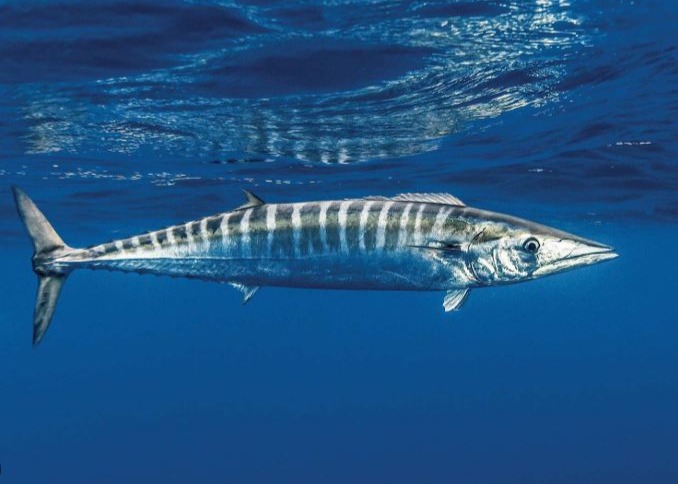
Wahoo are one of the fastest fish in the ocean — and they demand the warmest water of any species you’ll target from a Southern California sportfishing boat. If you’re not fishing in 72–82°F water, you’re probably not fishing for wahoo.
These fish are creatures of tropical and subtropical currents. Off our coast, that means long-range trips to Baja California banks, or the rare warm-water years when wahoo push north into SoCal waters. Either way, water temperature is the single best indicator of whether wahoo are in the area.
The Wahoo Temperature Window
| Temperature Range | Activity Level | Notes |
|---|---|---|
| Below 70°F | Very low | Wahoo are rarely found — too cold for this species |
| 70–72°F | Low–moderate | Fringe water; possible but not reliable |
| 72–76°F | High | Active feeding, especially near structure and current edges |
| 76–82°F | Peak | Prime wahoo water — this is the sweet spot |
| Above 82°F | Moderate | Still fishable but wahoo may go deep to find cooler water |
The 76–80°F range is where wahoo fishing is at its best. This is significantly warmer than bluefin tuna (60–68°F) or yellowtail (62–72°F), which is why wahoo are primarily a long-range target for SoCal anglers.
Where to Find Wahoo Water
From a Southern California port, you’ll typically need to head south to find consistent 72–82°F water. Here are the primary wahoo grounds:
Guadalupe Island. Located about 150 miles southwest of Ensenada, Guadalupe sits at the intersection of warm currents from the south and cooler California Current water. When the warm side pushes in, wahoo stack up around the island’s structure. Check the SST charts for a defined warm-water edge near the island.
Hurricane Bank (Banco Hurricane). One of the premier wahoo spots in the Pacific, located roughly 250 miles south of Cabo. Long-range boats out of San Diego run here during late summer and fall. Water temps consistently hold in the 78–82°F range.
San Benedicto and the Revillagigedo Islands. Deep offshore seamounts surrounded by warm tropical water. These are multi-day long-range destinations that produce wahoo alongside yellowfin tuna and giant trevally.
Outer banks off Baja. Seamounts and ridges like Uncle Sam Bank, Thetis Bank, and the Finger Bank can hold wahoo when warm currents push through. Use chlorophyll maps to identify productive edges where warm, clear water meets nutrient-rich upwelling zones.
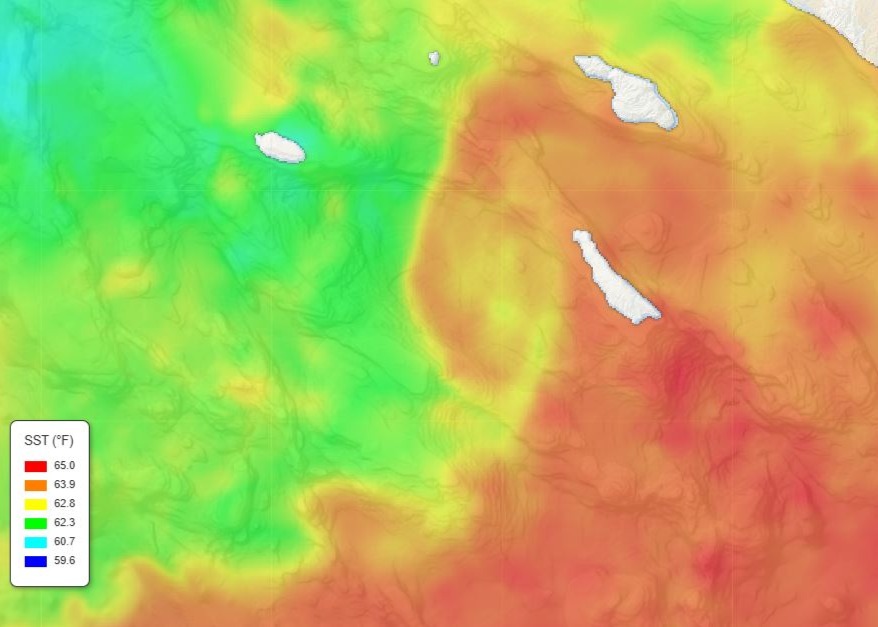
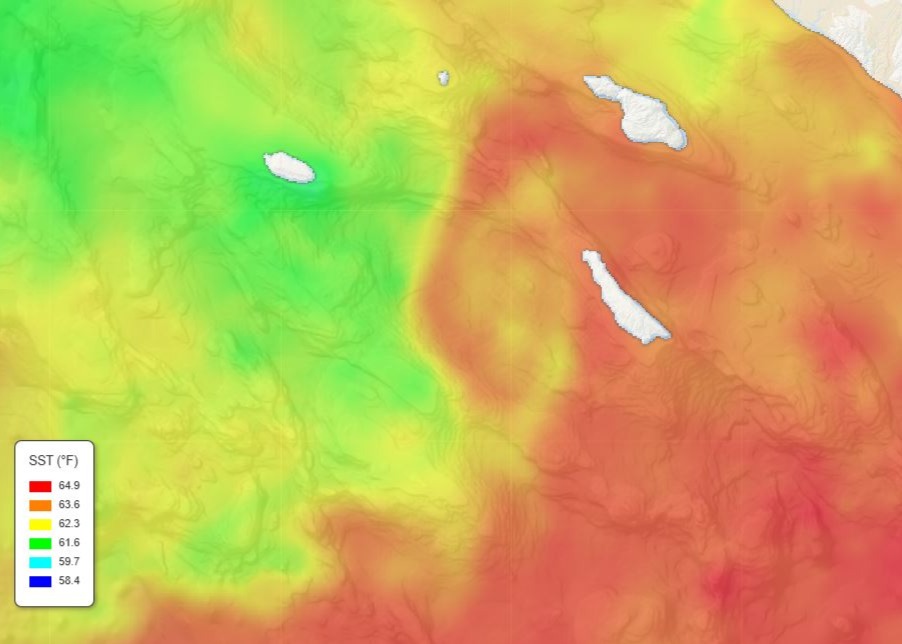
SoCal (rare years). During El Niño events or exceptionally warm seasons, wahoo occasionally push as far north as the Coronado Islands, San Clemente Island, or even Catalina. These events are unpredictable — but when you see 74°F+ water at the offshore islands on the SST chart, it’s worth paying attention to fish reports. You may also find dorado and yellowfin in the same warm-water push.
How to Use SST Charts for Wahoo
Wahoo fishing and SST charts go hand in hand. Here’s what to look for:
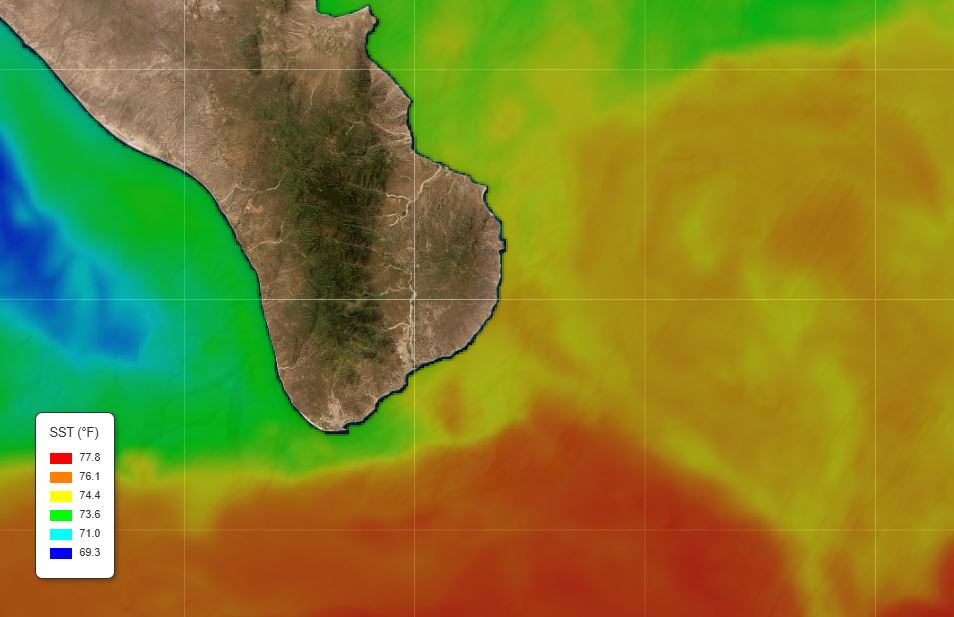
Find the 74–80°F contour line. Pull up the SST chart and look for where this temperature range intersects with underwater structure — seamounts, banks, island drop-offs, and ridges.
Look for temperature breaks. Wahoo love edges. A sharp transition from 72°F to 78°F over a short distance concentrates bait and predators. These temperature breaks are where you want to focus your trolling passes.
Watch for warm-water intrusions. Tongues of warm water pushing north or onshore can bring wahoo into areas they don’t normally inhabit. Track these intrusions day by day on the SST chart — if the warm water is expanding and holding, wahoo may follow it in.
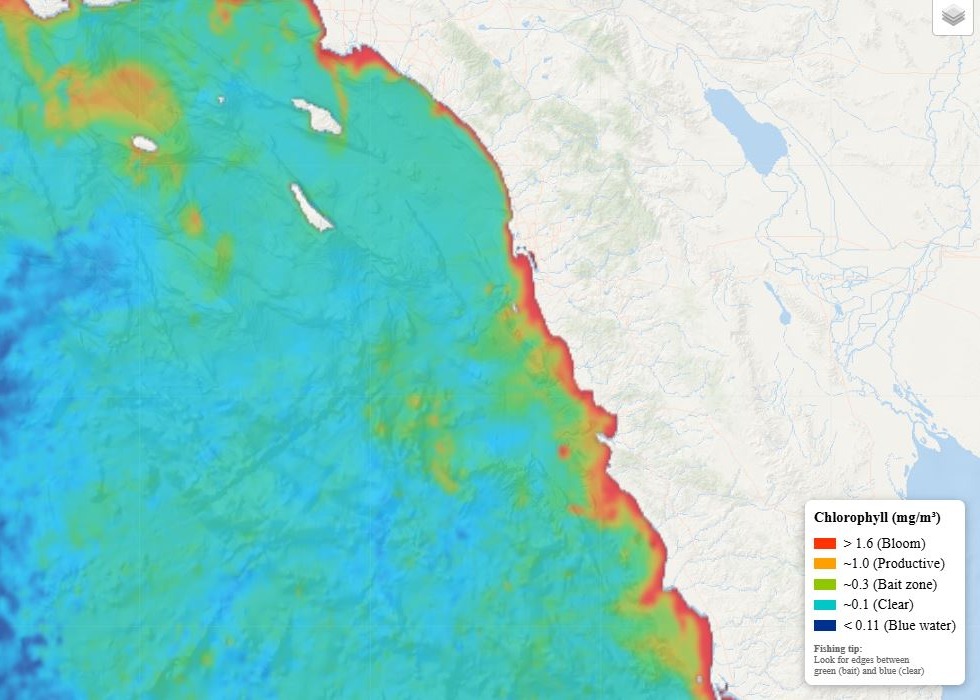
Cross-reference with chlorophyll. Wahoo prefer clean, blue, low-chlorophyll water. If you see high chlorophyll (green water) at the right temperature, that’s more likely yellowfin tuna or dorado water. Wahoo want warm AND clear. The chlorophyll map makes this easy to check — see our chlorophyll map guide for how to read the edges.
Wahoo Fishing Techniques
High-speed trolling is the primary method. Wahoo are built for speed — they can hit 60 mph in short bursts. Trolling at 8–14 knots with skirted lures, Rapala X-Rap Magnums, or rigged ballyhoo behind wire leaders is the standard approach. This is similar to trolling for tuna but at significantly higher speeds — wahoo want the lure moving fast.
Wire leaders are essential. Wahoo have razor-sharp teeth that will slice through even heavy fluorocarbon in a fraction of a second. Use single-strand wire or braided wire leaders in the 60–90lb range. This is the one species where fluorocarbon leader alone won’t cut it — literally.
Vertical jigging over structure produces big wahoo. Drop a heavy speed jig (200–400g) to the bottom over a seamount or bank, then work it back up with fast, aggressive retrieves. Knife jigs and heavy flat-falls in chrome or blue/silver work well. This is where a quality 40lb+ conventional reel earns its keep — you need both speed to work the jig and stopping power when a wahoo screams back toward the structure.
Live bait on the drift. When wahoo are in the area but not responding to trolling, slow-drifting live mackerel or skipjack on a wire leader can trigger strikes. Fish them at mid-depth using a slider rig with a wire bite leader. Use a J hook rather than a circle — wahoo hit and run fast, and you need the instant hookset.
Wahoo Gear and Lure Guides
Wahoo require stout tackle. Their initial run is explosive and their teeth will destroy anything that isn’t purpose-built for the job. Here’s the setup plus links to our detailed guides:
Reel: A quality conventional reel in the 30–50lb class with a smooth drag and at least 400 yards of capacity. Two-speed reels are ideal for switching between high-speed retrieves and grinding power. The Shimano Talica 12 is a proven wahoo reel.
Rod: A 6–7 foot heavy-action rod with fast tip for trolling, or an 8-foot rod for jigging applications. See our rod and reel combo guide for complete pairings.
Line: 50–65lb braided line with a heavy fluorocarbon wind-on leader, topped with wire. See our fishing line guide for specific braid recommendations.
Terminal: Always wire leader for wahoo. Palomar knots for the fluoro sections and haywire twists for wire connections. For the hook, see our hooks by species guide — J hooks on trolling lures, assist hooks on vertical jigs.
Plan Your Trip
Wahoo trips require planning — you need to know the water is right before committing to a long-range voyage. Start with the data:
- SST Chart — Find the 72–82°F water near banks and structure
- Chlorophyll Map — Confirm clean blue water at the right temps
- Fleet Tracker — See where long-range boats are heading
- Marine Weather — Check conditions for offshore runs
- AI Fishing Predictions — Data-driven forecasts for SoCal and Baja
- SD Fishing Season Calendar — What’s biting this month
Related Guides
- Best Water Temp for Yellowfin Tuna
- Best Water Temp for Bluefin Tuna
- Best Water Temp for Dorado
- Best Water Temp for Yellowtail
- Best Water Temp for White Seabass
- Best Water Temp for Halibut
- Finding Temperature Breaks
- How to Use Chlorophyll Maps
- Best Lures for Tuna
- Best Tuna Jigs
- Best Lures for Dorado
- Best Yellowtail Jigs & Irons
- Best Poppers for Tuna
- Surface Iron Fishing Guide
- Best 40lb Reels
- Best Reel for Bluefin Tuna
- Best 7-Foot Offshore Rods
- Best 8-Foot Offshore Rods
- Best Rod & Reel Combos for SoCal
- Best Hooks by Species
- Circle Hooks vs J Hooks
- Braid vs Mono vs Fluorocarbon
- Best Fishing Line by Pound Test
- Best Fishing Knots
- Slider Rig for Live Bait
- Overnight Trip Packing List
- SD Fishing Season Calendar
Tight lines!