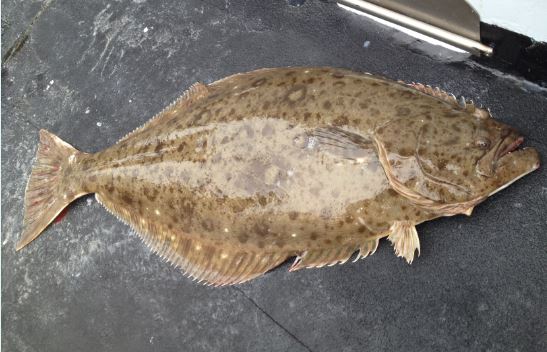
California halibut are one of the most accessible and rewarding species along the Southern California coast. They’re available year-round from both shore and boat, and they respond strongly to water temperature changes — making your SST chart one of the best tools for finding them.
Halibut prefer water between 56°F and 68°F, with peak activity in the 59–65°F range. They’re a cooler-water species compared to pelagics like dorado or yellowfin tuna, which means the best halibut fishing often happens in spring and early summer before the offshore species show up.
The Halibut Temperature Window
| Temperature Range | Activity Level | Notes |
|---|---|---|
| Below 54°F | Low | Fish are sluggish, holding in deeper sand channels |
| 54–56°F | Moderate | Fish beginning to move toward shallower flats |
| 56–60°F | High | Active feeding, especially in bays and harbors |
| 60–65°F | Peak | Prime bite — fish are shallow and aggressive |
| 65–68°F | Good | Still active but may shift to deeper or cooler areas |
| Above 68°F | Declining | Fish move to deeper, cooler sand flats |
The 60–65°F range is the money zone. When nearshore water hits this window in spring, halibut move onto shallow sandy flats to feed aggressively — from bays and harbors to the open surf zone.
Seasonal Patterns in Southern California
January–February: Water temps are at their lowest (54–58°F). Halibut hold in deeper water — sand channels in 40–80 feet, harbor entrances, and deep structure adjacent to sandy flats. Slow presentations like Carolina rigs with live bait work best.
March–April: The spring warm-up begins. As nearshore water pushes into the upper 50s and low 60s, halibut start migrating to shallower flats for spawning. This is when surf fishing picks up dramatically. Watch the SST chart for the first bays and beaches to cross 58°F.
May–June: Peak season. Water temps settle into the 60–66°F sweet spot. Halibut are on the shallow flats in force — the surf zone, bay mouths, jetties, and sandy points. Both shore anglers and boat fishermen see consistent action. This is the best window for halibut surf fishing — a swimbait in smelt or sardine pattern on a slow bottom retrieve is the go-to.
July–August: Water temps push into the upper 60s and low 70s. Halibut shift from the shallowest flats to slightly deeper water (15–40 feet), but fishing remains productive, especially in areas with current flow that keeps water cooler. As the offshore water warms up, this is also when dorado and yellowfin start showing, so many anglers shift focus offshore.
September–December: As water cools back through the 60s, there’s often a strong fall bite. Halibut feed heavily before winter, and the cooling water triggers aggressive feeding behavior. Don’t overlook fall halibut fishing — it can be as good as spring.
How Temperature Affects Where Halibut Hold
California halibut are ambush predators that lie flat on sandy bottoms waiting for baitfish to swim overhead. Water temperature doesn’t just affect their activity level — it determines where in the water column they position themselves.
In cool water (54–58°F), halibut hold in deeper sand channels, often 40–80 feet, near structure that provides current breaks. They’re less willing to chase bait and prefer slow presentations dragged past their faces.
In the sweet spot (59–65°F), halibut push into shallow water — 3–20 feet in the surf zone, bay flats, and nearshore sand bars. They’re actively hunting and will chase swimbaits, live bait, and even surface lures.
In warm water (66–70°F+), halibut seek out areas with cooler water influence — deeper flats, areas near cold upwelling, river mouths, and harbor channels where tidal exchange brings cooler water.
Using SST Charts for Halibut
Unlike pelagic species where you’re scanning hundreds of miles of open ocean, halibut fishing is about finding the right nearshore conditions. Here’s how to use the SST chart:
Find the 59–65°F band along the coast. Zoom into the nearshore zone and look for where your target beaches, bays, and harbors fall within this window.
Look for warming trends. A beach that was 56°F last week and is now 60°F is more productive than one that’s been sitting at 62°F for a month. Rising temperatures trigger halibut to move shallow and feed aggressively.
Compare nearby areas. South-facing beaches warm faster than north-facing ones. Bays and harbors warm faster than open coast. Use the SST chart to identify which specific areas are first to hit the sweet spot each spring.
Check chlorophyll for bait. Chlorophyll maps show where bait is concentrated nearshore. Halibut follow the bait — if you find 60°F water with high chlorophyll (meaning lots of baitfish), that’s a prime halibut zone.
Best Halibut Techniques by Temperature
Cool water (54–58°F) — go slow:
Use a Carolina rig with live bait (anchovy, smelt, or small perch) bounced slowly along the bottom. Dropper loop rigs with cut squid strips also produce in cold water. Fish deeper sand channels near structure.
Sweet spot (59–65°F) — go active:
This is swimbait time. A 4–6 inch swimbait in smelt or sardine pattern retrieved slowly along the bottom is the most effective halibut method in warm spring water. Fish the surf zone sandbars, bay flats, and jetty edges. Live bait under a bobber in 4–10 feet of water is deadly in bays.
Warm water (66°F+) — go deep:
Drop to deeper flats (30–60 feet) using Carolina rigs or swimbaits on heavier jigheads. Focus on areas with current flow — halibut will concentrate where tidal movement keeps water temperatures manageable.
Shore vs. Boat Fishing
Surf fishing is most productive when nearshore water is 59–65°F. Cast swimbaits or Carolina rigs past the first sand bar and work them back slowly. Dawn and dusk are prime. See our complete Doheny surf fishing guide and halibut surf fishing guide for specific techniques and locations.
Bay and harbor fishing can be productive even when the open coast is too cold. Enclosed waters warm faster, so check the SST chart for bays that are running 2–4°F warmer than the nearby coast. Mission Bay, Newport Bay, and Dana Point Harbor are all productive halibut spots.
Boat fishing lets you cover more ground and dial into specific bottom contours. Drift across sandy flats in 20–60 feet, using your electronics to find sand-to-rock transitions where halibut ambush bait.
Halibut Gear and Lure Guides
Once you’ve found the right water temperature, you need the right gear to capitalize. Here are our complete halibut guides:
- Best Swimbaits for Halibut — sizes, colors, and jighead weights for SoCal halibut
- Carolina Rig Setup — the best live bait rig for halibut in deeper water
- Best Hooks by Species — circle hooks in 2/0–4/0 for live bait, jigheads for swimbaits
- Best Surf Fishing Reels — 3000–5000 size spinning reels for shore
- Best Surf Casting Rods — 9–11 foot rods for reaching the sandbars
- Best 20lb Reels — the right reel class for halibut from the boat
- Best Rod & Reel Combos for SoCal — complete setups by target species
- Braid vs Mono vs Fluorocarbon — why 15–20lb braid + light fluoro leader is ideal for halibut
- Best Fishing Line by Pound Test — specific line recommendations
- Best Fishing Knots — FG knot and Palomar connections
Tackle Setup
Halibut don’t require heavy gear, but you need sensitivity to detect their subtle bites:
Rod: A 7-foot medium to medium-heavy rod for boat fishing, or a 9–11 foot surf rod for shore casting. Graphite rods are preferred for their sensitivity — halibut bites are often just a slight “tick.”
Reel: A 3000–5000 size spinning reel for surf and bay, or a 20lb conventional for boat fishing. See our spinning vs conventional guide if you’re deciding between the two.
Line: 15–20lb braid with a 15–20lb fluorocarbon leader. The light leader is important — halibut have good eyesight and can be line-shy in clear water.
Hooks: 2/0–4/0 circle hooks for live bait, or 3/0–5/0 jigheads for swimbaits. Connect everything with a Palomar knot. See our hooks by species guide for specific sizes.
Plan Your Trip
- SST Chart — Find the 59–65°F water nearshore
- Chlorophyll Map — Locate bait concentrations on the flats
- Fleet Tracker — See where boats are targeting halibut
- Marine Weather — Check wind and swell conditions
- AI Fishing Predictions — Data-driven forecasts for SoCal
- SD Fishing Season Calendar — What’s biting this month
Related Guides
- How to Find Halibut Surf Fishing in SoCal
- Surf Fishing at Doheny State Beach
- Best Swimbaits for Halibut
- Carolina Rig Setup
- Dropper Loop Rig
- Best Hooks by Species
- Circle Hooks vs J Hooks
- Best Surf Casting Rods
- Best Surf Fishing Reels
- Best 20lb Reels
- Best Rod & Reel Combos for SoCal
- Spinning vs Conventional Reels
- Braid vs Mono vs Fluorocarbon
- Best Fishing Line by Pound Test
- Best Fishing Knots
- How to Tie a Palomar Knot
- Best Water Temp for Dorado
- Best Water Temp for Yellowfin Tuna
- Best Water Temp for Bluefin Tuna
- Best Water Temp for Yellowtail
- Best Water Temp for White Seabass
- Finding Temperature Breaks
- SD Fishing Season Calendar
- Overnight Trip Packing List
Tight lines!