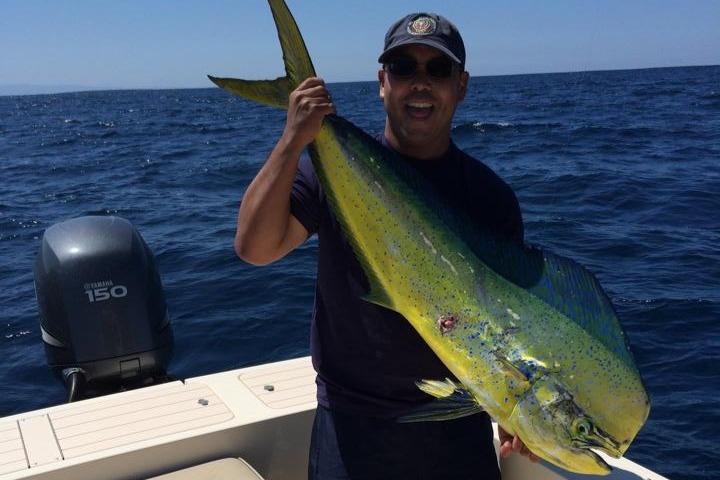
Dorado — also called mahi mahi, dolphinfish, or just “green and gold” — are the quintessential warm-water gamefish. Unlike bluefin tuna, which tolerate a wide range of temperatures, dorado have a clear preference: they want warm water. Understanding that preference is the key to timing your SoCal or Baja dorado trip, because when the right temperature water arrives, the dorado arrive with it.
The Quick Answer
Dorado prefer water temperatures between 72°F and 82°F (22–28°C). The sweet spot for Southern California fishing is 74–78°F. Below 70°F, dorado are uncommon in our waters. Above 80°F, they’re in their element — which is why Baja and the Sea of Cortez produce dorado nearly year-round.
In a typical SoCal season, dorado don’t show up until the warm water pushes north in mid-to-late summer, and they disappear as soon as it retreats in fall. Your SST charts are the best tool for tracking exactly when that warm water arrives and where it sits.
Powered by FishingBooker
Temperature Ranges and What to Expect
Below 70°F — Unlikely
Dorado are tropical fish. In water under 70°F, they simply aren’t around in any numbers. If your SST chart shows the offshore water is still in the 60s, the dorado haven’t arrived yet. Focus on bluefin tuna or yellowtail instead.
70–74°F — Early Arrivals
When warm water first pushes into SoCal in late June or July, scattered dorado ride the leading edge. In this range:
- Fish are often smaller (schoolie 5–15 lb class)
- They tend to be associated with floating kelp paddies and debris
- They’re usually mixed with other warm-water arrivals like yellowfin tuna
- Found primarily offshore — 50+ miles from the coast along warm water intrusions
74–78°F — Prime Zone ⭐
This is the sweet spot for SoCal dorado fishing. The water is warm enough to hold consistent numbers, and the fish are aggressive feeders. Expect:
- Good numbers on kelp paddies, floating debris, and weed lines
- Mixed sizes from schoolies to bulls over 30 lbs
- Surface activity — dorado hitting trolled lures, iron, and flylined bait
- Often found along temperature breaks where warm water meets cooler coastal water
When you see 74–78°F on the SST charts extending in from offshore, it’s go time.
78–82°F — Full Tropical Mode
This is more typical of Baja and Cortez water, but SoCal sees it during strong El Niño years or late-summer warm events. In this range:
- Dorado are everywhere and feeding aggressively
- Bull dorado (30–50+ lbs) become more common
- They may push closer to shore, sometimes within range of half-day boats
- Wahoo also show up in this temperature band, so you may find them on the same spots
Above 82°F
Still great dorado water — this is their natural tropical range. If you’re fishing Baja’s East Cape, Cabo, or the southern Cortez, 82–86°F is standard and dorado will be resident around structure, FADs, and bait concentrations year-round.
When Do Dorado Show Up in Southern California?
The dorado “season” in SoCal is almost entirely dictated by water temperature. Here’s the typical timeline:
June: Scouting the Charts
Warm water (70°F+) usually hasn’t reached SoCal yet, but it’s building offshore and along the Baja coast. Check the SST charts weekly to track warm water intrusions pushing north. Long-range boats fishing Baja may already be on dorado.
July: First Fish Arrive
The leading edge of 72–74°F water typically reaches the outer banks and offshore paddies by mid-July. This is when the first dorado counts start appearing on the fleet tracker from overnight and 1.5-day boats. The fish are often offshore — 60–100 miles out — associated with warm water fingers visible on SST charts. Have your trolling spread ready — cedar plugs and feathers behind the boat while you search for paddies.
August–September: Peak Season
The warmest water of the year. If the SST charts show 74–80°F water within 30–60 miles of San Diego, dorado fishing should be excellent. This is when full-day and even 3/4-day boats can reach them. The fleet tracker will show boats concentrating on productive areas. A 20lb class spinning setup with surface iron and poppers is all you need — dorado are aggressive enough that lure selection is less important than finding the right water.
October: Late Season Trophies
As the water begins to cool, dorado numbers thin but the remaining fish tend to be larger. Bull dorado that have been feeding all summer are at their heaviest. Watch the SST charts — as long as you can find pockets of 72°F+ water, dorado will be there. Step up to a medium-wire circle hook in 3/0–4/0 for big bulls on live bait — see our hooks guide for specifics.
November–May: Offseason (Locally)
Water temps drop below 70°F and dorado move south. But Baja’s Pacific coast, the East Cape, and the Cortez are still producing. If you’re planning a Baja trip, use the SST charts to find the warm water down south.
How to Use SST and Chlorophyll Charts for Dorado
Dorado hunting with satellite data is straightforward because they have such a clear temperature preference:
- Find the 72°F+ water — Pull up the SoCal SST chart and identify where warm water (orange/red) extends within range of the fleet.
- Look for warm water intrusions — Dorado ride fingers of warm water that push inshore from the open Pacific. These intrusions create long, narrow corridors of warm water surrounded by cooler coastal water. Fish concentrate along the edges.
- Find the temperature break — The sharp boundary between warm offshore water and cooler coastal water (the temperature break) concentrates bait and predators. This edge is where you want to troll or drift.
- Check chlorophyll — Dorado want warm, relatively clean water — but not dead blue water. The transition zone where productive green water meets clean blue water often holds bait and dorado. The chlorophyll maps show this boundary clearly. See our chlorophyll map guide for how to read them.
- Track the fleet — Use the fleet tracker to see where overnight boats are heading. If several boats are running to the same area 60–80 miles offshore, they’re likely on warm water and dorado.
Dorado vs. Other Warm-Water Species
Dorado share their temperature range with several other species. Knowing the overlap helps you plan:
| Species | Preferred Temp (°F) | Overlap with Dorado |
|---|---|---|
| Dorado (Mahi Mahi) | 72–82°F | — |
| Yellowfin Tuna | 72–82°F | Nearly identical — often on the same stops |
| Wahoo | 74–84°F | High overlap; wahoo favor slightly warmer |
| Bluefin Tuna | 60–72°F | Cool-side overlap at 70–72°F |
| Yellowtail | 62–70°F | Minimal overlap at 70–72°F |
The takeaway: when you find 74–78°F water with dorado, you’re also likely to find yellowfin tuna and possibly wahoo. It’s no coincidence that the best dorado trips are often mixed-bag trips.
Dorado Gear and Lure Guides
Once you’ve found the right water temperature, you need the right gear to capitalize. Here are our complete dorado guides:
- Best Lures for Dorado — cedar plugs, feathers, surface iron, poppers, and casting lures
- Best Hooks by Species — Owner circle hooks in 2/0–4/0 for live bait, J hooks on trolling lures
- Best 20lb Reels — the right reel class for dorado
- Best Rod & Reel Combos for SoCal — complete setups by target species
- Best Fishing Line by Pound Test — braid and leader recommendations
- Best Fishing Knots — FG knot for braid-to-fluoro connections
Other Factors That Affect the Dorado Bite
Floating structure — Dorado are structure-oriented more than almost any other pelagic. Kelp paddies, logs, debris, weed lines, and even a floating bucket can hold fish. When you find the right temperature water, start looking for floating objects.
Bait — Flying fish are the primary forage for dorado offshore. Sardines, small mackerel, and squid also work. If you see flying fish skipping along the surface, dorado are likely nearby. Trolling lures that imitate small baitfish — cedar plugs and feathers — are the most effective way to cover ground while searching.
Current — Warm-water eddies and current edges concentrate floating debris and bait, creating natural dorado magnets. The SST charts often show these eddies as circular warm-water features.
Water color — Dorado like clean, blue-green water. If you’re in muddy or very green water, keep going until the visibility improves. The chlorophyll map helps you identify water clarity before you leave the dock.
Wind — Light wind days are best for spotting kelp paddies and floating debris. Check the marine weather and swell and wind forecast before you go — in heavy weather, debris is harder to find and dorado tend to scatter.
Quick Reference Table
| Temperature | Rating | SoCal Timing | What to Expect |
|---|---|---|---|
| Below 70°F | No dorado | Nov–Jun | Water too cold; target other species |
| 70–74°F | Fair | Early Jul | Scattered schoolies on paddies; offshore |
| 74–78°F ⭐ | Prime | Jul–Sep | Good numbers; mixed sizes; aggressive bite |
| 78–82°F | Excellent | Aug–Oct (El Niño years) | Bull dorado; trophy potential; fish close to shore |
| Above 82°F | Excellent | Baja year-round | Resident fish; standard tropical conditions |
Plan Your Trip
Ready to plan a dorado trip? Start with the current ocean conditions:
- SST Chart — Watch for warm water (72°F+) pushing into SoCal waters
- Chlorophyll Map — Find the productive edges where warm meets green
- Marine Weather — Wind, swell, and offshore conditions
- Fleet Tracker — See which boats are running offshore to warm water
- AI Fishing Predictions — Data-driven forecasts for SoCal
- SD Fishing Season Calendar — When dorado show up in SoCal
Related Guides
- Best Lures for Dorado
- How to Fish Kelp Paddies
- Finding Temperature Breaks
- How to Use Chlorophyll Maps
- Best Hooks by Species
- Best Yellowtail Jigs & Irons
- Best Poppers for Tuna
- Surface Iron Fishing Guide
- Best 20lb Reels
- Best Rod & Reel Combos for SoCal
- Best Fishing Line by Pound Test
- Best Fishing Knots
- Braid vs Mono vs Fluorocarbon
- Best Water Temp for Bluefin Tuna
- Best Water Temp for Yellowfin Tuna
- Best Water Temp for Yellowtail
- Best Water Temp for Halibut
- Best Water Temp for White Seabass
- Best Reel for Bluefin Tuna
- Best Reel for Yellowtail
- Overnight Trip Packing List
Tight lines!
Affiliate Disclosure: As an Amazon Associate, fishing-reports.ai earns from qualifying purchases. Links to Amazon on this page are affiliate links — if you click and buy, we may earn a small commission at no extra cost to you.