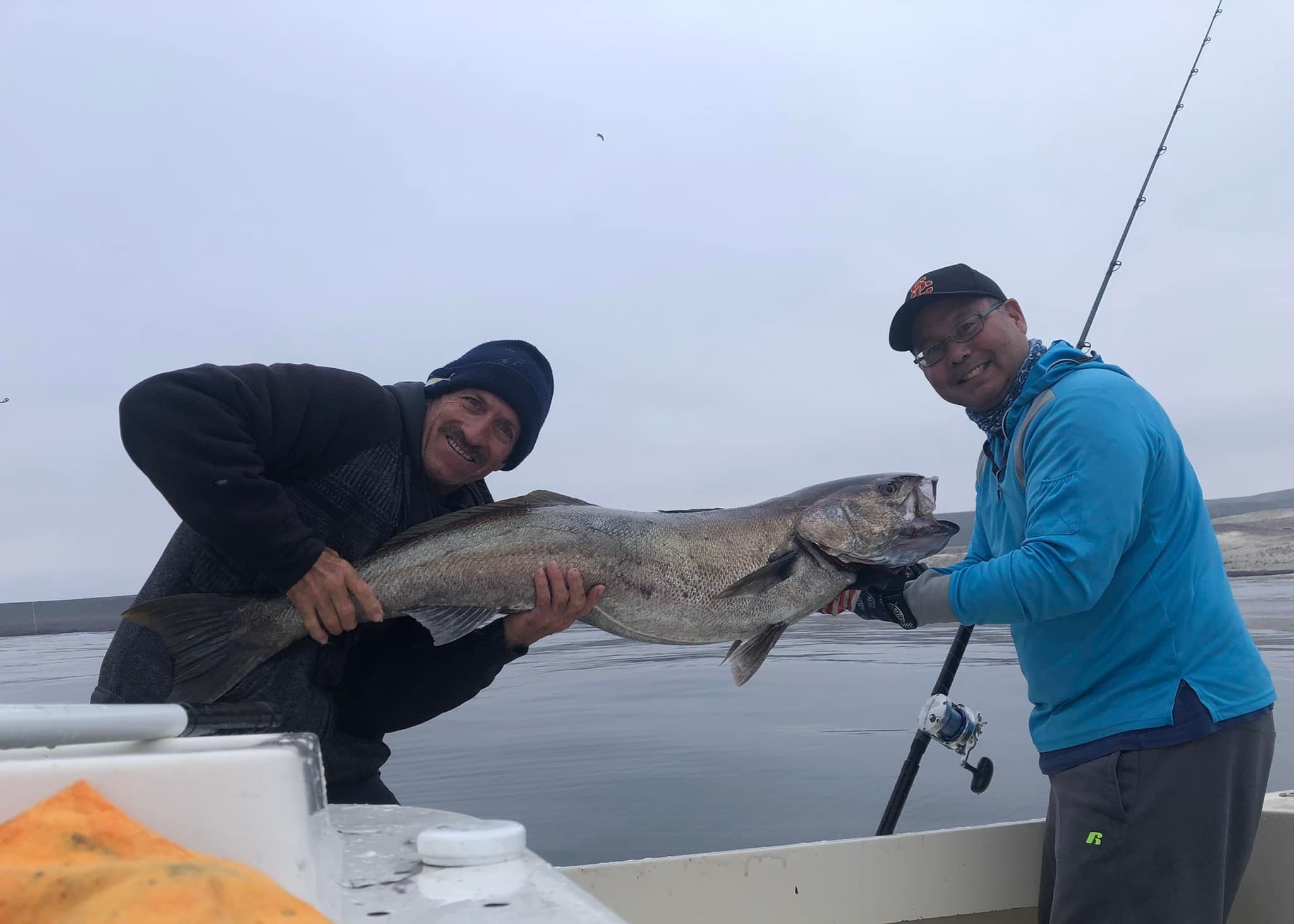
White seabass are one of the most prized inshore catches in Southern California, and water temperature is the single biggest factor in finding them. Too cold and they’re deep and dormant. Too warm and they’ve pushed north or offshore. Hit the sweet spot and you’re in for world-class fishing.
In this guide, we’ll cover the ideal water temperatures for white seabass, where they go as conditions change, and how to use SST charts to put yourself in the right spot at the right time.
The Ideal Temperature Range
White seabass are most active and aggressive in water between 58°F and 66°F (14–19°C). This is the range where they feed heavily, especially on squid — their favorite prey. Within that window, the magic number is around 60–64°F. That’s when the big spawning aggregations form and the fishing peaks.
Below 56°F, white seabass slow down considerably. They don’t disappear, but they become much harder to target. Above 68°F, they tend to move deeper or northward to find cooler water.
Seasonal Temperature Patterns in SoCal
Winter (December–February): Water temps drop to 54–58°F along the coast. White seabass are still around but deeper and less active. Most catches come from boats working structure in 80–120 feet of water. Check the San Diego fishing season calendar for monthly breakdowns.
Spring (March–May): This is prime time. As water warms through the upper 50s and into the low 60s, white seabass move inshore to spawn. The squid runs that come with spring upwelling draw massive schools into the kelp beds and along rocky coastline. March through May is the window most SoCal anglers wait for all year. A slider rig with live squid fished along kelp edges at dawn is the classic approach.
Summer (June–August): Water hits 64–72°F. White seabass are still catchable but have spread out. Look for them in deeper kelp edges and around offshore structure where temps stay in the low-to-mid 60s. Temperature breaks become important — the fish hold on the cooler side. As the offshore water warms, this is when dorado and yellowfin start showing, so many anglers shift focus offshore.
Fall (September–November): As water cools from the summer peak back through the 60s, a secondary feeding push happens. Not as concentrated as spring, but very productive for anglers who watch their SST charts and find pockets of 60–64°F water near kelp beds.
How to Use SST Charts for White Seabass
White seabass don’t roam the open ocean like tuna — they stick close to structure, kelp, and coastline. So when you check the SST chart, you’re looking for nearshore water in that 58–66°F range rather than offshore temperature breaks.
Pay special attention to areas where slightly warmer water pushes against the coast. These spots concentrate bait, especially squid, and the seabass follow. The chlorophyll map is your best friend here — high chlorophyll near kelp beds in the right temperature range is almost a guarantee that bait (and seabass) are in the area. Read our guide on how to use chlorophyll maps for fishing for the full breakdown.
The Squid Connection
White seabass and squid are inseparable. When squid spawn — which they do in water between 57°F and 64°F, usually in spring — white seabass follow them in. If you see squid boats lit up at night on the fleet tracker, that’s a strong signal that white seabass are nearby.
Squid egg beds in the kelp are magnets. White seabass will hang around these areas for weeks, gorging themselves. Fish near the kelp edges at dawn and dusk for the best results.
White Seabass Gear and Lure Guides
White seabass are powerful fish that can exceed 60 pounds, though most SoCal catches are in the 15–30 pound range. Here’s what you need and where to find our detailed guides:
Rod and reel: A 7-foot medium-heavy rod paired with a 20–25lb class reel is ideal. A conventional reel gives you better drag control for big fish in the kelp. See our rod and reel combo guide for specific pairings.
Line: 30–40lb braid with a 25–30lb fluorocarbon leader. The fluoro is critical — white seabass are line-shy in clear water, and they often feed around kelp where abrasion resistance matters. Connect braid to leader with an FG knot.
Hooks: Circle hooks in 4/0–6/0 are the best choice for live bait — squid, sardines, and mackerel. The Owner Mutu Circle (5163) is the go-to for white seabass bait fishing. Circle hooks land in the jaw corner and reduce gut-hooking, which matters when you’re fishing in kelp and can’t afford a deep-hooked fish that dives into the canopy. See our hooks by species guide for the full breakdown.
Rigs: A slider rig with live squid or sardine is one of the most effective white seabass techniques. For structure fishing, a dropper loop rig with cut squid or whole squid also produces.
Lures: Swimbaits in 5–7 inch sizes work when white seabass are feeding on baitfish rather than squid. Slow-rolled through the kelp at dawn, they produce strikes from fish that won’t eat bait under a float. Flat-fall jigs fished vertically also catch seabass holding on deep structure.
White Seabass Temperature Quick Reference
| Condition | Temp Range | What to Expect |
|---|---|---|
| Too cold | Below 56°F | Deep, inactive, hard to find |
| Warming up | 56–58°F | Starting to move inshore, scattered |
| Prime zone | 58–66°F | Peak activity, spawning, aggressive feeding |
| Sweet spot | 60–64°F | Best of the best — big schools, squid runs |
| Too warm | Above 68°F | Fish go deeper or push north |
Plan Your Trip
Check today’s conditions before you head out:
- SST Chart — Check nearshore water temperatures in the 58–66°F range
- Chlorophyll Map — Find where bait and squid are concentrating
- Marine Weather — Wind, swell, and conditions
- Fleet Tracker — See where boats are fishing and where squid boats are lit up
- AI Fishing Predictions — Data-driven forecasts for SoCal
- SD Fishing Season Calendar — What’s biting this month
Related Guides
- White Sea Bass Surf Fishing
- Best Hooks by Species
- Circle Hooks vs J Hooks
- Slider Rig for Live Bait
- Dropper Loop Rig
- Best Swimbaits for Halibut & Inshore
- Best Yellowtail Jigs & Irons
- Braid vs Mono vs Fluorocarbon
- Best Fishing Line by Pound Test
- Best Fishing Knots
- Best 20lb Reels
- Best 7-Foot Offshore Rods
- Best Rod & Reel Combos for SoCal
- Spinning vs Conventional Reels
- Finding Temperature Breaks
- How to Use Chlorophyll Maps
- Best Water Temp for Halibut
- Best Water Temp for Yellowtail
- Best Water Temp for Bluefin Tuna
- Best Water Temp for Yellowfin Tuna
- Best Water Temp for Dorado
- SD Fishing Season Calendar
- Overnight Trip Packing List
Tight lines!
Affiliate Disclosure: As an Amazon Associate, fishing-reports.ai earns from qualifying purchases. Links to Amazon on this page are affiliate links — if you click and buy, we may earn a small commission at no extra cost to you.