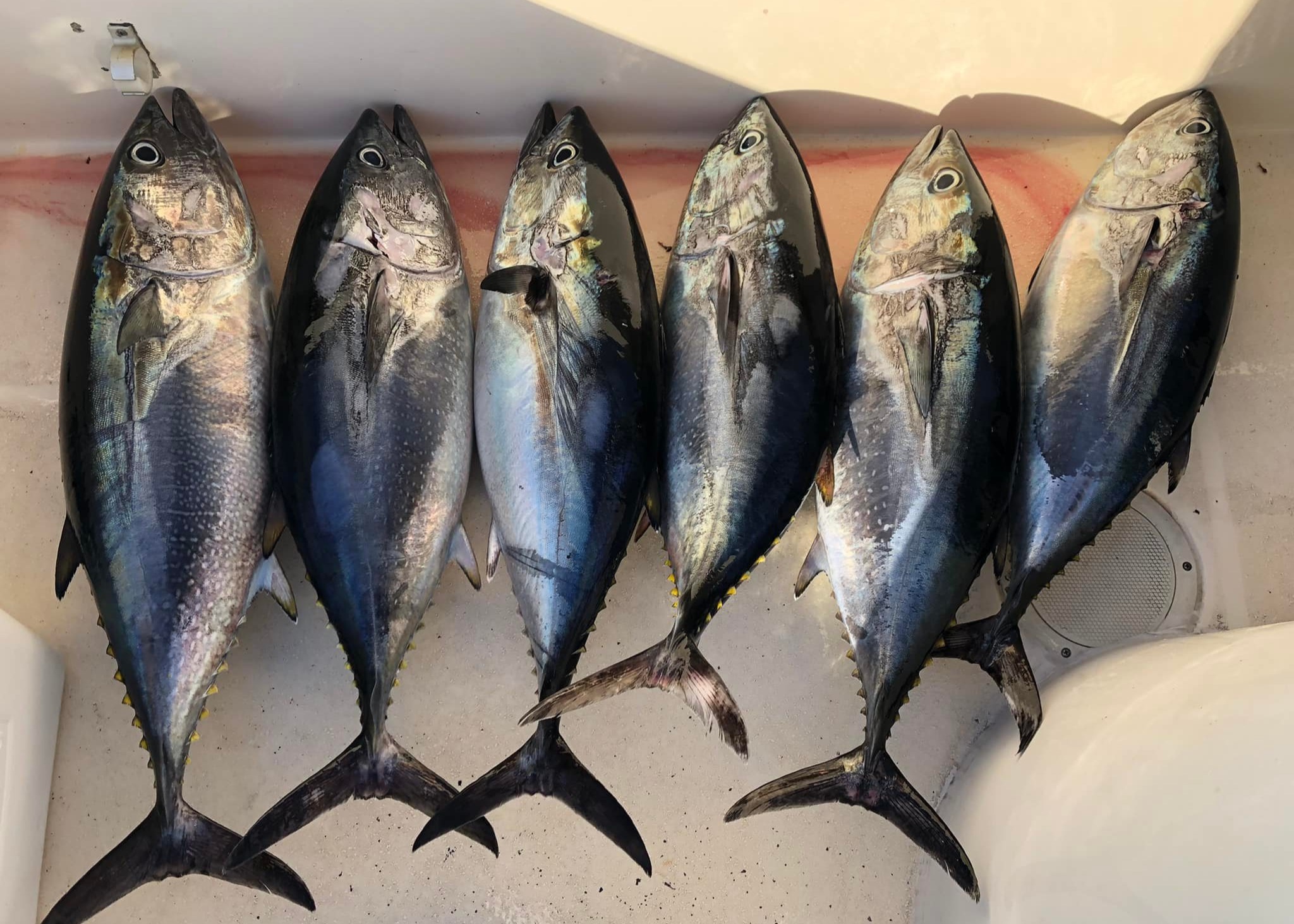
Bluefin are the most demanding fish you’ll hook in Southern California waters. A 50-pound bluefin can run 300 yards in the first burst, fight for 30+ minutes, and put sustained pressure on your drag system that most reels simply aren’t built to handle. When your reel fails on a bluefin, you don’t get a second chance.
This guide covers what you actually need in a bluefin reel: drag power, line capacity, two-speed gearing, and where to put your money at every budget level.
⚡ Short Answer
Most SoCal bluefin anglers want a two-speed conventional reel in the 40–50lb class with at least 25 lbs of max drag and 500+ yards of 50lb braid capacity. That covers everything from school 30-pounders to the occasional cow.
👉 See the full picks: Best 40lb+ Reels for Tuna Fishing — specific models reviewed with pros, cons, and pricing.
⚡ Quick Picks
Best overall: Shimano Talica 16 II — the SoCal bluefin standard. Smooth two-speed, 25+ lbs of drag.
Best for giants: Shimano Talica 20 II — more drag, more capacity for 150+ lb fish.
Best premium: Accurate Fury FX2 500N — smoothest drag in the business, built in California.
Best value: Penn Fathom II 30 SD — legitimate tuna reel at a fraction of the price.
Best spinning: Shimano Saragosa SW 14000 — for casting iron to surface bluefin.
Now here’s everything you need to know to make the right call.
What a Bluefin Reel Must Have
Drag: 25–40+ lbs of max drag. This is the single most important spec. Bluefin make long, powerful runs and you need serious pressure to turn them before they spool you or reach structure. Your reel should deliver at least 25 lbs of max drag, and it needs to stay smooth and consistent under sustained load. Carbon fiber drag washers that dissipate heat are essential. Cheap drags overheat and fade, and a bluefin will exploit that immediately.
Line capacity: 500+ yards of 50–65lb braid. A big SoCal bluefin can run 200–300 yards on the first pull. You need a minimum of 500 yards of heavy braid (50–65lb) to survive those runs with a safety margin. Running out of line on a tuna is one of the most frustrating experiences in fishing. Don’t let it happen. See the best fishing line by pound test guide for specific braid recommendations.
Two-speed gearing. Nearly non-negotiable for serious bluefin fishing. Two-speed reels let you switch between high gear for fast retrieves and surface work, and low gear for grinding power when a tuna goes deep and decides to circle. Fighting a 50+ pound fish from 200 feet down in high gear only will destroy your back and potentially your reel gears.
Heavy-duty construction. Machined aluminum frame, stainless steel gears, sealed bearings. Bluefin fights put extreme stress on every component. Stamped frames flex under load, weak gears strip, unsealed bearings corrode. This isn’t the place to cut corners.
Conventional vs Spinning for Bluefin
Conventional reels are the standard for bluefin. They deliver more drag power, more line capacity, and two-speed gearing, which are all critical for this species.
Large spinning reels in the 10000–18000 class are used by some experienced anglers for casting poppers and stick baits to surface-feeding tuna. But spinners at that size are expensive, heavy, and their drag systems generally don’t hold up as well as conventional under prolonged stress. For the vast majority of anglers, conventional is the right call.
Reel Size Classes for Bluefin
40lb class (medium conventional): The starting point for bluefin fishing. Handles fish in the 30–60lb range effectively. Good for school-size bluefin SoCal boats encounter on day trips. Holds 500+ yards of 50lb braid with adequate drag. See the full 40lb+ reel reviews →
50lb class: The sweet spot for SoCal bluefin. These reels hold 600+ yards of 65lb braid and deliver 30+ lbs of smooth drag. This is what most serious bluefin anglers run on overnight trips out of San Diego. Handles everything from 40-pound school fish to the occasional 100+ pound cow.
60–80lb class (large conventional): For targeting trophy bluefin over 100 lbs or fishing long-range trips where you might encounter giants. These are heavy, expensive reels that most anglers don’t need for typical SoCal bluefin. If you’re making multi-day trips to Guadalupe or fishing known big-fish zones, stepping up makes sense.
Not sure what class you need? If this is your first dedicated tuna reel, go with the 40–50lb class. It covers 90% of SoCal bluefin scenarios and pairs perfectly with a quality 8-foot offshore rod.
Top Bluefin Reels by Budget
For detailed reviews with specific models, features, and current pricing, see the Best 40lb+ Reels for Tuna Fishing guide. Here’s what to prioritize at each budget level:
Entry level ($250–$400): At this price, you can find a solid two-speed conventional with 20+ lbs of drag and enough capacity for 50lb braid. These reels handle school-size bluefin (20–50 lbs) well. Look for carbon fiber drags and an aluminum frame. Penn and Shimano both offer strong options.
Mid-range ($400–$700): This bracket gets you reels with 30+ lbs of max drag, larger spools for 600+ yards of heavy braid, and significantly better gear quality. Two-speed is standard at this price. These reels handle bluefin up to 80+ lbs and are the most popular choice for SoCal overnight trips. Shimano, Daiwa, Okuma, and Penn all compete hard here.
Premium ($700–$1,200+): Top-tier bluefin reels with 35–50 lbs of drag, precision machined components, and the kind of build quality that handles hundred-pound fish without breaking a sweat. Accurate, Shimano Talica/Trinidad, and Avet are the names most SoCal tuna anglers reach for at this level. Buy-it-once reels that will last years of hard use.
Setting Up Your Bluefin Reel
Line: Spool with 50–65lb braid. Some anglers add a mono topshot (first 50–100 yards of mono over the braid) for stretch that cushions the initial strike and helps prevent pulled hooks on bait presentations. The fishing line guide covers the best brands at every pound test.
Leader: 40–80lb fluorocarbon, 6–15 feet long. Leader length depends on water clarity. Clear water calls for longer leaders so the visible braid is farther from the fish. Connect braid to fluoro with an FG knot.
Terminal: Circle hooks in 4/0–7/0 for live bait, or various jigs and poppers for artificials. Palomar or San Diego Jam for terminal connections. See the fishing knots guide for step-by-step instructions.
Hooks: Check the best hooks by species guide for specific hook sizes and styles matched to bluefin presentations.
Drag setting: Set your strike drag at about 1/3 of your weakest connection (usually the leader). For 60lb fluoro leader, that’s about 20 lbs of strike drag. Set it at home with a scale. Don’t guess on the water. You can bump drag up during the fight once the fish is hooked and the line is already under tension.
Rod Pairing
A bluefin reel needs to be matched with the right rod:
Bait fishing: An 8-foot medium-heavy to heavy rod with moderate action. The length provides lifting leverage and moderate flex cushions the line during surges. Fiberglass or composite blanks are preferred for their shock absorption.
Jigging: A shorter 5.5–6.5 foot heavy-action rod with a fast tip. Stiffer for working jigs with the backbone to fight fish vertically. Graphite or composite blanks work well.
Casting poppers/iron: A 7-foot to 8-foot heavy-action rod with a fast tip for launching heavy poppers and surface irons. This is where graphite rods shine — lighter weight for repeated casting.
For complete rod and reel pairing advice, see the rod and reel combo guide.
Common Mistakes
Underspending on the reel. Bluefin is the one species where a cheap reel will cost you fish. A $150 reel that “works fine for yellowtail” will fail when a 60-pound bluefin tests the drag for 20 straight minutes. Budget at least $300+ for a dedicated bluefin reel.
Not enough line capacity. If you can’t hold 500+ yards of 50lb braid, you’re gambling every time a big fish takes a long run. Don’t put yourself in a position where you’re staring at a spool with 20 yards left and a fish still running.
Single-speed for big fish. A single-speed reel can catch bluefin, but you’ll work three times as hard during the fight. When a tuna goes deep and starts circling, you need low gear. Paying the premium for two-speed is one of the best investments in tuna fishing.
Not testing drag before the trip. Set your drag at home with a scale. Most anglers run their drag too loose because they’re afraid of breaking off. On bluefin, you need serious drag pressure to control the fight. Know your numbers before you leave the dock.
Frequently Asked Questions
What size reel do I need for bluefin tuna?
A 40–50lb class two-speed conventional covers most SoCal bluefin scenarios. For school-size fish (30–60 lbs), the 40lb class is ideal. For targeting larger fish on overnight or multi-day trips, step up to a 50lb class for extra line capacity and drag power.
Can I use a spinning reel for bluefin?
Yes, but conventional is strongly preferred. Spinning reels in the 10000–18000 size work for casting poppers to surface fish, but they lack the two-speed gearing and sustained drag performance that conventional reels deliver for extended bluefin fights.
How much drag do I need for bluefin tuna?
At least 25 lbs of max drag for school-size bluefin, 30–40+ lbs for larger fish. The drag must be smooth and heat-resistant. Carbon fiber drag washers are essential. Set your strike drag at 1/3 of your weakest connection.
What line should I use for bluefin tuna?
50–65lb braid with a 40–80lb fluorocarbon leader. You need at least 500 yards of braid on the spool. See the fishing line guide for specific brand recommendations.
What’s the best rod to pair with a bluefin reel?
An 8-foot medium-heavy to heavy rod is the most versatile choice. Fiberglass or composite blanks absorb shock better during long fights. See the combo guide for matched pairings.
Plan Your Bluefin Trip
- SST Charts — Bluefin bite best in 60–68°F water
- Chlorophyll Maps — Find the bait that attracts tuna schools
- Fleet Tracker — See where tuna boats are fishing right now
- Marine Weather — Check offshore conditions before you go
- AI Fishing Predictions — Data-driven bite forecasts for SoCal
- What to Bring on an Overnight Trip
Related Guides
- Best 40lb+ Reels for Tuna Fishing
- Best 30lb Reels for Saltwater Fishing
- Best Reel for Yellowtail Fishing
- Best Water Temp for Bluefin Tuna
- Best 8ft Offshore Rods
- Best Poppers for Tuna
- Fly-Line Rig for Tuna
- Surface Iron Fishing Guide
- Jigs vs Irons vs Poppers
- San Diego Fishing Season Calendar
Tight lines!
Affiliate Disclosure: As an Amazon Associate, fishing-reports.ai earns from qualifying purchases. Links to Amazon on this page are affiliate links — if you click and buy, we may earn a small commission at no extra cost to you.