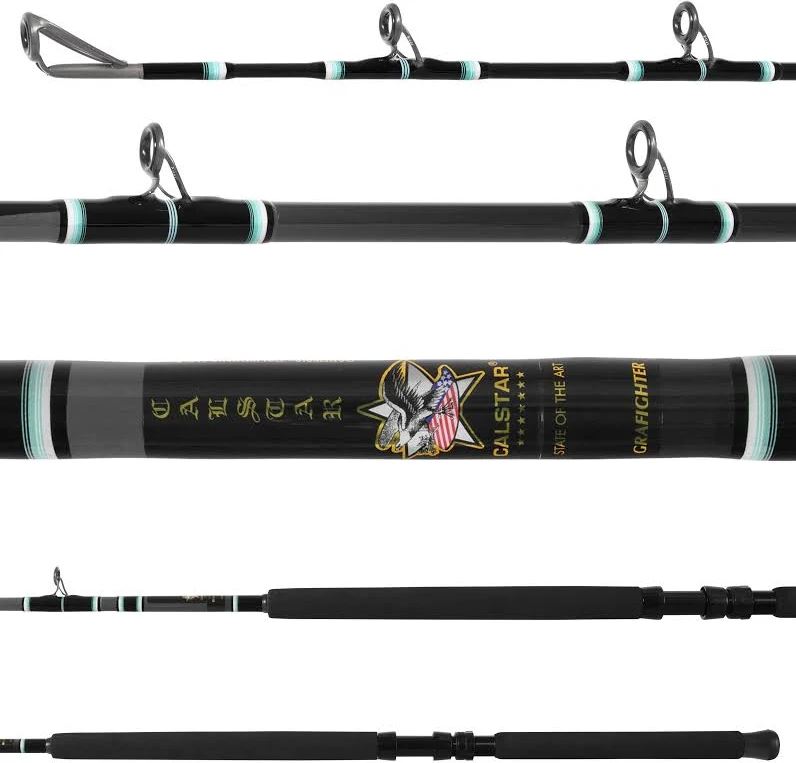
An 8-foot rod gives you something a 7-footer can’t: casting distance. That extra foot of leverage translates to 15–20% more distance when throwing surface irons, and it gives live baits a longer, smoother launch that keeps them alive and swimming. The trade-off is less fish-fighting leverage (longer rod = more flex = more room for the fish to work) and more fatigue over a full day. For specific SoCal applications, an 8-footer is the right tool.
⚡ Quick Picks
Best for iron/poppers: Shimano Grappler Type C 8’2″ H — purpose-built for casting surface lures to pelagics.
Best budget: Daiwa Proteus 8′ Heavy — capable iron rod at a fraction of the premium price.
Best for live bait: Calstar Grafighter 800M — SoCal classic for lobbing big baits on long-range trips.
Best for lighter popping: Shimano Grappler Type C 8’2″ MH — easier to fish all day, handles school tuna and yellowtail.
When You Need an 8-Foot Rod
Surface iron casting: This is the primary reason SoCal anglers own 8-foot rods. When yellowtail or tuna are boiling on the surface 80+ yards from the boat, an 8-foot spinning rod loads a 4.5-ounce Tady 45 and launches it into territory a 7-footer can’t reach. Those extra yards of casting distance often determine whether you’re in the zone or falling short. See the complete surface iron guide and the jigs vs irons vs poppers breakdown.
Popper fishing: Same logic. Poppers need rod length to generate casting distance. The longer rod also gives you better leverage for working popper action, because the increased rod travel per twitch creates a more pronounced pop.
Live bait launching: On crowded party boats, getting your bait away from the boat and into clean water is critical. An 8-foot rod lets you lob a live sardine or mackerel farther from the boat with a gentler motion, reducing the chance of tearing the bait off the hook. A slider rig on a long rod is deadly for this.
Long-range trips: Multi-day runs to the Baja banks and offshore islands often involve a mix of iron casting, popper work, and live bait. All situations where the 8-footer earns its spot in the rod rack. Don’t forget to check the overnight trip packing list.
Powered by FishingBooker
Best 8-Foot Rods for SoCal
Best for Iron & Poppers: Shimano Grappler Type C 8’2″ Heavy (Spinning)
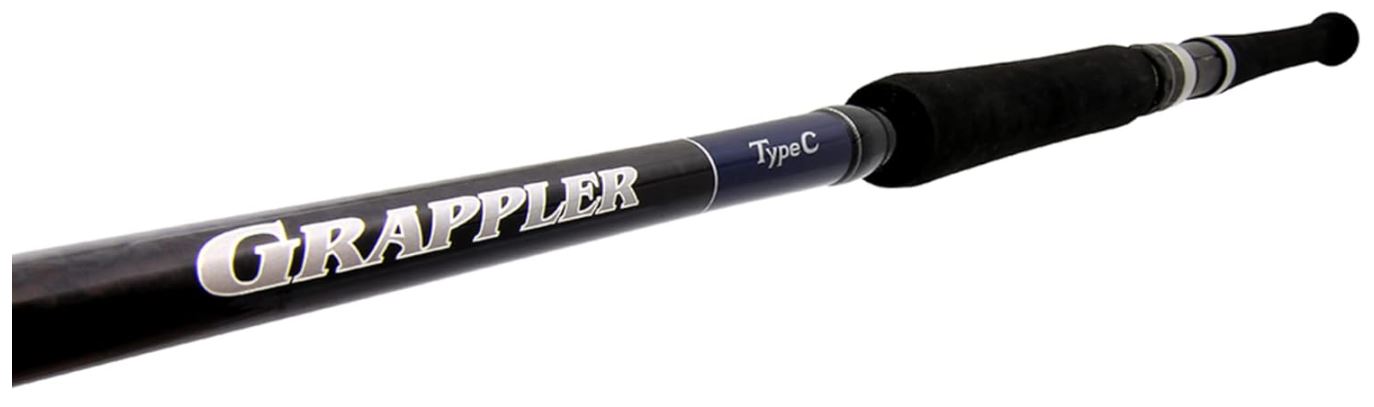
The Grappler Type C is Shimano’s purpose-built casting rod for offshore surface work: poppers, stickbaits, and heavy iron. The 8’2″ Heavy model is the sweet spot for SoCal iron fishing. It loads a Tady 45 or Salas 7X for maximum distance, and the Spiral-X / Hi-Power X blank construction makes it lighter and more rigid than anything else in its class. The fast action transmits your retrieve speed to the iron while the powerful butt section absorbs the shock of a tuna or yellowtail hitting at full speed. This is the rod SoCal tuna chasers are switching to. Pair with a Shimano Saragosa 6000 or Saragosa 14000 for heavier applications.
Best for Lighter Popping: Shimano Grappler Type C 8’2″ Medium-Heavy (Spinning)
If the Heavy model feels like overkill, or if you’re casting lighter poppers and irons to yellowtail and school tuna rather than big bluefin, the MH version is significantly more fishable all day. Same Spiral-X / Hi-Power X construction, same 8’2″ casting distance, but a softer tip that loads easier with lighter lures and absorbs head shakes better during the fight. Better casting accuracy with lures in the 2–4 ounce range. If you’re mainly targeting yellowtail and yellowfin on iron, this is probably the better pick over the Heavy.
Best Budget: Daiwa Proteus 8′ Heavy (Conventional)
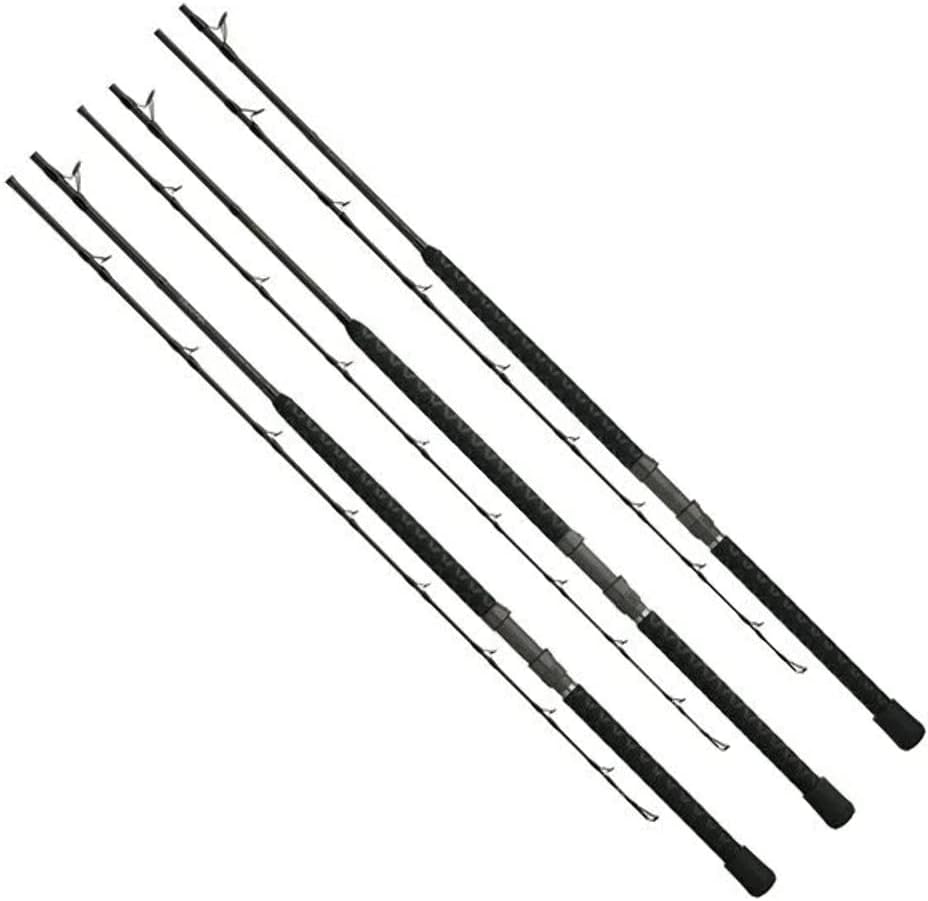
A capable 8-foot iron rod at a fraction of the Grappler’s price. The graphite blank is a bit heavier than the Shimanos and the guides aren’t as refined, but it casts irons well and has enough backbone to fight yellowtail and school tuna. A great entry-level iron rod or a backup to keep in the rod rack. If you’re trying iron fishing for the first time and don’t want to invest $300+ in a rod you might not love, start here. Pairs well with a Daiwa BG MQ 4000 or Saragosa 5000 for a complete budget setup.
Best for Live Bait: Calstar Grafighter 800M (Conventional)
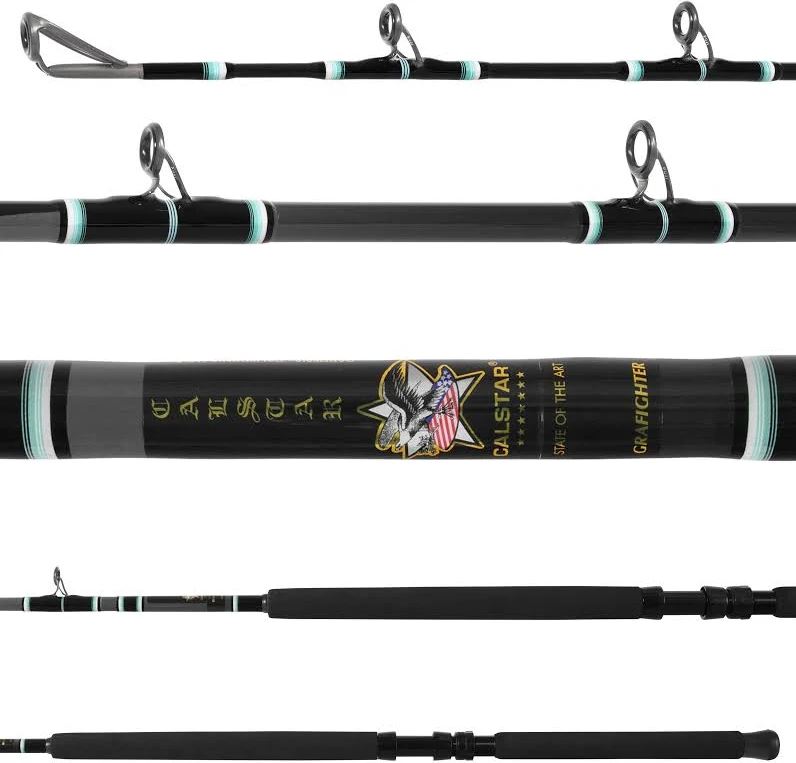
Calstar Grafighter live bait rods
An 8-foot conventional rod for live bait might seem unusual, but for long-range trip anglers this setup shines. The extra length lets you lob big baits (sardines, mackerel, even small skipjack) farther from the boat with a smooth, controlled cast. Medium power with moderate-fast action provides a soft tip that keeps baits alive and a progressive backbone for fighting big fish. A slider rig on a Calstar 800M is a proven long-range killer. Paired with a Shimano Talica 12 for yellowtail or a Talica 16 for tuna, this is a serious long-range tool.
8-Foot vs 7-Foot: When to Grab Which
| Situation | Best Length | Why |
|---|---|---|
| Surface iron casting | 8 foot | Maximum casting distance to reach boiling fish |
| Popper fishing | 8 foot | Better lure action and casting distance |
| Party boat bait fishing | 7 foot | Better fish-fighting leverage in tight quarters |
| Vertical jigging | 7 foot or shorter | Shorter rod = better jigging mechanics |
| Tuna on heavy gear | 5’6″–6’6″ | Maximum leverage for big fish straight below |
| Long-range trip (one rod) | 7 foot | Best compromise of versatility and power |
| Long-range trip (two rods) | 7′ + 8′ | 7′ for bait, 8′ for casting — ideal combo |
Gear Pairings for 8-Foot Rods
8-foot rods in this class pair primarily with spinning reels for casting applications. A 6000–14000 class spinning reel with 20+ pounds of drag and fast retrieve (6.0:1 or higher) matches the rod’s intended use. Spool with 40–65lb braid. The thinner diameter of braid maximizes the casting advantage that the longer rod provides. See the line guide for specific brand picks.
| Application | Rod | Reel | Line |
|---|---|---|---|
| Heavy iron / bluefin | Grappler Type C 8’2″ H | Saragosa 14000 or Twin Power 6000 | 65lb braid / no leader |
| Lighter iron / yellowtail | Grappler Type C 8’2″ MH | Saragosa 6000 | 50lb braid / no leader |
| Budget iron | Proteus 8′ H | Saragosa 5000 or BG MQ 4000 | 40lb braid / no leader |
| Live bait long-range | Calstar 800M | Talica 12 or Talica 16 | 40lb braid / 30lb fluoro leader |
For the conventional 8-foot bait rod (Calstar 800M), pair with a 30lb lever drag reel for yellowtail or a 40lb two-speed for tuna. Connect braid to leader with an FG knot.
See the complete rod and reel combo guide for detailed pairing recommendations across all applications.
Frequently Asked Questions
Do I need an 8-foot rod for SoCal fishing?
Not as your first rod. A 7-footer is more versatile and handles 80% of offshore situations. An 8-foot rod is your second rod, specifically for casting iron and poppers when fish are boiling out of range. If you fish iron regularly, it’s essential.
What reel pairs best with an 8-foot iron rod?
A 6000–14000 class spinning reel. The Shimano Saragosa 6000 is the most popular pairing for yellowtail iron, and the Saragosa 14000 or Stella SW 10000 for heavier tuna work. See the 30lb reel guide and 40lb reel guide for complete reviews.
Should I get the Heavy or Medium-Heavy Grappler?
Heavy if you’re throwing 4+ ounce iron to bluefin and big yellowtail. Medium-Heavy if you’re casting 2–4 ounce poppers and lighter iron to yellowtail and school tuna. The MH is easier to fish all day and more forgiving on the cast.
Can I use an 8-foot rod for bait fishing?
It works for live bait launching (the Calstar 800M is specifically built for this), but it’s not ideal for general party boat bait fishing. A 7-foot rod gives you better leverage for fighting fish and is more manageable on a crowded rail.
What line should I use for iron casting?
40–65lb braid with no leader for maximum distance. Some anglers add a short 40lb fluoro topshot for abrasion resistance, but most SoCal iron fishermen go straight braid. See the line guide for specific brands.
Graphite or fiberglass for an 8-foot rod?
Graphite for casting applications. You need the rod to be light enough to cast repeatedly all day, and graphite’s stiffness translates to better lure action. The Calstar bait rod uses a composite blank for shock absorption, which makes more sense for a rod that fights fish rather than casts lures.
Plan Your Trip
- SST Chart — Water temperatures and temperature breaks for your target species
- Chlorophyll Map — Where bait is concentrating
- Marine Weather — Wind matters for iron fishing. Calm is best.
- Fleet Tracker — Where the fleet is finding surface action
- AI Fishing Predictions — Data-driven forecasts for SoCal
- SD Fishing Season Calendar — When iron fishing peaks
- Overnight Trip Packing List — For multi-day long-range runs
Related Guides
- Best 7-Foot Offshore Rods — the more versatile all-around option
- Best Surf Casting Rods — for the beach
- Best Rod & Reel Combos for SoCal
- Best 30lb Reels — spinning picks for iron setups
- Best 40lb+ Reels for Tuna — heavy spinning for bluefin
- Best Reel for Yellowtail
- Best Reel for Bluefin Tuna
- Surface Iron Fishing Guide
- Best Poppers for Tuna
- Jigs vs Irons vs Poppers
- Graphite vs Fiberglass Rods
- Best Fishing Line by Pound Test
Tight lines!
Affiliate Disclosure: As an Amazon Associate, fishing-reports.ai earns from qualifying purchases. Links to Amazon on this page are affiliate links — if you click and buy, we may earn a small commission at no extra cost to you.