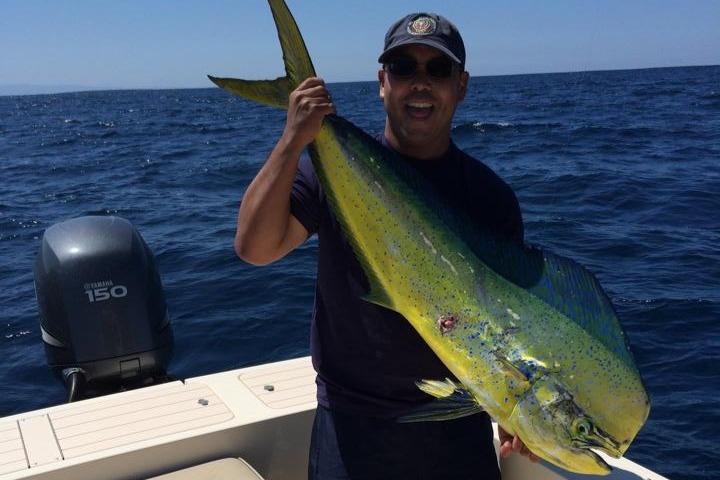
Dorado — also called mahi mahi or dolphinfish — are the most aggressive lure-eating fish you’ll encounter in SoCal and Baja waters. They hit hard, they hit often, and they’ll chase down lures that other species would ignore. That makes them some of the most fun fish to target on artificial, but it also means lure selection matters. Not because dorado are picky, but because the right lure gets you more strikes, better hookups, and keeps the fish around the boat longer.
Dorado show up in SoCal when water temperatures reach 68°F and above, typically from midsummer through fall. They’re almost always associated with floating structure: kelp paddies, debris lines, buoys, and anything else that creates shade and holds bait. Use the SST chart and chlorophyll map to find warm water with bait concentrations. That’s where the paddies form and the dorado stack up.
⚡ Quick Picks
Best trolling lure: Cedar plugs — simple, cheap, and dorado crush them. Carry a dozen.
Best trolling spread: Zuker feather jigs — run 4 at staggered distances in green/yellow and blue/white.
Best casting lure: Tady 45 surface iron — burn it past a paddy and watch them light up.
Best deep trolling: Rapala X-Rap Magnum — gets down where dorado hold under paddies.
Best for keeping fish at the boat: Soft plastic swimbaits — cheap, easy to rig, and dorado eat them nonstop.
Powered by FishingBooker
Trolling Lures
Trolling is the most common way to find dorado on the open ocean. You cover ground until you find paddies, debris, or temperature breaks, and the trolled lures work while you search. Run a spread of 4–6 lures at staggered distances behind the boat to cover more water and figure out which color and depth the fish want.
Cedar Plugs
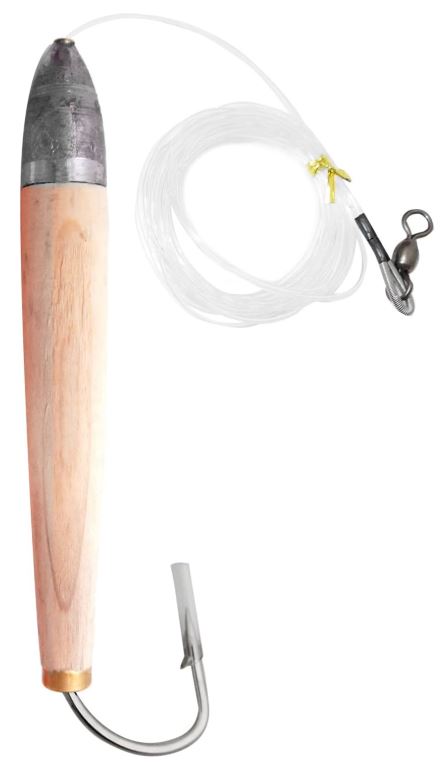
Cedar plugs are the workhorses of the paddy search. When you’re running 30–50 miles of open ocean looking for kelp, you want lures that stay fishing at 7–8 knots hour after hour without maintenance, and a cedar plug does exactly that. Green/yellow and blue/white are the top dorado colors; natural cedar also produces well. Run them 50–100 feet back so they work close enough to the boat for a quick pitch to any paddy you find. Dorado don’t need the long leads that line-shy bluefin require. They’re aggressive, competitive feeders that will chase a lure right to the transom. Keep a dozen on board because dorado teeth eventually chew through the finish, and a beat-up plug still catches fish but a split hook is a pulled bite.
Feather Jigs (Zuker / Tuna Feathers)
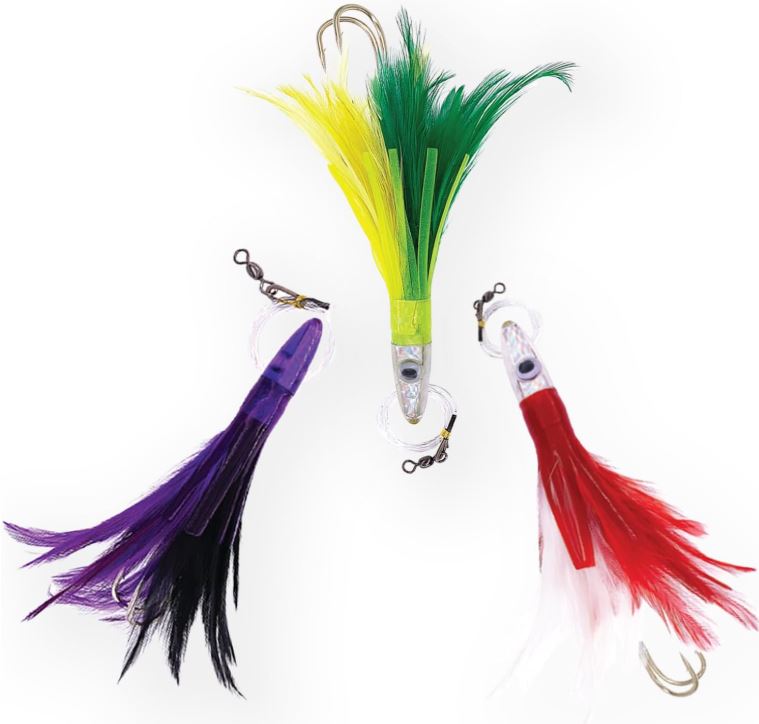
A 4-feather spread in bright colors is the standard dorado paddy search setup. Green/yellow is the #1 dorado color. It imitates juvenile dorado, which triggers a territorial feeding response. Blue/white and root beer/orange follow close behind. Stagger your spread: two short (20–30 feet back) in the prop wash and two long (60–80 feet back) on the outside. Dorado attack aggressively and often hit multiple lures in the spread at once, so use 5/0–7/0 J hooks pre-rigged in the skirt and check all positions after each hookup. They’ll frequently slash a second lure during the fight. When the search is on and paddies are far apart, a hookup on a feather tells you the temperature and bait situation is right and it’s worth slowing down to look harder.
Rapala X-Rap Magnum Series
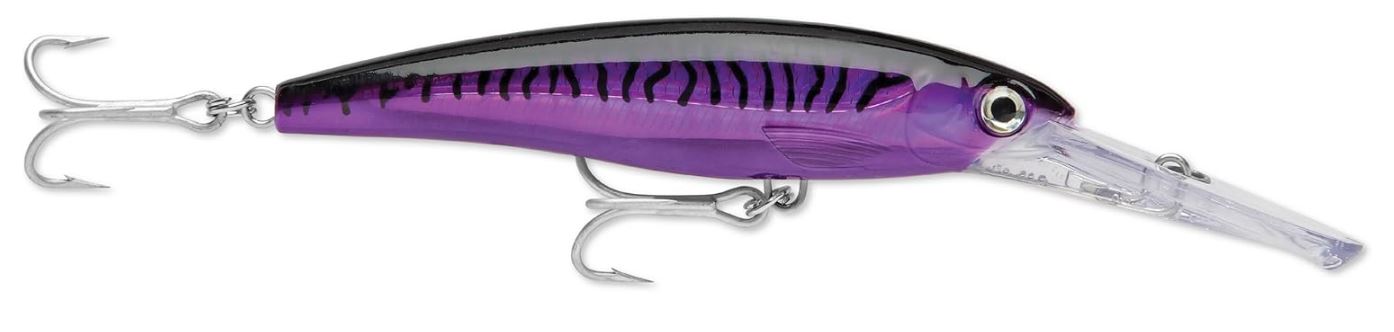
The X-Rap Magnum earns its spot specifically when dorado are holding tight under a paddy and refusing surface lures. Kelp paddies create a shaded zone that dorado use to ambush bait, and the bigger bull dorado often sit several feet below the canopy where cedar plugs and feathers run above them. A Rapala diving to 10–15 feet punches through that zone and puts the lure right in front of fish that are actively holding but won’t rise. Run it on the outside of your spread at 5–7 knots. Dorado gold, pilchard, and bonito patterns are the top producers. The 10 and 15 sizes cover most SoCal situations. Step up to the 20 for Baja fish that average larger. When everyone is pulling their lines in at a paddy because the fish won’t eat, one rod with an X-Rap still trolling past often gets the first bite.
Casting Lures (for Kelp Paddies)
Once you’ve found dorado on a paddy, casting lures is the most exciting way to catch them. Dorado are competitive feeders. When one chases a lure, the rest follow. Keeping lures in the water keeps the school active and near the boat. The key is speed and aggression: cast past the paddy, retrieve fast, and keep casting. A dead boat with no lures in the water means the school disappears.
Surface Iron (Tady 45 / Tady 4/0)
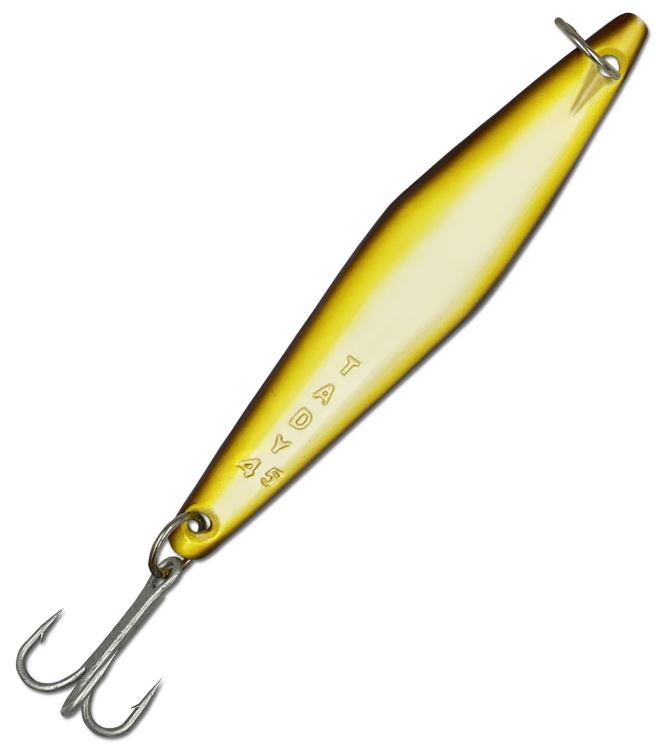
The same irons you throw for yellowtail work beautifully on dorado. Cast past the paddy and burn the iron back through the school. Dorado will chase it aggressively. You’ll often see them racing the iron with their dorsal fin lit up electric blue. The Tady 4/0 in 2.6oz is particularly effective because the lighter weight lets you work it a bit slower, giving more fish a chance to track and commit. The heavier Tady 45 (2.9oz) is better when you need extra casting distance to reach paddies from a drifting boat. For a full breakdown of iron types and technique, see the jigs and irons guide and jigs vs irons vs poppers comparison.
Poppers
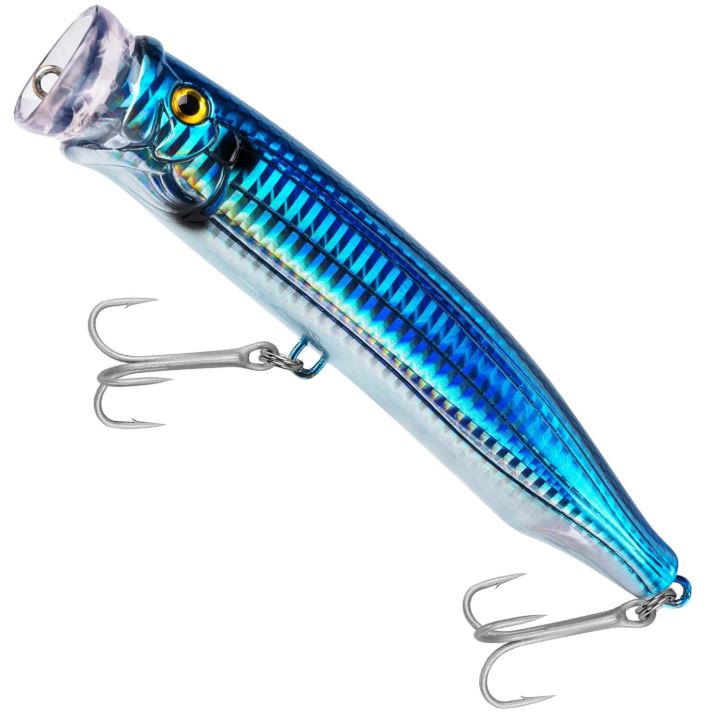
Dorado go absolutely insane for poppers. The splash and commotion triggers their competitive instinct. You’ll often see multiple fish racing to be the first one to the lure. A medium-sized popper (80–120mm) in bone, sardine, or bright green/yellow patterns is deadly when cast near a paddy. Pop it aggressively and hold on. You don’t need the heavy-duty tuna poppers here. Dorado average 5–15 lbs, so a lighter popper that’s easier to work all day is ideal. The strikes are some of the most violent surface eats in fishing.
Big Hammer Swimbaits
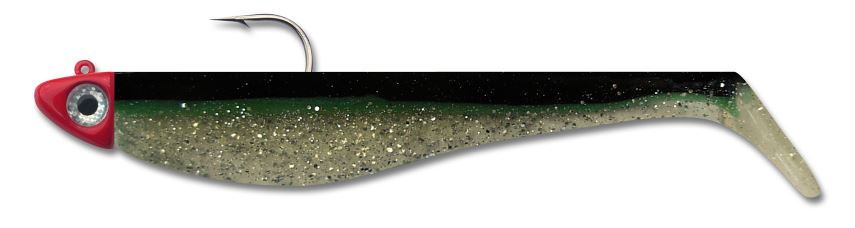
A 4–6 inch soft plastic swimbait on a 1/2 to 1oz jig head is a simple, effective dorado lure that every angler on the boat can fish. The swimming tail action drives them crazy. Cast it past the paddy, let it sink a few feet, and retrieve with a moderate, steady pace. Green/yellow (imitating a small dorado — they’re cannibalistic), white, and sardine patterns work well. The advantage of soft plastics is they’re cheap, and dorado teeth chew through them fast, so you’ll go through several per session. Pack a bag of 20+. For more on soft plastic technique, see the swimbaits guide.
Dr Fish Casting Spoons
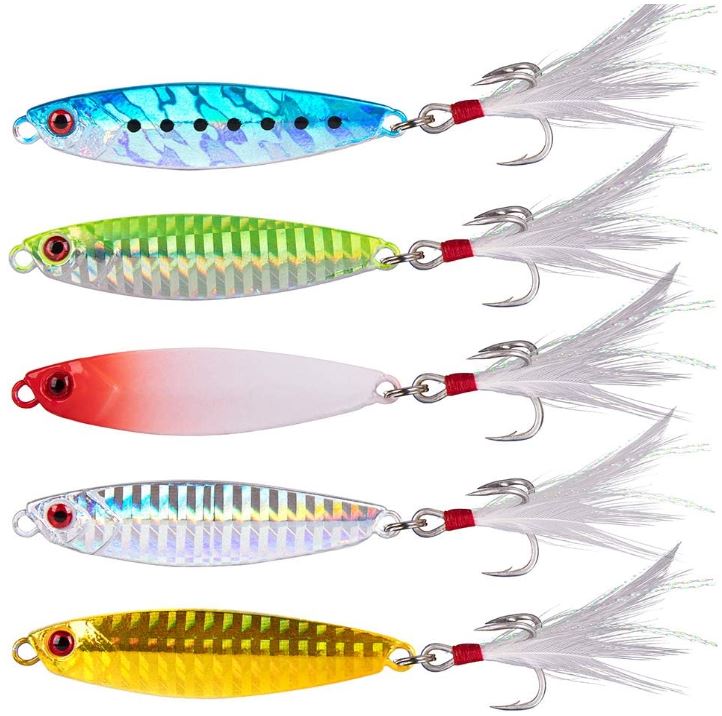
A large, heavy casting spoon (2–3 oz) in chrome or gold produces a massive flash that draws dorado from distance. Particularly effective when the school is scattered and you need to attract fish to the boat from across a debris field. Cast it out, let it flutter down a few feet, then retrieve with an erratic pump-and-wind to create an injured baitfish action. The fluttering fall is often when the bite comes. Dorado can’t resist a wounded, flashing target sinking away from them.
Color Selection
Dorado respond strongly to color, more so than most SoCal species. The top producers:
- Green and yellow — imitates small dorado (they’re cannibalistic) and triggers a territorial response. The #1 dorado color.
- Blue and white — sardine imitation, the universal SoCal choice that works on everything.
- Chartreuse — high visibility in any water clarity, especially in off-color Baja water.
- Pink / hot pink — surprisingly effective, especially on overcast days and in deeper water.
- Natural / bone — clear water, bright days when flash alone is enough.
- Root beer / orange — classic trolling feather color, works especially well in the morning.
When in doubt, start with green/yellow. Dorado chase their own kind, and this triggers the most aggressive, competitive response. If they’re not eating green/yellow (rare), switch to blue/white. Check the chlorophyll map for water clarity. In greener, dirtier water, go brighter (chartreuse, pink). In clean blue water, go natural or chrome.
When to Throw What
| Situation | Lure Type | Top Pick |
|---|---|---|
| Searching for paddies / covering ground | Trolling spread | Cedar plugs + feathers |
| Dorado holding deep under paddy | Deep-diving troller | Rapala X-Rap Magnum |
| Boiling on surface at paddy | Surface iron | Tady 45 or 4/0 |
| Multiple fish competing at paddy | Popper | 80–120mm popper, green/yellow |
| Keeping school at the boat | Soft plastic swimbait | 5″ paddle tail, green/yellow |
| Scattered school, need to attract fish | Casting spoon | 2–3oz chrome spoon |
| Picky fish, clear water | Light casting jig | Tady 4/0 (2.6oz) bone/chrome |
Keeping the School at the Boat
The key to a big dorado session is keeping the school active and near the boat. Here’s the playbook:
- Leave the first fish in the water. When you hook a dorado, don’t rush to boat it. Keep it swimming alongside the boat. Its distress signals draw the rest of the school in close. A hooked dorado is the best chum you have.
- Keep lures in the water. Have another angler casting while the first fish is being fought. Dead time with no lures in the water means the school drifts away.
- Immediate re-cast. When you boat a fish, get another lure or bait back in the water immediately. Speed matters more than lure choice here. Throw anything.
- Chum when they fade. If the school starts to drift away, toss handfuls of bait (sardines or chunks) to keep them interested.
- Don’t let the boat drift away from the paddy. Keep the boat positioned near the structure. If you drift too far, idle back to the paddy and restart.
Gear for Dorado
Dorado don’t require heavy gear. Lighter gear means more fun and better lure action. A 20lb class setup handles most SoCal dorado perfectly.
Casting setup: A spinning reel in the 4000–6000 class, a Shimano Saragosa 5000 or Daiwa BG MQ 4000, on a 7-foot medium-heavy rod. Spool with 30lb braid and a 25lb fluorocarbon leader connected with an FG knot. This handles everything from soft plastics to surface iron.
Iron setup: If you’re dedicated to throwing iron at paddies, step up to a Saragosa 6000 on an 8-foot rod for maximum casting distance. Same as your yellowtail iron setup — dorado just happen to eat it too.
Trolling setup: A 20–30lb class conventional reel, Penn Squall II 25N or Shimano Talica 12, on a 7-foot medium rod. Spool with 30–40lb braid or mono. Keep the drag light. Dorado have soft mouths and heavy drag pulls hooks.
Hooks: Use J hooks on trolling lures and jigs (you need the instant hookset). For live bait, circle hooks in 2/0–4/0 are better. Dorado often swallow baits and circles prevent gut-hooking. See the hooks guide for specific sizes.
For complete rod and reel pairing advice, see the best rod and reel combo guide, and check the fishing line guide for specific braid recommendations.
Frequently Asked Questions
What is the best all-around lure for dorado?
For trolling: cedar plugs — cheap, simple, and they never stop producing. For casting at paddies: a Tady 45 surface iron in blue/white or green/yellow. If you could only bring two lure types on a dorado trip, those would be them.
What color lure is best for dorado?
Green and yellow is the #1 dorado color. It imitates small dorado and triggers aggressive, territorial strikes. Blue and white (sardine pattern) is the close #2 and works as a universal color for all SoCal species. When in doubt, start green/yellow.
How do I find dorado in SoCal?
Look for warm water (68°F+) on the SST chart, then locate kelp paddies and debris lines within that warm water. The chlorophyll map shows where bait is concentrating, and the fleet tracker shows where boats are finding dorado. Read the dorado temperature guide for seasonal patterns.
Can I use the same lures for dorado and yellowtail?
Yes. Surface irons (Tady 45, Tady 4/0), poppers, and casting jigs all work on both species. Dorado tend to prefer brighter colors (green/yellow, chartreuse) while yellowtail lean toward blue/white and chrome. The main gear difference is you can fish lighter tackle for dorado since they average smaller.
What rod and reel do I need for dorado?
A 20lb class spinning setup is ideal. Saragosa 5000 or BG MQ 4000 on a 7-foot medium-heavy rod with 30lb braid. Lighter gear means more fun on dorado. They don’t require the 40lb class setups you’d use for bluefin tuna.
What water temperature do dorado need?
68°F and above. They’re a warm-water species that shows up in SoCal from midsummer through fall when offshore water heats up. The sweet spot is 72–78°F. Check the dorado temperature guide and the SST chart to find productive water.
Do I need wire leader for dorado?
No. Dorado have small, sandpaper-like teeth that abrade fluorocarbon slowly but won’t bite through it in a fight. A 25–30lb fluoro leader is plenty. Wire leader actually reduces strikes because dorado have good eyesight and feed in clear water. Retie your leader periodically if it’s getting chewed up.
Plan Your Trip
Dorado follow warm water and floating structure. Check conditions:
- SST Chart — Find water above 68°F where dorado live
- Chlorophyll Map — Where bait is concentrating near kelp paddies
- Marine Weather — Wind, swell, and offshore conditions
- Fleet Tracker — See where the fleet is finding dorado
- AI Fishing Predictions — Data-driven forecasts for SoCal
- Best Water Temp for Dorado — Ideal temperature range and seasonal patterns
- SD Fishing Season Calendar — When dorado show up in SoCal
Related Guides
- Best Water Temp for Dorado
- How to Fish Kelp Paddies
- Finding Temperature Breaks
- Best Yellowtail Jigs & Irons
- Best Poppers for Tuna
- Surface Iron Fishing Guide
- Jigs vs Irons vs Poppers
- Best Reel for Yellowtail
- Best Reel for Bluefin Tuna
- Best 20lb Reels
- Best 7-Foot Offshore Rods
- Best 8-Foot Offshore Rods
- Best Rod & Reel Combos for SoCal
- Best Swimbaits for Halibut
- Braid vs Mono vs Fluorocarbon
- Best Fishing Line by Pound Test
- Best Fishing Knots
- Circle Hooks vs J Hooks
- Best Hooks by Species
- Overnight Trip Packing List
Tight lines!
Affiliate Disclosure: As an Amazon Associate, fishing-reports.ai earns from qualifying purchases. Links to Amazon on this page are affiliate links — if you click and buy, we may earn a small commission at no extra cost to you.