• Best Fishing Knots Every Angler Should Know

    You can have the best rod, reel, and line money can buy, but if your knot fails, none of it matters. A good knot is the weakest link you can control — and in saltwater fishing where fish are bigger, runs are longer, and abrasion is constant, the wrong knot will cost you fish.

    You don’t need to know 50 knots. You need to know five or six really well and tie them consistently under pressure — on a rocking boat, in the dark, with a bite going off. Here are the knots that cover every saltwater connection you’ll need in SoCal.


    Book a Yellowtail Charter
    Southern California & Baja · Verified reviews · Free cancellation

    Powered by FishingBooker


    The Essential Knots

    1. Palomar Knot — Best for Hooks and Jigs

    The Palomar is the single most important knot in fishing. It’s incredibly strong (near 100% line strength when tied correctly), easy to tie, and works with braid, mono, and fluorocarbon. Use it every time you tie a hook, jig, or swivel to your line.

    How to tie it: Double 6 inches of line and pass the loop through the hook eye. Tie a simple overhand knot with the doubled line, leaving the loop large enough to pass the hook through. Pass the hook through the loop. Moisten and pull both the standing line and tag end to cinch tight against the hook eye. Trim the tag.

    The key mistakes people make: not wetting the knot before cinching (causes friction damage), not passing the loop completely over the hook (the knot will slip), and leaving the tag too short (it can pull through under load). See our step-by-step Palomar guide with pictures for the full breakdown.

    2. FG Knot — Best for Braid-to-Leader Connections

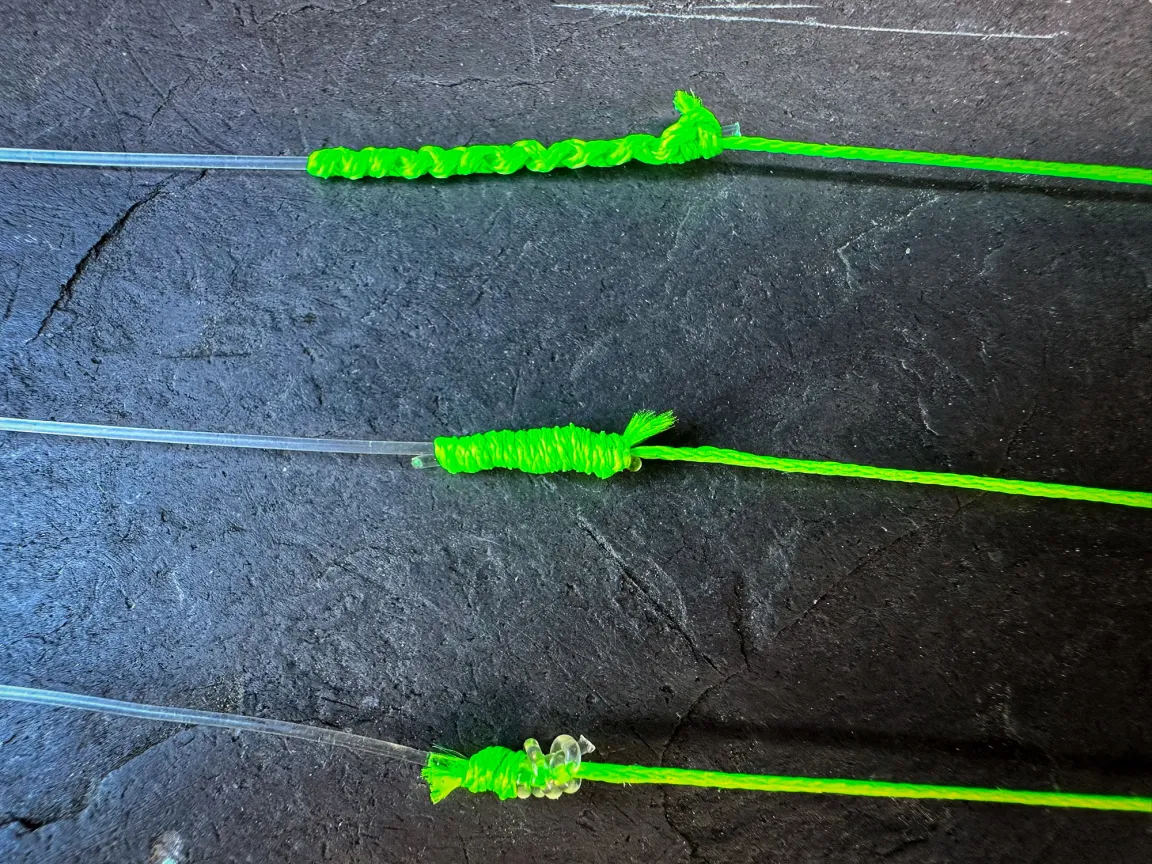
    The FG knot is the gold standard for connecting braided main line to a fluorocarbon or mono leader. It creates a slim, streamlined connection that passes through rod guides smoothly — critical when a fish runs and your knot has to fly through the tip. It’s harder to learn than other knots, but once you have it down, nothing else compares for braid-to-leader connections.

    How to tie it: Hold the leader under tension (many anglers hold it in their teeth or use a knot tool). Wrap the braid around the leader in alternating directions — over from the right, then over from the left — creating a series of tight wraps. Do 15–20 wraps. Then finish with a series of half hitches on the braid side only, cinching each one tight. Trim the leader tag flush and the braid tag close.

    The FG knot has a learning curve — expect to tie it 20–30 times at home before it becomes second nature. Watch a YouTube tutorial to see the hand motions. Once you get it, you’ll tie it every time. This is the knot connecting your 50–65lb braid to your fluoro leader on every tuna setup, yellowtail rig, and dorado outfit. An alternative that’s easier but bulkier is the Alberto knot (see below).

    3. Uni Knot — Best Versatile Knot

    The uni knot is the Swiss army knife of fishing knots. It works for tying hooks, joining two lines together (double uni), connecting to swivels, and even making a loop knot with a slight modification. It’s not quite as strong as the Palomar for hooks, but it’s incredibly versatile and fast to tie.

    How to tie it: Pass the line through the hook eye. Double back to form a loop alongside the standing line. Wrap the tag end around both lines and through the loop 5–6 times (use 8 wraps for braid). Moisten and pull the tag end to tighten the wraps. Slide the knot down to the hook eye by pulling the standing line. Trim the tag.

    The uni knot also works as a line-to-line connection: tie a uni knot on each line around the other line, then pull both standing lines to slide the knots together. This double uni is a reliable braid-to-leader connection that’s easier than the FG — just bulkier.

    4. Alberto Knot — Easiest Braid-to-Leader Knot

    If the FG knot is too fiddly for you, the Alberto knot is the next best option for braid-to-leader connections. It’s essentially a modified uni knot that handles the diameter difference between braid and fluorocarbon well. Not as slim as the FG, but significantly easier to tie — especially on a moving boat.

    How to tie it: Double over 6 inches of the leader to form a loop. Pass the braid through the loop. Wrap the braid around the doubled leader 7 times going away from the loop, then 7 times coming back toward it. Pass the braid back through the leader loop (same direction you entered). Moisten and slowly pull tight. Trim both tags.

    5. San Diego Jam Knot — Best for Heavy Hooks and Jigs

    When you’re tying heavy circle hooks or big yellowtail jigs to thick fluorocarbon leader, the San Diego jam knot is hard to beat. It cinches tight against heavy wire hooks better than a Palomar (which can slip on thick hook eyes) and maintains near-100% knot strength with heavy fluoro. This is the knot for your 4/0–6/0 Owner circles on tuna fly-line rigs and big bait setups.

    How to tie it: Pass the line through the hook eye. Wrap the tag end around the standing line 5–7 times, moving away from the hook. Pass the tag end through the loop closest to the hook eye, then back through the large loop you just created. Moisten and pull tight. It looks complicated written out, but it’s fast once you’ve done it a few times.

    6. Improved Clinch Knot — The Backup

    The improved clinch knot is probably the first knot most anglers learn. It’s reliable enough for mono and fluorocarbon up to about 30lb test, but it starts to lose strength with thicker diameters and doesn’t hold well with braid. Think of it as your backup — perfectly fine for basic applications but replaced by the Palomar and uni for most serious use.

    Which Knot for Which Connection

    ConnectionBest KnotAlternate
    Hook to mono/fluoroPalomarSan Diego jam, uni
    Hook to braid (no leader)PalomarUni (8 wraps)
    Jig or iron to leaderSan Diego jamPalomar
    Braid to fluoro leaderFG knotAlberto, double uni
    Swivel connection (Carolina rig)PalomarUni
    Loop knot (for lure action)Non-slip loop (Kreh)Uni loop
    Quick dropper loopDropper loopSurgeon’s loop

    Knot-Tying Tips

    Always wet your knots. Friction from cinching a dry knot generates heat that weakens line — especially fluorocarbon. A quick lick or dip in the water before pulling tight preserves full knot strength.

    Pull knots tight slowly. Jerking a knot tight causes uneven wraps and weak spots. Steady, firm pressure seats everything properly.

    Test every knot. After tying, give the line a firm pull. Better to find a bad knot before you cast than after a fish breaks you off.

    Retie regularly. Fluorocarbon develops memory and micro-abrasions after catching fish. Retie after every few fish or any time you feel roughness near the knot.

    Practice at home. Tying an FG knot for the first time while the tuna are biting is a recipe for frustration. Practice until muscle memory takes over.

    Hooks and Line Guides

    A strong knot only matters if it’s tied to the right hook with the right line. Here are our complete guides:

    Plan Your Trip

    Knots tied? Check conditions before heading out:

    Related Guides

    Tight lines!

  • Carolina Rig Setup for Saltwater Fishing

    Carolina Rig Setup for Saltwater Fishing

    The Carolina rig is one of the most effective bottom-fishing rigs for Southern California saltwater. It keeps your bait pinned to the bottom where halibut, corbina, and croaker feed, while giving the bait just enough freedom to look natural. If you surf fish or target halibut from a boat, you need this rig in your playbook.

    Setting up a Carolina rig is straightforward, but the details matter — the wrong weight, hook, or leader length can mean the difference between limits and getting skunked. Here’s exactly how to tie one and when to use it.

    What Is a Carolina Rig?

    A Carolina rig separates your weight from your bait using a leader. The weight sits on the main line above a swivel, and the bait hangs below on a separate length of leader. This design lets the weight anchor to the bottom while the bait floats or drifts naturally in the current — exactly how a real baitfish or sand crab moves.

    Compare this to a dropper loop rig where the weight hangs below and the bait sits higher in the water column. The Carolina rig excels when fish are feeding right on the bottom — which is most of the time for halibut, corbina, and California croaker.

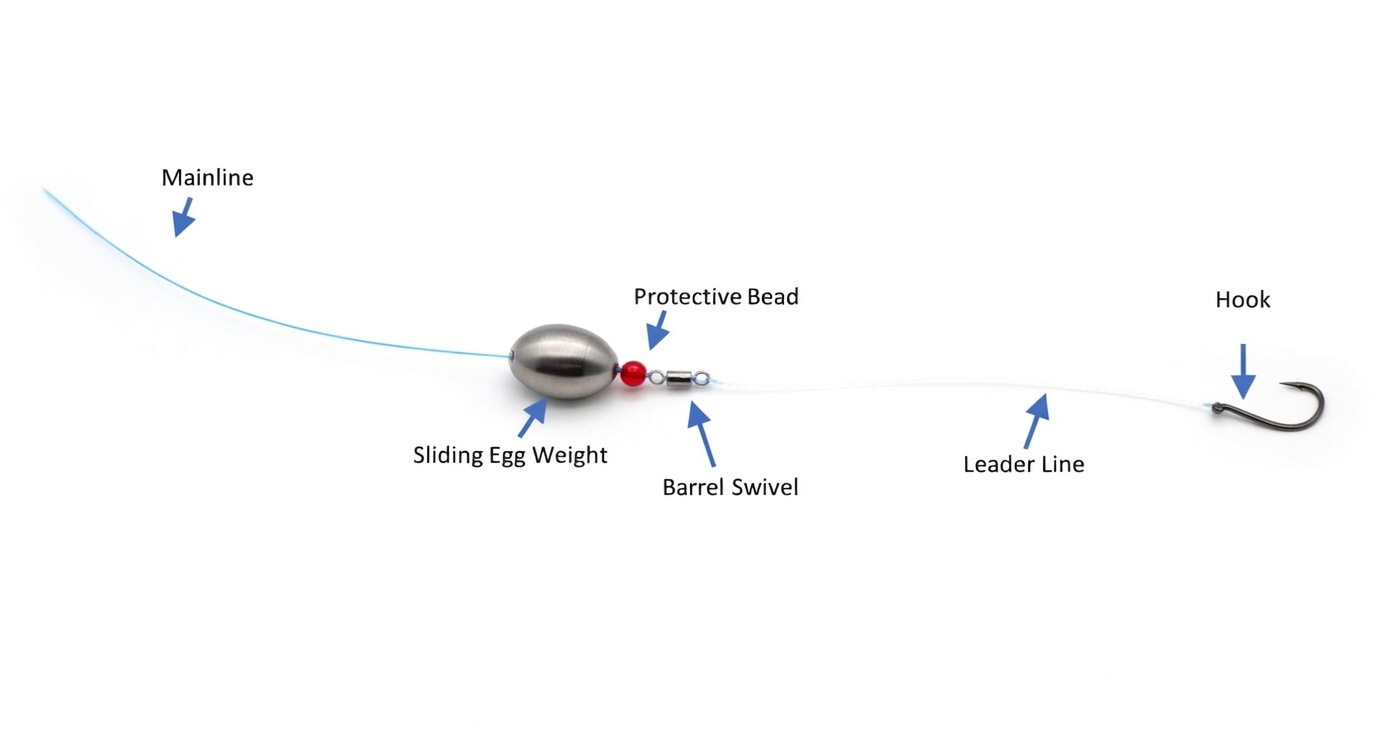
    Carolina rig diagram showing egg sinker, bead, swivel, fluorocarbon leader, and circle hook setup for halibut fishing

    How to Tie a Carolina Rig (Step by Step)

    What you need: An egg sinker (1–4 oz depending on current and surf), a plastic bead, a barrel swivel (size 3–5), fluorocarbon leader line (15–20lb), and a hook (circle or kahle style, size 1/0–4/0).

    Step 1: Slide the egg sinker onto your main line. The line passes through the hole in the center of the sinker, allowing it to slide freely.

    Step 2: Slide a small plastic bead onto the main line after the sinker. This bead protects your knot from being damaged by the sinker banging against it. Don’t skip this step — without the bead, your knot will fail at the worst possible moment.

    Step 3: Tie your main line to one end of the barrel swivel using a Palomar knot or improved clinch knot. The swivel acts as a stopper — the sinker and bead sit above it on the main line, free to slide. See our knot guide for step-by-step tying instructions.

    Step 4: Cut a length of fluorocarbon leader — typically 18 to 36 inches. Tie one end to the other eye of the barrel swivel.

    Step 5: Tie your hook to the free end of the leader. A Palomar knot works perfectly here.

    That’s it. Bait the hook, cast it out, and let the sinker pull everything to the bottom. The sinker sits on the sand, the leader extends out with the current, and your bait drifts naturally right in the strike zone.

    Dialing in the Details

    Sinker Weight

    Use the lightest weight that holds bottom. In calm surf or from a boat in minimal current, 1–2 ounces is plenty. In moderate surf, go to 3 ounces. In heavy surf or strong current, 4 ounces or even a pyramid sinker (which grips the sand) keeps you in place. Too much weight kills the natural presentation. Too little and you’re rolling down the beach.

    Leader Length

    This is the most important variable. A longer leader gives the bait more freedom to move but makes casting harder and reduces sensitivity. A shorter leader keeps better contact but looks less natural.

    For halibut in the surf, 24–36 inches is ideal — halibut are ambush predators and won’t chase a bait far, but they do like it to look natural. For corbina, 18–24 inches works better because they pick up baits delicately and a shorter leader means you feel the bite sooner. From a boat targeting halibut in bays or along the coast, 18–24 inches keeps good control.

    Hook Selection

    Circle hooks in 2/0–4/0 are the best all-around choice for Carolina rigs. They hook in the corner of the mouth almost every time, which means better hookup rates and easier releases. When a halibut picks up your bait, just reel tight and the circle hook does the work — no big hookset needed. The Owner Mutu Light Circle (5114) in 2/0–3/0 is ideal for halibut Carolina rigs — light wire for better penetration on a soft-mouthed fish. For a complete breakdown of hook models and sizes, see our hooks by species guide.

    Line and Leader

    Main line should be braided line in the 15–30lb range. Braid’s sensitivity lets you feel the slightest bump — critical for detecting halibut bites, which are often just a subtle “tick.” The fluorocarbon leader (15–20lb) provides abrasion resistance against sand and rocks plus near-invisibility in clear SoCal water. The swivel prevents the braid from twisting as the sinker slides. Connect your braid to the swivel with a Palomar knot, and for braid-to-leader connections elsewhere in your setup, see our complete knot guide.

    Best Baits for a Carolina Rig

    The beauty of the Carolina rig is that it works with almost any bait. For halibut, live or frozen sardines, smelt, and squid strips are all productive. Cut squid is especially effective because it stays on the hook well and halibut love it. For corbina and perch in the surf, sand crabs (soft-shell when possible), bloodworms, and mussels are the top producers. Swimbaits and grubs also work on a Carolina rig — thread a 3–4 inch soft plastic on a jig head or weedless hook and fish it exactly the same way.

    When and Where to Use It

    The Carolina rig shines in these SoCal situations: surf fishing sandy beaches for halibut, corbina, and perch — particularly in the troughs between sandbars. Bay fishing from shore or kayak for halibut and spotted bay bass. Slow drifts along sandy bottom from a boat. And fishing structure edges where halibut stage to ambush bait moving along the sand-to-rock transition.

    Check the SST chart before heading out — halibut start feeding aggressively when nearshore water hits the upper 50s to low 60s. Read our halibut temperature guide for seasonal patterns. For beach-specific advice, our Doheny surf fishing guide and halibut surf fishing guide walk you through reading the sand and finding productive troughs.

    Tackle Setup

    The right rod and reel make a big difference on Carolina rigs — you need sensitivity to feel light bites and enough backbone to cast weighted rigs:

    Surf: A 9–11 foot surf rod paired with a 4000–5000 spinning reel. The longer rod gives you casting distance to reach the sandbars, and the spinning reel handles the lighter weights well.

    Boat: A 7-foot medium rod paired with a 20lb class reel — either spinning or conventional. Shorter rod for working the rig vertically on a drift.

    Line: 15–20lb braid with 15–20lb fluorocarbon leader. See our line guide for specific brand recommendations.

    For complete rod and reel pairing advice, see our best rod and reel combo guide.

    Plan Your Trip

    Check conditions before you head out:

    Related Guides

    Tight lines!

  • Braid vs Mono vs Fluorocarbon — Which Fishing Line Should You Use?

    Braid vs Mono vs Fluorocarbon — Which Fishing Line Should You Use?

    Your fishing line is the only connection between you and the fish. Choose the wrong one and you’ll lose fish, miss bites, and waste money. Choose the right one — and match it to the right situation — and your catch rate goes up immediately.

    Here’s the short answer most SoCal anglers land on: braided mainline + fluorocarbon leader. It’s the standard setup for 90% of saltwater applications from surf to tuna. But understanding why — and when to break from this standard — will make you a better angler. For specific line weight recommendations by species, see our best fishing line by pound test guide.

    Quick Comparison

    Property Braided Monofilament Fluorocarbon
    Diameter Thinnest (per lb test) Thickest Medium
    Stretch Near zero High (25–30%) Low (5–10%)
    Visibility Visible (colored) Low (clear) Nearly invisible underwater
    Abrasion resistance Low Good Excellent
    Sensitivity Excellent Low Good
    Sinks or floats Floats Slow sink Sinks
    UV resistance Excellent Poor (degrades) Excellent
    Cost High upfront, lasts long Cheap Most expensive per yard
    Knot strength Needs specific knots Easy to knot Needs wet knots, can be stiff

    Braided Line: Your Mainline

    Braid is the standard mainline for SoCal saltwater fishing. Here’s why:

    Thinner diameter = more capacity. 30lb braid has the same diameter as 8lb mono. This means you can fit 300+ yards of heavy line on a reel that would only hold 150 yards of equivalent mono. When a yellowtail or tuna takes a 200-yard run, that extra capacity is the difference between landing the fish and getting spooled.

    Zero stretch = instant sensitivity. Braid doesn’t stretch, so every movement of your lure and every bite transmits directly to your rod tip. You feel structure, detect subtle bites (critical for halibut on swimbaits), and get faster hooksets.

    Longevity. Braid doesn’t degrade from UV exposure or develop “memory” (coils from being spooled). A quality braid can last a year or more before needing replacement, while mono should be replaced every few months.

    When NOT to use braid as mainline: Braid is visible in the water and has zero abrasion resistance against rocks and structure. This is why you always use a leader — never tie braid directly to your hook or lure (except for some topwater applications like surface iron where visibility doesn’t matter and maximum casting distance is the priority).

    Fluorocarbon: Your Leader Material

    Fluorocarbon is the standard leader material for saltwater fishing. It bridges the gap between braid’s sensitivity and the fish’s wariness:

    Nearly invisible underwater. Fluorocarbon has a refractive index close to water, making it almost invisible to fish. In clear SoCal water, this is a major advantage — line-shy fish like halibut and white seabass can see mono but struggle to detect fluoro.

    Abrasion resistant. Fluorocarbon holds up against rocks, kelp, and sharp gill plates better than braid or mono. When your leader is rubbing against a yellowtail’s body during the fight, fluoro survives. Braid would be cut in seconds.

    Sinks. Fluorocarbon sinks naturally, which keeps your bait or lure down in the water column. This is important for Carolina rigs, fly-line rigs, and any bottom-fishing application.

    Low stretch. Not quite zero like braid, but much less than mono. You maintain good sensitivity through the leader while getting the shock absorption that braid can’t provide.

    Tips for fluorocarbon: Always wet your knots before cinching — dry fluoro generates heat that weakens the line. Use a Palomar knot for terminal connections and an FG knot for braid-to-leader connections. Fluoro is stiffer than mono, so leave a slightly longer tag end to prevent slippage.

    Monofilament: Still Has Its Place

    Mono gets overlooked in the braid era, but it still has legitimate applications:

    Trolling. Mono’s stretch acts as a shock absorber when a fish strikes a trolled lure at speed. This prevents pulled hooks and broken leaders. Many experienced trollers run mono mainline specifically for this cushion effect — it’s especially valuable for dorado and tuna trolling spreads with cedar plugs and feathers.

    Live bait soaking. When fishing live bait for tuna or white seabass, mono’s stretch gives the fish time to eat the bait without feeling hard resistance. This is why some captains recommend mono topshots on tuna rigs.

    Budget option. Mono is dramatically cheaper than braid or fluoro. If you’re filling multiple reels and budget is a concern, mono mainline with a short fluoro leader still catches plenty of fish. It won’t perform as well, but it works.

    Surf fishing (in certain conditions). Some surf anglers prefer mono because it’s less likely to catch wind and create tangles on long casts. The stretch can also help absorb wave surge when fighting fish in the surf.

    Leader material (budget). Mono leaders work fine in murky water or when targeting less line-shy species. A 20lb mono leader is significantly cheaper than 20lb fluoro and will get the job done when conditions aren’t finesse-demanding.

    The SoCal Standard: Braid + Fluoro Leader

    Here’s how to set up the standard rig for different SoCal scenarios. For specific line weight and brand recommendations, see our fishing line by pound test guide.

    Surf fishing: 20lb braid mainline → 15–20lb fluorocarbon leader (3–4 feet) → Palomar knot to hook. Connect braid to leader with an FG knot or double uni. Pair with a 4000–5000 spinning reel on a 9–10 foot rod.

    Party boat (yellowtail/calico): 30lb braid → 25–30lb fluoro leader (4–6 feet) → Palomar knot to jig or hook. Pair with a 20lb conventional reel or 30lb reel on a 7-foot rod. See our yellowtail reel guide for specific models.

    Tuna (bluefin/yellowfin): 50–65lb braid → 40–60lb fluoro leader (6–15 feet depending on water clarity) → circle hook or jig. The leader length matters more for tuna — clear water = longer leader. Pair with a 40lb+ conventional reel on an 8-foot rod. See our bluefin reel guide for complete recommendations.

    Halibut (boat or shore): 15–20lb braid → 12–20lb fluoro leader (2–3 feet) → Carolina rig or swimbait. Light leader is important — halibut can be line-shy in clear water.

    Braid-to-Leader Knots

    The connection between your braid mainline and fluorocarbon leader is the weakest point in your system. Use the right knot:

    FG Knot: The strongest braid-to-leader connection. Retains nearly 100% of line strength and creates a slim, low-profile knot that slides through guides easily. It takes practice to tie, but it’s worth learning for any application over 20lb. See our complete knot guide.

    Double Uni Knot: Easier to tie than the FG and still retains 85–90% strength. Good for lighter applications (under 30lb) or when you need to retie quickly on the water.

    Alberto Knot: A modified version of the Uni that works well for connecting braid to heavier fluoro (30lb+). Good compromise between strength and ease of tying.

    For terminal connections (line to hook/lure), the Palomar knot retains 90–95% strength on all three line types and should be your go-to. See our hooks by species guide for the right hook to tie it to.

    Choosing Pound Test

    Target Species Braid Mainline Fluoro Leader
    Surf perch, croaker 10–15lb 8–12lb
    Halibut 15–20lb 12–20lb
    Calico bass 20–30lb 15–25lb
    Yellowtail 30–40lb 25–40lb
    White seabass 30–40lb 25–30lb
    Dorado 30–40lb 25–30lb
    Bluefin tuna 50–80lb 40–60lb
    Yellowfin tuna 40–65lb 30–50lb

    For a deeper dive on matching line weight to species — including specific braid and fluorocarbon brand recommendations — see our best fishing line by pound test guide.

    Common Mistakes

    Not using a leader. Running straight braid to your hook is the number one mistake beginners make. Fish can see braid, and it has zero abrasion resistance. Always use a fluorocarbon (or at minimum mono) leader.

    Leader too short. A 12-inch leader defeats the purpose. Use at least 3 feet for inshore and 6+ feet for offshore in clear water. The fish need enough distance from the visible braid to not be spooked.

    Not replacing mono. Monofilament degrades from UV exposure and develops memory. If you’re using mono mainline, re-spool every 2–3 months or after heavy use. Braid and fluoro last much longer.

    Dry knots on fluoro. Cinching a fluorocarbon knot without wetting it first can weaken the line by up to 20%. Always wet your knots — saliva or water, every single time.

    Using fluoro as mainline. Fluoro is expensive and has more memory than braid. Using it as mainline fills your reel with costly line that doesn’t cast as well. Use it for leaders and use braid or mono as mainline.

    Plan Your Trip

    Related Guides

    Tight lines!

  • Graphite vs Fiberglass Fishing Rods – Which Is Right for You?

    Graphite vs Fiberglass Fishing Rods – Which Is Right for You?

    Choosing between graphite and fiberglass comes down to one fundamental trade-off: sensitivity vs. power. Graphite rods are lighter and more sensitive — you feel every tick and tap. Fiberglass rods are tougher and more forgiving — they absorb shock and fight big fish without breaking.

    For SoCal saltwater fishing, the answer isn’t one or the other. It depends on what you’re targeting, where you’re fishing, and how you like to fight fish. Let’s break it down.

    Quick Comparison

    Factor Graphite Fiberglass Composite (blend)
    Weight Light Heavy Medium
    Sensitivity Excellent Low Good
    Durability Moderate — can snap under shock Excellent — very hard to break Good
    Power (lifting) Good Excellent Very good
    Flex pattern Fast action (tip flex) Slow/moderate (full flex) Moderate-fast
    Price range $80–$500 $50–$300 $100–$400
    Best for Finesse, jigging, bite detection Trolling, big game, live bait soaking All-around use

    Graphite Rods: When Sensitivity Matters

    Graphite (also called carbon fiber) rods transmit vibrations from the tip to your hand better than any other material. This means you feel subtle bites, bottom structure changes, and lure action with crystal clarity.

    Best applications for graphite:

    Halibut fishing. Halibut have some of the subtlest bites in saltwater — often just a faint “tick” as they mouth the bait. A graphite rod lets you detect these takes and react before the fish drops it. This applies to both surf fishing and boat fishing with swimbaits or Carolina rigs.

    Jigging for yellowtail and calico bass. Working jigs and irons requires feeling what the lure is doing at depth. Graphite rods give you the feedback to know if your jig is working properly and to detect strikes instantly.

    Surf fishing. A graphite surf rod is lighter to hold all day, casts farther (the stiffness transfers more energy during the cast), and lets you feel bites through the heavy surf rod length.

    Light tackle inshore. Calico bass, spotted bay bass, and other inshore species often require finesse presentations where sensitivity is critical. Graphite paired with a spinning reel is the standard setup.

    Trade-off: Graphite is more brittle than fiberglass. A sharp impact — dropping the rod, high-sticking it against the rail, or a sudden shock load from a big fish — can snap a graphite rod. They also tend to have fast action, which means less shock absorption during the fight.

    Fiberglass Rods: When Power Matters

    Fiberglass rods flex deeper into the blank and absorb more shock. They’re nearly indestructible, they fight big fish without fatiguing the angler as much, and they’re more forgiving of mistakes.

    Best applications for fiberglass:

    Tuna fishing. When you’re hooked into a 50+ lb bluefin that’s going to run, stop, and run again for 30 minutes, a fiberglass rod absorbs those surges without transmitting every jolt into your arms. The deep flex acts as a shock absorber, protecting both the line and the angler.

    Trolling. Fiberglass trolling rods handle the constant load of dragging lures at speed. They don’t fatigue the way graphite can under sustained stress, and their flexibility cushions the initial strike so you don’t pull the hook.

    Live bait soaking. When you’re fishing a fly-line rig or slider rig with live bait for tuna or white seabass, you want a rod that lets the fish eat the bait without feeling resistance. Fiberglass rods with moderate action give the fish time to commit before you set the hook.

    Kids and beginners. Fiberglass rods are much harder to break. If you’re rigging up for your kid’s first fishing trip or handing a rod to someone inexperienced, fiberglass can take the abuse of being dropped, high-sticked, and mishandled without snapping.

    Heavy bottom fishing. Cranking up rockfish, lingcod, or sheephead from deep water puts sustained load on the rod. Fiberglass handles this punishment better and has the backbone to lift heavy fish off the bottom.

    Trade-off: Fiberglass rods are heavier and less sensitive. You’ll fatigue faster casting them all day, and you’ll miss subtle bites that a graphite rod would telegraph to your hand.

    Composite (Blend) Rods: The Best of Both?

    Many modern fishing rods use a blend of graphite and fiberglass — called composite blanks. These attempt to split the difference: more sensitivity than pure fiberglass, more durability than pure graphite.

    Composite rods are a smart choice when you need one rod to cover multiple applications. A composite 7-foot offshore rod can handle jigging (where you want graphite sensitivity) and then transition to fighting a big yellowtail (where you want fiberglass forgiveness). They’re the most versatile option for SoCal party boat fishing.

    Most mid-range rods in the $150–$300 range are composite, even if they’re marketed as “graphite.” Check the specs — if it lists an IM6 or IM7 graphite rating with “glass reinforcement,” it’s a composite.

    Best Rod Material by Application

    Application Best Material Why
    Surf casting Graphite Lighter weight, better casting distance, bite sensitivity
    Halibut (boat) Graphite Detect subtle bites, sensitivity to bottom structure
    Calico bass (jigging) Graphite Feel the jig, detect bites, fast hooksets
    Yellowtail (party boat) Composite Sensitivity for jigging + power for the fight
    Yellowtail (iron) Graphite Casting distance, retrieve feel
    Bluefin tuna Fiberglass or composite Shock absorption, sustained load handling
    Trolling Fiberglass Handles constant load, cushions strikes
    Live bait (tuna/WSB) Fiberglass Lets fish eat without feeling resistance
    Rockfish (deep drop) Fiberglass Lifting power from deep water
    All-around party boat Composite Best versatility for mixed-species trips

    Understanding Rod Action

    Rod material directly affects action — where the rod bends under load:

    Fast action (mostly graphite): Only the top third of the rod flexes. Great for sensitivity, quick hooksets, and casting accuracy. The downside is less shock absorption — a big fish can break you off if you don’t manage your drag carefully.

    Moderate action (composite): The top half of the rod flexes. Good balance of sensitivity and forgiveness. This is the most versatile action for SoCal fishing.

    Slow action (mostly fiberglass): The rod bends all the way into the butt section. Maximum shock absorption and fish-fighting leverage, but less sensitivity and slower hooksets.

    For most SoCal applications, moderate-fast action is the sweet spot. You get enough sensitivity to detect bites and enough flex to absorb surges from big fish.

    What the Rod Ratings Mean

    Graphite rods are often rated by their modulus — the stiffness measurement of the graphite fiber:

    IM6 (intermediate modulus): More durable, slightly heavier. Good for budget-friendly rods that still perform well. Fine for most applications.

    IM7–IM8: Better sensitivity-to-weight ratio. This is the sweet spot for quality fishing rods. Most rods in the $150–$300 range use IM7 or IM8.

    IM9–IM12 (high modulus): Lightest and most sensitive, but also the most brittle. These are premium rods ($300+) best suited for experienced anglers who know how to handle delicate equipment.

    Higher modulus isn’t always better — it just means lighter and more sensitive at the cost of durability. For harsh saltwater environments where rods get banged around on the boat, IM7 or composite is often the smarter choice.

    Building Your Rod Collection

    Here’s a practical three-rod setup that covers most SoCal saltwater situations:

    Rod 1 — Graphite surf/inshore: A 9–10 foot graphite surf rod paired with a 4000–5000 spinning reel. Use it for surf fishing, bay fishing, and light inshore work.

    Rod 2 — Composite party boat: A 7-foot composite rod paired with a 20–30lb conventional reel. Your workhorse for day trips targeting calico, yellowtail, bonito, and small tuna.

    Rod 3 — Fiberglass/composite tuna stick: An 8-foot heavy rod paired with a 40lb+ conventional reel. For overnight trips, bluefin tuna, big yellowtail, and any fish that’s going to push your tackle to its limits.

    For complete setup recommendations with specific models, see our best rod and reel combo guide.

    Plan Your Next Trip

    Related Guides

    Tight lines!

  • Spinning vs Conventional Reels — Which Is Better for Saltwater Fishing?

    Spinning vs Conventional Reels — Which Is Better for Saltwater Fishing?

    Spinning or conventional? It’s one of the most common questions in saltwater fishing — and the answer depends entirely on what you’re fishing for, where you’re fishing, and how much experience you have.

    The short version: spinning reels are easier to use, better for casting light baits, and ideal for surf fishing and finesse applications. Conventional reels deliver more power, better line capacity, and superior drag performance for big fish and heavy tackle. Most serious SoCal anglers own both.

    This guide breaks down exactly when to use each type, with specific recommendations for Southern California species and situations.

    Quick Comparison

    Factor Spinning Reel Conventional Reel
    Ease of use Very easy — no backlash risk Moderate — requires thumb control
    Casting distance Excellent with light lures Good, but risk of backlash (birdnest)
    Drag power Good (8–20 lbs typical) Excellent (15–50+ lbs)
    Line capacity Moderate High — holds more heavier line
    Cranking power Lower gear ratio leverage Higher — two-speed options available
    Best line class 8–25 lb 20–80+ lb
    Price range $50–$400 $100–$800+

    Book a Tuna Charter
    Southern California & Baja · Verified reviews · Free cancellation

    Powered by FishingBooker


    When to Use a Spinning Reel

    Surf fishing. Spinning reels are the clear winner from shore. They cast farther with lighter weights, don’t backlash in wind, and are easier to use when you’re standing in the surf. A 4000–5000 size spinning reel is the standard for SoCal surf fishing. See our guide to the best surf fishing reels.

    Light line applications (8–20 lb). When you’re fishing light tackle for calico bass, spotfin croaker, halibut in the bays, or other inshore species, spinning reels give you better casting performance and more natural bait presentation.

    Throwing swimbaits and light jigs. If you’re casting swimbaits for halibut or light jigs for calico bass, spinning reels let you work lighter lures more effectively. The bail closure and line management is more forgiving than a conventional for repetitive casting.

    Beginners. If you’re new to saltwater fishing, start with spinning. Zero risk of backlash, intuitive operation, and you’ll spend more time fishing instead of untangling line. You can always step up to conventional later.

    Pier and jetty fishing. The casting advantage of spinning reels makes them ideal for reaching fish from structures where casting distance matters.

    When to Use a Conventional Reel

    Party boat fishing (20–40 lb class). Conventional reels dominate on SoCal sportfishing boats. When you’re dropping heavy jigs, fighting yellowtail on 30lb, or winding up rockfish from deep water, conventional reels provide the cranking power and drag performance that spinning reels can’t match. See our guides to best 20lb reels, best 30lb reels, and best 40lb+ reels.

    Yellowtail fishing. A strong yellowtail will run 100+ yards of line off your reel. Conventional reels with 15–25 lbs of drag and 300+ yards of capacity are the standard for targeting yellows. Check our best reel for yellowtail guide.

    Tuna fishing. Whether it’s bluefin or yellowfin, tuna require heavy drag, massive line capacity, and grinding power. Two-speed conventional reels are the standard for anything over 30 lbs — and they’re essential for 50lb+ tuna. See our best reel for bluefin tuna guide.

    Trolling. Conventional reels are designed for trolling applications. The spool design handles the constant pressure of dragging lures at speed, and the clicker system lets you know when a fish hits without holding the rod.

    Surface iron fishing. Throwing heavy surface irons and jigs for yellowtail requires the kind of casting distance and retrieve speed that conventional reels deliver. Experienced iron fishermen prefer conventional reels for the higher gear ratios and better casting control.

    Bottom fishing (deep). When you’re dropping to 200+ feet for rockfish, lingcod, or sheephead, conventional reels with low gear ratios make cranking up heavy fish from depth manageable. Spinning reels don’t have the mechanical advantage for this application.

    The SoCal Arsenal: You Need Both

    Most experienced SoCal anglers end up with a mix of both types. Here’s what a well-rounded setup looks like:

    Setup 1 — Surf/Inshore (spinning): 4000–5000 spinning reel on a 9–10 foot surf rod spooled with 20lb braid and a fluorocarbon leader. Use it for: surf fishing halibut and perch, bay fishing, casting swimbaits, light rock fishing. This covers your shore fishing needs.

    Setup 2 — Party boat standard (conventional): Medium conventional reel on a 7-foot rod spooled with 30lb braid. Use it for: calico bass, yellowtail, bonito, small tuna on day trips. This is your all-around boat rod and the most-used setup on SoCal sportfishing boats.

    Setup 3 — Big game (conventional): Heavy two-speed conventional on an 8-foot rod spooled with 50–65lb braid. Use it for: bluefin tuna, big yellowtail, wahoo on overnight trips. This is the heavy stick you bring when the big fish are biting.

    For complete recommendations on pairing rods and reels, see our best rod and reel combo guide.

    Spinning vs Conventional by Species

    Target Species Best Reel Type Why
    Halibut (surf) Spinning Casting distance from shore, light presentations
    Halibut (boat) Either Spinning for swimbaits, conventional for Carolina rigs
    Calico bass Either Spinning for plastics/swimbaits, conventional for iron
    Yellowtail Conventional Drag power and line capacity for long runs
    White seabass Conventional Need 20–30lb drag and heavy line capacity
    Bluefin tuna Conventional Non-negotiable — need 30+ lbs drag, two-speed
    Yellowfin tuna Conventional Same as bluefin — heavy tackle required
    Dorado Either 25lb spinning works; conventional for bigger fish
    Barred surf perch Spinning Light line, long casts from the beach
    Rockfish Conventional Cranking power from deep water

    Common Mistakes

    Using a spinning reel for big tuna. Spinning reels above 8000 size exist for tuna, but they’re specialist tools. The drag systems aren’t as durable as conventional reels under prolonged heavy pressure. Unless you’re an experienced angler who specifically wants the challenge, stick with conventional for anything over 40 lbs.

    Buying a conventional for surf fishing. A casting conventional (baitcaster) can work from shore, but it requires practice to avoid backlash, especially in wind. For most surf anglers, spinning is the right choice — it lets you focus on fishing instead of managing your reel.

    Overspending on one type. It’s better to have a solid $150 spinning reel AND a solid $200 conventional than one $400 reel that only covers half your fishing situations. Versatility matters more than having one premium reel.

    Key Features to Compare

    Drag system: Conventional reels typically use larger carbon fiber washers that dissipate heat better during long fights. For fish that make extended runs (yellowtail, tuna), this matters. Spinning reels have improved dramatically, but conventional still wins for sustained heavy drag.

    Gear ratio: Conventional reels offer two-speed options — high gear for fast retrieves and low gear for power cranking. This is a huge advantage when fighting big fish or working heavy jigs from deep water. Spinning reels are single-speed only.

    Line lay: Conventional reels spool line evenly with a level-wind or manual thumb guidance. Spinning reels use an oscillating spool that can cause line twist over time, especially with certain lures. Use a swivel when fishing lures that spin to prevent this.

    Corrosion resistance: Both types are available in saltwater-specific models with sealed bearings and corrosion-resistant materials. Always buy reels rated for saltwater use — freshwater reels will corrode quickly in the salt environment. Rinse any reel with fresh water after every trip.

    Plan Your Next Trip

    Related Gear Guides

    Tight lines!

  • Best Water Temperature for Halibut Fishing in California

    Best Water Temperature for Halibut Fishing in California

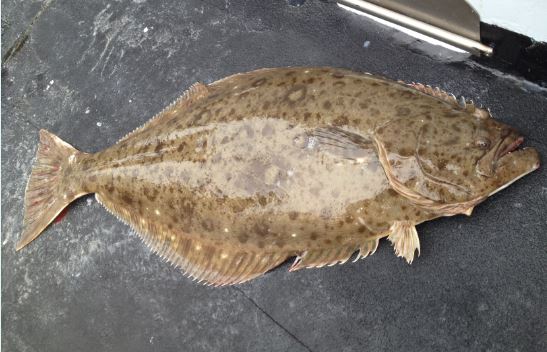
    California halibut are one of the most accessible and rewarding species along the Southern California coast. They’re available year-round from both shore and boat, and they respond strongly to water temperature changes — making your SST chart one of the best tools for finding them.

    Halibut prefer water between 56°F and 68°F, with peak activity in the 59–65°F range. They’re a cooler-water species compared to pelagics like dorado or yellowfin tuna, which means the best halibut fishing often happens in spring and early summer before the offshore species show up.

    The Halibut Temperature Window

    Temperature Range Activity Level Notes
    Below 54°F Low Fish are sluggish, holding in deeper sand channels
    54–56°F Moderate Fish beginning to move toward shallower flats
    56–60°F High Active feeding, especially in bays and harbors
    60–65°F Peak Prime bite — fish are shallow and aggressive
    65–68°F Good Still active but may shift to deeper or cooler areas
    Above 68°F Declining Fish move to deeper, cooler sand flats

    The 60–65°F range is the money zone. When nearshore water hits this window in spring, halibut move onto shallow sandy flats to feed aggressively — from bays and harbors to the open surf zone.


    Book a Fishing Charter
    Southern California & Baja · Verified reviews · Free cancellation

    Powered by FishingBooker


    Seasonal Patterns in Southern California

    January–February: Water temps are at their lowest (54–58°F). Halibut hold in deeper water — sand channels in 40–80 feet, harbor entrances, and deep structure adjacent to sandy flats. Slow presentations like Carolina rigs with live bait work best.

    March–April: The spring warm-up begins. As nearshore water pushes into the upper 50s and low 60s, halibut start migrating to shallower flats for spawning. This is when surf fishing picks up dramatically. Watch the SST chart for the first bays and beaches to cross 58°F.

    May–June: Peak season. Water temps settle into the 60–66°F sweet spot. Halibut are on the shallow flats in force — the surf zone, bay mouths, jetties, and sandy points. Both shore anglers and boat fishermen see consistent action. This is the best window for halibut surf fishing — a swimbait in smelt or sardine pattern on a slow bottom retrieve is the go-to.

    July–August: Water temps push into the upper 60s and low 70s. Halibut shift from the shallowest flats to slightly deeper water (15–40 feet), but fishing remains productive, especially in areas with current flow that keeps water cooler. As the offshore water warms up, this is also when dorado and yellowfin start showing, so many anglers shift focus offshore.

    September–December: As water cools back through the 60s, there’s often a strong fall bite. Halibut feed heavily before winter, and the cooling water triggers aggressive feeding behavior. Don’t overlook fall halibut fishing — it can be as good as spring.

    How Temperature Affects Where Halibut Hold

    California halibut are ambush predators that lie flat on sandy bottoms waiting for baitfish to swim overhead. Water temperature doesn’t just affect their activity level — it determines where in the water column they position themselves.

    In cool water (54–58°F), halibut hold in deeper sand channels, often 40–80 feet, near structure that provides current breaks. They’re less willing to chase bait and prefer slow presentations dragged past their faces.

    In the sweet spot (59–65°F), halibut push into shallow water — 3–20 feet in the surf zone, bay flats, and nearshore sand bars. They’re actively hunting and will chase swimbaits, live bait, and even surface lures.

    In warm water (66–70°F+), halibut seek out areas with cooler water influence — deeper flats, areas near cold upwelling, river mouths, and harbor channels where tidal exchange brings cooler water.

    Using SST Charts for Halibut

    Unlike pelagic species where you’re scanning hundreds of miles of open ocean, halibut fishing is about finding the right nearshore conditions. Here’s how to use the SST chart:

    Find the 59–65°F band along the coast. Zoom into the nearshore zone and look for where your target beaches, bays, and harbors fall within this window.

    Look for warming trends. A beach that was 56°F last week and is now 60°F is more productive than one that’s been sitting at 62°F for a month. Rising temperatures trigger halibut to move shallow and feed aggressively.

    Compare nearby areas. South-facing beaches warm faster than north-facing ones. Bays and harbors warm faster than open coast. Use the SST chart to identify which specific areas are first to hit the sweet spot each spring.

    Check chlorophyll for bait. Chlorophyll maps show where bait is concentrated nearshore. Halibut follow the bait — if you find 60°F water with high chlorophyll (meaning lots of baitfish), that’s a prime halibut zone.

    Best Halibut Techniques by Temperature

    Cool water (54–58°F) — go slow:

    Use a Carolina rig with live bait (anchovy, smelt, or small perch) bounced slowly along the bottom. Dropper loop rigs with cut squid strips also produce in cold water. Fish deeper sand channels near structure.

    Sweet spot (59–65°F) — go active:

    This is swimbait time. A 4–6 inch swimbait in smelt or sardine pattern retrieved slowly along the bottom is the most effective halibut method in warm spring water. Fish the surf zone sandbars, bay flats, and jetty edges. Live bait under a bobber in 4–10 feet of water is deadly in bays.

    Warm water (66°F+) — go deep:

    Drop to deeper flats (30–60 feet) using Carolina rigs or swimbaits on heavier jigheads. Focus on areas with current flow — halibut will concentrate where tidal movement keeps water temperatures manageable.

    Shore vs. Boat Fishing

    Surf fishing is most productive when nearshore water is 59–65°F. Cast swimbaits or Carolina rigs past the first sand bar and work them back slowly. Dawn and dusk are prime. See our complete Doheny surf fishing guide and halibut surf fishing guide for specific techniques and locations.

    Bay and harbor fishing can be productive even when the open coast is too cold. Enclosed waters warm faster, so check the SST chart for bays that are running 2–4°F warmer than the nearby coast. Mission Bay, Newport Bay, and Dana Point Harbor are all productive halibut spots.

    Boat fishing lets you cover more ground and dial into specific bottom contours. Drift across sandy flats in 20–60 feet, using your electronics to find sand-to-rock transitions where halibut ambush bait.

    Halibut Gear and Lure Guides

    Once you’ve found the right water temperature, you need the right gear to capitalize. Here are our complete halibut guides:

    Tackle Setup

    Halibut don’t require heavy gear, but you need sensitivity to detect their subtle bites:

    Rod: A 7-foot medium to medium-heavy rod for boat fishing, or a 9–11 foot surf rod for shore casting. Graphite rods are preferred for their sensitivity — halibut bites are often just a slight “tick.”

    Reel: A 3000–5000 size spinning reel for surf and bay, or a 20lb conventional for boat fishing. See our spinning vs conventional guide if you’re deciding between the two.

    Line: 15–20lb braid with a 15–20lb fluorocarbon leader. The light leader is important — halibut have good eyesight and can be line-shy in clear water.

    Hooks: 2/0–4/0 circle hooks for live bait, or 3/0–5/0 jigheads for swimbaits. Connect everything with a Palomar knot. See our hooks by species guide for specific sizes.

    Plan Your Trip

    Related Guides

    Tight lines!

  • Best Water Temperature for Wahoo Fishing

    Best Water Temperature for Wahoo Fishing

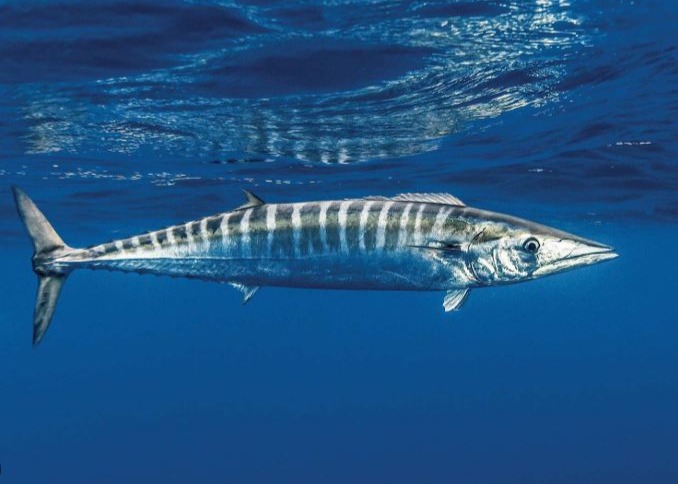
    Wahoo are one of the fastest fish in the ocean — and they demand the warmest water of any species you’ll target from a Southern California sportfishing boat. If you’re not fishing in 72–82°F water, you’re probably not fishing for wahoo.

    These fish are creatures of tropical and subtropical currents. Off our coast, that means long-range trips to Baja California banks, or the rare warm-water years when wahoo push north into SoCal waters. Either way, water temperature is the single best indicator of whether wahoo are in the area.

    The Wahoo Temperature Window

    Temperature Range Activity Level Notes
    Below 70°F Very low Wahoo are rarely found — too cold for this species
    70–72°F Low–moderate Fringe water; possible but not reliable
    72–76°F High Active feeding, especially near structure and current edges
    76–82°F Peak Prime wahoo water — this is the sweet spot
    Above 82°F Moderate Still fishable but wahoo may go deep to find cooler water

    The 76–80°F range is where wahoo fishing is at its best. This is significantly warmer than bluefin tuna (60–68°F) or yellowtail (62–72°F), which is why wahoo are primarily a long-range target for SoCal anglers.

    Where to Find Wahoo Water

    From a Southern California port, you’ll typically need to head south to find consistent 72–82°F water. Here are the primary wahoo grounds:

    Guadalupe Island. Located about 150 miles southwest of Ensenada, Guadalupe sits at the intersection of warm currents from the south and cooler California Current water. When the warm side pushes in, wahoo stack up around the island’s structure. Check the SST charts for a defined warm-water edge near the island.

    Hurricane Bank (Banco Hurricane). One of the premier wahoo spots in the Pacific, located roughly 250 miles south of Cabo. Long-range boats out of San Diego run here during late summer and fall. Water temps consistently hold in the 78–82°F range.

    San Benedicto and the Revillagigedo Islands. Deep offshore seamounts surrounded by warm tropical water. These are multi-day long-range destinations that produce wahoo alongside yellowfin tuna and giant trevally.

    Outer banks off Baja. Seamounts and ridges like Uncle Sam Bank, Thetis Bank, and the Finger Bank can hold wahoo when warm currents push through. Use chlorophyll maps to identify productive edges where warm, clear water meets nutrient-rich upwelling zones.

    SoCal (rare years). During El Niño events or exceptionally warm seasons, wahoo occasionally push as far north as the Coronado Islands, San Clemente Island, or even Catalina. These events are unpredictable — but when you see 74°F+ water at the offshore islands on the SST chart, it’s worth paying attention to fish reports. You may also find dorado and yellowfin in the same warm-water push.

    How to Use SST Charts for Wahoo

    Wahoo fishing and SST charts go hand in hand. Here’s what to look for:

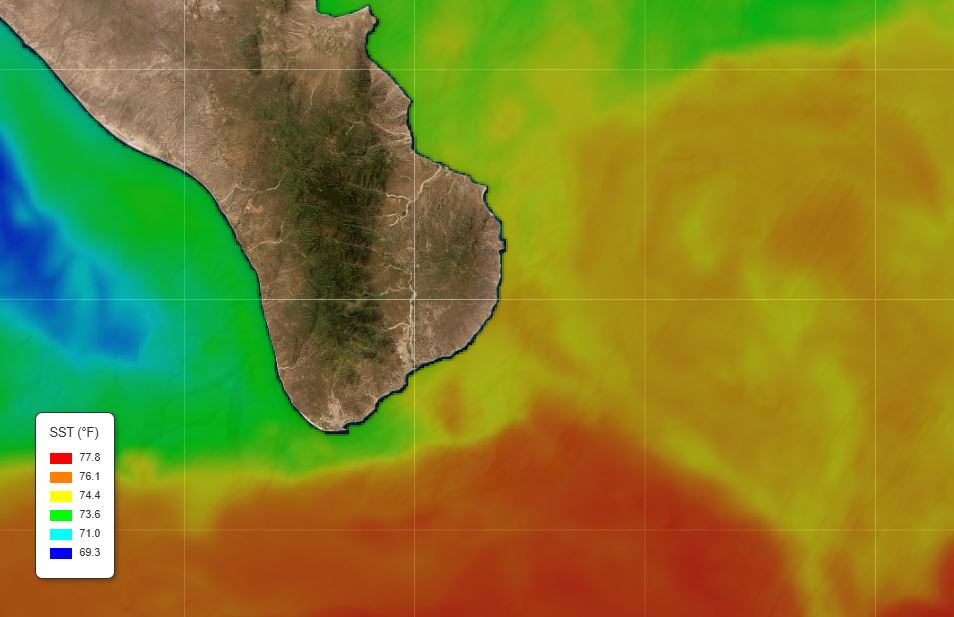
    Find the 74–80°F contour line. Pull up the SST chart and look for where this temperature range intersects with underwater structure — seamounts, banks, island drop-offs, and ridges.

    Look for temperature breaks. Wahoo love edges. A sharp transition from 72°F to 78°F over a short distance concentrates bait and predators. These temperature breaks are where you want to focus your trolling passes.

    Watch for warm-water intrusions. Tongues of warm water pushing north or onshore can bring wahoo into areas they don’t normally inhabit. Track these intrusions day by day on the SST chart — if the warm water is expanding and holding, wahoo may follow it in.

    Cross-reference with chlorophyll. Wahoo prefer clean, blue, low-chlorophyll water. If you see high chlorophyll (green water) at the right temperature, that’s more likely yellowfin tuna or dorado water. Wahoo want warm AND clear. The chlorophyll map makes this easy to check — see our chlorophyll map guide for how to read the edges.

    Wahoo Fishing Techniques

    High-speed trolling is the primary method. Wahoo are built for speed — they can hit 60 mph in short bursts. Trolling at 8–14 knots with skirted lures, Rapala X-Rap Magnums, or rigged ballyhoo behind wire leaders is the standard approach. This is similar to trolling for tuna but at significantly higher speeds — wahoo want the lure moving fast.

    Wire leaders are essential. Wahoo have razor-sharp teeth that will slice through even heavy fluorocarbon in a fraction of a second. Use single-strand wire or braided wire leaders in the 60–90lb range. This is the one species where fluorocarbon leader alone won’t cut it — literally.

    Vertical jigging over structure produces big wahoo. Drop a heavy speed jig (200–400g) to the bottom over a seamount or bank, then work it back up with fast, aggressive retrieves. Knife jigs and heavy flat-falls in chrome or blue/silver work well. This is where a quality 40lb+ conventional reel earns its keep — you need both speed to work the jig and stopping power when a wahoo screams back toward the structure.

    Live bait on the drift. When wahoo are in the area but not responding to trolling, slow-drifting live mackerel or skipjack on a wire leader can trigger strikes. Fish them at mid-depth using a slider rig with a wire bite leader. Use a J hook rather than a circle — wahoo hit and run fast, and you need the instant hookset.

    Wahoo Gear and Lure Guides

    Wahoo require stout tackle. Their initial run is explosive and their teeth will destroy anything that isn’t purpose-built for the job. Here’s the setup plus links to our detailed guides:

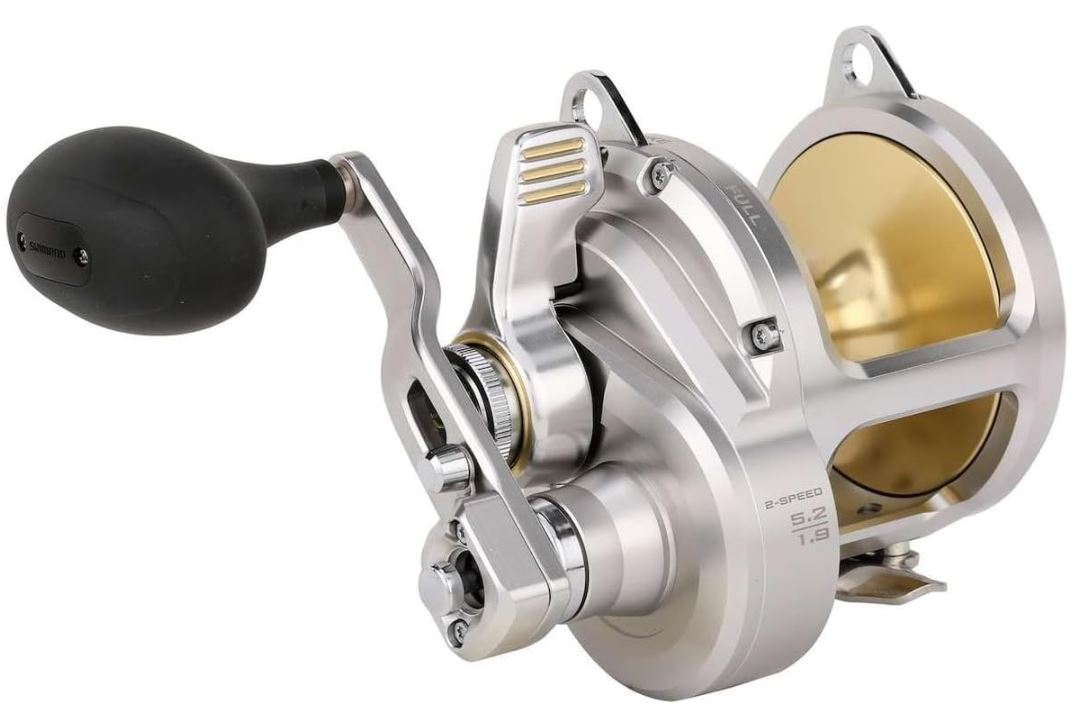
    Reel: A quality conventional reel in the 30–50lb class with a smooth drag and at least 400 yards of capacity. Two-speed reels are ideal for switching between high-speed retrieves and grinding power. The Shimano Talica 12 is a proven wahoo reel.

    Rod: A 6–7 foot heavy-action rod with fast tip for trolling, or an 8-foot rod for jigging applications. See our rod and reel combo guide for complete pairings.

    Line: 50–65lb braided line with a heavy fluorocarbon wind-on leader, topped with wire. See our fishing line guide for specific braid recommendations.

    Terminal: Always wire leader for wahoo. Palomar knots for the fluoro sections and haywire twists for wire connections. For the hook, see our hooks by species guide — J hooks on trolling lures, assist hooks on vertical jigs.

    Plan Your Trip

    Wahoo trips require planning — you need to know the water is right before committing to a long-range voyage. Start with the data:

    Related Guides

    Tight lines!

  • Best Water Temperature for Yellowfin Tuna Fishing

    Best Water Temperature for Yellowfin Tuna Fishing

    Yellowfin tuna are warm-water predators that follow temperature and bait across vast stretches of ocean. Off Southern California and into Baja, finding yellowfin means finding the right water — and that starts with understanding their temperature preferences.

    In this guide, we’ll break down the ideal water temperatures for yellowfin tuna, how they differ from bluefin tuna, and how to use SST charts to plan your trips.

    The Ideal Temperature Range

    Yellowfin tuna thrive in water between 68°F and 78°F (20–26°C). They’re significantly warmer-water fish than bluefin, which is why SoCal anglers typically encounter them farther south and later in the season. The sweet spot is around 72–76°F — that’s where you’ll find the most consistent concentrations.

    Below 65°F, yellowfin become scarce. They won’t tolerate cold water the way bluefin will. Above 82°F, they tend to go deeper during the day, feeding near the surface only in low-light conditions.

    Seasonal Patterns for SoCal and Baja

    Spring (March–May): Yellowfin are typically south of the border, concentrated around the Baja banks — Hurricane Bank, the Ridge, and the high spots south of Cedros. Water temps at these locations hit the upper 60s and 70s well before SoCal waters warm up. Long-range boats run these trips with trolling spreads of cedar plugs and feathers to cover ground between stops.

    Summer (June–August): This is when things get exciting for SoCal boats. As warm currents push north, yellowfin follow. During El Niño years or strong warm-water intrusions, yellowfin can show up as close as the Coronado Islands or even the 302/371/425 spots. Check the fleet tracker — when the long-range boats start running shorter trips, that’s a sign yellowfin have moved within range. Have your tuna setup rigged with 50–65lb braid and ready.

    Fall (September–November): Peak season for SoCal yellowfin. Water temps are at their annual high, and the fish that have been pushing north all summer are now in full feeding mode. September and October can produce incredible fishing within range of overnight and 1.5-day trips. Surface iron and poppers are at their most effective when yellowfin are boiling on the surface. See our fishing season calendar for specifics.

    Winter (December–February): Yellowfin retreat south as water cools. They’re still available on multi-day Baja trips, but you won’t find them in SoCal waters. This is the season to focus on bluefin instead.

    Using SST Charts for Yellowfin

    Yellowfin tuna relate strongly to temperature breaks. They patrol the edges where warm and cool water meet, using the convergence zone as a feeding highway. On the SST chart, look for sharp color transitions where water jumps 2–4°F over a short distance. See our fishing the edges guide for how to work these boundaries once you’re on the water.

    The warm side of the break is where you want to focus. Yellowfin cruise the warm edge, diving into cooler water to ambush bait that gets pushed along the break. Combine the SST chart with the chlorophyll map — high chlorophyll on the cool side of a break means bait, and bait on a temperature break means tuna.

    Warm-water intrusions are especially productive. When tongues of 72°F+ water push inshore from the open Pacific, yellowfin ride them in. The edges of these intrusions collect kelp paddies and debris that also hold dorado — making mixed-bag trips common when you find the right intrusion.

    Yellowfin vs. Bluefin Temperature Preferences

    FactorYellowfinBluefin
    Ideal temp range68–78°F60–72°F
    Sweet spot72–76°F62–68°F
    Cold toleranceLow — won’t go below 65°FHigh — comfortable in upper 50s
    SoCal peakSeptember–OctoberJune–November
    Where to find themWarm side of breaksEither side of breaks

    This is why SoCal boats can have both species on the same trip — bluefin on the cool side of a break and yellowfin on the warm side, sometimes only miles apart. Size up your gear for the bigger fish — a 40lb+ class setup handles both species.

    Yellowfin Gear and Lure Guides

    Yellowfin are pound-for-pound one of the hardest fighting tuna. They run fast and deep, and a big yellowfin (40lb+) will test your tackle. Here are our complete guides:

    Casting and jigging: Surface iron (Tady 45) and poppers are devastating on surface-feeding yellowfin. When fish are deep on the meter, flat-fall jigs get down to where they’re holding. See our surface iron guide for casting technique and our jigs vs irons vs poppers comparison for when to throw each.

    Trolling: Cedar plugs, feathers, and Rapala X-Rap Magnums in a staggered spread cover ground along temperature breaks. See our tuna trolling guide for the complete spread setup.

    Live bait: A fly-line rig with live sardine or mackerel is the bread-and-butter technique when the boat is stopped on a school. Use a 2/0–4/0 circle hook for jaw-corner hookups — see our hooks guide and circle vs J hooks guide for specifics.

    Rod and reel: A 40lb+ class setup for big yellowfin — Shimano Talica 12 or similar on an 8-foot rod. Spool with 50–65lb braid and a 30–40lb fluorocarbon leader connected with an FG knot. See our rod and reel combo guide for complete pairings.

    Hooks: Replace factory trebles on all iron and poppers with Owner ST-66 trebles — factory hooks straighten on yellowfin. Owner Mutu Light Circle (5114) in 2/0–4/0 for fly-lining. See our hooks by species guide for the full breakdown.

    Yellowfin Temperature Quick Reference

    ConditionTemp RangeWhat to Expect
    No yellowfinBelow 65°FToo cold — fish are farther south
    Possible65–68°FOccasional fish on temp breaks
    Prime zone68–78°FActive feeding, surface boils
    Sweet spot72–76°FBest concentrations, most aggressive
    Still good78–82°FFish deeper during midday

    Plan Your Trip

    Check today’s conditions before you head out:

    Related Guides

    Tight lines!

  • Best Water Temperature for White Seabass Fishing

    Best Water Temperature for White Seabass Fishing

    White seabass are one of the most prized inshore catches in Southern California, and water temperature is the single biggest factor in finding them. Too cold and they’re deep and dormant. Too warm and they’ve pushed north or offshore. Hit the sweet spot and you’re in for world-class fishing.

    In this guide, we’ll cover the ideal water temperatures for white seabass, where they go as conditions change, and how to use SST charts to put yourself in the right spot at the right time.

    The Ideal Temperature Range

    White seabass are most active and aggressive in water between 58°F and 66°F (14–19°C). This is the range where they feed heavily, especially on squid — their favorite prey. Within that window, the magic number is around 60–64°F. That’s when the big spawning aggregations form and the fishing peaks.

    Below 56°F, white seabass slow down considerably. They don’t disappear, but they become much harder to target. Above 68°F, they tend to move deeper or northward to find cooler water.

    Seasonal Temperature Patterns in SoCal

    Winter (December–February): Water temps drop to 54–58°F along the coast. White seabass are still around but deeper and less active. Most catches come from boats working structure in 80–120 feet of water. Check the San Diego fishing season calendar for monthly breakdowns.

    Spring (March–May): This is prime time. As water warms through the upper 50s and into the low 60s, white seabass move inshore to spawn. The squid runs that come with spring upwelling draw massive schools into the kelp beds and along rocky coastline. March through May is the window most SoCal anglers wait for all year. A slider rig with live squid fished along kelp edges at dawn is the classic approach.

    Summer (June–August): Water hits 64–72°F. White seabass are still catchable but have spread out. Look for them in deeper kelp edges and around offshore structure where temps stay in the low-to-mid 60s. Temperature breaks become important — the fish hold on the cooler side. As the offshore water warms, this is when dorado and yellowfin start showing, so many anglers shift focus offshore.

    Fall (September–November): As water cools from the summer peak back through the 60s, a secondary feeding push happens. Not as concentrated as spring, but very productive for anglers who watch their SST charts and find pockets of 60–64°F water near kelp beds.

    How to Use SST Charts for White Seabass

    White seabass don’t roam the open ocean like tuna — they stick close to structure, kelp, and coastline. So when you check the SST chart, you’re looking for nearshore water in that 58–66°F range rather than offshore temperature breaks.

    Pay special attention to areas where slightly warmer water pushes against the coast. These spots concentrate bait, especially squid, and the seabass follow. The chlorophyll map is your best friend here — high chlorophyll near kelp beds in the right temperature range is almost a guarantee that bait (and seabass) are in the area. Read our guide on how to use chlorophyll maps for fishing for the full breakdown.

    The Squid Connection

    White seabass and squid are inseparable. When squid spawn — which they do in water between 57°F and 64°F, usually in spring — white seabass follow them in. If you see squid boats lit up at night on the fleet tracker, that’s a strong signal that white seabass are nearby.

    Squid egg beds in the kelp are magnets. White seabass will hang around these areas for weeks, gorging themselves. Fish near the kelp edges at dawn and dusk for the best results.

    White Seabass Gear and Lure Guides

    White seabass are powerful fish that can exceed 60 pounds, though most SoCal catches are in the 15–30 pound range. Here’s what you need and where to find our detailed guides:

    Rod and reel: A 7-foot medium-heavy rod paired with a 20–25lb class reel is ideal. A conventional reel gives you better drag control for big fish in the kelp. See our rod and reel combo guide for specific pairings.

    Line: 30–40lb braid with a 25–30lb fluorocarbon leader. The fluoro is critical — white seabass are line-shy in clear water, and they often feed around kelp where abrasion resistance matters. Connect braid to leader with an FG knot.

    Hooks: Circle hooks in 4/0–6/0 are the best choice for live bait — squid, sardines, and mackerel. The Owner Mutu Circle (5163) is the go-to for white seabass bait fishing. Circle hooks land in the jaw corner and reduce gut-hooking, which matters when you’re fishing in kelp and can’t afford a deep-hooked fish that dives into the canopy. See our hooks by species guide for the full breakdown.

    Rigs: A slider rig with live squid or sardine is one of the most effective white seabass techniques. For structure fishing, a dropper loop rig with cut squid or whole squid also produces.

    Lures: Swimbaits in 5–7 inch sizes work when white seabass are feeding on baitfish rather than squid. Slow-rolled through the kelp at dawn, they produce strikes from fish that won’t eat bait under a float. Flat-fall jigs fished vertically also catch seabass holding on deep structure.

    White Seabass Temperature Quick Reference

    ConditionTemp RangeWhat to Expect
    Too coldBelow 56°FDeep, inactive, hard to find
    Warming up56–58°FStarting to move inshore, scattered
    Prime zone58–66°FPeak activity, spawning, aggressive feeding
    Sweet spot60–64°FBest of the best — big schools, squid runs
    Too warmAbove 68°FFish go deeper or push north

    Plan Your Trip

    Check today’s conditions before you head out:

    Related Guides

    Tight lines!

  • San Diego Fishing Season Calendar — Complete Month-by-Month Guide

    San Diego Fishing Season Calendar — Complete Month-by-Month Guide

    San Diego is one of the few places in the world where you can fish offshore every month of the year. The species change with the seasons as water temperatures rise and fall, bringing waves of gamefish from the tropics to the north and resident species through their annual cycles. Knowing what’s in season — and what water temperature triggers each bite — is the difference between an epic trip and a slow one.

    Here’s a month-by-month breakdown of what to expect from San Diego’s sportfishing fleet, the water temperatures that drive each fishery, and how to use ocean condition data to time your trips.

    At a Glance: San Diego Fishing Calendar

    Month Avg SST Primary Targets Trip Types
    Jan 57–60°F Rockfish, Yellowtail, Lingcod ½ day, ¾ day
    Feb 57–59°F Rockfish, Yellowtail (squid), Lingcod ½ day, ¾ day
    Mar 58–61°F Yellowtail, White Seabass, Rockfish ¾ day, 1.5 day
    Apr 59–63°F Yellowtail, White Seabass, early Bluefin ¾ day, full day, 1.5 day
    May 61–65°F Bluefin, Yellowtail, White Seabass Full day, 1.5 day, overnight
    Jun 63–67°F Bluefin, Yellowtail, Calico Bass Full day, overnight, multi-day
    Jul 66–72°F Bluefin, Yellowfin, Yellowtail, Dorado All trip types
    Aug 68–74°F Bluefin, Yellowfin, Dorado, Wahoo All trip types
    Sep 69–75°F Bluefin, Yellowfin, Dorado, Wahoo All trip types — peak variety
    Oct 67–72°F Bluefin (trophies), Yellowfin, Dorado Full day, overnight, multi-day
    Nov 63–68°F Bluefin, Yellowtail, Rockfish Full day, ¾ day, 1.5 day
    Dec 59–63°F Rockfish, Yellowtail, Lingcod ½ day, ¾ day

    Let’s go Fishing!
    Search for the Perfect Fishing Charter
    Southern California & Baja
    Verified reviews · Free cancellation · 90-day price match
    Powered by FishingBooker · Affiliate partner

    Winter: December through February

    Water temperature: 57–62°F

    Winter is bottom fishing season. The offshore pelagics have largely moved south, and the fleet focuses on rockfish, lingcod, and sheephead on the local reefs and structure. But winter isn’t all about bottom fish — yellowtail often stick around the islands and local kelp beds, especially when squid are spawning.

    What’s biting:

    • Rockfish — The bread and butter of winter fishing. Vermilion, reds, coppers, and bocaccio on the local reefs. Half-day boats produce consistent limits.
    • Lingcod — Big, aggressive predators that hit swimbaits and live bait fished near the bottom. Fish to 30+ lbs are landed every winter.
    • Yellowtail — When squid spawning activity peaks near the islands (San Clemente, Catalina), yellowtail stack up to feed on them. The squid bite requires specialized techniques (dropper loop rigs, live squid bait), but produces some of the biggest yellowtail of the year — fish over 30 lbs are common. Check the fleet tracker to see if overnight boats are running to the islands.
    • Bonito — Still around in fishable numbers, especially on half-day boats near Point Loma and La Jolla. Great fight and fun on light tackle.

    SST tip: Look at the SST charts for pockets of warmer water (61°F+) near the islands. Warmer pockets in winter often hold better yellowtail fishing.

    Spring: March through May

    Water temperature: 58–65°F

    Spring is transition season and arguably the most exciting time to watch the SST charts. Water temperatures are climbing, and every degree brings new possibilities. White seabass arrive, yellowtail fishing heats up, and the first bluefin of the year may show on the outer banks.

    What’s biting:

    • Yellowtail — As water climbs past 62°F, yellowtail fishing transitions from the winter squid bite to the spring/summer bait bite. Fish move from the islands to the local kelp beds and Coronado Islands. Iron jigs and live sardines become the go-to.
    • White Seabass — The prized catch of spring. White seabass push into SoCal waters when temps hit 59–63°F, usually targeting squid. They’re most commonly caught on live squid fished near kelp beds and structure, especially at night or early morning. The fishery is heavily dependent on squid availability — check if the squid fleet is active.
    • Bluefin Tuna — Early-season bluefin start showing in April or May as water nears 62°F on the outer banks. These are often the first big-fish reports of the year and generate huge excitement. Watch the SST charts for temperature breaks forming along the 60–65°F isotherms offshore.
    • Calico Bass — Spring bass fishing on the kelp beds is outstanding as the fish come shallow to feed. Live sardines on the kelp edge or swimbaits for the bigger specimens.
    • Halibut — California halibut move into shallower sandy areas to feed in spring. Half-day boats pick them up on the flats near Point Loma and Mission Bay.

    SST tip: Spring is all about temperature breaks. Coastal upwelling creates sharp cold/warm boundaries that concentrate bait and gamefish. A 3°F break in April is a fish highway.

    Summer: June through August

    Water temperature: 63–74°F

    Peak season. The widest variety of species, the most boats on the water, and the best conditions for offshore fishing. The warm water has arrived, and with it come the pelagics that make SoCal sportfishing world-class.

    What’s biting:

    • Bluefin Tuna — The main event. Summer bluefin fishing from San Diego is legendary. Schools show up from the local banks out to San Clemente and Tanner Bank. Fish from 20 lbs to 200+ lbs are caught on flylined sardines, surface iron, kite, and trolled lures. The fleet tracker is essential for finding where the bite is.
    • Yellowfin Tuna — Arriving in July when water temps hit 72°F, yellowfin add another dimension. Often found mixed with bluefin on the same grounds, or further offshore on warm water intrusions. Yellowfin are typically more aggressive biters than bluefin.
    • Dorado — Show up mid-to-late summer as 72°F+ water pushes in. Found on kelp paddies and debris offshore. The colorful fight and excellent table fare make them a favorite.
    • Yellowtail — Still going strong on the islands, kelp beds, and Coronado Islands. Summer yellowtail tend to be more willing biters than spring fish.
    • Calico Bass & Barracuda — Excellent inshore fishing all summer. Half-day and 3/4-day boats produce consistent action.

    SST tip: Summer produces the most complex SST charts of the year — warm water intrusions, eddies, upwelling plumes, and temperature breaks everywhere. Use the SST charts and chlorophyll maps together to find where warm offshore water meets productive coastal water. That intersection is where the action concentrates.

    Fall: September through November

    Water temperature: 63–75°F

    Many veteran anglers consider fall the best season of all. Water temperatures peak in September, bringing the widest species variety of the year. As temps slowly drop through October and November, the remaining warm-water species are at their largest.

    What’s biting:

    • Bluefin Tuna (trophies) — Fall bluefin are the heaviest of the year. Fish that have been feeding all summer are at peak weight, and 200+ lb catches are most common in September and October. As water cools, the window narrows but the quality increases.
    • Yellowfin Tuna — Peak yellowfin action. September and October often produce the highest yellowfin counts of the year, sometimes mixing with bluefin on the same grounds.
    • Dorado — Late-season dorado tend to be bigger (bull dorado to 40+ lbs) as smaller fish have moved south. Still on paddies and debris in 72°F+ water.
    • Wahoo — The most exotic catch in SoCal waters. Wahoo prefer 74°F+ water and show up in September and October during warm years, particularly around the outer islands and offshore banks. They’re fast, powerful, and incredible table fare.
    • Yellowtail — Fall yellowtail fishing can be outstanding, especially as fish migrate south and stack up on local structure.

    SST tip: Watch the SST charts for the warm water retreat. As the 72°F water pulls offshore and south through October and November, the warm-water species retreat with it. The fleet tracker shows which boats are still running offshore — when they stop going, the warm water is gone.

    Species Temperature Quick Reference

    For detailed temperature guides on individual species, see our in-depth articles:

    Species Preferred Temp (°F) SoCal Season Temp Guide
    Bluefin Tuna 60–72°F Apr–Nov Read Guide
    Yellowfin Tuna 72–82°F Jul–Oct Read Guide
    Yellowtail 62–70°F Year-round (peak Mar–Oct) Read Guide
    Dorado (Mahi Mahi) 72–82°F Jul–Oct Read Guide
    Wahoo 74–84°F Sep–Oct (warm years) Read Guide
    White Seabass 59–66°F Mar–Jun Read Guide
    Rockfish 52–65°F Year-round
    Lingcod 50–60°F Nov–Mar (best)
    Calico Bass 60–72°F Year-round (peak May–Oct)
    California Halibut 58–68°F Mar–Sep Read Guide
    Barracuda 63–72°F Apr–Oct

    How to Use Ocean Data to Plan Your Trip

    The beauty of understanding seasonal temperature patterns is that you can combine that knowledge with real-time data to make smarter decisions about when and where to fish. Here’s the workflow:

    1. Know what’s in season — Use the calendar above to narrow down your target species based on the month.
    2. Check the SST charts — Visit the charts page to see current water temperatures. Are they running warm or cool for the time of year? That shifts everything earlier or later.
    3. Look for structure in the data — Temperature breaks, warm water intrusions, chlorophyll edges, and eddies all concentrate fish. Our guides on reading SST charts and finding temperature breaks show you exactly what to look for.
    4. Watch the fleet — The fleet tracker shows where San Diego’s sportfishing boats are heading and how long they’re staying on the grounds. This is real-time intelligence on where the bite is.
    5. Check the AI forecast — Our AI prediction model synthesizes SST, chlorophyll, swell, wind, and historical catch data to give you a daily forecast of fishing conditions.

    The anglers who check conditions before choosing their trip consistently outperform those who book randomly. Water temperature data won’t guarantee fish on the end of your line, but it stacks the odds heavily in your favor.