An ice shelter transforms ice fishing from a tolerance exercise into an enjoyable one. Without shelter, ice fishing on a 10°F day with wind quickly becomes about managing cold rather than catching fish. With shelter, the same conditions become genuinely comfortable — heated interior, wind block, room to fish multiple holes, and protection that extends the fishing day to its productive maximum. The shelter is often the gear item that separates serious ice anglers from casual ones.
This guide covers the three shelter categories — flip-overs, hub-style shanties, and wheelhouses — and the specific products that consistently perform across Upper Midwest conditions. Pair with the ice fishing safety guide for the cold-weather context and the augers guide for the equipment that creates the holes you’ll fish from inside.
⚡ Quick Picks by Situation
Best flip-over (4-5 person): Eskimo Outbreak 450XD — the workhorse flip-over.
Best premium flip-over: Otter Vortex Pro Cabin — refined build, better insulation.
Best hub for groups: Clam X-600 Thermal Hub — sets up larger than flip-overs.
Best for mobile fishing: Smaller flip-overs (2-3 person Eskimo or Otter).
Best for multi-day stays: Wheelhouse rental at a destination resort — see Lake of the Woods guide.
Shelter Category Overview
| Category | Setup Speed | Mobility | Best For |
|---|---|---|---|
| Flip-Over | 30 seconds | High (sled mounted) | Mobile fishing, 1-5 anglers, day trips |
| Hub Shanty | 2-5 minutes | Medium (pop-up, carry to ice) | Group fishing, semi-permanent setup |
| Wheelhouse | 15-30 min (parking) | Low (towed onto ice) | Multi-day stays, overnight fishing |
| Permanent Shack | Days/weeks setup | None (left on lake all season) | Local anglers with year-after-year use |
Flip-overs dominate the recreational ice fishing market. They strike the best balance between speed of setup, mobility across the lake, and protection from cold. Hub shanties serve groups and longer sessions. Wheelhouses are the premium destination ice fishing experience.
Flip-Over Shelters
Eskimo Outbreak 450XD
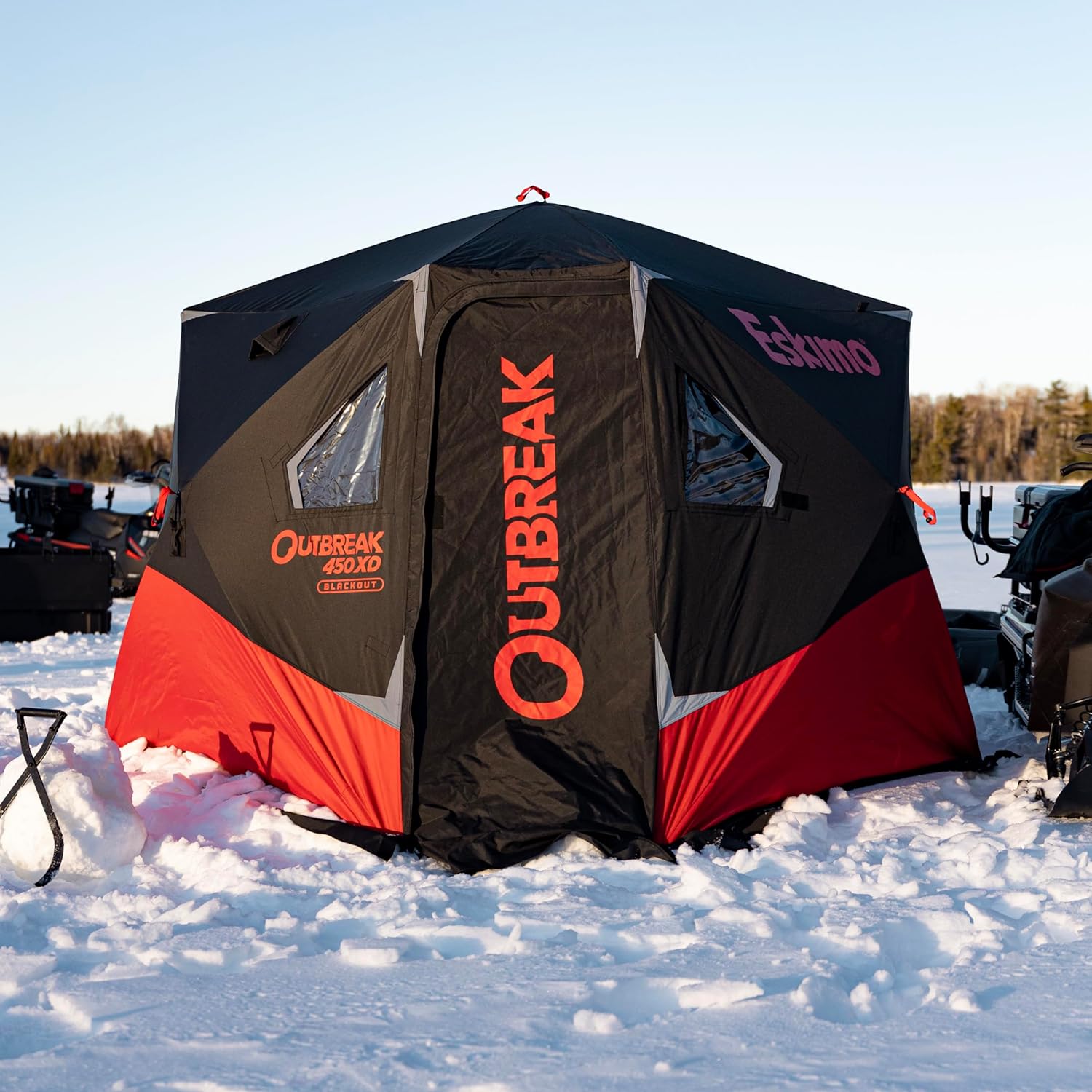
The Eskimo Outbreak 450XD is the workhorse flip-over shelter for groups of 4-5 anglers. The “flip-over” design integrates the shelter into a sled: the sled hauls gear across the ice, and when you reach your spot, the shelter flips up and over the sled to create an enclosed fishing space. Setup takes about 30 seconds from arrival to fishing. The 450 series provides 65 sq ft of fishing space (5 fishable holes typically), 600-denier insulated fabric for cold weather, and aluminum framework that handles wind. The XD designation adds insulation and durability over the base 450 model — worth the premium for serious users. Best applications: family ice fishing trips, group walleye fishing on Mille Lacs and Lake of the Woods, mobile fishing where you’ll relocate during the day. Eskimo’s brand reputation in the category is well-established; replacement parts and warranty support are accessible. Price point around $700-900 depending on configuration.
Otter Vortex Pro Cabin
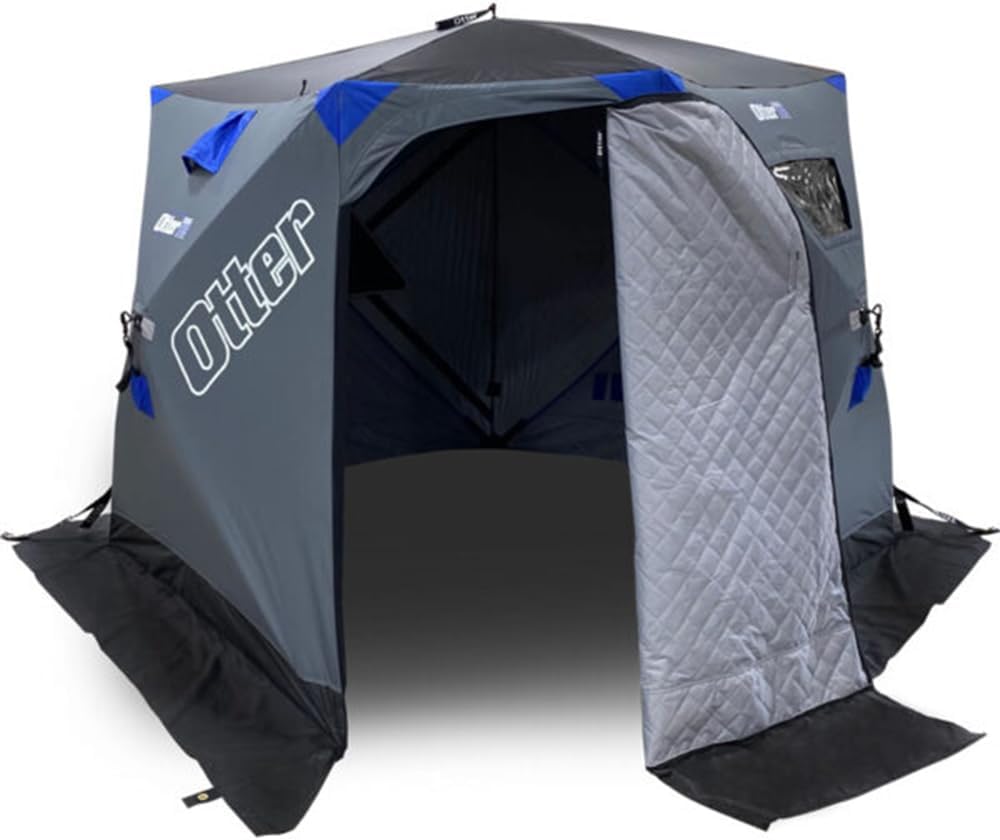
The Otter Vortex Pro Cabin is the premium flip-over option. Otter Outdoors (Minnesota-based) has a reputation for the most refined flip-over builds in the category: heavier sled material that handles rough ice better, more durable fabric with better cold-weather performance, more comfortable interior design with better storage organization, and refined hardware throughout. The Pro Cabin specifically provides cabin-style standing room — a comfort advantage that matters during multi-hour sessions. The trade-off is significantly higher cost ($1,200-1,800 depending on size and configuration) and slightly more weight than competing flip-overs. For anglers who fish 30+ days per year, the refinements pay back in comfort and durability. For occasional anglers, the Eskimo Outbreak delivers the core flip-over benefits at lower cost.
Hub-Style Shanties
Clam X-600 Thermal Hub
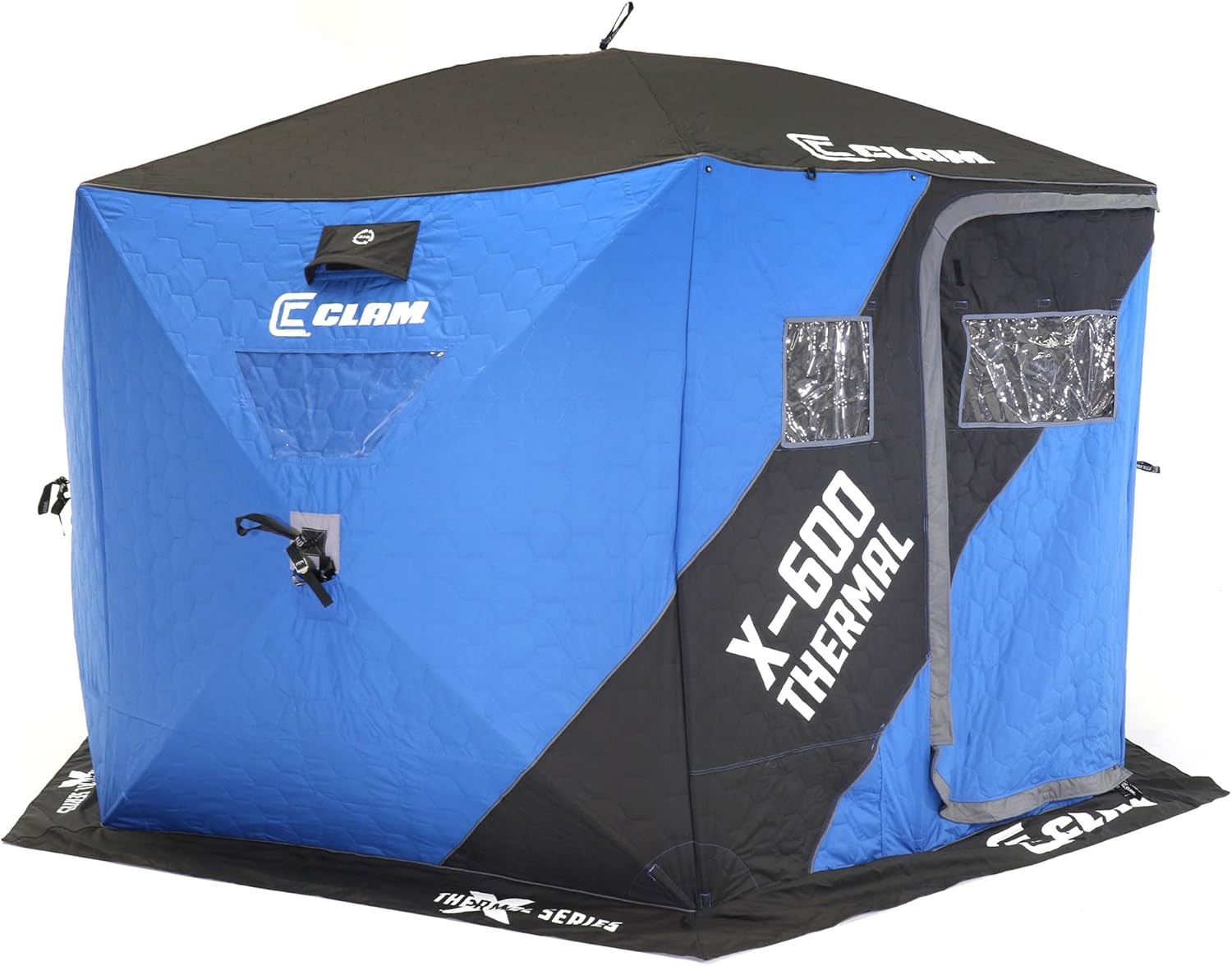
The Clam X-600 Thermal Hub represents the hub-style shanty alternative to flip-overs. Hubs use a pop-up tent design: collapsed for transport, then expanded into a freestanding structure on the ice. The X-600 provides 60 sq ft of fishing space — comparable to a large flip-over — but in a different form factor. The hub doesn’t roll on a sled; you carry it to the ice in a duffel-style bag, then set it up where you want to fish. The thermal insulation in the X-600 is significant — 90-gram thermal fabric, sealed window flaps, and floor coverage that prevents drafts. Best for: groups of 4-6 anglers, semi-permanent setups where you’ll fish the same spot all day, and situations where the flip-over’s sled-based mobility isn’t needed. The Clam hub category also has smaller (X-200, X-300, X-400) and larger (X-800) options to match group size. Clam is the dominant brand in the hub category — alternative brands exist but Clam has the most refined product line.
Wheelhouses
Wheelhouses are the premium ice fishing experience but operate on a different scale than purchasable shelters. A wheelhouse is essentially a small RV or trailer built for ice fishing — heated cabin with sleeping quarters, kitchen, propane heat, holes in the floor for fishing, and lighting for overnight sessions. Costs run $15,000-50,000+ to purchase, plus tow vehicle, plus storage during the off-season.
For most anglers, wheelhouse rental at a destination resort is the way to experience this category:
- Lake of the Woods (Baudette, Wheelers Point): Multiple resorts offer wheelhouse rentals. $300-600 per night with bedding, heat, and fishing gear included.
- Mille Lacs: Garrison and Isle area resorts. Similar pricing and inclusion.
- Upper Red Lake: Wheelhouse rental destination for serious crappie and walleye fishing.
The wheelhouse experience justifies the destination-trip cost for serious ice anglers. See the Lake of the Woods guide and Mille Lacs guide for destination details.
Choosing a Shelter Size
| Anglers | Recommended Shelter | Sq Ft |
|---|---|---|
| Solo angler, mobile fishing | 1-2 person flip-over (Eskimo or Otter) | 30-45 |
| 2-3 anglers, day trip | 2-3 person flip-over | 45-60 |
| 4-5 anglers, family trip | Eskimo Outbreak 450XD or Otter Vortex Pro Cabin | 60-70 |
| 5-6+ anglers, group | Clam X-600 Hub or larger | 60-100+ |
| Multi-day stays | Wheelhouse (rent or buy) | 80-200+ |
Err on the side of slightly larger than you think you need. Anglers spread out, gear accumulates, heat sources need space — too-small shelters become cramped quickly.
Heating Your Shelter
Propane heat is the standard. Three options:
Mr. Heater Buddy series. The category benchmark. Portable propane heaters that warm a flip-over in minutes. 4,000-12,000 BTU options cover most shelter sizes. Includes low-oxygen shutoff for safety.
Catalytic heaters. Use a chemical catalyst rather than open flame. Lower CO output but slower heating. Less common in modern ice fishing.
Wheelhouse furnaces. Built-in forced-air systems on wheelhouses. Most reliable heat but only available in permanent installations.
Critical safety note: propane combustion produces carbon monoxide. CO is odorless and colorless. In an enclosed shelter, CO can build to dangerous levels within hours. Always ventilate when using propane heat — crack a window or vent. Carry a CO detector for overnight wheelhouse stays. See the ice fishing safety guide for detailed CO awareness.
Common Mistakes
Undersizing the shelter. Buying a 2-person shelter for a 3-person family means cramped quarters and inadequate hole access. Match shelter size to your actual group + a margin.
Skipping the insulated upgrade. Base shelter fabric is functional in mild weather. Insulated upgrades (XD versions, thermal hubs) provide significant warmth advantage in deep cold. Worth the investment for Upper Midwest conditions.
Improper ventilation with propane heat. CO from propane heaters kills. Always vent. Don’t sleep in shelters with running heaters unless you have CO detection and adequate ventilation.
Wrong shelter category for your fishing style. If you’ll relocate during the day, get a flip-over (mobility). If you’ll set up and stay, a hub works. If you want overnight, look at wheelhouses (rent first).
Skipping accessories. Heater, ice anchors (secure the shelter against wind), interior light, hole sleeves to keep holes from freezing back — these accessories make the shelter functional. Budget for them as part of the overall shelter cost.
Buying without seeing it set up. Shelters are bigger than they look in product photos. If possible, see a setup at a sporting goods store or borrow a friend’s before committing.
Gear to Pair with Your Shelter
- Best Ice Augers — drill holes inside the shelter
- Best Ice Fishing Flashers
- Best Ice Fishing Rods
- Best Ice Fishing Reels
- Best Tip-Ups
- Best Ice Fishing Jigs
- Ice Fishing Guide
- Ice Fishing Safety Guide
Frequently Asked Questions
What’s the best ice fishing shelter?
The Eskimo Outbreak 450XD is the best value flip-over. The Otter Vortex Pro Cabin is the premium flip-over. The Clam X-600 Thermal Hub is the best hub for groups.
Flip-over or hub shelter?
Flip-over for mobility (sled-mounted, fast setup, relocate during the day). Hub for stationary fishing (longer setup but larger interior, better for groups). Most recreational anglers start with flip-overs and add hubs for specific group fishing trips later.
What size ice shelter do I need?
1-2 person for solo/duo fishing. 3-person flip-overs for casual day trips. 4-5 person (Eskimo Outbreak 450XD) for family/group trips. 6+ person (Clam X-600 Hub) for larger groups. Err larger — too-small shelters become cramped fast.
How do I heat my ice shelter?
Propane heaters from the Mr. Heater Buddy family are the standard. 4,000-12,000 BTU based on shelter size. Always ventilate when running propane heat — carbon monoxide is the major risk. See the ice fishing safety guide for CO awareness.
Are wheelhouses worth buying?
For most anglers, no. Wheelhouse rental at destination resorts ($300-600/night) gives you the experience without the $15,000-50,000+ ownership cost. Buy a wheelhouse only if you fish 50+ days a year on ice and have storage/transport infrastructure.
What’s the lifespan of an ice shelter?
Quality flip-overs (Eskimo, Otter) typically last 5-10+ years with normal use. The sled bottom wears first; fabric and frame last longer. Hubs (Clam) similar. Wheelhouses last decades with maintenance. The XD/Pro upgrades extend lifespan significantly.
Plan Your Trip
- SST Charts
- Fleet Tracker
- Marine Weather
- AI Fishing Predictions
- Minnesota Fishing Season Calendar
- Wisconsin Fishing Season Calendar
- Upper Midwest Fishing Trips
Related Guides
- Ice Fishing Guide
- Ice Fishing Safety Guide
- Best Ice Augers
- Best Ice Fishing Flashers
- Best Ice Fishing Rods
- Best Ice Fishing Reels
- Best Tip-Ups
- Best Ice Fishing Jigs
- Best Ice Fishing Line
- Lake of the Woods Fishing Guide
- Lake of the Woods Ice Fishing
- Mille Lacs Fishing Guide
- Upper Midwest Fishing Trips
Tight lines!
Affiliate Disclosure: As an Amazon Associate, fishing-reports.ai earns from qualifying purchases. Links to Amazon on this page are affiliate links — if you click and buy, we may earn a small commission at no extra cost to you.