Crankbaits are the search-and-cover tool of walleye fishing. Where jigs let you target known fish on specific structure, crankbaits let you cover water systematically and find walleye scattered across larger areas. They’re especially effective during the summer months when walleye spread across deep water and during fall when fish push back toward structure but aren’t yet tight to it. Trolling crankbaits is the dominant Lake Erie walleye technique. Trolling and casting them is essential on Mille Lacs, Lake of the Woods, and the bigger natural lakes.
This guide covers the three crankbait styles that consistently produce Upper Midwest walleye — shallow-running shad imitations, mid-depth deeper-running cranks, and the magnum-sized big-fish targets. Pair this with the walleye trolling guide for the boat speed and spread setup that maximizes these lures.
⚡ Quick Picks by Situation
Best overall trolling: Berkley Flicker Shad — the modern walleye trolling standard.
Best classic / casting: Rapala Shad Rap — 40 years of proven walleye production.
Best deep / magnum: Rapala X-Rap Magnum — for the deepest summer walleye.
Best shallow / pre-spawn: Rapala Husky Jerk — suspending jerkbait, works for casting too.
Best small profile: Rapala Original F05 — finesse option for clear water.
Standard Walleye Trolling Crankbaits
Berkley Flicker Shad (Size 5-7)
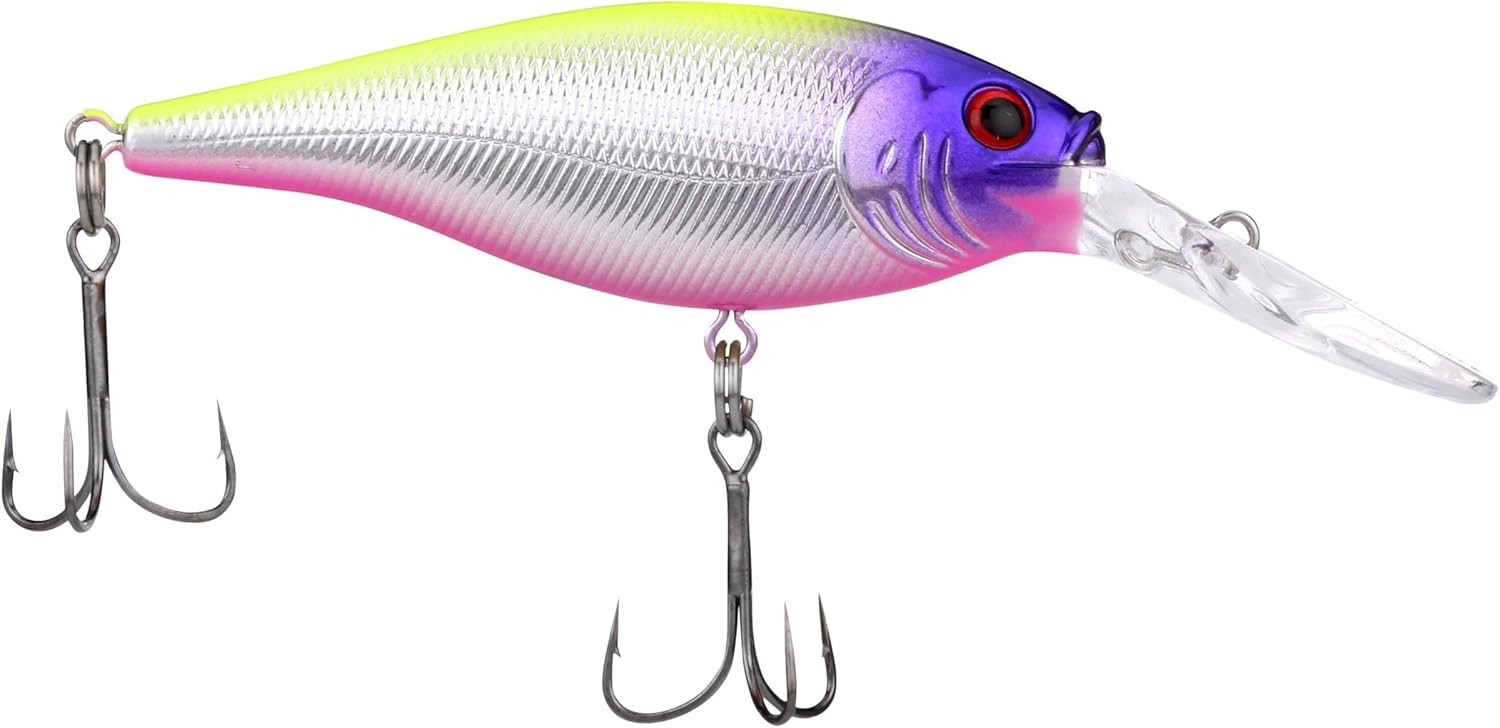
The Berkley Flicker Shad has earned its place as the dominant walleye trolling crankbait of the modern era. The tighter, more refined wobble compared to traditional crankbaits matches the slower trolling speeds walleye prefer (1.5-2.2 mph). The size 5 covers most depths from 6-12 feet at typical trolling speeds; the size 7 reaches 10-18 feet. Color selection matters more than with most crankbaits — chartreuse, fire tiger, perch, and natural shiner produce in different water conditions. The Flicker Shad’s diving lip is durable enough to handle rocky bottoms without immediate failure, though prolonged bottom contact will eventually wear it. Run on a 10-12 foot fluorocarbon leader connected to braid mainline — the leader’s invisibility matters for clear-water walleye. See the braid vs mono guide for the connection setup.
Rapala Shad Rap (Size 5-7)
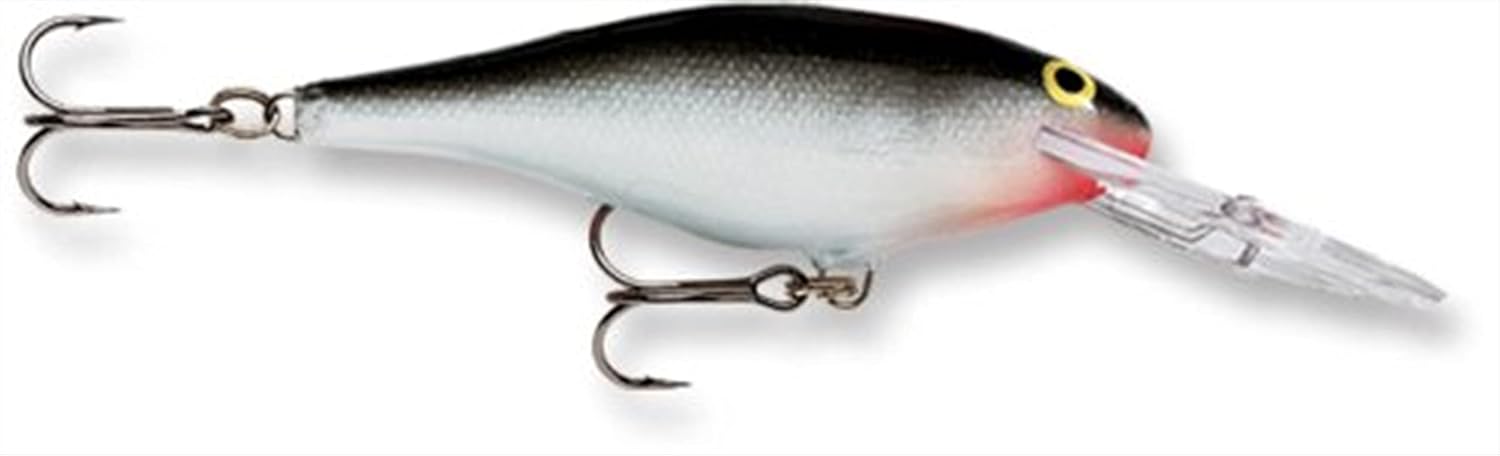
The Rapala Shad Rap is the lure that built modern walleye trolling. Introduced in the mid-1980s, the Shad Rap defined what a walleye crankbait should look like — narrow shad profile, tight rolling action, balsa wood construction (originally). The SR5 (size 5, 2″) covers shallow water from 4-9 feet; the SR7 (2.75″) reaches 7-13 feet. The Shad Rap fishes slightly differently than the Flicker Shad — the slightly wider wobble suits faster trolling speeds (2.0-2.4 mph) and triggers reaction strikes when walleye aren’t actively feeding. Some serious walleye anglers carry both Shad Raps and Flicker Shads and switch between them when one isn’t producing. The Crawfish and Purple Descent colors are reliable across most Upper Midwest conditions. Casts well too — better than the Flicker Shad for shore-based walleye fishing or working specific structure from a boat.
Rapala Husky Jerk (HJ10/HJ12)
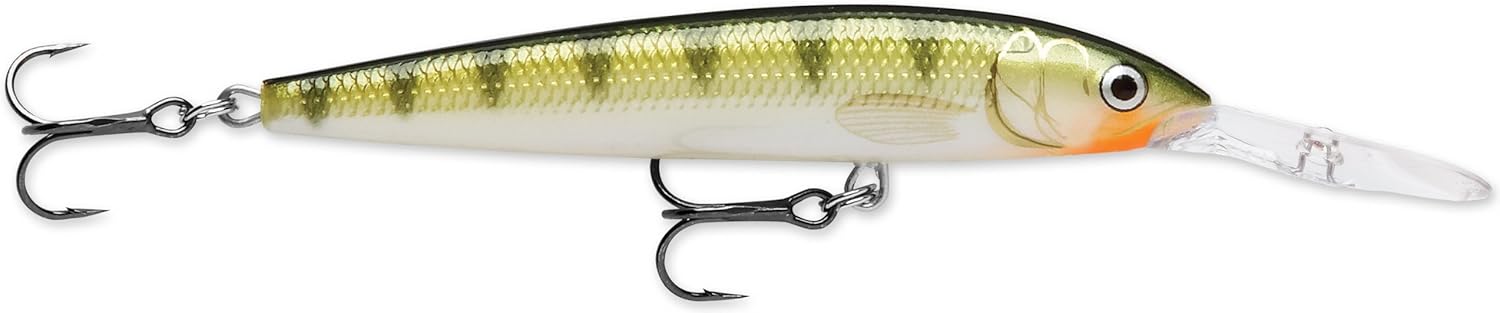
The Husky Jerk is the suspending jerkbait that owns spring walleye fishing. After ice-out and through the early spring period, walleye push shallow to feed on baitfish, and the Husky Jerk’s suspending action — where the lure stops in place during pauses — triggers strikes that constantly-moving lures miss. The HJ10 (4″) covers most spring walleye situations. Cast or troll, with frequent pauses on the retrieve. The Husky Jerk transitions to pier fishing for salmon (covered in the coho lures guide) and works on smallmouth bass too — a versatile lure worth keeping in any Upper Midwest tackle box. Best colors: Glass Perch, Clown, Silver/Black for spring; natural patterns for clear summer water.
Deep-Water and Magnum Crankbaits
Rapala X-Rap Magnum
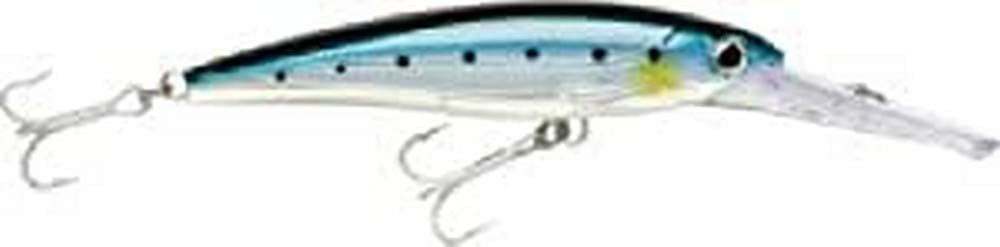
The X-Rap Magnum is the deep-water specialist for summer walleye trolling. Available in multiple sizes designed for specific depth ranges, the Magnum reaches depths that standard Flicker Shads and Shad Raps can’t — 20+ feet down at trolling speeds without needing planer boards or downriggers. The aggressive wobble triggers reactive strikes from walleye holding deep on summer structure. Best applications: Lake Erie summer walleye, deep Mille Lacs structure, Lake of the Woods open-water trolling. Color selection: blue/silver and green/silver natural patterns produce in deep clear water; orange and chartreuse for the stained water of Upper Red Lake or Bay of Green Bay.
Storm WildEye Live Series
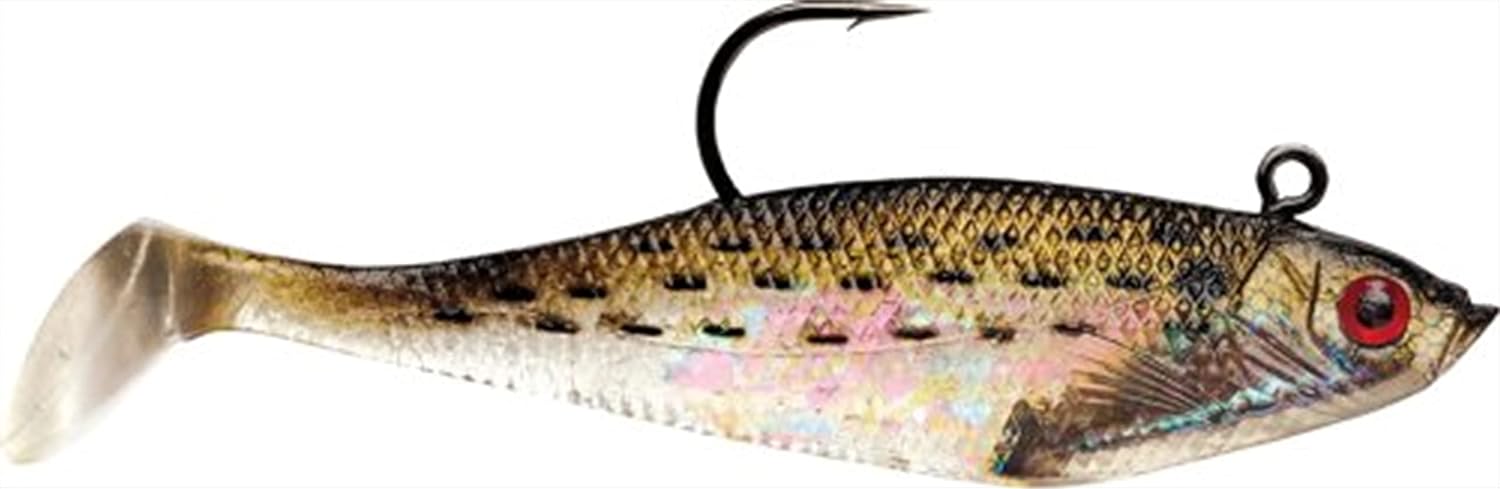
The Storm WildEye Live Series provides the swimbait profile for situations where soft plastic action triggers strikes that hard crankbaits don’t. Pre-rigged with a weighted hook, the WildEye works as a casting lure or vertical jigging tool — not a trolling lure in the traditional sense. Excellent for working specific structure (rocky points, drop-offs) where you want to slow down and present a lure precisely. Bigger fish often prefer the swimbait profile over a crankbait’s tight wobble. The 3-inch size covers walleye applications; the 4-inch crosses into smallmouth and small pike work.
Trolling Speed and Depth
The single biggest variable in crankbait trolling success is speed. Different lures hit their best action at different speeds:
| Lure | Optimal Speed (GPS) | Approximate Depth |
|---|---|---|
| Berkley Flicker Shad 5 | 1.5-2.0 mph | 6-12 ft |
| Berkley Flicker Shad 7 | 1.7-2.2 mph | 10-18 ft |
| Rapala Shad Rap SR5 | 1.8-2.4 mph | 4-9 ft |
| Rapala Shad Rap SR7 | 2.0-2.5 mph | 7-13 ft |
| Rapala Husky Jerk HJ10 | 1.0-2.5 mph (suspending) | 4-7 ft |
| Rapala X-Rap Magnum | 2.0-3.0 mph | 15-30 ft |
GPS speed over ground matters, not boat speedometer. Current and wind affect actual lure presentation significantly even if the boat’s speedometer shows constant speed. Always use GPS.
Color Selection for Walleye Crankbaits
| Conditions | Best Colors | Why |
|---|---|---|
| Clear water, bright sun | Natural shiner, perch, blue/silver | Mimics live bait, less aggressive flash |
| Stained water | Chartreuse, fire tiger, orange | High visibility through turbidity |
| Low light / dawn / dusk | Glow, purple, dark patterns | Silhouette matters more than color |
| Deep water (15+ ft) | Glow, UV, contrasting patterns | Most colors fade at depth; visibility key |
| Cold water (spring/fall) | Glass perch, clown, silver/black | Cold-water fish respond to subtle natural patterns |
Trolling Setup for Walleye
Walleye crankbait trolling typically uses 4-6 rods spread across the boat:
- Center/back rod (1): Direct line behind the boat. Closest to prop wash but produces in active fish situations.
- Outside lines on planer boards (2-4): Spread the lures wider than the boat’s footprint. Church Tackle TX-22 planer boards are the walleye-specialized standard.
- Dipsy diver lines (0-2): Reach mid-depth without downriggers. Useful for getting crankbaits down to 15-20 feet.
- Downrigger lines (0-2): Deep trolling for Lake Erie or summer walleye on big water. See the downrigger guide for setup.
Use line counter reels on all rods to set precise depths via line out. Without a line counter, you can’t accurately repeat the depth that’s producing.
Line and Leader Selection
Walleye crankbait trolling demands the right line setup. Three common configurations:
Pure monofilament (10-12 lb): The traditional walleye trolling setup. Stretch helps cushion strikes and reduces hook-pulls on light walleye bites. Simple — no leader knot required.
Braid mainline with monofilament leader (30 lb braid + 15-20 ft of 10-12 lb mono leader): Modern setup. Braid provides line counter precision and sensitivity; mono leader provides stretch near the lure for strike absorption. Connect with an FG knot or modified Albright. See the best fishing knots guide for the connections.
Pure braid (15-20 lb): For deep cold water and pressured fish. Sensitivity is maximum, no stretch. Some walleye anglers prefer this for the strike detection it provides. Adds a barrel swivel or tippet ring to the leader connection to allow flexibility at the lure.
For full background on line selection trade-offs, see braid vs mono vs fluorocarbon and best fishing line by pound test.
Common Mistakes
Trolling too fast for walleye. Walleye prefer 1.5-2.4 mph for most crankbaits. Boats coming over from bass fishing often troll at 2.5-3.0 mph and miss walleye. Slow down — use GPS to confirm actual speed.
Wrong leader length. Short leaders kill the lure’s natural action. Walleye crankbait setups typically use 8-15 foot fluorocarbon or mono leaders. Don’t go shorter than 6 feet.
Not varying the depth. Walleye hold at specific depths that change throughout the day. If you’re not getting bites, change crankbait sizes (deeper-running or shallower) before changing lures. Cover the water column systematically.
Bouncing crankbaits off bottom. Sometimes effective for triggering strikes, but constant bottom contact wears out lips and creates noise that spooks fish. Aim for the lure to occasionally tick bottom, not crash it.
Skipping the temperature check. Before setting up your spread, check the SST charts and identify the prime walleye temperature band (65-72°F). Run your crankbaits at that depth, not just at whatever depth the lure naturally fishes.
Gear to Pair with Your Crankbaits
- Best Walleye Rods — moderate-action rods for trolling
- Best Walleye Reels — line counters for precise depth
- Walleye Trolling Guide — complete trolling setup
- Best Planer Boards — Church Tackle TX-22 walleye boards
- Best Downriggers — for deep water work
- Best Fishing Knots — FG knot for braid-to-leader
- Braid vs Mono vs Fluorocarbon — line selection
- Graphite vs Fiberglass — rod material for trolling
Frequently Asked Questions
What’s the best crankbait for walleye?
The Berkley Flicker Shad in size 5-7 is the most-used walleye crankbait. The Rapala Shad Rap is the classic alternative with 40 years of proven track record. For deep water, the Rapala X-Rap Magnum.
What size crankbait for walleye?
Size 5 (Flicker Shad and Shad Rap) covers most shallow-to-mid-depth water. Size 7 reaches deeper. Magnums for deep summer work or trophy targeting. Start with size 5 in chartreuse, fire tiger, and natural shiner colors.
What’s the best trolling speed for walleye crankbaits?
1.5-2.4 mph GPS for most walleye crankbaits. Flicker Shads run best at 1.5-2.0 mph; Shad Raps at 2.0-2.4 mph; X-Rap Magnums at 2.0-3.0 mph. Always use GPS speed over ground, not boat speedometer.
Do I need planer boards for walleye trolling?
Not strictly necessary, but they dramatically improve coverage. Church Tackle TX-22 walleye-specific planer boards are the standard. Without boards, you’re trolling 4 rods through the same water; with boards, you’re covering 100+ feet wide of strike zone.
What line should I use for walleye trolling?
Either pure mono (10-12 lb) for simplicity, or braid mainline (30 lb) with monofilament leader (10-12 lb) for sensitivity. The braid vs mono guide covers the trade-offs. Avoid pure braid in clear water.
How deep do walleye crankbaits run?
Depends on size and trolling speed. Size 5 crankbaits reach 6-12 feet. Size 7 reach 10-18 feet. Magnum crankbaits reach 15-30 feet. For specific depth/speed charts, check the manufacturer’s dive chart for each lure.
Plan Your Trip
- SST Charts
- Chlorophyll Maps
- Fleet Tracker
- Marine Weather
- AI Fishing Predictions
- Minnesota Fishing Season Calendar
- Upper Midwest Fishing Trips
Related Guides
- Best Water Temp for Walleye
- Best Walleye Jigs
- Best Walleye Rods
- Best Walleye Reels
- Walleye Trolling Guide
- Walleye Jigging Guide
- Best Planer Boards
- Best Downriggers
- Braid vs Mono vs Fluorocarbon
- Best Fishing Line by Pound Test
- Best Fishing Knots
- Graphite vs Fiberglass Rods
- Spinning vs Conventional
- Best Coho Salmon Lures (Husky Jerk crossover)
- Minnesota Fishing Season Calendar
- Mille Lacs Fishing Guide
Tight lines!
Affiliate Disclosure: As an Amazon Associate, fishing-reports.ai earns from qualifying purchases. Links to Amazon on this page are affiliate links — if you click and buy, we may earn a small commission at no extra cost to you.