The right walleye rod transforms your fishing. The wrong one buries strikes. Walleye are notorious for light, subtle bites — a slight tap, a soft tick, a momentary tension change — and the rod is what translates those bites into your hand. Too stiff a rod loses the feedback. Too soft a rod loses the hookset. The walleye rod market has matured to the point where matching the right rod to the right technique is straightforward — if you know what to look for.
This guide covers what makes a good walleye rod, the two best options at different price points, and how to match the rod to your primary technique (jigging vs trolling vs casting). Pair this with the walleye reels guide for matched setups. For background on rod construction, the graphite vs fiberglass guide explains the material trade-offs that apply to walleye rods just as they do saltwater.
⚡ Quick Picks by Situation
Best overall jigging rod: St. Croix Eyecon — purpose-built for walleye fishing.
Best budget rod: Fenwick Eagle — proven action at the entry price point.
For walleye trolling: The Okuma Classic Pro GLT (8’6″ Medium) crosses over from salmon trolling.
For deep vertical jigging: St. Croix Eyecon 6’8″ Medium with extra-fast tip.
Match the action to the technique: Fast/extra-fast tip for jigging, moderate action for trolling.
What Makes a Good Walleye Rod
Walleye rods are purpose-built for the species’ specific behaviors:
Length: 6’6″ to 6’10” for jigging, 7’+ for casting and trolling. Jigging rods need to be short enough for vertical work in a boat or ice house. Casting rods benefit from extra length for distance. Trolling rods typically run 7’6″ to 8’6″ for proper load with crankbaits and downriggers.
Action: Fast to extra-fast for jigging, moderate for trolling. The action describes where the rod bends. Fast and extra-fast actions bend in the tip only — this gives you the sensitivity to feel light walleye bites and the backbone for sharp hooksets. Moderate actions bend through the middle of the rod, which is what you want for trolling to load with the crankbait and absorb strikes.
Power: Medium-light to medium for jigging, medium to medium-heavy for trolling. Power rates the rod’s strength — its ability to handle weight. Lighter powers give you bite detection; heavier powers give you hookset strength. Most walleye anglers run medium-power rods as their primary because they balance both.
Material: Graphite or graphite composite. Walleye fishing is a sensitivity game. Pure graphite blanks transmit vibration efficiently, letting you feel a walleye breathe on the bait. Fiberglass adds durability but kills sensitivity. The graphite vs fiberglass guide covers the trade-offs — for walleye, graphite wins. Composite blanks (graphite-fiberglass mixes) work well for trolling rods where some give is desirable.
Guides: Quality saltwater-rated or premium freshwater guides. Cheap guides develop wear that cuts line. Fuji guides or equivalent premium options are worth the cost.
Walleye Spinning Rods
Spinning rods are the dominant walleye rod configuration. Most walleye techniques — jigging, casting, finesse work — favor spinning over conventional. The spinning vs conventional comparison applies to walleye as it does saltwater: spinning wins for finesse and casting, conventional wins for trolling.
St. Croix Eyecon Walleye Rod

The St. Croix Eyecon series is purpose-built for walleye fishing. St. Croix is the Wisconsin-based rod maker that built its reputation on freshwater rods designed for specific fisheries. The Eyecon series gets walleye-specific design touches throughout — the action is calibrated for the species’ typical bite pressure, the handles are sized for cold-weather grip (important for ice fishing and spring opener conditions), and the guide spacing supports the typical jig-and-minnow presentation rather than the bass-fishing action many “freshwater” rods are designed around. The 6’8″ Medium with extra-fast tip is the workhorse — handles 1/8 oz to 3/8 oz jigs, 6-12 lb line, and Mille Lacs class walleye without issue. Pair with a quality 2500-3000 size spinning reel — see the walleye reels guide for matched pairings.
Fenwick Eagle Walleye Rod

The Fenwick Eagle is the budget option that delivers more than its price suggests. Fenwick has been making fishing rods since the 1950s, and the Eagle line represents their entry-level offerings — but “entry-level” at Fenwick still means quality construction, proper action, and durable materials. The Eagle walleye-rated rods come in lengths and powers that match common walleye techniques without unnecessary complexity. For anglers building their first walleye-specific setup or for backup rods on a multi-day trip, the Eagle is the right value choice. The action isn’t quite as refined as the St. Croix Eyecon, but the performance gap is much smaller than the price gap suggests.
Walleye Trolling Rods
Trolling demands different rod characteristics than jigging. The rod loads with the crankbait and downrigger weight, absorbs strikes during the constant motion of trolling, and provides leverage during the fight. The salmon trolling rods covered in the salmon trolling rods guide work for walleye trolling — sometimes with one minor adjustment.
Okuma Classic Pro GLT
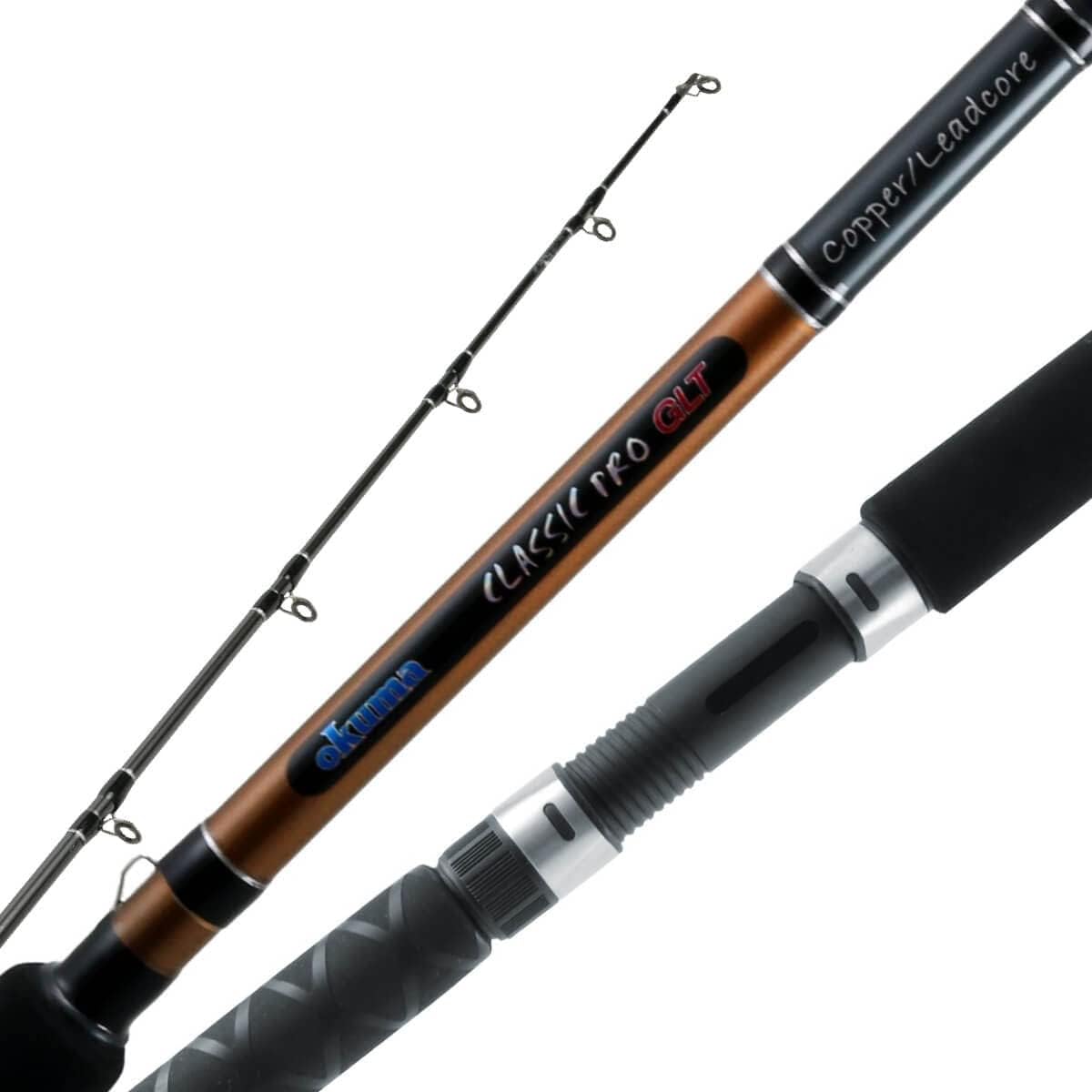
The Okuma Classic Pro GLT in 8’6″ Medium handles walleye trolling well. The same rod that anchors Great Lakes salmon trolling setups (covered in detail in the salmon trolling rods guide) scales down for walleye work. For Lake Erie style heavy-water trolling, run the Medium-Heavy version. For lighter walleye crankbait work on smaller lakes, the Medium handles it. Anglers who fish both salmon and walleye can standardize on one rod family across their entire trolling spread.
Walleye Rods by Technique
| Technique | Length | Power | Action |
|---|---|---|---|
| Vertical Jigging | 6’4″-6’10” | Medium-Light to Medium | Extra-Fast |
| Casting Jigs | 6’8″-7’2″ | Medium | Fast |
| Casting Crankbaits | 6’10”-7’4″ | Medium | Moderate-Fast |
| Live Bait Rigging | 7’0″-7’6″ | Medium-Light | Fast |
| Trolling (light) | 7’6″-8’6″ | Medium | Moderate |
| Trolling (Lake Erie/heavy) | 8’6″ | Medium-Heavy | Moderate |
| Ice Fishing | 28″-36″ | Light-Medium-Light | Fast-Extra-Fast |
Pairing Rod to Reel
Rod and reel must balance for proper feel. Standard pairings:
- St. Croix Eyecon 6’8″ Medium + Shimano Stradic FL 4000 — the premium walleye jigging combo
- Fenwick Eagle Medium + Daiwa BG MQ 4000 — solid mid-tier setup
- Okuma Classic Pro GLT Medium + Okuma Convector CV-30DLX — trolling combo with line counter
- Light ice rod + small ice spinning reel — specialized ice fishing setup
For full reel selection, see the walleye reels guide. The SoCal-focused rod and reel combo guide covers some of the same line size considerations that apply to walleye.
Common Mistakes
Using a bass rod for walleye. Bass rods are often heavier-action than walleye rods need. The stiffer action loses the sensitivity required for walleye’s light bites. Walleye-specific rods (or trout-rated freshwater rods) are tuned differently.
Wrong length for the technique. A 7’6″ rod is too long for vertical jigging in a boat. A 6’8″ rod is too short for crankbait casting from shore. Match the length to your primary technique — 6’8″ for boat jigging, 7’2″+ for casting, 8’+ for trolling.
Cheap guides developing wear. Walleye lines (especially mono and braid) cut through worn guides over time. Inspect annually and replace the rod when wear becomes obvious. A new mid-tier rod is cheaper than fighting lost fish on worn equipment.
Wrong action for the technique. Moderate-action rods don’t transmit bites the way fast/extra-fast rods do. Choose the action based on what you need the rod to do — sensitivity for jigging, load for trolling.
Skipping the rod warranty. St. Croix and many premium manufacturers offer transferable warranties. For rods you’ll use for years, the warranty is real value. Cheaper rods often skip this — factor it into the price comparison.
Frequently Asked Questions
What’s the best walleye rod?
The St. Croix Eyecon in 6’8″ Medium with extra-fast tip is the most-recommended overall walleye rod. The Fenwick Eagle walleye rods are the budget alternative. For trolling, the Okuma Classic Pro GLT.
What length walleye rod do I need?
6’8″ is the standard for boat jigging. Step up to 7’+ for casting from shore. Trolling rods are 7’6″-8’6″. The right length depends primarily on your most common technique — jig most? Stay at 6’8″. Cast most? Go 7’+.
Spinning or baitcaster for walleye?
Spinning dominates walleye fishing. The spinning vs conventional guide explains the reasons — spinning excels at finesse, light lures, and casting. Baitcasters are used for some heavier walleye applications (deep cranking, heavy jigs) but spinning is the standard.
What action for walleye jigging?
Extra-fast action with medium or medium-light power. This combination gives you sensitivity to detect light bites and backbone to set the hook firmly. Fast action works if you can’t find extra-fast.
Are walleye rods worth the price?
Yes if you fish walleye consistently. The species-specific action and components produce more fish over time than generic rods would. For occasional walleye anglers, a quality bass or trout rod adapts adequately, but dedicated walleye anglers benefit from purpose-built rods.
What’s the difference between graphite and fiberglass walleye rods?
Graphite is more sensitive and transmits bites better — critical for walleye. Fiberglass is more durable but loses sensitivity. Most quality walleye rods use graphite blanks. See the graphite vs fiberglass guide for the detailed comparison.
Plan Your Trip
- SST Charts
- Chlorophyll Maps
- Fleet Tracker
- Marine Weather
- AI Fishing Predictions
- Minnesota Fishing Season Calendar
- Upper Midwest Fishing Trips
Related Guides
- Best Water Temp for Walleye
- Best Walleye Jigs
- Best Walleye Crankbaits
- Best Walleye Reels
- Walleye Jigging Guide
- Walleye Trolling Guide
- Graphite vs Fiberglass Rods
- Spinning vs Conventional Reels
- Best Fishing Line by Pound Test
- Braid vs Mono vs Fluorocarbon
- Best Salmon Trolling Rods (Trolling Cross-Ref)
- Best Rod & Reel Combos (SoCal)
- Best 7-Foot Offshore Rods (SoCal)
- Best Musky Rods
- Minnesota Fishing Season Calendar
- Mille Lacs Fishing Guide
Tight lines!
Affiliate Disclosure: As an Amazon Associate, fishing-reports.ai earns from qualifying purchases. Links to Amazon on this page are affiliate links — if you click and buy, we may earn a small commission at no extra cost to you.