The ice auger is the single most-used piece of ice fishing equipment after the rod itself. Every fishing day starts with drilling holes. Every move on the lake means drilling more holes. A poor auger turns a productive 50-hole day into a frustrating 15-hole day. A good auger lets you stay mobile, search structure systematically, and fish multiple spots before settling. The right auger pays for itself in fish caught within the first season.
The ice auger market has shifted dramatically in the past five years. Lithium-electric augers have largely replaced gas augers as the modern standard — quieter, lighter, faster, and with battery life that handles a full day of fishing on a single charge. Gas augers retain a place for heavy users and extreme cold conditions, but they’re no longer the default choice. This guide covers the four auger categories and the specific products that consistently perform across Upper Midwest ice fishing conditions.
⚡ Quick Picks by Situation
Best overall electric: ION Alpha 8″ Electric Auger — the modern Upper Midwest standard.
Best lightweight electric: StrikeMaster Lithium 24v Lite 6″ — portable, fast, panfish-focused.
Best gas: Thunderbay 33cc 8″ Power Ice Auger — traditional power for heavy users.
Best hand / drill-driven: NILS Convertible 8″ Hand Auger — converts to cordless drill use.
Best budget approach: Buy a NILS hand auger and a quality cordless drill — covers most needs at half the price.
The Four Auger Categories
Modern ice augers split into four categories, each with distinct trade-offs:
| Category | Best For | Trade-Offs |
|---|---|---|
| Lithium / Electric | Most anglers, mobility, all-day use | Battery cost, cold-weather battery drain |
| Gas | Extreme cold, very heavy use, deep ice | Weight, noise, fuel handling |
| Hand (manual) | Light ice, occasional fishing, budget | Slow on thick ice, physical effort |
| Drill-driven | Anglers who already own quality cordless drills | Drill battery life, two-tool requirement |
Lithium augers have become the dominant category over the past five years. Modern lithium batteries handle Upper Midwest cold (down to about -10°F before significant performance drop), drill 30-50+ holes per charge through typical mid-winter ice, and weigh roughly half what gas augers weigh. For most anglers, the answer is a lithium electric.
Lithium / Electric Augers
ION Alpha 8″ Electric Auger
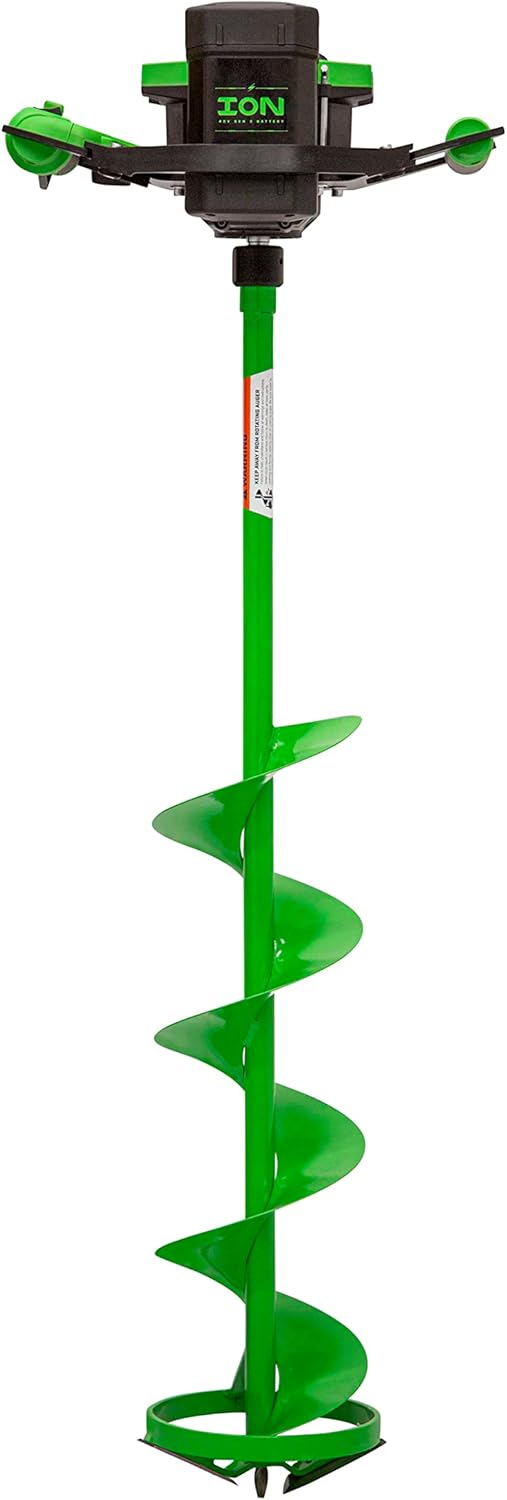
The ION Alpha is the lithium auger that defined the modern category. ION (a Minnesota company) was an early entrant into lithium ice augers and has refined the design over multiple generations. The Alpha runs a brushless motor with a 40V lithium battery, drives an 8-inch blade through up to 12 inches of ice in about 8-10 seconds per hole, and gets 30-50+ holes per charge in typical mid-winter conditions. Weight is approximately 22 pounds — significantly lighter than equivalent gas augers, which run 30-35 pounds. The reverse function helps clear slush from the hole without lifting the auger. Battery life degrades in extreme cold (below -10°F), but typical Minnesota and Wisconsin January conditions don’t push the battery to that limit. The 8-inch hole size is the most common Upper Midwest standard — large enough for trophy walleye and pike, small enough that drilling is fast and the hole freezes back manageable in cold conditions. Best for most ice anglers; the $600-650 price point reflects the modern category benchmark.
StrikeMaster Lithium 24v Lite 6″
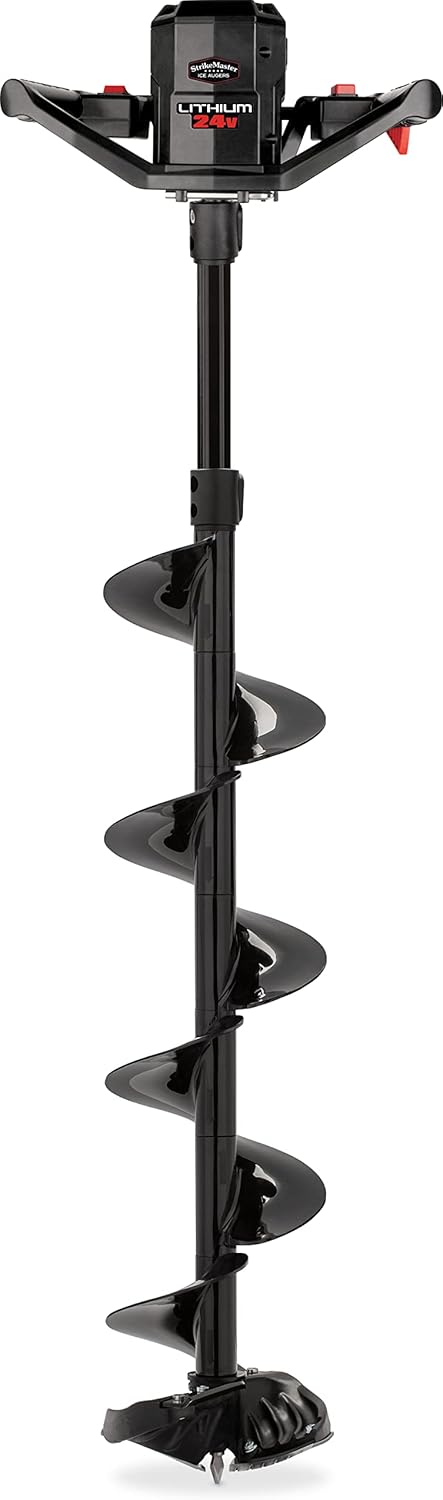
The StrikeMaster Lite represents the panfish-focused lithium auger. The 6-inch blade drills faster than 8-inch blades through equivalent ice (smaller hole, less ice volume to remove), and the lighter overall package — about 15-17 pounds — makes it the choice for anglers who walk extensively across the ice or fish from sleds rather than vehicles. The 24V battery system trades some thick-ice drilling capability for reduced weight and faster recharge. Best applications: panfish-focused fishing (perch, crappie, bluegill), light early-season ice when speed matters, and anglers who prefer the lighter package even at the cost of some power. Many anglers own both an 8-inch general-purpose auger and a 6-inch panfish auger for different situations. The 6-inch hole isn’t large enough for trophy pike or large walleye, so it’s not a universal answer — but for its intended use, it excels.
Gas Augers
Thunderbay 33cc 8″ Power Ice Auger
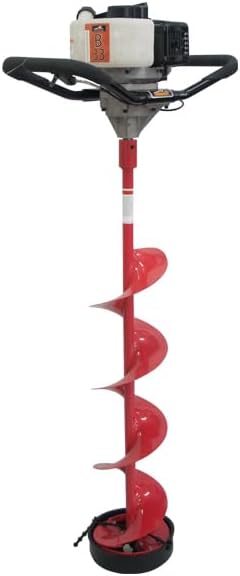
Gas augers retain a place in the ice fishing world despite the lithium revolution. The Thunderbay 33cc handles the situations where electric augers struggle: extreme cold (below -15°F) that drains lithium batteries, very thick mid-season ice (20+ inches), and heavy-use scenarios where you might drill 60-100+ holes in a day. The 33cc two-stroke engine produces enough torque to power through any reasonable ice thickness without bogging down. Weight is approximately 32-35 pounds, noticeably heavier than electric. Refueling at the lake requires carrying a small fuel container — manageable but an extra logistics consideration. The category traditionally was dominated by Jiffy and Eskimo; Thunderbay has emerged as the value-priced gas alternative with strong build quality. For anglers who fish in extreme cold or drill very heavy hole counts, gas remains relevant. For everyone else, lithium has won.
Hand & Drill-Driven Augers
NILS Convertible 8″ Hand Auger
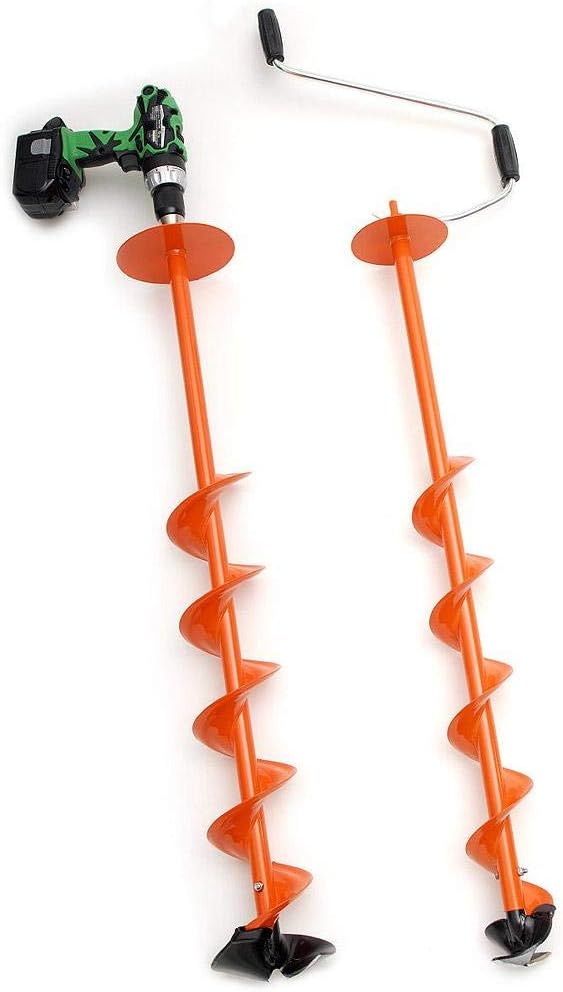
NILS hand augers are the premium hand auger choice, manufactured in Finland with precision-machined blades that hold an edge dramatically longer than commodity hand augers. The Convertible model adapts to use with a cordless drill — drill the first hole or two by hand, then attach a quality cordless drill for additional holes. This versatility makes it the smart choice for anglers who want to keep options open: full hand use when batteries die or cold limits electric options, drill-driven when speed matters. The 8-inch hole size matches the lithium auger standard. Weight is about 9 pounds — substantially lighter than any powered auger. For anglers fishing 1-5 holes per day on first ice (when ice is thinner and hand drilling is fast), the NILS handles the situation better than carrying a heavy lithium auger out for limited use. For anglers fishing 20+ holes per day in mid-season, attach a cordless drill — a quality 18V drill drives the auger through 12 inches of ice in 15-20 seconds per hole. Best paired with a high-quality drill like a Milwaukee M18 Fuel or DeWalt 60V Max for best results.
Sizing: 6″ vs 7″ vs 8″ vs 9″ vs 10″
Hole size matters in ways most beginners underestimate:
| Size | Target | Trade-Offs |
|---|---|---|
| 6″ | Panfish, smaller walleye, perch | Fast to drill, narrow for big fish, freezes back fast in cold |
| 7″ | General-purpose walleye | Compromise size, less common |
| 8″ | Walleye, large perch, smaller pike | The Upper Midwest standard. Balance of size and drilling speed. |
| 9″ | Large walleye, pike, lake trout | Slower to drill, accommodates bigger fish |
| 10″ | Trophy pike, large lake trout, ice spearing | Significantly slower to drill, requires more power |
The 8-inch size is the Upper Midwest standard for good reason — it handles 90%+ of fish anglers target, drills reasonably fast, and freezes back slowly enough in cold weather to maintain a fishable hole for hours. Step up to 9″ or 10″ only if specifically targeting trophy pike or lake trout. Step down to 6″ only for panfish-focused fishing where drilling speed and hole count matter more than fish size.
Battery Life and Cold Weather Performance
Lithium battery performance is the limiting factor in modern electric augers:
Typical mid-winter performance (10-25°F): A 40V battery in an 8-inch auger drills 30-50 holes through 8-12 inches of ice. The variability comes from ice thickness — thicker ice means more energy per hole.
Extreme cold (below 0°F): Battery capacity drops 20-30%. Plan for fewer holes per charge in deep January cold. Keep batteries warm (inside a heated vehicle or shelter) between uses.
Extreme cold (below -10°F): Battery performance degrades significantly. Some anglers carry batteries inside coat pockets to keep them warm. Gas augers become more competitive in this temperature range.
Strategy: Carry a second battery. Most lithium auger manufacturers sell additional batteries; the cost is roughly $150-200 per battery. With two batteries, you essentially have unlimited drilling capacity for a typical day, with the second battery always charging in a vehicle while the first is in use.
Drilling Technique
Even the best auger benefits from correct technique:
Apply steady downward pressure. Don’t push too hard — the blade does the work. Lean about 10-15 pounds of body weight onto the auger as it drills. Forcing the auger slows it down (the blade can’t clear chips fast enough) and wears the motor harder.
Let the auger work. Once it engages the ice and starts producing chips, don’t change pressure. Maintain consistent feed rate.
Use reverse to clear slush. Once you’ve drilled through to water, run the auger in reverse briefly to clear slush from the hole. This makes the next jig drop cleaner.
Keep the auger vertical. A canted auger drills a tapered hole that’s harder to fish from. Keep the auger plumb.
Listen to the motor. If the motor sounds labored, you’re probably pushing too hard. Ease off.
Maintenance
Augers are mechanically simple but require basic care:
- Inspect blades before each trip. Sharp blades drill fast and clean. Dull blades drill slow and create gummy holes.
- Replace blades when chipped or excessively dull. Replacement blades cost $30-80 depending on brand.
- Drain fuel from gas augers at season end. Old fuel gums up carburetors. Pour out remaining fuel or run the auger until it runs dry.
- Charge lithium batteries to 50% for storage. Full-charge or full-discharge storage degrades batteries faster. 50% is the sweet spot.
- Store augers indoors or in dry sheds. Moisture corrodes blade edges and motor housings.
- Clean ice and slush from the blade housing after each trip. Frozen accumulation interferes with subsequent drilling.
Common Mistakes
Wrong size for your fishing. Buying a 10″ auger for general walleye fishing means slower drilling for no benefit. Buying a 6″ auger and trying to land a 20lb pike means the hole is too small. Match size to species.
Single battery only. One battery limits you to that battery’s capacity. Carry a second; the cost difference is small relative to losing a fishing day to dead batteries.
Skipping blade sharpness check. Dull blades drill slower and harder. Inspect blades before each trip and after rocky bottoms (which can chip blades if you over-drill into the ice’s bottom edge).
Gas auger in extreme cold without preparation. Gas augers need to be warmed up properly in cold. Letting them sit in -10°F for hours means a 5-10 minute warm-up before they’ll run smoothly.
Carrying a heavy auger when you don’t need to. A NILS hand auger with a cordless drill is sufficient for many anglers and weighs half what a lithium auger weighs. Be honest about your usage — do you really drill 30+ holes per day? If not, the lighter package is the smarter choice.
Not pre-warming batteries. Cold lithium batteries deliver less power. Bring batteries into a warm vehicle or shelter before going onto the ice when temperatures are below 10°F.
Gear to Pair with Your Auger
- Best Ice Fishing Flashers — find fish at each hole you drill
- Best Ice Fishing Rods
- Best Ice Fishing Reels
- Best Ice Shelters
- Best Ice Fishing Jigs
- Ice Fishing Guide
- Ice Fishing Safety Guide
Frequently Asked Questions
What’s the best ice auger?
For most ice anglers, the ION Alpha 8″ Electric is the modern standard. The StrikeMaster Lithium 24v Lite 6″ is the panfish-focused alternative. For gas, the Thunderbay 33cc 8″. For hand/drill use, the NILS Convertible 8″.
Electric or gas ice auger?
Electric for most anglers. Modern lithium augers match or exceed gas performance in mid-winter conditions while being lighter, quieter, and lower-maintenance. Gas retains advantages in extreme cold (below -10°F) and very high hole counts (100+ per day). For the typical Upper Midwest weekend angler, electric is the right choice.
What size ice auger should I buy?
8 inches is the Upper Midwest standard — handles walleye, perch, smaller pike, and lake trout while drilling fast enough to be practical. Step down to 6″ only for panfish-focused fishing. Step up to 9″ or 10″ only for trophy pike, large lake trout, or ice spearing applications.
How many holes can a lithium ice auger drill on one charge?
Typical mid-winter conditions: 30-50 holes per charge through 8-12 inches of ice. Battery life decreases in extreme cold (below 0°F) and with thicker ice. Most anglers carry a second battery for unlimited drilling on a typical day.
Are hand ice augers worth it?
Yes for specific use cases. Anglers who fish only a few holes per day, who hike to remote ice, who fish first-ice when ice is thinner and hand-drilling is fast, or who want a backup option will all benefit from a quality hand auger. The NILS Convertible bridges hand and drill-driven use.
What’s a drill-driven ice auger?
A hand auger adapted to attach to a cordless drill (usually 18V or 20V Max class). The drill replaces the manual hand crank. Effective drilling speed approaches lithium auger performance at lower cost — assuming you already own a quality cordless drill. The NILS Convertible and similar designs support this approach.
Plan Your Trip
- SST Charts
- Fleet Tracker
- Marine Weather
- AI Fishing Predictions
- Minnesota Fishing Season Calendar
- Wisconsin Fishing Season Calendar
- Upper Midwest Fishing Trips
Related Guides
- Ice Fishing Guide
- Ice Fishing Safety Guide
- Best Ice Fishing Flashers
- Best Ice Fishing Rods
- Best Ice Fishing Reels
- Best Ice Shelters
- Best Tip-Ups
- Best Ice Fishing Jigs
- Best Ice Fishing Line
- Ice Fishing for Walleye
- Ice Fishing for Pike
- Ice Fishing for Crappie
- Ice Fishing for Perch
- Ice Fishing for Lake Trout
- Lake of the Woods Ice Fishing
- Mille Lacs Fishing Guide
- Lake of the Woods Fishing Guide
- Upper Midwest Fishing Trips
Tight lines!
Affiliate Disclosure: As an Amazon Associate, fishing-reports.ai earns from qualifying purchases. Links to Amazon on this page are affiliate links — if you click and buy, we may earn a small commission at no extra cost to you.