Northern pike are aggressive ambush predators with simple lure preferences. Unlike musky’s “fish of 10,000 casts” pattern, pike usually commit when a lure invades their territory. Unlike walleye’s selective bite, pike strike with conviction. The challenge isn’t getting pike to bite — it’s getting the lure to them at the right depth and pace. Once you find the fish, the catch rate is high. Once you find the trophy fish, the catch rate is still high — they just hit bigger lures.
This guide covers the four lure categories that dominate Upper Midwest pike fishing — classic red-and-white spoons, inline bucktail spinners, French-style spinners, and the crossover lures from musky fishing. Pair this with the pike temperature guide for seasonal context. Note: wire leaders are non-negotiable for pike — see the leader section at the bottom.
⚡ Quick Picks by Situation
Best overall pike lure: Dardevle Spoon Original in 1 oz — the iconic pike spoon.
Best bucktail spinner: Mepps Aglia #5 Bucktail — pike-sized profile.
Best French-style spinner: Mepps Black Fury — black blade for stained water.
Best alternative spoon: Cotton Cordell C.C. Spoon — flashy chrome option.
Best casting distance: Acme Kastmaster 1 oz — for reaching long structure.
Classic Pike Spoons
Spoons are the foundational pike lure. The flashing wobble imitates a wounded baitfish — pike’s preferred prey signature. A 1 oz spoon casts a long distance, sinks predictably, and works at multiple retrieve speeds.
Dardevle Spoon Original (1 oz)
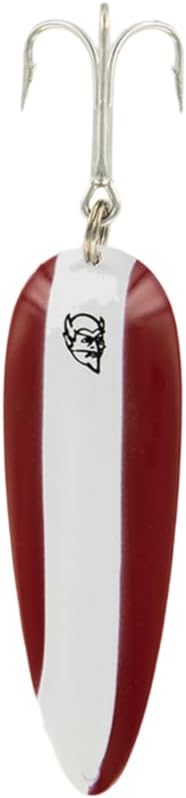
The Dardevle is the spoon synonymous with pike fishing. The classic red-and-white striping pattern is the most-produced lure design in North American fishing history — there’s a reason. The 1 oz size is the workhorse for most pike applications: casts well, sinks to typical pike depths (5-15 feet), and runs at standard retrieve speeds. The wobble is wide and erratic, matching a wounded baitfish profile perfectly. Throw past structure (weed edges, points, rock piles), let the spoon sink for 5-10 seconds, then retrieve with steady speed punctuated by occasional pauses. Strikes typically come on the retrieve or during pauses. The red-and-white pattern works across all conditions; alternative patterns (yellow/red, perch, fire tiger) match specific forage types or stained water. Replace the factory hook with a heavier treble if targeting trophy pike — the standard hook is adequate but not exceptional.
Cotton Cordell C.C. Spoon
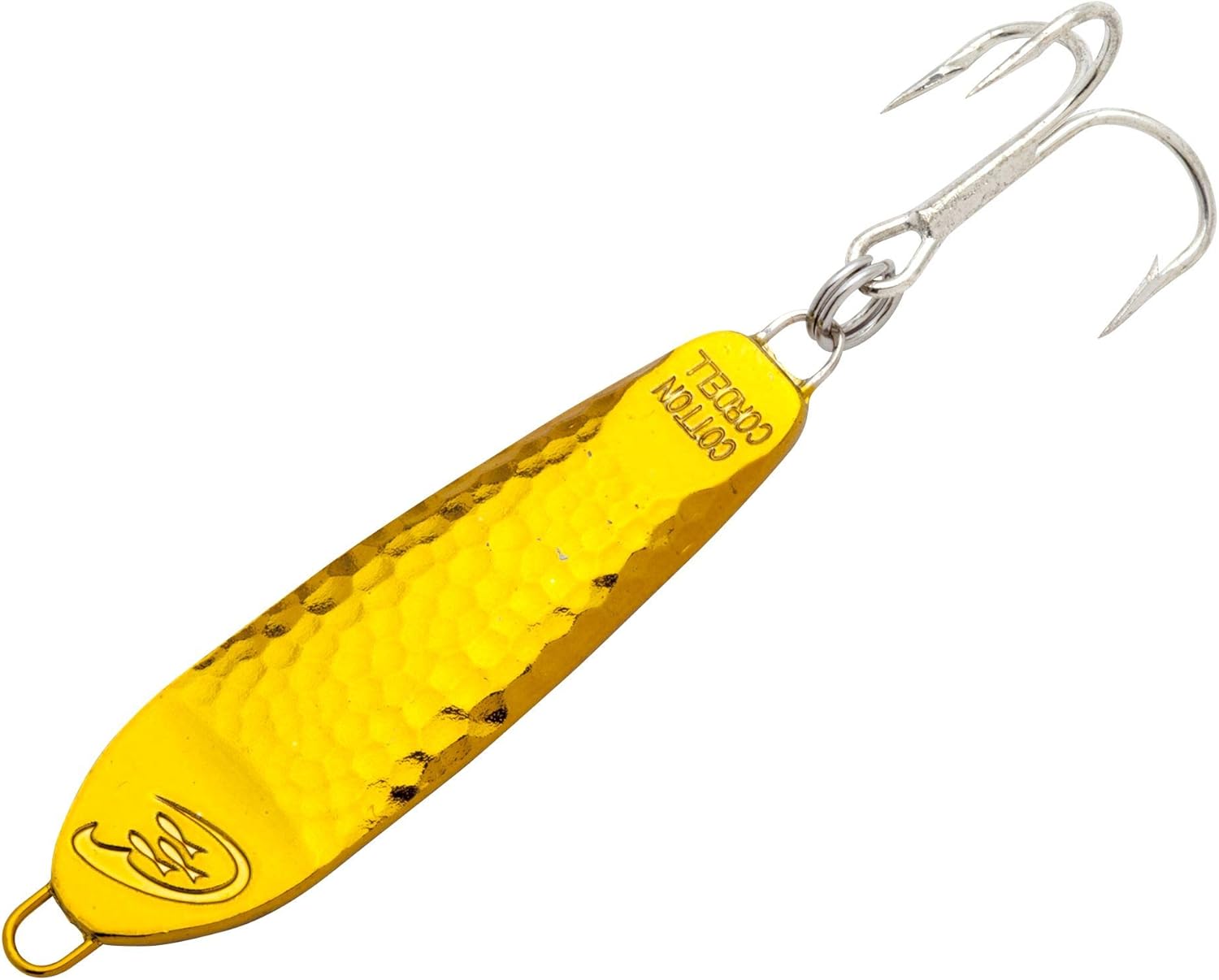
The Cotton Cordell C.C. Spoon is the chrome-flash alternative to the Dardevle. Where the Dardevle’s painted finish wears with use, the C.C. Spoon’s chrome holds its visual signature longer. The wobble is slightly tighter than the Dardevle, which suits faster retrieves and clear-water conditions. Particularly effective in late-summer clear water on Canadian Shield lakes where pike see Dardevle patterns frequently and have become educated. Chrome and chrome/blue patterns dominate the C.C. Spoon’s color palette. Worth carrying alongside Dardevles as a pattern alternative when one isn’t producing.
Acme Kastmaster 1 oz

The Acme Kastmaster crosses over from saltwater pier fishing (covered in the pier fishing salmon guide) and shore-based applications into pike fishing. The dense single-piece chrome construction casts farther than any other spoon in its weight class — important when pike are working bait at the outer edge of normal casting range. Chrome, gold, and chrome/blue patterns produce. The Kastmaster’s tighter action makes it less effective than the Dardevle for typical structure fishing but better for distance casting from shore or reaching offshore weed edges.
Bucktail Spinners
Bucktail spinners combine spinning blade flash with bucktail hair volume. The combination of visual attraction and water displacement triggers pike aggression more effectively than spoons in some situations.
Mepps Aglia #5 Bucktail
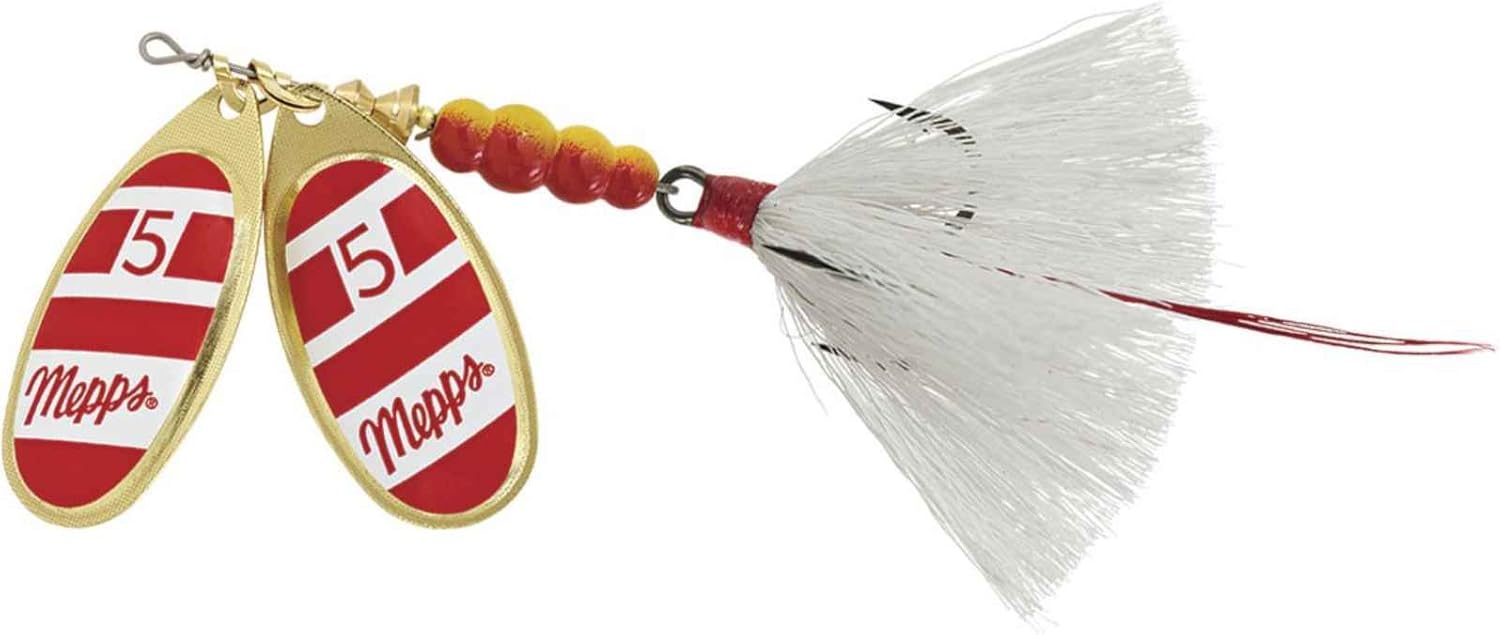
The Mepps Aglia in #5 Bucktail size is the pike-specific version of the spinner that anchors river coho fishing (smaller #4 size — see the coho lures guide). The #5 size — about 1/2 oz with a bigger blade — matches pike’s preferred prey profile and produces consistently from spring through fall. Silver blade with red bucktail is the classic Upper Midwest pike pattern; fluorescent orange and chartreuse for stained water. Cast across weed edges, retrieve at a moderate-fast pace to keep the blade rotating, vary speed and add occasional pauses. Pike will follow these spinners often — be ready for boatside strikes on the pickup. Replace the factory hook with a premium 2/0-3/0 treble for trophy targeting.
Mepps Black Fury Inline Spinner
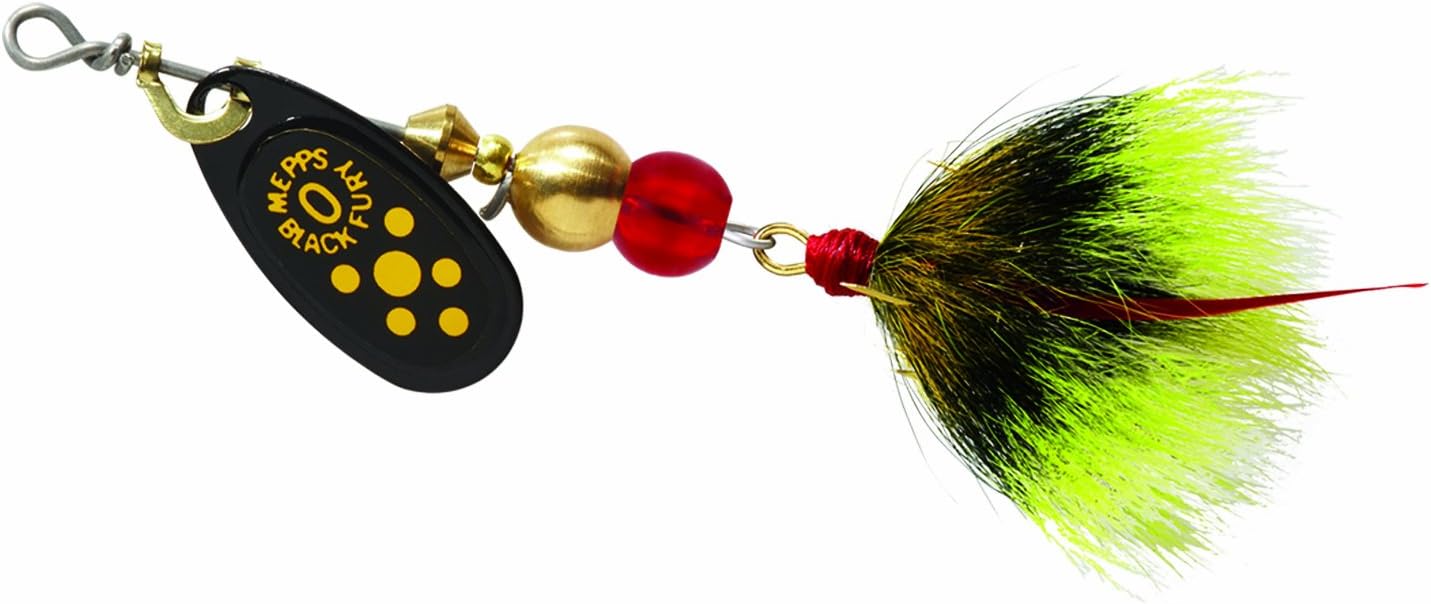
The Mepps Black Fury is the dark-blade variant in the Mepps lineup. The black blade with yellow or fluorescent dots creates a different attraction signature than the silver blade Aglia — particularly effective in stained water (Upper Red Lake, certain Wisconsin and Manitoba lakes) where the contrast against the murky background matters more than overall flash. Sizes 3-5 cover pike applications, with size 4 (3/8 oz) being the workhorse. The Black Fury also catches walleye and trout in addition to pike, making it a versatile multi-species lure to carry. Run on the same wire leader setup as other pike spinners.
Worden’s Original Rooster Tail
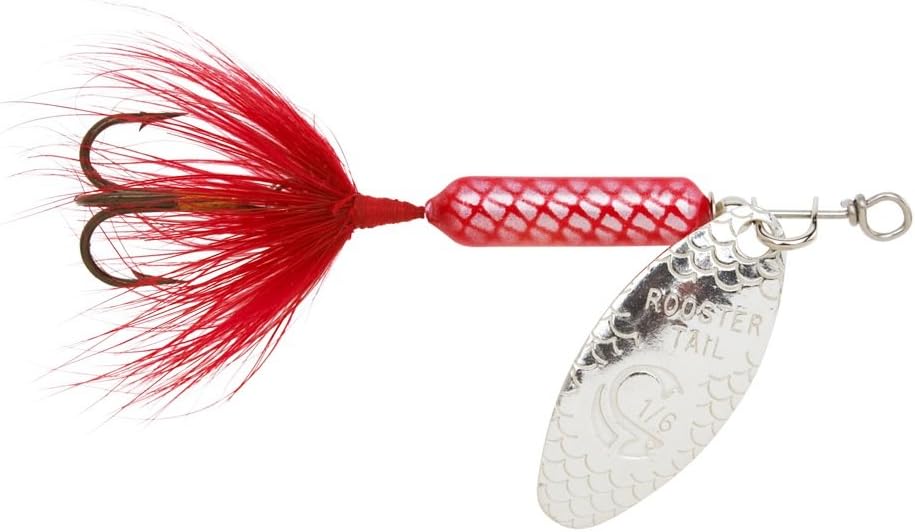
The Worden’s Rooster Tail is the budget-friendly alternative in the inline spinner category. The 1/4 oz size matches smaller pike and crosses over to smallmouth bass. The willowleaf blade rotates at slower speeds than Mepps Aglias, which suits cold-water fishing in spring and fall when pike feed slower. Pure red and white-and-red patterns work well in stained water. Particularly useful for anglers fishing both pike and trout (Rooster Tails are classic trout lures), as one spinner serves multiple species at multiple sizes.
Crossover Lures from Other Fisheries
Several lures from other categories work effectively for pike:
Musky bucktails (smaller sizes). The Mepps Musky Killer in the smallest sizes catches big pike. Musky lures and pike lures overlap in the upper range.
Suspending jerkbaits. The Rapala Husky Jerk in HJ12-HJ14 sizes produces pike effectively, particularly for finesse situations or fish that have rejected spinners and spoons.
Soft plastic swimbaits. The Storm WildEye Live Series in 4-inch sizes catches both walleye and pike, making it a versatile lure to carry on multi-species trips.
Topwater plugs. Pike will hit large topwater lures at dawn and dusk. Big poppers and walk-the-dog plugs designed for largemouth bass produce effectively for shallow-water pike.
Color Selection for Pike
| Conditions | Best Colors | Why |
|---|---|---|
| Clear water, bright sun | Chrome, silver/blue, natural perch | Mimics live bait, less aggressive |
| Stained water | Red and white (Dardevle), chartreuse, fluorescent orange | High visibility through turbidity |
| Low light / dawn / dusk | Black/yellow, copper, dark patterns | Silhouette matters most |
| Cold water (early spring / late fall) | White, silver, subtle natural | Cold pike respond to less aggressive flash |
| Hot summer | Bright reactive colors | Trigger lethargic fish into reaction strikes |
Wire Leaders (Mandatory for Pike)
Pike teeth cut mono and braid easily. A wire leader is not optional:
American Fishing Wire 90lb Single Strand

The American Fishing Wire single-strand 90lb is the most-used pike wire in the Upper Midwest. 12-18 inch leaders are the standard length. Connect via Albright knot from braid to wire — see the best fishing knots guide. Inspect leaders after every fish; pike teeth create kinks that weaken the wire over time. Replace as needed.
Malin Wire Leader 90lb

Malin is the premium wire leader option. Slightly stiffer and more durable than American Fishing Wire. Worth the price difference for serious pike anglers or for trophy pike targeting.
Line Setup for Pike
Pike fishing is lighter than musky but heavier than walleye:
Mainline: 30-50lb braid (PowerPro, J-Braid). The braid vs mono guide explains why braid dominates — sensitivity for strike detection and no stretch for hookset.
Leader: 90lb wire, 12-18 inches.
Connection: Albright knot or modified Albright braid-to-wire. The best fishing knots guide covers the technique.
Reel: 4000-6000 size spinning reel handles most pike. For dedicated pike work or big-water situations, conventional baitcasters in the size class covered in the best 30lb reels guide work well.
For broader line selection guidance, see best fishing line by pound test.
Hook Considerations
Pike hookups happen primarily on the retrieve, not on the cast. The hook needs to penetrate quickly and hold during the fight:
- 1 oz spoons: 2/0 treble hooks standard, 3/0 for trophy
- Inline spinners (size 5): 1/0-2/0 trebles
- Larger bucktails: 4/0-5/0 trebles
For background on hook selection, the best hooks by species guide covers the saltwater equivalents. The circle hooks vs J hooks guide also applies — circles work for live bait pike fishing while J hooks/trebles work for artificial lures.
Common Mistakes
Skipping the wire leader. The biggest mistake in pike fishing. Pike teeth cut mono and braid in one strike. Use 90lb+ wire leader. No exceptions.
Lures too small. Big pike eat big prey. A 1/4 oz spinner catches small pike; a 1 oz Dardevle catches big pike. Scale your lures up when targeting trophy fish.
Retrieve too fast. Many anglers retrieve pike lures at bass-fishing speeds. Pike often prefer slower retrieves, particularly in cold water and stained conditions. Slow down — the spinning blade should still rotate but the lure should move slower than your instinct says.
Wrong structure. Pike are ambush predators — they need cover. Even prime temperature water without weeds, timber, or rock structure holds few pike. Find the cover first, then fish through it.
Cheap hooks left in factory configuration. Factory hooks on spoons and spinners are functional but not exceptional. For trophy pike targeting, upgrade to premium replacement trebles. The hookset is critical because pike’s bony mouth resists penetration.
Gear to Pair with Your Pike Lures
- Best Musky Rods — Heavy musky rods handle pike effectively
- Best Walleye Rods — Lighter walleye rods work for smaller pike
- Best Water Temp for Northern Pike
- Best Musky Lures — cross-over lures for big pike
- Best Fishing Knots
- Best Fishing Line by Pound Test
- Braid vs Mono vs Fluorocarbon
- Best Hooks by Species
- Circle Hooks vs J Hooks
Frequently Asked Questions
What’s the best pike lure?
The Dardevle Spoon in 1 oz red-and-white is the iconic pike lure. The Mepps Aglia #5 Bucktail is the spinner standard. Most pike anglers carry both categories and switch based on conditions.
What color spoon for pike?
Red and white (Dardevle classic) is the standard. Yellow and red for stained water. Chrome and silver for clear water. Fluorescent patterns for low-light or dark water conditions. The Cotton Cordell C.C. Spoon in chrome is the alternative to Dardevle red-and-white.
Do I need a wire leader for pike?
Yes — absolutely required. Pike teeth cut mono and braid in one strike. Use 90lb+ wire leader, 12-18 inches long. No exceptions, regardless of how light the rest of your setup is.
What size lure for trophy pike?
Scale up from the standard sizes. 1.5-2 oz spoons (or step up to musky-class lures). Mepps Aglia in larger sizes. Live suckers or large swimbaits for the biggest fish.
What’s the best time to fish for pike?
Two trophy windows: spring post-ice-out (water 45-58°F) and fall (water 50-65°F). See the pike temperature guide for the detailed seasonal patterns. Mid-summer is harder fishing as pike retreat to deeper, cooler water.
What line for pike fishing?
30-50lb braid mainline (PowerPro or similar) with a 90lb wire leader, 12-18 inches long. The braid vs mono guide explains why braid dominates — sensitivity and no stretch matter for setting hooks into pike’s bony mouth.
Plan Your Trip
- SST Charts
- Chlorophyll Maps
- Fleet Tracker
- Marine Weather
- AI Fishing Predictions
- Minnesota Fishing Season Calendar
- Upper Midwest Fishing Trips
Related Guides
- Best Water Temp for Northern Pike
- Best Musky Lures
- Best Musky Rods
- Best Walleye Jigs
- Best Walleye Crankbaits
- Best Walleye Rods
- Musky Fishing Guide
- Best Fishing Knots
- Best Fishing Line by Pound Test
- Braid vs Mono vs Fluorocarbon
- Best Hooks by Species
- Circle Hooks vs J Hooks
- Pier Fishing Salmon Guide (Kastmaster crossover)
- Minnesota Fishing Season Calendar
- Lake of the Woods Fishing Guide
Tight lines!
Affiliate Disclosure: As an Amazon Associate, fishing-reports.ai earns from qualifying purchases. Links to Amazon on this page are affiliate links — if you click and buy, we may earn a small commission at no extra cost to you.