Musky rods exist on their own scale. Where a “heavy” bass rod is rated for 1 oz lures, a musky rod is rated for 4-8 oz lures and the fish that eat them. Where a walleye rod is 6’8″ Medium with extra-fast action, a musky rod is 8’6″ Heavy with a moderate-fast action. The differences aren’t gradual — they’re a different category entirely. A musky rod has to do three things at once: cast a 5-ounce bait 60+ feet, perform a figure-eight at the boat with control, and land a 40-inch fish that doesn’t quit. There’s no economical way to make a rod that does this without specialized design.
This guide covers what makes a musky rod work, the best dedicated musky rods on the market, and how to match the rod to your primary technique. For background on rod construction principles, the graphite vs fiberglass guide applies to musky rods just as it does saltwater — though for musky, the answer leans more toward composite blanks than pure graphite. Pair with the best musky lures guide for matched setups.
⚡ Quick Picks by Situation
Best overall musky rod: St. Croix Mojo Musky — purpose-built for musky.
Best for bucktails: St. Croix Mojo Musky 8’6″ Heavy with moderate-fast action.
Best for big soft plastics (Bull Dawgs): 8’6″ Extra-Heavy or 9′ Heavy.
Best for figure-eight work: 8’6″ — short enough for control, long enough for casting.
Best heavy reel pairing: Heavy duty conventional or large baitcaster (see spinning vs conventional).
What Makes a Good Musky Rod
Musky rod design fights two competing requirements: enough backbone to cast 5-ounce lures and land 40-inch fish, but enough sensitivity to feel the lure work and detect strikes. Key specifications:
Length: 8′ to 9′. Shorter than 8′ loses the leverage for casting heavy lures effectively. Longer than 9′ becomes unwieldy for boatside figure-eights. 8’6″ is the sweet spot for general musky work.
Action: Moderate-Fast. The rod needs to bend through the upper third when loaded — that loading is what casts a heavy lure with control. Fast-action rods are too tip-heavy for big musky lures; slow rods don’t have the backbone for hookset.
Power: Heavy to Extra-Heavy. Rated for 1-6 oz lures (Heavy) or 2-8 oz lures (Extra-Heavy). Most anglers find Heavy is the right starting point — handles standard 4-6 oz lures while still being castable all day.
Material: Graphite composite. Pure graphite is too brittle for musky-class lures and fish. Composite blanks combine graphite’s sensitivity with fiberglass’s durability. The graphite vs fiberglass guide covers the trade-offs in detail — for musky, composite is the right answer.
Guides: Premium aluminum oxide or titanium framed. Heavy braid running through guides creates wear. Quality guides last; cheap guides develop grooves within a season.
Handle: Long EVA or split-grip. Two-handed casting is the standard for musky lures. Long handles (12-15 inches) provide leverage. Split grips reduce weight without sacrificing function.
The Musky Rod
St. Croix Mojo Musky Rod
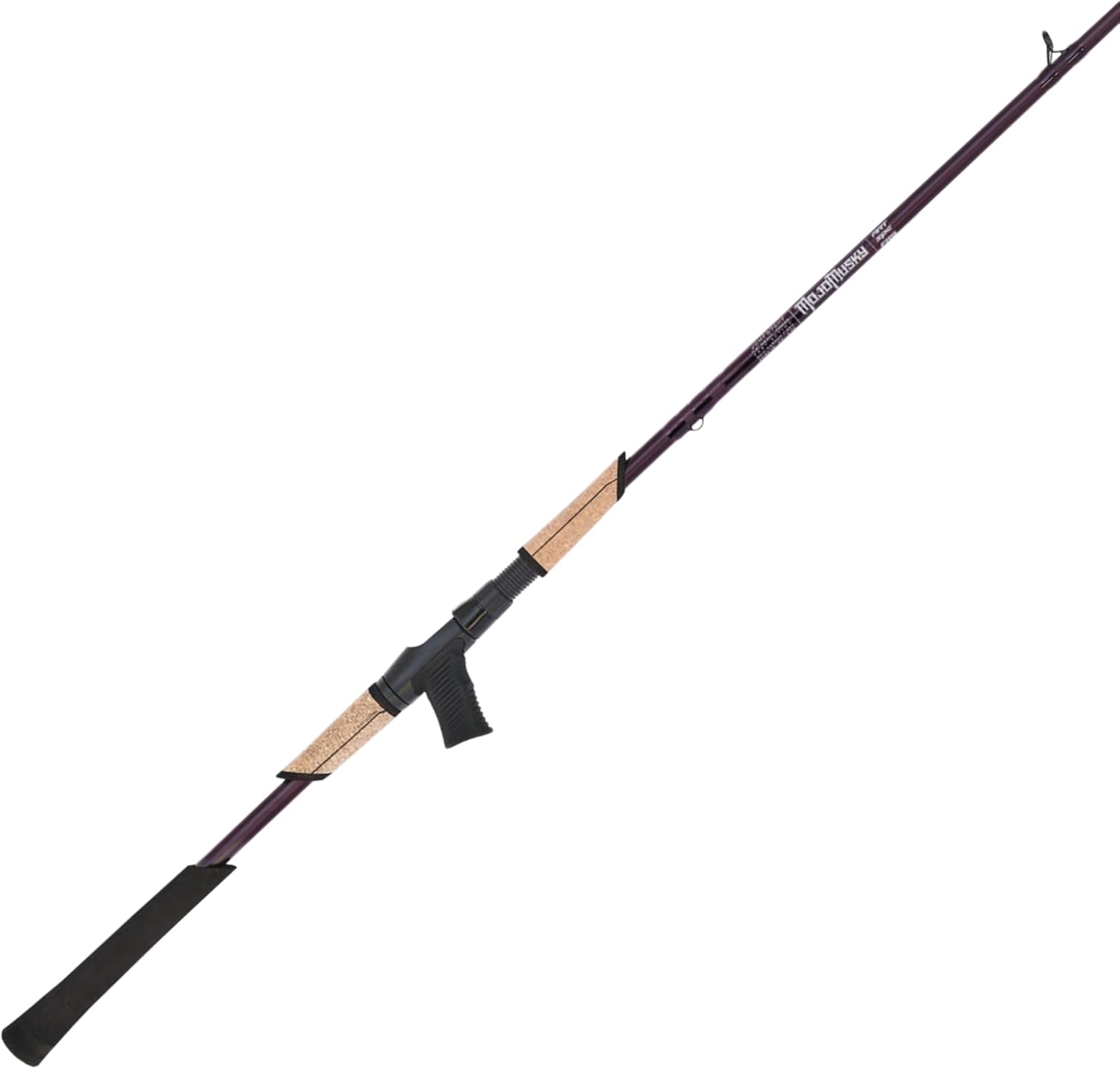
The St. Croix Mojo Musky is the rod most serious Upper Midwest musky anglers settle on. St. Croix’s Wisconsin roots mean the company understands musky fishing — they’re not adapting bass rod designs for the species. The Mojo Musky line covers multiple length and power options designed specifically for musky applications: 8’6″ Heavy for general bucktail and standard lure use, 8’6″ Extra-Heavy for big Bull Dawgs and heavy jigs, 9′ Heavy for casting distance and shore-based applications. The graphite composite blank provides enough sensitivity to feel a Bull Dawg breathing and enough backbone to set hooks into a 40-inch musky’s bony mouth. The 8’6″ Heavy is the recommended starter rod — the most versatile across musky techniques. Pair with a quality baitcaster rated for 65-80lb braid. Priced in the $230-280 range depending on configuration, the Mojo Musky represents the value entry-point for serious musky gear. St. Croix’s premium tiers (Premier Musky, Legend) offer refinements but the Mojo handles trophy fish without compromise.
Musky Rods by Technique
| Technique | Length | Power | Action |
|---|---|---|---|
| Standard Bucktails (1-2 oz) | 8’6″ | Heavy | Moderate-Fast |
| Big Bucktails (3-4 oz) | 8’6″-9′ | Heavy to Extra-Heavy | Moderate-Fast |
| Bull Dawgs (4-6 oz) | 8’6″-9′ | Extra-Heavy | Moderate |
| Jerkbaits | 8′-8’6″ | Heavy | Moderate-Fast |
| Topwater (large) | 8’6″ | Heavy | Moderate-Fast |
| Live Suckers (Fall) | 9’+ | Extra-Heavy | Moderate |
| Trolling | 8’6″-9’6″ | Heavy | Moderate |
Pairing Rod to Reel
Musky reels are heavy-duty conventional or large baitcaster. The spinning vs conventional guide explains the principles — for musky, conventional reels win because they handle the heavy lure weights and big fish drags more effectively than spinning. Recommended pairings:
- St. Croix Mojo Musky 8’6″ Heavy + heavy baitcaster (Shimano Tranx 400 or similar) — the standard musky combo
- St. Croix Mojo Musky 9′ Extra-Heavy + Shimano Tranx 500 — heavy Bull Dawg / live sucker setup
- St. Croix Mojo Musky 8′ Heavy + Daiwa Lexa 400 — alternative quality combo
- Trolling musky rod + line counter reel — see the salmon trolling reels guide for line counter options that work for musky trolling
The SoCal rod and reel combo guide covers balance principles that apply to musky setups — the rod and reel should feel like they belong together, not mismatched in weight or capacity.
Line and Leader Setup
Musky demands the heaviest freshwater line setup of any common application:
Mainline: 65-100lb braid (PowerPro, J-Braid). Lighter than 65lb risks break-offs; heavier than 100lb adds weight without meaningful benefit. The braid vs mono guide explains why braid dominates for musky — no stretch for hook penetration, low diameter for casting distance with heavy lures.
Leader: 90-130lb wire leader, 18 inches long. Non-negotiable for musky. American Fishing Wire 90lb or Malin 90lb are the standards. Connect with an Albright knot or modified Albright (see the best fishing knots guide).
Reel capacity: 200-300 yards of 80lb braid. Musky don’t typically make long runs, but enough capacity matters for the occasional explosive run into structure.
For full line selection guidance, the best fishing line by pound test guide covers the saltwater equivalent line classes that apply here.
Common Mistakes
Using a heavy bass rod for musky. Bass rods top out at “Heavy” power rated for 2 oz lures. Musky lures start at 4 oz. The bass rod can’t load properly with the heavier lure, leading to fatigue and poor casts. Get a purpose-built musky rod.
Wrong action for the lure. Fast-action rods don’t load properly with heavy musky lures. Moderate-Fast is the standard; slower actions for the heaviest lures.
Underpowered for trophy musky. A Heavy power rod handles average musky. Trophy targeting (45+ inch fish) benefits from Extra-Heavy power. The extra backbone matters during the fight, not just the cast.
Spinning reel for heavy musky lures. Some anglers try to fish musky with heavy spinning gear. It works for smaller lures but breaks down with 5+ oz baits. Conventional/baitcaster setups handle heavy musky lures more efficiently.
Cheap guides on a musky rod. Heavy braid wears through cheap guides within a season. The grooves cut your line on subsequent strikes. Pay for quality guides — they last years.
Skipping the long handle. Two-handed casting is standard for musky lures. Short handles (under 12″) make all-day casting tiring and reduce control. Long handle is non-negotiable for serious musky work.
Caring for Your Musky Rod
Musky rods take more abuse than most fishing rods — heavy lures, big fish, frequent figure-eights at the boat. Routine care:
- Inspect guides after every trip — heavy braid wears them faster than mono
- Tighten loose hardware (reel seats, guides) regularly
- Rinse with fresh water after each trip, even from freshwater lakes
- Store rod vertically, not horizontally bent against a wall
- Replace tip-tops at the first sign of grooving
- Treat the EVA grip annually to prevent compression and cracking
Gear to Pair with Your Musky Rod
- Best Musky Lures — Mepps Musky Killer, Bull Dawg, big jerkbaits
- Musky Fishing Guide — techniques and presentation
- Best Water Temp for Musky
- Best Northern Pike Lures — pike rods cross over to musky in some applications
- Best Fishing Knots — FG and Albright knots
- Best Fishing Line by Pound Test
- Braid vs Mono vs Fluorocarbon
- Graphite vs Fiberglass Rods
- Spinning vs Conventional
Frequently Asked Questions
What’s the best musky rod?
The St. Croix Mojo Musky in 8’6″ Heavy with moderate-fast action is the most-recommended overall musky rod. St. Croix’s premium lines (Premier, Legend) offer refinements but the Mojo handles trophy fish at a more accessible price point.
What length musky rod do I need?
8’6″ is the standard — long enough for casting distance, short enough for figure-eight control. Step up to 9′ for distance casting or shore-based fishing. Step down to 8′ for tight quarters or specific techniques. Avoid anything shorter than 8′ for general musky work.
What action for musky rods?
Moderate-Fast action. The rod needs to load through the upper third when casting heavy lures and absorb the strike of a big musky. Fast-action rods don’t load properly with 4+ oz lures; slow actions lack backbone for hookset.
What power for musky rods?
Heavy power for general musky work (rated 1-6 oz lures). Extra-Heavy for big Bull Dawgs, live suckers, or trophy targeting (rated 2-8 oz lures). Most anglers start with Heavy and add Extra-Heavy later for specific applications.
Spinning or baitcaster for musky?
Baitcaster (conventional). Heavy musky lures are too much for typical spinning reels. The spinning vs conventional guide covers the principles. Specialized heavy spinning reels work for smaller musky lures but baitcasters are the standard.
Can I use a musky rod for pike?
Yes — a Heavy musky rod handles big pike easily. Most musky rods are slightly overkill for typical pike (which are smaller and lighter biters), but a single rod that handles both species is a reasonable choice. The pike lures guide covers the application crossover.
Plan Your Trip
- SST Charts
- Chlorophyll Maps
- Fleet Tracker
- Marine Weather
- AI Fishing Predictions
- Wisconsin Fishing Season Calendar
- Upper Midwest Fishing Trips
Related Guides
- Best Water Temp for Musky
- Best Musky Lures
- Musky Fishing Guide
- Best Northern Pike Lures
- Best Walleye Rods
- Best Walleye Jigs
- Graphite vs Fiberglass Rods
- Spinning vs Conventional
- Best Fishing Knots
- Best Fishing Line by Pound Test
- Braid vs Mono vs Fluorocarbon
- Best Salmon Trolling Rods
- Best Rod & Reel Combos (SoCal)
- Wisconsin Fishing Season Calendar
- Lake of the Woods Fishing Guide
Tight lines!
Affiliate Disclosure: As an Amazon Associate, fishing-reports.ai earns from qualifying purchases. Links to Amazon on this page are affiliate links — if you click and buy, we may earn a small commission at no extra cost to you.