Musky lures are different from any other freshwater fishing lures. The size scale alone separates them — where a “large” walleye crankbait runs 3 inches, a “small” musky lure starts at 8 inches and the big ones push 14 inches or more. The weight pushes 4-8 ounces. The hooks are 5/0 to 8/0 trebles, not the #2 or #4 hooks of walleye fishing. These aren’t lures you cast lightly — they’re heavy artillery designed for fish that will follow them and either commit explosively or refuse with a flick of the tail.
This guide covers the three musky lure categories that consistently produce — bucktails, soft plastic gliders, and jerkbaits — and the specific products in each. Pair this with the musky temperature guide for seasonal context and the musky fishing guide for presentation technique. Note: musky require heavy gear and wire leaders are mandatory — see the wire leader section below.
⚡ Quick Picks by Situation
Best bucktail: Mepps Musky Killer — the bucktail standard.
Best soft plastic / glider: Bull Dawg Musky Lure — the iconic musky soft bait.
Best jerkbait: Delong Lures 8″ Jerkbait — large soft plastic jerkbait.
Wire leader (required): American Fishing Wire 90lb — minimum spec for musky.
Heavy wire alternative: Malin 90lb wire leader — premium option.
Bucktails (Standard Musky Lure)
Bucktails are the most-used musky lure category. The spinning blade creates flash and vibration; the bucktail hair (or synthetic fiber substitute) creates volume and movement. Cast and steady retrieve produces the strikes.
Mepps Musky Killer Bucktail
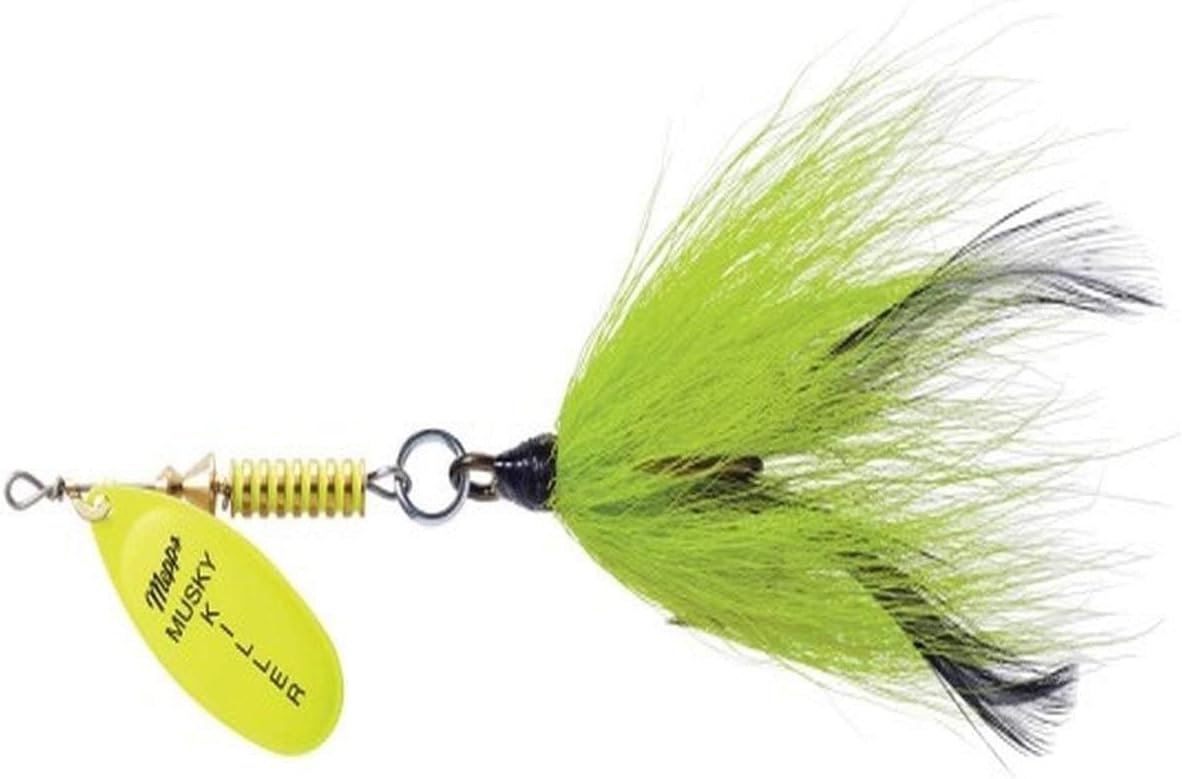
The Mepps Musky Killer is the bucktail standard. The 1 oz size is the workhorse for most musky situations — enough mass to cast a long distance, enough blade size to attract from longer distances, but not so heavy that you can’t fish it all day. Mepps’ blade designs are the most refined in the bucktail category, producing maximum flash with minimum retrieve speed. Color selection is intentionally simple compared to walleye lures — black, white, chartreuse, and orange cover most musky conditions. Replace the factory hook with a premium 5/0 treble for trophy targeting (the factory hook is functional but not exceptional). Best applications: weed edges in 5-15 feet of water, points and breaks in early summer, fall feeding patterns. The Mepps brand also crosses over to pike fishing — the Mepps Aglia in size #5 covers smaller pike applications.
Soft Plastic Musky Baits
Soft plastics dominate modern musky fishing. The realistic profile and natural action produce strikes when bucktails and jerkbaits don’t. The category includes gliders, swimbaits, and creature-style lures.
Bull Dawg Musky Lure
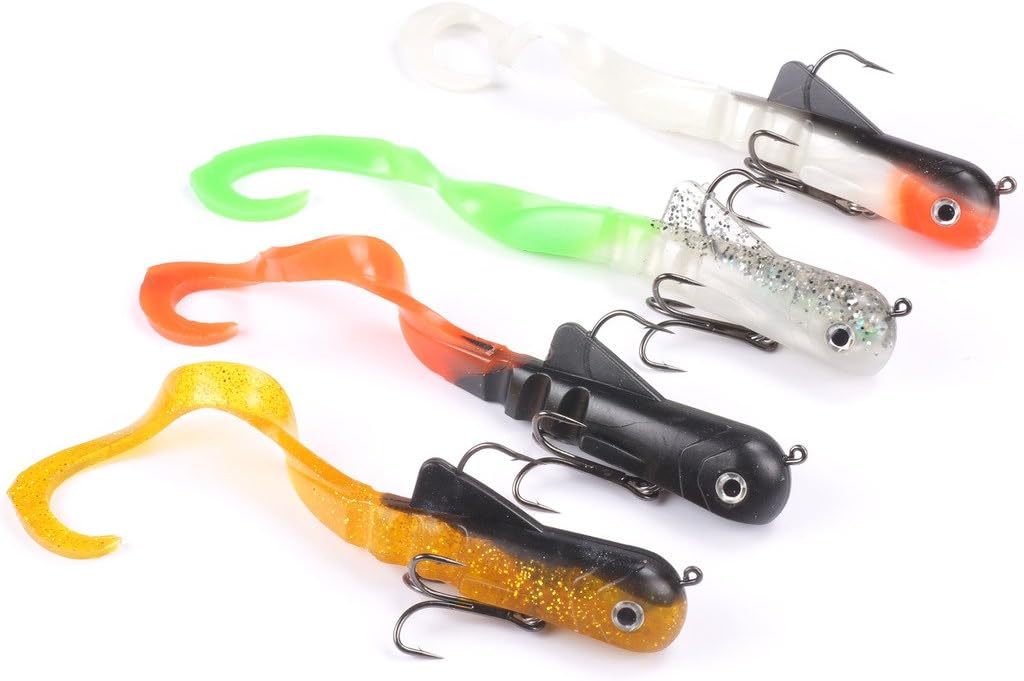
The Bull Dawg is the iconic musky soft plastic. The 8-inch profile, the weighted head, and the distinctive paddle-tail action have produced trophy musky for decades. The Bull Dawg can be fished at multiple depths — pause for sink rate, retrieve speed for swimming depth. Cast it across weed edges in summer; work it slower in fall as fish become more deliberate. The Bull Dawg requires heavy gear — minimum 80lb braid with 100lb wire leader. The hook is built into the bait, so no rigging required out of the package. Black, brown, and natural colors produce in clear water; orange and chartreuse for stained conditions. The Magnum Bull Dawg (10-12″) targets the biggest musky.
Delong Lures 8″ Jerkbait
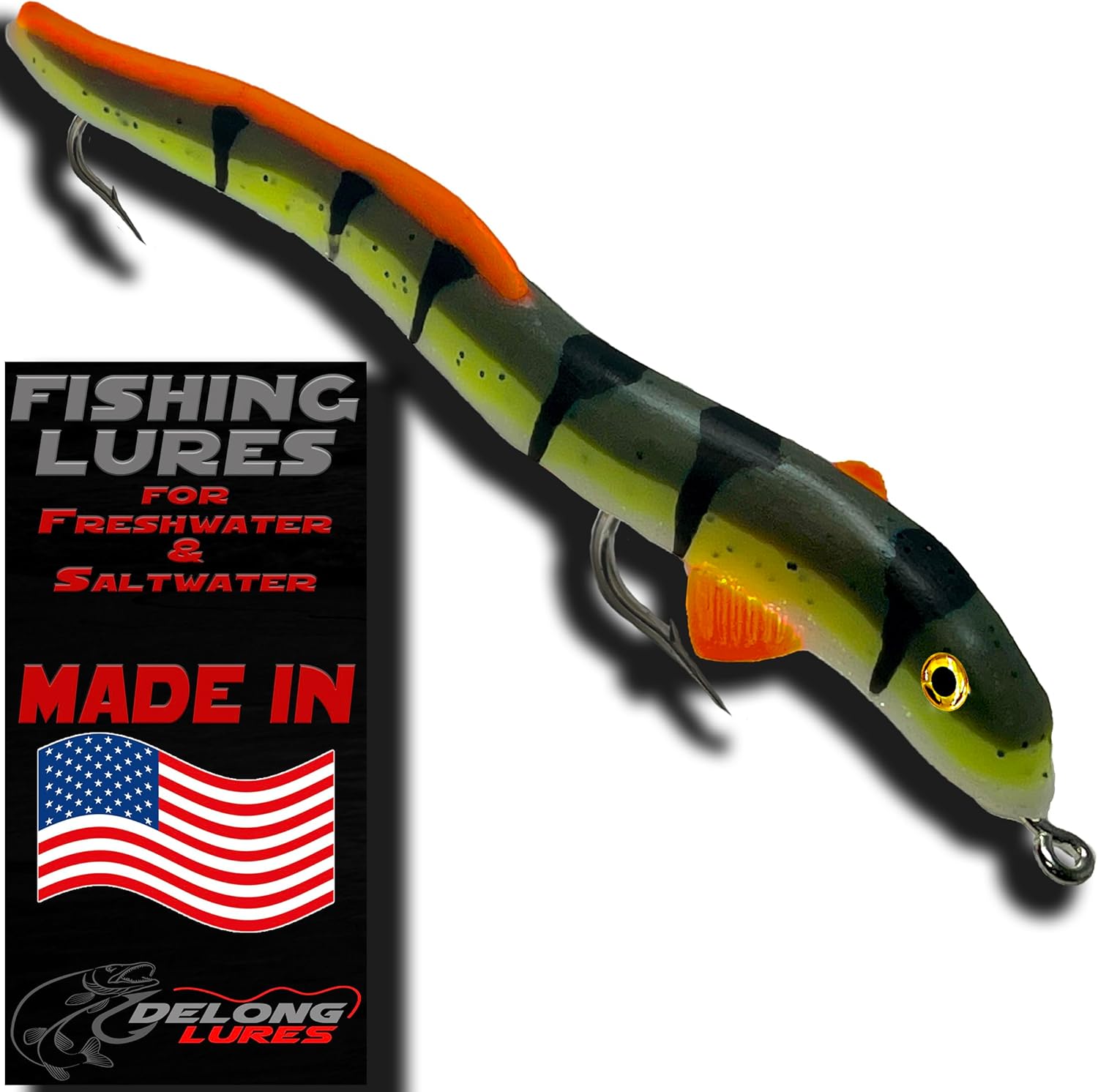
The Delong 8″ Jerkbait is the soft plastic alternative to traditional hard jerkbaits like the Suick. The soft material allows fish to hold the bait longer before committing to a strike, which means more hookups on follows. The jerkbait action — sharp twitches followed by pauses — triggers reaction strikes from neutral musky. Particularly effective in late summer when fish have been pressured and won’t commit to bucktails. The 8″ size matches typical musky forage. Pair with heavy spinning or musky-specific casting tackle. Best paired with 80-100lb braid and a wire leader connection — see the wire leader section below.
Wire Leaders (Mandatory for Musky)
Musky teeth cut mono and braid easily. A wire leader is not optional. Two standards:
American Fishing Wire 90lb

American Fishing Wire is the most-used wire leader brand in the Upper Midwest musky community. The 90lb single-strand wire handles musky’s bite easily. 18-inch leaders are the standard length — long enough to keep the line away from musky teeth, short enough not to interfere with lure action. Connect via Albright knot or modified Albright (covered in the best fishing knots guide). Replace leaders after every hook-up — wire develops kinks that weaken with use.
Malin Wire Leader 90lb

Malin is the premium wire leader alternative. Slightly stiffer wire, slightly more durable against kinking. Worth the price difference for anglers fishing musky consistently or targeting trophy fish. Same 18-inch standard length applies.
Specialty Musky Lures
Beyond the three main categories, several specialty lures earn their place in serious musky tackle boxes:
Topwater plugs. Bucktails dominate, but topwater lures produce some of the year’s most exciting strikes. Walk-the-dog plugs like the Pacemaker and large prop baits like the Topraider create commotion that attracts musky from long distances.
Crankbaits (deep diving). Less common than bucktails but useful for deep summer musky. The Rapala X-Rap Magnum covers some of this category for walleye-targeting that crosses into musky territory.
Live suckers. The fall sucker pattern produces the biggest musky of the year. 14-inch suckers rigged on quick-strike rigs produce 50+ inch fish. The setup is more complex than artificial lures but the results justify the effort for trophy hunting.
Topwater frogs. Some musky anglers swear by large soft plastic frogs in heavy weed cover. The Storm WildEye Live Series in larger sizes can serve this role, though smaller versions are more common for walleye (covered in the walleye jigs guide).
Musky Hooks
Musky lures use larger hooks than any other freshwater application. Most ship with adequate factory hooks, but trophy musky targeting often calls for replacement:
- Bucktail trebles: 5/0 standard, 6/0 for trophy targeting
- Soft plastic single hooks: 8/0 internal hooks on Bull Dawgs and similar
- Jerkbait hooks: Built into the bait, typically 6/0-8/0 doubles
- Quick-strike rigs (for live suckers): 5/0-8/0 single hooks with specialized leader configurations
Premium hook brands like Owner and Gamakatsu produce specifically for musky applications. The Mustad 7691S 9/0 stainless steel hooks (covered in the saltwater hooks by species guide) cross over to musky use for trophy work.
Color Selection for Musky
| Conditions | Best Colors | Why |
|---|---|---|
| Clear water, bright sun | Natural perch, sucker, black | Mimics forage, less aggressive |
| Stained water | Black/orange, chartreuse, fire tiger | High visibility through turbidity |
| Low light / overcast | Black, dark patterns, glow | Silhouette matters most |
| Fall (cold water) | White, silver, natural | Cold water musky respond to subtle patterns |
| Trophy targeting | Larger profiles, contrasting colors | Big fish want bigger, more contrast |
Lure Size by Season
| Season | Water Temp | Lure Size |
|---|---|---|
| Spring (post-spawn) | 55-65°F | 8″ smaller bucktails and jerkbaits |
| Early summer | 65-72°F | 9-10″ Bull Dawgs and standard bucktails |
| Peak summer | 72-80°F | 10-12″ larger profiles, big bucktails |
| Fall trophy window | 50-65°F | 12-14″ magnum baits, live suckers |
| Late fall | 40-50°F | 14″+ live suckers on quick-strike rigs |
The Boatside Strike (Figure-Eight)
Musky’s most distinctive behavior is following lures to the boat without striking. This is where the figure-eight technique becomes critical. When a musky follows your lure, don’t lift it out of the water at the boat — instead, run the lure in a figure-eight pattern at the side of the boat, varying speed and depth. This often triggers the follower to commit. Every serious musky angler ends every retrieve with a figure-eight at the boat. Many of the biggest musky of the year are caught on figure-eights, not on the cast itself.
Line and Setup for Musky
Musky fishing demands heavy line. Recommended setup:
Mainline: 65-100lb braid (PowerPro, J-Braid). Lighter than 65lb risks break-offs on big fish or hard structure. Heavier than 100lb adds weight without much benefit.
Leader: 90-130lb wire leader, 18 inches long. American Fishing Wire or Malin standard. Connect via Albright knot or knotless connection.
Knots: Strong connections are critical. See the best fishing knots guide for the connections — the FG knot for braid-to-leader and the Albright for braid-to-wire are the standards.
For background on heavier line considerations, the saltwater best fishing line by pound test and braid vs mono guides apply many of the same principles at scale.
Common Mistakes
Skipping the wire leader. The single most common mistake. Musky teeth cut mono and braid in one strike. Without a wire leader, you’re fishing on borrowed time. Always use 90lb+ wire.
Lures too small. A “big” bass lure is small for musky. The minimum effective musky lure is 8 inches; the sweet spot is 9-12 inches. Scale up from what feels comfortable.
Skipping the figure-eight. Many anglers cast and retrieve to the boat, then lift the lure out. They miss every following musky. The figure-eight at boatside takes 10 seconds and produces trophy fish.
Wrong line for the lure size. 30lb braid won’t cast 4-ounce Bull Dawgs effectively or land a 40-inch fish on heavy weed structure. Match line to lure weight and target species. 65-80lb minimum.
Fishing in water too warm. When water temperatures exceed 80°F, catch-and-release mortality increases significantly. Many ethical musky anglers stop fishing in extreme heat. See the musky temperature guide for the conservation considerations.
Replacing factory hooks too rarely. Musky pull harder than any other freshwater predator. Inspect treble hooks after every fish — bent hooks lose subsequent strikes. Replace as needed.
Gear to Pair with Your Musky Lures
- Best Musky Rods — heavy power, 8’+ length
- Musky Fishing Guide — techniques and locations
- Best Northern Pike Lures — pike crossover
- Best Water Temp for Musky
- Best Fishing Knots — FG and Albright knots for wire connections
- Best Fishing Line by Pound Test
- Braid vs Mono vs Fluorocarbon
- Best Hooks by Species (SoCal cross-ref)
Frequently Asked Questions
What’s the best musky lure?
For bucktails, the Mepps Musky Killer. For soft plastics, the Bull Dawg. For jerkbaits, the Delong 8″ Jerkbait. Most serious musky anglers carry all three categories.
What size lure for musky?
Minimum 8 inches. The sweet spot is 9-12 inches. Trophy targeting uses 12-14 inch lures or live suckers. Smaller lures catch smaller musky and miss the big ones.
Do I need a wire leader for musky?
Yes — absolutely required. Musky teeth cut mono and braid in one strike. Use 90lb+ American Fishing Wire or Malin wire leaders, 18 inches long. No exceptions.
What line should I use for musky?
65-100lb braid mainline (PowerPro, J-Braid, etc.) connected to a 90-130lb wire leader. Lighter line risks break-offs; heavier doesn’t add meaningful benefit. The fishing line guide covers braid selection.
What’s the best time to fish for musky?
Two windows: late spring through early summer (water 60-72°F, active feeding), and fall (water 50-65°F, trophy season). Peak summer is harder fishing — see the musky temperature guide for the conservation considerations.
What’s a figure-eight and why do I need it?
The figure-eight is a boatside maneuver where you run your lure in a figure-eight pattern at the side of the boat to trigger following musky to strike. Many trophy musky are caught on figure-eights, not on the cast. Every musky retrieve should end with one.
Plan Your Trip
- SST Charts
- Chlorophyll Maps
- Fleet Tracker
- Marine Weather
- AI Fishing Predictions
- Wisconsin Fishing Season Calendar
- Upper Midwest Fishing Trips
Related Guides
- Best Water Temp for Musky
- Best Water Temp for Northern Pike
- Best Musky Rods
- Musky Fishing Guide
- Best Northern Pike Lures
- Best Walleye Jigs
- Best Walleye Rods
- Best Fishing Knots
- Best Fishing Line by Pound Test
- Braid vs Mono vs Fluorocarbon
- Best Hooks by Species
- Minnesota Fishing Season Calendar
- Wisconsin Fishing Season Calendar
- Lake of the Woods Fishing Guide
- Mille Lacs Fishing Guide
Tight lines!
Affiliate Disclosure: As an Amazon Associate, fishing-reports.ai earns from qualifying purchases. Links to Amazon on this page are affiliate links — if you click and buy, we may earn a small commission at no extra cost to you.