Ice fishing rods exist on a different scale than open-water rods. Where a walleye spinning rod runs 6’8″ to 7′, an ice fishing rod runs 24″ to 36″. Where a saltwater rod’s blank tapers across multiple feet of action, an ice rod’s blank is doing all its work in 24 inches of length. The compressed scale demands purpose-built design — ice rods aren’t just shortened versions of summer rods, they’re a distinct category with their own engineering.
This guide covers what makes a good ice rod, the species-matched lengths and powers, and the specific rods that consistently produce. For background on rod construction, the graphite vs fiberglass guide applies to ice rods just as it does saltwater rods — though ice rods lean heavily toward graphite for the sensitivity required to detect light winter bites.
⚡ Quick Picks by Situation
Best all-around walleye/pike: St. Croix Mojo Ice 34″ Medium-Heavy — the workhorse ice rod.
Best premium specialty: TUCR Bullwhip — custom Tuned Up Custom Rods build.
Best for panfish: Light or ultralight 28″ rod with extra-fast tip — sensitivity matters most.
Best for pike on tip-down: Heavy power 36″+ rod — needs backbone for big fish.
Pair with: Best Ice Fishing Reels and specialty ice line.
What Makes a Good Ice Rod
Ice rods have their own specification set:
Length: 24″ to 36″. The short length is for working over a hole without flexing the rod against the ice edge. Panfish rods run shorter (24-28″); walleye rods medium (28-32″); pike and lake trout rods longer (34-40″). Length affects leverage during the fight more than casting (you’re not casting under ice).
Action: Fast to Extra-Fast. Ice fishing demands sensitivity for the light bites typical of winter feeding. Fast-action rods (bending in the top third) transmit subtle taps; extra-fast (top quarter) provides maximum bite detection at the cost of some hookset cushion.
Power: Ultralight to Heavy. Match power to target species. Panfish: ultralight or light. Walleye/perch: light to medium. Pike/lake trout: medium-heavy to heavy.
Material: Graphite or graphite composite. Pure graphite for maximum sensitivity. Composite blends add durability at the cost of some sensitivity. The graphite vs fiberglass guide covers the trade-offs — for ice fishing where bite detection is critical, graphite wins.
Guides: Premium aluminum oxide or titanium. Cold weather doesn’t matter to guide material but line freezes can — guides with smooth interior surfaces handle ice buildup better than rough guides.
Handle: Cork or EVA, short. The handle on an ice rod is much shorter than a summer rod — usually 5-8 inches. Tucked under your arm or held in one hand while jigging with the other.
The Workhorse Ice Rod
St. Croix Mojo Ice 34″ Medium-Heavy

The St. Croix Mojo Ice in 34″ Medium-Heavy is the workhorse ice rod for walleye and pike anglers in the Upper Midwest. St. Croix’s Wisconsin manufacturing tradition extends to their ice rods — these aren’t summer rods cut short, they’re purpose-designed for ice fishing conditions. The Medium-Heavy power handles 1/8 to 1/2 oz jigs and spoons, 8-15 lb line, and walleye through the 8-pound class without compromise. The 34″ length gives leverage for fighting bigger fish while remaining short enough for hole-fishing comfort. The blank’s extra-fast action transmits the subtle weight changes that walleye bites produce in cold water — a critical advantage when fish are sluggish. Best paired with a quality inline reel or small spinning reel. For panfish-focused fishing, the same Mojo Ice family offers lighter power options (Light, Ultralight) in shorter lengths (28″, 24″) — same blank quality, smaller scale. St. Croix’s transferable warranty extends to ice rods — worth knowing for a category where blanks occasionally break against ice edges.
Premium Specialty Builds
Tuned Up Custom Rods (TUCR) Bullwhip
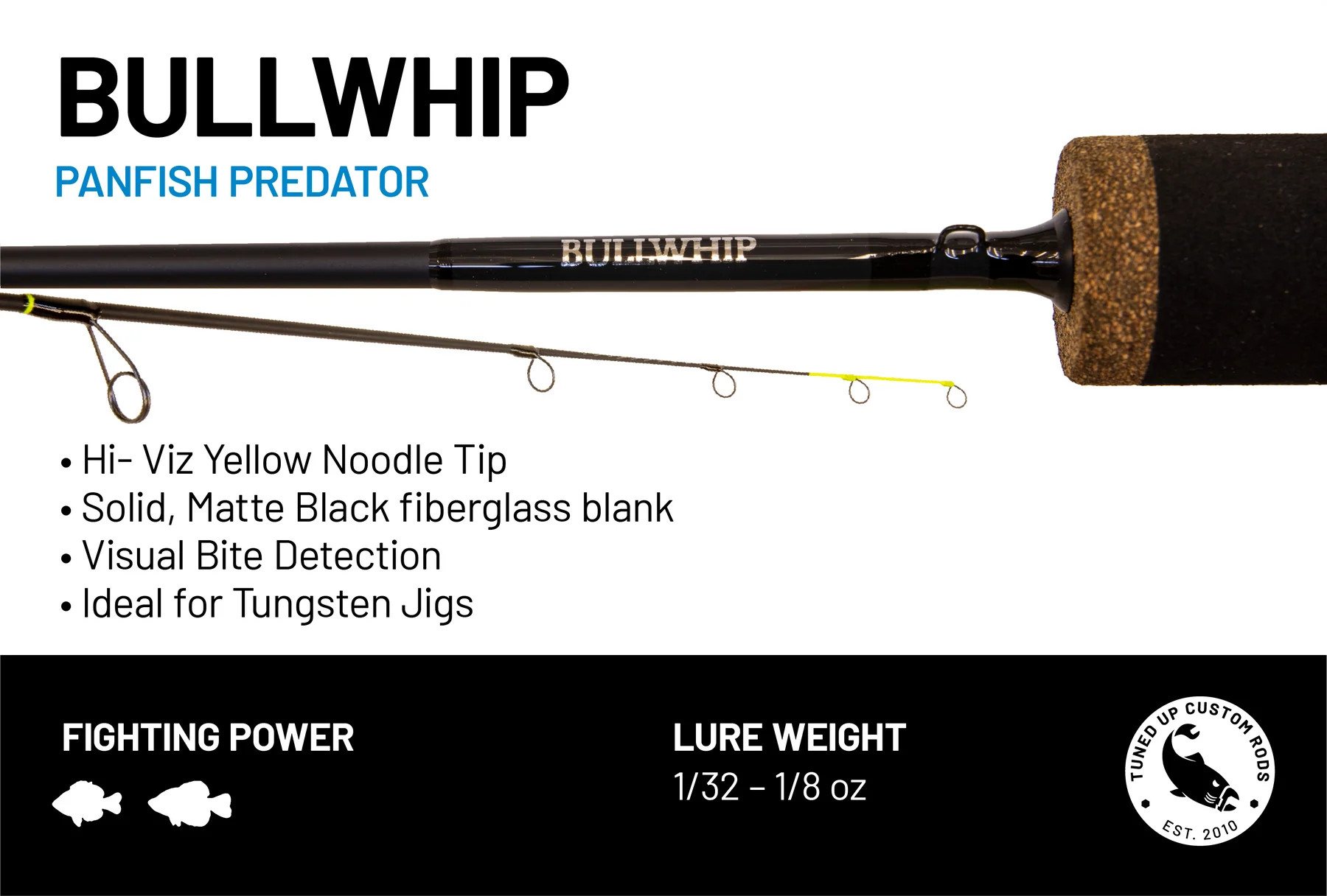
Tuned Up Custom Rods (TUCR) is the Minnesota-based custom ice rod builder that has earned a serious following among Upper Midwest ice fishing specialists. The Bullwhip is one of their signature builds — a 32-36″ rod with refined action and components that step beyond what production rods offer. TUCR builds each rod custom to the angler’s specifications: length, action, power, handle configuration, guide selection. The result is a rod precisely tuned to your fishing style. The trade-off: longer lead time (typically several weeks) and significantly higher cost ($250-400 depending on configuration) than mass-produced rods. For anglers who fish 30+ days per year and want premium gear, TUCR Bullwhips justify the cost. For occasional ice anglers, the St. Croix Mojo Ice covers the same ground at lower cost. TUCR also builds rods for walleye-specific applications, panfish, and pike — if the Bullwhip isn’t quite right, browse their full lineup.
Ice Rod Selection by Species
| Species | Length | Power | Action |
|---|---|---|---|
| Bluegill, Crappie | 24-28″ | Ultralight | Extra-Fast |
| Yellow Perch | 26-30″ | Light | Extra-Fast |
| Walleye (general) | 28-34″ | Medium-Light to Medium | Fast to Extra-Fast |
| Walleye (large/trophy) | 32-36″ | Medium | Fast |
| Pike (jigging) | 34-40″ | Medium-Heavy to Heavy | Fast |
| Lake Trout | 32-36″ | Medium-Heavy | Fast |
| Deadstick (any species) | 24-28″ | Light or Medium-Light | Slow (visible tip) |
Inline Reels vs Spinning
The rod is half the equation; the reel determines what line management options you have. Two reel categories:
Inline reels — designed specifically for ice fishing. The line spools straight off the front without the rotation that twists line on spinning reels. Inline reels are the modern serious-angler standard. See the ice fishing reels guide.
Small spinning reels — work well for general ice fishing. Less expensive than inline reels. Line twist becomes a problem over multiple fishing days as the spool rotation twists the line. Manageable but a known limitation.
The spinning vs conventional guide covers the underlying principles. For ice fishing, the choice is between inline (purpose-built) and spinning (general-purpose at lower cost).
Common Mistakes
Buying summer rods cut down. Some anglers cut down old summer rods to use as ice rods. Sometimes it works; usually the action doesn’t translate properly. Purpose-built ice rods are tuned for the species, length, and conditions of ice fishing.
Wrong action for the technique. Slow-action rods are for deadstick presentations where the rod tip flexes to show bites. Fast-action rods are for active jigging where you need bite detection through your hand. Match action to technique.
Underpowered for trophy fish. A light-action panfish rod can’t land a 10-pound walleye through an 8-inch hole. Match power to the largest fish you might hook.
Skipping the warranty consideration. Ice rods break occasionally — flexing against ice edges, being stepped on in the shelter, getting slammed in the truck door. St. Croix and similar manufacturers offer transferable warranties that pay back across many seasons.
Using non-ice line on ice rods. Cold stiffens standard mono and braid. Use ice-specific line — see the ice line guide.
Wrong rod length for the shelter. A 36″ rod is awkward in some flip-over shelters. Test the rod in the space you’ll actually fish before committing. Some anglers use shorter rods inside shelters and longer rods outside.
Gear to Pair with Your Ice Rod
- Best Ice Fishing Reels
- Best Ice Fishing Jigs
- Best Ice Fishing Line
- Best Ice Augers
- Best Ice Fishing Flashers
- Best Tip-Ups
- Ice Fishing Guide
- Ice Fishing Safety Guide
Frequently Asked Questions
What’s the best ice fishing rod?
The St. Croix Mojo Ice in 34″ Medium-Heavy is the most-recommended walleye/pike ice rod. The TUCR Bullwhip is the premium custom option. For panfish, lighter and shorter (28″ Light) Mojo Ice rods.
How long should an ice fishing rod be?
24-28″ for panfish, 28-34″ for walleye, 34-40″ for pike. Shorter rods give better hole work; longer rods give more leverage during the fight. Match length to species and fishing style.
What action for ice fishing?
Fast to extra-fast action for active jigging — maximum bite sensitivity. Slow (moderate) action for deadstick presentations where you want a visible tip flex on bites.
Can I use a summer rod for ice fishing?
Possible but suboptimal. Summer rods are 6+ feet long, awkward in a fishing hole. The action is calibrated for open-water casting, not vertical ice fishing. Purpose-built ice rods perform significantly better.
Should I cut down an old summer rod?
Not recommended. Cutting changes the action in unpredictable ways — usually making it stiffer and less sensitive than intended. Buy a purpose-built ice rod instead.
Are custom ice rods worth the price?
For serious ice anglers (30+ days/year), yes — custom rods like the TUCR Bullwhip are tuned precisely to your preferences. For casual anglers, the St. Croix Mojo Ice covers the same use cases at lower cost.
Plan Your Trip
- SST Charts
- Fleet Tracker
- Marine Weather
- AI Fishing Predictions
- Minnesota Fishing Season Calendar
- Wisconsin Fishing Season Calendar
- Upper Midwest Fishing Trips
Related Guides
- Ice Fishing Guide
- Ice Fishing Safety Guide
- Best Ice Augers
- Best Ice Fishing Flashers
- Best Ice Fishing Reels
- Best Ice Shelters
- Best Tip-Ups
- Best Ice Fishing Jigs
- Best Ice Fishing Line
- Best Walleye Rods (Open Water)
- Graphite vs Fiberglass Rods
- Spinning vs Conventional Reels
- Ice Fishing for Walleye
- Ice Fishing for Pike
- Lake of the Woods Ice Fishing
Tight lines!
Affiliate Disclosure: As an Amazon Associate, fishing-reports.ai earns from qualifying purchases. Links to Amazon on this page are affiliate links — if you click and buy, we may earn a small commission at no extra cost to you.