Tip-ups are the patient angler’s ice fishing tool. While active jigging demands constant attention, a tip-up sits silently over a hole with a baited rig, waiting for a fish to commit to running with the bait. The mechanism releases a flag when a fish takes — a visible signal across the ice that says “go set the hook.” Tip-ups are how Upper Midwest anglers catch the biggest pike of the year, and they’re a key part of multi-rod walleye spreads on Mille Lacs and Lake of the Woods.
This guide covers the three tip-up styles that dominate the category, how they differ, and how to choose. Most serious ice anglers eventually own multiple tip-ups — both because state regulations allow multiple lines per angler and because the patient bait-and-wait approach pairs well with active jigging from a separate hole.
⚡ Quick Picks by Situation
Best classic tip-up: Beaver Dam Original — the wood-frame standard.
Best thermal (hole-covering): HT Polar Therm — covers the hole, prevents freeze-back.
Best premium thermal: Frabill Pro-Thermal — refined design with better hardware.
For pike: Any of the above with a wire leader and 14-30 lb test line.
Start with: Two Beaver Dams or two HT Polar Therms — most states allow 2-3 lines per angler.
How a Tip-Up Works
The basic mechanism is simple: a spool of heavy line hangs below the ice surface with a baited rig (typically a treble hook with a live shiner or large minnow). The frame sits on or over the hole. A trigger holds a spring-loaded flag down against the frame. When a fish takes the bait and pulls line, the trigger releases and the flag pops up — a visible signal across the ice.
The angler watches multiple tip-ups across the lake (most states allow 2-3 lines per angler), running to set the hook when a flag deploys. This passive approach works particularly well for predator species (pike, walleye, lake trout) that take their time committing to bait. Tip-ups also let an angler cover more water than active jigging from a single hole.
The Three Tip-Up Categories
| Style | Hole Coverage | Best For |
|---|---|---|
| Classic Wood Frame | Above hole (open hole) | Traditional aesthetic, simplicity, mild weather |
| Thermal / Cover Style | Covers entire hole | Cold weather (prevents freeze-back), most modern use |
| Wind Tip-Up | Above hole | Active wind-driven jigging action |
Classic Wood Frame Tip-Ups
Beaver Dam Original
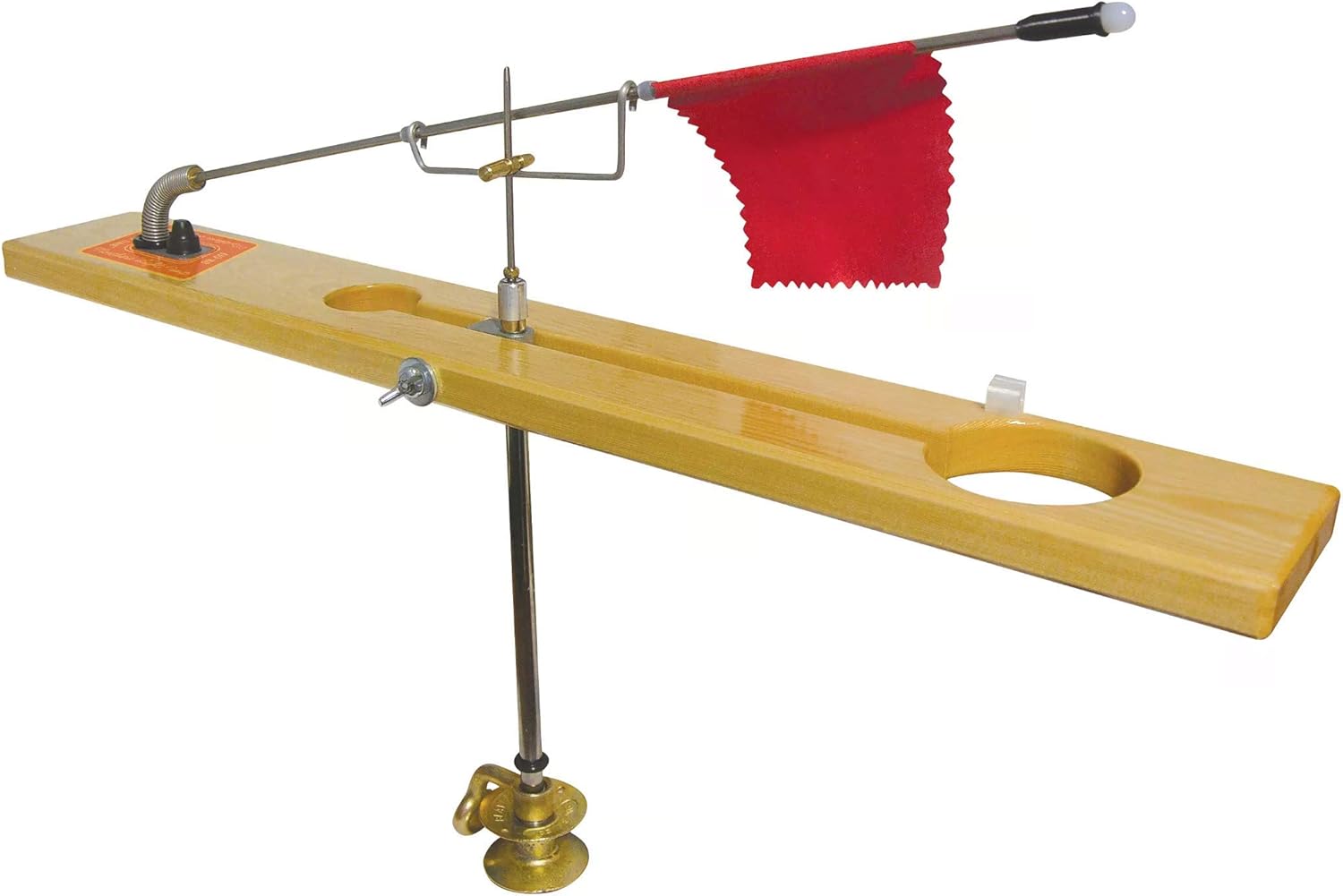
The Beaver Dam Original is the wood-frame tip-up that defined the classic style. Hand-made in Vermont since the 1940s, the Beaver Dam uses an oak frame, brass hardware, and a stainless steel spring — components that last decades with basic care. The mechanism is simple, reliable, and replaceable. Setup is straightforward: stake the frame across the hole, set the trigger with the spring-loaded flag down, drop the baited rig. Best for traditional aesthetic-minded anglers and mild-weather fishing where freeze-back of the hole isn’t the limiting factor. The Beaver Dam doesn’t cover the hole, so in extreme cold the hole will freeze around the line and need to be re-drilled. The classic appeal and lifetime durability justify the slightly higher price than modern plastic alternatives.
Thermal / Hole-Covering Tip-Ups
HT Polar Therm Tip-Up
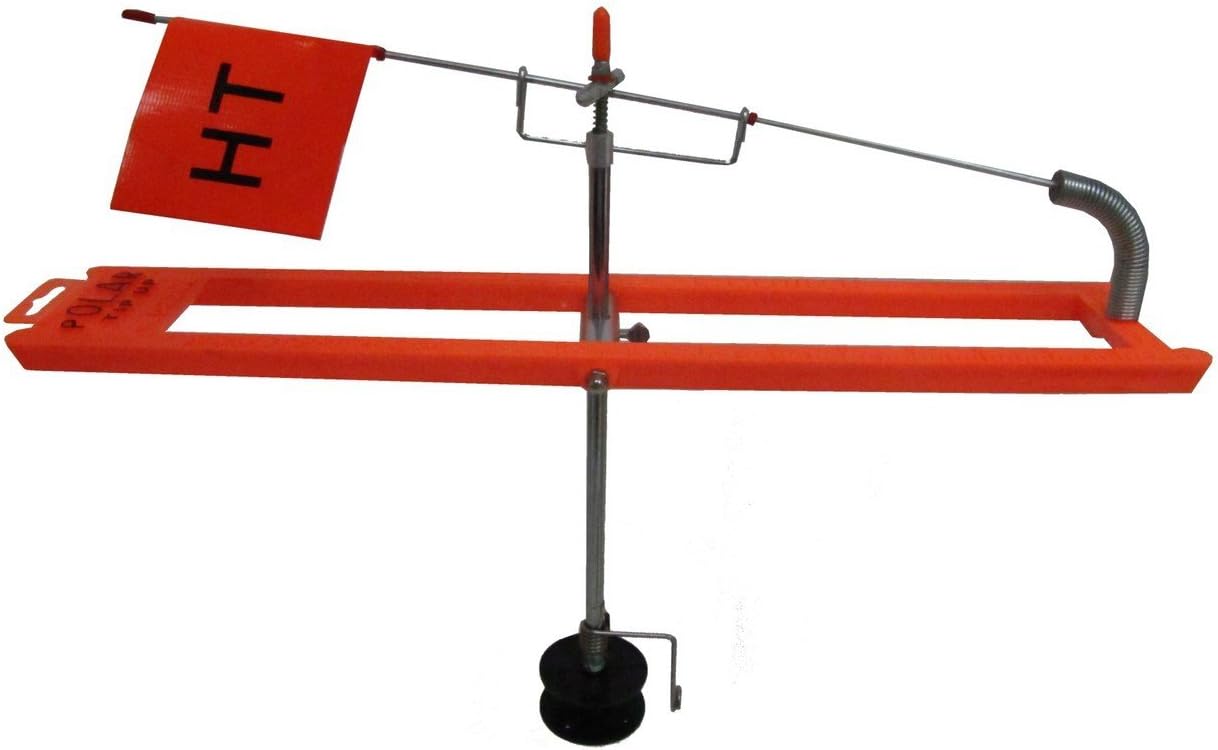
The HT Polar Therm represents the modern hole-covering thermal tip-up that has become the dominant category for serious ice anglers. The plastic frame extends across the hole, covering it completely. Insulation around the hole-covering portion prevents freeze-back even in deep cold (below 0°F). The mechanism uses the same spring-loaded flag as classic tip-ups but in a more compact frame. Best for serious cold weather fishing where freeze-back is the primary frustration with classic tip-ups. The hole stays open for hours of fishing rather than needing to be re-drilled every hour or two. Price point makes it accessible — typically half the cost of the Beaver Dam Original for a more functional modern design.
Frabill Pro-Thermal Tip-Up
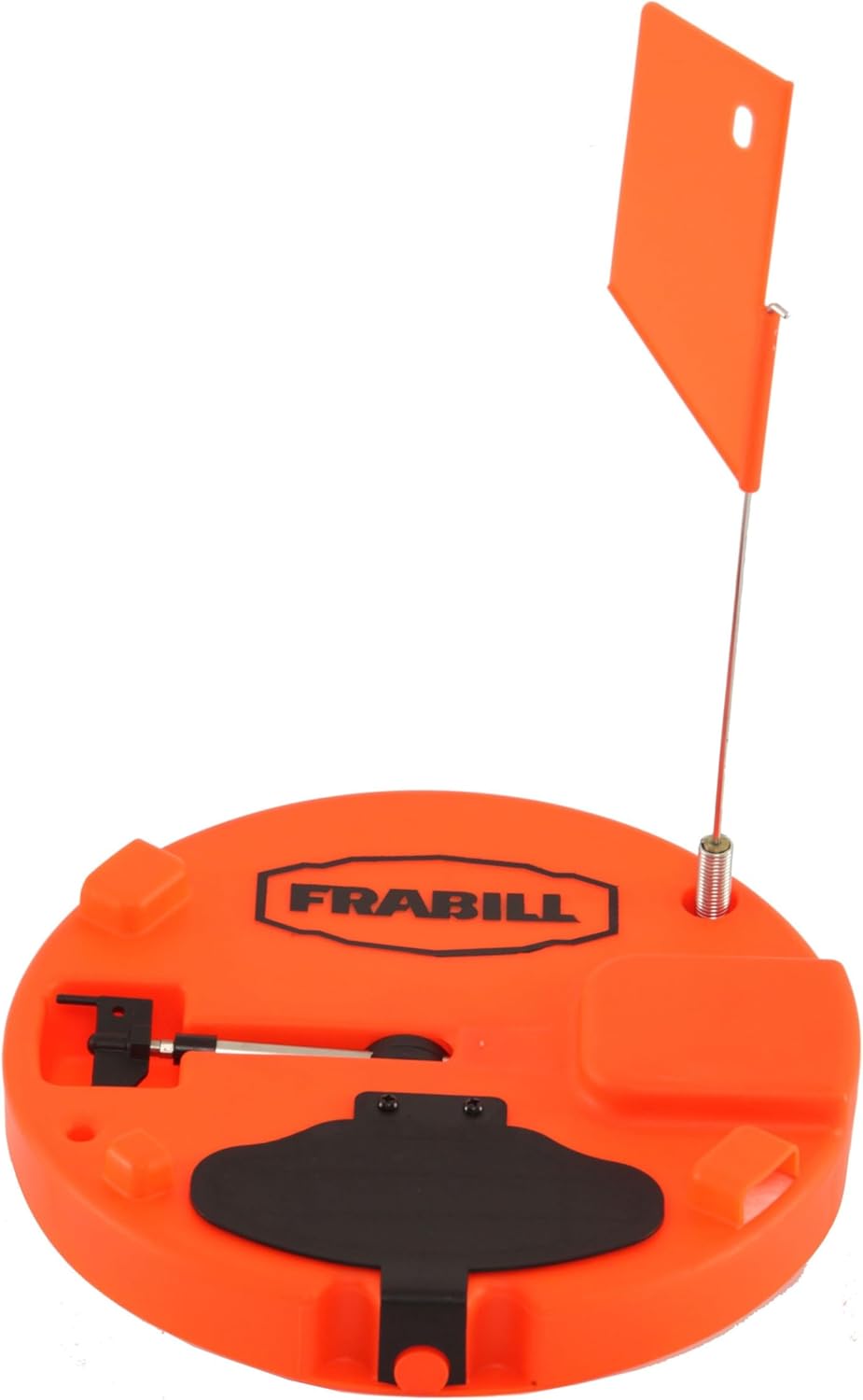
The Frabill Pro-Thermal is the premium thermal tip-up. Refined design touches separate it from the HT Polar Therm: better hardware quality (stainless steel components, improved flag spring), more durable plastic frame, and a smoother trigger mechanism that reduces false-flag deployments from wind. Frabill’s brand reputation for ice fishing accessories carries over to their tip-ups. For anglers fishing 30+ days per year or in particularly harsh conditions (Lake of the Woods, Canadian shield), the Pro-Thermal’s refinements pay back over years of use. Pair with quality tip-up line and a wire leader for pike applications.
Tip-Up Line and Rigging
Tip-up rigging differs significantly from active rod fishing:
Mainline: 30-40 lb black dacron tip-up line is the traditional standard. Dacron has minimal stretch (so you feel takes when running to the flag), maintains supple feel in cold, and is highly visible against snow when handling. Most tip-ups come pre-spooled with appropriate line.
Leader: Fluorocarbon leader (10-20 lb for walleye, 20-30 lb for pike) connecting the dacron to the bait. For pike, add a 12-18″ wire leader (90 lb single-strand) — pike teeth cut fluorocarbon. See the pike lures guide for wire leader options.
Hook setup: Treble hooks (size 6 for walleye, size 4 for pike) on a quick-strike rig. Live shiner or sucker hooked through the back, allowing it to swim naturally.
Weight: A small split shot 12-18″ above the hook keeps the bait at depth. For deep water, add additional weight as needed.
Depth setting: Use a depth weight to find bottom, then set the bait 6-18″ off bottom for walleye and pike. Higher in the water column for lake trout (which suspend).
Setting and Watching Tip-Ups
The skill of tip-up fishing:
Spread tip-ups across productive water. Don’t cluster them in one spot. Use lake structure (depth changes, points, weed edges) to position each tip-up in slightly different water.
Stay within sight of all your tip-ups. When a flag pops, you have a finite window to set the hook before the fish drops the bait. Fishing from a shelter or vehicle that has clear sight lines to all your tip-ups is important.
Set the flag tension correctly. Too tight and small fish won’t trip it. Too loose and wind triggers false flags. Adjust based on bait size and species.
Use a buddy system. Two anglers covering 4-6 tip-ups across more water than one angler can manage. Trade off who runs to which flag.
Re-bait regularly. Sluggish or dead minnows don’t trigger strikes. Cycle bait every couple of hours.
Handle the line carefully when setting the hook. When you reach the tip-up, pull line in by hand (not with the spool). When you feel weight, set the hook with a sharp pull. Then play the fish hand-over-hand back to the hole.
State Regulations
Most Upper Midwest states allow 2-3 lines per angler under the ice:
- Minnesota: 2 lines per angler standard; some special-regulation lakes allow more.
- Wisconsin: 3 lines per angler.
- Michigan: 3 lines per angler.
- Ontario: Varies by zone — check current regulations.
Always verify current regulations at the time of your trip. DNRs update rules periodically.
Common Mistakes
Not setting tension correctly. Most missed flags come from incorrect flag tension. Practice setting it before getting on the ice.
Skipping the wire leader for pike. Pike cut mono and fluoro. Always use wire when pike are possible — even when walleye are the target.
Tip-ups too close together. Don’t cluster. Spread them across productive water — different depths, different structure.
Watching from too far away. If you can’t see flags clearly, you can’t react fast enough. Stay within 100-200 yards visually.
Fishing dead bait too long. Cycle bait every couple hours. Sluggish minnows don’t draw strikes.
Setting the hook too hard. Tip-up takes can be subtle. A firm but smooth hookset works better than a violent yank that pulls the bait from the fish.
Gear to Pair with Your Tip-Ups
- Best Northern Pike Lures — for the open-water pike crossover
- Best Fishing Knots — Albright for braid-to-wire
- Best Hooks by Species
- Best Ice Augers
- Best Ice Fishing Flashers
- Best Ice Shelters
- Ice Fishing Guide
- Ice Fishing Safety Guide
Frequently Asked Questions
What’s the best tip-up?
The Beaver Dam Original is the classic wood-frame standard. The HT Polar Therm is the best value modern thermal. The Frabill Pro-Thermal is the premium refined alternative.
How many tip-ups can I use?
Most Upper Midwest states allow 2-3 lines per angler under the ice. Minnesota: 2. Wisconsin: 3. Michigan: 3. Verify current regulations at the time of your trip.
What line for tip-ups?
30-40 lb dacron mainline (typically pre-spooled). 10-30 lb fluorocarbon leader to a treble hook. For pike, add a 12-18″ wire leader. The dacron’s minimal stretch means you feel fish when you reach the tip-up.
What’s a “thermal” tip-up?
A tip-up frame that covers the hole rather than sitting across it. The cover insulates the hole from cold air, preventing freeze-back. The hole stays open for hours of fishing rather than re-freezing every couple hours.
What species are tip-ups best for?
Pike (the classic tip-up target), walleye (in multi-line spreads), and lake trout. Tip-ups don’t work as well for active panfish (crappie, bluegill) that prefer faster jigging presentations.
Do I need a wire leader for tip-ups?
Yes for pike — their teeth easily cut mono and fluoro. For pure walleye fishing (no pike in the lake), heavy fluoro is sufficient. When in doubt, use wire. See the best fishing knots guide for the Albright knot used to connect dacron to wire.
Plan Your Trip
- SST Charts
- Fleet Tracker
- Marine Weather
- AI Fishing Predictions
- Minnesota Fishing Season Calendar
- Wisconsin Fishing Season Calendar
- Upper Midwest Fishing Trips
Related Guides
- Ice Fishing Guide
- Ice Fishing Safety Guide
- Best Ice Augers
- Best Ice Fishing Flashers
- Best Ice Fishing Rods
- Best Ice Fishing Reels
- Best Ice Shelters
- Best Ice Fishing Jigs
- Best Ice Fishing Line
- Ice Fishing for Pike
- Ice Fishing for Walleye
- Ice Fishing for Lake Trout
- Best Northern Pike Lures (Open Water)
- Best Fishing Knots
- Lake of the Woods Ice Fishing
Tight lines!
Affiliate Disclosure: As an Amazon Associate, fishing-reports.ai earns from qualifying purchases. Links to Amazon on this page are affiliate links — if you click and buy, we may earn a small commission at no extra cost to you.