Line counter reels are the precision instruments of Great Lakes trolling. Unlike a standard conventional reel, line counters track the exact amount of line you’ve let out, displayed on a digital or mechanical counter on top of the reel. That means when you find the bite at “82 feet behind the rigger,” you can repeat that exact setting on every rod — and on every trip. Combined with downrigger depth, line counter measurement is what makes Great Lakes trolling repeatable rather than guesswork.
This guide compares the four reels that dominate Great Lakes salmon trolling boats: Okuma Convector, Daiwa Saltist, Penn Warfare, and Shimano Tekota. Each has a different price point and feature set, and there’s a clear right answer for different angler profiles. Pair with the salmon trolling rods guide for complete setups.
⚡ Quick Picks by Budget
Best overall value: Okuma Convector CV-30DLX — the Great Lakes workhorse, perfect quality-to-price ratio.
Best budget: Penn Warfare 20LC — proven line counter at the lowest entry point.
Best premium: Shimano Tekota — top-tier construction, smoothest drag.
Best alternative: Daiwa Saltist Line Counter — Daiwa’s quality build at a competitive price.
Star drag alternative: Penn Squall II 25N — non-line-counter option if you’re already using one.
Most charter boats run a mix of these reels rather than standardizing on one. Different reels suit different rod positions in the spread — the inside rod doesn’t need the same capacity as the wide dipsy diver rod. Here’s what each one does well.
Line Counter Trolling Reels
Okuma Convector CV-30DLX
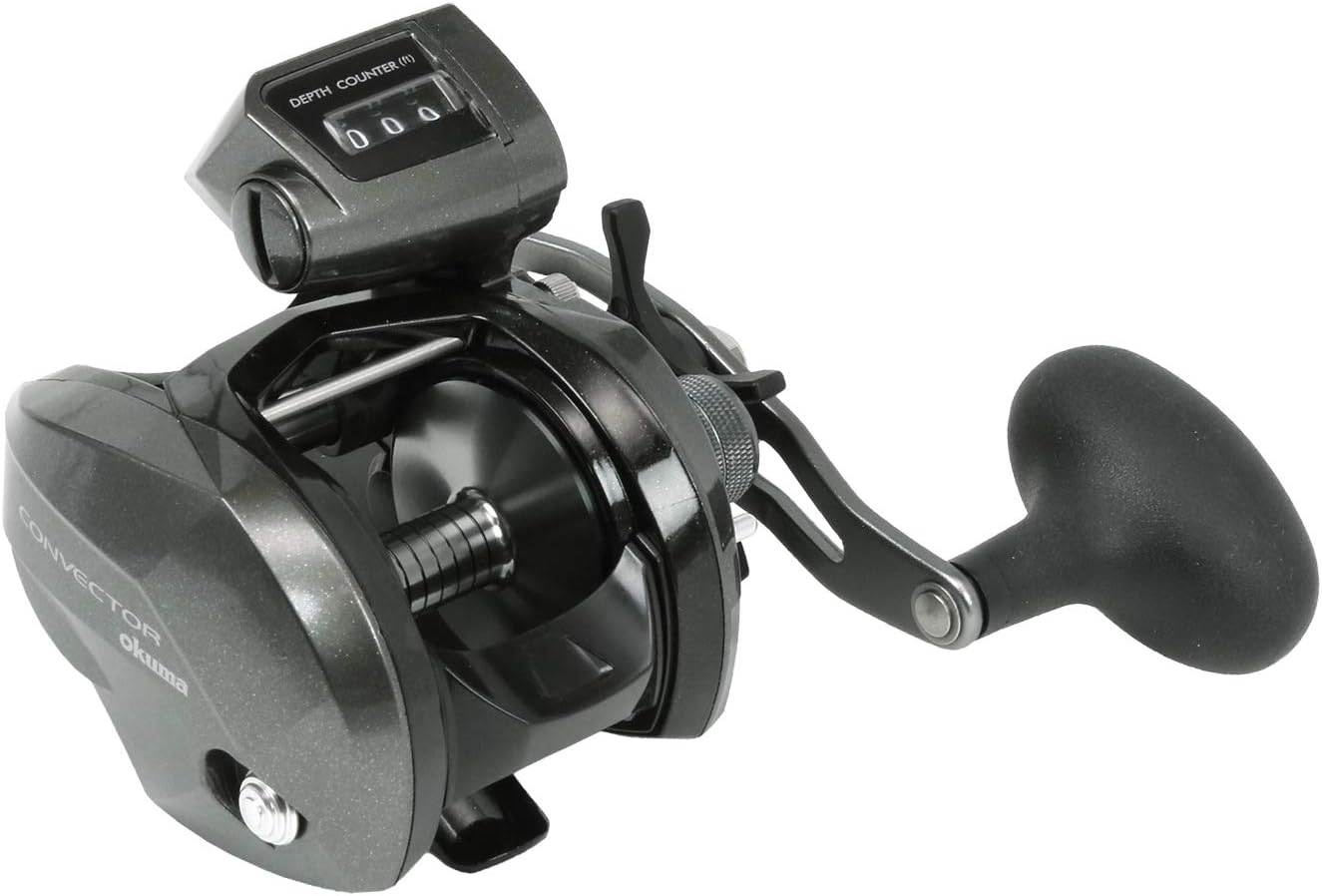
The Okuma Convector CV-30DLX is the most popular line counter reel on Great Lakes salmon boats — not because it’s the cheapest or the most premium, but because the quality-to-price ratio is essentially unbeatable for what trolling actually demands. The mechanical line counter is accurate, the drag is smooth enough for Great Lakes salmon (which don’t make the screaming runs of saltwater tuna), the line capacity is appropriate for the species, and it lasts season after season of hard use. The CV-30DLX is the standard size for kings and lakers — 30 size means 300+ yards of 30lb mono or equivalent braid. Okuma’s larger CV-45DLX adds capacity for deep copper or lead core applications. Priced in the $130–180 range, it sits in the sweet spot where you can equip an entire trolling spread (4–6 reels) without breaking the bank.
Penn Warfare 20LC Line Counter
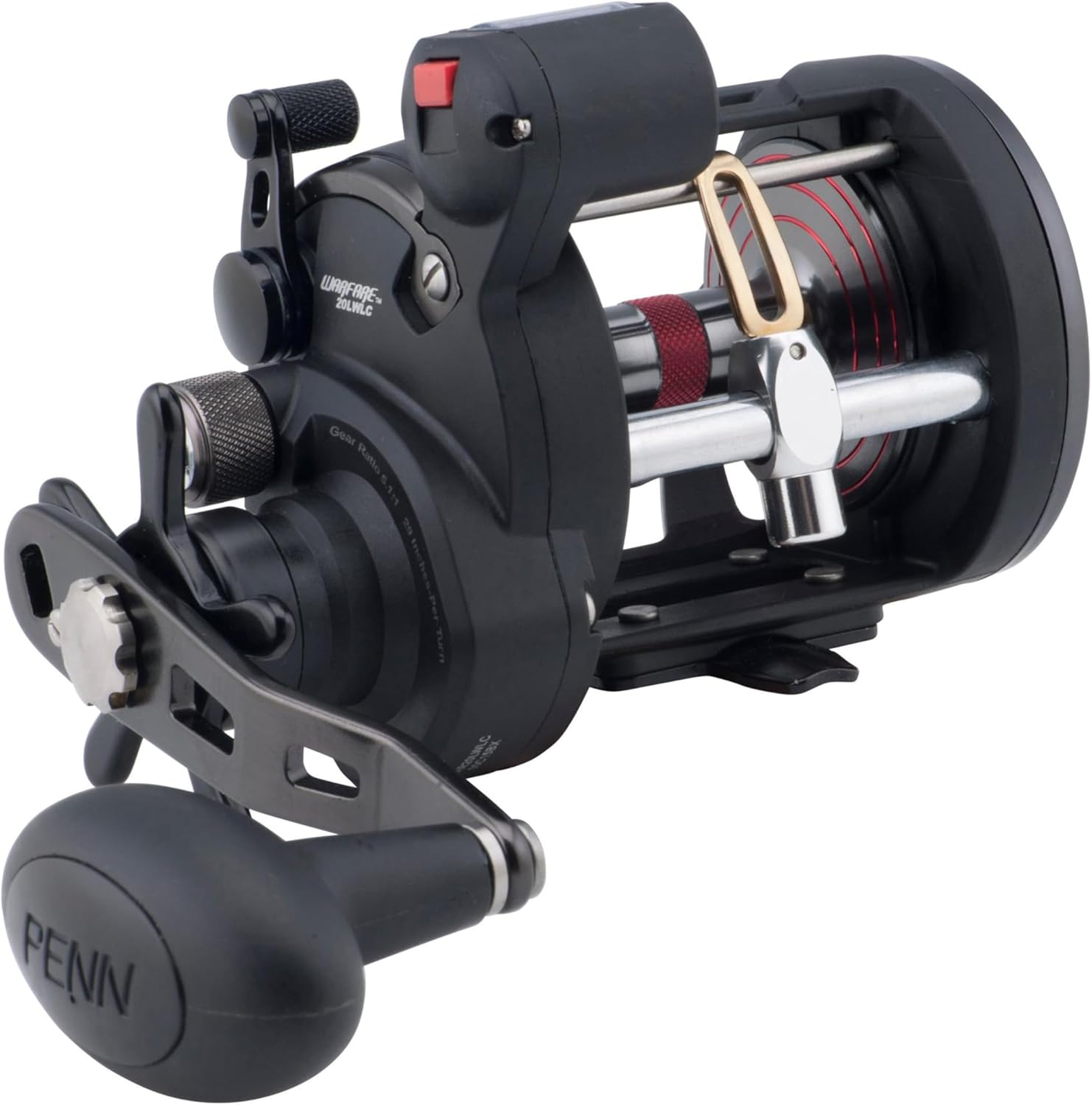
The Penn Warfare 20LC is the budget entry point into line counter trolling. Around $90–130, it’s the reel most anglers buy when they’re stepping up from non-line-counter conventionals and aren’t sure they want to commit to the Okuma price point. The Warfare’s drag and gearing aren’t as refined as the Okuma — the line counter feels less precise in use, the drag has more break-in needed — but it gets the job done. Penn’s HT-100 carbon fiber drag system handles Great Lakes salmon without issues. For anglers building out a 4–6 reel spread on a real budget, the Warfare lets you cover more rod positions per dollar than any competitor. Pair with quality braid and you have a setup that produces fish.
Daiwa Saltist Line Counter
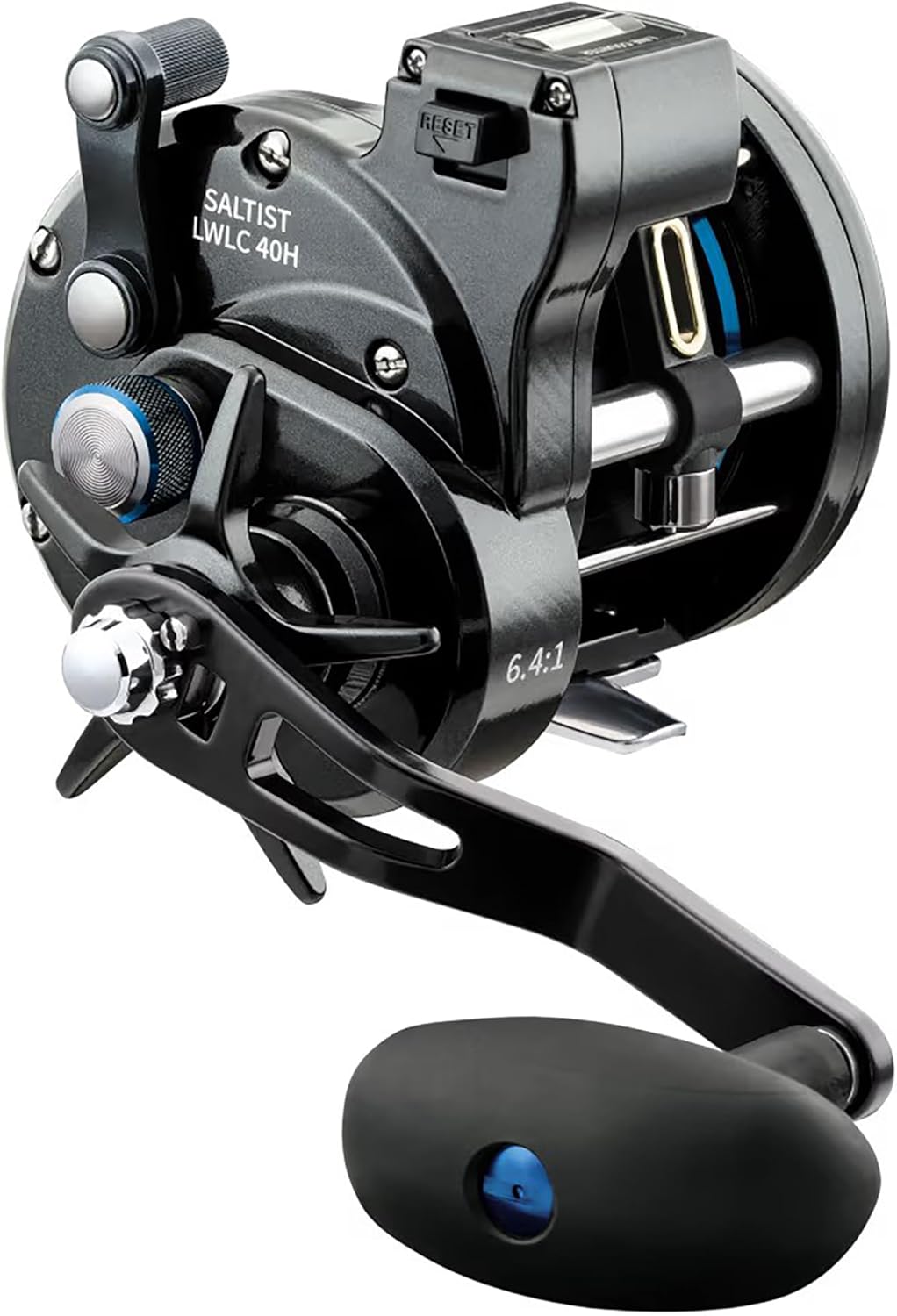
The Daiwa Saltist line counter is the alternative premium option for anglers who prefer Daiwa’s build philosophy. Daiwa’s reel engineering — particularly in the gear materials and bearings — is slightly different from Shimano’s, and the Saltist line counter inherits that quality. The drag is smooth out of the box without break-in. The gear feel is precise. The line counter mechanism reads accurately and stays accurate over seasons of use. Priced in the $200–280 range, it competes with the Shimano Tekota at the upper end and represents the same kind of buy-it-once investment. The choice between Saltist and Tekota usually comes down to which brand’s other reels you already own — both are excellent.
Shimano Tekota
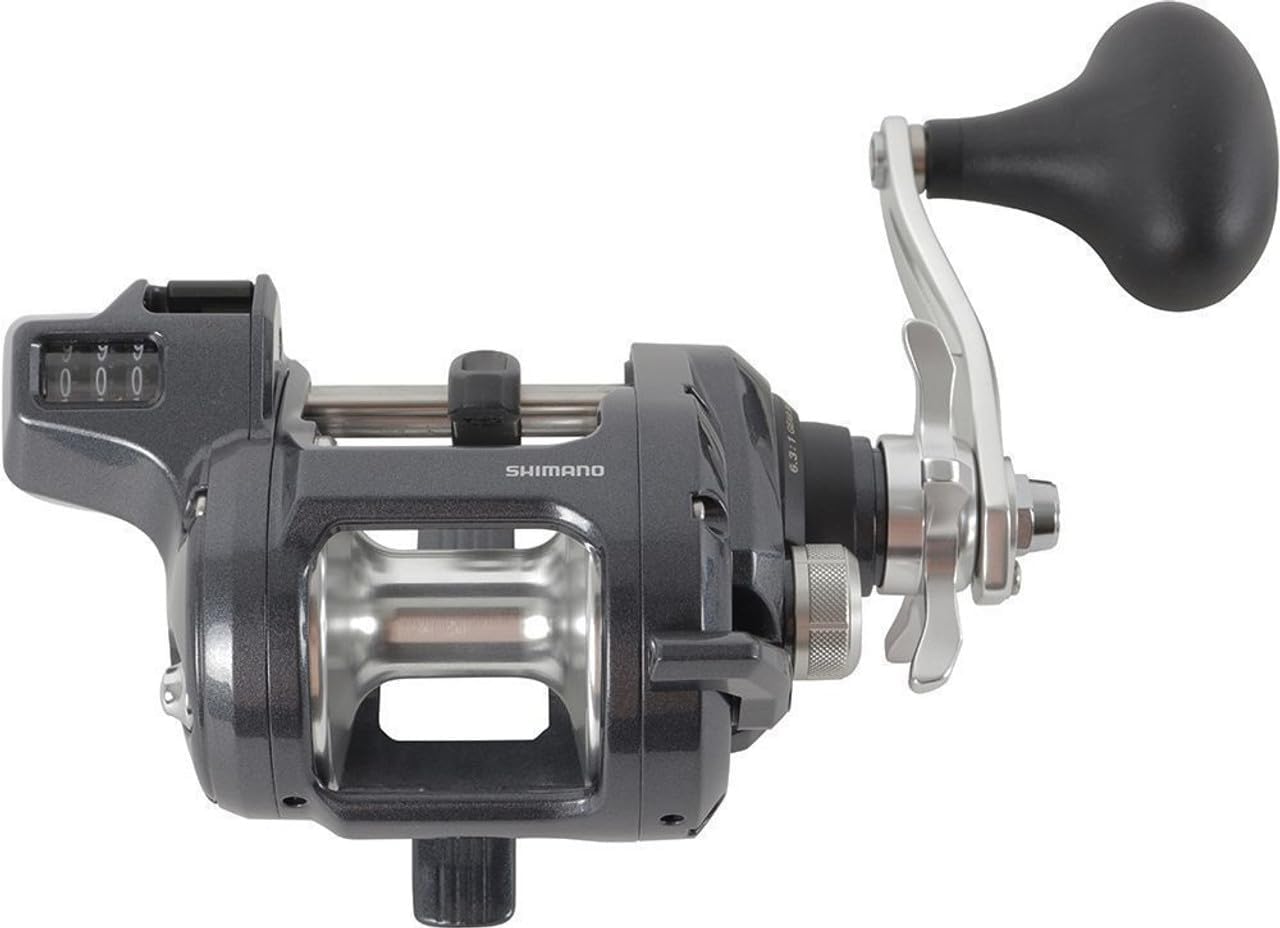
The Shimano Tekota is the top-tier line counter for Great Lakes salmon trolling. Shimano’s Hagane gear technology, Septon grips, and overall build quality are everything you’d expect from a premium Shimano reel. The drag is the smoothest in the category — important for those rare times when a 30+ lb king makes a long run and demands consistent drag pressure. The line counter mechanism is the most precise of the four reels in this guide. Priced in the $280–400 range depending on size, it’s the reel for anglers who fish hard, fish often, and don’t want to replace gear every few seasons. The Tekota also handles light saltwater use (kingfish, smaller tuna, mahi) if you ever take it on a Pacific or Gulf coast trip, adding cross-fishery flexibility.
Star Drag Alternative
Not every rod on a trolling spread needs a line counter. The downrigger rods especially can use simpler star drag conventionals because depth control comes from the downrigger itself rather than line out measurement. This is where the existing Penn Squall II 25N earns its place.
Penn Squall II 25N

The Penn Squall II 25N is already familiar to anyone who’s read the yellowtail or bluefin guides — it’s a strong, simple conventional that handles Great Lakes salmon work without needing the line counter complexity. On downrigger rods specifically, where the depth is set by the rigger and not by line out, the Squall II offers similar capacity and durability to the Okuma Convector at a lower price point. It also handles light saltwater work if you fish multiple fisheries. The star drag is reliable and easy to set. For downrigger positions on a spread, a Squall II is a legitimate choice over a line counter.
Choosing the Right Reel
The right reel depends on your role in the trolling spread:
| Rod Position | Recommended Reel | Why |
|---|---|---|
| Downrigger (depth from rigger) | Penn Squall II 25N or Okuma Convector | Line counter optional since depth is set by the rigger |
| Dipsy diver | Okuma Convector or Tekota | Line counter critical to set diver depth precisely |
| Lead core / copper line | Larger Okuma (CV-45DLX) or Tekota 500 | Need capacity for thick line and segment counts |
| Planer board | Smaller line counter (Penn Warfare 20LC) | Easier to manage on board lines, line counter helps with depth |
| Lake trout / heavy work | Larger Tekota or Saltist | Heavier drag, more capacity for deep work |
Spooling Your Trolling Reel
Line selection matters more for trolling than for many fishing applications. Three common setups:
Braided mainline + monofilament leader. Spool with 30lb PowerPro or similar braid for the no-stretch sensitivity and depth precision. Add a 25–30 foot top shot of 20–25lb monofilament for stretch and shock absorption near the lure. This is the most-used Great Lakes trolling spool config.
Monofilament only. Spool with 20–25lb mono for straightforward simplicity. The stretch helps cushion strikes and reduces lost fish on strong runs. Lower precision than braid for depth measurement but easier to manage. Better choice for newer anglers.
Lead core or copper. Some rods are dedicated to lead core or copper line for depth control without downriggers. The reel needs enough capacity to hold the segmented line plus a mono backing. Larger line counter sizes (Okuma CV-45DLX, Shimano Tekota 700) are required.
Common Mistakes
Over-spec’ing for line capacity. A 700-yard capacity reel makes sense for tuna fishing. For Great Lakes salmon, 300 yards is plenty — fish rarely run more than 150 yards on the longest fights. Bigger reels add weight and cost without adding utility.
Skipping the line counter on dipsy rods. The dipsy diver depth is set by line out — without a line counter, you’re guessing. Always use a line counter on dipsy rods even if you’re using star drag on downrigger rods.
Tightening drag too much. Trolling drag should be lighter than fighting drag. Set drag light enough that a fish striking at high trolling speed won’t snap the line, then ratchet up after the hookset. Many anglers run drag too heavy from the start and lose fish to break-offs on the strike.
Buying premium reels for every position. A six-rod trolling spread doesn’t need six Shimano Tekotas — the cost is exorbitant and the return is minimal. Mix Okumas, Penns, and one or two Tekotas across the spread. Reserve premium reels for the rods that matter most (dipsy lines, lead core lines).
Not calibrating the line counter. Line counters drift over time as line stretches and the spool diameter changes with line wear. Calibrate annually by measuring line out against a known reference (50 feet of line measured on the dock should read 50 feet on the counter).
Gear to Pair with Your Reels
- Best Salmon Trolling Rods — 8’6″ downrigger rods match the reels
- Best Downriggers — depth control system
- Best Planer Boards — horizontal coverage
- Best King Salmon Spoons — what runs at the end of the line
- Best Coho Salmon Lures
- Salmon Trolling Guide — putting the whole system together
- PowerPro Braid — mainline for trolling reels
- Sufix Lead Core — for lead core reel applications
Frequently Asked Questions
What’s the best line counter reel for Great Lakes salmon?
The Okuma Convector CV-30DLX is the most popular pick and offers the best value-to-quality ratio. The Shimano Tekota is the premium option for anglers who fish hard and want the best build quality.
Do I need line counters on all my rods?
No. Line counters are essential for dipsy diver rods, lead core lines, and planer board lines where depth is determined by line out. Downrigger rods can use star drag conventionals like the Penn Squall II 25N since the downrigger sets the depth.
Okuma vs Penn vs Shimano for trolling — which is best?
Each has its place. Penn for budget. Okuma for value. Shimano and Daiwa for premium. Most Great Lakes boats run a mix rather than standardizing on one brand — different positions in the spread benefit from different reels.
What size line counter reel for kings?
20–30 size is the standard for Great Lakes kings. Okuma Convector CV-30, Penn Warfare 20LC, Shimano Tekota 500. Larger 40–45 sizes are for lead core, copper line, or specialized applications.
What line should I use on a trolling reel?
30lb PowerPro braid as mainline with a 25–30 foot top shot of 20–25lb monofilament is the most common Great Lakes setup. The braid gives precision and depth control; the mono gives shock absorption on the strike. See the line selection guide for details.
How do I calibrate a line counter reel?
Strip off a known length of line (50 feet measured against your boat or dock) and verify the counter reads 50 feet. If it’s off, adjust against the manufacturer’s spec (most have a small reset mechanism). Recalibrate annually as line wears and spool diameter changes.
Plan Your Trip
- SST Charts — find temperature breaks
- Chlorophyll Maps — locate bait
- Fleet Tracker — see where boats are running
- Marine Weather — wind and wave conditions
- AI Fishing Predictions — daily forecasts
- Lake Michigan Fishing Season Calendar
- Great Lakes Fishing Trips
Related Guides
- Best Water Temp for King Salmon
- Best Water Temp for Coho Salmon
- Best Water Temp for Lake Trout
- Best King Salmon Spoons
- Best Coho Salmon Lures
- Best Downriggers
- Best Planer Boards
- Best Salmon Trolling Rods
- Salmon Trolling Guide
- Lake Michigan Fishing Season Calendar
- Braid vs Mono vs Fluorocarbon
- Best 30lb Reels (SoCal)
- Best 40lb+ Reels (SoCal)
- Best Rod & Reel Combos
- Great Lakes Fishing Trips
Tight lines!
Affiliate Disclosure: As an Amazon Associate, fishing-reports.ai earns from qualifying purchases. Links to Amazon on this page are affiliate links — if you click and buy, we may earn a small commission at no extra cost to you.