Coho salmon are the most willing biters in the Great Lakes salmon family. They hit aggressively, chase faster than kings, and tolerate a wider range of lure presentations. That doesn’t mean any lure works — there’s a specific arsenal that produces consistently, and the brands that own coho fishing are different from the brands that own kings. Brad’s Cut Plug for trolling. Rapala Husky Jerks for spring shallow water and pier casting. Mepps Aglia spinners for river runs and shore fishing. Each tool has its season and its place.
This guide breaks down what to throw for coho across all three modes — boat trolling, pier and shore casting, and river fishing during the fall run. Pair this with the coho temperature guide to know when and where these lures put fish in the cooler.
⚡ Quick Picks by Situation
Best trolling lure: Brad’s Cut Plug Killer 4.0 — the coho standard, runs at perfect coho speeds.
Spring pier / shallow: Rapala Husky Jerk HJ12 — perfect for early-season coho in 5–25 feet.
Pier / shore casting: Mepps Aglia #4 or #5 — the river and pier producer.
River run / casting: Acme Kastmaster 1oz — long-cast spoon for distance work.
Trolling spoon: Michigan Stinger Stingray — same king spoon in smaller sizes works for coho.
Trolling Lures for Coho
Brad’s Cut Plug Killer 4.0
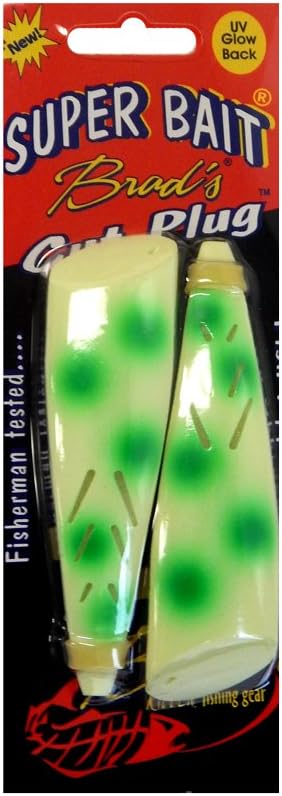
If there’s a single lure synonymous with Great Lakes coho fishing, it’s the Brad’s Cut Plug. The design is unique — a hollow plastic plug shaped like a cut piece of herring, with the flat front face giving it a wobbling, erratic action that imitates a wounded baitfish. The Killer 4.0 size is the coho standard. Most anglers fish them with bait inserted into the cavity — anchovy, herring, or even tuna belly — which doubles the attraction with scent. Run them 30–60 feet down on downriggers or behind dipsy divers at 2.4–2.8 mph. Color matters: Green/Glow, UV White, and Mountain Dew are reliable Lake Michigan producers. The cut plug excels when coho are scattered and need to be coaxed — the erratic action triggers strikes that spoons wouldn’t get.
Michigan Stinger Stingray (smaller sizes)
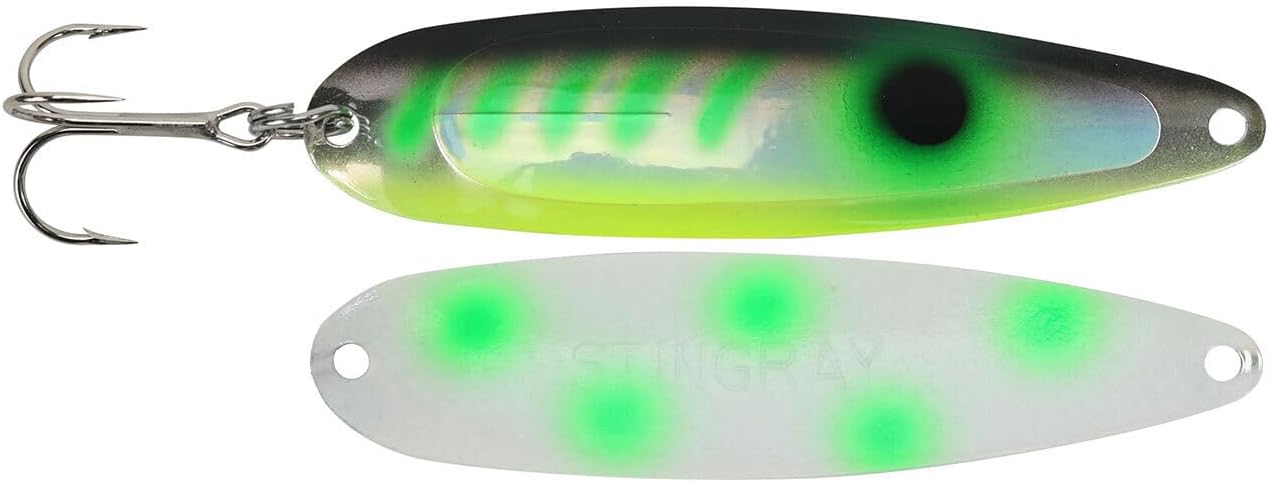
The same Stingray spoon that owns king salmon fishing also produces well on coho when scaled down. The 3.0″ Stingray matches the smaller bait profile coho typically feed on, and the tighter wobble works at the slightly faster speeds (2.5–3.0 mph) coho prefer. Throughout the summer, mixed-species spreads running larger Stingrays for kings and smaller ones for coho cover both targets in one trolling pass. Top colors for coho: Frog, Mountain Dew, and the various UV chartreuse patterns. Replace factory trebles with Owner ST-66s.
Loony Trolling Spoon

The budget producer earns its place in the coho spread too. Coho are aggressive enough that they’ll hit a Loony just as readily as a premium spoon, which makes this the smart pick for filling out a 6–8 rod spread without spending $200 on spoons alone. Run them on the secondary lines and outer dipsy divers where they get fished hard and occasionally lost. The catch rate stays competitive even though the price point doesn’t.
Pier and Shallow Water Lures
Spring coho — and post-spawn fall coho — push into shallow water where boat trolling isn’t the right approach. Stickbaits cast from piers or trolled with planer boards in 5–25 feet of water own this fishery.
Rapala Husky Jerk HJ12 / HJ14
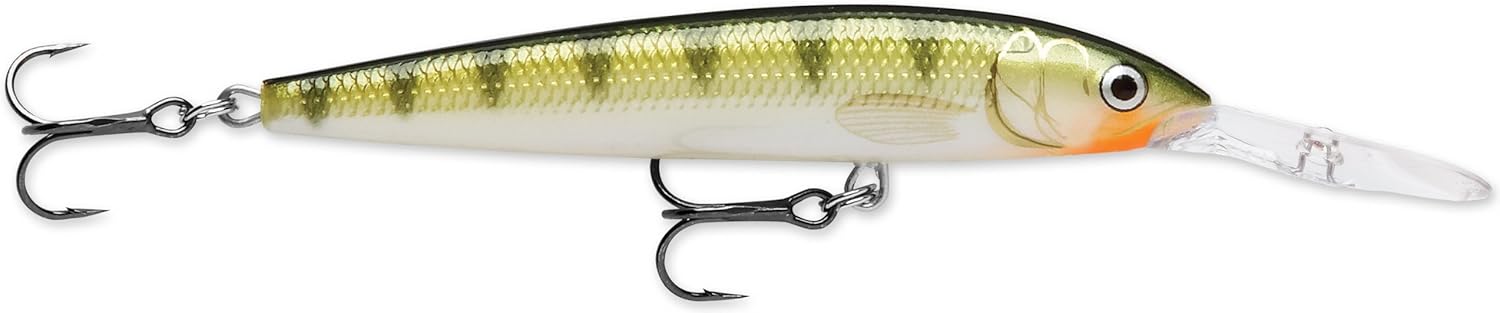
The Husky Jerk is the pier and planer board lure for spring coho. The HJ12 (4.75″) is the right size for matching the small smelt and emerald shiner forage that coho push shallow to feed on after ice-out. Step up to the HJ14 (5.5″) when bait gets bigger later in spring. The suspending action — the lure holds its depth on the pause — triggers strikes from following fish that wouldn’t commit to a constantly-moving lure. Best colors for Lake Michigan spring coho: Glass Perch, Clown, Silver/Black, and Purple Descent. Cast and retrieve slowly from piers with frequent pauses, or troll with planer boards at 2.0–2.5 mph in 10–25 feet of water.
Acme Kastmaster 1oz

The Kastmaster is the “throw it a mile” answer to pier and shore coho fishing. The dense single-piece chrome construction casts farther than any other spoon in its weight class, which matters when coho are working bait just outside normal casting range. The action is simple — a tight wobble on retrieve with a fluttering fall on the drop — but it’s enough to trigger coho strikes consistently. Chrome/blue, chrome/green, and gold are the proven colors. Replace the factory split ring with a heavier one if you’re targeting larger fall coho. Cast, count down to your target depth, then retrieve at a moderate-fast pace with occasional pauses.
River and Stream Lures
The fall coho run pushes fish into tributary rivers and streams across Lake Michigan’s eastern shore — Manistee, Pere Marquette, Big Manistee, Betsie, Platte. River coho hit different lures than open-water coho. Spinners and small plugs dominate.
Mepps Aglia Spinner (#4 or #5)
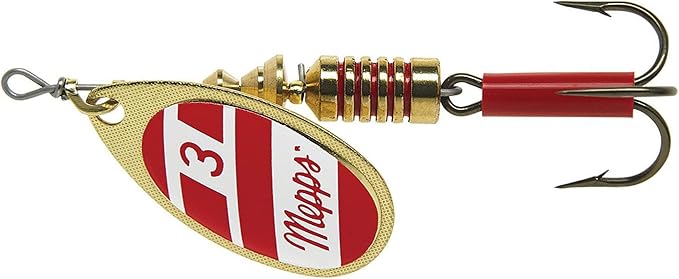
The Mepps Aglia has been the river salmon spinner for decades. The #4 (3/8 oz) is the right size for typical Great Lakes tributaries; step up to #5 (1/2 oz) when the river is high and pushing hard. The rotating blade creates flash and vibration that triggers reaction strikes from coho that aren’t actively feeding — they’re spawning, not hunting, but they’ll hit out of aggression. Silver blade with red dressing is the classic Great Lakes pattern. Fluorescent orange and chartreuse also produce well, especially in stained water. Cast across and slightly downstream, then let the current bring the spinner across the holding lies. Slow your retrieve to maintain blade rotation without skating the spinner across the surface.
Rapala Original F05 / F07

The Original Rapala in size F05 or F07 is the small-river coho lure. Where the Mepps Aglia gives you flash and vibration, the Rapala Original gives you a tighter, more bait-like wobble that produces in clearer water or when coho are pressured by other anglers. Use the F05 for tight, smaller rivers where you need precise casts. The F07 is the standard for the medium-sized Great Lakes tributaries. Silver/black and gold/orange are the standard colors. Drift through holes and runs, twitching the rod tip to give the lure life. The smaller profile and tight action are deadly on coho that have rejected larger offerings.
Color Selection for Coho
| Conditions | Trolling Colors | River/Pier Colors |
|---|---|---|
| Spring / Cold Water | Silver/Blue, Glass Perch, Clown | Silver, Gold, Natural Minnow |
| Bright Sun / Clear Water | Green/Silver, Blue/Silver, UV Crinkle | Silver, Gold, Brown Trout |
| Overcast / Stained Water | Mountain Dew, Chartreuse, Frog | Fluorescent Orange, Chartreuse, Pink |
| Fall Run / River | — | Silver/Red, Orange, Pink, Chartreuse |
| Low Light / Dawn | Glow patterns, UV White, Carbon 14 | Silver, Brass, Glow |
How to Set Up for Coho
The setup varies by mode. Three common rigging approaches:
Trolling rig: Cut plug or spoon on 25–30lb monofilament leader (10–15 feet long), connected via ball-bearing swivel to your mainline. Mainline is typically 30lb braid or 40lb mono. Run from downriggers, planer boards, or dipsy divers.
Pier rig: Spoon or stickbait on 12lb mono direct to mainline, or via small ball-bearing swivel to prevent line twist with spoons. Penn Spinfisher VII in the 4500–6500 size on a 9–10′ medium-power spinning rod is the standard pier setup.
River rig: Spinner or Rapala on 8lb monofilament direct to small ball-bearing swivel, then to mainline. Lighter rod and reel — a 7′ medium-light spinning combo handles the river fishery well.
Common Mistakes
Trolling too slow for coho. Coho prefer faster trolling than kings. If you’re at 2.4 mph and not getting coho hits, bump up to 2.7–3.0 mph. The willingness of coho to chase faster lures is one of their defining traits.
Using king-sized spoons exclusively. The 3.75″ Stingray that owns kings is too big for many coho situations. Drop to 3.0″ or 2.5″ spoons when targeting coho specifically — the smaller profile matches their preferred bait size.
Ignoring spring shallow opportunities. April and May coho fishing in shallow water with planer boards or pier casting produces some of the easiest salmon fishing of the year. Many anglers skip this window waiting for “real” salmon season.
Wrong colors for river fishing. Open-water coho colors don’t translate to rivers. Switch to silver/red, fluorescent orange, and chartreuse for river work — the visibility through stained tributary water is different from open lake water.
Skipping the pause. On suspending lures like the Husky Jerk, the pause is when the strike happens. Don’t retrieve constantly — work the lure with frequent pauses that let coho catch up and commit.
Gear to Pair with Coho Lures
- Best Salmon Trolling Reels — line counters for trolling
- Best Salmon Trolling Rods — 8’6″ downrigger rods
- Best Downriggers — for summer depth
- Best Planer Boards — essential for spring shallow water
- Best King Salmon Spoons — cross-species spoon options
- Pier Fishing Salmon Guide — pier-specific techniques
- River Salmon Fishing Guide — fall run river techniques
- Salmon Trolling Guide
Frequently Asked Questions
What are the best lures for coho salmon?
For trolling, the Brad’s Cut Plug Killer 4.0 is the standard. For pier and shallow water, Rapala Husky Jerk HJ12. For river runs, Mepps Aglia #4 or #5. These three lures cover the entire coho fishery across seasons.
What size spoon for coho?
3.0″ spoons are the sweet spot for coho. The Michigan Stinger Stingray in 3.0″ matches the smaller alewife and smelt forage that coho prefer. Step down to 2.5″ for spring fish on smaller bait, step up to 3.75″ only when coho mix with kings in late summer.
What’s the difference between coho and king salmon lures?
Coho prefer smaller profiles and faster speeds. Where kings hit 3.75″ spoons at 2.4 mph, coho prefer 3.0″ spoons at 2.7–3.0 mph. The Brad’s Cut Plug is more coho-specific than king-specific. Spinners (Mepps Aglia) work for coho in rivers but not for kings. Husky Jerks and pier lures work for coho but rarely produce kings.
How do I fish a cut plug?
The Brad’s Cut Plug has a cavity that holds bait — typically anchovy, herring, or tuna belly. Insert the bait, secure the plug, then run it 30–60 feet down on a downrigger or behind a dipsy diver at 2.4–2.8 mph. The wobbling action mimics a wounded baitfish, and the bait inside adds scent attraction.
What’s the best lure for river coho?
The Mepps Aglia spinner in #4 or #5 is the river coho standard. Silver blade with red dressing is the classic Great Lakes pattern. Step up to fluorescent orange or chartreuse colors in stained water. Cast across and downstream, let the current carry the spinner across holding lies.
Can I catch coho from shore?
Yes — particularly in spring when fish push shallow to feed, and during the fall run when coho stage near tributary mouths and run up the rivers. The Acme Kastmaster 1oz for distance and the Mepps Aglia for accuracy cover most shore-based coho situations.
Plan Your Trip
- SST Charts — find the 54–60°F coho band
- Chlorophyll Maps — locate alewife-holding water
- Fleet Tracker — see where charters are working
- Marine Weather — wind matters for pier and shore fishing
- AI Fishing Predictions — daily forecasts
- Lake Michigan Fishing Season Calendar
- Great Lakes Fishing Trips
Related Guides
- Best Water Temp for Coho Salmon
- Best Water Temp for King Salmon
- Best Water Temp for Atlantic Salmon
- Best King Salmon Spoons
- Best Downriggers
- Best Planer Boards
- Best Salmon Trolling Rods
- Best Salmon Trolling Reels
- Salmon Trolling Guide
- Pier Fishing for Salmon
- River Salmon Fishing Guide
- Manistee River Salmon Fishing
- Lake Michigan Fishing Season Calendar
- Lake Ontario Salmon Fishing
- Great Lakes Fishing Trips
Tight lines!
Affiliate Disclosure: As an Amazon Associate, fishing-reports.ai earns from qualifying purchases. Links to Amazon on this page are affiliate links — if you click and buy, we may earn a small commission at no extra cost to you.