Pacific salmon fishing demands purpose-built rods. The same fishing categories that you’d cover with three or four rod actions in summer bass fishing require six or seven specialized PNW salmon configurations: mooching rods for fishing whole herring at depth, casting rods for back-trolling Kwikfish plugs, trolling rods for downrigger setups, baitcasters for bobber-doggin’ and plunking, and lever-drag conventionals for ocean work. Mixing and matching across these categories produces compromises that cost fish.
This guide covers the rods and reels that consistently produce across Pacific salmon fishing — the workhorses that anglers from Westport to Astoria to Sekiu actually use. For the broader technique context, see the Pacific salmon fishing guide. For the lures and plugs these rods deliver, see best Pacific salmon lures and plugs.
⚡ Quick Picks by Situation
Best back-trolling rod: Lamiglas Kwikfish 10’6″ — designed specifically for Kwikfish plugs.
Best mooching rod (premium): Shimano Technium Mooching 10’6″ — refined high-end build.
Best mooching rod (value): Okuma Connoisseur Mooching — workhorse at the $150-200 tier.
Best versatile rod: St. Croix Onchor Salmon — covers casting + light bobber-doggin’.
Best line-counter trolling reel: Shimano Tekota 600 — the PNW troller standard.
The Three Rod Categories for PNW Salmon
| Category | Length | Power | Primary Application |
|---|---|---|---|
| Mooching rod | 10’6″ – 11′ | Medium / Medium-Light | Whole herring fishing for Chinook |
| Casting rod | 8’6″ – 10’6″ | Medium-Heavy | Back-trolling Kwikfish, plunking, bobber-doggin’ |
| Trolling rod | 8’6″ – 10′ | Medium-Heavy | Downrigger and dipsy diver work |
Most serious PNW salmon anglers own multiple rods across these categories. A complete setup might include two mooching rods, two casting rods, and four trolling rods (one per downrigger). For first-time PNW anglers, start with one rod that matches your primary technique — casting for river fishing, mooching for ocean charters with private boat, trolling for downrigger setups.
Casting Rods — Back-Trolling and Versatile Use
Lamiglas Kwikfish 10’6″ Salmon Casting Rod
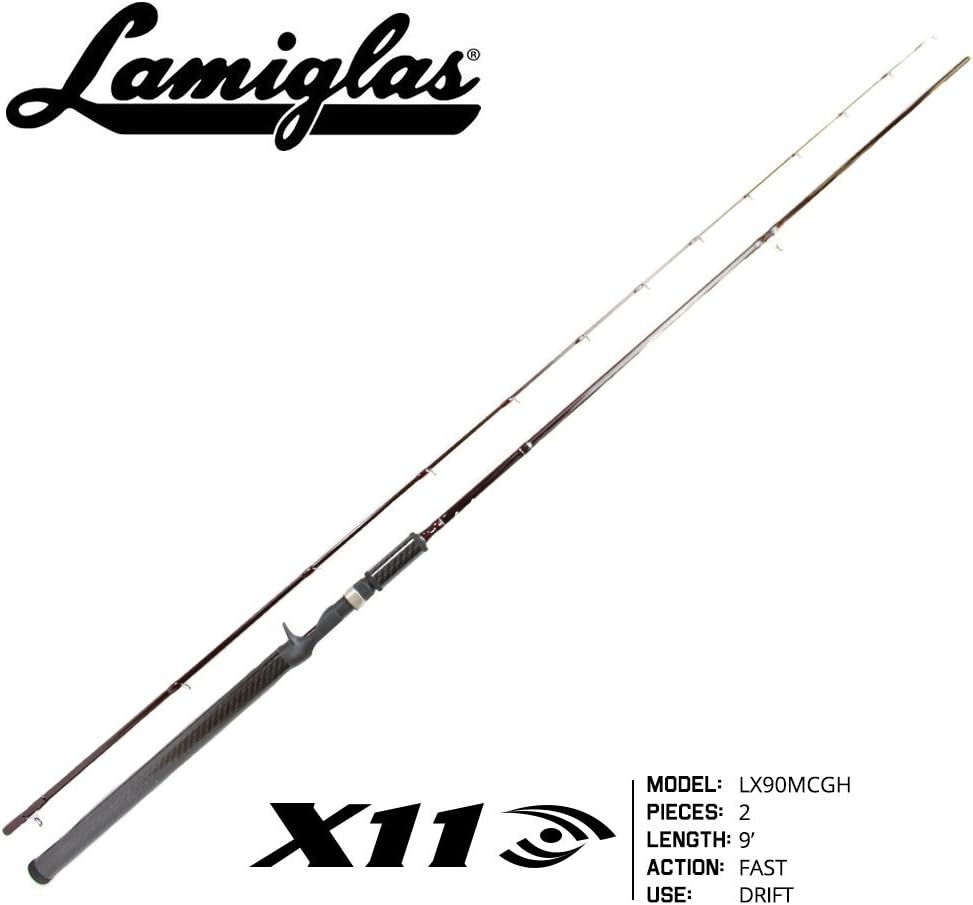
The Lamiglas Kwikfish Series is the rod that defined the back-trolling category. Designed in the Pacific Northwest for back-trolling Kwikfish K-series plugs — the dominant Columbia River and big-water technique for fall Chinook. The 10’6″ length provides leverage for keeping the plug working in current; the medium-heavy power handles the largest Chinook without compromise. The action transmits the distinctive Kwikfish wobble through the rod tip — you can read whether the plug is working correctly without watching the line. Lamiglas is Washington-based, manufactured in the PNW with materials and design tuned for PNW salmon fishing. The brand commands a premium price ($250-400 depending on configuration) but the build justifies it for serious anglers. Best paired with a quality baitcaster like the Shimano Curado 200, or a line-counter reel for trolled applications. The rod is overkill for Coho-only fishing; for mixed Chinook/Coho work it’s the workhorse.
St. Croix Onchor Salmon Rod
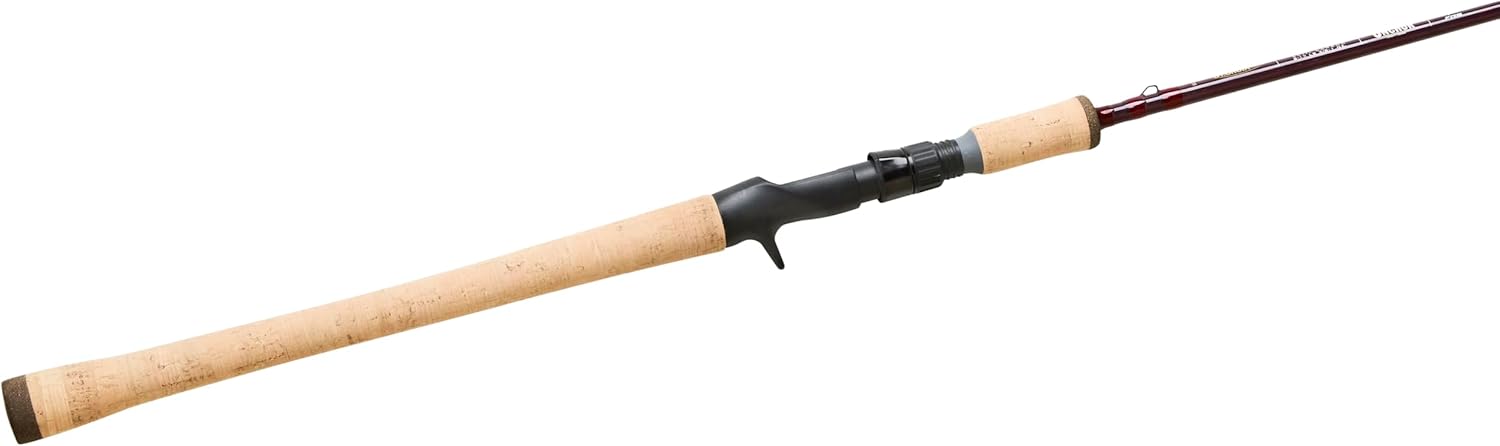
The St. Croix Onchor is the versatile mid-tier rod for PNW salmon fishing. St. Croix’s Wisconsin manufacturing produces consistent build quality across their salmon lineup; the Onchor series specifically targets multi-species and multi-technique salmon applications. The rod handles bobber-doggin’ for Coho, plunking applications, light back-trolling, and even some mooching applications when paired with a single-action reel. Less specialized than the Lamiglas Kwikfish but more versatile — better choice for anglers who want one rod that covers multiple PNW techniques. The transferable St. Croix warranty extends to salmon rods, which matters given the abuse this category sees (rocks, boat handling, bar conditions). Price point around $200-280 makes it accessible without the Lamiglas premium.
Mooching Rods — The Classic PNW Chinook Setup
Shimano Technium Salmon Mooching Rod 10’6″

The Shimano Technium is the premium mooching rod that fills the gap left by hard-to-find G. Loomis IMX models. Mooching is the classic PNW Chinook technique — drift fishing whole or cut herring on a long soft rod that telegraphs the subtle bite of a Chinook nosing the bait. The Technium’s blank is purpose-designed for this: ultra-fast tip that detects the lightest pickup, but enough backbone in the lower section to handle a 30-pound king on its first run. The 10’6″ length provides leverage in current and sweep distance for setting the hook on a fish that often takes the bait while moving away from the boat. Best paired with a direct-drive single-action mooching reel (Daiwa Mooching Reel below) for the classic PNW setup. Premium price point ($350-500) reflects the build quality. For serious mooching anglers — particularly Westport, Sekiu, and Buoy 10 Chinook specialists — this is the rod that justifies the investment.
Okuma Connoisseur Mooching Rod 10’6″
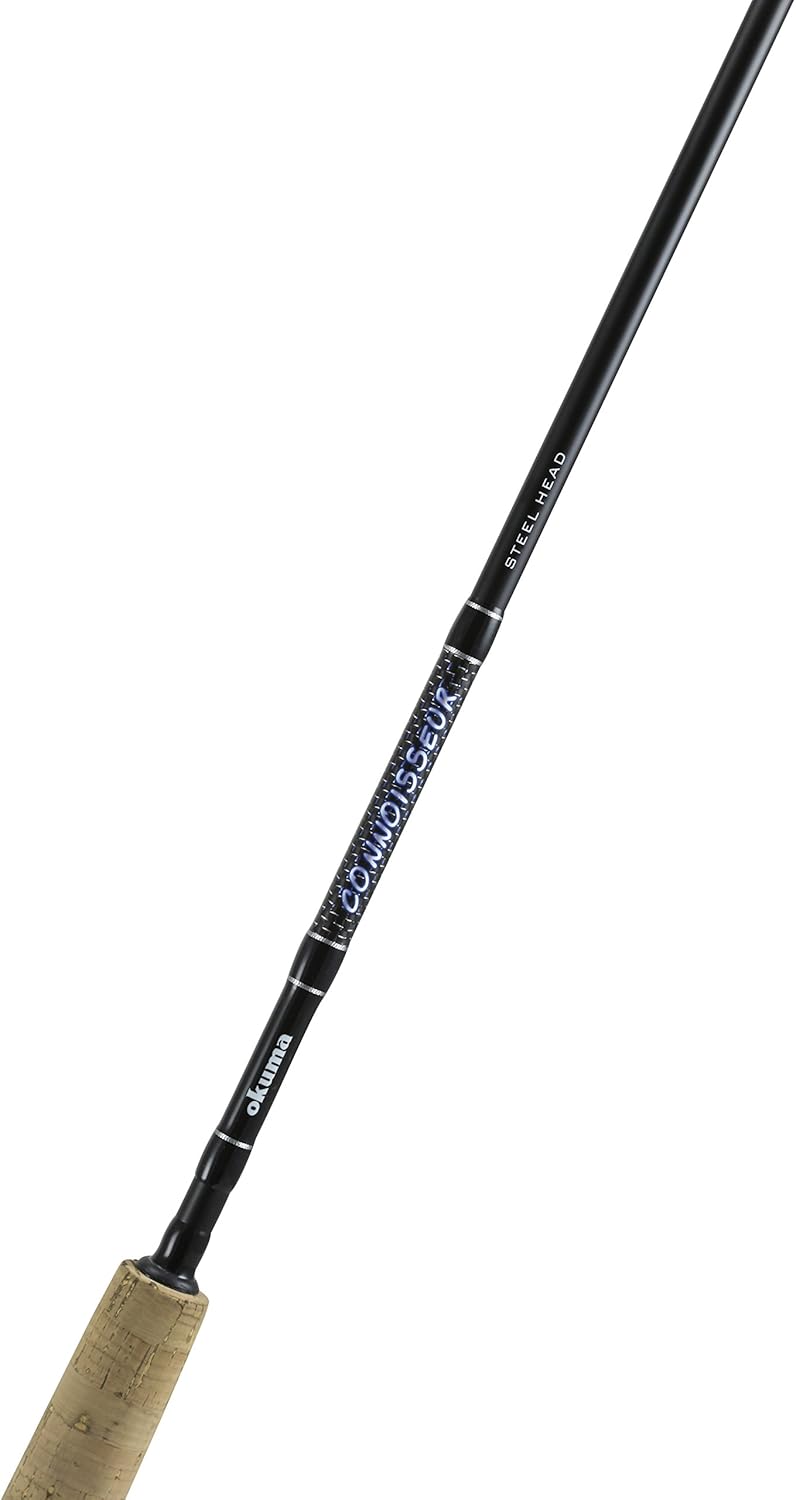
The Okuma Connoisseur is the value alternative to the Shimano Technium in the mooching category. The blank action is comparable — soft tip for bite detection, backbone in the lower section for fish-fighting power. Cosmetics and component quality are a step below the Shimano (lower-grade guides, simpler reel seat) but the functional performance is similar. For anglers entering the mooching technique who don’t want to spend $400+ on a premium rod, the Connoisseur at $150-200 covers the same basic application. The mooching skill set transfers regardless of which rod you start with; many anglers begin with the Okuma and upgrade to a Technium or used Loomis once they’ve committed to mooching as their primary Chinook technique.
Mooching Reels — Direct-Drive Single-Action
Daiwa Mooching Reel
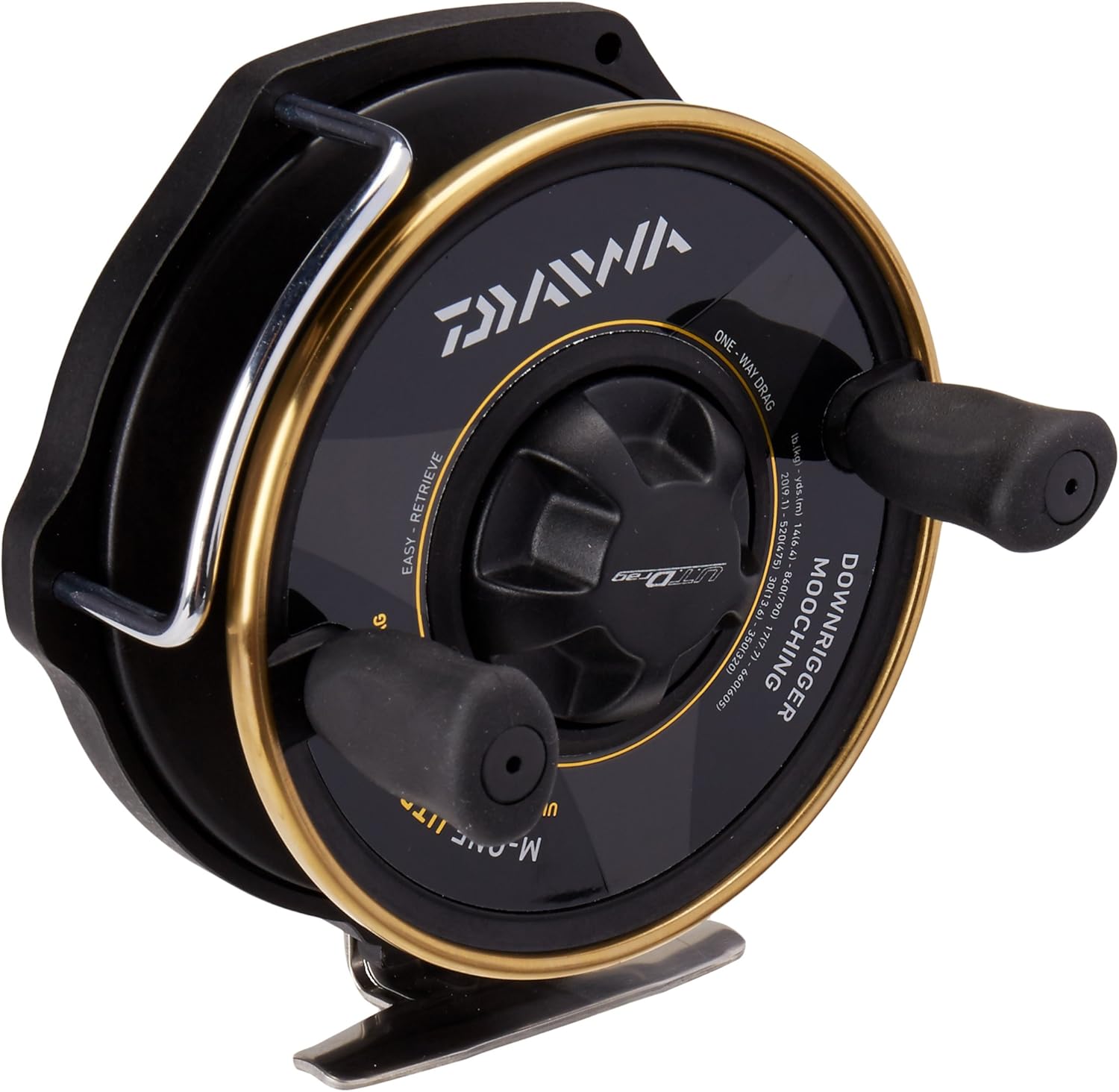
Mooching reels are a PNW-specific category that confuses anglers from other regions. Unlike spinning or baitcasting reels, a mooching reel is a direct-drive single-action design — one turn of the handle equals one revolution of the spool. No drag system in the modern sense; the angler controls the fight with palm pressure on the spool. The Daiwa Mooching Reel is the most accessible modern mooching reel option: solid build, smooth bearings, and proper mooching-reel geometry. The direct-drive feel gives anglers immediate connection to the fish — when a 30-pound Chinook surges, you feel every pound of pressure through your palm. This is the iconic PNW Chinook fishing experience that ocean charters and serious river anglers preserve. Best paired with a 10’6″ mooching rod (Shimano Technium or Okuma Connoisseur). The learning curve is real — anglers transitioning from spinning reels need 1-2 trips to develop the palm-control technique — but the connection to the fight justifies the transition for serious anglers.
Trolling Reels — Line-Counter and Lever Drag
Shimano Tekota 600 Line-Counter Reel
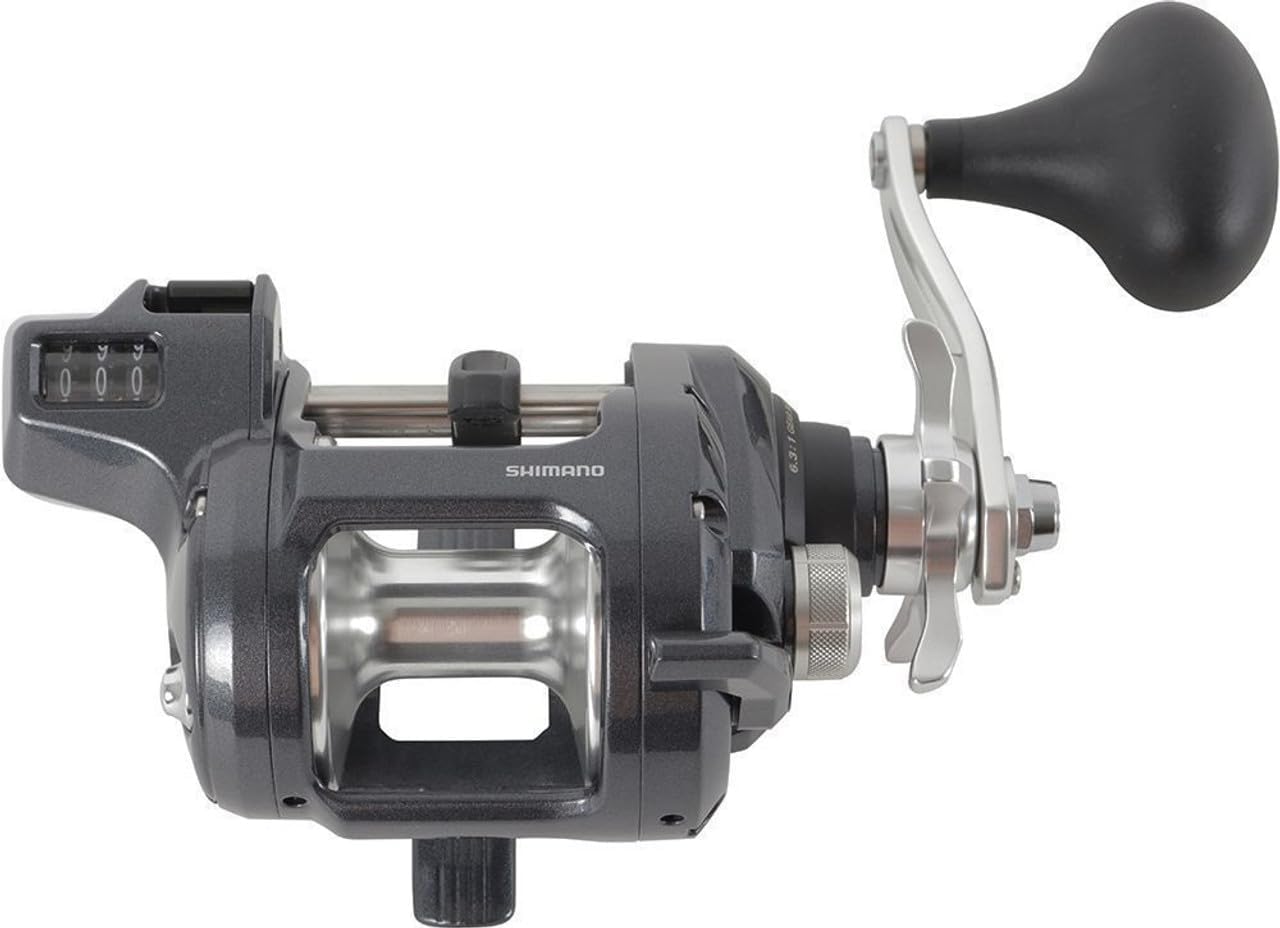
The Shimano Tekota is the most-used trolling reel in the PNW salmon fishery. Line-counter reels are essential for downrigger and dipsy diver trolling — you need to know exactly how much line is out to position lures at specific depths. The Tekota 600 holds appropriate line capacity for salmon trolling (200+ yards of 30 lb mono or equivalent braid), has the smooth drag necessary for ocean Chinook fights, and the line-counter accuracy is consistent across temperature ranges (some cheaper line-counters drift with temperature changes). Best applications: downrigger trolling with spoons or plugs, dipsy diver fishing with planer boards, and any application where depth-precise lure placement matters. Pair with the Lamiglas Kwikfish casting rod or a dedicated 8’6″-9′ trolling rod. The Tekota family ranges from 300 (lighter applications) to 800 (heavy ocean work); the 600 is the workhorse middle size.
Penn Squall Lever Drag Reel

The Penn Squall represents the heavier-duty ocean trolling option. Lever drag reels — where you push a lever to engage a calibrated drag setting rather than turning a star wheel — provide more consistent drag pressure during long fights with big fish. Best applications: outer ocean trolling (Westport, Ilwaco) where Chinook over 30 pounds are realistic, deep-line techniques requiring stronger drag pressure for hook setting at distance, and any application where the simpler-but-coarser star drag of a Tekota becomes a limitation. Penn Squall is the value lever drag option; brands like Avet and Shimano TLD compete in similar territory at higher price points. The Squall is also useful for halibut and other heavier saltwater applications, making it a multi-purpose investment for anglers who fish beyond salmon.
Baitcasting Reels — Versatile and Bobber-Doggin’
Shimano Curado 200 Baitcaster
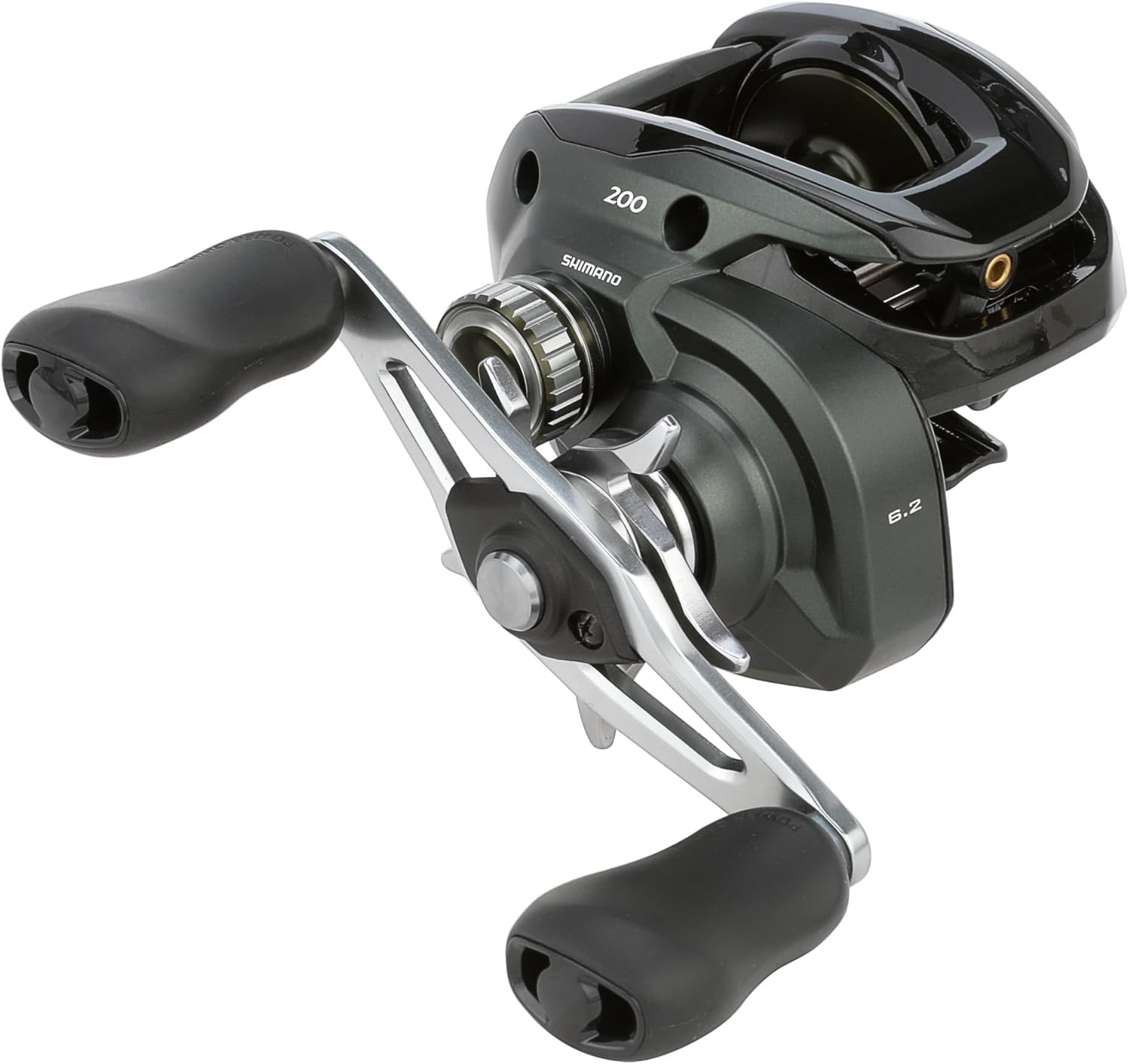
The Shimano Curado 200 is the versatile baitcaster that crosses over from bass fishing into PNW salmon applications. Best uses: bobber-doggin’ (where the smooth drag helps land 8-15 lb Coho on light fluorocarbon leaders), plunking applications, light back-trolling, and any technique that benefits from a baitcaster’s casting accuracy. The 200-size is appropriate for the line capacity needed in salmon applications (150+ yards of 14-20 lb mono); the larger Curado 300 covers heavier applications. The reel’s bass-fishing heritage means smooth operation, good drag, and reliable construction at a reasonable price point ($180-220). Cross-references to the walleye reels guide apply — the Curado is a multi-species workhorse, not a salmon-specific reel.
Selection by Technique
| Technique | Best Rod | Best Reel |
|---|---|---|
| Mooching (Chinook) | Shimano Technium 10’6″ / Okuma Connoisseur | Daiwa Mooching Reel |
| Back-trolling Kwikfish | Lamiglas Kwikfish 10’6″ | Shimano Tekota 600 or Curado 200 |
| Downrigger trolling | Lamiglas Kwikfish or dedicated trolling rod | Shimano Tekota 600 (depth-specific) |
| Bobber-doggin’ | St. Croix Onchor 10’6″ | Shimano Curado 200 |
| Plunking | St. Croix Onchor 10’6″ or Lamiglas | Shimano Tekota or Penn Squall |
| Ocean trolling (offshore) | Lamiglas Kwikfish or trolling rod | Penn Squall Lever Drag |
| Coho-only river casting | St. Croix Onchor or lighter rod | Shimano Curado 200 |
Line Recommendations
Match line to rod and application:
- Mooching rod: 15-20 lb monofilament mainline, 12-15 lb fluorocarbon leader
- Lamiglas Kwikfish: 25-30 lb monofilament for back-trolling, 30-40 lb braid with fluorocarbon leader for distance
- Trolling reel: 30 lb monofilament or 40 lb braid (the line-counter accuracy is calibrated for specific line types — match what the reel manufacturer specifies)
- Bobber-doggin’ Curado: 30 lb braid mainline with 12-15 lb fluorocarbon leader
- Plunking setup: 30-40 lb mono or 50 lb braid (heavy weight requires heavy line)
See the best fishing line by pound test guide and braid vs mono guide for the underlying principles.
Common Mistakes
Wrong rod for the technique. A trolling rod for mooching produces poor bite detection. A mooching rod for plunking lacks the backbone. Match rod to technique.
Spinning reel on a mooching rod. The PNW mooching tradition uses direct-drive single-action reels for a reason — the connection to the fish is fundamentally different. Spinning reels work mechanically but miss the experience. Try a mooching reel before committing to spinning gear in this category.
Underpowered line on the Kwikfish rod. The Lamiglas Kwikfish is designed for 25-30 lb line. Lighter line reduces hookset effectiveness on the rod’s heavy backbone.
Skipping the line-counter for trolling. Standard reels can troll salmon but the precise depth control of line-counter reels improves catch rates noticeably. Worth the investment for serious trolling.
Buying everything at once. Most PNW salmon anglers build their rod arsenal over multiple seasons, learning what they actually need. Start with one rod matched to your primary technique; expand from there.
Wrong rod length for the boat. Some smaller boats can’t handle 10’6″ rods inside a cabin or against a windshield. Test the rod length against your fishing vessel before committing.
Gear Pairings
- Best Pacific Salmon Lures and Plugs
- Best Downriggers
- Best Planer Boards
- Best Fishing Line by Pound Test
- Best Fishing Knots
- Braid vs Mono vs Fluorocarbon
- Spinning vs Conventional Reels
- Pacific Salmon Fishing Guide
- Pacific Salmon Safety Guide
Frequently Asked Questions
What’s the best rod for Pacific salmon?
It depends on technique. For back-trolling Kwikfish: Lamiglas Kwikfish 10’6″. For mooching: Shimano Technium or Okuma Connoisseur. For versatile use: St. Croix Onchor.
What’s a mooching reel and do I need one?
A direct-drive single-action reel used specifically for mooching — drift-fishing whole herring on light leaders. The angler controls the fight with palm pressure on the spool rather than a drag system. PNW Chinook anglers consider it the iconic salmon reel; bass and trout anglers find the learning curve real. You don’t need one to catch salmon, but if you fish mooching seriously, a proper mooching reel changes the experience.
Spinning or baitcasting reel for PNW salmon?
Baitcasters (like the Shimano Curado 200) dominate PNW salmon fishing for back-trolling, bobber-doggin’, and plunking applications. Spinning reels work for ocean trolling and some casting applications. Mooching uses dedicated mooching reels. The technique determines the reel category. See spinning vs conventional.
What length rod for PNW salmon?
10’6″ is the dominant length across mooching, back-trolling, and most river applications. Shorter rods (8’6″-9′) for downrigger trolling. Longer rods (11′) for specialized mooching. Standard PNW salmon rods cluster around 10’6″ because the length provides leverage for both back-trolling action and hook-setting at distance.
Can I use bass or trout gear for PNW salmon?
Not for Chinook. Standard bass rods lack the backbone for 20+ pound salmon. Trout rods bend dangerously under hook-set pressure on heavy hooks. Coho fishing has more flexibility — a heavier bass rod can land Coho on light fluorocarbon leaders. For any Chinook target, invest in proper salmon gear.
What’s the difference between mooching and trolling?
Mooching: boat in neutral or slow drift, line vertical or near-vertical, the angler controls the bait’s action through rod movement. Trolling: boat under power at a target speed, lures fish at depth set by downriggers or weight, angler waits for strikes. Mooching is more active and engaging; trolling covers more water. Both produce; many charter operations use a mix of both within a single trip.
How much should I spend on a salmon rod?
Quality entry-level: $150-250 (Okuma Connoisseur, St. Croix Onchor). Mid-tier: $250-400 (St. Croix premium, Lamiglas mid-range). Premium: $400-700 (Lamiglas top-tier, Shimano Technium, custom builds). The premium tier matters most for anglers fishing 30+ days per season; casual anglers can fish productively with quality entry-level gear.
Plan Your Trip
- SST Charts
- Fleet Tracker
- Marine Weather
- AI Fishing Predictions
- Pacific Salmon Fishing Guide
- Pacific Salmon Safety Guide
- Columbia River Salmon Fishing
- Puget Sound Salmon Fishing
Related Guides
- Pacific Salmon Fishing Guide
- Pacific Salmon Safety Guide
- Best Pacific Salmon Lures and Plugs
- Pacific Chinook Salmon Fishing
- Pacific Coho Salmon Fishing
- Pacific Pink Salmon Fishing
- Mooching for Salmon
- Bobber-Doggin’ for Salmon
- Plunking for Salmon
- Columbia River Salmon Fishing
- Puget Sound Salmon Fishing
- Best Salmon Trolling Rods (Great Lakes)
- Best Salmon Trolling Reels (Great Lakes)
- Best Downriggers
- Best Planer Boards
- Best Fishing Line by Pound Test
- Braid vs Mono vs Fluorocarbon
- Spinning vs Conventional Reels
- Best Fishing Knots
Tight lines!
Affiliate Disclosure: As an Amazon Associate, fishing-reports.ai earns from qualifying purchases. Links to Amazon on this page are affiliate links — if you click and buy, we may earn a small commission at no extra cost to you.