• Best King Salmon Spoons: Great Lakes Trolling Guide

    Trolling spoons are the foundation of Great Lakes king salmon fishing. Spend any time on a charter boat out of Manistee, Ludington, or Sheboygan and you’ll see the same three or four brands cycling through the rotation: Moonshine, Michigan Stinger, Dreamweaver, with a few regional favorites in the mix. The reason is simple — these spoons have decades of proven catches on Great Lakes kings, and their colors, sizes, and actions are tuned specifically for this fishery.

    This guide covers what actually works for kings: the spoon brands and patterns that fill coolers, the size selection that matches the season, the colors that produce in different water clarity, and what to pair them with. If you’re new to Great Lakes trolling and trying to figure out where to start your spoon collection, this is the shortcut. Cross-reference the king salmon temperature guide to know what depth to put these in.

    ⚡ Quick Picks by Situation

    Best overall: Moonshine RV Series — the Great Lakes standard, Carbon 14 is iconic.

    Standard trolling: Michigan Stinger Stingray — 3.75″ is the most-used king size.

    Picky fish / clear water: Dreamweaver Super Slim — tighter wobble for educated kings.

    Attractor / flasher combo: Pro-Troll ProChip 11 Flasher — run ahead of any spoon for hot bite days.

    Budget producer: Loony Trolling Spoon — proven catch rate at a fraction of the premium brands.


    Let’s go Fishing!
    Search for the Perfect Fishing Trip or Charter
    Great Lakes Salmon Country
    Verified reviews · Free cancellation · 90-day price match
    Powered by FishingBooker · Affiliate partner

    Now here’s what each spoon does, when to throw it, and how to set up your spread.

    Standard Trolling Spoons

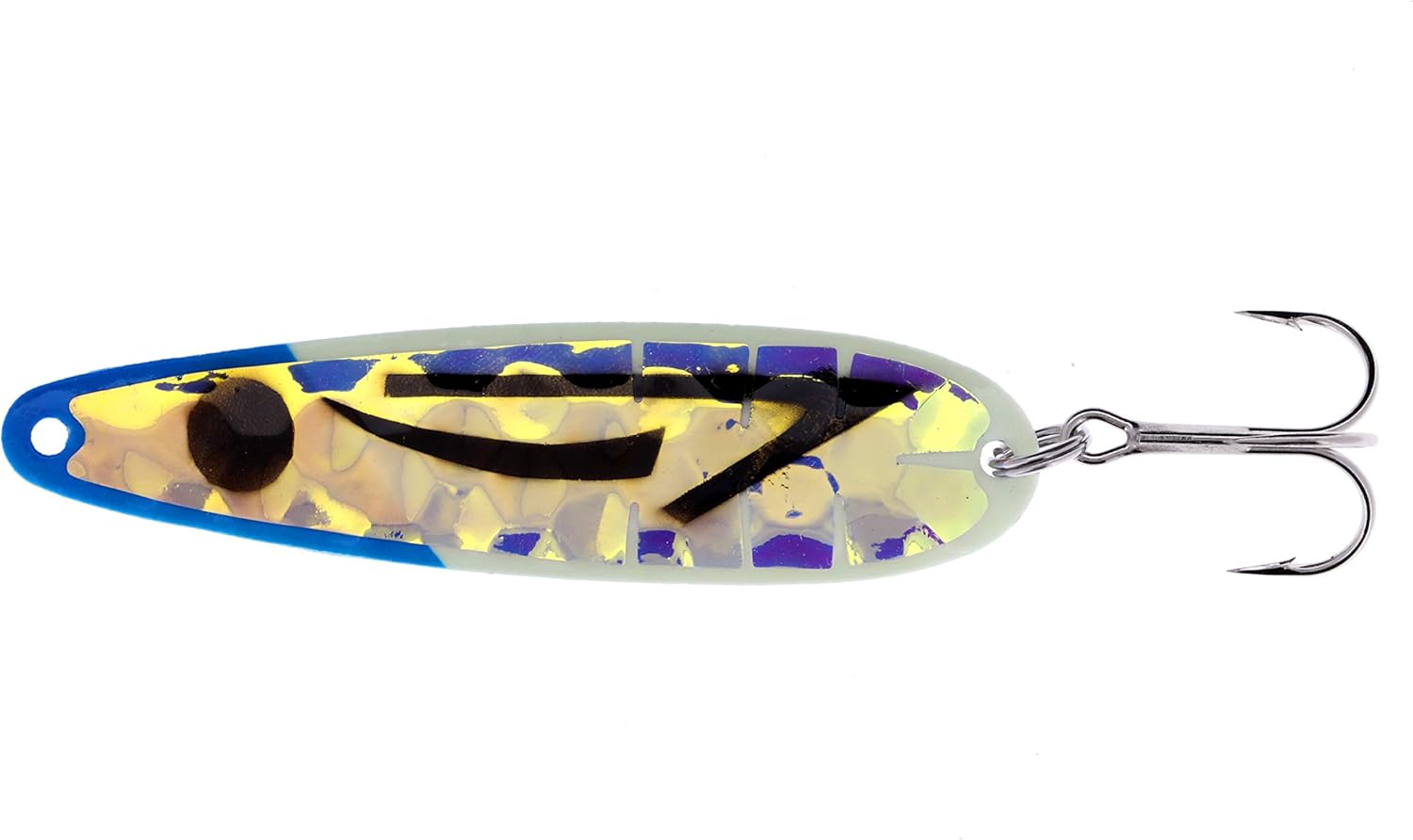
    Moonshine Lures RV Series Spoon
    Buy it on Amazon

    The Moonshine RV Series is the SoCal-equivalent legendary spoon for Great Lakes kings — the same way the Tady 45 owns yellowtail water out west. The RV refers to “reverse vinyl,” a specific tape pattern that glows under UV light and continues attracting fish in low-light conditions. Carbon 14 is the iconic color — black ladder back with green/UV elements — and it produces from dawn through bright daylight. The spoon has a wider wobble than most competitors, which throws more flash and triggers strikes on lethargic fish. Run at 2.4–2.6 mph, 60–100 feet down on downriggers or behind dipsy divers. Replace the factory treble with an Owner ST-66 in 2/0 — most charter captains do this immediately when the spoon comes out of the package. Other proven colors: Wonderbread, Sully (chartreuse), Frog.

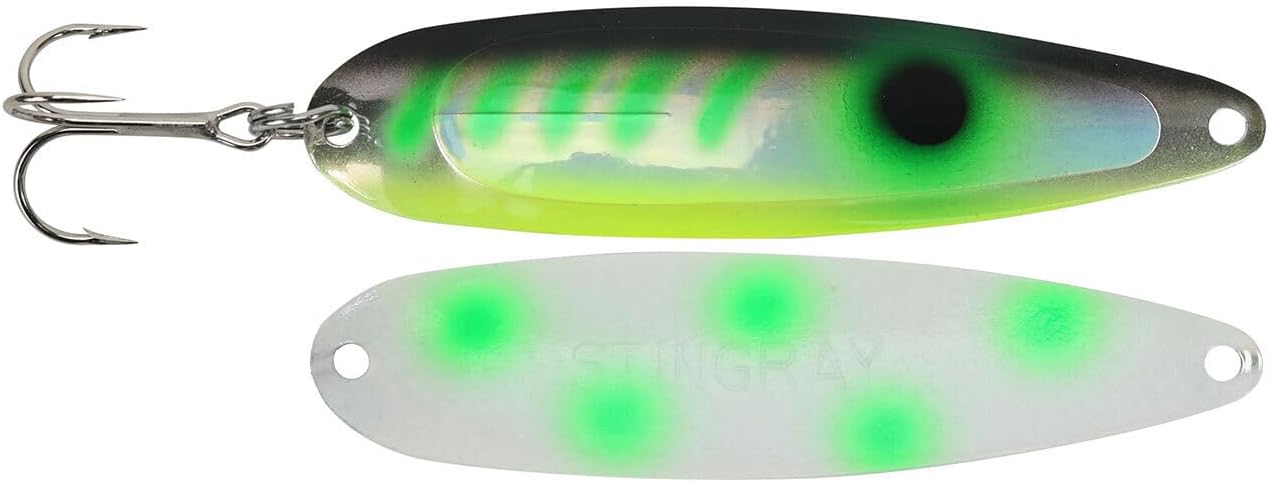
    Michigan Stinger Stingray Spoon (3.75″)
    Buy it on Amazon

    If Moonshine owns the dawn bite, Michigan Stinger owns the midday grind. The Stingray 3.75″ is the most-used king salmon spoon size across the entire Great Lakes fleet — it’s the size that matches the alewife forage base in late summer, and the action runs perfectly at the 2.4–2.8 mph trolling speeds kings prefer. Stinger’s color selection is unmatched: blue/silver, green/UV, mixed veggie, and the “Carbon Lemon Ice” pattern produce on Lake Michigan specifically. Like Moonshine, Stinger’s factory trebles are functional but most anglers upgrade to Owner ST-66s. The Stingray’s action is slightly tighter than the RV, which makes it the better pick when kings are following but not committing — the tighter wobble triggers reaction strikes on educated fish. Build your spread with 2–4 Stingrays in different colors to find the daily pattern.

    Dreamweaver Super Slim Spoon
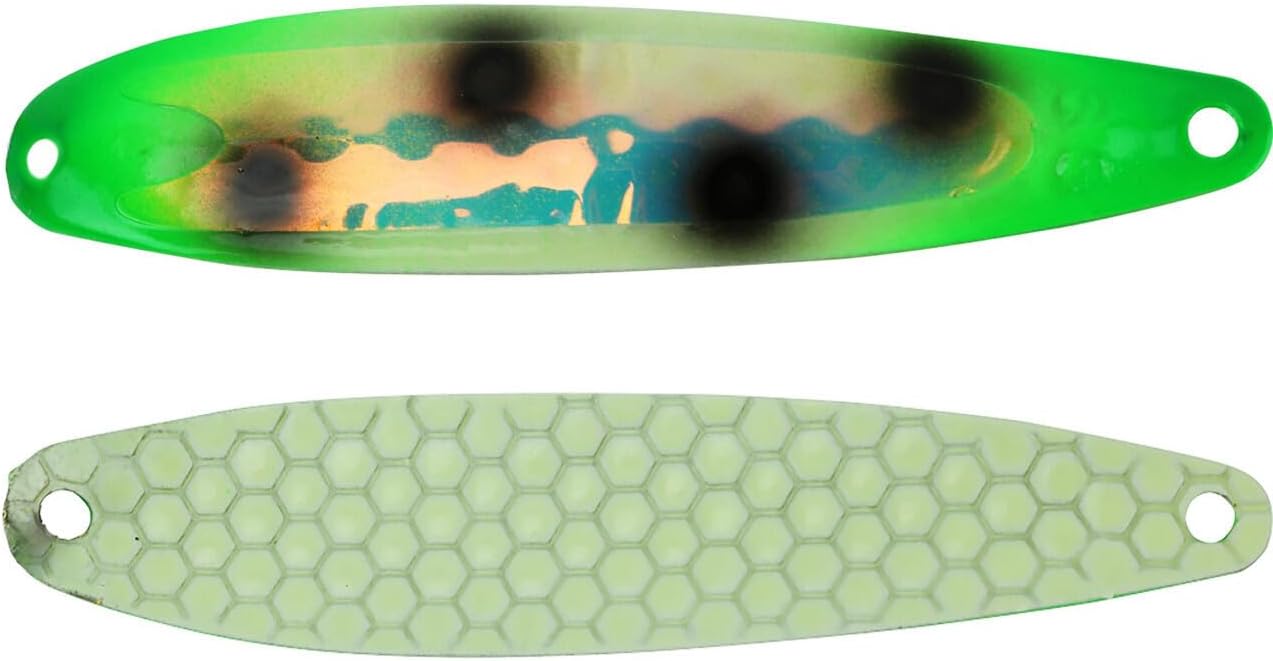
    Buy it on Amazon

    The Super Slim is the finesse option in the three-spoon king salmon arsenal. Narrower body, tighter wobble, and a more subtle profile than the RV or Stingray make it the spoon to throw when other patterns are getting follows but no commits. The Super Slim shines in clear water and on bright sunny days when kings get cautious. It also runs cleaner at higher speeds — if conditions push your trolling speed up to 2.8–3.0 mph (which happens with current or wind chop), Super Slims maintain their action while wider spoons start to spin out. Mountain Dew, Watermelon, and Carbon 14 colors are reliable Lake Michigan producers. Pair with a flasher for kings that are deep and skeptical.

    Loony Trolling Spoon

    Buy it on Amazon

    The Loony is the value option that consistently surprises people. It’s cheaper than the premium brands, the finishes aren’t as refined, and the packaging looks like a 1990s tackle shop bin. But the action is solid, the colors hit the key Great Lakes patterns, and the catch rate competes with spoons that cost three times as much. For anglers building out a spread on a budget, or for stocking the boat with backup spoons after losing a few to break-offs, the Loony deserves a place in the box. Run them on the secondary lines or behind your premium spoons until you find what’s producing — then you’ll know if the day calls for stepping up to a Moonshine or if the Loony is doing the job just fine.

    Flashers and Attractors

    Flashers are the multiplier. On hot bite days, kings will hit a bare spoon all day long. On tough days — and most Great Lakes salmon days have at least some toughness in them — a flasher run 24–36 inches ahead of the spoon dramatically increases your strike rate. The flasher creates flash and vibration that pulls kings from outside the spread, and the spoon trailing it gets the strike.

    Pro-Troll ProChip 11 Flasher
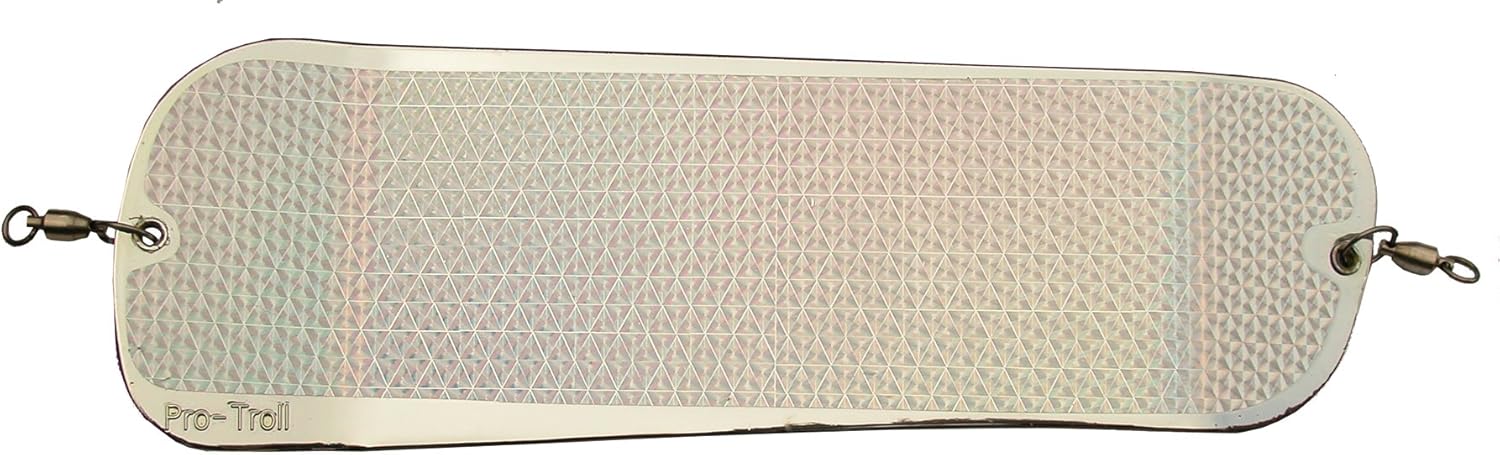
    Buy it on Amazon

    The ProChip 11 is the standard 8″ flasher for Great Lakes kings. The size produces strong flash and vibration without overwhelming the spoon trailing behind it. Pro-Troll’s “EChip” technology — a small battery-powered chip that emits a low-voltage electrical signal — is the differentiator. Whether or not the EChip adds fish-attracting bio-electrical signals is debated among captains, but the spoons work consistently and have a loyal following on the fleet. Run 24–36 inches behind the flasher on a heavy fluorocarbon leader. The most productive colors on Lake Michigan are Glo White, Mountain Dew, and UV Crinkle. Replace the snap swivel with a heavier ball-bearing version if you’re targeting trophy kings — the standard hardware has been known to fail on big fish.

    Dodger Assortment

    Buy it on Amazon

    Dodgers are the lower-action alternative to flashers — they sway side-to-side rather than rotating, creating a more subtle attraction. Dodgers work well in clear water and on educated fish where a full flasher might be too aggressive. They also pair better with cut plugs and certain bait rigs that need a tighter trailing line to work properly. A starter dodger assortment gives you Lake Michigan-relevant colors at a fraction of the cost of buying individual premium dodgers. Run 18–28 inches ahead of your trailing lure on a slightly stiffer leader than you’d use with a flasher.

    Spoon Color Selection by Conditions

    Color matters more in salmon trolling than most people realize. Charter captains will switch colors aggressively until they find what’s producing on a given day. Some patterns:

    Conditions Best Colors Why
    Dawn / Low Light Black/Glow, UV patterns, Carbon 14 Glow patterns charge up at dawn light, UV reflects pre-sunrise spectrum.
    Bright Sun / Clear Water Blue/Silver, Green/Silver, natural alewife Mimics live bait colors, less aggressive flash for educated fish.
    Bright Sun / Cloudy Water Chartreuse, Orange, Hot Pink High visibility through stained water, triggers reaction strikes.
    Overcast / Stained Water Chartreuse, Mountain Dew, Wonderbread Bright colors penetrate, contrast matters more than realism.
    Deep Water (100+ ft) Glow patterns, UV, Carbon 14 Most natural colors disappear at depth. Glow and UV still produce.

    Spoon Size and Depth Pairing

    Spoon size should match the bait kings are feeding on. On Lake Michigan, that’s primarily alewives — which run 3–5 inches in summer. Your spoon should match that profile. The Stingray 3.75″ is exactly in that range, which is why it’s so productive.

    • 3.0″ spoons — Spring and early summer when kings feed on smaller bait. Coho mix in.
    • 3.75″ spoons — The standard king size. Summer through fall. Most productive across all conditions.
    • 4.0–4.5″ spoons — Late summer / pre-spawn when kings are committed and looking for bigger meals. Larger trophy kings.
    • Magnum 5″+ spoons — Specialized use for very deep water and trophy targeting. Not necessary for typical king fishing.

    How to Set Up Your Spoon Spread

    A typical king salmon spread runs 6–10 lines off a charter boat. Recreational anglers can produce well with 4–6. The mix matters more than the count:

    1. Downriggers (2–4 lines) — Set at thermocline depth. Run your most reliable spoons here. See downrigger setup guide.
    2. Dipsy divers (2–4 lines) — Set wider than the boat to spread your strike zone. Run spoons or flasher/spoon combos.
    3. Lead core or copper (1–2 lines) — Reaches mid-depth without downriggers. Good for back-of-boat coverage.
    4. Planer boards (optional) — Spring/early summer or shallow conditions. See planer board guide.

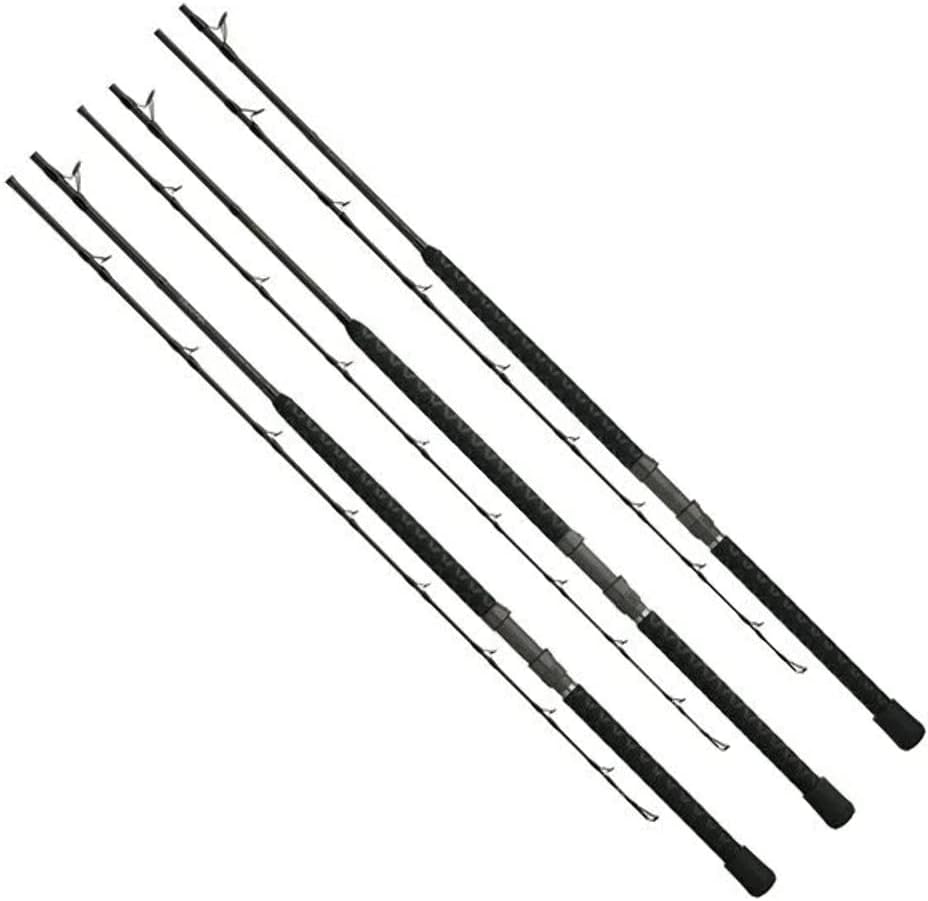
    Pair your reels and rods correctly: line counter reels on 8’6″ downrigger rods. See the full salmon trolling guide for spread layouts and trolling speeds.

    Common Mistakes

    Running the same color on every rod. Kings change preferences within an hour. Your spread should have 3–4 different patterns at any time. When one starts producing, you can swap others to match.

    Not replacing factory hooks. Most premium spoon manufacturers ship with adequate but not exceptional trebles. Upgrading to Owner ST-66 trebles in 2/0 dramatically improves hookup-to-landing ratios on kings.

    Trolling speed wrong for the spoon. Wider-action spoons (Moonshine RV) work best at 2.4–2.6 mph. Tighter spoons (Super Slim) work up to 3.0 mph. If you switch spoons, check the action behind the boat — spoons that aren’t running right won’t catch fish.

    Skipping the flasher on tough days. Bare spoons work in active conditions. When the bite is slow, the flasher/spoon combo doubles or triples strike rates.

    Cheap leader on flashers. The hardware on flasher-to-spoon connections takes the brunt of strikes. Don’t skimp on swivels or leader — use 30lb fluorocarbon minimum with quality ball-bearing swivels.

    Gear to Pair with Your Spoons

    Spoons are one piece of the system. The full setup:

    Frequently Asked Questions

    What are the best spoons for king salmon?

    The three brands that dominate the Great Lakes fleet are Moonshine Lures RV Series, Michigan Stinger, and Dreamweaver Super Slim. Each has slightly different action and color selections; most serious anglers carry all three. Start with a few of each in proven Great Lakes patterns like Carbon 14, Wonderbread, and Mountain Dew.

    What size spoon for kings?

    The 3.75″ size matches the alewife forage base on Lake Michigan and is the most productive across conditions. Step down to 3.0″ for spring and early summer when bait is smaller, step up to 4.0″+ for late summer pre-spawn fish targeting bigger meals.

    What’s the best spoon color for king salmon?

    Depends on light and water clarity. Carbon 14 (black ladder back with green/UV) is the most reliable single color across conditions. For dawn, add Glow or UV patterns. For bright sun and clear water, blue/silver and green/silver. For stained water or overcast, chartreuse and Wonderbread. Build a spread with 3–4 different patterns to find the daily preference.

    Do I need a flasher for king salmon?

    Not always, but it dramatically increases strike rates on slow days. The Pro-Troll ProChip 11 is the standard 8″ flasher. Run it 24–36 inches ahead of your spoon on heavy fluorocarbon. On active days, bare spoons produce; when the bite slows, the flasher/spoon combo finds fish that wouldn’t hit a spoon alone.

    How fast should I troll spoons for kings?

    2.4–2.6 mph is the standard king trolling speed. Wider-action spoons like the Moonshine RV work best in this range. Tighter-action spoons like the Dreamweaver Super Slim can run faster, up to 3.0 mph if current pushes you there. Always check the spoon action behind the boat — if it’s not running right, slow down or speed up.

    How deep should I run spoons for kings?

    Depends on the season and thermocline depth. Spring: 15–35 feet. Early summer: 30–60 feet. Peak summer: 60–120 feet. Pre-spawn (August): 40–80 feet. See the king salmon temperature guide for detail. Use a temp/speed probe at downrigger depth to find the prime 52–56°F band.

    Plan Your Trip

    Related Guides

    Tight lines!
  • Best Downriggers for Great Lakes Salmon Trolling

    Downriggers are the single most important piece of equipment in Great Lakes salmon fishing. By July, kings are 80–120 feet down. Coho are 40–70 feet down. Lake trout are deeper still. Without downriggers, you simply cannot put a lure where the fish are. Lead core line and copper get you there with limitations; dipsy divers spread your coverage; but downriggers give you precise, repeatable depth control that nothing else can match.

    This guide breaks down what to buy for Great Lakes salmon trolling — manual vs electric, Cannon vs Scotty, what features matter, and where to spend your money at each budget level. The investment ranges from about $150 for a single manual unit to $1,500+ per side for top-end electric setups. Knowing what you actually need vs what marketing pushes saves real money.

    ⚡ Quick Picks by Situation

    Budget / first downrigger: Cannon Easi-Troll HS Manual — proven manual at the lowest entry point.

    Mid-tier electric: Cannon Optimum 10 TS — the workhorse electric for most Great Lakes anglers.

    Premium electric: Scotty 1106 Depthpower — built-tough alternative for serious fishing.

    Essential accessory: 10 lb Downrigger Weight — minimum weight for proper line angle.

    Release clips: Black’s Releases / Cannon Clips — quality clips prevent missed strikes.


    Let’s go Fishing!
    Search for the Perfect Fishing Trip or Charter
    Great Lakes Trolling
    Verified reviews · Free cancellation · 90-day price match
    Powered by FishingBooker · Affiliate partner

    Manual vs Electric: What’s Right for You?

    The first decision is manual vs electric. The cost difference is significant — manuals run $150–$300, electrics start around $700 and go to $1,500+ — but the operational difference matters more than the cost over the long run.

    Manual downriggers work when you have time, fewer rod setups, and aren’t fishing every day. You hand-crank the weight up after each strike or depth change. Setting depth takes 15–30 seconds. Two manual riggers running side-by-side is manageable. Four becomes a workout. For weekend anglers who do 6–10 trips a year and run 2–4 lines, manual is fine.

    Electric downriggers work when fishing time is precious or you’re running multiple rods. The button retrieves the weight in 10–15 seconds while you’re already netting the fish or resetting other lines. The depth counter is digital and precise. Anglers doing 30+ trips a season or running 4+ rods almost always step up to electric eventually. Charter captains use electric exclusively.

    The honest math: a serious recreational angler in their second or third year of salmon fishing usually wishes they’d bought electric from the start. The time saved over a season pays back the price difference in convenience.

    Manual Downriggers

    Cannon Easi-Troll HS

    Buy it on Amazon

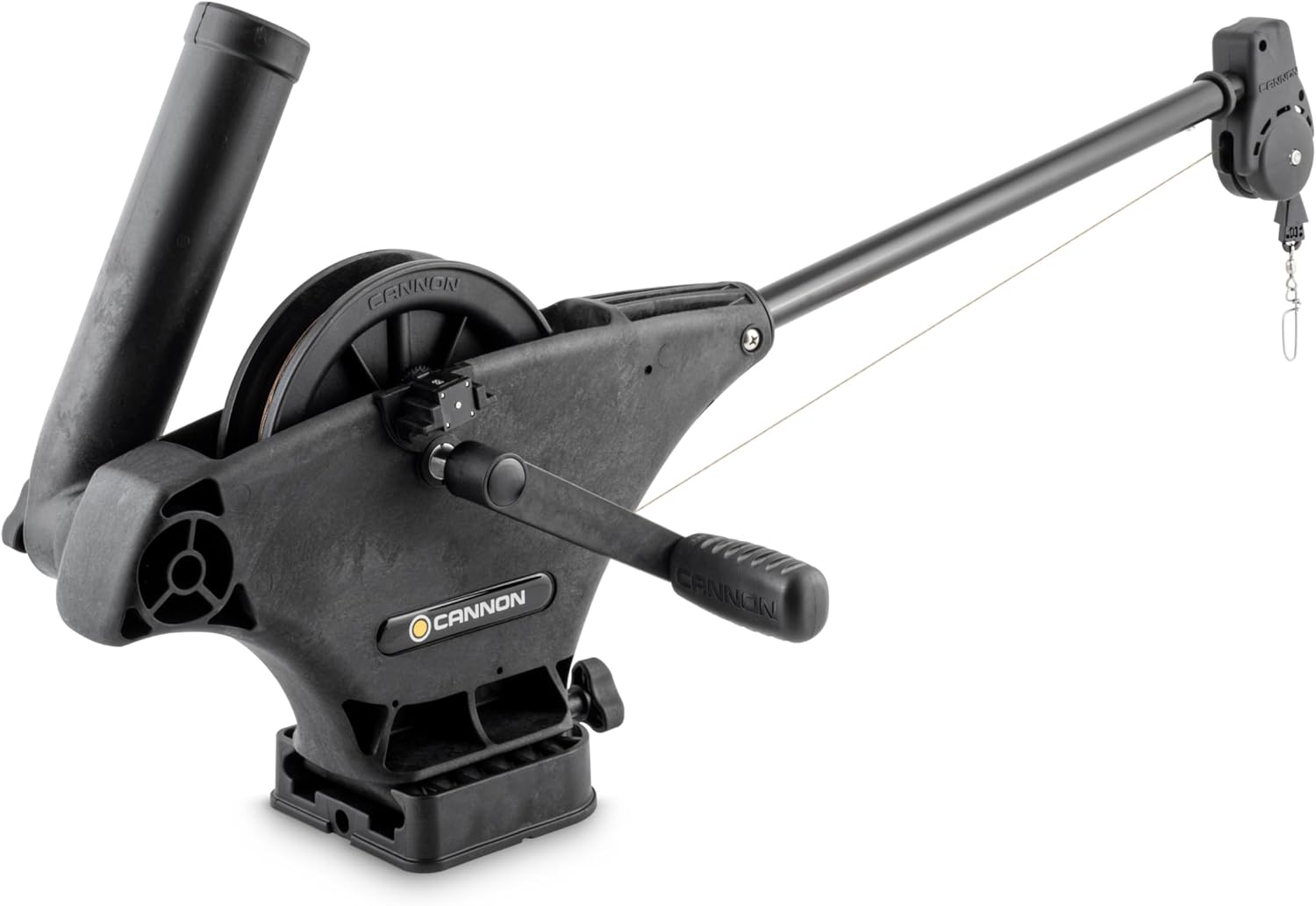
    The Cannon Easi-Troll HS is the entry point into serious downrigger fishing. The “HS” means “high-speed” — the gear ratio retrieves the weight faster than older Cannon manuals, which matters when you’re cranking up 80–120 feet of cable repeatedly. The unit mounts to a transom or rail with the standard Cannon swivel base, and it comes with the depth counter and stainless cable already installed. For around $150–200, you get a downrigger that produces fish identically to a $1,000 electric — the only difference is your shoulder gets the workout instead of a motor. Pair with a 10 lb weight and Cannon release clips and you’re ready to fish. Best use case: anglers running one or two downriggers, getting started, or working from a smaller boat where electric setups are overkill.

    Electric Downriggers

    Cannon Optimum 10 TS

    Buy it on Amazon

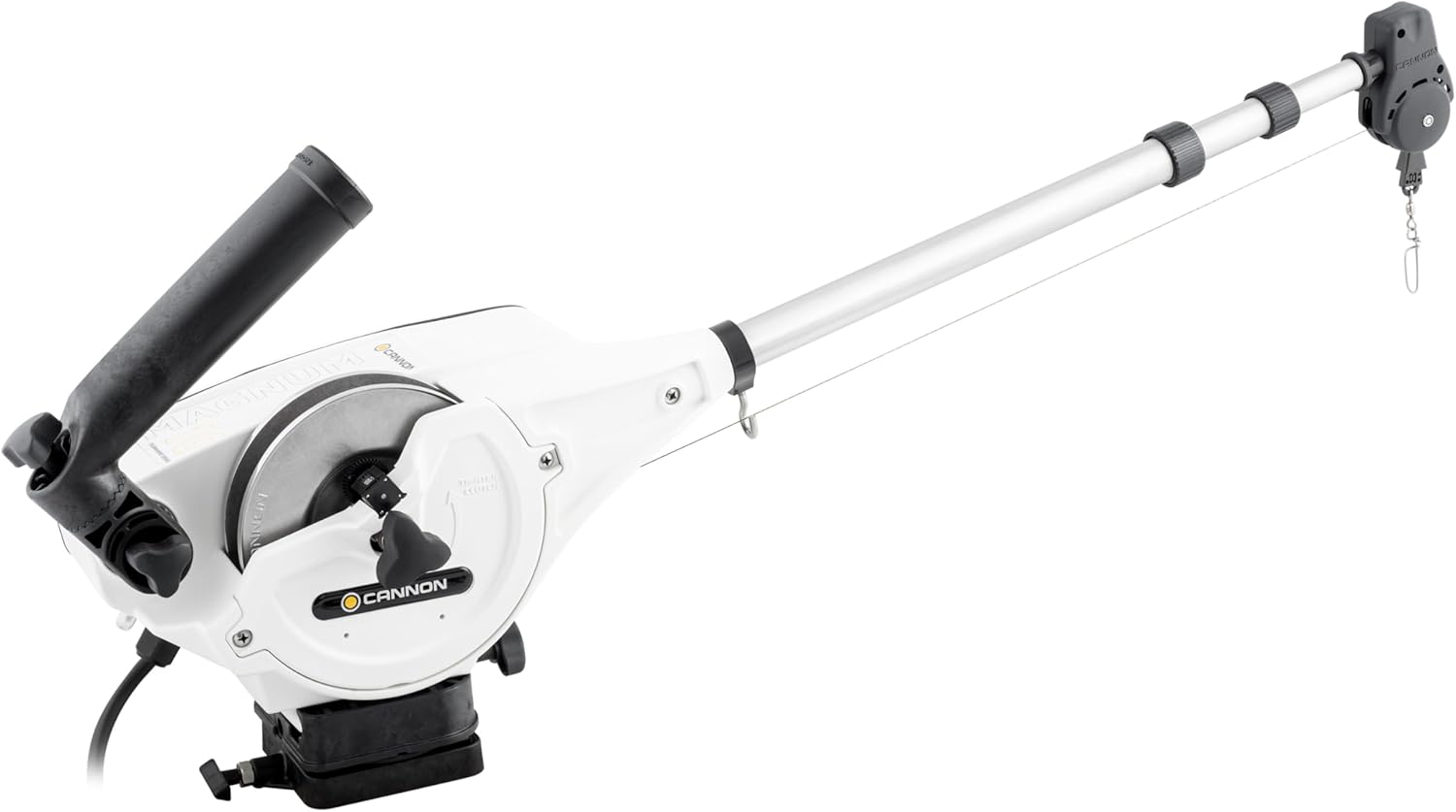
    The Cannon Optimum 10 TS is the workhorse electric downrigger for Great Lakes anglers — not the cheapest, not the most expensive, but the one most charter captains and serious recreational anglers actually use. The “10” refers to the boom length (10 inches off the side of the boat, keeping cable clear of the transom). “TS” is “telescoping boom” — extends to about 4 feet for spreading lines further from the boat. Variable-speed retrieval, digital depth counter, programmable bottom tracking, and built-in transducer mount cover all the features you actually need. It connects to Cannon’s network so multiple units can sync depths if you’re building a high-end setup. Around $1,000–1,300 depending on configuration. The single most-recommended downrigger by Great Lakes charter captains.

    Scotty 1106 Depthpower

    Buy it on Amazon

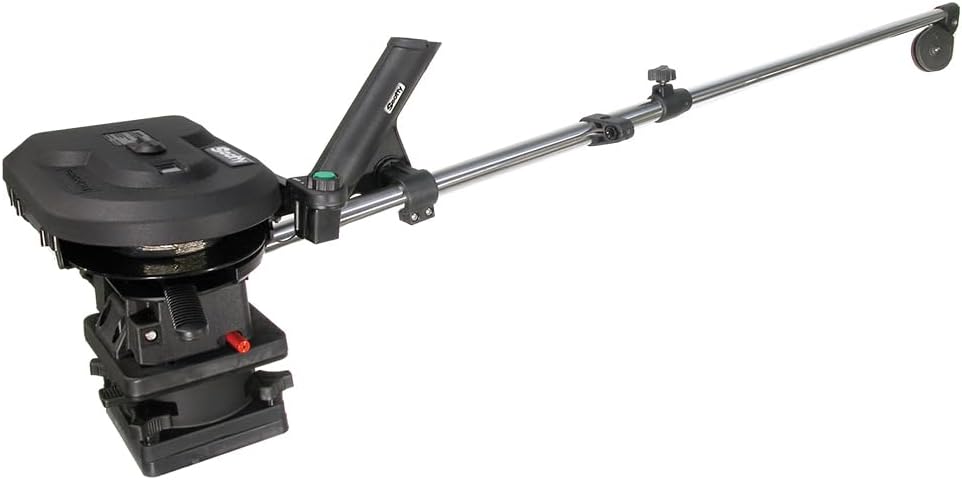
    Scotty is the Canadian alternative to Cannon, and the 1106 Depthpower is the model that competes head-to-head with the Cannon Optimum. Scotty’s design philosophy is slightly different — heavier-duty construction, longer boom options, and a focus on saltwater durability that translates well to Great Lakes use. The 1106 Depthpower has the digital counter and variable-speed retrieval, and it’s known for surviving heavy use better than competing units. The mount is different from Cannon’s — Scotty uses a proprietary track system that integrates with their full line of accessories. If you’re starting fresh and considering Scotty’s ecosystem (downriggers, rod holders, planer board mast), the 1106 is the right entry point. About $1,100–1,400. Best for anglers who fish heavily, fish saltwater seasonally, or prefer Scotty’s heavier-duty build.

    Essential Accessories

    The downrigger itself is only part of the system. These accessories are required, not optional:

    Downrigger Weights (Cannonballs)

    Buy it on Amazon

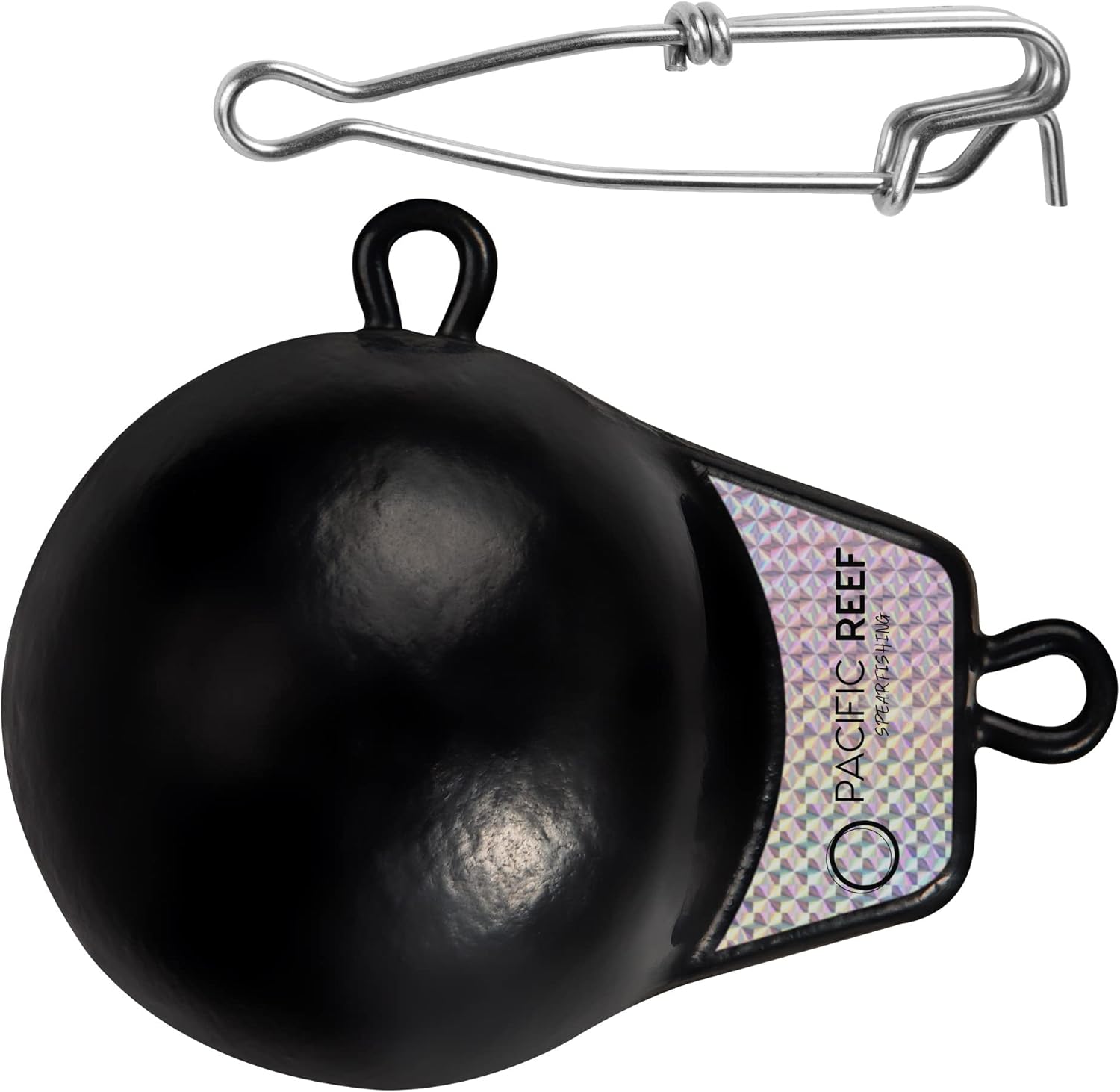
    The weight pulls your cable down and keeps the line angle vertical enough that depth reading matches reality. Too light a weight at trolling speed and the cable angles back so significantly that “60 feet of cable out” might mean “40 feet of actual depth.” For Great Lakes salmon trolling at 2.4–2.8 mph, 10 lb is the minimum useful weight. 12–14 lb is better for deeper fishing (100+ feet) or higher speeds. Get at least one weight per downrigger, plus one spare — break-offs happen, and you don’t want your trip ending because you lost your only ball at 80 feet down.

    Release Clips

    Buy it on Amazon

    The release clip holds your fishing line to the downrigger cable until a fish hits, then releases so the line is free to fight the fish off the rod. Cheap or worn-out clips either release too easily (you lose presentations every time the boat hits chop) or grip too hard (you miss strikes because the fish can’t pull the line free). Black’s Releases and Cannon’s own clips are the two reliable options. Pinch tension should be adjustable. Replace clips every 1–2 seasons of heavy use — they wear out.

    Choosing the Right Downrigger Setup

    Match the rigger to your boat and use case:

    Setup Recommendation Total Cost
    First downrigger, small boat 1 × Cannon Easi-Troll HS + 10 lb weight + clips $200–250
    2 manual riggers 2 × Cannon Easi-Troll HS + weights + clips $400–500
    1 electric (transitional) 1 × Cannon Optimum 10 TS + accessories $1,100–1,400
    Mid-tier 2-electric setup 2 × Cannon Optimum 10 TS + accessories $2,200–2,800
    Heavy-duty 2-electric 2 × Scotty 1106 Depthpower + accessories $2,400–3,000
    Full charter-style 4-rigger 4 × Cannon Optimum 10 TS + accessories $4,500–5,500

    Mounting and Installation

    How you mount the downrigger matters as much as which unit you buy. Three common mounting approaches:

    Transom mount — Cheapest, simplest. Through-bolt the swivel base to the rear transom of the boat. Works for smaller boats and starter setups. Limits how far you can spread the downriggers from the centerline.

    Gunnel mount — Through-bolt to the side gunnel near the back of the boat. Allows the downrigger boom to extend further from the boat (especially with telescoping booms), spreading your trolling spread wider. Standard for serious setups.

    Track mount — A length of aluminum track bolted along the gunnel that allows the downrigger to slide forward or back. Most flexible setup, used on charter boats and high-end recreational rigs. Allows quick repositioning between trips or even during a trip.

    For most owners, gunnel mounts on each side toward the rear of the boat is the right setup. Boom length should be enough that your weights run outside the prop wash but not so wide that they tangle with your dipsy diver lines.

    Common Mistakes

    Buying too light a weight. 8 lb weights are common in starter kits, but they don’t pull the cable down hard enough for Great Lakes trolling speeds. Step up to 10 lb minimum, 12 lb for serious work. Cable angle matters more than people realize.

    Cheap clips. The release clip is where strikes are won or lost. Pay for quality clips and replace them as they wear. A $4 worn clip can cost you a $50 day’s worth of fish.

    Skipping the depth counter calibration. Electric downriggers have digital counters that need occasional calibration. If your counter says 60 feet but the weight is actually at 80 feet because of cable angle, your spread is wrong. Calibrate annually against a depth finder.

    Going electric on the wrong boat. Electric downriggers need significant battery capacity. If your boat’s electrical system can barely run a fish finder, adding two electrics will drain your battery in a day. Upgrade to dual batteries before adding electric riggers.

    Not learning to read the rigger. The downrigger isn’t just a depth tool — the bend of the cable, the way the weight tracks behind the boat, and the way the rigger reacts to bottom contact all give information. Anglers who watch their rigger setup learn what depth is producing without checking the counter.

    Gear to Pair with Your Downriggers

    Frequently Asked Questions

    Do I need a downrigger for Great Lakes salmon?

    For summer fishing (June–September), essentially yes. Kings hold at 60–120 feet by July, and there’s no efficient way to keep lures at that depth consistently without a downrigger. Lead core and copper lines can reach the depths but with much less precision. For spring (April–May) you can produce with planer boards alone.

    What size downrigger weight should I use?

    10 lb minimum for Great Lakes salmon trolling at 2.4–2.8 mph. 12–14 lb is better for depths over 100 feet or trolling speeds above 2.8 mph. Lighter weights cause significant cable angle that makes your depth reading inaccurate.

    Manual or electric downrigger?

    Manual works for occasional anglers running 1–2 rods. Electric becomes worth the cost for serious anglers running 3+ rods or fishing 20+ days per season. The convenience over a year of fishing pays back the price difference for most regular users.

    How many downriggers do I need?

    1 to start. 2 is the standard recreational setup. 4 is charter-style for maximum coverage. Each additional downrigger gives you another depth and presentation, but also adds complexity to managing the spread.

    What’s better, Cannon or Scotty?

    Both are excellent. Cannon dominates the Great Lakes market and has more accessory integration. Scotty has heavier-duty construction and is more popular on the Pacific coast. Functionally they perform similarly. If you’re starting fresh, pick the brand whose ecosystem (rod holders, accessories) you prefer and stick with it.

    Can downriggers be used for walleye?

    Yes — downriggers are excellent for deep summer walleye on lakes like Lake Erie. Same technique as salmon, just with smaller lures and slower trolling speeds (1.5–2.2 mph). The investment in downriggers pays back across multiple species and fisheries.

    Plan Your Trip

    Related Guides

    Tight lines!
  • Best Coho Salmon Lures: Great Lakes Guide

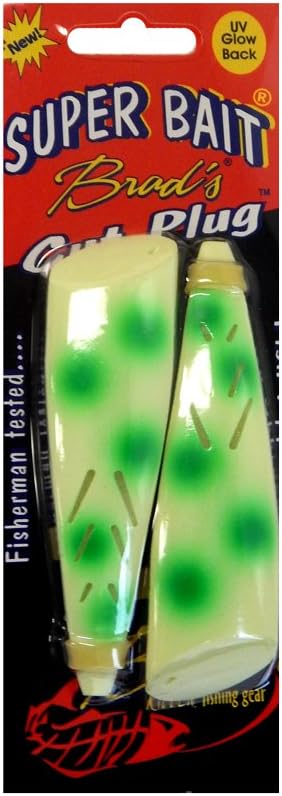
    Coho salmon are the most willing biters in the Great Lakes salmon family. They hit aggressively, chase faster than kings, and tolerate a wider range of lure presentations. That doesn’t mean any lure works — there’s a specific arsenal that produces consistently, and the brands that own coho fishing are different from the brands that own kings. Brad’s Cut Plug for trolling. Rapala Husky Jerks for spring shallow water and pier casting. Mepps Aglia spinners for river runs and shore fishing. Each tool has its season and its place.

    This guide breaks down what to throw for coho across all three modes — boat trolling, pier and shore casting, and river fishing during the fall run. Pair this with the coho temperature guide to know when and where these lures put fish in the cooler.

    ⚡ Quick Picks by Situation

    Best trolling lure: Brad’s Cut Plug Killer 4.0 — the coho standard, runs at perfect coho speeds.

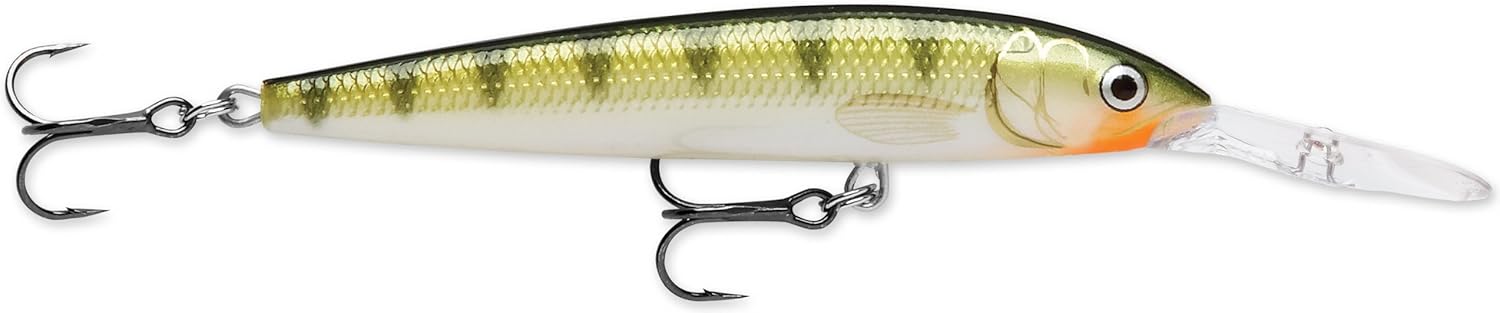
    Spring pier / shallow: Rapala Husky Jerk HJ12 — perfect for early-season coho in 5–25 feet.

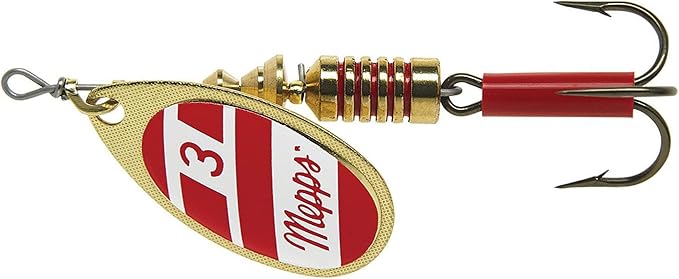
    Pier / shore casting: Mepps Aglia #4 or #5 — the river and pier producer.

    River run / casting: Acme Kastmaster 1oz — long-cast spoon for distance work.

    Trolling spoon: Michigan Stinger Stingray — same king spoon in smaller sizes works for coho.


    Let’s go Fishing!
    Search for the Perfect Fishing Trip or Charter
    Great Lakes Coho
    Verified reviews · Free cancellation · 90-day price match
    Powered by FishingBooker · Affiliate partner

    Trolling Lures for Coho

    Brad’s Cut Plug Killer 4.0

    Buy it on Amazon

    If there’s a single lure synonymous with Great Lakes coho fishing, it’s the Brad’s Cut Plug. The design is unique — a hollow plastic plug shaped like a cut piece of herring, with the flat front face giving it a wobbling, erratic action that imitates a wounded baitfish. The Killer 4.0 size is the coho standard. Most anglers fish them with bait inserted into the cavity — anchovy, herring, or even tuna belly — which doubles the attraction with scent. Run them 30–60 feet down on downriggers or behind dipsy divers at 2.4–2.8 mph. Color matters: Green/Glow, UV White, and Mountain Dew are reliable Lake Michigan producers. The cut plug excels when coho are scattered and need to be coaxed — the erratic action triggers strikes that spoons wouldn’t get.

    Michigan Stinger Stingray (smaller sizes)

    Buy it on Amazon

    The same Stingray spoon that owns king salmon fishing also produces well on coho when scaled down. The 3.0″ Stingray matches the smaller bait profile coho typically feed on, and the tighter wobble works at the slightly faster speeds (2.5–3.0 mph) coho prefer. Throughout the summer, mixed-species spreads running larger Stingrays for kings and smaller ones for coho cover both targets in one trolling pass. Top colors for coho: Frog, Mountain Dew, and the various UV chartreuse patterns. Replace factory trebles with Owner ST-66s.

    Loony Trolling Spoon

    Buy it on Amazon

    The budget producer earns its place in the coho spread too. Coho are aggressive enough that they’ll hit a Loony just as readily as a premium spoon, which makes this the smart pick for filling out a 6–8 rod spread without spending $200 on spoons alone. Run them on the secondary lines and outer dipsy divers where they get fished hard and occasionally lost. The catch rate stays competitive even though the price point doesn’t.

    Pier and Shallow Water Lures

    Spring coho — and post-spawn fall coho — push into shallow water where boat trolling isn’t the right approach. Stickbaits cast from piers or trolled with planer boards in 5–25 feet of water own this fishery.

    Rapala Husky Jerk HJ12 / HJ14

    Buy it on Amazon

    The Husky Jerk is the pier and planer board lure for spring coho. The HJ12 (4.75″) is the right size for matching the small smelt and emerald shiner forage that coho push shallow to feed on after ice-out. Step up to the HJ14 (5.5″) when bait gets bigger later in spring. The suspending action — the lure holds its depth on the pause — triggers strikes from following fish that wouldn’t commit to a constantly-moving lure. Best colors for Lake Michigan spring coho: Glass Perch, Clown, Silver/Black, and Purple Descent. Cast and retrieve slowly from piers with frequent pauses, or troll with planer boards at 2.0–2.5 mph in 10–25 feet of water.

    Acme Kastmaster 1oz

    Buy it on Amazon

    The Kastmaster is the “throw it a mile” answer to pier and shore coho fishing. The dense single-piece chrome construction casts farther than any other spoon in its weight class, which matters when coho are working bait just outside normal casting range. The action is simple — a tight wobble on retrieve with a fluttering fall on the drop — but it’s enough to trigger coho strikes consistently. Chrome/blue, chrome/green, and gold are the proven colors. Replace the factory split ring with a heavier one if you’re targeting larger fall coho. Cast, count down to your target depth, then retrieve at a moderate-fast pace with occasional pauses.

    River and Stream Lures

    The fall coho run pushes fish into tributary rivers and streams across Lake Michigan’s eastern shore — Manistee, Pere Marquette, Big Manistee, Betsie, Platte. River coho hit different lures than open-water coho. Spinners and small plugs dominate.

    Mepps Aglia Spinner (#4 or #5)

    Buy it on Amazon

    The Mepps Aglia has been the river salmon spinner for decades. The #4 (3/8 oz) is the right size for typical Great Lakes tributaries; step up to #5 (1/2 oz) when the river is high and pushing hard. The rotating blade creates flash and vibration that triggers reaction strikes from coho that aren’t actively feeding — they’re spawning, not hunting, but they’ll hit out of aggression. Silver blade with red dressing is the classic Great Lakes pattern. Fluorescent orange and chartreuse also produce well, especially in stained water. Cast across and slightly downstream, then let the current bring the spinner across the holding lies. Slow your retrieve to maintain blade rotation without skating the spinner across the surface.

    Rapala Original F05 / F07

    Buy it on Amazon

    The Original Rapala in size F05 or F07 is the small-river coho lure. Where the Mepps Aglia gives you flash and vibration, the Rapala Original gives you a tighter, more bait-like wobble that produces in clearer water or when coho are pressured by other anglers. Use the F05 for tight, smaller rivers where you need precise casts. The F07 is the standard for the medium-sized Great Lakes tributaries. Silver/black and gold/orange are the standard colors. Drift through holes and runs, twitching the rod tip to give the lure life. The smaller profile and tight action are deadly on coho that have rejected larger offerings.

    Color Selection for Coho

    Conditions Trolling Colors River/Pier Colors
    Spring / Cold Water Silver/Blue, Glass Perch, Clown Silver, Gold, Natural Minnow
    Bright Sun / Clear Water Green/Silver, Blue/Silver, UV Crinkle Silver, Gold, Brown Trout
    Overcast / Stained Water Mountain Dew, Chartreuse, Frog Fluorescent Orange, Chartreuse, Pink
    Fall Run / River Silver/Red, Orange, Pink, Chartreuse
    Low Light / Dawn Glow patterns, UV White, Carbon 14 Silver, Brass, Glow

    How to Set Up for Coho

    The setup varies by mode. Three common rigging approaches:

    Trolling rig: Cut plug or spoon on 25–30lb monofilament leader (10–15 feet long), connected via ball-bearing swivel to your mainline. Mainline is typically 30lb braid or 40lb mono. Run from downriggers, planer boards, or dipsy divers.

    Pier rig: Spoon or stickbait on 12lb mono direct to mainline, or via small ball-bearing swivel to prevent line twist with spoons. Penn Spinfisher VII in the 4500–6500 size on a 9–10′ medium-power spinning rod is the standard pier setup.

    River rig: Spinner or Rapala on 8lb monofilament direct to small ball-bearing swivel, then to mainline. Lighter rod and reel — a 7′ medium-light spinning combo handles the river fishery well.

    Common Mistakes

    Trolling too slow for coho. Coho prefer faster trolling than kings. If you’re at 2.4 mph and not getting coho hits, bump up to 2.7–3.0 mph. The willingness of coho to chase faster lures is one of their defining traits.

    Using king-sized spoons exclusively. The 3.75″ Stingray that owns kings is too big for many coho situations. Drop to 3.0″ or 2.5″ spoons when targeting coho specifically — the smaller profile matches their preferred bait size.

    Ignoring spring shallow opportunities. April and May coho fishing in shallow water with planer boards or pier casting produces some of the easiest salmon fishing of the year. Many anglers skip this window waiting for “real” salmon season.

    Wrong colors for river fishing. Open-water coho colors don’t translate to rivers. Switch to silver/red, fluorescent orange, and chartreuse for river work — the visibility through stained tributary water is different from open lake water.

    Skipping the pause. On suspending lures like the Husky Jerk, the pause is when the strike happens. Don’t retrieve constantly — work the lure with frequent pauses that let coho catch up and commit.

    Gear to Pair with Coho Lures

    Frequently Asked Questions

    What are the best lures for coho salmon?

    For trolling, the Brad’s Cut Plug Killer 4.0 is the standard. For pier and shallow water, Rapala Husky Jerk HJ12. For river runs, Mepps Aglia #4 or #5. These three lures cover the entire coho fishery across seasons.

    What size spoon for coho?

    3.0″ spoons are the sweet spot for coho. The Michigan Stinger Stingray in 3.0″ matches the smaller alewife and smelt forage that coho prefer. Step down to 2.5″ for spring fish on smaller bait, step up to 3.75″ only when coho mix with kings in late summer.

    What’s the difference between coho and king salmon lures?

    Coho prefer smaller profiles and faster speeds. Where kings hit 3.75″ spoons at 2.4 mph, coho prefer 3.0″ spoons at 2.7–3.0 mph. The Brad’s Cut Plug is more coho-specific than king-specific. Spinners (Mepps Aglia) work for coho in rivers but not for kings. Husky Jerks and pier lures work for coho but rarely produce kings.

    How do I fish a cut plug?

    The Brad’s Cut Plug has a cavity that holds bait — typically anchovy, herring, or tuna belly. Insert the bait, secure the plug, then run it 30–60 feet down on a downrigger or behind a dipsy diver at 2.4–2.8 mph. The wobbling action mimics a wounded baitfish, and the bait inside adds scent attraction.

    What’s the best lure for river coho?

    The Mepps Aglia spinner in #4 or #5 is the river coho standard. Silver blade with red dressing is the classic Great Lakes pattern. Step up to fluorescent orange or chartreuse colors in stained water. Cast across and downstream, let the current carry the spinner across holding lies.

    Can I catch coho from shore?

    Yes — particularly in spring when fish push shallow to feed, and during the fall run when coho stage near tributary mouths and run up the rivers. The Acme Kastmaster 1oz for distance and the Mepps Aglia for accuracy cover most shore-based coho situations.

    Plan Your Trip

    Related Guides

    Tight lines!
  • Best Tuna Jigs and Lures

    Best Tuna Jigs and Lures

    When tuna are crashing bait on the surface or stacked on deep structure, the angler throwing iron is the one getting bit. Live bait catches more tuna overall in SoCal — but nothing matches the adrenaline of a bluefin blowing up on a surface iron or hammering a flat-fall on the drop. Jig fishing for tuna is harder than throwing iron at yellowtail — tuna are faster, pickier, and pull significantly harder — but the payoff is worth it.

    This guide covers the three main categories of tuna jigs — surface irons, yo-yo (vertical) jigs, and casting jigs — plus the specific models that consistently produce on SoCal bluefin and yellowfin. If you’re still dialing in your tuna setup, check our best reel for bluefin guide first.

    ⚡ Quick Picks by Situation

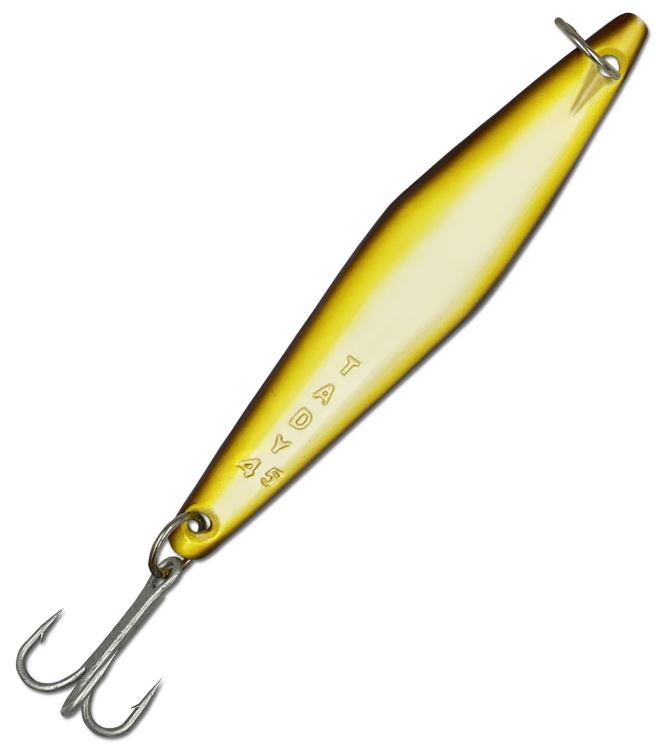
    Surface boils: Tady 45 (2.9 oz) — the SoCal standard, cast it into the boil and burn it back.

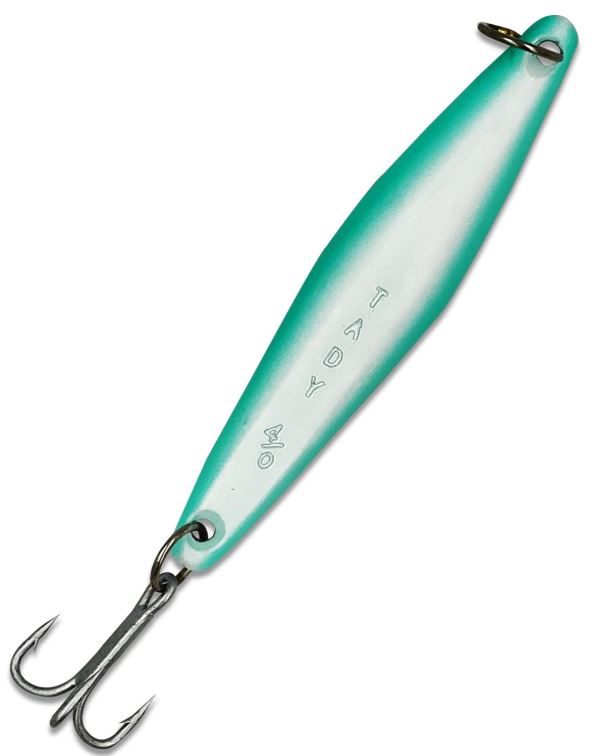
    Finesse surface: Tady 4/0 (2.6 oz) — lighter profile for picky bluefin that are following but not eating.

    Distance / wind: Nomad Design Slidekick (4.25 oz) — aerodynamic, reaches boils other irons can’t.

    Deep structure: Shimano Butterfly Flat-Fall — the flutter on the drop is what triggers the bite.

    Heavy yo-yo: Tady 4/0 Heavy (6 oz) — punches through current to deep fish fast.


    Book a Tuna Charter
    Southern California & Baja · Verified reviews · Free cancellation

    Powered by FishingBooker


    Surface Irons

    Surface iron fishing for tuna is the pinnacle of SoCal angling. When bluefin or yellowfin push bait to the surface and the water erupts, casting iron into the chaos is how you get the most explosive strikes in the ocean. The window is often short — tuna boil for a few minutes, then go back down — so you need to be rigged, ready, and casting the instant fish show on top. Speed is everything: fast retrieve, long cast, no hesitation. For a full breakdown of when to throw iron vs other lure types, see our jigs vs irons vs poppers guide.

    Critical upgrade: Replace the factory treble hooks on every iron you own with Owner ST-66 trebles in 2/0–3/0. Factory trebles are made from soft wire and will straighten instantly on a tuna. The ST-66 is 4X strong with a tin finish for corrosion resistance. This is non-negotiable — see our hooks guide for details.

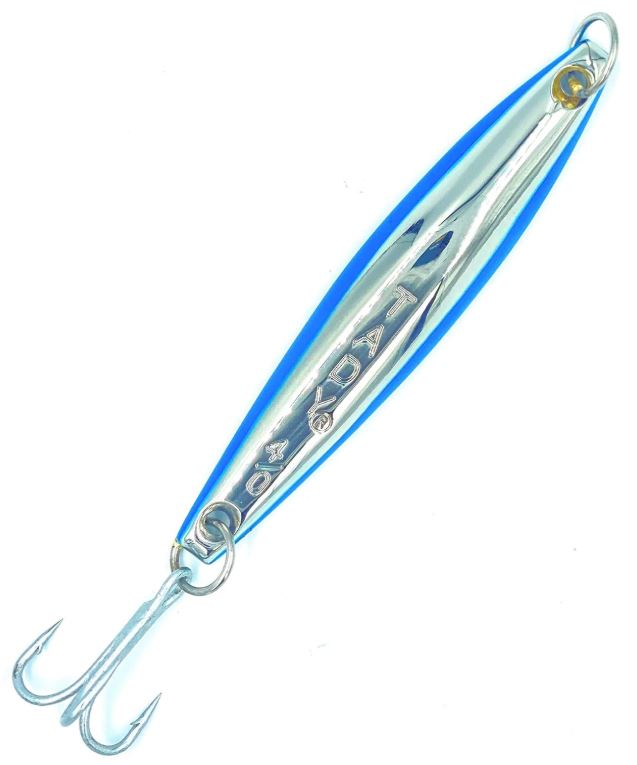
    Tady 45 (2.9 oz / 6.5″)

    Buy it on Amazon

    On bluefin specifically, the Tady 45 is all about speed and distance. When a boil erupts, you need a full-burn retrieve from the moment the iron hits the water — no pause, no slow down, no hesitation. Tuna are keyed on escaping bait at maximum speed, and any break in the retrieve gets the iron refused. The 2.9oz weight earns its place on tuna trips because bluefin boils move fast and casting distance determines whether you’re in the zone or watching from behind. Every extra yard of cast matters when the window is 90 seconds. Non-negotiable: replace the factory treble immediately with an Owner ST-66 in 2/0. Bluefin will straighten soft factory wire on the first hard run — this upgrade is not optional.

    Tady 4/0 (2.6 oz / 5.74″)

    Buy it on Amazon

    The 4/0 is a finesse weapon for line-shy bluefin — not a backup to the 45, but a deliberate tool for a specific situation. When bluefin in the 30–60lb class are boiling but following the 45 without committing, the smaller 4/0 profile matches smaller forage and the slightly different action gives picky fish a reason to eat. This is well-documented behavior on SoCal bluefin: fish that have seen pressure get selective, and the 4/0 breaks through that. Bone and chrome are the go-to colors on difficult fish. The reduced casting distance means you need fish within range, but when everyone on the boat is watching followers and not going tight, the 4/0 is the move. Same treble rule applies: ST-66, not factory.

    Nomad Design Slidekick Surface Iron (4.25 oz)

    Buy it on Amazon

    The Slidekick solves the tuna angler’s most common problem: boils that are too far away and moving fast. At 4.25oz, it cuts through headwinds and delivers 20–30 yards more distance than a Tady in rough conditions — and on bluefin where the boil window is short and the school is moving, that distance is often everything. The hard dart-and-slash action differs from the Tady’s wobble, which can trigger strikes from fish that have already refused every other iron in the boat. The extra weight also means it can be yo-yoed vertically in a pinch when fish drop below the surface mid-stop. Same mandatory upgrade: Owner ST-66 trebles before you throw it at anything with tuna written on it.

    Yo-Yo (Vertical) Jigs

    When tuna are on the meter but won’t come to the surface, yo-yo jigging gets down to their depth. This is especially productive on bluefin — they often hold 60–150 feet below the surface during the day and only come up briefly to feed. Drop the jig to the depth fish are marking, then work it back up with sharp, aggressive rod pumps. The erratic darting action triggers reaction strikes from fish that are ignoring bait and surface presentations.

    Tady 4/0 Heavy Yo-Yo Iron (6 oz)

    Buy it on Amazon

    Bluefin on the meter at 80–200 feet is where the Heavy earns its place. The 6oz sinks fast enough to reach a moving school before it passes underneath — which is the constant challenge with deep bluefin, because unlike yellowtail stacked on structure, tuna don’t hold still. Work it with hard, sharp pumps, but unlike deep yellowtail jigging where the bite comes on the rise, bluefin often eat the Heavy on the fall — feather it down on semi-slack line and watch for a tick or sudden slack that signals a fish. When bluefin are circling at 150+ feet and won’t commit to anything on the surface, this is where you find the bite. A 40lb conventional setup with 65lb braid is the right call — a 30lb yellowtail setup gets embarrassed on the first run of a big bluefin.

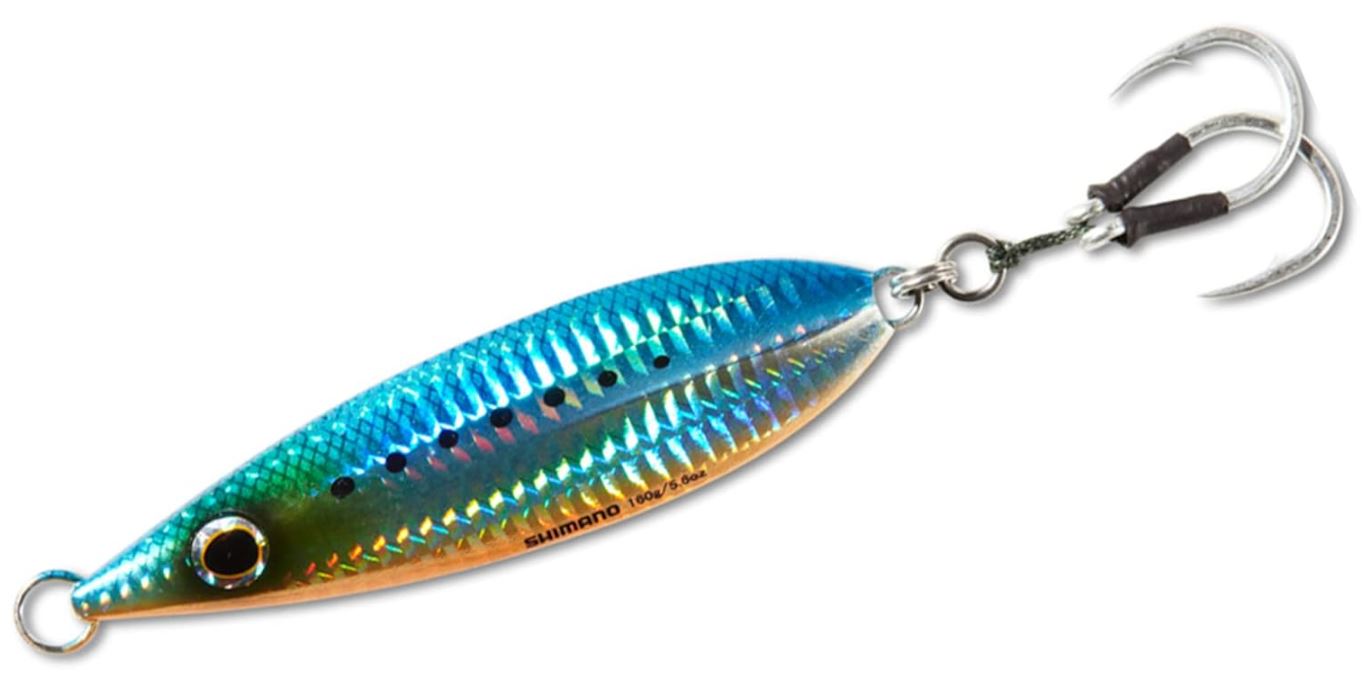
    Shimano Butterfly Flat-Fall Jig (160–200g)

    Buy it on Amazon

    The Flat-Fall produces bluefin bites that nothing else in the bag will. The critical thing to understand for tuna specifically: the bite comes on the fall, not the rise. Drop it on a semi-slack line and watch your line for a tick, a jump, or sudden slack going down — that’s the eat. Bluefin will inhale a flat-fall on the descent and you’re tight before you feel it as a thump. This is a completely different mental approach than yo-yo jigging with the Heavy, and anglers who treat it like a standard vertical jig miss most bites. On deep stops where fish are marking at 150–200 feet and surface iron is getting nothing, the flat-fall angler is almost always the first one going tight. Single assist hook 4/0–6/0 on the top ring. Blue sardine and pink are the consistent bluefin producers.

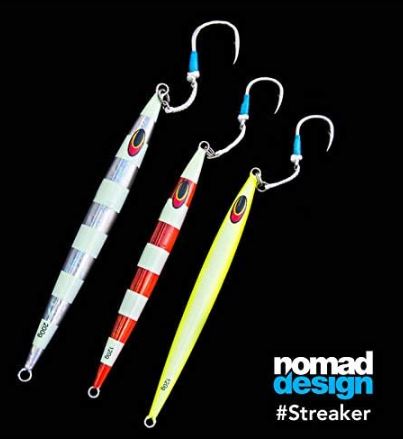
    Nomad Design Streaker Deep Water Jig — Silver Glow Stripe

    Buy it on Amazon

    When bluefin are deep and lethargic — present on the meter but not responding to aggressive presentations — the Streaker’s slow-pitch flutter triggers fish that have locked down. This is most relevant on trips where fish have seen sustained pressure and stopped reacting to standard iron. The slow-pitch technique for tuna requires patience: let the jig sink completely on near-slack line, work it up slowly with soft rod loads, and let it fall again. The Silver Glow Stripe finish matters at depth specifically for bluefin — fish holding at 150+ feet are in low light conditions, and the glow adds visibility that blue sardine and pink patterns don’t deliver below 120 feet. This is a specialty tool for a specific situation, not a first-throw option, but knowing when to deploy it is what separates experienced tuna jig anglers.

    Casting Jigs

    Not every tuna situation calls for surface iron or vertical jigging. Sometimes fish are mid-column — too deep for surface iron, too scattered for a straight vertical drop. Casting jigs bridge that gap: cast them out, count them down to the depth fish are holding, and work them back. They also double as vertical jigs in a pinch. For a full comparison of when to throw each type, see our jigs vs irons vs poppers guide.

    MUSTAD Colt Sniper Jig

    Buy it on Amazon

    Bluefin suspended mid-column — on the meter but not on structure and not at the surface — are the Colt Sniper’s target. Count it down to the depth fish are marking on the sonar, then work it back with a pump-and-wind retrieve. This happens most often when bluefin are following offshore temperature breaks and holding at a specific thermocline depth without rising or settling on bottom. The through-wire construction matters on tuna specifically — bluefin in the 30–60lb range test every component and standard wire-through won’t survive a full fight. It also doubles as a casting jig for mid-column fish during a stop: count it down 15–20 feet and work it back instead of burning on top when surface presentations are getting ignored.

    Shimano Current Sniper Jig

    Buy it on Amazon

    SoCal bluefin concentrate along offshore current edges and temperature breaks, and the Current Sniper’s asymmetric design performs in the moving water you find along those lines. Standard symmetrical jigs spin in current and lose their action entirely — the Current Sniper darts and slashes naturally in the flow, looking like a baitfish being pushed along a current edge, which is exactly how bluefin see their forage in that environment. Cast up-current along a temperature break, sink to depth, and retrieve with the current. This is a specific tool for offshore current fishing, but that’s precisely where SoCal bluefin concentrate — along the edges where water masses collide and bait stacks up.

    Color Selection

    Tuna are more color-selective than yellowtail, especially bluefin in clear water. Match the forage and you’ll get bit more consistently:

    • Blue and white — sardine imitation, the all-around best tuna color in SoCal.
    • Chrome / silver — maximum flash in clear water. The go-to for surface iron when tuna are chasing bait on top.
    • Bone / white — subtle profile for bright days and line-shy bluefin. Works when chrome is too flashy.
    • Scrambled egg (blue/yellow/white) — the classic SoCal pattern that still produces on tuna.
    • Pink — surprisingly deadly on tuna, especially on flat-falls and vertical jigs fished deep. May imitate squid.
    • Blue sardine — realistic finish for picky fish. The top flat-fall color for bluefin.
    • Silver glow stripe — deep water where light fades, adds visibility below 100 feet.

    When in doubt, start with blue/white for surface iron and blue sardine or pink for vertical jigs. Bluefin key on matching the forage — if they’re eating sardines, blue/white and chrome dominate. If the bite is happening deeper or around dawn, darker and pink patterns produce better. Check the chlorophyll map for water clarity — in clean blue water, go natural or chrome. In greener water, brighter patterns get more attention.

    When to Throw What

    SituationBest Jig TypeTop Pick
    Tuna boiling, crashing bait on topSurface ironTady 45 blue/white — burn it back
    Picky bluefin, refusing the 45Light surface ironTady 4/0 chrome or bone
    Wind, need distance to reach boilHeavy surface ironNomad Slidekick 4.25 oz
    Fish on meter, won’t come upYo-yo ironTady 4/0 Heavy 6 oz
    Deep fish, biting on the fallFlat-fall jigButterfly Flat-Fall 160–200g
    Lethargic fish, slow bite deepSlow-pitch jigNomad Streaker Silver Glow
    Mid-column, count-downCasting jigColt Sniper
    Current edges, temperature breaksCurrent jigCurrent Sniper

    Gear to Pair with Your Jigs

    Tuna pull harder than yellowtail — significantly harder. SoCal bluefin regularly run 30–80 lbs with fish over 100 every season, and even yellowfin in the 20–40 lb range will punish undersized tackle. Your jig gear needs to launch heavy iron, handle high-speed retrieves, and stop a fish that wants to take 300 yards of line on the first run.

    Surface iron: A spinning reel in the 6000–10000 class — Shimano Saragosa 6000 or Saragosa 8000 — paired with an 8-foot heavy spinning rod for maximum casting distance. Spool with 50–65lb braid — no leader for maximum distance on the cast. The 8-foot rod is preferred over a 7-footer for tuna iron because the extra length adds critical distance when you’re trying to reach a boil before it goes down.

    Yo-yo jigging: A 40lb class conventional reelShimano Talica 12 or Penn Squall II 25N — on a 7-foot medium-heavy rod. Spool with 50–65lb braid and 30–40lb fluorocarbon leader connected with an FG knot. The heavier class is necessary because bluefin on a vertical jig often eat heading straight down — you need stopping power to turn the fish before it spools you.

    Casting jigs: Same spinning setup as surface iron works — Saragosa 6000 on an 8-foot rod with 50–65lb braid. Add a 30–40lb fluoro leader for casting jigs since you’re not relying on the same distance you need for iron — the extra abrasion resistance of fluoro matters when tuna are rubbing the leader against their sandpaper skin.

    Hooks: Owner ST-66 trebles (2/0–3/0) on every surface iron — replace factory hooks immediately. Single assist hooks (4/0–6/0) on flat-falls and vertical jigs — far better hookup ratio than trebles on the drop. See our hooks by species guide for specific sizes. Use J hooks on assist rigs, not circle hooks — you need the instant hookset on reaction strikes.

    For complete rod and reel pairing advice, see our bluefin reel guide, best rod and reel combo guide, and fishing line guide for specific braid recommendations.

    Frequently Asked Questions

    What is the best all-around tuna jig?

    The Tady 45 (2.9 oz) for surface situations and the Shimano Butterfly Flat-Fall (160g) for when fish are deep. Between those two jigs you can cover tuna on the surface and tuna on the meter. Replace the Tady’s factory trebles with Owner ST-66s before you throw it at tuna.

    What jig should I use when tuna are deep?

    Start with a Shimano Butterfly Flat-Fall (160g) and watch your line on the fall — that’s when bluefin eat it. If that’s not working, switch to a Tady 4/0 Heavy (6 oz) for an aggressive yo-yo presentation, or try the Nomad Streaker for a slower approach on lethargic fish.

    What’s the difference between surface iron and yo-yo iron?

    Surface irons are cast and retrieved at high speed across the top of the water when tuna are boiling. Yo-yo irons are dropped vertically and worked up with sharp rod pumps when fish are deep on the meter. Different techniques for different situations — see our complete comparison guide and surface iron guide.

    What reel do I need for tuna iron?

    For surface iron: a spinning reel in the 6000–10000 class like the Saragosa 6000 or 8000. For yo-yo jigging: a 40lb conventional like the Talica 12. Tuna require heavier gear than yellowtail — don’t bring a 30lb class setup to a bluefin fight. See our bluefin reel guide for complete recommendations.

    Do I need to replace treble hooks on my irons?

    Yes — this is non-negotiable for tuna. Factory trebles on iron jigs are made from soft wire that straightens on a hard-pulling tuna in seconds. Replace every treble with Owner ST-66 trebles — 4X strong construction that won’t bend or break. Takes 2 minutes per jig with split-ring pliers. This is the single most important upgrade for tuna jig fishing. See our hooks guide for the right treble size for each iron.

    What rod length is best for casting iron at tuna?

    An 8-foot rod is preferred for tuna — the extra length over a 7-footer adds 15–20% more casting distance, and on tuna where boils are farther out and the window is shorter, that distance matters. It’s more tiring over a full day, but the extra reach is worth it when bluefin are boiling at the edge of your range.

    What water temperature do tuna like?

    Bluefin bite best in 60–72°F water, with the sweet spot at 62–68°F. Yellowfin want 68°F and above, with the sweet spot around 72–78°F. Check our bluefin temperature guide, yellowfin temperature guide, and the SST chart to find productive water.

    Plan Your Trip

    Tuna follow bait along temperature breaks. Check conditions before you go:

    Related Guides

    Tight lines!
  • Best Tuna Lures for trolling

    Best Tuna Lures for trolling

    Tuna are the hardest-pulling fish in SoCal waters — and convincing one to eat an artificial lure instead of live bait is one of the most rewarding things you can do on the ocean. Bluefin and yellowfin both respond to lures, but they’re far pickier than species like dorado or yellowtail. The right lure, fished at the right speed and depth, puts fish on the deck. The wrong one gets ignored while the guy next to you on live bait goes tight.

    Bluefin show up in SoCal when water temperatures hit 60–72°F, typically from late spring through fall, with the biggest fish arriving in summer. Yellowfin prefer warmer water — 68°F and above — and overlap with bluefin from midsummer through fall. Both species follow bait — sardine, anchovy, squid, and mackerel schools that stack up along temperature breaks and current edges. Use the SST chart and chlorophyll map to find productive water where bait is concentrating — that’s where the tuna will be.

    ⚡ Quick Picks

    Best trolling lure: Cedar plugs — proven bluefin and yellowfin producer, run them behind every offshore spread.

    Best trolling spread: Zuker feather jigs — run 4–6 at staggered distances in blue/white and black/purple.

    Best casting lure: Tady 45 surface iron — the SoCal standard when tuna are crashing bait on top.

    Best deep trolling: Rapala X-Rap Magnum — gets down 15–20 feet where tuna cruise below the surface.

    Best surface lure: Poppers — when tuna are blowing up on bait, nothing beats a popper eat.


    Book a Tuna Charter
    Southern California & Baja · Verified reviews · Free cancellation

    Powered by FishingBooker


    Trolling Lures

    Trolling is how most tuna trips start — you cover ground until you mark fish on the meter, find temperature breaks, or run into birds working bait. A spread of 4–6 lures at staggered distances behind the boat works while you search, and a hookup on the troll often signals a school underneath that you can then stop on and fish with bait or casting lures. Run your spread at 6–8 knots for bluefin, 7–9 knots for yellowfin.

    Cedar Plugs

    Buy it on Amazon

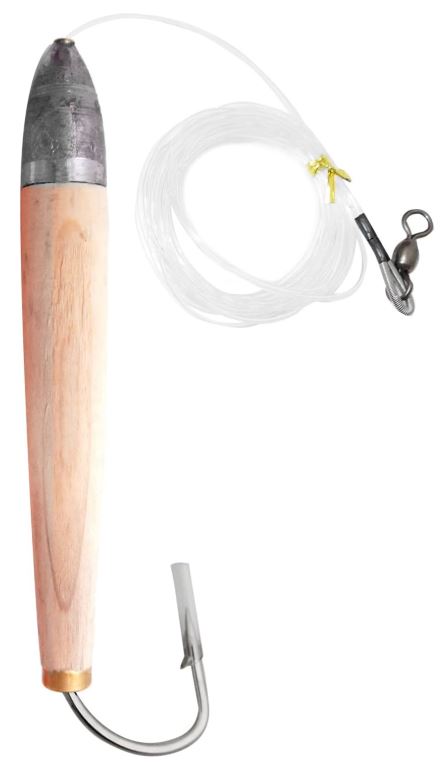
    Bluefin are notoriously boat-shy — they spook from hull noise and surface disturbance more than any other SoCal tuna. This is what makes cedar plugs the ideal bluefin trolling lure: run them 100–150 feet back and they’re out of the boat’s pressure zone entirely, working through clean, undisturbed water where nervous bluefin feel comfortable eating. For yellowfin, shorter leads (50–80 feet) work fine — they’re less cautious and will track a lure right into the prop wash. Natural cedar and blue/white are the standard daytime colors; black/purple silhouettes well from below when fish look up at the sky. Long-range boats running multi-day trips to the bluefin grounds put cedar plugs out every morning for a reason. Carry a dozen minimum — you’ll lose some to big fish, and a tuna doesn’t care that the finish is scratched.

    Feather Jigs (Zuker / Tuna Feathers)

    Buy it on Amazon

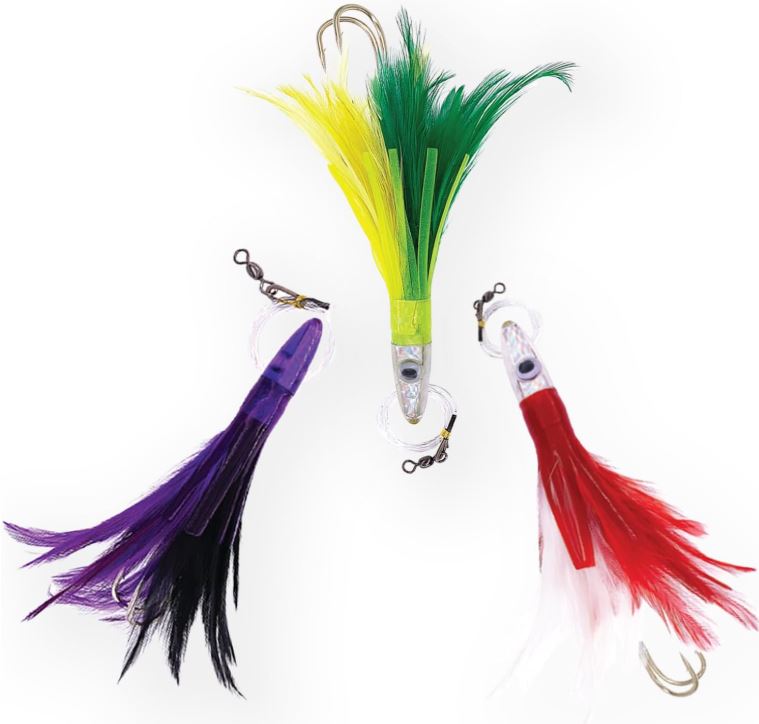
    Feathers are built for reaction strikes — the bubble trail at trolling speed triggers tuna that aren’t actively feeding to bite anyway. This matters on bluefin specifically because they frequently go through lockdown phases where they’re present on the meter but refusing bait. A feather at speed looks like a fleeing baitfish and bypasses that lockdown instinct. Run a tuna spread longer than you would for dorado: two short positions at 30–50 feet, two long at 80–120 feet, and for bluefin add a fifth at 150+ feet for extra standoff distance. Blue/white, black/purple, and green/yellow are the top tuna colors — blue/white for clear conditions, black/purple for dawn and overcast, green/yellow when yellowfin are mixed in. Use 7/0–9/0 J hooks — larger than you’d need for dorado — and sharpen them before every trip. A dull trolling hook at 7 knots produces bumps instead of hookups. When skipjack or bonito crash a feather, don’t just reel it in — tuna are frequently following underneath, and that species activity is a signal to drop down or slow down and investigate.

    Rapala X-Rap Magnum Series

    Buy it on Amazon

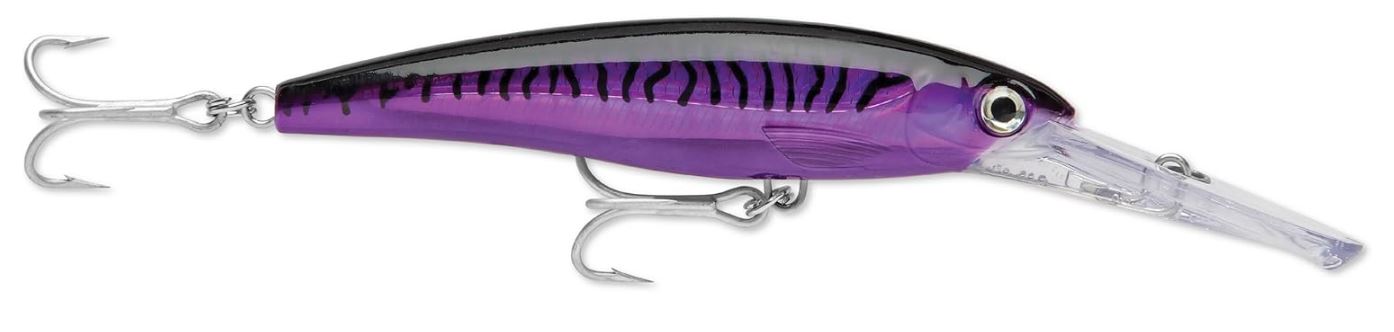
    Bluefin and yellowfin spend a significant portion of the day below the thermocline — below the 10–15 foot layer where cedar plugs and feathers are working. When you’re getting meter marks but not connecting on the troll, the X-Rap Magnum is the fix. At 10–20 feet of dive depth, it reaches fish that are present but holding below the surface zone. Cautious bluefin are also more willing to commit at depth than at the surface — the lure is farther from the boat’s noise and disturbance, and below the thermocline they’re more relaxed and feeding freely. Run the X-Rap on the outside or long positions of your spread at 5–7 knots, slightly slower than your feathers and plugs. The 15 and 20 sizes cover most SoCal depths. Bonito, sardine, and pilchard patterns work best on tuna. At $20–30 each they’re more expensive than cedar plugs — losing one to a big bluefin stings — but on days when everything else is getting ignored, the X-Rap is often the only thing in the spread getting bit.

    Casting Lures

    When tuna are on the surface — crashing bait, boiling, or chasing foamers — casting lures is how you get the most explosive strikes in SoCal fishing. The window is often short: tuna push bait to the surface, blow up on it for a few minutes, then go back down. You need to be rigged and ready to cast the moment you see the boil. Speed matters — the first lure in the water is the one that gets bit. For a deep dive on casting technique, see our surface iron guide and jigs vs irons vs poppers comparison.

    Surface Iron (Tady 45 / Tady 4/0)

    Buy it on Amazon

    Surface iron is the SoCal standard for tuna on top. When bluefin or yellowfin are crashing bait, a long cast with a Tady 45 (2.9 oz) into the boil and a fast, high-speed retrieve is the play. The iron skips across the surface like a fleeing baitfish, and the flash draws strikes from fish already in a feeding frenzy. The heavier Tady 45 gets maximum casting distance — critical when you’re trying to reach a boil before it goes down. The lighter Tady 4/0 (2.6 oz) gives you a slightly slower, more erratic action that can trigger bites when fish are pickier. Critical upgrade: replace the factory trebles with Owner ST-66 trebles in 2/0–3/0 — factory hooks straighten on tuna instantly. For a complete breakdown, see our tuna jigs and irons guide.

    Poppers

    Buy it on Amazon

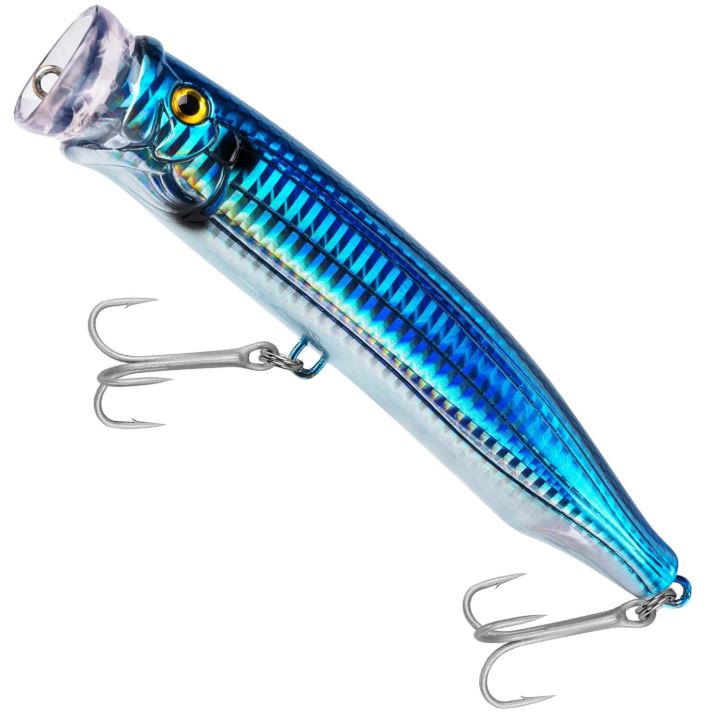
    A tuna eating a popper off the surface is one of the most violent strikes in fishing — the kind of eat that makes your hands shake. Poppers create a commotion on top that imitates panicked bait, and tuna in feeding mode can’t resist it. For bluefin and yellowfin, you need heavy-duty poppers — 120–180mm in the 2–4 oz range — because these fish pull hard enough to straighten light-tackle popper hooks and break cheap split rings. Nomad Chug Norris and Yo-Zuri Bull Popper are both proven SoCal tuna poppers. Replace the stock trebles with Owner ST-66s immediately. Work them with aggressive pops — two to three hard rod sweeps, pause, repeat. The pause is often when the fish commits. Sardine, bone, and blue/white patterns are the top producers in SoCal clear water.

    Big Hammer Swimbaits

    Buy it on Amazon

    A 5–7 inch soft plastic swimbait on a 1–2 oz jig head won’t be the first thing you throw at tuna — but it can be deadly in specific situations. When tuna are feeding on small bait (sardines, anchovies) and refusing larger iron and poppers, a swimbait matching the bait size gets bit. Cast it into the zone, let it sink to the depth the fish are holding, and retrieve with a moderate, steady pace — the swimming tail does the work. Sardine, blue/white, and mackerel patterns in 5–6 inch sizes match the most common SoCal tuna forage. The downside is durability — tuna teeth shred soft plastics fast, and you’ll go through multiple baits per fish. Pack a full bag of 20+. The upside is a natural presentation that can fool line-shy bluefin that have seen every iron jig on the boat. See our swimbaits guide for rigging details.

    Dr Fish Casting Spoons

    Buy it on Amazon

    A heavy casting spoon (3–4 oz) in chrome or blue/chrome produces massive flash that tuna can see from a distance. Particularly effective when fish are scattered and you need to draw them to the boat, or when they’re feeding just below the surface and ignoring topwater presentations. Cast it out, let it flutter down 10–20 feet, then retrieve with a pump-and-wind action. The fluttering fall is the key — it imitates a wounded baitfish sinking, and tuna often eat on the drop before you even start your retrieve. Chrome is the go-to in clear water; blue/chrome and green/chrome work in slightly dirtier conditions. Spoons also produce well when jigged vertically under the boat when tuna are holding deep on the meter but won’t come up to the surface.

    Color Selection

    Tuna are more selective about color than most SoCal species — especially bluefin in clear water. Match the bait they’re eating and you’ll get bit. The top producers:

    • Blue and white — sardine imitation, the universal SoCal tuna color. If you only carry one color, this is it.
    • Chrome / silver — maximum flash in clear water. Deadly on surface iron and spoons when tuna are chasing bait on top.
    • Black and purple — the classic long-range trolling color. Silhouettes well against the sky from below, which is how tuna see trolling lures.
    • Sardine / natural — realistic finishes for clear water and picky fish. Top choice for hard-body trolling lures like the Rapala X-Rap.
    • Green and yellow — dorado color that also catches yellowfin. Works best in warmer, slightly off-color water south toward Baja.
    • Bone / white — clean, subtle profile for bright days in clear water. Excellent on poppers and surface iron.

    When in doubt, start with blue/white for casting and black/purple for trolling. Bluefin in particular key on matching the forage — if they’re eating sardines, blue/white and chrome dominate. If they’re on squid at night, darker colors (black/purple, root beer) produce better at dawn. Check the chlorophyll map for water clarity — in cleaner blue water, go natural or chrome. In greener water near upwelling zones, brighter colors get more attention.

    When to Throw What

    SituationLure TypeTop Pick
    Searching for fish / covering groundTrolling spreadCedar plugs + feathers
    Fish on the meter but not on topDeep-diving trollerRapala X-Rap Magnum
    Tuna boiling / crashing bait on surfaceSurface ironTady 45 — long cast, high-speed retrieve
    Fish blowing up on top, staying upPopper120–180mm popper, bone or blue/white
    Fish feeding on small bait, refusing ironSoft plastic swimbait5–6″ paddle tail, sardine pattern
    Fish holding deep, scatteredCasting spoon3–4 oz chrome spoon, flutter and jig
    Picky bluefin, clear waterLight casting jigTady 4/0 (2.6 oz) chrome or bone

    Working a Tuna Stop

    When the captain calls a stop — whether from a troll strike, meter marks, or a visual on foamers — how the boat fishes the stop determines whether you catch a few or load up. Here’s the playbook:

    • Be rigged and ready before the stop. Have your iron or popper rod in hand with the bail open before the boat gets to the fish. The first 30 seconds of a stop are the most productive — tuna that are already feeding will eat the first thing they see.
    • Match what’s happening on the surface. If fish are boiling, throw iron or poppers. If they’re deep on the meter, drop a spoon or swimbait. If bait is in the water, match the bait size with your artificial.
    • Speed sells on surface fish. When tuna are up and eating, retrieve as fast as you can crank. They’re keyed on fleeing bait — slow lures get ignored. Burn the iron back and don’t stop reeling until the jig is at the boat.
    • Keep lures in the water. Dead time between casts means the school moves. Reel in, cast again immediately. If you’re fighting a fish, someone else should be casting.
    • Downsize if they’re picky. If tuna are boiling but refusing the Tady 45, drop to the lighter Tady 4/0 or switch to a swimbait. Bluefin in particular get lure-shy after seeing the same jig from every angler on the boat.
    • Don’t forget the chum. Toss handfuls of sardines or anchovies while casting to keep the school interested. The combination of live chum and a lure swimming through it is hard for any tuna to resist.

    Gear for Tuna

    Tuna require heavier gear than dorado or yellowtail — especially SoCal bluefin, which regularly run 30–80 lbs with fish over 100 lbs every season. Undersized gear means pulled hooks, broken line, and lost fish.

    Casting / iron setup: A spinning reel in the 6000–10000 class — Shimano Saragosa 6000 or Saragosa 8000 — on an 8-foot heavy rod. Spool with 50–65lb braid and a 30–40lb fluorocarbon leader connected with an FG knot. This is your iron and popper rod — it needs backbone to launch a 3 oz jig and stopping power to turn a bluefin before it spools you.

    Trolling setup: A 30–50lb class conventional reelShimano Talica 12 or Penn Squall II 25N — on a 7-foot medium-heavy rod. Spool with 50–65lb braid or 40lb mono. Set the drag at strike around 12–15 lbs for bluefin — light enough to prevent pulled hooks on the initial run but firm enough to stop the fish eventually.

    Hooks: Owner ST-66 trebles on every iron jig and popper — non-negotiable. Factory trebles will straighten on tuna. Pre-rigged J hooks on trolling feathers and cedar plugs. For live bait between lure sessions, Owner Mutu Light Circle (5114) in 2/0–4/0 for fly-lining. See our hooks guide for specific sizes by species and technique.

    For complete rod and reel pairing advice, see our bluefin reel guide, best rod and reel combo guide, and fishing line guide for specific braid recommendations.

    Frequently Asked Questions

    What is the best all-around lure for tuna?

    For trolling: cedar plugs — they’ve caught more tuna than any other artificial lure and they cost a few dollars each. For casting: a Tady 45 surface iron in blue/white or chrome with Owner ST-66 trebles. If you could only bring two lure types on a tuna trip, those would be them.

    What color lure is best for tuna?

    Blue and white is the #1 tuna color in SoCal — it imitates sardines, which are the primary forage. Chrome and silver are close behind for surface iron and spoons. For trolling, black and purple silhouettes well from below. Match the bait the fish are eating and you’ll get bit more consistently.

    How do I find tuna in SoCal?

    Start with the SST chart — bluefin want 60–72°F, yellowfin want 68°F+. Look for temperature breaks where warm and cool water meet — bait stacks up along these edges and tuna patrol them. The chlorophyll map shows bait concentrations, and the fleet tracker shows where boats are finding fish. Read our bluefin temperature guide and yellowfin temperature guide for seasonal patterns.

    Can I use the same lures for bluefin and yellowfin?

    Yes — surface irons, poppers, cedar plugs, and feathers all work on both species. The main difference is bluefin are more line-shy, so you may need longer trolling leads, lighter fluoro, and more natural color patterns. Yellowfin are more forgiving — brighter colors and shorter leads still get bit. Gear-wise, size up for bluefin since they average larger and pull significantly harder.

    What rod and reel do I need for tuna?

    For casting iron and poppers: Saragosa 6000 or 8000 on an 8-foot heavy rod with 50–65lb braid. For trolling: Talica 12 or Squall II 25N on a 7-foot medium-heavy rod. Tuna require heavier gear than dorado — a 40lb class setup is the minimum for SoCal bluefin. See our bluefin reel guide for complete recommendations.

    What water temperature do tuna need?

    Bluefin: 60–72°F, with the sweet spot around 62–68°F in SoCal. Yellowfin: 68°F and above, with the sweet spot around 72–78°F. Check our bluefin temperature guide, yellowfin temperature guide, and the SST chart to find productive water.

    Do I need to replace treble hooks on my lures?

    Absolutely — this is the single most important thing you can do before a tuna trip. Factory trebles on iron jigs and poppers are made from soft wire that straightens instantly on a hard-pulling tuna. Replace every treble with Owner ST-66 trebles — 4X strong construction that won’t bend or break. Takes 2 minutes per lure with split-ring pliers. See our hooks guide for the right treble size for each jig.

    Plan Your Trip

    Tuna follow bait along temperature breaks. Check conditions:

    Related Guides

    Tight lines!
  • Best Swimbaits for Halibut Fishing

    Best Swimbaits for Halibut Fishing

    Swimbaits have become the most popular artificial lure for targeting California halibut, and for good reason. A well-presented soft plastic swimbait imitates the small baitfish and sand-dwelling prey that halibut eat every day. Unlike live bait, you can fish swimbaits all day without worrying about your bait dying, you can cover more ground with active retrieves, and you can fish water that’s hard to reach with bait — sandy pockets between rocks, shallow flats, and narrow troughs in the surf.

    This guide covers the best swimbaits for halibut, how to rig them, and the techniques that consistently produce fish from boats, kayaks, and the beach.

    ⚡ Quick Picks

    Best overall: Big Hammer 4 inch — the SoCal halibut standard. Strong paddle tail, proven colors, catches everywhere.

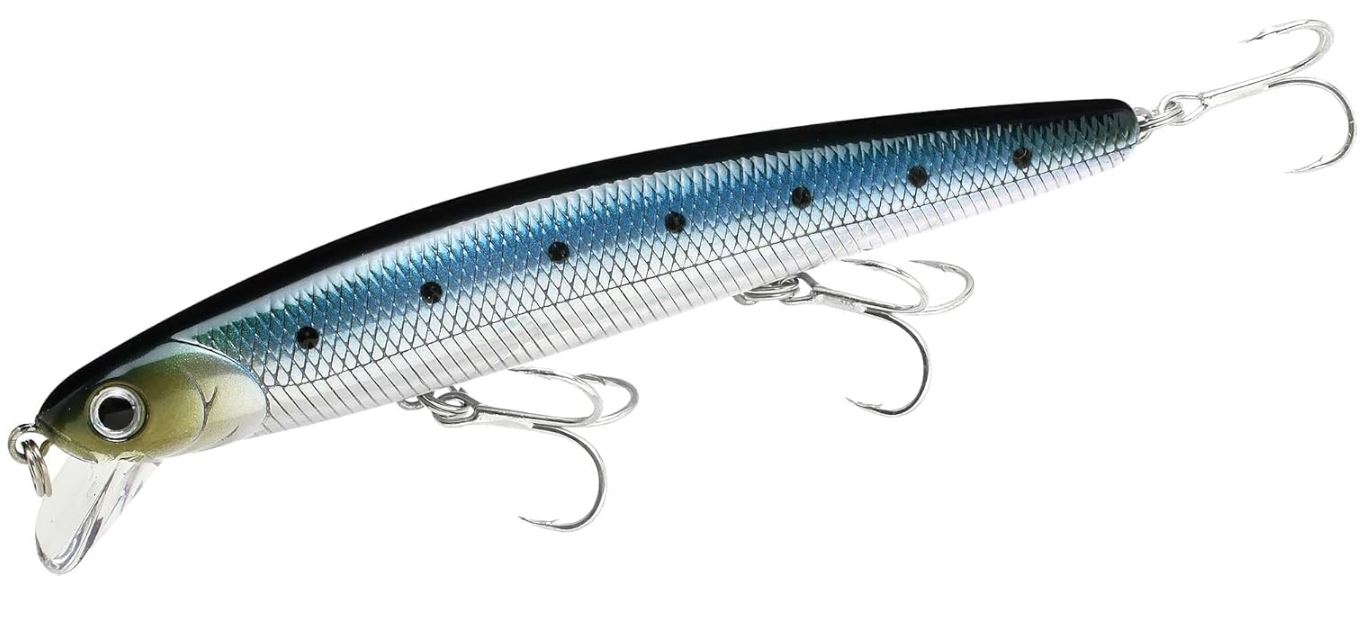
    Best for surf (hard body): Lucky Craft FlashMinnow 110 — suspends 1–2 ft deep, killer jerkbait action for halibut in the troughs.

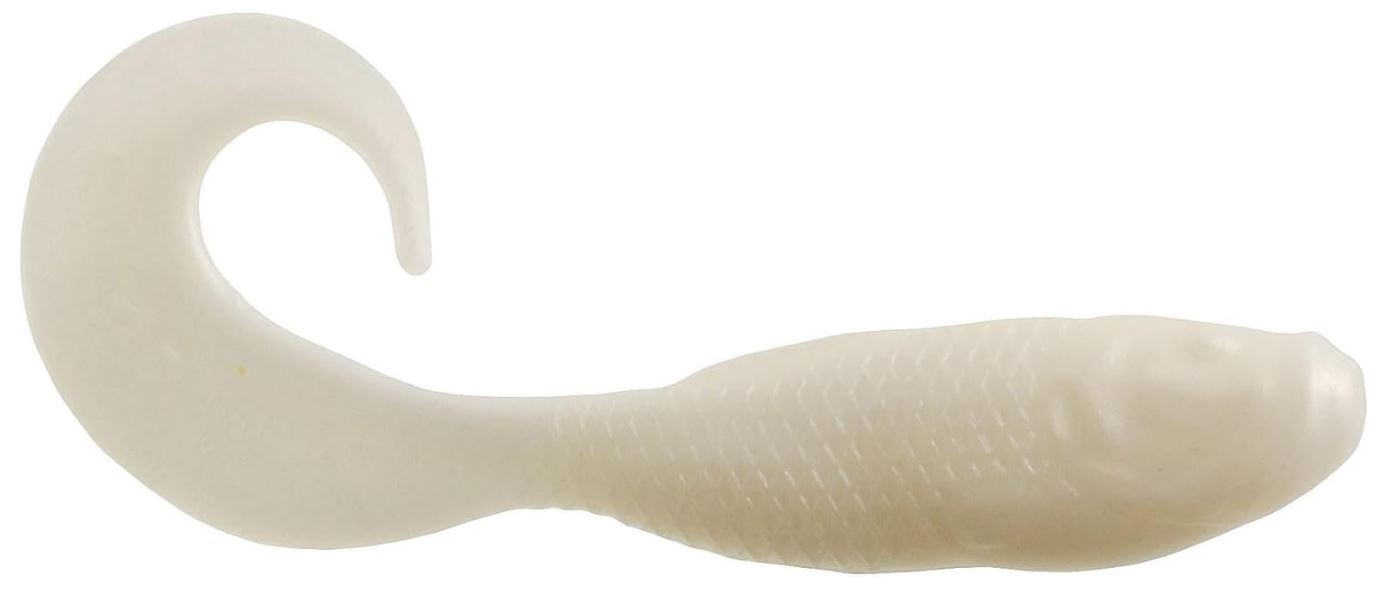
    Best for clear water: Berkley Gulp! 4inch Swimming Mullet — scent-infused, draws cautious fish that won’t commit to unscented plastic.

    Best for surf (soft plastic): Z-Man MinnowZ 3inch — nearly indestructible ElaZtech survives rocks and dozens of fish.

    Best for deep water: Keitech Swing Impact FAT 4.8 inch — oversized profile triggers bigger halibut at depth.

    Best hard body: Lucky Craft Gunfish — tight natural action for shallow bays and flats.

    When to Throw What

    SituationBest SwimbaitJig HeadWhy
    Surf troughsLucky Craft FlashMinnow 110N/A (hard body)Suspends 1–2 ft deep, jerk-and-pause triggers halibut in shallow troughs
    Surf (sandy bottom)Z-Man MinnowZ 3″1/4–1/2 oz roundIndestructible in rocks, buoyant tail kicks at slow bottom-drag speeds
    Heavy surf / currentBig Hammer 4″1/2–3/4 oz footballStrong vibration cuts through turbulence
    Clear calm waterGulp! Swimming Mullet1/4–3/8 oz roundScent draws cautious fish in high-visibility conditions
    Bay flats (5–15′)Lucky Craft GunfishN/A (hard body)Consistent depth, lifelike action, excellent hookup ratio
    Boat drift (20–40′)Big Hammer 4″1/2–3/4 oz roundProven all-around producer at moderate depth
    Deep structure (40–60′)Keitech 4.8″3/4–1 oz footballOversized profile draws big halibut, strong flutter on fall
    Slow bite / finickyGulp! Swimming Mullet1/4 oz round (dead stick)Scent trail converts followers, dead-stick patience
    Rock / reef transitionsZ-Man MinnowZ 3″3/8 oz dartSurvives snags, dart head triggers staged fish

    Best Soft Plastic Swimbaits

    Best Overall: Big Hammer 4″ Swimbait

    Buy it on Amazon

    The Big Hammer has been catching SoCal halibut for years and remains the benchmark. The wide paddle tail creates a strong, thumping vibration that halibut can detect from distance — important because halibut use their lateral line to sense prey movement in low-visibility conditions. The 4-inch size matches the small smelt and gobies that halibut feed on along sandy bottom. Smelt, sardine, and glow/chartreuse are the money colors. Rig on a 1/2 oz round jig head with a 4/0 wide-gap hook and drag it across sandy bottom — this is the setup that consistently produces from party boats, drift boats, and the surf. If you only buy one halibut swimbait, this is it.

    Best Hard Body for Surf: Lucky Craft FlashMinnow 110

    Buy it on Amazon

    The FlashMinnow 110 is the lure that changed SoCal surf halibut fishing. Part of Lucky Craft’s California Inshore Fishing (CIF) series, this 4.5-inch suspending jerkbait runs just 1–2 feet below the surface — right where halibut are looking up for prey in the troughs. The weight-shift system launches it well past the breakers, and the tight side-to-side action on a jerk-and-pause retrieve is irresistible. When you stop reeling, the FlashMinnow suspends in place and wobbles — that pause is when halibut strike. Corrosion-resistant VMC treble hooks come standard, and the hookup ratio is excellent since halibut commit hard on the pause. Metallic sardine and pearl white are the go-to colors. Fish it on a 7’6″–8′ medium to medium-heavy rod with 15–20lb braid and 12–15lb fluoro leader. Where soft plastics drag the bottom, the FlashMinnow covers the upper water column — carry both and you have the entire strike zone covered.

    Best for Clear Water: Berkley Gulp! 4″ Swimming Mullet

    Buy it on Amazon

    The Gulp! line infuses scent into the soft plastic, which gives you an edge in clear water where halibut can be cautious. The swimming mullet profile is a natural match for SoCal forage species, and the scent trail draws fish that might shy away from an unscented lure. Especially effective when halibut are in ambush mode and not actively chasing — the scent encourages them to commit when the visual alone wouldn’t. Pearl white and new penny are top producers. Also the best choice for the dead-stick technique — let the Gulp! sit on the bottom and the scent does the work while you wait. Keep them in their original bag juice when not in use; they dry out and lose effectiveness if stored improperly.

    Best for the Surf: Z-Man MinnowZ 3″

    Buy it on Amazon

    The Z-Man’s ElaZtech material is nearly indestructible — it survives dozens of fish, rocky bottom, and the abuse of surf casting without tearing. The smaller 3-inch profile matches the sand crabs and small baitfish that halibut eat in the surf zone. Rig it on a light jig head (1/4–1/2 oz) and work it through the troughs on a slow, bottom-bouncing retrieve. The material’s buoyancy keeps the tail kicking even at very slow speeds — critical in the surf where you need to creep the bait along the sand. Pair with a 4000–5000 spinning reel and 15–20lb braid for a deadly surf halibut setup.

    Best for Deep Water: Keitech Swing Impact FAT 4.8″

    Buy it on Amazon

    When you’re fishing halibut from a boat in 30–60 feet of water, you need a swimbait with enough size and action to draw attention at depth. The Keitech’s ribbed body creates subtle vibrations on the fall, and the fat paddle tail thumps hard even on a slow retrieve. The 4.8-inch size stands out on the bottom and triggers strikes from bigger halibut that won’t bother with a 3-inch bait. Sexy shad and bluegill are the standard colors. Rig on a 3/4–1 oz football head to maintain bottom contact in current — the football shape keeps it tracking upright instead of rolling over.

    Best for Flats and Bays: Lucky Craft Gunfish

    Buy it on Amazon

    In shallow bays and over sand flats where halibut cruise in 5–15 feet of water, a hard-body swimbait with a tight, natural action excels. These lures swim at a consistent depth on a steady retrieve and look incredibly lifelike. They’re more expensive than soft plastics and you risk losing them to snags, but the hookup ratio is excellent because the treble hooks catch fish that swipe at the lure. Trout and sardine patterns are most effective. Best fished in San Diego Bay, Mission Bay, and Newport Back Bay on calm days when you can see the sandy bottom. A medium-fast 7-foot rod gives you the accuracy to cast these into tight sandy pockets.

    Jig Heads

    The jig head is as important as the swimbait itself. Weight, hook size, and head shape all affect how your swimbait fishes.

    Weight

    Match to depth and current. Use the lightest weight that maintains bottom contact — halibut eat prey that moves naturally, not lures that plummet to the sand.

    ScenarioWeightWhy
    Surf fishing1/4–3/4 ozStays near bottom in wash without sinking too fast
    Bay / flats1/4–1/2 ozLight weight for natural drift in calm, shallow water
    Boat (20–40′)1/2–3/4 ozReaches bottom on drift, holds during slow retrieve
    Boat deep (40–60′)3/4–1 ozGets to bottom fast in deeper water and current
    Heavy current1–1.5 ozMaintains bottom contact in strong tidal flow

    Hook Size

    3/0–5/0 wide-gap for most 3–5 inch swimbaits. The hook point should exit the swimbait cleanly with a wide enough gap to penetrate the halibut’s bony jaw. Cheap jig heads with thin-wire hooks bend on big halibut — invest in quality heads with forged, sharp hooks. See our hooks guide for specific hook recommendations.

    Head Shape

    Round: Works everywhere and is the default choice. Best for general slow drag retrieves over sand.

    Football: More bottom stability in current — doesn’t roll on its side as easily. Best for boat drifts and the hop technique over sand-to-rock transitions.

    Dart: Creates an erratic, darting action that can trigger strikes from following fish. Best for reef edges and structure transitions where halibut stage.

    How to Fish Swimbaits for Halibut

    The Slow Drag (Best All-Around Technique)

    Cast out, let the swimbait sink to the bottom, and retrieve with a slow, steady pace — just fast enough to keep the tail kicking. You want the jig head to tick the bottom every few feet, kicking up little puffs of sand. Halibut ambush from the bottom, and a swimbait dragging along at their eye level is irresistible. This is the technique to start with every session. Works with every swimbait on this list — the Big Hammer and Keitech are particularly effective because their strong paddle tails generate vibration even at crawling speeds.

    The Hop

    When the slow drag isn’t producing, try short, sharp rod lifts that hop the swimbait off the bottom 6–12 inches, then let it flutter back down. The falling action often triggers a strike from a halibut that was watching but not committed. Especially effective over sand-to-rock transitions where halibut stage. Use a football jig head for this — it lands upright after each hop instead of falling on its side. The Keitech 4.8″ excels here because the ribbed body creates extra flutter on the fall.

    The Jerk and Pause (Best for Hard Bodies in the Surf)

    This is the FlashMinnow 110 technique. Cast into or parallel to the trough, give two or three sharp rod twitches to make the lure dart side-to-side, then pause for 2–3 seconds. The FlashMinnow suspends at 1–2 feet and wobbles in place during the pause — that wobble is what triggers the strike. Halibut will follow the lure during the jerks and eat it on the stop. Vary your pause length until you find what they want. On some days a quick one-second pause produces; on others, a long 4–5 second pause is the key. This technique covers the upper water column that bottom-dragging soft plastics miss.

    The Dead Stick

    Cast out, let the swimbait sit on the bottom, and wait. Give it an occasional twitch — just enough to make the tail flutter — then let it sit again. This sounds boring, but halibut will sometimes sit and stare at a swimbait for 30+ seconds before finally eating it. Patience pays. Works best with scented soft plastics like the Gulp! — the scent trail does the selling while you wait. Most effective in bays and calm surf conditions where halibut are holding in ambush positions.

    Where to Fish Swimbaits for Halibut

    Surf: Work the troughs between sandbars — these channels are halibut highways. For soft plastics, cast parallel to the beach and drag the swimbait through the trough. For hard bodies, throw a FlashMinnow 110 into the trough and work it with a jerk-and-pause retrieve — the 1–2 foot running depth keeps it right in the strike zone without snagging the bottom. Read our Doheny surf fishing guide and halibut surf fishing guide for how to find these features. A light Carolina rig with a trailing swimbait is also deadly in the surf.

    Bays: San Diego Bay, Mission Bay, Newport Back Bay — all hold halibut year-round. Target the sandy flats adjacent to channels where halibut move with the tide. Fish the last two hours of incoming tide for best results. The Lucky Craft is the top choice here — steady retrieve over clean sand flats.

    Boats: Drift over sandy bottom in 20–60 feet along the coast. Watch your SST chart for water in the optimal halibut temperature range (58–68°F), and fish sandy bottom near structure transitions. The Big Hammer on a 1/2–3/4 oz head is the standard boat swimbait, with the Keitech 4.8″ for deeper water and bigger fish.

    Gear for Halibut Swimbaits

    ScenarioReelRodLineLeader
    SurfSaragosa 5000 or Spinfisher 45009–10′ mediumPowerPro 20lbVanish 15lb
    Surf (FlashMinnow)Saragosa 5000 or Spinfisher 45007’6″–8′ med-heavy fastPowerPro 15–20lbBlue Label 12–15lb
    Bay / flatsBG MQ 40007′ medium-fastPowerPro 15lbBlue Label 12lb
    BoatSaragosa 5000 or BG MQ 40007′ mediumPowerPro 20lbBlue Label 15lb

    A spinning reel in the 3000–5000 class is the standard halibut swimbait setup. Braided line in 15–20lb gives you the sensitivity to feel the bite, and a 12–15lb fluorocarbon leader provides the invisibility to fool wary halibut in clear water. Connect braid to leader with an FG knot. See our surf reel guide for beach-specific options, our 20lb reel guide for boat use, and our combo guide for complete pairings.

    Color Selection Guide

    ConditionBest ColorsWhy
    Clear water / sunnyPearl white, natural smelt, sardineMatches natural forage in high visibility
    Murky / overcastChartreuse, glow, new pennyHigh contrast makes the bait visible
    Dawn / duskDark purple, motor oil, black/redSilhouette against fading light
    Sandy bottomSand, smelt, brown/goldBlends with surroundings (match the hatch)
    Bay over grass/rockBluegill, sexy shad, troutMatches gobies and small bass

    When in doubt, start with smelt or pearl white in clear conditions, chartreuse in dirty water. If the bite is slow, switch to something dramatically different — the color change alone can trigger a following fish to commit.

    Frequently Asked Questions

    What is the best swimbait for California halibut?

    For soft plastics, the Big Hammer 4″ in smelt or sardine on a 1/2 oz round jig head is the all-around best producer — it’s the swimbait that more SoCal halibut have been caught on than any other. For the surf specifically, the Lucky Craft FlashMinnow 110 is a game-changer — the suspending jerkbait action triggers aggressive strikes in the troughs. For clear water, add the Gulp! Swimming Mullet to your bag — the scent converts followers.

    What size swimbait for halibut?

    3–4 inches covers 90% of SoCal halibut fishing. Use 3″ (Z-Man MinnowZ) in the surf and shallow bays, 4″ (Big Hammer) from boats and in deeper water, and 4.8″ (Keitech) when targeting bigger halibut at depth. Larger swimbaits generally draw larger fish but get fewer total bites.

    How do you rig a swimbait for halibut?

    Thread the swimbait onto a round or football jig head (1/4–1 oz depending on depth). The hook point should exit cleanly from the back of the bait with plenty of gap between the hook point and the body. Make sure the swimbait hangs straight on the hook — a crooked bait spins instead of swimming, which kills the action and spooks fish.

    Can I use swimbaits for halibut in the surf?

    Absolutely — swimbaits are one of the most effective surf halibut techniques. For soft plastics, use a Z-Man MinnowZ 3″ or Big Hammer 4″ on a 1/4–3/4 oz jig head and slow-drag the bottom. For hard bodies, the Lucky Craft FlashMinnow 110 is deadly — it suspends 1–2 feet deep and the jerk-and-pause retrieve triggers aggressive strikes in the troughs. A 4500–5000 spinning reel on a 9–10 foot medium surf rod gives you the casting distance to reach productive water. See our halibut surf guide for finding the right spots.

    FlashMinnow or soft plastics — which should I throw in the surf?

    Both, but they cover different zones. The FlashMinnow 110 runs 1–2 feet below the surface and excels when halibut are actively looking up for baitfish in the troughs — work it with a jerk-and-pause retrieve. Soft plastics like the Big Hammer and Z-Man drag the bottom and target halibut in ambush mode on the sand. Start with the FlashMinnow to cover water quickly, then switch to soft plastics if the bite is slow or conditions are murky.

    What retrieve speed for halibut?

    Slow. Painfully slow. The #1 mistake anglers make is fishing swimbaits too fast. Halibut are ambush predators — they want prey that’s easy to catch. Retrieve just fast enough to keep the paddle tail kicking, letting the jig head tick the bottom every few feet. If you think you’re going slow enough, slow down more.

    What’s the best jig head weight for halibut?

    Use the lightest head that maintains bottom contact: 1/4–1/2 oz for surf and bays, 1/2–3/4 oz for boat fishing in 20–40 feet, 3/4–1 oz for 40–60 feet or heavy current. If you can’t feel the bottom, go heavier. If the bait is plummeting and sitting dead, go lighter.

    Gulp! or Big Hammer — which should I carry?

    Both. Start with the Big Hammer for its strong vibration and proven fish-catching ability. Switch to the Gulp! when the bite slows down or in clear calm conditions where the scent gives you an edge. The Gulp! is also better for dead-sticking since the scent trail attracts fish while the bait sits still. Carry both and you’re covered for any condition.

    Plan Your Trip

    Check conditions before targeting halibut:

    Related Guides

    Tight lines!
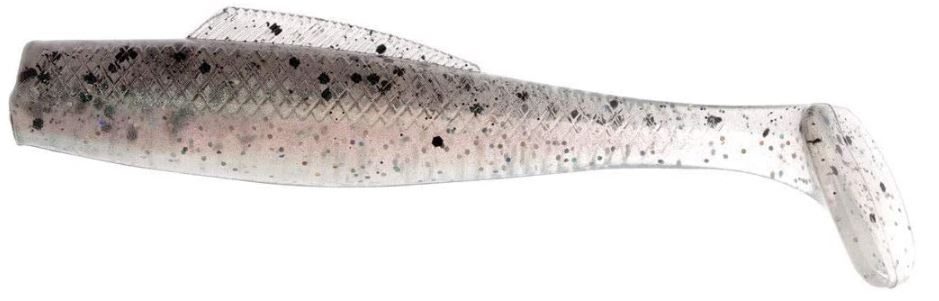
  • Best Lures for Dorado (Mahi Mahi) Fishing

    Best Lures for Dorado (Mahi Mahi) Fishing

    Dorado — also called mahi mahi or dolphinfish — are the most aggressive lure-eating fish you’ll encounter in SoCal and Baja waters. They hit hard, they hit often, and they’ll chase down lures that other species would ignore. That makes them some of the most fun fish to target on artificial, but it also means lure selection matters. Not because dorado are picky, but because the right lure gets you more strikes, better hookups, and keeps the fish around the boat longer.

    Dorado show up in SoCal when water temperatures reach 68°F and above, typically from midsummer through fall. They’re almost always associated with floating structure: kelp paddies, debris lines, buoys, and anything else that creates shade and holds bait. Use the SST chart and chlorophyll map to find warm water with bait concentrations. That’s where the paddies form and the dorado stack up.

    ⚡ Quick Picks

    Best trolling lure: Cedar plugs — simple, cheap, and dorado crush them. Carry a dozen.

    Best trolling spread: Zuker feather jigs — run 4 at staggered distances in green/yellow and blue/white.

    Best casting lure: Tady 45 surface iron — burn it past a paddy and watch them light up.

    Best deep trolling: Rapala X-Rap Magnum — gets down where dorado hold under paddies.

    Best for keeping fish at the boat: Soft plastic swimbaits — cheap, easy to rig, and dorado eat them nonstop.


    Book a Dorado Charter
    Southern California & Baja · Verified reviews · Free cancellation

    Powered by FishingBooker


    Trolling Lures

    Trolling is the most common way to find dorado on the open ocean. You cover ground until you find paddies, debris, or temperature breaks, and the trolled lures work while you search. Run a spread of 4–6 lures at staggered distances behind the boat to cover more water and figure out which color and depth the fish want.

    Cedar Plugs

    Buy it on Amazon

    Cedar plugs are the workhorses of the paddy search. When you’re running 30–50 miles of open ocean looking for kelp, you want lures that stay fishing at 7–8 knots hour after hour without maintenance, and a cedar plug does exactly that. Green/yellow and blue/white are the top dorado colors; natural cedar also produces well. Run them 50–100 feet back so they work close enough to the boat for a quick pitch to any paddy you find. Dorado don’t need the long leads that line-shy bluefin require. They’re aggressive, competitive feeders that will chase a lure right to the transom. Keep a dozen on board because dorado teeth eventually chew through the finish, and a beat-up plug still catches fish but a split hook is a pulled bite.

    Feather Jigs (Zuker / Tuna Feathers)

    Buy it on Amazon

    A 4-feather spread in bright colors is the standard dorado paddy search setup. Green/yellow is the #1 dorado color. It imitates juvenile dorado, which triggers a territorial feeding response. Blue/white and root beer/orange follow close behind. Stagger your spread: two short (20–30 feet back) in the prop wash and two long (60–80 feet back) on the outside. Dorado attack aggressively and often hit multiple lures in the spread at once, so use 5/0–7/0 J hooks pre-rigged in the skirt and check all positions after each hookup. They’ll frequently slash a second lure during the fight. When the search is on and paddies are far apart, a hookup on a feather tells you the temperature and bait situation is right and it’s worth slowing down to look harder.

    Rapala X-Rap Magnum Series

    Buy it on Amazon

    The X-Rap Magnum earns its spot specifically when dorado are holding tight under a paddy and refusing surface lures. Kelp paddies create a shaded zone that dorado use to ambush bait, and the bigger bull dorado often sit several feet below the canopy where cedar plugs and feathers run above them. A Rapala diving to 10–15 feet punches through that zone and puts the lure right in front of fish that are actively holding but won’t rise. Run it on the outside of your spread at 5–7 knots. Dorado gold, pilchard, and bonito patterns are the top producers. The 10 and 15 sizes cover most SoCal situations. Step up to the 20 for Baja fish that average larger. When everyone is pulling their lines in at a paddy because the fish won’t eat, one rod with an X-Rap still trolling past often gets the first bite.

    Casting Lures (for Kelp Paddies)

    Once you’ve found dorado on a paddy, casting lures is the most exciting way to catch them. Dorado are competitive feeders. When one chases a lure, the rest follow. Keeping lures in the water keeps the school active and near the boat. The key is speed and aggression: cast past the paddy, retrieve fast, and keep casting. A dead boat with no lures in the water means the school disappears.

    Surface Iron (Tady 45 / Tady 4/0)

    Buy it on Amazon

    The same irons you throw for yellowtail work beautifully on dorado. Cast past the paddy and burn the iron back through the school. Dorado will chase it aggressively. You’ll often see them racing the iron with their dorsal fin lit up electric blue. The Tady 4/0 in 2.6oz is particularly effective because the lighter weight lets you work it a bit slower, giving more fish a chance to track and commit. The heavier Tady 45 (2.9oz) is better when you need extra casting distance to reach paddies from a drifting boat. For a full breakdown of iron types and technique, see the jigs and irons guide and jigs vs irons vs poppers comparison.

    Poppers

    Buy it on Amazon

    Dorado go absolutely insane for poppers. The splash and commotion triggers their competitive instinct. You’ll often see multiple fish racing to be the first one to the lure. A medium-sized popper (80–120mm) in bone, sardine, or bright green/yellow patterns is deadly when cast near a paddy. Pop it aggressively and hold on. You don’t need the heavy-duty tuna poppers here. Dorado average 5–15 lbs, so a lighter popper that’s easier to work all day is ideal. The strikes are some of the most violent surface eats in fishing.

    Big Hammer Swimbaits

    Buy it on Amazon

    A 4–6 inch soft plastic swimbait on a 1/2 to 1oz jig head is a simple, effective dorado lure that every angler on the boat can fish. The swimming tail action drives them crazy. Cast it past the paddy, let it sink a few feet, and retrieve with a moderate, steady pace. Green/yellow (imitating a small dorado — they’re cannibalistic), white, and sardine patterns work well. The advantage of soft plastics is they’re cheap, and dorado teeth chew through them fast, so you’ll go through several per session. Pack a bag of 20+. For more on soft plastic technique, see the swimbaits guide.

    Dr Fish Casting Spoons

    Buy it on Amazon

    A large, heavy casting spoon (2–3 oz) in chrome or gold produces a massive flash that draws dorado from distance. Particularly effective when the school is scattered and you need to attract fish to the boat from across a debris field. Cast it out, let it flutter down a few feet, then retrieve with an erratic pump-and-wind to create an injured baitfish action. The fluttering fall is often when the bite comes. Dorado can’t resist a wounded, flashing target sinking away from them.

    Color Selection

    Dorado respond strongly to color, more so than most SoCal species. The top producers:

    • Green and yellow — imitates small dorado (they’re cannibalistic) and triggers a territorial response. The #1 dorado color.
    • Blue and white — sardine imitation, the universal SoCal choice that works on everything.
    • Chartreuse — high visibility in any water clarity, especially in off-color Baja water.
    • Pink / hot pink — surprisingly effective, especially on overcast days and in deeper water.
    • Natural / bone — clear water, bright days when flash alone is enough.
    • Root beer / orange — classic trolling feather color, works especially well in the morning.

    When in doubt, start with green/yellow. Dorado chase their own kind, and this triggers the most aggressive, competitive response. If they’re not eating green/yellow (rare), switch to blue/white. Check the chlorophyll map for water clarity. In greener, dirtier water, go brighter (chartreuse, pink). In clean blue water, go natural or chrome.

    When to Throw What

    SituationLure TypeTop Pick
    Searching for paddies / covering groundTrolling spreadCedar plugs + feathers
    Dorado holding deep under paddyDeep-diving trollerRapala X-Rap Magnum
    Boiling on surface at paddySurface ironTady 45 or 4/0
    Multiple fish competing at paddyPopper80–120mm popper, green/yellow
    Keeping school at the boatSoft plastic swimbait5″ paddle tail, green/yellow
    Scattered school, need to attract fishCasting spoon2–3oz chrome spoon
    Picky fish, clear waterLight casting jigTady 4/0 (2.6oz) bone/chrome

    Keeping the School at the Boat

    The key to a big dorado session is keeping the school active and near the boat. Here’s the playbook:

    • Leave the first fish in the water. When you hook a dorado, don’t rush to boat it. Keep it swimming alongside the boat. Its distress signals draw the rest of the school in close. A hooked dorado is the best chum you have.
    • Keep lures in the water. Have another angler casting while the first fish is being fought. Dead time with no lures in the water means the school drifts away.
    • Immediate re-cast. When you boat a fish, get another lure or bait back in the water immediately. Speed matters more than lure choice here. Throw anything.
    • Chum when they fade. If the school starts to drift away, toss handfuls of bait (sardines or chunks) to keep them interested.
    • Don’t let the boat drift away from the paddy. Keep the boat positioned near the structure. If you drift too far, idle back to the paddy and restart.

    Gear for Dorado

    Dorado don’t require heavy gear. Lighter gear means more fun and better lure action. A 20lb class setup handles most SoCal dorado perfectly.

    Casting setup: A spinning reel in the 4000–6000 class, a Shimano Saragosa 5000 or Daiwa BG MQ 4000, on a 7-foot medium-heavy rod. Spool with 30lb braid and a 25lb fluorocarbon leader connected with an FG knot. This handles everything from soft plastics to surface iron.

    Iron setup: If you’re dedicated to throwing iron at paddies, step up to a Saragosa 6000 on an 8-foot rod for maximum casting distance. Same as your yellowtail iron setup — dorado just happen to eat it too.

    Trolling setup: A 20–30lb class conventional reel, Penn Squall II 25N or Shimano Talica 12, on a 7-foot medium rod. Spool with 30–40lb braid or mono. Keep the drag light. Dorado have soft mouths and heavy drag pulls hooks.

    Hooks: Use J hooks on trolling lures and jigs (you need the instant hookset). For live bait, circle hooks in 2/0–4/0 are better. Dorado often swallow baits and circles prevent gut-hooking. See the hooks guide for specific sizes.

    For complete rod and reel pairing advice, see the best rod and reel combo guide, and check the fishing line guide for specific braid recommendations.

    Frequently Asked Questions

    What is the best all-around lure for dorado?

    For trolling: cedar plugs — cheap, simple, and they never stop producing. For casting at paddies: a Tady 45 surface iron in blue/white or green/yellow. If you could only bring two lure types on a dorado trip, those would be them.

    What color lure is best for dorado?

    Green and yellow is the #1 dorado color. It imitates small dorado and triggers aggressive, territorial strikes. Blue and white (sardine pattern) is the close #2 and works as a universal color for all SoCal species. When in doubt, start green/yellow.

    How do I find dorado in SoCal?

    Look for warm water (68°F+) on the SST chart, then locate kelp paddies and debris lines within that warm water. The chlorophyll map shows where bait is concentrating, and the fleet tracker shows where boats are finding dorado. Read the dorado temperature guide for seasonal patterns.

    Can I use the same lures for dorado and yellowtail?

    Yes. Surface irons (Tady 45, Tady 4/0), poppers, and casting jigs all work on both species. Dorado tend to prefer brighter colors (green/yellow, chartreuse) while yellowtail lean toward blue/white and chrome. The main gear difference is you can fish lighter tackle for dorado since they average smaller.

    What rod and reel do I need for dorado?

    A 20lb class spinning setup is ideal. Saragosa 5000 or BG MQ 4000 on a 7-foot medium-heavy rod with 30lb braid. Lighter gear means more fun on dorado. They don’t require the 40lb class setups you’d use for bluefin tuna.

    What water temperature do dorado need?

    68°F and above. They’re a warm-water species that shows up in SoCal from midsummer through fall when offshore water heats up. The sweet spot is 72–78°F. Check the dorado temperature guide and the SST chart to find productive water.

    Do I need wire leader for dorado?

    No. Dorado have small, sandpaper-like teeth that abrade fluorocarbon slowly but won’t bite through it in a fight. A 25–30lb fluoro leader is plenty. Wire leader actually reduces strikes because dorado have good eyesight and feed in clear water. Retie your leader periodically if it’s getting chewed up.

    Plan Your Trip

    Dorado follow warm water and floating structure. Check conditions:

    Related Guides

    Tight lines!
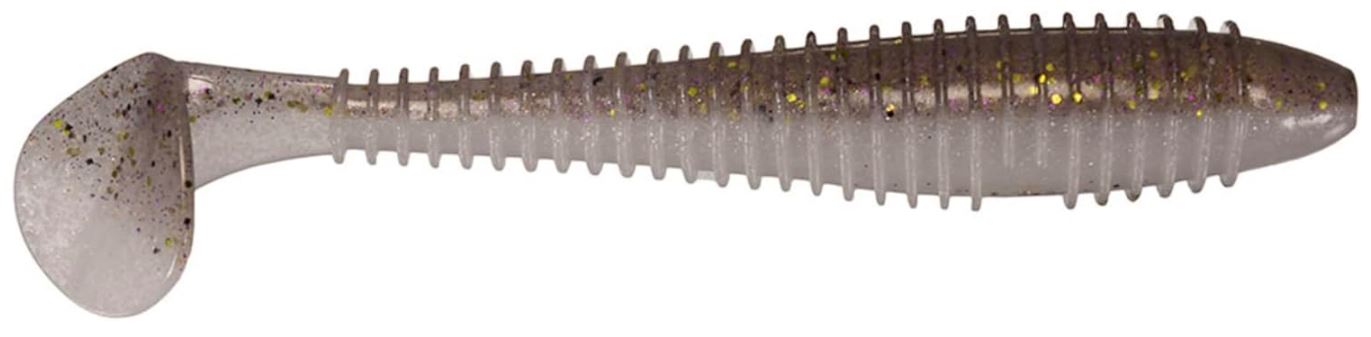
  • Best 7-Foot Rods for Offshore Fishing

    Best 7-Foot Rods for Offshore Fishing

    The 7-foot rod is the most versatile length for SoCal offshore fishing. Long enough to cast jigs and make controlled bait presentations, short enough to fight fish without losing leverage, and balanced enough to fish all day without destroying your arms. If you’re building a rod quiver for SoCal boats, a good 7-footer is the first rod you buy.

    This guide covers the best 7-foot rods for the species and techniques you’ll actually encounter on SoCal offshore trips. If you’re not sure whether you need a 7-foot or an 8-foot rod, the short version: 7 feet for versatility and fish-fighting power, 8 feet for casting distance and live bait control.

    ⚡ Quick Picks

    Best all-around: Shimano Teramar NE 7′ Heavy — the SoCal benchmark. Light, sensitive, handles everything.

    Best budget: Daiwa Proteus 7′ MH — 80% of the Teramar at 60% of the price.

    Best for jigging: Shimano Trevala MH Spinning — purpose-built for yo-yo iron and flat-falls.

    Best for live bait: Calstar Grafighter 700MH — SoCal classic, soft tip, powerful butt.

    Best premium: G. Loomis IMX PRO Green 7′ MH Fast — lightest and most sensitive rod on this list.

    Best for iron casting: Shimano Teramar SE 7′ Heavy Fast — stiff enough to launch heavy iron.

    What Makes a Good 7-Foot Offshore Rod

    Power: Medium-heavy is the sweet spot for SoCal. It handles yellowtail, white seabass, school tuna, and big calico bass without being so stiff that you can’t feel the bite. Medium power works for lighter applications like bonito, smaller yellowtail, and casting light iron. Heavy power is reserved for bluefin and big yellowfin, and at that point many anglers go shorter (5’6″–6’6″) for maximum leverage. See the graphite vs fiberglass guide for material considerations.

    Action: Fast action loads in the top third of the rod, giving you quick hooksets and good sensitivity. Moderate-fast loads a bit deeper, providing a more forgiving fight and better casting distance. For bait fishing, moderate-fast is often preferred. For jig and iron fishing, fast action is better because it transmits your rod work directly to the lure.

    Guides: Quality guides matter more than most anglers realize. Fuji or Pacific Bay guides with smooth, hard inserts (SiC or Alconite) reduce line friction and survive braid’s abrasiveness. Cheap guides get grooved by braid within a season, and grooved guides destroy your line.

    Best 7-Foot Rods for SoCal

    Best All-Around: Shimano Teramar NE 7′ Heavy, Spinning

    Buy it on Amazon

    The Teramar has been the benchmark SoCal offshore rod for years. The graphite blank is light enough to fish all day, sensitive enough to feel a subtle bait bite at 100 feet, and has enough backbone to handle 30lb class fish without folding. It casts well for bait and light jigs, and the fast action gives you good hookset speed. Available in both spinning and conventional configurations. Pair with a Penn Squall II 25N or Shimano Saragosa 5000 and you have the do-everything SoCal rod.

    Best Budget: Daiwa Proteus 7′ Medium-Heavy

    Buy it on Amazon

    A solid graphite rod that delivers 80% of the Teramar’s performance at about 60% of the price. The blank is slightly heavier and the guides aren’t quite as refined, but the action and power are right for SoCal offshore work. Good tip sensitivity for feeling bites, good butt section for leverage during the fight. If you need a reliable 7-footer without the premium price, this is the pick. Pairs well with a Daiwa BG MQ 4000 for a complete budget setup.

    Best for Jig Fishing: Shimano Trevala Medium-Heavy Spinning

    Buy it on Amazon

    Purpose-built for vertical jigging. The Trevala has a fast, responsive tip that transmits every rod movement to the jig and a powerful mid-section that loads for the fight. When you’re working flat-fall jigs and yo-yo irons on deep structure at the 9-Mile or La Jolla reefs, this rod’s action maximizes jig performance. Not as versatile as the Teramar for bait fishing, but noticeably better for dedicated jig work. Pairs naturally with the Shimano Ocea Jigger.

    Best for Live Bait: Calstar Grafighter 700MH

    Calstar Grafighter live bait rods

    A SoCal classic built specifically for live bait fishing. The Calstar has a moderate-fast action with a softer tip that absorbs the pull of a live bait without tearing it off the hook, and a progressive power curve that builds as the fish loads the rod. This design philosophy (soft tip for bait presentation, strong butt for fighting) is why Calstars have been on party boat rails for decades. A slider rig on a Calstar is a deadly yellowtail setup. Pairs beautifully with a Shimano Talica 12 or Penn Squall II 25N.

    Best Premium: G. Loomis IMX PRO Green 7′ Medium-Heavy Fast

    Buy it on Amazon

    If you want the lightest, most sensitive 7-footer money can buy, the IMX PRO Green delivers. The high-modulus graphite blank transmits vibration like nothing else. You’ll feel structure changes, bait behavior, and bites that other rods miss. It’s noticeably lighter in hand than the Teramar, which adds up over a 12-hour trip. The price reflects the quality, but anglers who fish frequently consider it an investment in comfort and performance.

    Best for Iron Casting (Spinning): Shimano Teramar SE 7′ Heavy Fast

    Buy it on Amazon

    When you need a 7-foot rod specifically for casting surface irons and poppers, the spinning version of the Teramar in heavy power is the standard. The stiffer blank loads a 4.5-ounce iron for long casts and works the jig aggressively on the retrieve. The heavy power also handles the explosive strikes and initial runs of yellowtail and tuna hitting iron at speed. Pair with a Shimano Saragosa 6000 for the classic SoCal iron setup.

    Matching Rod to Reel and Line

    ApplicationRodReelLine
    Party boat all-aroundTeramar 7′ MHPenn Squall II 2540lb braid / 30lb fluoro leader
    Light line / castingProteus 7′ MHDaiwa BG MQ 400030lb braid / 20lb fluoro leader
    Vertical jiggingTrevala 7′ MHShimano Ocea Jigger50lb braid / 40lb fluoro leader
    Live bait yellowtailCalstar 700MHShimano Talica 1240lb braid / 30lb fluoro leader
    Iron castingTeramar SE 7′ HShimano Saragosa 600050lb braid / no leader

    For complete combo recommendations, see the best rod and reel combo guide. For line specifics, check the fishing line guide and the braid vs mono vs fluorocarbon breakdown. Connect braid to leader with an FG knot.

    Frequently Asked Questions

    Should I get a 7-foot or 8-foot offshore rod?

    A 7-footer is more versatile: better fish-fighting leverage, easier to handle on a crowded party boat rail, and balanced for both bait and jig fishing. An 8-foot rod is better specifically for casting distance (surface iron, live bait presentations) and long-range live bait control. Most anglers should start with a 7-footer.

    What power rod do I need for yellowtail?

    Medium-heavy covers 90% of yellowtail fishing in SoCal. For school-size yellows (10–20 lbs) on 20lb gear, medium works. For big yellowtail on 30lb gear around structure, medium-heavy to heavy. See the yellowtail reel guide for the complete setup.

    What reel pairs best with a 7-foot offshore rod?

    For conventional bait fishing: Penn Squall II 25N or Shimano Talica 12. For spinning and iron casting: Shimano Saragosa 5000 or Saragosa 6000. See the combo guide for full pairings.

    Graphite or fiberglass for offshore rods?

    Graphite for most SoCal offshore applications — lighter and more sensitive. Fiberglass or composite is better for dedicated bait rods where shock absorption matters more than sensitivity, and for heavy tuna applications where graphite can fail under extreme load.

    What line should I use on a 7-foot offshore rod?

    40lb braid with 25–30lb fluorocarbon leader is the standard SoCal setup. Step up to 50lb braid for heavier iron casting. See the line guide for specific brand picks, and use an FG knot to connect braid to leader.

    Can I use one 7-foot rod for everything?

    A 7-foot medium-heavy fast graphite rod (like the Teramar) with a 30lb reel and 40lb braid handles about 80% of SoCal offshore fishing. You’ll want a second rod only when you get into dedicated surface iron casting or heavy tuna work, and at that point an 8-foot rod or a shorter heavy rod makes sense as your #2.

    Plan Your Trip

    Related Guides

    Tight lines!
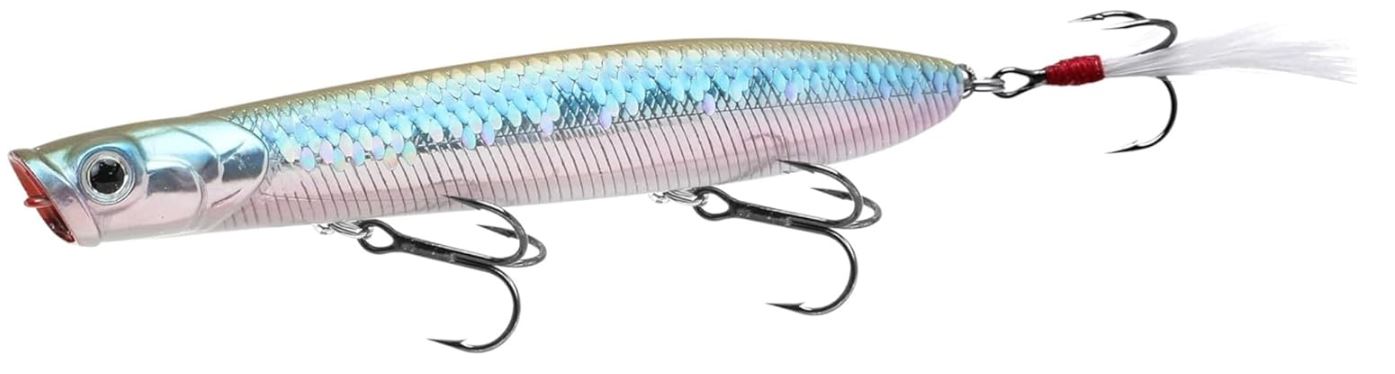
  • Best 8-Foot Rods for Offshore Fishing

    Best 8-Foot Rods for Offshore Fishing

    An 8-foot rod gives you something a 7-footer can’t: casting distance. That extra foot of leverage translates to 15–20% more distance when throwing surface irons, and it gives live baits a longer, smoother launch that keeps them alive and swimming. The trade-off is less fish-fighting leverage (longer rod = more flex = more room for the fish to work) and more fatigue over a full day. For specific SoCal applications, an 8-footer is the right tool.

    ⚡ Quick Picks

    Best for iron/poppers: Shimano Grappler Type C 8’2″ H — purpose-built for casting surface lures to pelagics.

    Best budget: Daiwa Proteus 8′ Heavy — capable iron rod at a fraction of the premium price.

    Best for live bait: Calstar Grafighter 800M — SoCal classic for lobbing big baits on long-range trips.

    Best for lighter popping: Shimano Grappler Type C 8’2″ MH — easier to fish all day, handles school tuna and yellowtail.

    When You Need an 8-Foot Rod

    Surface iron casting: This is the primary reason SoCal anglers own 8-foot rods. When yellowtail or tuna are boiling on the surface 80+ yards from the boat, an 8-foot spinning rod loads a 4.5-ounce Tady 45 and launches it into territory a 7-footer can’t reach. Those extra yards of casting distance often determine whether you’re in the zone or falling short. See the complete surface iron guide and the jigs vs irons vs poppers breakdown.

    Popper fishing: Same logic. Poppers need rod length to generate casting distance. The longer rod also gives you better leverage for working popper action, because the increased rod travel per twitch creates a more pronounced pop.

    Live bait launching: On crowded party boats, getting your bait away from the boat and into clean water is critical. An 8-foot rod lets you lob a live sardine or mackerel farther from the boat with a gentler motion, reducing the chance of tearing the bait off the hook. A slider rig on a long rod is deadly for this.

    Long-range trips: Multi-day runs to the Baja banks and offshore islands often involve a mix of iron casting, popper work, and live bait. All situations where the 8-footer earns its spot in the rod rack. Don’t forget to check the overnight trip packing list.


    Book a Yellowtail Charter
    Southern California & Baja · Verified reviews · Free cancellation

    Powered by FishingBooker


    Best 8-Foot Rods for SoCal

    Best for Iron & Poppers: Shimano Grappler Type C 8’2″ Heavy (Spinning)

    Buy it on Amazon

    The Grappler Type C is Shimano’s purpose-built casting rod for offshore surface work: poppers, stickbaits, and heavy iron. The 8’2″ Heavy model is the sweet spot for SoCal iron fishing. It loads a Tady 45 or Salas 7X for maximum distance, and the Spiral-X / Hi-Power X blank construction makes it lighter and more rigid than anything else in its class. The fast action transmits your retrieve speed to the iron while the powerful butt section absorbs the shock of a tuna or yellowtail hitting at full speed. This is the rod SoCal tuna chasers are switching to. Pair with a Shimano Saragosa 6000 or Saragosa 14000 for heavier applications.

    Best for Lighter Popping: Shimano Grappler Type C 8’2″ Medium-Heavy (Spinning)

    Buy it on Amazon

    If the Heavy model feels like overkill, or if you’re casting lighter poppers and irons to yellowtail and school tuna rather than big bluefin, the MH version is significantly more fishable all day. Same Spiral-X / Hi-Power X construction, same 8’2″ casting distance, but a softer tip that loads easier with lighter lures and absorbs head shakes better during the fight. Better casting accuracy with lures in the 2–4 ounce range. If you’re mainly targeting yellowtail and yellowfin on iron, this is probably the better pick over the Heavy.

    Best Budget: Daiwa Proteus 8′ Heavy (Conventional)

    Buy it on Amazon

    A capable 8-foot iron rod at a fraction of the Grappler’s price. The graphite blank is a bit heavier than the Shimanos and the guides aren’t as refined, but it casts irons well and has enough backbone to fight yellowtail and school tuna. A great entry-level iron rod or a backup to keep in the rod rack. If you’re trying iron fishing for the first time and don’t want to invest $300+ in a rod you might not love, start here. Pairs well with a Daiwa BG MQ 4000 or Saragosa 5000 for a complete budget setup.

    Best for Live Bait: Calstar Grafighter 800M (Conventional)

    Calstar Grafighter live bait rods

    An 8-foot conventional rod for live bait might seem unusual, but for long-range trip anglers this setup shines. The extra length lets you lob big baits (sardines, mackerel, even small skipjack) farther from the boat with a smooth, controlled cast. Medium power with moderate-fast action provides a soft tip that keeps baits alive and a progressive backbone for fighting big fish. A slider rig on a Calstar 800M is a proven long-range killer. Paired with a Shimano Talica 12 for yellowtail or a Talica 16 for tuna, this is a serious long-range tool.

    8-Foot vs 7-Foot: When to Grab Which

    SituationBest LengthWhy
    Surface iron casting8 footMaximum casting distance to reach boiling fish
    Popper fishing8 footBetter lure action and casting distance
    Party boat bait fishing7 footBetter fish-fighting leverage in tight quarters
    Vertical jigging7 foot or shorterShorter rod = better jigging mechanics
    Tuna on heavy gear5’6″–6’6″Maximum leverage for big fish straight below
    Long-range trip (one rod)7 footBest compromise of versatility and power
    Long-range trip (two rods)7′ + 8′7′ for bait, 8′ for casting — ideal combo

    Gear Pairings for 8-Foot Rods

    8-foot rods in this class pair primarily with spinning reels for casting applications. A 6000–14000 class spinning reel with 20+ pounds of drag and fast retrieve (6.0:1 or higher) matches the rod’s intended use. Spool with 40–65lb braid. The thinner diameter of braid maximizes the casting advantage that the longer rod provides. See the line guide for specific brand picks.

    ApplicationRodReelLine
    Heavy iron / bluefinGrappler Type C 8’2″ HSaragosa 14000 or Twin Power 600065lb braid / no leader
    Lighter iron / yellowtailGrappler Type C 8’2″ MHSaragosa 600050lb braid / no leader
    Budget ironProteus 8′ HSaragosa 5000 or BG MQ 400040lb braid / no leader
    Live bait long-rangeCalstar 800MTalica 12 or Talica 1640lb braid / 30lb fluoro leader

    For the conventional 8-foot bait rod (Calstar 800M), pair with a 30lb lever drag reel for yellowtail or a 40lb two-speed for tuna. Connect braid to leader with an FG knot.

    See the complete rod and reel combo guide for detailed pairing recommendations across all applications.

    Frequently Asked Questions

    Do I need an 8-foot rod for SoCal fishing?

    Not as your first rod. A 7-footer is more versatile and handles 80% of offshore situations. An 8-foot rod is your second rod, specifically for casting iron and poppers when fish are boiling out of range. If you fish iron regularly, it’s essential.

    What reel pairs best with an 8-foot iron rod?

    A 6000–14000 class spinning reel. The Shimano Saragosa 6000 is the most popular pairing for yellowtail iron, and the Saragosa 14000 or Stella SW 10000 for heavier tuna work. See the 30lb reel guide and 40lb reel guide for complete reviews.

    Should I get the Heavy or Medium-Heavy Grappler?

    Heavy if you’re throwing 4+ ounce iron to bluefin and big yellowtail. Medium-Heavy if you’re casting 2–4 ounce poppers and lighter iron to yellowtail and school tuna. The MH is easier to fish all day and more forgiving on the cast.

    Can I use an 8-foot rod for bait fishing?

    It works for live bait launching (the Calstar 800M is specifically built for this), but it’s not ideal for general party boat bait fishing. A 7-foot rod gives you better leverage for fighting fish and is more manageable on a crowded rail.

    What line should I use for iron casting?

    40–65lb braid with no leader for maximum distance. Some anglers add a short 40lb fluoro topshot for abrasion resistance, but most SoCal iron fishermen go straight braid. See the line guide for specific brands.

    Graphite or fiberglass for an 8-foot rod?

    Graphite for casting applications. You need the rod to be light enough to cast repeatedly all day, and graphite’s stiffness translates to better lure action. The Calstar bait rod uses a composite blank for shock absorption, which makes more sense for a rod that fights fish rather than casts lures.

    Plan Your Trip

    Related Guides

    Tight lines!
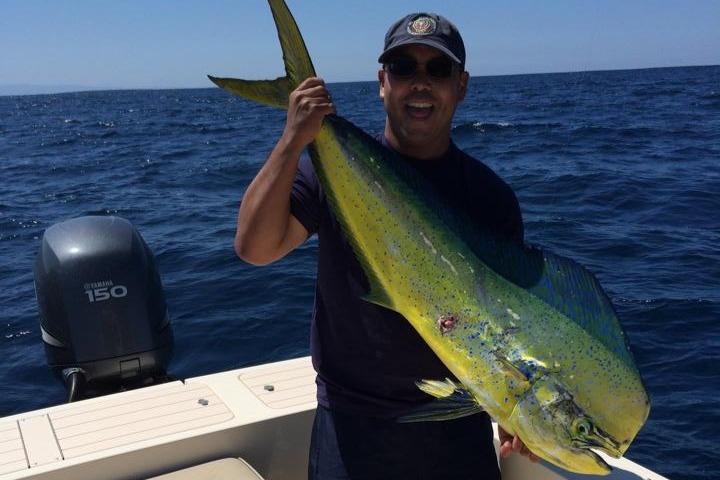
  • Best Fishing Line for Every Pound Test

    Best Fishing Line for Every Pound Test

    Fishing line is one of the few pieces of tackle that’s in play on every single cast. Your rod, reel, and hooks don’t matter if the line connecting them fails. Yet most anglers spend hours researching reels and minutes picking line, usually just grabbing whatever’s on sale. That’s a mistake, especially in saltwater where UV exposure, abrasion from structure, and powerful fish constantly test your line.

    This guide covers the best lines across all three types — braid, fluorocarbon, and monofilament — organized by pound test so you can find exactly what you need for your setup.

    ⚡ Quick Picks

    Best braid (all-around): PowerPro Super Slick V2 — the SoCal default. Consistent, casts well, available in every pound test.

    Best braid (casting): Daiwa J-Braid Grand x8 — smoothest through the guides, maximum distance for iron and surf.

    Best fluoro leader: Seaguar Blue Label — the industry standard. Reliable knots, consistent diameter, works everywhere.

    Best fluoro (tuna): Seaguar Grand Max — premium knot strength for heavy leader when a break-off costs you a bluefin.

    Best mono: Izorline XXX — SoCal-made classic. Soft, low memory, perfect for topshot and trolling.

    Quick Reference: Which Line Type for What

    ApplicationMain LineLeader
    Party boat bait fishingBraid (30–50lb)Fluorocarbon (20–40lb)
    Casting iron / jigsBraid (40–65lb)Optional fluoro (30–40lb)
    Surf fishingBraid (20–30lb)Fluorocarbon (15–20lb)
    Tuna (fly-line)Braid (40–65lb)Fluorocarbon (25–40lb)
    TrollingMonofilament (30–80lb)Fluorocarbon (40–80lb)
    Bay / inshore finesseBraid (15–20lb)Fluorocarbon (10–15lb)

    For a detailed comparison of the three line types — when braid beats mono, when fluoro is essential, and when mono still wins — see the braid vs mono vs fluorocarbon guide.


    Book a Fishing Charter
    Southern California & Baja · Verified reviews · Free cancellation

    Powered by FishingBooker


    Best Braided Lines

    Braid is the standard main line for SoCal saltwater. Thinner diameter means more line capacity on your reel and longer casts. Zero stretch means maximum sensitivity. You feel every bite and every bottom change. The trade-off is visibility (braid is opaque, which is why you use a fluoro leader) and abrasion resistance (braid cuts easily on rocks and structure). Connect braid to leader with an FG knot for a slim, strong connection that passes through your guides cleanly.

    Best Overall: PowerPro Super Slick V2

    Buy it on Amazon

    PowerPro has been the default SoCal braid for years, and the Super Slick V2 is the best version yet. The enhanced surface treatment reduces friction through guides for longer casts, and the tight 8-carrier weave is consistently round, which is critical for even line lay on your reel. Available in every pound test from 10lb to 80lb, so it covers everything from light tackle party boat to heavy tuna setups. It’s what most SoCal tackle shops recommend and what you’ll find pre-spooled on rental reels at most landings. If you only buy one braid, this is it.

    Best for Casting Distance: Daiwa J-Braid Grand x8

    Buy it on Amazon

    If maximum casting distance matters — and it does for surface iron fishing on an 8-foot rod and surf casting — J-Braid Grand’s slick finish and tight weave give you an edge. It’s noticeably smoother through the guides than most braids, and the consistent diameter means fewer wind knots. The color fades faster than PowerPro, but performance-wise it’s excellent. Spool your Saragosa 6000 or Saragosa 14000 with 50lb J-Braid Grand for the longest iron casts possible.

    Best for Tuna: Shimano Kairiki 8

    Buy it on Amazon

    A premium 8-carrier braid built for the highest-demand fishing. When you’re fighting a bluefin tuna on 40lb+ gear — a Talica 16 or Talica 20 locked down at 25 lbs of drag — you need braid that doesn’t dig into itself under heavy pressure and maintains consistent strength throughout the fight. Kairiki 8 handles this better than budget braids. Expensive, but your line is the last place to cut corners on a tuna trip.

    Best Fluorocarbon Leaders

    Fluorocarbon serves two purposes in saltwater: near-invisibility in clear water (fluoro’s refractive index matches water closely) and abrasion resistance against rocks, kelp, and fish mouths. In SoCal, fluoro leader is nearly universal. The only time you skip it is when casting surface iron where maximum distance matters more than stealth.

    Best Overall: Seaguar Blue Label

    Buy it on Amazon

    The industry standard fluorocarbon leader. Blue Label is consistent in diameter, knot strength is reliable, and it’s available in every test from 6lb to 80lb. It’s what most SoCal anglers tie on without thinking, and it works. Perfect for slider rigs, dropper loops, Carolina rigs, and general bait fishing leader. Connect to braid with an FG knot for the strongest, slimmest connection.

    Best for Tuna: Seaguar Grand Max

    Buy it on Amazon

    When you’re fishing 25–40lb fluorocarbon leader for bluefin tuna and every pound of knot strength matters, Grand Max is the premium choice. It’s made from higher-grade fluorocarbon resin that’s thinner for its strength rating, which means a smaller profile in the water and better FG knot connections. The knot strength is noticeably better than standard fluoro, which is the difference between landing a big bluefin and a heartbreaking break-off. Also the right choice for heavy popper leaders (50–80lb) where tuna have time to inspect the connection.

    Best Value: Berkley Vanish

    Buy it on Amazon

    A solid budget fluorocarbon that handles most SoCal applications perfectly. It’s a bit stiffer than Seaguar products, which actually helps it lay straighter as a leader. Knot strength is good, abrasion resistance is respectable, and you get more line per dollar. Great for surf fishing leaders, dropper loop rigs, and Carolina rigs where you go through leader material regularly. Also a good choice for dorado fishing where their sandpaper teeth chew through leader. No point using premium fluoro that gets destroyed every few fish.

    Best Monofilament

    Mono has been largely replaced by braid as main line in SoCal, but it still has its place: trolling (the stretch absorbs shock from strikes), topshot on heavy conventional reels (a layer of mono on top of braid provides abrasion protection and knot security), and as a budget-friendly main line for newer anglers who don’t want to deal with braid’s tendency to wind-knot. For a full comparison, see the braid vs mono vs fluorocarbon guide.

    Best Overall: Izorline XXX

    Buy it on Amazon

    A SoCal-made mono that’s been a local favorite for decades. Izorline XXX is softer and more limp than most monos, which means better casting and less memory. It’s available in the exact line classes SoCal anglers need — 12, 15, 20, 25, 30, 40, and 60lb — and the consistency is excellent spool to spool. If you fish mono as main line, need topshot material for your tuna reels, or run a conventional setup that performs better with mono, this is the one.

    Best for Trolling: Momoi Hi-Catch

    Buy it on Amazon

    A premium tournament-grade mono designed for offshore trolling. Exceptional abrasion resistance, consistent diameter, and the right amount of stretch to absorb the shock of a tuna strike at 7 knots. Available in heavy tests (40–130lb) that trollers need. If you troll cedar plugs and feathers for dorado, or run a serious bluefin trolling spread, Momoi is the standard.

    Line Recommendations by Setup

    SetupMain LineLeaderKnot
    Surf fishingPowerPro 20lb braidVanish 15lb fluoroFG knot
    20lb party boatPowerPro 30lb braidBlue Label 20lb fluoroFG knot
    30lb yellowtailPowerPro 50lb braidBlue Label 30lb fluoroFG knot
    40lb+ tunaKairiki 65lb braidGrand Max 40lb fluoroFG knot
    Iron castingJ-Braid Grand 50lb braidNone (max distance)
    Popper fishingPowerPro 65lb braidGrand Max 60lb fluoroFG knot
    Trolling (dorado)Momoi 30lb monoBlue Label 30lb fluoroDouble uni
    Halibut / inshorePowerPro 20lb braidVanish 15lb fluoroFG knot

    For complete rod and reel pairing advice for each of these setups, see the best rod and reel combo guide.

    Line Maintenance Tips

    Rinse after every trip. Spray your reels and line with fresh water after each use. Salt crystals build up between braid fibers and in fluoro coils, weakening the line and causing friction.

    Replace braid annually. Braid lasts 1–2 seasons with proper care. Replace it when it starts feeling rough or fuzzy. That’s frayed fibers that have lost strength. Re-spool at the beginning of each season and you’re covered.

    Check fluoro leader constantly. Fluorocarbon leader should be retied after every few fish. Check for nicks by running it between your fingers. One nick from a yellowtail’s gill plate or a rock is enough to halve your line strength. Retying takes 30 seconds; losing a fish to a weak leader ruins your day.

    Mono has the shortest lifespan. UV damage degrades mono within a few months. Replace mono main line at least twice per season, and check your trolling line for stiffness and discoloration before every trip.

    Match drag to line strength. Set your drag at about 1/3 of your line’s rated strength. If you’re running 30lb braid with 20lb fluoro leader, set drag based on the leader (weakest link) — about 6–7 lbs of drag at strike. A good FG knot is essentially 100% of the leader’s strength, so the leader is almost always your limiting factor.

    Frequently Asked Questions

    What pound test braid should I use for SoCal?

    30lb for general party boat bait fishing, 40–50lb for yellowtail and jig fishing, and 50–65lb for tuna and heavy iron casting. When in doubt, 40lb PowerPro is the most versatile choice for SoCal.

    Do I always need a fluorocarbon leader?

    For bait fishing, yes. Always. For iron casting, most SoCal anglers skip the leader for maximum casting distance. For popper fishing, use a leader. The lure’s slower action gives fish time to inspect the connection. See the line type comparison for the full breakdown.

    PowerPro or J-Braid — which is better?

    PowerPro Super Slick V2 is the better all-around choice — more durable color, better abrasion resistance, and widely available. J-Braid Grand casts slightly farther due to its slicker coating, so it’s the better pick specifically for iron fishing and surf casting where every yard matters.

    What knot should I use to connect braid to leader?

    The FG knot. It’s the strongest braid-to-fluoro connection (near 100% of leader strength) and creates a slim profile that passes through rod guides without catching. It takes practice to tie well, but once you learn it, you’ll never use anything else. See the knots guide for step-by-step instructions.

    How often should I re-spool my reels?

    Braid: once per year (or when it feels fuzzy/rough). Mono: twice per season minimum. Fluoro leader: retie after every few fish. If you fish frequently (20+ trips per year), you may need to re-spool braid mid-season. Always re-spool before a big trip. A long-range overnight is not the time to discover your braid is shot.

    Is expensive braid worth it for tuna?

    Yes. When you’re putting 20+ lbs of drag on a bluefin for 30 minutes, budget braid digs into itself and loses strength at the crossover points. Premium braid like Shimano Kairiki 8 maintains its rated strength under sustained heavy pressure. The difference between a $30 spool and a $50 spool of braid is nothing compared to the cost of losing a trophy fish.

    What leader weight for yellowtail?

    25–30lb Seaguar Blue Label for general bait fishing, 30–40lb around heavy structure (kelp, rocks). For iron fishing, skip the leader entirely or use a very short (2-foot) section of 40lb fluoro if you’re losing fish to abrasion. See the yellowtail reel guide for complete setup recommendations.

    Plan Your Trip

    Got your reels spooled? Check conditions:

    Related Guides

    Tight lines!