• Best Walleye Rods: Spinning, Jigging & Trolling Guide

    The right walleye rod transforms your fishing. The wrong one buries strikes. Walleye are notorious for light, subtle bites — a slight tap, a soft tick, a momentary tension change — and the rod is what translates those bites into your hand. Too stiff a rod loses the feedback. Too soft a rod loses the hookset. The walleye rod market has matured to the point where matching the right rod to the right technique is straightforward — if you know what to look for.

    This guide covers what makes a good walleye rod, the two best options at different price points, and how to match the rod to your primary technique (jigging vs trolling vs casting). Pair this with the walleye reels guide for matched setups. For background on rod construction, the graphite vs fiberglass guide explains the material trade-offs that apply to walleye rods just as they do saltwater.

    ⚡ Quick Picks by Situation

    Best overall jigging rod: St. Croix Eyecon — purpose-built for walleye fishing.

    Best budget rod: Fenwick Eagle — proven action at the entry price point.

    For walleye trolling: The Okuma Classic Pro GLT (8’6″ Medium) crosses over from salmon trolling.

    For deep vertical jigging: St. Croix Eyecon 6’8″ Medium with extra-fast tip.

    Match the action to the technique: Fast/extra-fast tip for jigging, moderate action for trolling.


    Let’s go Fishing!
    Search for the Perfect Fishing Trip or Charter
    Upper Midwest & Great Lakes
    Verified reviews · Free cancellation · 90-day price match
    Powered by FishingBooker · Affiliate partner

    What Makes a Good Walleye Rod

    Walleye rods are purpose-built for the species’ specific behaviors:

    Length: 6’6″ to 6’10” for jigging, 7’+ for casting and trolling. Jigging rods need to be short enough for vertical work in a boat or ice house. Casting rods benefit from extra length for distance. Trolling rods typically run 7’6″ to 8’6″ for proper load with crankbaits and downriggers.

    Action: Fast to extra-fast for jigging, moderate for trolling. The action describes where the rod bends. Fast and extra-fast actions bend in the tip only — this gives you the sensitivity to feel light walleye bites and the backbone for sharp hooksets. Moderate actions bend through the middle of the rod, which is what you want for trolling to load with the crankbait and absorb strikes.

    Power: Medium-light to medium for jigging, medium to medium-heavy for trolling. Power rates the rod’s strength — its ability to handle weight. Lighter powers give you bite detection; heavier powers give you hookset strength. Most walleye anglers run medium-power rods as their primary because they balance both.

    Material: Graphite or graphite composite. Walleye fishing is a sensitivity game. Pure graphite blanks transmit vibration efficiently, letting you feel a walleye breathe on the bait. Fiberglass adds durability but kills sensitivity. The graphite vs fiberglass guide covers the trade-offs — for walleye, graphite wins. Composite blanks (graphite-fiberglass mixes) work well for trolling rods where some give is desirable.

    Guides: Quality saltwater-rated or premium freshwater guides. Cheap guides develop wear that cuts line. Fuji guides or equivalent premium options are worth the cost.

    Walleye Spinning Rods

    Spinning rods are the dominant walleye rod configuration. Most walleye techniques — jigging, casting, finesse work — favor spinning over conventional. The spinning vs conventional comparison applies to walleye as it does saltwater: spinning wins for finesse and casting, conventional wins for trolling.

    St. Croix Eyecon Walleye Rod

    Buy it on Amazon

    The St. Croix Eyecon series is purpose-built for walleye fishing. St. Croix is the Wisconsin-based rod maker that built its reputation on freshwater rods designed for specific fisheries. The Eyecon series gets walleye-specific design touches throughout — the action is calibrated for the species’ typical bite pressure, the handles are sized for cold-weather grip (important for ice fishing and spring opener conditions), and the guide spacing supports the typical jig-and-minnow presentation rather than the bass-fishing action many “freshwater” rods are designed around. The 6’8″ Medium with extra-fast tip is the workhorse — handles 1/8 oz to 3/8 oz jigs, 6-12 lb line, and Mille Lacs class walleye without issue. Pair with a quality 2500-3000 size spinning reel — see the walleye reels guide for matched pairings.

    Fenwick Eagle Walleye Rod

    Buy it on Amazon

    The Fenwick Eagle is the budget option that delivers more than its price suggests. Fenwick has been making fishing rods since the 1950s, and the Eagle line represents their entry-level offerings — but “entry-level” at Fenwick still means quality construction, proper action, and durable materials. The Eagle walleye-rated rods come in lengths and powers that match common walleye techniques without unnecessary complexity. For anglers building their first walleye-specific setup or for backup rods on a multi-day trip, the Eagle is the right value choice. The action isn’t quite as refined as the St. Croix Eyecon, but the performance gap is much smaller than the price gap suggests.

    Walleye Trolling Rods

    Trolling demands different rod characteristics than jigging. The rod loads with the crankbait and downrigger weight, absorbs strikes during the constant motion of trolling, and provides leverage during the fight. The salmon trolling rods covered in the salmon trolling rods guide work for walleye trolling — sometimes with one minor adjustment.

    Okuma Classic Pro GLT
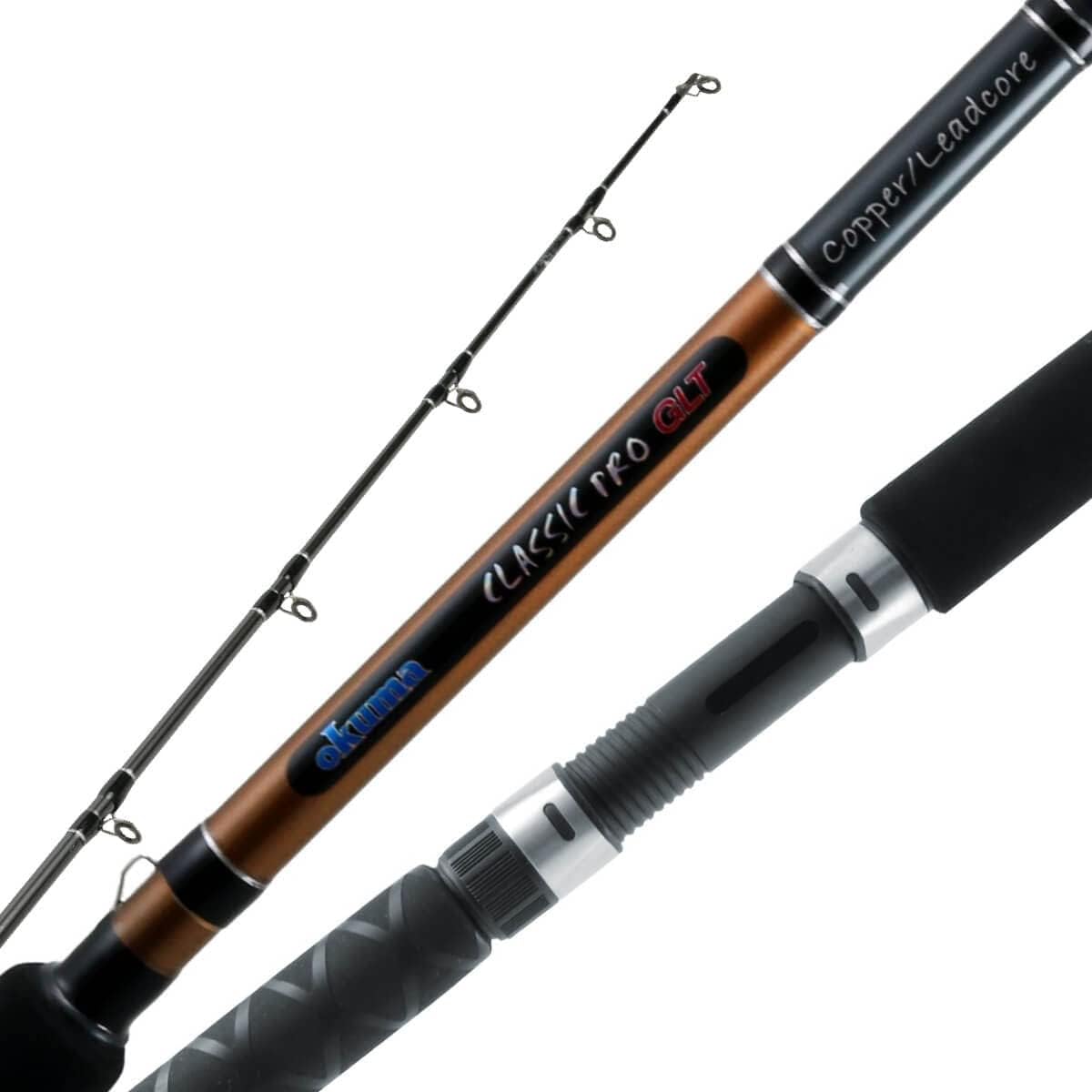
    Buy it on Amazon

    The Okuma Classic Pro GLT in 8’6″ Medium handles walleye trolling well. The same rod that anchors Great Lakes salmon trolling setups (covered in detail in the salmon trolling rods guide) scales down for walleye work. For Lake Erie style heavy-water trolling, run the Medium-Heavy version. For lighter walleye crankbait work on smaller lakes, the Medium handles it. Anglers who fish both salmon and walleye can standardize on one rod family across their entire trolling spread.

    Walleye Rods by Technique

    Technique Length Power Action
    Vertical Jigging 6’4″-6’10” Medium-Light to Medium Extra-Fast
    Casting Jigs 6’8″-7’2″ Medium Fast
    Casting Crankbaits 6’10”-7’4″ Medium Moderate-Fast
    Live Bait Rigging 7’0″-7’6″ Medium-Light Fast
    Trolling (light) 7’6″-8’6″ Medium Moderate
    Trolling (Lake Erie/heavy) 8’6″ Medium-Heavy Moderate
    Ice Fishing 28″-36″ Light-Medium-Light Fast-Extra-Fast

    Pairing Rod to Reel

    Rod and reel must balance for proper feel. Standard pairings:

    • St. Croix Eyecon 6’8″ Medium + Shimano Stradic FL 4000 — the premium walleye jigging combo
    • Fenwick Eagle Medium + Daiwa BG MQ 4000 — solid mid-tier setup
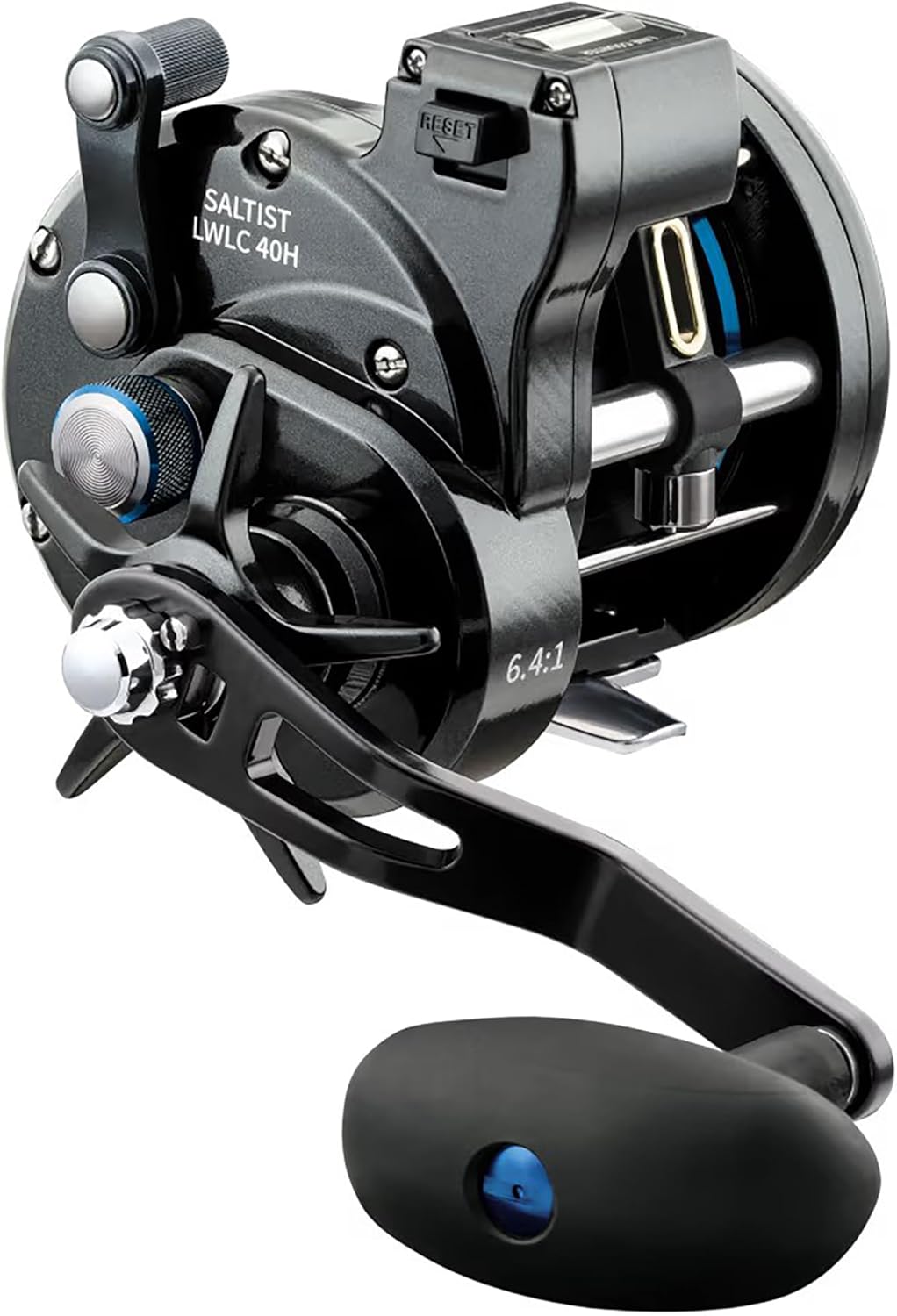
    • Okuma Classic Pro GLT Medium + Okuma Convector CV-30DLX — trolling combo with line counter
    • Light ice rod + small ice spinning reel — specialized ice fishing setup

    For full reel selection, see the walleye reels guide. The SoCal-focused rod and reel combo guide covers some of the same line size considerations that apply to walleye.

    Common Mistakes

    Using a bass rod for walleye. Bass rods are often heavier-action than walleye rods need. The stiffer action loses the sensitivity required for walleye’s light bites. Walleye-specific rods (or trout-rated freshwater rods) are tuned differently.

    Wrong length for the technique. A 7’6″ rod is too long for vertical jigging in a boat. A 6’8″ rod is too short for crankbait casting from shore. Match the length to your primary technique — 6’8″ for boat jigging, 7’2″+ for casting, 8’+ for trolling.

    Cheap guides developing wear. Walleye lines (especially mono and braid) cut through worn guides over time. Inspect annually and replace the rod when wear becomes obvious. A new mid-tier rod is cheaper than fighting lost fish on worn equipment.

    Wrong action for the technique. Moderate-action rods don’t transmit bites the way fast/extra-fast rods do. Choose the action based on what you need the rod to do — sensitivity for jigging, load for trolling.

    Skipping the rod warranty. St. Croix and many premium manufacturers offer transferable warranties. For rods you’ll use for years, the warranty is real value. Cheaper rods often skip this — factor it into the price comparison.

    Frequently Asked Questions

    What’s the best walleye rod?

    The St. Croix Eyecon in 6’8″ Medium with extra-fast tip is the most-recommended overall walleye rod. The Fenwick Eagle walleye rods are the budget alternative. For trolling, the Okuma Classic Pro GLT.

    What length walleye rod do I need?

    6’8″ is the standard for boat jigging. Step up to 7’+ for casting from shore. Trolling rods are 7’6″-8’6″. The right length depends primarily on your most common technique — jig most? Stay at 6’8″. Cast most? Go 7’+.

    Spinning or baitcaster for walleye?

    Spinning dominates walleye fishing. The spinning vs conventional guide explains the reasons — spinning excels at finesse, light lures, and casting. Baitcasters are used for some heavier walleye applications (deep cranking, heavy jigs) but spinning is the standard.

    What action for walleye jigging?

    Extra-fast action with medium or medium-light power. This combination gives you sensitivity to detect light bites and backbone to set the hook firmly. Fast action works if you can’t find extra-fast.

    Are walleye rods worth the price?

    Yes if you fish walleye consistently. The species-specific action and components produce more fish over time than generic rods would. For occasional walleye anglers, a quality bass or trout rod adapts adequately, but dedicated walleye anglers benefit from purpose-built rods.

    What’s the difference between graphite and fiberglass walleye rods?

    Graphite is more sensitive and transmits bites better — critical for walleye. Fiberglass is more durable but loses sensitivity. Most quality walleye rods use graphite blanks. See the graphite vs fiberglass guide for the detailed comparison.

    Plan Your Trip

    Related Guides

    Tight lines!

  • Best Walleye Reels: Spinning & Line Counter Guide

    Walleye reels split into two distinct categories that serve different parts of the same fishery. Spinning reels handle the finesse work — jigging, casting, live bait rigging — that produces 70% of walleye catches. Line counter conventional reels handle the trolling work — crankbaits, planer boards, deep summer fish — that fills out the remaining 30%. Most serious walleye anglers own both types and switch based on the day’s plan.

    This guide covers the reel categories, the specific models that consistently perform, and how to match the reel to your technique. For background on the spinning vs conventional decision, the spinning vs conventional reels guide covers the trade-offs in depth. Many of the same principles that govern saltwater reel selection (covered in best 30lb reels and best 20lb reels) apply to walleye work — just at a smaller scale.

    ⚡ Quick Picks by Situation

    Best overall spinning reel: Shimano Stradic FL 4000 — the walleye spinning standard.

    Best mid-tier spinning: Daiwa BG MQ 4000 — value-priced alternative.

    Best line counter (trolling): Okuma Convector CV-30DLX — proven Great Lakes/walleye standard.

    Best premium line counter: Daiwa Lexa LC — top-tier construction.

    Budget line counter: Penn Warfare 20LC — entry-point for serious trolling.


    Let’s go Fishing!
    Search for the Perfect Fishing Trip or Charter
    Upper Midwest & Great Lakes
    Verified reviews · Free cancellation · 90-day price match
    Powered by FishingBooker · Affiliate partner

    Walleye Spinning Reels

    Spinning reels handle the majority of walleye applications. The 3000-4000 size class covers most needs — light enough for sensitivity, large enough for line capacity and drag.

    Shimano Stradic FL 4000

    Buy it on Amazon

    The Shimano Stradic FL 4000 is the premium walleye spinning reel that most serious anglers settle on. The drag is smooth out of the box and stays smooth through years of hard use. The CI4+ frame construction is light enough that you can jig all day without fatigue. The 4000 size holds plenty of line for any walleye situation — 200+ yards of 8lb braid is enough for the longest runs walleye produce. Pair with a St. Croix Eyecon rod and you have a setup that competes at any level. The price point ($180-220) is the gateway to “serious” walleye gear — anything cheaper is starter equipment, anything more expensive is diminishing returns for freshwater work. Worth the investment if you fish walleye more than 10 days a year.

    Daiwa BG MQ 4000

    Buy it on Amazon

    The Daiwa BG MQ 4000 is the value alternative that competes directly with the Stradic at a lower price point. Daiwa’s “Monocoque” body design produces a strong, light reel without the price tag of premium models. The drag isn’t quite as smooth as the Stradic but is more than adequate for typical walleye applications. Best use case: anglers building out a 2-3 reel walleye setup who want to spend $250 total across two reels rather than $400 on one premium reel. For occasional walleye fishing or as backup reels, the BG MQ delivers more than its price suggests. Daiwa’s brand has long had a strong reputation in saltwater (see the best 30lb reels guide for the saltwater Daiwa pedigree), and that construction quality carries into their freshwater lines.

    Walleye Line Counter Reels (Trolling)

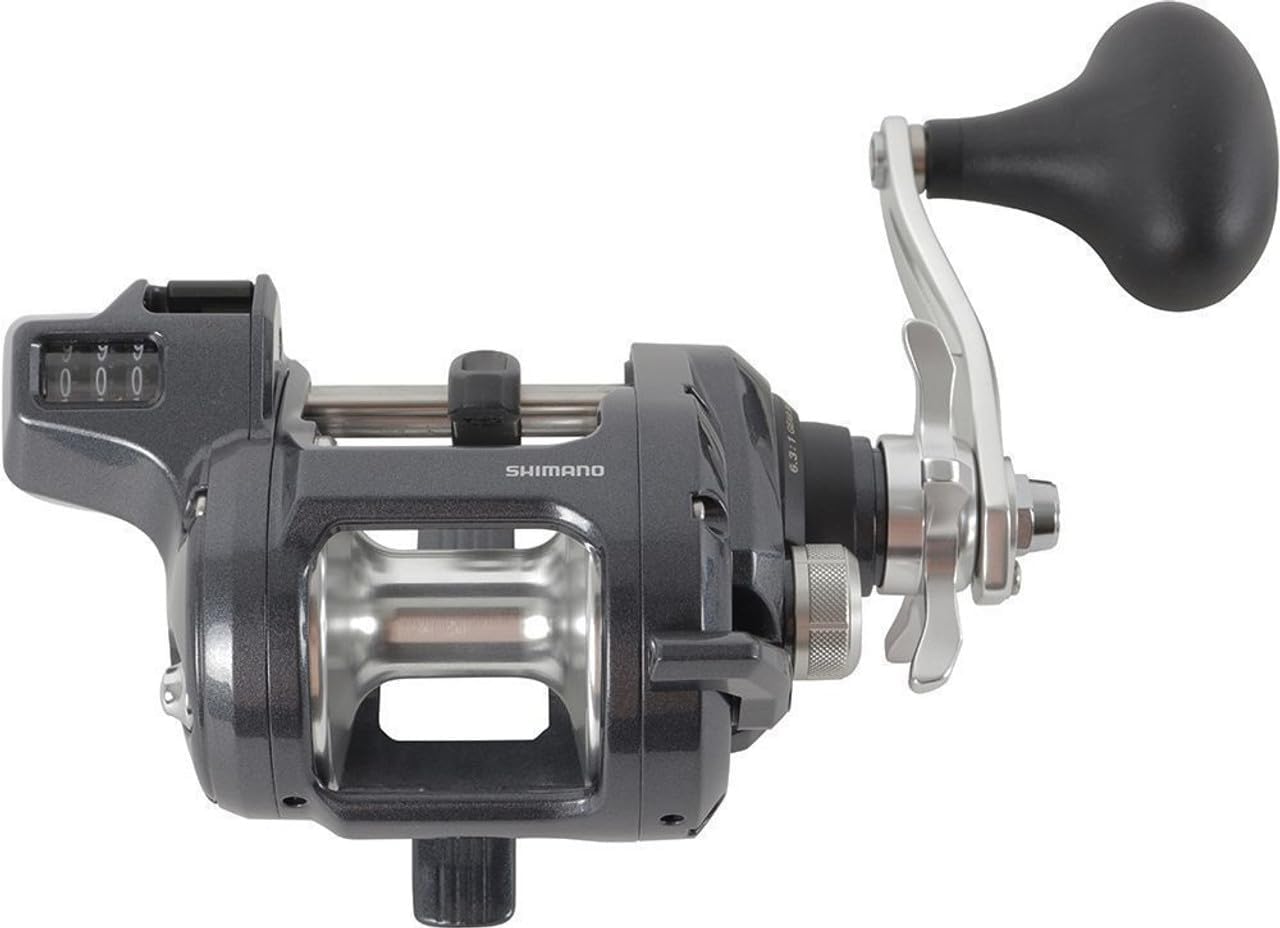
    Line counter reels track exactly how much line is out — critical for trolling crankbaits at specific depths. The salmon trolling reels covered in detail in the salmon trolling reels guide all work for walleye trolling, just typically in smaller sizes.

    Okuma Convector CV-30DLX

    Buy it on Amazon

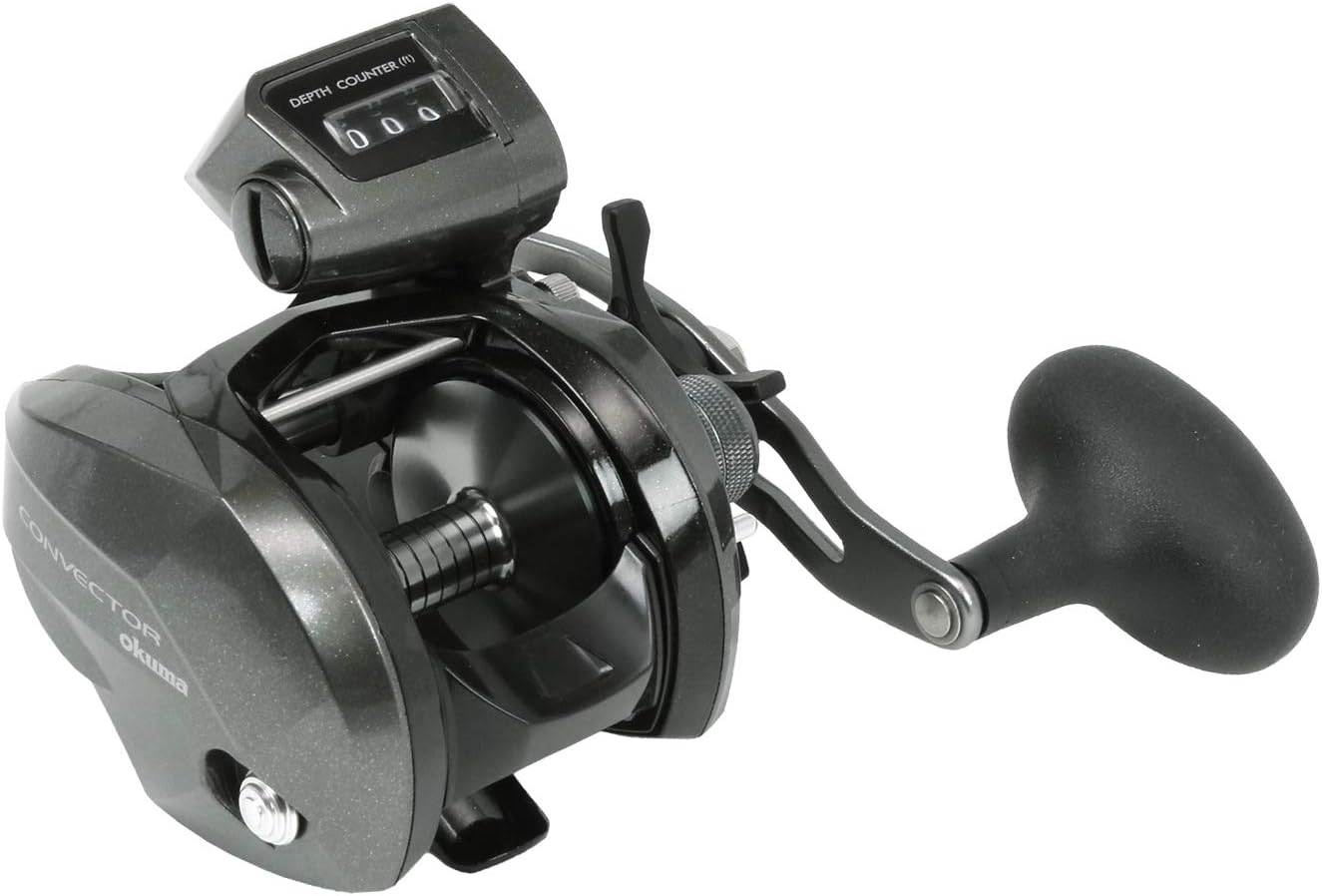
    The Okuma Convector CV-30DLX is the walleye trolling standard — same reel that anchors Great Lakes salmon trolling spreads. The 30 size is appropriate for walleye work (the salmon guide covers larger sizes for kings). The mechanical line counter is accurate enough for typical walleye trolling depths, the drag handles 10-20lb walleye without issues, and the construction lasts through seasons of heavy use. Most Lake Erie walleye charter boats run Convector-class reels in some form. The CV-15D is the smaller alternative for ultralight walleye trolling or for anglers who prefer a lighter package.

    Daiwa Lexa LC Line Counter

    Buy it on Amazon

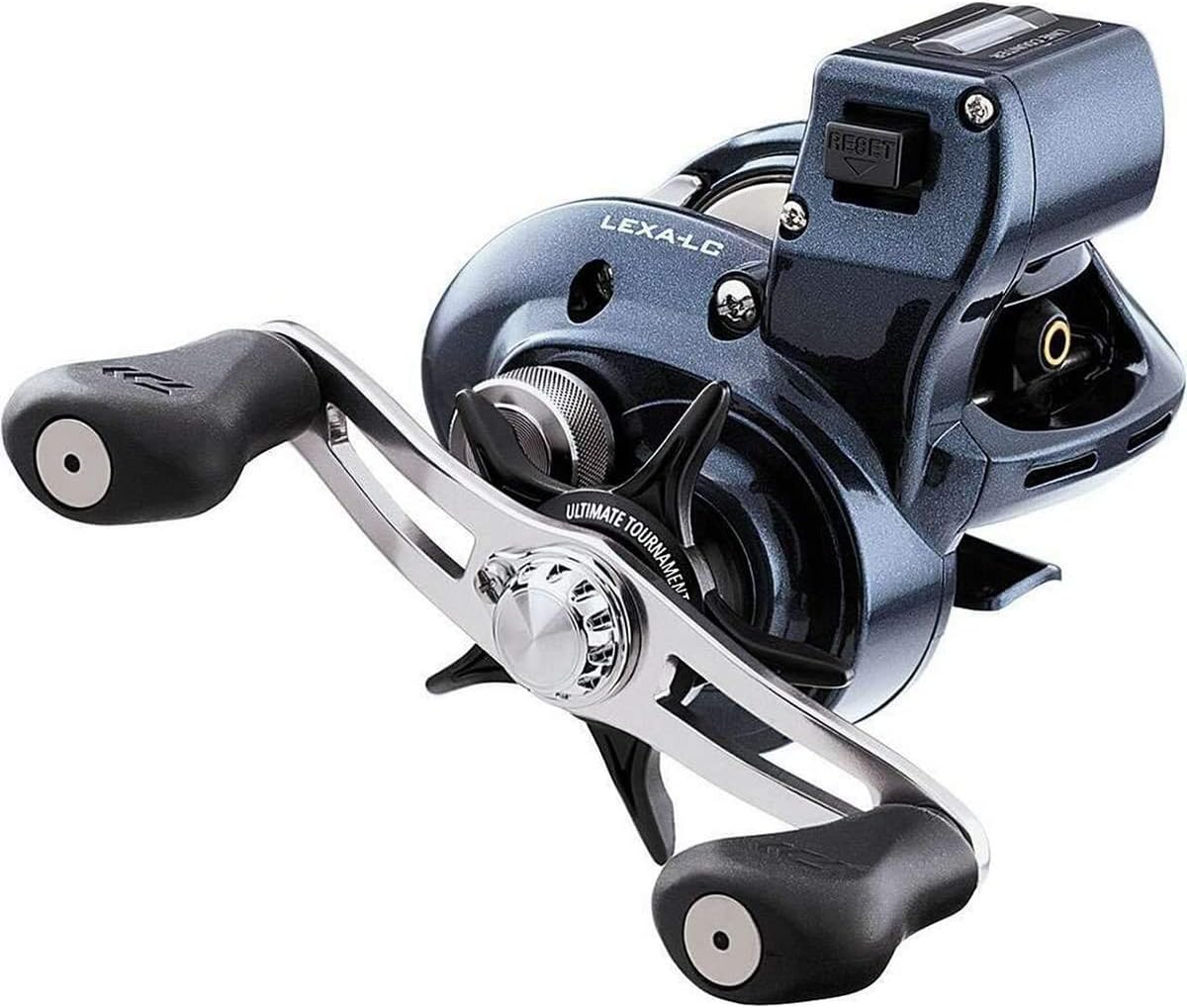
    The Daiwa Lexa LC is the premium walleye line counter. Daiwa’s engineering on the line counter mechanism produces noticeably more precise depth readings than competing brands. The drag is smoother out of the box than the Okuma Convector. The construction is heavier — important for trolling reels that see constant exposure to wind, sun, and water. The Lexa LC is the reel for anglers who fish walleye trolling consistently and want premium feel and durability. Priced higher than the Convector but in the same value range as the Shimano Tekota covered in the salmon guide.

    Penn Warfare 20LC

    Buy it on Amazon

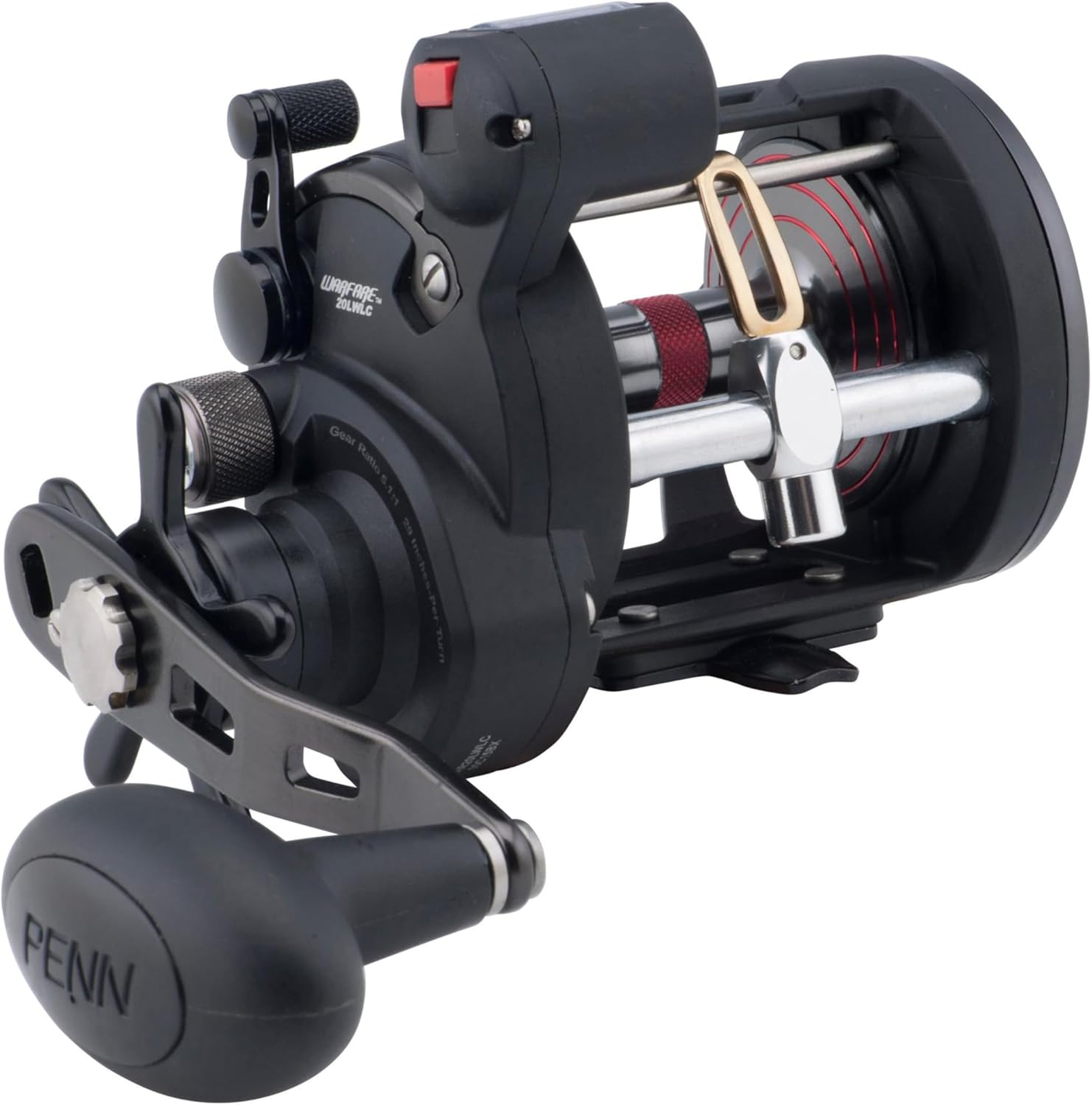
    The Penn Warfare 20LC is the budget entry-point for walleye line counter trolling. Around $90-120, it’s the reel most walleye anglers buy when they’re moving from non-line-counter trolling to precise depth-controlled trolling without committing to premium prices. The Warfare’s drag and gearing aren’t refined enough for long-term hard use, but for occasional walleye trolling or as backup reels in a multi-rod spread, it works fine. Penn’s HT-100 carbon fiber drag system handles walleye fishing easily. The salmon trolling reels guide covers the Warfare in detail at saltwater scale; the same considerations apply at the walleye scale.

    Reel Sizing for Walleye

    Application Spinning Size Line Counter Size
    Light jigging, finesse 2500-3000
    Standard jigging, casting 3000-4000
    Heavy casting, big crankbaits 4000-5000
    Walleye trolling (standard) 15-30 size
    Heavy walleye trolling (Lake Erie) 30 size
    Lead core / copper line work 30-45 size

    Line Capacity and Selection

    The 4000 size walleye spinning reel handles 150-200 yards of 8-10lb mono or 200+ yards of 10-15lb braid. The 30 size line counter trolling reel handles 200-300 yards of similar line. Both are plenty for walleye — fish rarely run more than 80 yards on a fight.

    Line selection trade-offs:

    Spinning reel mainline: Most walleye anglers run 10-15lb braid (PowerPro, J-Braid) with a 6-10lb fluorocarbon leader. The braid provides sensitivity; the fluorocarbon provides invisibility near the lure. Some traditional anglers stick with 6-10lb monofilament for the simplicity and stretch.

    Line counter mainline: 10-15lb monofilament for traditional walleye trolling. Some modern setups use 30lb braid with 12-15lb mono leader (10-15 feet long). The braid vs mono guide explains the trade-offs that apply to trolling.

    For broader background, see best fishing line by pound test.

    Drag Settings for Walleye

    Walleye don’t make screaming runs like saltwater fish — drag settings are more about avoiding hook-pulls than handling long fights:

    • Spinning reel for jigging: Set drag to 25-30% of line break strength. Tight enough to set hooks, loose enough to let fish run when they need to.
    • Line counter for trolling: Set drag to 25% of line break strength. Trolling drag should be lighter than fighting drag — a strike at trolling speed needs to give line, not snap it.
    • Ice fishing: Set drag light — 2-3 lbs maximum. Heavy drag in cold conditions pulls hooks from walleye’s bony mouths.

    Pairing Reel to Rod

    Balance matters. Standard pairings:

    • Shimano Stradic 4000 + St. Croix Eyecon 6’8″ Medium — premium jigging combo
    • Daiwa BG MQ 4000 + Fenwick Eagle Medium — solid mid-tier setup
    • Okuma Convector CV-30DLX + Okuma Classic Pro GLT Medium — trolling combo
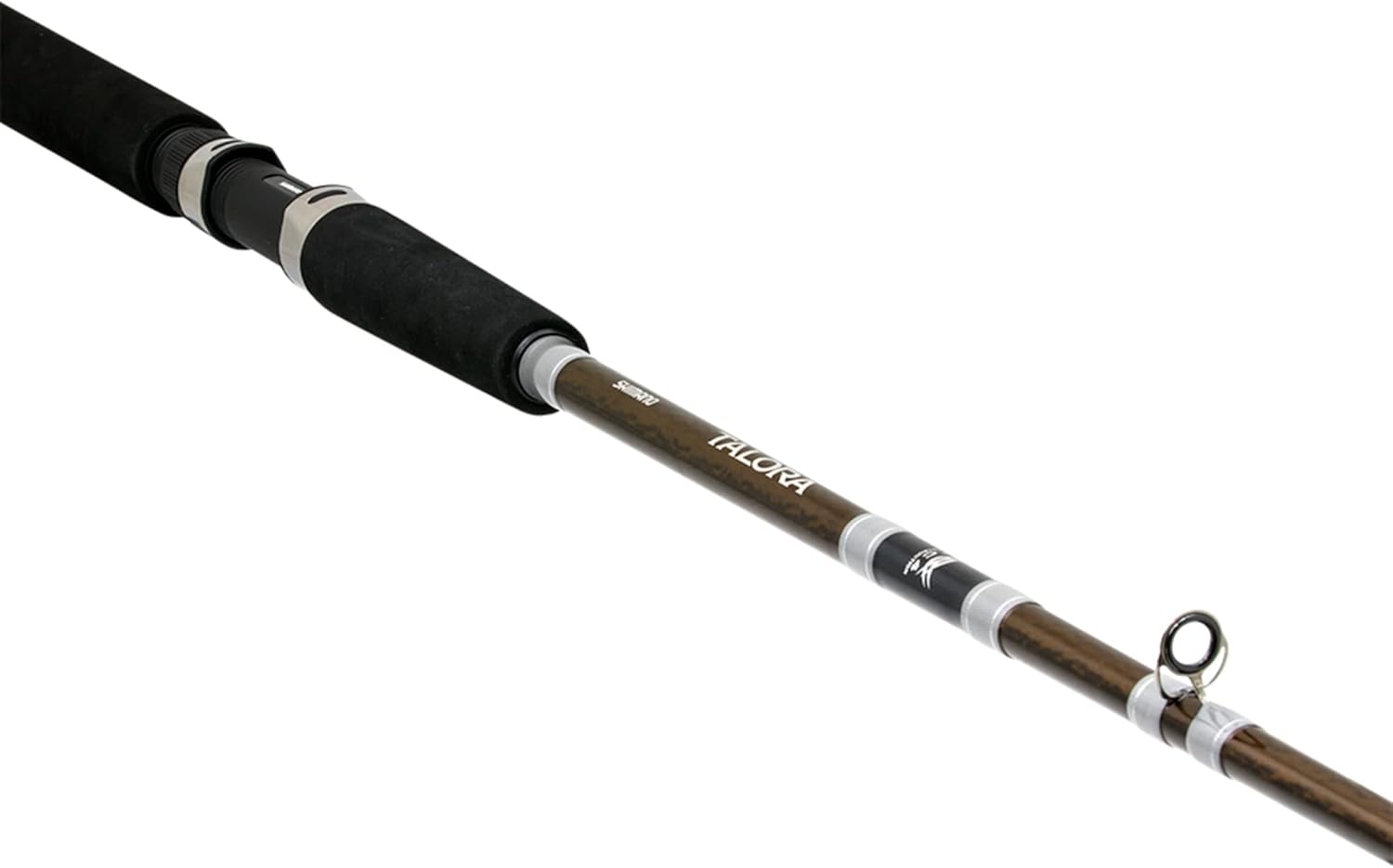
    • Daiwa Lexa LC + Shimano Talora trolling rod — premium trolling combo (see salmon trolling rods guide)
    • Penn Warfare 20LC + Okuma Classic Pro GLT Medium — budget trolling setup

    The walleye rods guide covers rod pairings in detail. For broader rod-and-reel principles, the SoCal rod and reel combos guide applies many of the same balance considerations.

    Common Mistakes

    Wrong reel size for the technique. A 5000-size spinning reel is too heavy for vertical jigging. A 2500-size is too small for line capacity. 3000-4000 hits the sweet spot for most walleye applications.

    Skipping line counters on trolling rods. Without a line counter, you’re guessing how deep your crankbait runs. The crankbait depth chart only works if you know how much line is out. Line counters are required for serious walleye trolling.

    Over-spec’ing line capacity. 300 yards of line is plenty for walleye. A 5000-size reel with 300 yards of 15lb braid is heavier and more expensive than necessary. Buy reels sized to the application.

    Cheap drag systems. Cheap reels have cheap drags that grab and release unevenly. This causes hook-pulls during fights — particularly painful with trophy walleye. The Stradic and BG drags hit a sweet spot of price and quality.

    Mismatched gear. A Shimano Stradic on a budget Walmart rod looks and feels wrong. A Penn Warfare on a Shimano Talora is overkill. Match the reel tier to the rod tier — they should feel like they belong together.

    Gear to Pair with Your Reels

    Frequently Asked Questions

    What’s the best walleye reel?

    The Shimano Stradic FL 4000 is the standard premium walleye spinning reel. The Daiwa BG MQ 4000 is the value alternative. For trolling, the Okuma Convector CV-30DLX line counter.

    What size spinning reel for walleye?

    3000-4000 size is the standard. 4000 is the most versatile — handles jigging, casting, and live bait rigging. 3000 for ultralight finesse work. 5000 only for heavy casting or pike crossover situations.

    Do I need a line counter reel for walleye trolling?

    Yes for serious trolling. Without a line counter, you can’t repeat the exact depth that’s producing — meaning when you find the fish, you can’t replicate that depth on other rods or in subsequent passes. Line counters are essential.

    What’s the difference between spinning and line counter reels for walleye?

    Spinning reels handle jigging, casting, and finesse work. Line counter conventional reels handle trolling. Different techniques, different reels. Most serious walleye anglers own both. The spinning vs conventional guide covers the underlying principles.

    What line should I use on a walleye reel?

    Spinning: 10-15lb braid with 6-10lb fluoro leader is the modern standard. Pure mono (8-10lb) is the traditional approach. Line counter: 10-15lb monofilament or 30lb braid with mono leader. See the best fishing line guide.

    How do I set the drag on a walleye reel?

    For spinning jigging: 25-30% of line break strength. For trolling: 25% of line break strength (trolling drag should be lighter). For ice fishing: 2-3 lbs maximum. Set drag with the line pulled in the direction the fish will pull, not by spinning the reel.

    Plan Your Trip

    Related Guides

    Tight lines!
  • Best Smallmouth Bass Lures: Finesse to Power Guide

    Smallmouth bass are aggressive enough that they hit almost any lure on the right day. They’re selective enough that the wrong lure produces nothing on tough days. The gap between those two states — easy fishing and tough fishing — is what separates casual smallmouth anglers from serious ones. The serious anglers know which lure to throw when, and they have the inventory to switch between presentations until they find what’s working.

    This guide covers the four lure categories that produce Upper Midwest smallmouth across all conditions — Ned rigs and finesse plastics for tough days, vertical jigs for deep water, swimbaits for active fish, and jerkbaits for spring and fall trophy work. Pair this with the smallmouth temperature guide for seasonal context.

    ⚡ Quick Picks by Situation

    Best finesse / Ned rig: Z-Man Finesse TRD ShroomZ — the modern smallmouth standard.

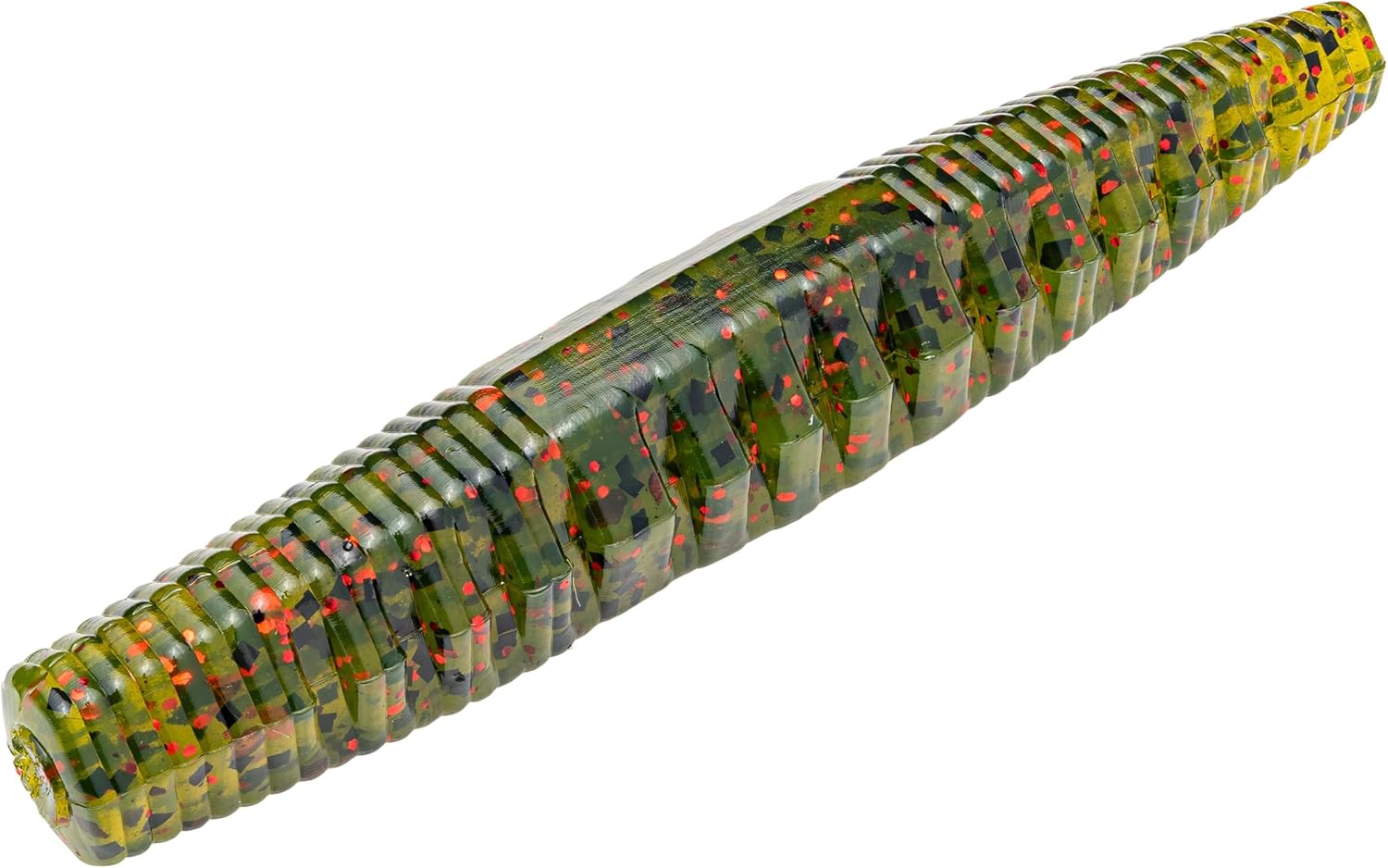
    Best Ned worm: Strike King Ned Ocho — soft plastic for ShroomZ heads.

    Best deep vertical jig: Rapala Jigging Rap W3 — smaller smallmouth-sized.

    Best swimbait: Storm WildEye Live Series — pre-rigged for casting.

    Best for clear water: Keitech Swimbait — premium soft plastic.


    Let’s go Fishing!
    Search for the Perfect Fishing Trip or Charter
    Upper Midwest & Great Lakes Smallmouth
    Verified reviews · Free cancellation · 90-day price match
    Powered by FishingBooker · Affiliate partner

    Finesse / Ned Rig (Modern Standard)

    The Ned rig — a small soft plastic worm or stickbait fished on a mushroom-style jig head — has revolutionized smallmouth fishing over the past decade. The technique produces when smallmouth refuse aggressive lures, particularly in clear water and on heavily-pressured lakes.

    Z-Man Finesse TRD ShroomZ Jig Heads

    Buy it on Amazon

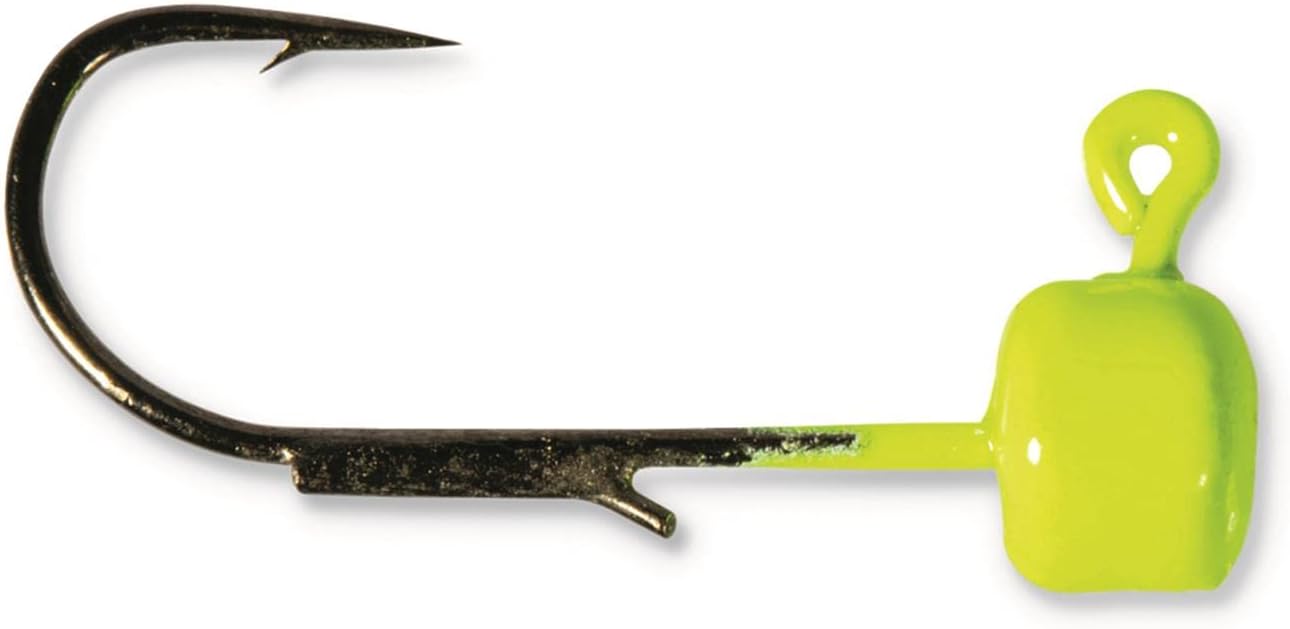
    The Z-Man ShroomZ jig heads are the foundation of the Ned rig system. The mushroom-shaped head sits the soft plastic body upright on the bottom — looking like a baitfish or crayfish nosing into the substrate. The 1/10 oz to 1/6 oz sizes cover most smallmouth applications. Z-Man’s hooks are sharp out of the package and durable through repeated use. Pair with the matching soft plastic body (Strike King Ned Ocho or Z-Man’s own TRD body). The Ned rig requires light line — 6-10lb fluorocarbon mainline or braid with fluoro leader — and a slow presentation. Cast to structure, let the rig sink to bottom, then slowly drag and lift. Strikes are usually subtle taps; set the hook on any unusual feel. Mille Lacs smallmouth anglers consistently rate the Ned rig as the most productive smallmouth presentation across summer conditions.

    Strike King Ned Ocho

    Buy it on Amazon

    The Strike King Ned Ocho is the soft plastic body designed specifically for Ned rig presentation. The 3-inch length matches the ShroomZ head perfectly, the salt-impregnated material adds weight and durability, and the color palette covers smallmouth-relevant patterns: green pumpkin, brown, watermelon, smoke. Salt-impregnated bodies hold up longer than freshwater-only plastics — important for the slow Ned rig retrieve that exposes the bait to fish for longer periods. Brown and green pumpkin are the highest-producing colors across most Upper Midwest waters; black and smoke variants for stained conditions. Pair with 1/10-1/6 oz ShroomZ heads.

    Vertical Jigs for Deep Smallmouth

    Summer smallmouth often hold deep on structure. Vertical jigging is the most effective way to present a lure at 20-35 foot depths.

    Rapala Jigging Rap W3

    Buy it on Amazon

    The Rapala Jigging Rap in the smaller W3 size is the smallmouth-specific application of the lure that dominates walleye and lake trout fishing (covered in the walleye jigs guide). The W3 (2.5″) size matches smallmouth’s prey scale better than the larger W5 and W7 used for walleye. The horizontal swimming action on the drop, the circling motion when jigged, and the realistic minnow profile produce smallmouth from deep structure in summer. Glow patterns dominate for low-light conditions; perch and natural patterns for clear summer water. The Jigging Rap technique is sharp upward snaps followed by controlled falls — different from Ned rig dragging or finesse work. Position the boat over structure, drop the lure to bottom, then jig with sharp 12-18 inch snaps. Most strikes come on the fall.

    Swimbaits and Active Lures

    When smallmouth are aggressive — spring, fall, dawn, dusk — swimbaits and active lures produce bigger fish than finesse plastics.

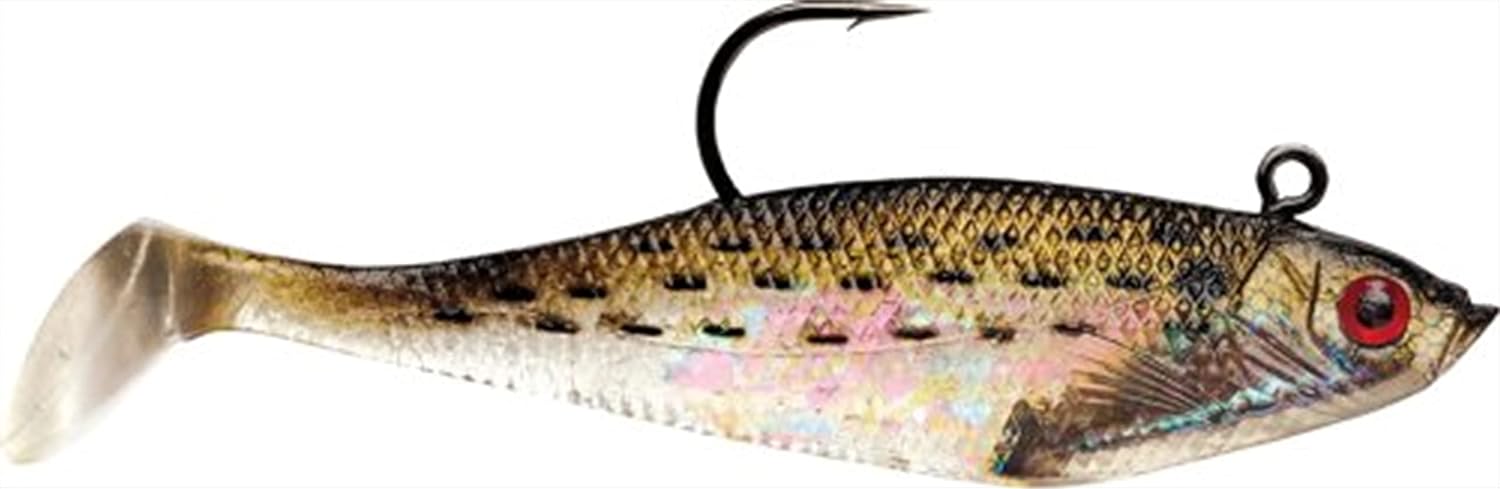
    Storm WildEye Live Series

    Buy it on Amazon

    The Storm WildEye in 3-4 inch sizes is the easy-to-use swimbait for smallmouth fishing. Pre-rigged with a weighted hook, the WildEye works as a casting lure for active fish or vertical for inactive ones. The realistic minnow profile and natural swim action trigger reaction strikes from cruising smallmouth. The same lure works for walleye (covered in the walleye guide) and crosses into smaller pike applications — versatile enough to carry on multi-species trips. Best colors for smallmouth: rainbow trout, shiner, perch. Cast to structure, count down to your target depth, retrieve with steady speed punctuated by occasional pauses.

    Keitech Swimbait

    Buy it on Amazon

    The Keitech is the premium soft plastic swimbait that produces when other swimbaits fail. Japanese-made with refined materials and color patterns, Keitechs cost more than Storm WildEyes but produce more strikes in pressured water. The 3-3.5″ size matches typical smallmouth forage. Rig on a 1/8-1/4 oz jig head or weighted swimbait hook. The paddle tail’s action is more refined than most swimbaits — subtle yet attractive. Worth the premium for clear-water lakes (Mille Lacs, Lake Vermilion) where smallmouth see swimbait presentations frequently. Color selection runs natural — silver shiner, smoke, ayu — rather than aggressive contrasting patterns.

    Big Hammer Swimbait 4″

    Buy it on Amazon

    The Big Hammer crosses over from the SoCal saltwater world (covered in the best yellowtail jigs guide) into freshwater applications. The 4-inch size and substantial profile target trophy smallmouth that pass smaller offerings. Rig on a 3/8-1/2 oz jig head for vertical work or weighted swimbait hook for casting. The double-action design — paddle tail with body roll — produces realistic baitfish behavior. Particularly effective on Mille Lacs and Sturgeon Bay for the 5+ lb class smallmouth those waters produce.

    Drop Shot Rigs

    The drop shot rig — a hook above a sinker — is the deep-water finesse technique that produces when nothing else does. Particularly effective for smallmouth holding deep in summer or in heavily-pressured water.

    Components:

    Tie the hook above the sinker using a Palomar knot (see the Palomar knot guide) with a long tag end going down to the sinker. The bait floats above bottom while the sinker maintains depth — perfect for inactive smallmouth holding off bottom.

    Color Selection for Smallmouth

    Conditions Best Colors Why
    Clear water, bright sun Green pumpkin, brown, smoke, watermelon Mimics crayfish and gobies, natural appearance
    Stained water Black, junebug, dark patterns Silhouette contrasts against turbidity
    Low light / dawn / dusk Black, dark patterns, motor oil Silhouette matters more than color
    Cold water (spring/fall) Silver, white, gold, natural shiner Match cold-water baitfish
    Hot summer (deep water) Natural patterns, perch, goby Mimics primary deep-water forage

    Line and Setup for Smallmouth

    Smallmouth demand finesse — lighter line than walleye or pike fishing:

    Mainline for finesse work (Ned rigs, drop shots): 10-15lb braid (PowerPro, J-Braid) with 6-8lb fluorocarbon leader. The braid provides sensitivity for the subtle bites; the fluoro leader provides invisibility near the lure. The braid vs mono guide covers the trade-offs.

    Mainline for swimbaits and Jigging Raps: 12-20lb braid with 8-12lb fluoro leader. The slightly heavier setup handles the bigger lures and bigger fish that take them.

    Knots: Palomar for direct connections (see the Palomar knot guide), FG knot for braid-to-fluoro leader (see best fishing knots).

    Reels: 2500-3000 size spinning reel for finesse, 3000-4000 for active lures. The walleye reels guide covers the same size class with reel-specific recommendations.

    For broader line guidance, see the best fishing line by pound test guide.

    Hook Considerations

    Smallmouth have hard mouths similar to walleye — hookset depends on sharp hooks and good geometry. The best hooks by species guide covers selection. For smallmouth-specific applications:

    • ShroomZ heads: Built-in hooks, replace if dull
    • Drop shot hooks: 1/0 to #1 for typical smallmouth bait sizes
    • Swimbait hooks: 3/0 to 5/0 weighted swimbait hooks
    • Wacky rig hooks: 1/0 (rigged through the middle of soft plastic stickbait)

    The circle hooks vs J hooks discussion applies less to smallmouth fishing — J hooks dominate because most smallmouth presentations require active hooksets, not the slow-rotating hookup of circle hooks.

    Common Mistakes

    Too heavy line. Smallmouth are line-shy in clear water. 6-10lb fluoro for finesse work, max 15lb for aggressive lures. Heavy bass line (20lb+) kills strikes from clear-water smallmouth.

    Wrong jig head weight. Too heavy a Ned rig head crashes through the strike zone too fast. 1/10 oz is the standard for typical conditions; only step up to 1/6 oz in wind or current.

    Retrieve too fast. Bass fishermen converting to smallmouth often retrieve too fast. Smallmouth respond to slow, methodical presentations — particularly with Ned rigs and finesse plastics.

    Wrong colors for the water. Bass-fishing colors (chartreuse, white) don’t always translate. Smallmouth respond to natural craw and goby colors more reliably than bright bass patterns.

    Skipping structure scanning. Smallmouth are structure fish. Without electronics to find rock piles, points, and breaks, you’re casting blind. A modern fish finder pays back its cost in smallmouth caught.

    Gear to Pair with Your Smallmouth Lures

    Frequently Asked Questions

    What’s the best smallmouth bass lure?

    For finesse work (most situations), the Z-Man Finesse TRD ShroomZ with a Strike King Ned Ocho body is the modern standard. For active fishing, the Rapala Jigging Rap W3. Most anglers carry both categories.

    What’s a Ned rig?

    A finesse rig using a small mushroom-shaped jig head (like the Z-Man ShroomZ) with a 3-inch soft plastic stickbait. Fished slowly along the bottom — the lure sits upright looking like a baitfish or crayfish. Particularly effective for pressured smallmouth in clear water.

    What color lure for smallmouth?

    Green pumpkin, brown, smoke, and watermelon are the standard smallmouth colors — they mimic crayfish and gobies, the primary forage. Black and junebug for stained water. Silver and white for cold water.

    What size jig head for smallmouth?

    1/10 oz to 1/6 oz for Ned rigs is standard. 1/4 to 3/8 oz for drop shot sinkers. Match the weight to the depth and conditions — lighter when possible, heavier when wind or depth demands it.

    What line for smallmouth fishing?

    10-15lb braid mainline with 6-8lb fluorocarbon leader for finesse work. Heavier (12-20lb braid + 8-12lb fluoro) for swimbaits and aggressive lures. Smallmouth are line-shy in clear water — keep visible line as light as possible.

    How deep are smallmouth in summer?

    15-25 feet on most lakes in mid-summer. The smallmouth temperature guide covers the seasonal depth patterns. Vertical jigging with the Jigging Rap W3 is the most effective deep-water technique.

    Plan Your Trip

    Related Guides

    Tight lines!
  • Best Northern Pike Lures: Spoons, Spinners & Big Baits

    Northern pike are aggressive ambush predators with simple lure preferences. Unlike musky’s “fish of 10,000 casts” pattern, pike usually commit when a lure invades their territory. Unlike walleye’s selective bite, pike strike with conviction. The challenge isn’t getting pike to bite — it’s getting the lure to them at the right depth and pace. Once you find the fish, the catch rate is high. Once you find the trophy fish, the catch rate is still high — they just hit bigger lures.

    This guide covers the four lure categories that dominate Upper Midwest pike fishing — classic red-and-white spoons, inline bucktail spinners, French-style spinners, and the crossover lures from musky fishing. Pair this with the pike temperature guide for seasonal context. Note: wire leaders are non-negotiable for pike — see the leader section at the bottom.

    ⚡ Quick Picks by Situation

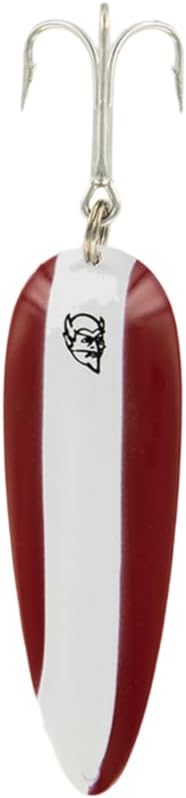
    Best overall pike lure: Dardevle Spoon Original in 1 oz — the iconic pike spoon.

    Best bucktail spinner: Mepps Aglia #5 Bucktail — pike-sized profile.

    Best French-style spinner: Mepps Black Fury — black blade for stained water.

    Best alternative spoon: Cotton Cordell C.C. Spoon — flashy chrome option.

    Best casting distance: Acme Kastmaster 1 oz — for reaching long structure.


    Let’s go Fishing!
    Search for the Perfect Fishing Trip or Charter
    Upper Midwest & Canadian Shield
    Verified reviews · Free cancellation · 90-day price match
    Powered by FishingBooker · Affiliate partner

    Classic Pike Spoons

    Spoons are the foundational pike lure. The flashing wobble imitates a wounded baitfish — pike’s preferred prey signature. A 1 oz spoon casts a long distance, sinks predictably, and works at multiple retrieve speeds.

    Dardevle Spoon Original (1 oz)

    Buy it on Amazon

    The Dardevle is the spoon synonymous with pike fishing. The classic red-and-white striping pattern is the most-produced lure design in North American fishing history — there’s a reason. The 1 oz size is the workhorse for most pike applications: casts well, sinks to typical pike depths (5-15 feet), and runs at standard retrieve speeds. The wobble is wide and erratic, matching a wounded baitfish profile perfectly. Throw past structure (weed edges, points, rock piles), let the spoon sink for 5-10 seconds, then retrieve with steady speed punctuated by occasional pauses. Strikes typically come on the retrieve or during pauses. The red-and-white pattern works across all conditions; alternative patterns (yellow/red, perch, fire tiger) match specific forage types or stained water. Replace the factory hook with a heavier treble if targeting trophy pike — the standard hook is adequate but not exceptional.

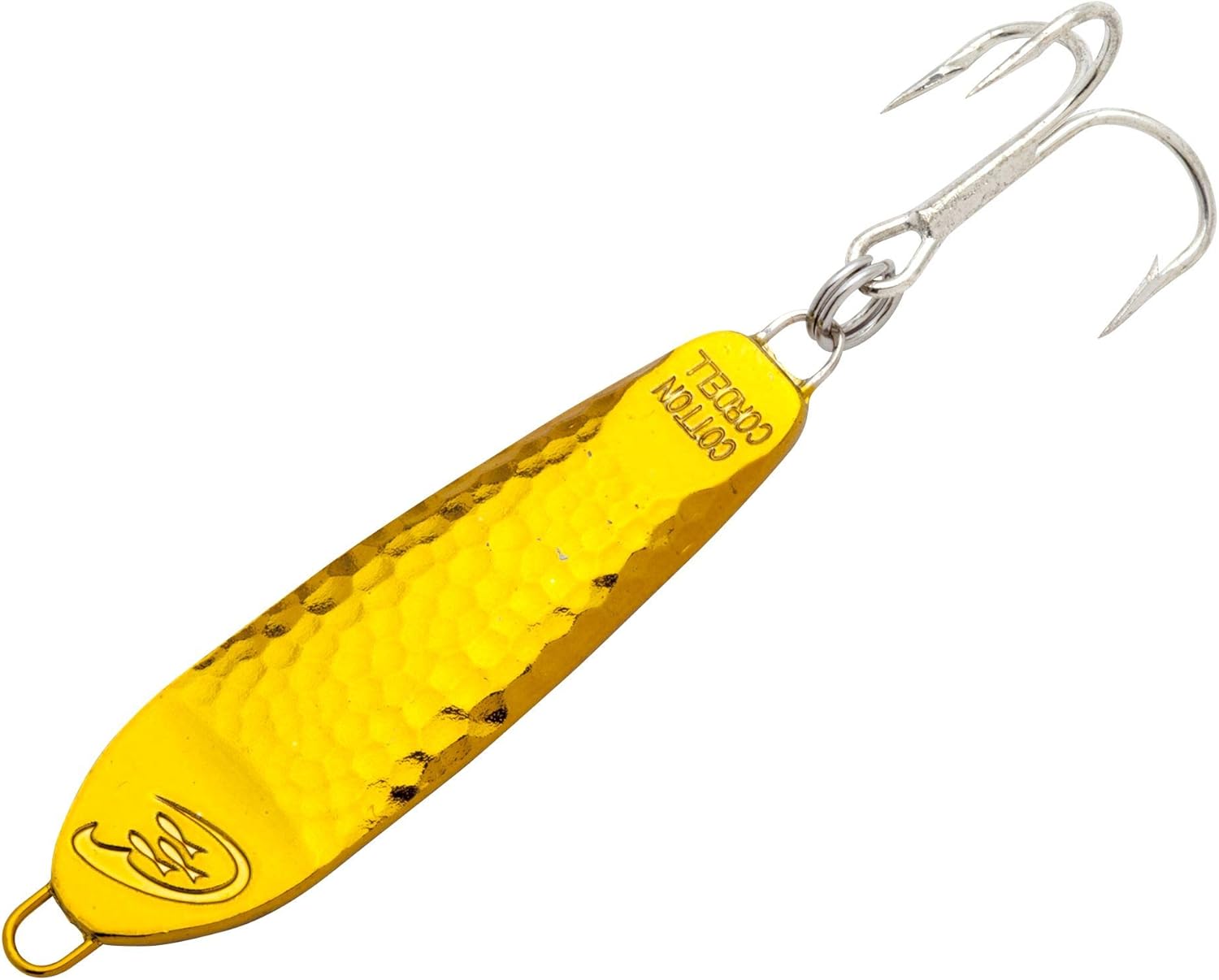
    Cotton Cordell C.C. Spoon

    Buy it on Amazon

    The Cotton Cordell C.C. Spoon is the chrome-flash alternative to the Dardevle. Where the Dardevle’s painted finish wears with use, the C.C. Spoon’s chrome holds its visual signature longer. The wobble is slightly tighter than the Dardevle, which suits faster retrieves and clear-water conditions. Particularly effective in late-summer clear water on Canadian Shield lakes where pike see Dardevle patterns frequently and have become educated. Chrome and chrome/blue patterns dominate the C.C. Spoon’s color palette. Worth carrying alongside Dardevles as a pattern alternative when one isn’t producing.

    Acme Kastmaster 1 oz

    Buy it on Amazon

    The Acme Kastmaster crosses over from saltwater pier fishing (covered in the pier fishing salmon guide) and shore-based applications into pike fishing. The dense single-piece chrome construction casts farther than any other spoon in its weight class — important when pike are working bait at the outer edge of normal casting range. Chrome, gold, and chrome/blue patterns produce. The Kastmaster’s tighter action makes it less effective than the Dardevle for typical structure fishing but better for distance casting from shore or reaching offshore weed edges.

    Bucktail Spinners

    Bucktail spinners combine spinning blade flash with bucktail hair volume. The combination of visual attraction and water displacement triggers pike aggression more effectively than spoons in some situations.

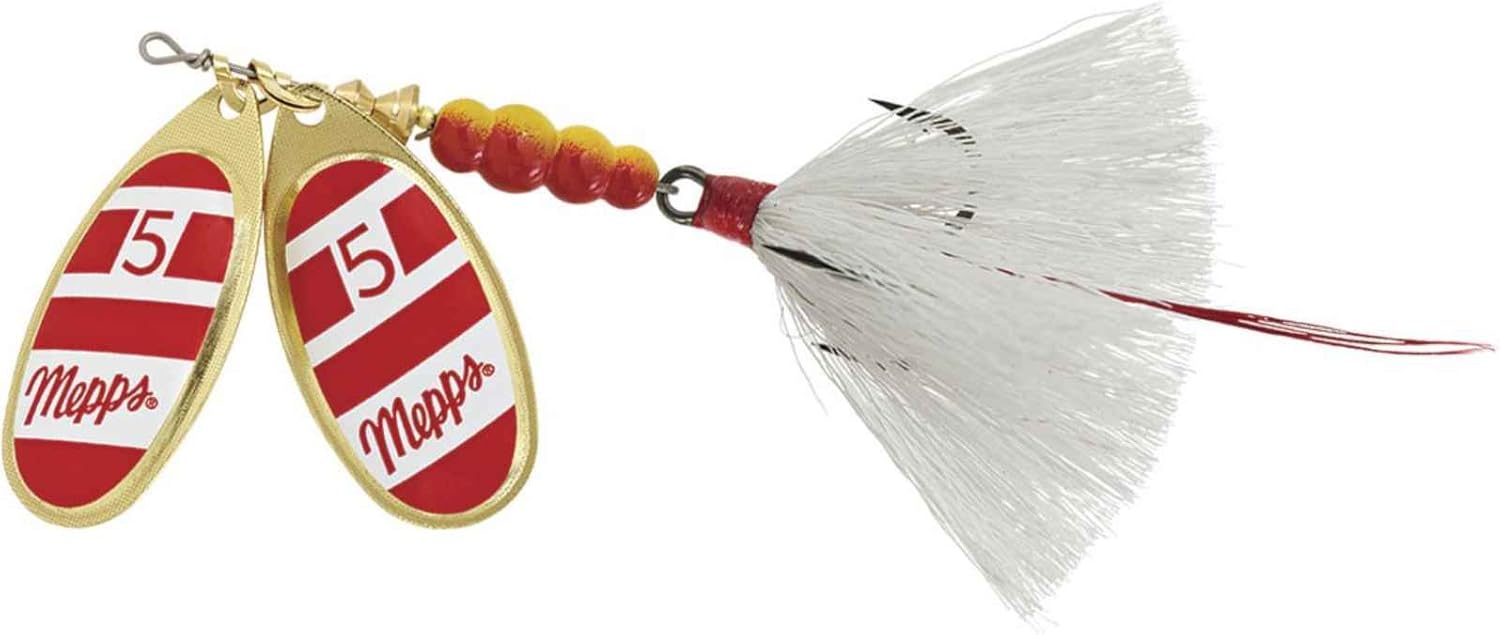
    Mepps Aglia #5 Bucktail

    Buy it on Amazon

    The Mepps Aglia in #5 Bucktail size is the pike-specific version of the spinner that anchors river coho fishing (smaller #4 size — see the coho lures guide). The #5 size — about 1/2 oz with a bigger blade — matches pike’s preferred prey profile and produces consistently from spring through fall. Silver blade with red bucktail is the classic Upper Midwest pike pattern; fluorescent orange and chartreuse for stained water. Cast across weed edges, retrieve at a moderate-fast pace to keep the blade rotating, vary speed and add occasional pauses. Pike will follow these spinners often — be ready for boatside strikes on the pickup. Replace the factory hook with a premium 2/0-3/0 treble for trophy targeting.

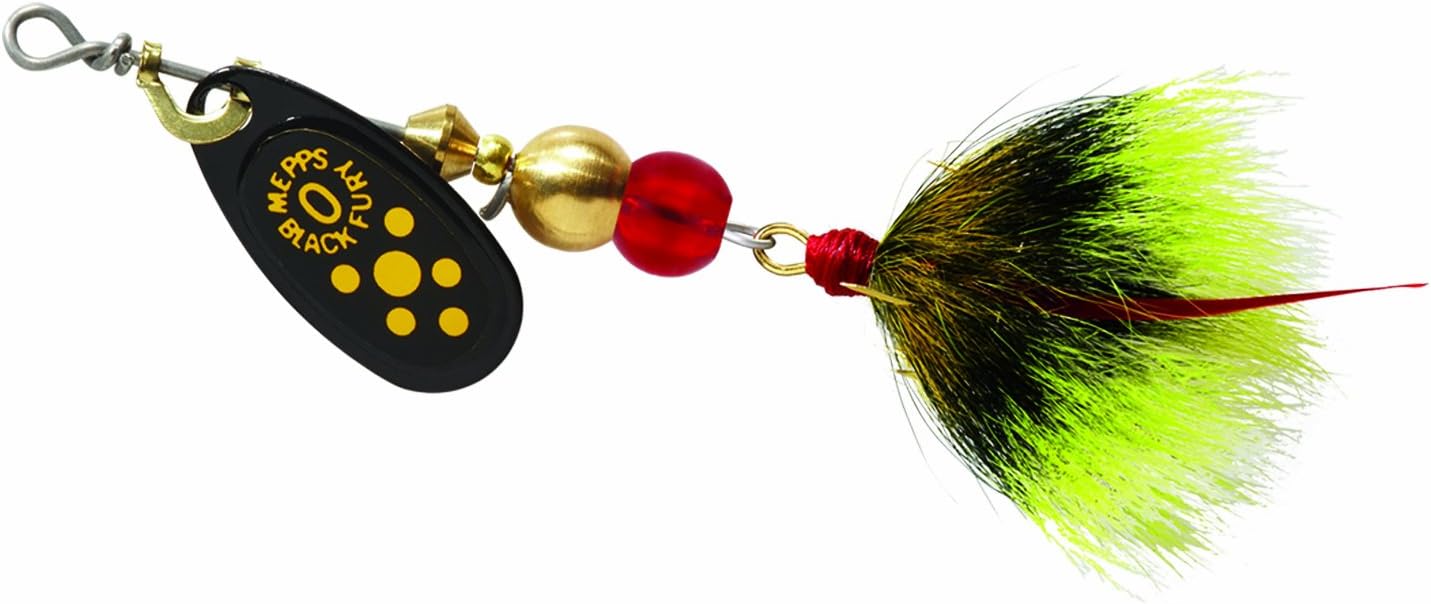
    Mepps Black Fury Inline Spinner

    Buy it on Amazon

    The Mepps Black Fury is the dark-blade variant in the Mepps lineup. The black blade with yellow or fluorescent dots creates a different attraction signature than the silver blade Aglia — particularly effective in stained water (Upper Red Lake, certain Wisconsin and Manitoba lakes) where the contrast against the murky background matters more than overall flash. Sizes 3-5 cover pike applications, with size 4 (3/8 oz) being the workhorse. The Black Fury also catches walleye and trout in addition to pike, making it a versatile multi-species lure to carry. Run on the same wire leader setup as other pike spinners.

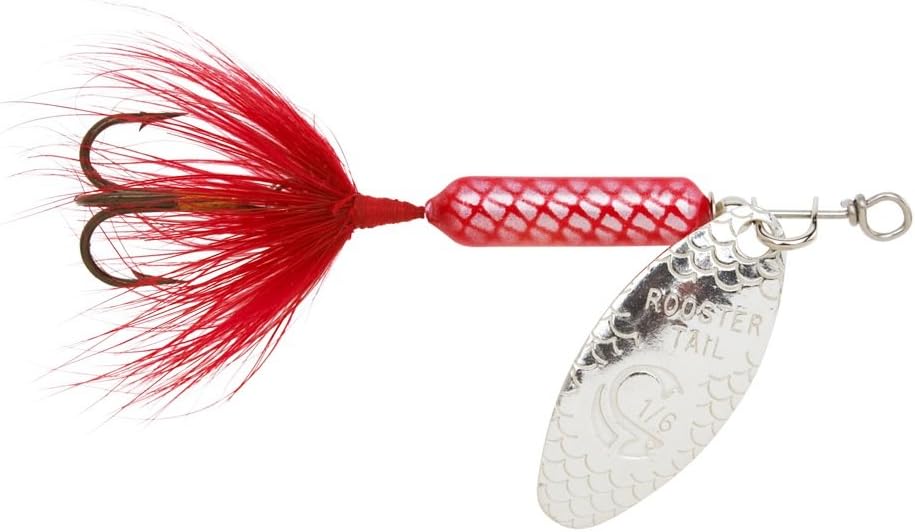
    Worden’s Original Rooster Tail

    Buy it on Amazon

    The Worden’s Rooster Tail is the budget-friendly alternative in the inline spinner category. The 1/4 oz size matches smaller pike and crosses over to smallmouth bass. The willowleaf blade rotates at slower speeds than Mepps Aglias, which suits cold-water fishing in spring and fall when pike feed slower. Pure red and white-and-red patterns work well in stained water. Particularly useful for anglers fishing both pike and trout (Rooster Tails are classic trout lures), as one spinner serves multiple species at multiple sizes.

    Crossover Lures from Other Fisheries

    Several lures from other categories work effectively for pike:

    Musky bucktails (smaller sizes). The Mepps Musky Killer in the smallest sizes catches big pike. Musky lures and pike lures overlap in the upper range.

    Suspending jerkbaits. The Rapala Husky Jerk in HJ12-HJ14 sizes produces pike effectively, particularly for finesse situations or fish that have rejected spinners and spoons.

    Soft plastic swimbaits. The Storm WildEye Live Series in 4-inch sizes catches both walleye and pike, making it a versatile lure to carry on multi-species trips.

    Topwater plugs. Pike will hit large topwater lures at dawn and dusk. Big poppers and walk-the-dog plugs designed for largemouth bass produce effectively for shallow-water pike.

    Color Selection for Pike

    Conditions Best Colors Why
    Clear water, bright sun Chrome, silver/blue, natural perch Mimics live bait, less aggressive
    Stained water Red and white (Dardevle), chartreuse, fluorescent orange High visibility through turbidity
    Low light / dawn / dusk Black/yellow, copper, dark patterns Silhouette matters most
    Cold water (early spring / late fall) White, silver, subtle natural Cold pike respond to less aggressive flash
    Hot summer Bright reactive colors Trigger lethargic fish into reaction strikes

    Wire Leaders (Mandatory for Pike)

    Pike teeth cut mono and braid easily. A wire leader is not optional:

    American Fishing Wire 90lb Single Strand

    Buy it on Amazon

    The American Fishing Wire single-strand 90lb is the most-used pike wire in the Upper Midwest. 12-18 inch leaders are the standard length. Connect via Albright knot from braid to wire — see the best fishing knots guide. Inspect leaders after every fish; pike teeth create kinks that weaken the wire over time. Replace as needed.

    Malin Wire Leader 90lb

    Buy it on Amazon

    Malin is the premium wire leader option. Slightly stiffer and more durable than American Fishing Wire. Worth the price difference for serious pike anglers or for trophy pike targeting.

    Line Setup for Pike

    Pike fishing is lighter than musky but heavier than walleye:

    Mainline: 30-50lb braid (PowerPro, J-Braid). The braid vs mono guide explains why braid dominates — sensitivity for strike detection and no stretch for hookset.

    Leader: 90lb wire, 12-18 inches.

    Connection: Albright knot or modified Albright braid-to-wire. The best fishing knots guide covers the technique.

    Reel: 4000-6000 size spinning reel handles most pike. For dedicated pike work or big-water situations, conventional baitcasters in the size class covered in the best 30lb reels guide work well.

    For broader line selection guidance, see best fishing line by pound test.

    Hook Considerations

    Pike hookups happen primarily on the retrieve, not on the cast. The hook needs to penetrate quickly and hold during the fight:

    • 1 oz spoons: 2/0 treble hooks standard, 3/0 for trophy
    • Inline spinners (size 5): 1/0-2/0 trebles
    • Larger bucktails: 4/0-5/0 trebles

    For background on hook selection, the best hooks by species guide covers the saltwater equivalents. The circle hooks vs J hooks guide also applies — circles work for live bait pike fishing while J hooks/trebles work for artificial lures.

    Common Mistakes

    Skipping the wire leader. The biggest mistake in pike fishing. Pike teeth cut mono and braid in one strike. Use 90lb+ wire leader. No exceptions.

    Lures too small. Big pike eat big prey. A 1/4 oz spinner catches small pike; a 1 oz Dardevle catches big pike. Scale your lures up when targeting trophy fish.

    Retrieve too fast. Many anglers retrieve pike lures at bass-fishing speeds. Pike often prefer slower retrieves, particularly in cold water and stained conditions. Slow down — the spinning blade should still rotate but the lure should move slower than your instinct says.

    Wrong structure. Pike are ambush predators — they need cover. Even prime temperature water without weeds, timber, or rock structure holds few pike. Find the cover first, then fish through it.

    Cheap hooks left in factory configuration. Factory hooks on spoons and spinners are functional but not exceptional. For trophy pike targeting, upgrade to premium replacement trebles. The hookset is critical because pike’s bony mouth resists penetration.

    Gear to Pair with Your Pike Lures

    Frequently Asked Questions

    What’s the best pike lure?

    The Dardevle Spoon in 1 oz red-and-white is the iconic pike lure. The Mepps Aglia #5 Bucktail is the spinner standard. Most pike anglers carry both categories and switch based on conditions.

    What color spoon for pike?

    Red and white (Dardevle classic) is the standard. Yellow and red for stained water. Chrome and silver for clear water. Fluorescent patterns for low-light or dark water conditions. The Cotton Cordell C.C. Spoon in chrome is the alternative to Dardevle red-and-white.

    Do I need a wire leader for pike?

    Yes — absolutely required. Pike teeth cut mono and braid in one strike. Use 90lb+ wire leader, 12-18 inches long. No exceptions, regardless of how light the rest of your setup is.

    What size lure for trophy pike?

    Scale up from the standard sizes. 1.5-2 oz spoons (or step up to musky-class lures). Mepps Aglia in larger sizes. Live suckers or large swimbaits for the biggest fish.

    What’s the best time to fish for pike?

    Two trophy windows: spring post-ice-out (water 45-58°F) and fall (water 50-65°F). See the pike temperature guide for the detailed seasonal patterns. Mid-summer is harder fishing as pike retreat to deeper, cooler water.

    What line for pike fishing?

    30-50lb braid mainline (PowerPro or similar) with a 90lb wire leader, 12-18 inches long. The braid vs mono guide explains why braid dominates — sensitivity and no stretch matter for setting hooks into pike’s bony mouth.

    Plan Your Trip

    Related Guides

    Tight lines!
  • Best Musky Rods: Heavy Power Casting Guide

    Musky rods exist on their own scale. Where a “heavy” bass rod is rated for 1 oz lures, a musky rod is rated for 4-8 oz lures and the fish that eat them. Where a walleye rod is 6’8″ Medium with extra-fast action, a musky rod is 8’6″ Heavy with a moderate-fast action. The differences aren’t gradual — they’re a different category entirely. A musky rod has to do three things at once: cast a 5-ounce bait 60+ feet, perform a figure-eight at the boat with control, and land a 40-inch fish that doesn’t quit. There’s no economical way to make a rod that does this without specialized design.

    This guide covers what makes a musky rod work, the best dedicated musky rods on the market, and how to match the rod to your primary technique. For background on rod construction principles, the graphite vs fiberglass guide applies to musky rods just as it does saltwater — though for musky, the answer leans more toward composite blanks than pure graphite. Pair with the best musky lures guide for matched setups.

    ⚡ Quick Picks by Situation

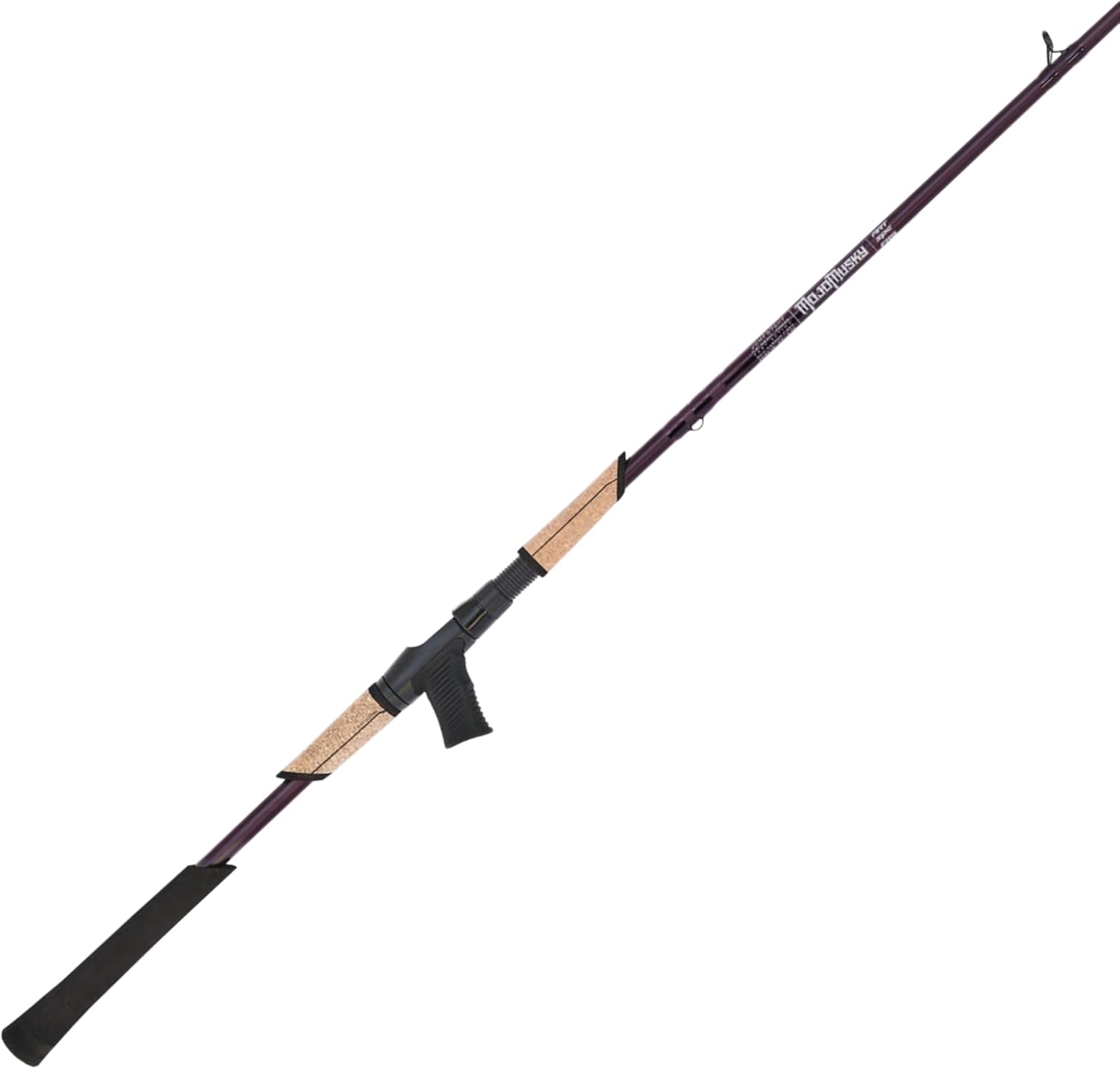
    Best overall musky rod: St. Croix Mojo Musky — purpose-built for musky.

    Best for bucktails: St. Croix Mojo Musky 8’6″ Heavy with moderate-fast action.

    Best for big soft plastics (Bull Dawgs): 8’6″ Extra-Heavy or 9′ Heavy.

    Best for figure-eight work: 8’6″ — short enough for control, long enough for casting.

    Best heavy reel pairing: Heavy duty conventional or large baitcaster (see spinning vs conventional).


    Let’s go Fishing!
    Search for the Perfect Fishing Trip or Charter
    Wisconsin & Upper Midwest Musky Country
    Verified reviews · Free cancellation · 90-day price match
    Powered by FishingBooker · Affiliate partner

    What Makes a Good Musky Rod

    Musky rod design fights two competing requirements: enough backbone to cast 5-ounce lures and land 40-inch fish, but enough sensitivity to feel the lure work and detect strikes. Key specifications:

    Length: 8′ to 9′. Shorter than 8′ loses the leverage for casting heavy lures effectively. Longer than 9′ becomes unwieldy for boatside figure-eights. 8’6″ is the sweet spot for general musky work.

    Action: Moderate-Fast. The rod needs to bend through the upper third when loaded — that loading is what casts a heavy lure with control. Fast-action rods are too tip-heavy for big musky lures; slow rods don’t have the backbone for hookset.

    Power: Heavy to Extra-Heavy. Rated for 1-6 oz lures (Heavy) or 2-8 oz lures (Extra-Heavy). Most anglers find Heavy is the right starting point — handles standard 4-6 oz lures while still being castable all day.

    Material: Graphite composite. Pure graphite is too brittle for musky-class lures and fish. Composite blanks combine graphite’s sensitivity with fiberglass’s durability. The graphite vs fiberglass guide covers the trade-offs in detail — for musky, composite is the right answer.

    Guides: Premium aluminum oxide or titanium framed. Heavy braid running through guides creates wear. Quality guides last; cheap guides develop grooves within a season.

    Handle: Long EVA or split-grip. Two-handed casting is the standard for musky lures. Long handles (12-15 inches) provide leverage. Split grips reduce weight without sacrificing function.

    The Musky Rod

    St. Croix Mojo Musky Rod

    Buy it on Amazon

    The St. Croix Mojo Musky is the rod most serious Upper Midwest musky anglers settle on. St. Croix’s Wisconsin roots mean the company understands musky fishing — they’re not adapting bass rod designs for the species. The Mojo Musky line covers multiple length and power options designed specifically for musky applications: 8’6″ Heavy for general bucktail and standard lure use, 8’6″ Extra-Heavy for big Bull Dawgs and heavy jigs, 9′ Heavy for casting distance and shore-based applications. The graphite composite blank provides enough sensitivity to feel a Bull Dawg breathing and enough backbone to set hooks into a 40-inch musky’s bony mouth. The 8’6″ Heavy is the recommended starter rod — the most versatile across musky techniques. Pair with a quality baitcaster rated for 65-80lb braid. Priced in the $230-280 range depending on configuration, the Mojo Musky represents the value entry-point for serious musky gear. St. Croix’s premium tiers (Premier Musky, Legend) offer refinements but the Mojo handles trophy fish without compromise.

    Musky Rods by Technique

    Technique Length Power Action
    Standard Bucktails (1-2 oz) 8’6″ Heavy Moderate-Fast
    Big Bucktails (3-4 oz) 8’6″-9′ Heavy to Extra-Heavy Moderate-Fast
    Bull Dawgs (4-6 oz) 8’6″-9′ Extra-Heavy Moderate
    Jerkbaits 8′-8’6″ Heavy Moderate-Fast
    Topwater (large) 8’6″ Heavy Moderate-Fast
    Live Suckers (Fall) 9’+ Extra-Heavy Moderate
    Trolling 8’6″-9’6″ Heavy Moderate

    Pairing Rod to Reel

    Musky reels are heavy-duty conventional or large baitcaster. The spinning vs conventional guide explains the principles — for musky, conventional reels win because they handle the heavy lure weights and big fish drags more effectively than spinning. Recommended pairings:

    • St. Croix Mojo Musky 8’6″ Heavy + heavy baitcaster (Shimano Tranx 400 or similar) — the standard musky combo
    • St. Croix Mojo Musky 9′ Extra-Heavy + Shimano Tranx 500 — heavy Bull Dawg / live sucker setup
    • St. Croix Mojo Musky 8′ Heavy + Daiwa Lexa 400 — alternative quality combo
    • Trolling musky rod + line counter reel — see the salmon trolling reels guide for line counter options that work for musky trolling

    The SoCal rod and reel combo guide covers balance principles that apply to musky setups — the rod and reel should feel like they belong together, not mismatched in weight or capacity.

    Line and Leader Setup

    Musky demands the heaviest freshwater line setup of any common application:

    Mainline: 65-100lb braid (PowerPro, J-Braid). Lighter than 65lb risks break-offs; heavier than 100lb adds weight without meaningful benefit. The braid vs mono guide explains why braid dominates for musky — no stretch for hook penetration, low diameter for casting distance with heavy lures.

    Leader: 90-130lb wire leader, 18 inches long. Non-negotiable for musky. American Fishing Wire 90lb or Malin 90lb are the standards. Connect with an Albright knot or modified Albright (see the best fishing knots guide).

    Reel capacity: 200-300 yards of 80lb braid. Musky don’t typically make long runs, but enough capacity matters for the occasional explosive run into structure.

    For full line selection guidance, the best fishing line by pound test guide covers the saltwater equivalent line classes that apply here.

    Common Mistakes

    Using a heavy bass rod for musky. Bass rods top out at “Heavy” power rated for 2 oz lures. Musky lures start at 4 oz. The bass rod can’t load properly with the heavier lure, leading to fatigue and poor casts. Get a purpose-built musky rod.

    Wrong action for the lure. Fast-action rods don’t load properly with heavy musky lures. Moderate-Fast is the standard; slower actions for the heaviest lures.

    Underpowered for trophy musky. A Heavy power rod handles average musky. Trophy targeting (45+ inch fish) benefits from Extra-Heavy power. The extra backbone matters during the fight, not just the cast.

    Spinning reel for heavy musky lures. Some anglers try to fish musky with heavy spinning gear. It works for smaller lures but breaks down with 5+ oz baits. Conventional/baitcaster setups handle heavy musky lures more efficiently.

    Cheap guides on a musky rod. Heavy braid wears through cheap guides within a season. The grooves cut your line on subsequent strikes. Pay for quality guides — they last years.

    Skipping the long handle. Two-handed casting is standard for musky lures. Short handles (under 12″) make all-day casting tiring and reduce control. Long handle is non-negotiable for serious musky work.

    Caring for Your Musky Rod

    Musky rods take more abuse than most fishing rods — heavy lures, big fish, frequent figure-eights at the boat. Routine care:

    • Inspect guides after every trip — heavy braid wears them faster than mono
    • Tighten loose hardware (reel seats, guides) regularly
    • Rinse with fresh water after each trip, even from freshwater lakes
    • Store rod vertically, not horizontally bent against a wall
    • Replace tip-tops at the first sign of grooving
    • Treat the EVA grip annually to prevent compression and cracking

    Gear to Pair with Your Musky Rod

    Frequently Asked Questions

    What’s the best musky rod?

    The St. Croix Mojo Musky in 8’6″ Heavy with moderate-fast action is the most-recommended overall musky rod. St. Croix’s premium lines (Premier, Legend) offer refinements but the Mojo handles trophy fish at a more accessible price point.

    What length musky rod do I need?

    8’6″ is the standard — long enough for casting distance, short enough for figure-eight control. Step up to 9′ for distance casting or shore-based fishing. Step down to 8′ for tight quarters or specific techniques. Avoid anything shorter than 8′ for general musky work.

    What action for musky rods?

    Moderate-Fast action. The rod needs to load through the upper third when casting heavy lures and absorb the strike of a big musky. Fast-action rods don’t load properly with 4+ oz lures; slow actions lack backbone for hookset.

    What power for musky rods?

    Heavy power for general musky work (rated 1-6 oz lures). Extra-Heavy for big Bull Dawgs, live suckers, or trophy targeting (rated 2-8 oz lures). Most anglers start with Heavy and add Extra-Heavy later for specific applications.

    Spinning or baitcaster for musky?

    Baitcaster (conventional). Heavy musky lures are too much for typical spinning reels. The spinning vs conventional guide covers the principles. Specialized heavy spinning reels work for smaller musky lures but baitcasters are the standard.

    Can I use a musky rod for pike?

    Yes — a Heavy musky rod handles big pike easily. Most musky rods are slightly overkill for typical pike (which are smaller and lighter biters), but a single rod that handles both species is a reasonable choice. The pike lures guide covers the application crossover.

    Plan Your Trip

    Related Guides

    Tight lines!

  • Best Musky Lures: Bucktails, Jerkbaits & Big Baits

    Musky lures are different from any other freshwater fishing lures. The size scale alone separates them — where a “large” walleye crankbait runs 3 inches, a “small” musky lure starts at 8 inches and the big ones push 14 inches or more. The weight pushes 4-8 ounces. The hooks are 5/0 to 8/0 trebles, not the #2 or #4 hooks of walleye fishing. These aren’t lures you cast lightly — they’re heavy artillery designed for fish that will follow them and either commit explosively or refuse with a flick of the tail.

    This guide covers the three musky lure categories that consistently produce — bucktails, soft plastic gliders, and jerkbaits — and the specific products in each. Pair this with the musky temperature guide for seasonal context and the musky fishing guide for presentation technique. Note: musky require heavy gear and wire leaders are mandatory — see the wire leader section below.

    ⚡ Quick Picks by Situation

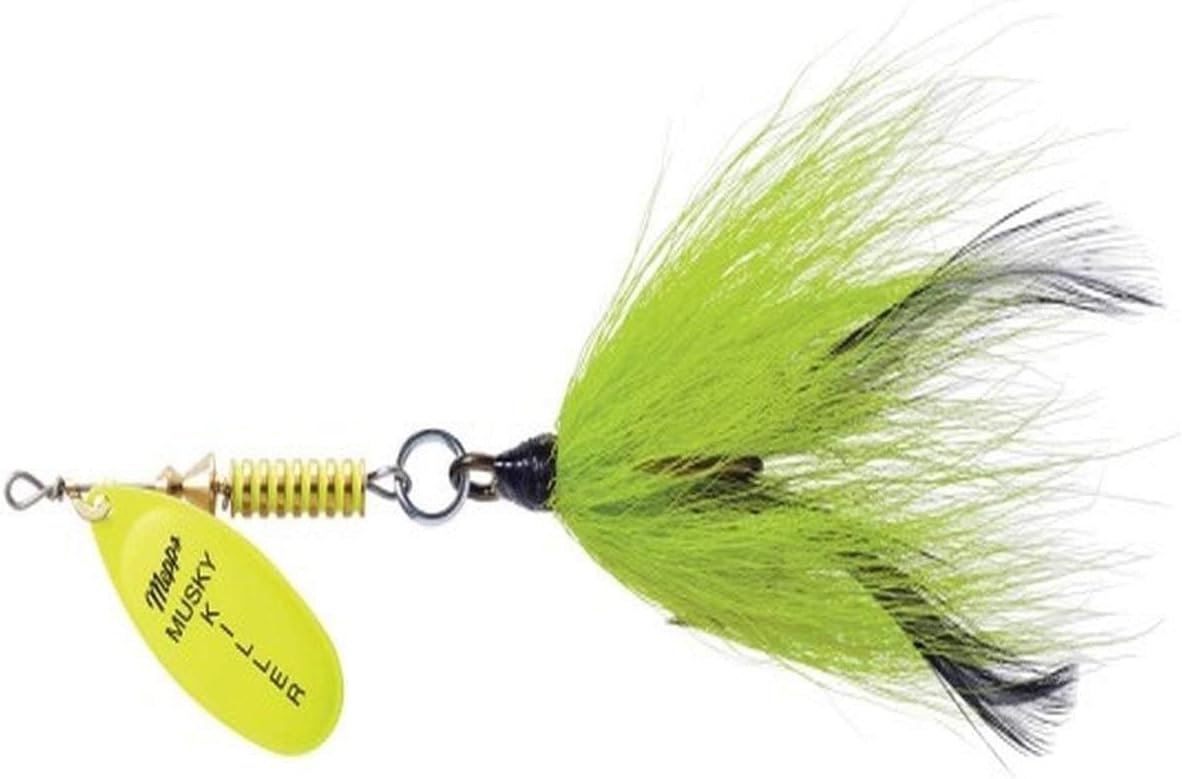
    Best bucktail: Mepps Musky Killer — the bucktail standard.

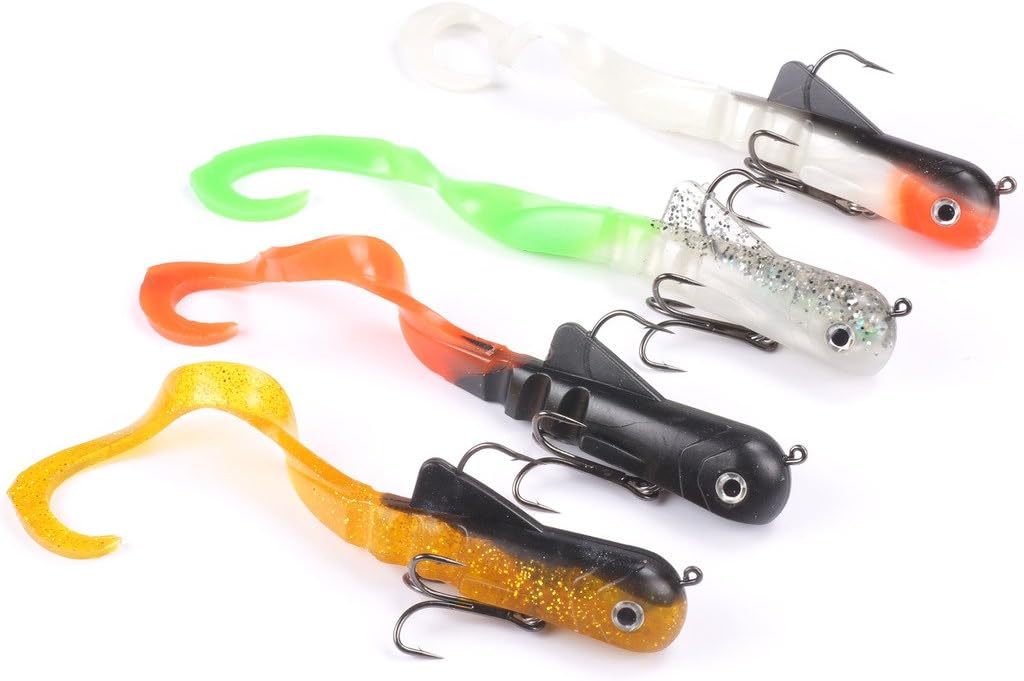
    Best soft plastic / glider: Bull Dawg Musky Lure — the iconic musky soft bait.

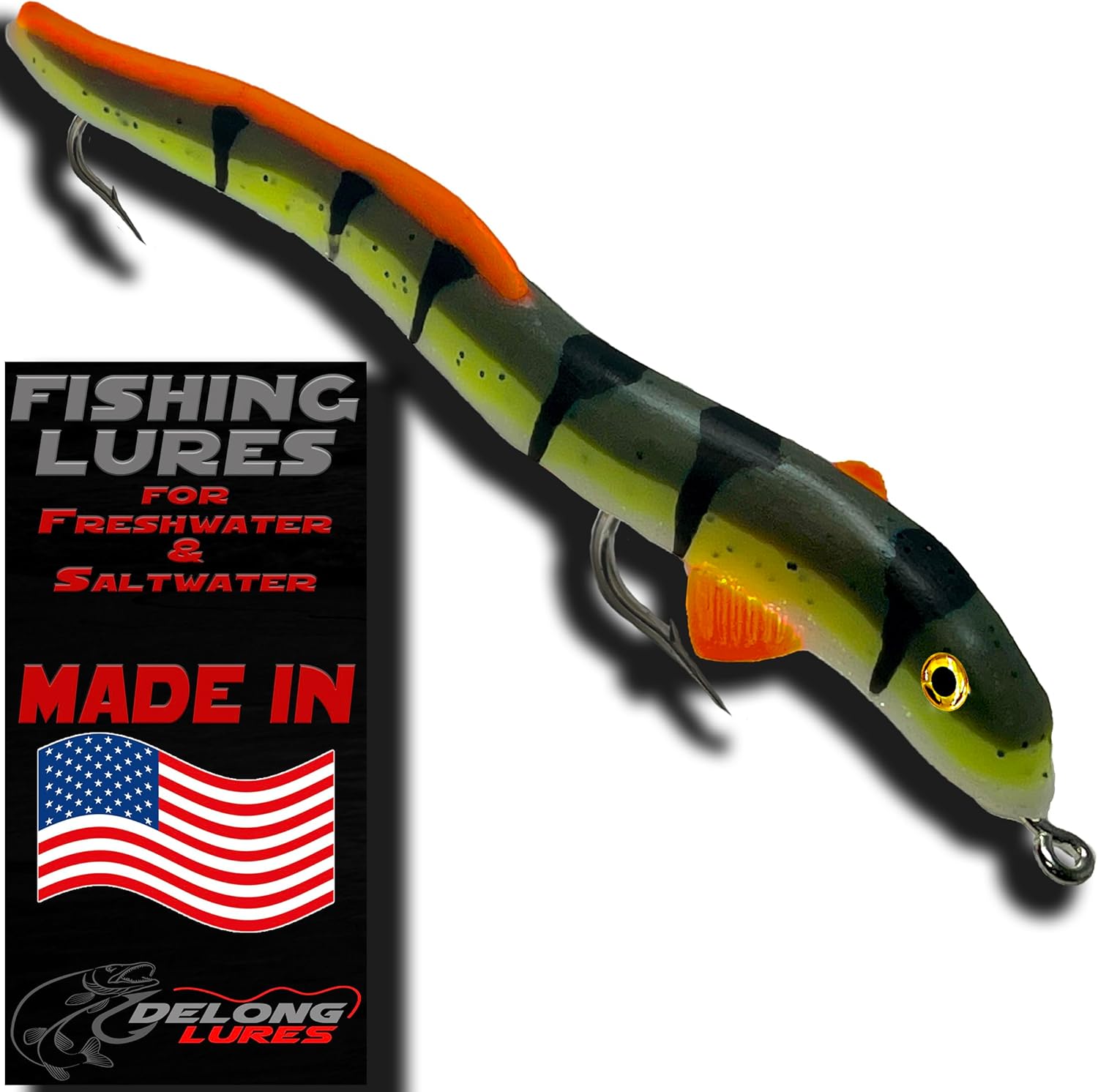
    Best jerkbait: Delong Lures 8″ Jerkbait — large soft plastic jerkbait.

    Wire leader (required): American Fishing Wire 90lb — minimum spec for musky.

    Heavy wire alternative: Malin 90lb wire leader — premium option.


    Let’s go Fishing!
    Search for the Perfect Fishing Trip or Charter
    Wisconsin & Upper Midwest Musky Country
    Verified reviews · Free cancellation · 90-day price match
    Powered by FishingBooker · Affiliate partner

    Bucktails (Standard Musky Lure)

    Bucktails are the most-used musky lure category. The spinning blade creates flash and vibration; the bucktail hair (or synthetic fiber substitute) creates volume and movement. Cast and steady retrieve produces the strikes.

    Mepps Musky Killer Bucktail

    Buy it on Amazon

    The Mepps Musky Killer is the bucktail standard. The 1 oz size is the workhorse for most musky situations — enough mass to cast a long distance, enough blade size to attract from longer distances, but not so heavy that you can’t fish it all day. Mepps’ blade designs are the most refined in the bucktail category, producing maximum flash with minimum retrieve speed. Color selection is intentionally simple compared to walleye lures — black, white, chartreuse, and orange cover most musky conditions. Replace the factory hook with a premium 5/0 treble for trophy targeting (the factory hook is functional but not exceptional). Best applications: weed edges in 5-15 feet of water, points and breaks in early summer, fall feeding patterns. The Mepps brand also crosses over to pike fishing — the Mepps Aglia in size #5 covers smaller pike applications.

    Soft Plastic Musky Baits

    Soft plastics dominate modern musky fishing. The realistic profile and natural action produce strikes when bucktails and jerkbaits don’t. The category includes gliders, swimbaits, and creature-style lures.

    Bull Dawg Musky Lure

    Buy it on Amazon

    The Bull Dawg is the iconic musky soft plastic. The 8-inch profile, the weighted head, and the distinctive paddle-tail action have produced trophy musky for decades. The Bull Dawg can be fished at multiple depths — pause for sink rate, retrieve speed for swimming depth. Cast it across weed edges in summer; work it slower in fall as fish become more deliberate. The Bull Dawg requires heavy gear — minimum 80lb braid with 100lb wire leader. The hook is built into the bait, so no rigging required out of the package. Black, brown, and natural colors produce in clear water; orange and chartreuse for stained conditions. The Magnum Bull Dawg (10-12″) targets the biggest musky.

    Delong Lures 8″ Jerkbait

    Buy it on Amazon

    The Delong 8″ Jerkbait is the soft plastic alternative to traditional hard jerkbaits like the Suick. The soft material allows fish to hold the bait longer before committing to a strike, which means more hookups on follows. The jerkbait action — sharp twitches followed by pauses — triggers reaction strikes from neutral musky. Particularly effective in late summer when fish have been pressured and won’t commit to bucktails. The 8″ size matches typical musky forage. Pair with heavy spinning or musky-specific casting tackle. Best paired with 80-100lb braid and a wire leader connection — see the wire leader section below.

    Wire Leaders (Mandatory for Musky)

    Musky teeth cut mono and braid easily. A wire leader is not optional. Two standards:

    American Fishing Wire 90lb

    Buy it on Amazon

    American Fishing Wire is the most-used wire leader brand in the Upper Midwest musky community. The 90lb single-strand wire handles musky’s bite easily. 18-inch leaders are the standard length — long enough to keep the line away from musky teeth, short enough not to interfere with lure action. Connect via Albright knot or modified Albright (covered in the best fishing knots guide). Replace leaders after every hook-up — wire develops kinks that weaken with use.

    Malin Wire Leader 90lb

    Buy it on Amazon

    Malin is the premium wire leader alternative. Slightly stiffer wire, slightly more durable against kinking. Worth the price difference for anglers fishing musky consistently or targeting trophy fish. Same 18-inch standard length applies.

    Specialty Musky Lures

    Beyond the three main categories, several specialty lures earn their place in serious musky tackle boxes:

    Topwater plugs. Bucktails dominate, but topwater lures produce some of the year’s most exciting strikes. Walk-the-dog plugs like the Pacemaker and large prop baits like the Topraider create commotion that attracts musky from long distances.

    Crankbaits (deep diving). Less common than bucktails but useful for deep summer musky. The Rapala X-Rap Magnum covers some of this category for walleye-targeting that crosses into musky territory.

    Live suckers. The fall sucker pattern produces the biggest musky of the year. 14-inch suckers rigged on quick-strike rigs produce 50+ inch fish. The setup is more complex than artificial lures but the results justify the effort for trophy hunting.

    Topwater frogs. Some musky anglers swear by large soft plastic frogs in heavy weed cover. The Storm WildEye Live Series in larger sizes can serve this role, though smaller versions are more common for walleye (covered in the walleye jigs guide).

    Musky Hooks

    Musky lures use larger hooks than any other freshwater application. Most ship with adequate factory hooks, but trophy musky targeting often calls for replacement:

    • Bucktail trebles: 5/0 standard, 6/0 for trophy targeting
    • Soft plastic single hooks: 8/0 internal hooks on Bull Dawgs and similar
    • Jerkbait hooks: Built into the bait, typically 6/0-8/0 doubles
    • Quick-strike rigs (for live suckers): 5/0-8/0 single hooks with specialized leader configurations

    Premium hook brands like Owner and Gamakatsu produce specifically for musky applications. The Mustad 7691S 9/0 stainless steel hooks (covered in the saltwater hooks by species guide) cross over to musky use for trophy work.

    Color Selection for Musky

    Conditions Best Colors Why
    Clear water, bright sun Natural perch, sucker, black Mimics forage, less aggressive
    Stained water Black/orange, chartreuse, fire tiger High visibility through turbidity
    Low light / overcast Black, dark patterns, glow Silhouette matters most
    Fall (cold water) White, silver, natural Cold water musky respond to subtle patterns
    Trophy targeting Larger profiles, contrasting colors Big fish want bigger, more contrast

    Lure Size by Season

    Season Water Temp Lure Size
    Spring (post-spawn) 55-65°F 8″ smaller bucktails and jerkbaits
    Early summer 65-72°F 9-10″ Bull Dawgs and standard bucktails
    Peak summer 72-80°F 10-12″ larger profiles, big bucktails
    Fall trophy window 50-65°F 12-14″ magnum baits, live suckers
    Late fall 40-50°F 14″+ live suckers on quick-strike rigs

    The Boatside Strike (Figure-Eight)

    Musky’s most distinctive behavior is following lures to the boat without striking. This is where the figure-eight technique becomes critical. When a musky follows your lure, don’t lift it out of the water at the boat — instead, run the lure in a figure-eight pattern at the side of the boat, varying speed and depth. This often triggers the follower to commit. Every serious musky angler ends every retrieve with a figure-eight at the boat. Many of the biggest musky of the year are caught on figure-eights, not on the cast itself.

    Line and Setup for Musky

    Musky fishing demands heavy line. Recommended setup:

    Mainline: 65-100lb braid (PowerPro, J-Braid). Lighter than 65lb risks break-offs on big fish or hard structure. Heavier than 100lb adds weight without much benefit.

    Leader: 90-130lb wire leader, 18 inches long. American Fishing Wire or Malin standard. Connect via Albright knot or knotless connection.

    Knots: Strong connections are critical. See the best fishing knots guide for the connections — the FG knot for braid-to-leader and the Albright for braid-to-wire are the standards.

    For background on heavier line considerations, the saltwater best fishing line by pound test and braid vs mono guides apply many of the same principles at scale.

    Common Mistakes

    Skipping the wire leader. The single most common mistake. Musky teeth cut mono and braid in one strike. Without a wire leader, you’re fishing on borrowed time. Always use 90lb+ wire.

    Lures too small. A “big” bass lure is small for musky. The minimum effective musky lure is 8 inches; the sweet spot is 9-12 inches. Scale up from what feels comfortable.

    Skipping the figure-eight. Many anglers cast and retrieve to the boat, then lift the lure out. They miss every following musky. The figure-eight at boatside takes 10 seconds and produces trophy fish.

    Wrong line for the lure size. 30lb braid won’t cast 4-ounce Bull Dawgs effectively or land a 40-inch fish on heavy weed structure. Match line to lure weight and target species. 65-80lb minimum.

    Fishing in water too warm. When water temperatures exceed 80°F, catch-and-release mortality increases significantly. Many ethical musky anglers stop fishing in extreme heat. See the musky temperature guide for the conservation considerations.

    Replacing factory hooks too rarely. Musky pull harder than any other freshwater predator. Inspect treble hooks after every fish — bent hooks lose subsequent strikes. Replace as needed.

    Gear to Pair with Your Musky Lures

    Frequently Asked Questions

    What’s the best musky lure?

    For bucktails, the Mepps Musky Killer. For soft plastics, the Bull Dawg. For jerkbaits, the Delong 8″ Jerkbait. Most serious musky anglers carry all three categories.

    What size lure for musky?

    Minimum 8 inches. The sweet spot is 9-12 inches. Trophy targeting uses 12-14 inch lures or live suckers. Smaller lures catch smaller musky and miss the big ones.

    Do I need a wire leader for musky?

    Yes — absolutely required. Musky teeth cut mono and braid in one strike. Use 90lb+ American Fishing Wire or Malin wire leaders, 18 inches long. No exceptions.

    What line should I use for musky?

    65-100lb braid mainline (PowerPro, J-Braid, etc.) connected to a 90-130lb wire leader. Lighter line risks break-offs; heavier doesn’t add meaningful benefit. The fishing line guide covers braid selection.

    What’s the best time to fish for musky?

    Two windows: late spring through early summer (water 60-72°F, active feeding), and fall (water 50-65°F, trophy season). Peak summer is harder fishing — see the musky temperature guide for the conservation considerations.

    What’s a figure-eight and why do I need it?

    The figure-eight is a boatside maneuver where you run your lure in a figure-eight pattern at the side of the boat to trigger following musky to strike. Many trophy musky are caught on figure-eights, not on the cast. Every musky retrieve should end with one.

    Plan Your Trip

    Related Guides

    Tight lines!

  • Salmon Trolling Guide: Great Lakes Speed, Depth & Spread

    Trolling is the dominant technique for Great Lakes salmon — and it’s deceptively complex. A bare-bones definition is “pulling lures behind a moving boat,” but the actual practice involves a half-dozen variables that all matter: trolling speed, depth control, lure presentation, spread layout, electronics interpretation, and reaction to changing conditions. Get any one of these wrong and your catch rate drops dramatically. Get them all right and you’ll have days that feel like the fish are jumping into the boat.

    This guide ties together everything else in the Great Lakes salmon section — the downriggers, planer boards, spoons, coho lures, and reels — into a single technique system. Read this once, then keep it bookmarked as a reference for setting up your trolling pattern at the start of each trip.


    Let’s go Fishing!
    Search for the Perfect Fishing Trip or Charter
    Great Lakes Trolling
    Verified reviews · Free cancellation · 90-day price match
    Powered by FishingBooker · Affiliate partner

    Trolling Speed by Species

    Trolling speed is the single most important variable you control. The right speed activates the lure action; the wrong speed kills it. Different species respond to different speed ranges.

    Target Species Optimal Speed (GPS) Lure Action at Speed
    King Salmon 2.4–2.6 mph Wider wobble, more flash
    Coho Salmon 2.5–3.0 mph Tighter, more frequent wobble
    Atlantic Salmon 2.4–2.8 mph Moderate, varies by spoon
    Lake Trout 1.5–2.2 mph Slower, more deliberate
    Steelhead 2.5–3.0 mph Fast, aggressive action
    Mixed Spread 2.4–2.7 mph Compromise that hits all species

    GPS speed is what matters, not the boat’s speedometer. Currents on the Great Lakes can mean a boat doing 2.5 mph through the water is actually moving 1.8 or 3.0 mph relative to ground depending on direction. Your GPS speed over ground is what controls lure presentation. Always go by GPS.

    Understanding the Thermocline

    The thermocline is where salmon live in summer. It’s the layer in the water column where temperature drops rapidly with depth — typically a 20-degree drop over 20 feet. By July, a typical Lake Michigan profile is:

    • Surface to 40 ft: 65–72°F — too warm for most salmonids
    • 40–60 ft: Rapid thermocline transition
    • 60–120 ft: 48–58°F — the salmon zone
    • Below 120 ft: 42–48°F — lake trout territory

    Your downrigger depth needs to put your spread in the salmon zone. A temp/speed probe at downrigger depth gives you exact readings; without one, you estimate from surface temp and depth charts. See the king salmon temperature guide and coho temperature guide for species-specific depths.

    Building Your Trolling Spread

    A trolling spread is the arrangement of multiple lines running off the boat at different depths and horizontal positions. The goal is to maximize coverage without lines tangling. A typical Great Lakes salmon spread:

    The Six-Rod Recreational Spread

    This is what most serious recreational anglers run on a typical fishing day:

    1. Downrigger #1 (port) — At thermocline depth (e.g., 80 feet), 50 feet behind the boat
    2. Downrigger #2 (starboard) — At thermocline depth, 50 feet behind the boat (mirror)
    3. Dipsy diver #1 (port wide) — Set to 100–120 feet out, depth 40–60 feet
    4. Dipsy diver #2 (starboard wide) — Mirror of #3
    5. Lead core or copper #1 (back of boat) — Mid-depth, 30–50 feet down
    6. Center back rod — Direct line behind the boat, surface or very shallow

    This spread covers a horizontal width of about 200 feet behind the boat at depths from surface to thermocline. Six different depth/horizontal combinations dramatically increase the odds of intercepting fish.

    The Eight-Rod Charter Spread

    Charter boats add two more rods, usually:

    1. Planer board (port outside) — 100–150 feet from boat, surface to shallow depth
    2. Planer board (starboard outside) — Mirror

    The result is 250 feet of horizontal coverage at the back of the boat. Charter captains can manage this much spread because they have a deckhand and years of experience reading multiple rods simultaneously.

    Depth Control: Putting Lures in the Zone

    Three primary methods get lures to the right depth:

    Downriggers — The most precise method. The weight pulls cable down to a specific depth (read off the digital counter), and the fishing line clips to the cable at that depth. When a fish hits, the line releases from the cable and fights free. See the downrigger guide for setup.

    Lead core or copper line — The line itself sinks. Lead core is typically marked in 10-yard color segments, with each segment going down about 5 feet at trolling speed. Copper line sinks faster. The downside is the line is heavy and reduces your sense of strikes; the upside is no downrigger equipment is needed. Sufix Lead Core is the standard.

    Dipsy divers — Diving planers that pull a fishing line down and sideways. Set on a numbered dial system (most use 0–3 settings), they reach 30–80 feet down depending on setting and line out. Excellent for spreading lines wider than the boat without downriggers.

    A complete spread uses all three methods to cover different depths and positions.

    Reading Your Electronics

    Modern fish finders show the thermocline as a distinct band of color or density change in the water column. Below the thermocline, you’ll often see arches (individual fish) or balls (bait schools) in the cold water. Reading the screen tells you exactly where to set your spread:

    • Thermocline depth shows as a horizontal band of color change, usually 30–60 feet below surface in summer
    • Bait balls appear as dense scattered marks, often suspended above or near the thermocline
    • Individual fish arches below or in the thermocline are your targets — set the spread at their depth
    • Bottom contour matters even at depth — look for fish near structure rather than open water

    A temp/speed probe at downrigger depth combines surface electronics with at-depth confirmation. Most charter captains run probes; serious recreational anglers should too if they fish more than 20 days a year.

    Setting the Spread: A Sequence

    Here’s the order most charter captains use when starting a trolling pass:

    1. Identify the target depth. Check electronics for thermocline, bait, fish marks. Decide where to set your primary depth.
    2. Get the boat to trolling speed. 2.4–2.7 mph GPS. Run for a minute to stabilize.
    3. Set the downriggers first. Drop the weight to target depth. Clip the line in at the rigger. Set the rod in the holder with appropriate drag.
    4. Set the dipsy divers next. Drop the diver behind the boat, let line out to reach target depth, set the rod.
    5. Add lead core / copper. Let out the segment count needed for your target depth. Set the rod.
    6. Set planer boards last (if running them). Lure first, then clip into the board release, then let the board plane out.
    7. Watch for strikes. First 5 minutes after setting often produce the first hits as lures find baseline running depth and action.

    Reacting to Strikes

    The moment of truth. What you do in the 10 seconds after a hit determines whether the fish makes it to the net:

    Don’t slow the boat. Keep trolling at speed while the fish is being fought. Slowing the boat puts slack in the line and changes the angle of fight. The boat stays at speed until the fish is at the net.

    Bring the rod to vertical. The angler picks up the rod with the bend already loaded with the fight, then brings it to vertical to set the hook fully.

    Maintain steady pressure. Don’t pump and reel like saltwater fighting — Great Lakes salmon need consistent pressure that wears them down. The drag should be set to give line on hard runs and hold otherwise.

    Reel other lines in if needed. If the fight is going to cross other rods (likely on dipsy and downrigger setups), reel in the rods the fish might cross before fully fighting it.

    Net the fish smoothly. A big net handled smoothly under the fish brings it aboard. Don’t lift with the line — the leader can break under the lift weight, losing the fish at the boat.

    Reading the Day: When to Change Up

    Some days the spread you set at 6 AM produces all day. Most days it doesn’t. Knowing when to adjust:

    If you haven’t had a strike in 30 minutes — Change something. Spoon color, depth, speed, or location.

    If only one rod is producing — Mimic that rod across the spread. If the wide dipsy at 60 feet down is hitting, set another rod at similar depth.

    If you’re getting follows but no hookups — Slow the trolling speed slightly. Following fish that don’t commit often need a slightly slower presentation.

    If the bite turns off suddenly — Often a temperature shift or bait movement. Check electronics for new thermocline depth or bait location. Reset spread accordingly.

    If marks are showing but no strikes — Fish are present but inactive. Change spoon color (try Glo or UV), add a flasher, or wait for a feeding window (often dawn/dusk).

    Common Trolling Mistakes

    Trolling too fast for kings. 2.4–2.6 mph is the king range. Most anglers troll too fast (2.8–3.0+) and miss kings that won’t chase that quickly. Slow down and the kings will eat.

    Not enough variety in the spread. Running the same color/size lure on every rod kills your information feedback. Mix it up so when one rod produces you know what pattern is working.

    Setting the spread once and leaving it. The fish move during the day. Adjust depth and lure choice every 30–60 minutes based on what’s producing and what electronics show.

    Skipping the speed verification. Don’t trust the boat speedometer. Use GPS speed over ground.

    Running lines too close together. Tangled spreads cost time and lost fish. Plan your line spacing carefully and pay attention as you set rods.

    Ignoring barometric pressure. Falling barometer triggers feeding. Rising or stable high pressure usually slows the bite. Build trip planning around pressure trends, not just calendar days.

    Gear Required for Trolling

    Frequently Asked Questions

    What’s the best trolling speed for salmon?

    2.4–2.6 mph for kings. 2.5–3.0 mph for coho. 1.5–2.2 mph for lake trout. A mixed-species spread typically runs 2.4–2.7 mph as a compromise. GPS speed over ground matters, not boat speedometer.

    How deep should I troll for salmon?

    Depends on season and thermocline. Spring: 15–35 feet. Early summer: 30–60 feet. Peak summer: 60–120 feet. Pre-spawn fall: 40–80 feet. Always target the prime temperature band (52–56°F for kings, 55–58°F for coho).

    What’s the right trolling spread for salmon?

    Six rods is the standard recreational spread: 2 downriggers, 2 dipsy divers, 1 lead core/copper, 1 back rod. Add planer boards to expand to 8 rods for serious fishing. Match the spread to your boat size, crew, and electronic capacity.

    How do I find salmon while trolling?

    Read your electronics. Thermocline depth, bait balls, and fish arches all show. Set the spread at the depth where bait and fish are appearing. Use the SST charts and chlorophyll maps to plan locations before launching.

    Should I use braid or mono for salmon trolling?

    30lb PowerPro braid as mainline with a 25–30 foot mono top shot is the most common setup. Braid gives depth precision; mono gives strike absorption near the lure. Pure mono works but loses the depth precision.

    What time of day is best for salmon trolling?

    Dawn and dusk produce the most aggressive feeding. Mid-morning to early afternoon can be tough on bright days. Late afternoon often produces a second feeding window. Plan trips to be on the water for both light windows when possible.

    Plan Your Trip

    Related Guides

    Tight lines!

  • Best Salmon Trolling Rods: Great Lakes Buying Guide

    The rod is the most overlooked piece of a Great Lakes salmon trolling setup. Anglers obsess over reels, downriggers, and spoons, then put it all on a rod that’s wrong for the application — too stiff, too short, or built for the wrong line type. The result is missed strikes, broken-off fish, and a trolling spread that doesn’t perform to its potential. A purpose-built salmon trolling rod isn’t optional gear; it’s the connection between your spread and the fish.

    This guide covers what makes a good salmon trolling rod and the specific models that produce on Great Lakes water. The right rod loads properly with a downrigger weight, telegraphs the strike clearly to the angler, and absorbs the runs of a 25-pound king without snapping. Pair this with the salmon trolling reels guide for matched setups.

    ⚡ Quick Picks by Situation

    Best overall value: Okuma Classic Pro GLT — proven 8’6″ downrigger rod, the Great Lakes standard.

    Best premium: Shimano Talora Trolling Rod — top-tier sensitivity and build quality.

    For dipsy divers: Heavier-action rod in 9’–10′ — the Okuma Classic Pro GLT also offers heavier dipsy-specific models.

    For planer boards: Medium-power rod, can use the same 8’6″ downrigger rod or a slightly lighter alternative.

    For lead core: Slightly heavier rod with backbone to handle thick line and weight.


    Let’s go Fishing!
    Search for the Perfect Fishing Trip or Charter
    Great Lakes Trolling
    Verified reviews · Free cancellation · 90-day price match
    Powered by FishingBooker · Affiliate partner

    What Makes a Good Salmon Trolling Rod

    Salmon trolling rods are purpose-built. The right rod has specific characteristics:

    Length: 8’6″ is the standard for downrigger work. Some anglers run 9′ or 10′ rods on dipsy divers or planer boards, but 8’6″ is the most versatile choice. The length provides leverage for fighting heavy fish at the boat and helps absorb runs without break-offs. Anything shorter than 7’6″ doesn’t load properly with downrigger weights.

    Action: Moderate to moderate-fast. Salmon trolling rods need a parabolic bend that loads with the downrigger weight and absorbs the strike. A fast-action rod transmits too much shock to the line; an extra-slow rod doesn’t load properly. Moderate is the sweet spot — the rod bends through the middle when loaded with a weight, giving you the right tension to detect strikes and the cushion to absorb runs.

    Power: Medium for general salmon, medium-heavy for kings. Medium-power rods (rated for 12–25lb line) handle coho, browns, and Atlantic salmon well. For kings, medium-heavy (rated for 15–30lb line) is the better choice — bigger fish need more backbone. Specialized lake trout rods often step up to heavy power for deep water work.

    Material: Graphite-composite blanks. Pure graphite is too sensitive and breaks; pure fiberglass is too soft. Modern salmon rods use a graphite-fiberglass composite that combines the responsiveness of graphite with the durability of glass. This is non-negotiable in the price range we’re discussing.

    Guides: Stainless steel or aluminum oxide. Trolling rods see constant exposure to splash and weather. Cheap guides corrode and develop grooves that wear through line. Quality guides (Fuji or equivalent) last decades.

    Roller tip or premium tip-top. Trolling produces constant friction on the tip guide as line pulls through it. A roller tip eliminates the wear entirely; a premium aluminum oxide tip-top works well for moderate use. Avoid plastic or cheap ceramic tips.

    The Trolling Rods

    Okuma Classic Pro GLT Salmon/Steelhead Rod

    Buy it on Amazon

    The Okuma Classic Pro GLT is the salmon trolling rod most anglers settle on after trying others. The graphite composite blank loads properly with a 10–12 lb downrigger weight, telegraphs the strike clearly when a fish takes, and absorbs the runs of mid-20-lb kings without break-offs. The 8’6″ Medium-Heavy is the most-used variant — rated for 15–30lb line and 1–4 oz lures. Stainless steel guides resist corrosion through years of Great Lakes use. The full cork handle stays grippy when wet. At around $80–110, this is the rod most Great Lakes anglers buy 4–6 of when building out a trolling spread. The Classic Pro GLT also comes in lighter versions for coho and brown trout work, and heavier versions for dipsy diver setups — letting you standardize on one rod family across your entire spread.

    Shimano Talora Trolling Rod (8’6″ Medium)

    Buy it on Amazon

    The Shimano Talora is the premium pick for serious Great Lakes anglers. Shimano’s blank technology produces a rod that’s noticeably more sensitive than entry-level competitors — you’ll feel a king investigating your spoon before the strike, where on a budget rod you’d only feel the actual hookset. The action is true moderate, loading uniformly through the rod under downrigger weight rather than hinging at one point. Build quality is excellent — Fuji guides, premium reel seat, full-length cork handle that’s comfortable for hours of fighting fish. The 8’6″ Medium handles everything from spring coho through summer kings. Stepping up to Medium-Heavy is the right call for anglers focused on big kings or running heavy dipsy divers. Priced at $150–230 depending on configuration, the Talora is the rod that justifies its cost over years of fishing — quality holds up where cheaper rods develop guide grooves and lose action.

    Rod Setup by Position in the Spread

    Different positions in the trolling spread benefit from slightly different rod specifications:

    Position Rod Length Action Power
    Downrigger (kings) 8’6″ Moderate Medium-Heavy
    Downrigger (coho, browns) 8’6″ Moderate Medium
    Dipsy diver 9’–10′ Moderate-Fast Heavy
    Planer board 8’6″ Moderate Medium
    Lead core / copper 9’–10′ Moderate Heavy
    Lake trout (deep) 8’6″–9′ Moderate-Fast Heavy

    Most recreational anglers can build a complete spread with one rod family (like the Okuma Classic Pro GLT) in two variants: Medium-Heavy for the king-targeting downrigger positions, and Heavy for the dipsy diver and lead core positions. Matching brand and family makes the spread visually consistent in the rod holders and standardizes the feel.

    Pairing Rod to Reel

    Rod and reel need to balance properly. A heavy reel on a light rod feels nose-heavy and tiring; a light reel on a heavy rod feels under-spec’d. Recommended pairings:

    • Okuma Classic Pro GLT MH + Okuma Convector CV-30DLX — the standard Great Lakes salmon trolling combo
    • Shimano Talora Medium + Shimano Tekota — premium balanced setup, ideal for serious anglers
    • Okuma Classic Pro GLT Heavy + larger Okuma or Daiwa Saltist — dipsy diver / lead core setup
    • Talora Medium-Heavy + Penn Squall II 25N — premium rod, budget reel for downrigger positions

    Common Mistakes

    Using saltwater rods for trolling. Saltwater stand-up rods like the 7′ offshore rods work for casting and fighting, but their length and action aren’t ideal for downrigger trolling. Use purpose-built trolling rods.

    Buying too stiff a rod. Anglers transitioning from bass or other fast-action fishing often buy rods that are too stiff for trolling. Salmon trolling needs moderate action to load with the downrigger weight and absorb strikes. A rod that doesn’t bend properly under weight isn’t doing its job.

    Mixing rod lengths randomly. A spread with 7′ rods next to 9′ rods looks chaotic and creates inconsistent angles in the rod holders. Standardize on 8’6″ for downriggers and 9’–10′ for dipsy lines.

    Cheap guides. Trolling rods see more constant water exposure than casting rods. Cheap guides develop wear and corrosion within a season or two. Pay for stainless or aluminum oxide guides — they last.

    Not protecting the rod tip. The tip guide takes the most wear from line constantly running through it. Inspect annually and replace the tip-top if you see grooving. A worn tip-top can cut your line on the next big strike.

    Caring for Your Trolling Rod

    Trolling rods take more abuse than most fishing rods because they’re constantly under load. Routine care:

    • Rinse with fresh water after each trip — Great Lakes water is fresh but still carries minerals that build up on guides
    • Inspect guides for corrosion or wear — replace tip-tops at the first sign of grooving
    • Wipe down the reel seat and tighten loose hardware annually
    • Store rods vertically or horizontally — never bent against a wall
    • Treat the cork handle with cork sealer annually to prevent cracking

    Gear to Pair with Your Trolling Rods

    Frequently Asked Questions

    What’s the best salmon trolling rod?

    The Okuma Classic Pro GLT in 8’6″ Medium-Heavy is the most-used and best-value pick. For premium quality, the Shimano Talora is the top-tier choice. Both are 8’6″ downrigger-rated rods with moderate action.

    What length salmon trolling rod do I need?

    8’6″ is the standard for downrigger positions and the most versatile length. Step up to 9’–10′ for dipsy diver and lead core positions where extra leverage helps manage the equipment. Anything shorter than 7’6″ doesn’t load properly with downrigger weights.

    What action for salmon trolling rods?

    Moderate action. The rod needs to load through the middle when bent with a downrigger weight and absorb the shock of a king’s strike. Fast action transmits too much shock; extra-slow doesn’t load properly. Moderate is the sweet spot for both detection and durability.

    Medium or Medium-Heavy for kings?

    Medium-Heavy is the right pick if you’re targeting kings primarily. Rated for 15–30lb line and 1–4 oz weights, MH handles heavy downrigger weights and 25-pound fish without strain. Step down to Medium for coho-focused fishing where lighter strikes need a more sensitive tip.

    How many trolling rods do I need?

    Most Great Lakes recreational setups run 4–8 rods. Two on each downrigger, two dipsy divers, two planer boards is a complete spread. Start with 4 if you’re new to trolling — two downriggers and two dipsies covers most situations.

    Can I use a casting rod for trolling?

    You can fish them, but casting rods aren’t designed for the constant load of trolling. The action and length aren’t right, the guides aren’t sized for trolling line, and the reel seats often don’t fit trolling reels properly. Purpose-built trolling rods are worth the investment.

    Plan Your Trip

    Related Guides

    Tight lines!

  • Best Salmon Trolling Reels: Line Counter Guide

    Line counter reels are the precision instruments of Great Lakes trolling. Unlike a standard conventional reel, line counters track the exact amount of line you’ve let out, displayed on a digital or mechanical counter on top of the reel. That means when you find the bite at “82 feet behind the rigger,” you can repeat that exact setting on every rod — and on every trip. Combined with downrigger depth, line counter measurement is what makes Great Lakes trolling repeatable rather than guesswork.

    This guide compares the four reels that dominate Great Lakes salmon trolling boats: Okuma Convector, Daiwa Saltist, Penn Warfare, and Shimano Tekota. Each has a different price point and feature set, and there’s a clear right answer for different angler profiles. Pair with the salmon trolling rods guide for complete setups.

    ⚡ Quick Picks by Budget

    Best overall value: Okuma Convector CV-30DLX — the Great Lakes workhorse, perfect quality-to-price ratio.

    Best budget: Penn Warfare 20LC — proven line counter at the lowest entry point.

    Best premium: Shimano Tekota — top-tier construction, smoothest drag.

    Best alternative: Daiwa Saltist Line Counter — Daiwa’s quality build at a competitive price.

    Star drag alternative: Penn Squall II 25N — non-line-counter option if you’re already using one.


    Let’s go Fishing!
    Search for the Perfect Fishing Trip or Charter
    Great Lakes Trolling
    Verified reviews · Free cancellation · 90-day price match
    Powered by FishingBooker · Affiliate partner

    Most charter boats run a mix of these reels rather than standardizing on one. Different reels suit different rod positions in the spread — the inside rod doesn’t need the same capacity as the wide dipsy diver rod. Here’s what each one does well.

    Line Counter Trolling Reels

    Okuma Convector CV-30DLX

    Buy it on Amazon

    The Okuma Convector CV-30DLX is the most popular line counter reel on Great Lakes salmon boats — not because it’s the cheapest or the most premium, but because the quality-to-price ratio is essentially unbeatable for what trolling actually demands. The mechanical line counter is accurate, the drag is smooth enough for Great Lakes salmon (which don’t make the screaming runs of saltwater tuna), the line capacity is appropriate for the species, and it lasts season after season of hard use. The CV-30DLX is the standard size for kings and lakers — 30 size means 300+ yards of 30lb mono or equivalent braid. Okuma’s larger CV-45DLX adds capacity for deep copper or lead core applications. Priced in the $130–180 range, it sits in the sweet spot where you can equip an entire trolling spread (4–6 reels) without breaking the bank.

    Penn Warfare 20LC Line Counter

    Buy it on Amazon

    The Penn Warfare 20LC is the budget entry point into line counter trolling. Around $90–130, it’s the reel most anglers buy when they’re stepping up from non-line-counter conventionals and aren’t sure they want to commit to the Okuma price point. The Warfare’s drag and gearing aren’t as refined as the Okuma — the line counter feels less precise in use, the drag has more break-in needed — but it gets the job done. Penn’s HT-100 carbon fiber drag system handles Great Lakes salmon without issues. For anglers building out a 4–6 reel spread on a real budget, the Warfare lets you cover more rod positions per dollar than any competitor. Pair with quality braid and you have a setup that produces fish.

    Daiwa Saltist Line Counter

    Buy it on Amazon

    The Daiwa Saltist line counter is the alternative premium option for anglers who prefer Daiwa’s build philosophy. Daiwa’s reel engineering — particularly in the gear materials and bearings — is slightly different from Shimano’s, and the Saltist line counter inherits that quality. The drag is smooth out of the box without break-in. The gear feel is precise. The line counter mechanism reads accurately and stays accurate over seasons of use. Priced in the $200–280 range, it competes with the Shimano Tekota at the upper end and represents the same kind of buy-it-once investment. The choice between Saltist and Tekota usually comes down to which brand’s other reels you already own — both are excellent.

    Shimano Tekota

    Buy it on Amazon

    The Shimano Tekota is the top-tier line counter for Great Lakes salmon trolling. Shimano’s Hagane gear technology, Septon grips, and overall build quality are everything you’d expect from a premium Shimano reel. The drag is the smoothest in the category — important for those rare times when a 30+ lb king makes a long run and demands consistent drag pressure. The line counter mechanism is the most precise of the four reels in this guide. Priced in the $280–400 range depending on size, it’s the reel for anglers who fish hard, fish often, and don’t want to replace gear every few seasons. The Tekota also handles light saltwater use (kingfish, smaller tuna, mahi) if you ever take it on a Pacific or Gulf coast trip, adding cross-fishery flexibility.

    Star Drag Alternative

    Not every rod on a trolling spread needs a line counter. The downrigger rods especially can use simpler star drag conventionals because depth control comes from the downrigger itself rather than line out measurement. This is where the existing Penn Squall II 25N earns its place.

    Penn Squall II 25N

    Buy it on Amazon

    The Penn Squall II 25N is already familiar to anyone who’s read the yellowtail or bluefin guides — it’s a strong, simple conventional that handles Great Lakes salmon work without needing the line counter complexity. On downrigger rods specifically, where the depth is set by the rigger and not by line out, the Squall II offers similar capacity and durability to the Okuma Convector at a lower price point. It also handles light saltwater work if you fish multiple fisheries. The star drag is reliable and easy to set. For downrigger positions on a spread, a Squall II is a legitimate choice over a line counter.

    Choosing the Right Reel

    The right reel depends on your role in the trolling spread:

    Rod Position Recommended Reel Why
    Downrigger (depth from rigger) Penn Squall II 25N or Okuma Convector Line counter optional since depth is set by the rigger
    Dipsy diver Okuma Convector or Tekota Line counter critical to set diver depth precisely
    Lead core / copper line Larger Okuma (CV-45DLX) or Tekota 500 Need capacity for thick line and segment counts
    Planer board Smaller line counter (Penn Warfare 20LC) Easier to manage on board lines, line counter helps with depth
    Lake trout / heavy work Larger Tekota or Saltist Heavier drag, more capacity for deep work

    Spooling Your Trolling Reel

    Line selection matters more for trolling than for many fishing applications. Three common setups:

    Braided mainline + monofilament leader. Spool with 30lb PowerPro or similar braid for the no-stretch sensitivity and depth precision. Add a 25–30 foot top shot of 20–25lb monofilament for stretch and shock absorption near the lure. This is the most-used Great Lakes trolling spool config.

    Monofilament only. Spool with 20–25lb mono for straightforward simplicity. The stretch helps cushion strikes and reduces lost fish on strong runs. Lower precision than braid for depth measurement but easier to manage. Better choice for newer anglers.

    Lead core or copper. Some rods are dedicated to lead core or copper line for depth control without downriggers. The reel needs enough capacity to hold the segmented line plus a mono backing. Larger line counter sizes (Okuma CV-45DLX, Shimano Tekota 700) are required.

    Common Mistakes

    Over-spec’ing for line capacity. A 700-yard capacity reel makes sense for tuna fishing. For Great Lakes salmon, 300 yards is plenty — fish rarely run more than 150 yards on the longest fights. Bigger reels add weight and cost without adding utility.

    Skipping the line counter on dipsy rods. The dipsy diver depth is set by line out — without a line counter, you’re guessing. Always use a line counter on dipsy rods even if you’re using star drag on downrigger rods.

    Tightening drag too much. Trolling drag should be lighter than fighting drag. Set drag light enough that a fish striking at high trolling speed won’t snap the line, then ratchet up after the hookset. Many anglers run drag too heavy from the start and lose fish to break-offs on the strike.

    Buying premium reels for every position. A six-rod trolling spread doesn’t need six Shimano Tekotas — the cost is exorbitant and the return is minimal. Mix Okumas, Penns, and one or two Tekotas across the spread. Reserve premium reels for the rods that matter most (dipsy lines, lead core lines).

    Not calibrating the line counter. Line counters drift over time as line stretches and the spool diameter changes with line wear. Calibrate annually by measuring line out against a known reference (50 feet of line measured on the dock should read 50 feet on the counter).

    Gear to Pair with Your Reels

    Frequently Asked Questions

    What’s the best line counter reel for Great Lakes salmon?

    The Okuma Convector CV-30DLX is the most popular pick and offers the best value-to-quality ratio. The Shimano Tekota is the premium option for anglers who fish hard and want the best build quality.

    Do I need line counters on all my rods?

    No. Line counters are essential for dipsy diver rods, lead core lines, and planer board lines where depth is determined by line out. Downrigger rods can use star drag conventionals like the Penn Squall II 25N since the downrigger sets the depth.

    Okuma vs Penn vs Shimano for trolling — which is best?

    Each has its place. Penn for budget. Okuma for value. Shimano and Daiwa for premium. Most Great Lakes boats run a mix rather than standardizing on one brand — different positions in the spread benefit from different reels.

    What size line counter reel for kings?

    20–30 size is the standard for Great Lakes kings. Okuma Convector CV-30, Penn Warfare 20LC, Shimano Tekota 500. Larger 40–45 sizes are for lead core, copper line, or specialized applications.

    What line should I use on a trolling reel?

    30lb PowerPro braid as mainline with a 25–30 foot top shot of 20–25lb monofilament is the most common Great Lakes setup. The braid gives precision and depth control; the mono gives shock absorption on the strike. See the line selection guide for details.

    How do I calibrate a line counter reel?

    Strip off a known length of line (50 feet measured against your boat or dock) and verify the counter reads 50 feet. If it’s off, adjust against the manufacturer’s spec (most have a small reset mechanism). Recalibrate annually as line wears and spool diameter changes.

    Plan Your Trip

    Related Guides

    Tight lines!

  • Best Planer Boards for Salmon & Walleye Trolling

    Planer boards do something downriggers can’t: they take your lure away from the boat. While downriggers put your line directly below the boat at a specific depth, planer boards push the line 50 to 150 feet out to the side. This matters for two reasons. First, it dramatically widens your search lane — instead of dragging spoons through a 10-foot-wide zone behind the boat, you cover 200+ feet of water on each trolling pass. Second, fish that get spooked by the boat’s hull and prop wash don’t get a chance to spook your outside lines. Big browns and shallow-water kings in particular won’t strike a line running too close to the boat.

    For spring Great Lakes salmon fishing, planer boards aren’t optional — they’re the primary technique. Coho and brown trout in 5–25 feet of water are essentially uncatchable without boards. Even in summer, boards expand your spread and add an extra dimension to a downrigger-focused setup. This guide covers what to buy and how to use them.

    ⚡ Quick Picks by Situation

    Best inline planer board: Off Shore Tackle OR12 Side-Planer — the proven salmon and trout standard.

    Best walleye board: Church Tackle TX-22 — most popular walleye-specific board, works for salmon too.

    Heavy line / mag board: Off Shore Tackle OR16 Pro Mag — larger version for thick line and deeper applications.

    Snap weight system: Snap Release Clips — for adding weight to planer board lines.

    Best for beginners: Either OR12 or TX-22 — both are forgiving, easy to set up, and proven producers.


    Let’s go Fishing!
    Search for the Perfect Fishing Trip or Charter
    Great Lakes Trolling
    Verified reviews · Free cancellation · 90-day price match
    Powered by FishingBooker · Affiliate partner

    Inline vs Mast Planer Boards

    Before picking a specific board, decide between two systems:

    Inline planer boards attach directly to your fishing line. The line runs from your rod, through the planer board’s release clip, and out to the lure. When a fish hits, the line releases from the board and you fight the fish on the rod directly. The board floats freely until you reel it in. This is the easier setup for most anglers and the standard for Great Lakes salmon, walleye, and brown trout. The Off Shore Tackle OR12 and Church Tackle TX-22 are both inline boards.

    Mast / cable planer boards use a large pair of boards connected to a mast on the bow of the boat by a heavy cable. Multiple fishing lines clip to the cable rather than to individual boards. This system covers more water and runs more lines simultaneously, but requires a substantial mast installation and a learning curve to operate. Charter boats often use mast systems; most recreational anglers don’t.

    For 95% of recreational anglers, inline boards are the right choice. The rest of this guide focuses on inline setups.

    Inline Planer Boards

    Off Shore Tackle OR12 Side-Planer

    Buy it on Amazon

    The Off Shore Tackle OR12 is the salmon and trout standard inline board across the Great Lakes. The design has been refined over decades — a foam-cored hull that tracks straight at trolling speeds, an adjustable release clip in the front, and an “OR-19 Snapper Releases” pin in the back that holds your line until a fish triggers it. The board planes 50–150 feet off the boat depending on how much line you let out, giving you wide coverage. The OR12 handles braid, mono, and lead core lines equally well. Available in red/orange and yellow color schemes for visibility against different water conditions. The release tension is adjustable on a dial — set it lighter for finesse coho strikes, heavier for kings that need to commit before pulling free. This is the board you’ll see on 80% of salmon-focused Great Lakes recreational boats.

    Church Tackle TX-22 Walleye Planer Board

    Buy it on Amazon

    Church Tackle’s TX-22 is the walleye-focused alternative to the Off Shore OR12, and it crosses over to salmon use with no issues. The TX-22 has a slightly different release clip design — Church’s “Tattle Flag” system makes it easy to see when a small fish hits without immediately releasing the line. This matters more for walleye (which often strike lightly) than salmon (which usually hammer the lure), but the visual confirmation is useful in both fisheries. Construction quality is on par with Off Shore, and the boards plane stably at the same trolling speeds. Most anglers settle on one brand or the other based on which they tried first and got comfortable with; both produce identically. If you’re building a multi-species trolling setup that includes serious walleye work, the TX-22 is the slight edge. For salmon-only, either works.

    Setting Up Planer Boards

    A typical inline board setup runs three boards per side — close, mid, and outside. Six boards total on a serious recreational rig. The process:

    1. Set your lure depth first. Boards don’t control depth — they control horizontal position. For depth, use lead core, copper, or a snap weight before setting the board.
    2. Clip the line into the board’s release clip. Adjust tension based on your target — lighter for finesse fish, heavier for committed strikes.
    3. Set the board out. Let out 50–100 feet of line behind the boat at trolling speed, then attach the board and let it plane outward.
    4. Manage your spread. Outside board first, then mid, then inside. Avoid running boards in a straight line — stagger them so each is in different water.
    5. When a fish hits: The line releases from the board’s clip. The board floats free until you reel it in along with the fish.

    Release Clip Tension

    Getting the release tension right is the single most important skill in planer board fishing. Too loose, and the board releases every time you hit chop. Too tight, and the fish can’t pull the line free, killing your hookset.

    Target Species Tension Setting Why
    Spring Coho (3–6 lbs) Light Smaller fish, light strikes, need easy release
    Brown Trout (4–10 lbs) Light to Medium Variable strike intensity
    Summer King Salmon (15–25 lbs) Medium to Heavy Hard strikes, fish need to commit fully
    Walleye (3–8 lbs) Light Light strikes, finicky fish
    Lake Trout (10–20 lbs) Medium Steady strikes, deliberate fight

    Using Planer Boards by Season

    Spring (April–May): The Primary Tool

    This is when boards do their best work. Coho and brown trout push into 5–25 feet of water. Downriggers aren’t useful in water that shallow. Boards with Husky Jerks, Rapalas, and small spoons in 5–25 feet of water produce excellent catches. Set the board, troll the depth contour, and wait for the release.

    Summer (June–August): The Outside Lines

    When kings and coho push deep, downriggers become primary and boards become secondary. But boards still produce by covering water outside the boat’s footprint. Run lead core or copper line off the boards to reach moderate depths (30–60 feet) without spooking fish with prop wash. The boards become the wing positions of your spread.

    Fall (September–October): Returns to Primary

    As surface temps drop and fish push shallow again, boards return to primary use. Pre-spawn kings staging near tributary mouths often hit boards in 30–50 feet of water more readily than downrigger spreads.

    Common Mistakes

    Wrong release tension. The #1 mistake. Tension that worked last season needs recalibration this season as the rubber clips age. Test before every trip with a similar-weight pull.

    Boards too close to the boat. If your boards are only 30 feet out, you’re not using their full benefit. Outside boards should plane 100–150 feet from the boat.

    Running boards in a straight line. If three boards are all on the same horizontal line behind the boat, they’re all in the same water. Stagger them so each is in different water depth or coverage.

    Not adjusting for wind. Wind affects board planing significantly. With a strong crosswind, boards on one side plane wider than the other. Adjust line out lengths to compensate.

    Forgetting to retrieve the board. When a fish releases the line, the board floats free. In rough water it can drift quickly. Mark its general location and retrieve it as soon as the fish is landed.

    Using boards for depth control. Boards don’t control depth — only horizontal position. Pair with lead core, copper, or snap weights for depth control.

    Accessories for Planer Boards

    Snap Weight Release Clips

    Buy it on Amazon

    Snap weights are the depth-control answer for planer board lines. Rather than using lead core or copper line throughout the spool, you attach a clip-on weight at a specific distance behind the lure. The weight clips on with a release that pops free when a fish hits. This lets you adjust depth on the fly — change the weight size or position to fine-tune. Particularly useful when you’ve found fish at an unusual depth and need to adjust quickly without changing lines.

    Gear to Pair with Planer Boards

    Frequently Asked Questions

    Do I need planer boards for salmon fishing?

    For spring shallow-water fishing, yes — there’s no efficient alternative for coho and brown trout in 5–25 feet of water. For summer downrigger fishing, boards are useful but optional. Most serious Great Lakes recreational anglers run both downriggers and boards as a complete system.

    Inline or mast planer boards?

    Inline boards (like Off Shore OR12 or Church Tackle TX-22) are the right choice for nearly all recreational anglers. Mast systems are charter-boat equipment that requires significant installation and operating skill. Inline boards are simpler, more flexible, and produce the same fish.

    How far out do planer boards run?

    50–150 feet from the boat depending on how much line you let out behind the board. Outside boards typically run 100–150 feet out. Inside boards run 50–80 feet. Stagger boards at different distances to spread your trolling coverage.

    What’s the best planer board?

    The Off Shore Tackle OR12 is the salmon and trout standard. The Church Tackle TX-22 is the walleye-specialized option that also works for salmon. Both are excellent; most anglers pick one brand and standardize.

    How do I set release clip tension on planer boards?

    Adjust the tension dial on the front release clip. Light tension for spring coho and walleye. Medium for brown trout and lake trout. Heavy for committed kings. Test by pulling line from the clip — it should release with firm pressure but not from chop or wave action.

    Can planer boards be used for walleye?

    Yes — planer boards are essential for walleye trolling, particularly on big water like Lake Erie. The Church Tackle TX-22 is specifically designed for walleye and is the dominant board in that fishery. The same technique used for salmon applies to walleye, just at slower trolling speeds (1.5–2.2 mph).

    Plan Your Trip

    Related Guides

    Tight lines!